Home Blog Page 219

A minister’s message to me

By Lasisi Olagunju

“You may forward this to him to reflect on…if he’s redeemable!” A Tinubu minister from the South-West sent this message to a respected, elderly journalist now in his mid-70s. It was meant for me and the Oga did as instructed; he forwarded the message to me. I read what the big man wanted me to read. It was someone’s reaction to my column on the Alaafin-Ooni problem and what I had described as Yoruba’s “curse of enlightenment.”

The minister said he got it from a Yoruba WhatsApp group, author unknown, but he believed so much in what the writer wrote that he thought he should get Olagunju to read it “if he is redeemable.”

And what is in that message of redemption? I read it slowly and carefully because it came from a big man, a minister who had been where I am today: “Undoubtedly a researched article…but this writer is the archetypal Yoruba! He’s the most guilty of all the Yoruba negative attributes he so comprehensively enumerated. A content analysis of his writings shows a consistent, persistent and relentless attack on fellow Yoruba Tinubu under the same ‘curse of enlightenment’! If truly he’s disconcerted about the Yoruba ‘curse’, then he should engage himself in deep introspection – as all the Yoruba abhorrent attitudes he lampoons, he manifests with glee in his vituperations against Tinubu!”

The above is the core content of what the minister said I should read for my redemption. The man described Tinubu as “the first real Yoruba man to attain Nigeria’s presidency.” I read that part and understood the man’s problem.

The minister was not the writer, but he was the Postmaster-General who dispatched the ‘letter’ for delivery to me. I have the minister’s telephone number but I replied him through the same Oga and pleaded that it should be forwarded to him. While I do not owe the complainant any explanation for what I do, I thought the minister had obviously not been reading what he should be reading; or he had been reading the wrong thing. Because no one is completely bad, and no one is comprehensively good, I had written columns that were positive about some positive steps taken by the Tinubu government. I sent the link of one of such columns to the minister through Oga: “I wrote this last year in defence of Tinubu. Did they beg me or pay me before I wrote it? They probably want a slave (a phlegm eater. There was one like that in Old Oyo, serving His Imperial Majesty. His title was Ajitó oba má p’òfóló. That position no longer exists).”

The minister got the message and replied: “Very predictable! I expected that reaction. It’s still along the same line of ‘curse of enlightenment’. Point is – there’s a preponderance of Tinubu bashing that far outstrips any isolated pro -write up.” The minister then drifted into some Hubert Ogunde ‘Yoruba Ronu’ song.

Saul going to Damascus was on a mission to persecute Christians before a heavenly light turned him to Paul. I was happy that, like Ananias, I laid my hand on the minister and got him ‘redeemed’ from seeing the columnist as an inveterate enemy who sees absolutely no good in the king and his gilded palace. His reaction shows an admission that, at least there is now an “isolated pro-writeup” from a Yoruba man who is an ‘enemy’ of his brother, the president. If the minister had been a Muslim, I would have exclaimed Allahu Akbar (God is Great) at his redemption.

What I canvassed in my article on peace among Yoruba oba was unity of the race. What the minister and his writer demanded was conspiracy of silence by an entire race. Unity means togetherness, it means oneness of purpose; it does not mean sheepish following. I consulted a text here and it told me that true unity does not require uniformity of thought; it means standing together on some issues and respecting differences in others, even allowing for reasonable discourse. I agree with that reasoning. A people sworn to a conspiracy of silence are a people heading towards perdition. Their motive is to protect selfish interests and avoid difficult truths. Their spring water, in the words of the Ghanaian writer, Ayi Kwei Armah, is flowing towards the desert. Its end is extinction.

The minister and the anonymous critic of the columnist want all Yoruba to sleep and put all their heads on the same pillow. They thought every Yoruba comment and commentary about Tinubu and his government must be positive. They say it has to be because the president is Yoruba. When you hear or read stuff like this, you question their claim to Awolowo’s ideology of public service. Since they claim to be progressives of the Awolowo school, the best an ‘enemy’ like me can do is to invite their attention to Awoism and its literature. There is this quote from Chief Obafemi Awolowo’s autobiography: “The Yoruba are a fastidious, critical and discerning people. They will not do anything in politics merely to oblige a fellow Yoruba. If the Yorubaman is satisfied that your policy is good and will serve his self-interest, he will support you no matter from which ethnic group you hail.” Before I am accused of manufacturing this quote, I quickly say that it is on page 261 of the 1997 edition of the book, ‘Awo’.

Column writing is a self-inflicted draining enterprise. And, in taking up that beat, the columnist has behind his mind journalism’s famous interrogative sextet: who, what, where, when, how, and why. He may satisfy all or may not. That is where what he writes is different from what the everyday beat reporter does. This columnist has no enemy. The decision as to what to fix his eyes on, and how to plot his way through the labyrinth of interrogation of the issues is entirely his. Picking his words on the keyboard with one finger as I do, the columnist’s journalism sees ghastly scenes with humane and critical eyes. It is futile (and too late) to seek to goad him into the tribal cave of the heathen. What he does weekly are monologues of suppressed anger at the subversion of the noble in his heritage as a (Yoruba) Nigerian.

The columnist asks questions even when he knows answers won’t come. Over six weeks ago, Works minister, Dave Umahi, announced the Ibadan–Ife–Ilesha road as one of the South West roads that have got 30 per cent funding “for work to start in earnest.” Has anyone seen a one per cent work done on that road since then? Where did the money go? The Yoruba columnist must not ask those questions because the president is Yoruba. Yet, those terribly bad federal roads are in Yorubaland. How did people in this government feel when they heard President John Mahama of Ghana announce the deportation of Nigerians from the US through Ghana? Mahama said at a press conference last week that “a group of 14 deportees including Nigerians and one Gambian have already arrived in Ghana, and the government facilitated their return to their home countries.” Deported from the US to Ghana; deported again from Ghana to Nigeria.

That is the dilemma of being a Nigerian today. Rejection abroad; hostility and suffering at home (Ilé ò gbàá, ònà ò gbàá). Japa is about fleeing a hostile country in search of safety, opportunities, and dignity. Arrival abroad reveals a reality that mocks expectation. Mass deportations from the US; far-right, anti immigrant rallies in the UK. Yet, the people in charge of our affairs think it is bastardy for a Yoruba to tell a Yoruba president and his government that they should work harder; that they should see ‘performance’ beyond serving themselves and their families; that the people of Nigeria deserve a cosy, comfortable country which works and functions as home to all.

In fairness to the president, one of his first charges to journalists was that they should hold his feet to the fire of vigilance. Nothing, so far, has suggested that he has changed his mind. But his (overzealous) men want the journalist to join the On-Your-Mandate-We-Stand choir or keep quiet. Collective silence is collective death. When did we collectively decide to be deaf and dumb? Where and when speech is duty, keeping quiet when you have a voice is a betrayal. And being silent in the face of wrong is akin to telling a lie. And our ancestors say a lie may glow and bloom but what it ultimately yields is bad, poisonous fruits (Bí irọ́ bá tan iná, kò lè so èso rere).

This writer promises to continue to be fair; he pledges to strive to write well, better and sweet without bile. But then, he should be allowed to tell the minister to minister well and the president to preside well. That is the road to our collective salvation. He will not abandon that road.

The views expressed by contributors are strictly personal and not of Law & Society Magazine.

Hon. Justice Adefope-Okojie says, ‘No one will invest in a nation with a failing judiciary’, condemns tribal politics

A retired justice of the Court of Appeal, Hon. Justice Oludotun Adebola Adefope-Okojie, has condemned the rising influence of tribalism in political appointments, urging a return to merit-based selection across public institutions.

She also warned that a dysfunctional judiciary deters investment and stifles economic growth. Speaking at the unveiling of her new book, Civil Litigation: A Quick Reference Guide to Substantive Law and Procedure, the former Justice of the Court of Appeal, who retired in May 2023, emphasised that no investor will risk capital in a country where the legal system is unreliable, corrupt, or inefficient.

Her Lordship, who served in the Lagos Division, highlighted that a robust judiciary is essential for economic prosperity. “Investors seek certainty—enforceable contracts, protected property rights, and fair dispute resolution,” she stated.

According to Justice Adefope-Okojie, nations with independent and efficient judiciaries succeed in attracting significant foreign direct investment, while countries with failing systems suffer capital flight and economic stagnation.

Again, she warned that Nigeria cannot achieve meaningful progress if mediocrity, driven by tribal and sectional interests, continues to dominate critical appointments.

“In this nation, we cannot continue with the patronage of mediocrity if we are to move forward,” she said. “We must move away from tribal politics and sectional favoritism, especially when we have so many sound and brilliant minds in this country.”

Further reflecting on the judiciary, she described its current state as “comatose” and cautioned that deep divisions threaten national unity.

“The nation is going through a lot. There is so much division. The truth must be told — we must come back to the truth,” she added.

Justice Adefope-Okojie further expressed concern over the public’s declining confidence in the judiciary, citing the massive backlog of unresolved cases as a key factor undermining the rule of law and discouraging foreign investment.

“No serious investor will bring their money into a country where court cases drag on for years without resolution. We must deal with the backlog of cases — otherwise, we are going nowhere,” she stated.

Drawing from her extensive legal career, which began with her call to the Nigerian Bar in 1976 and included earning an LL.M. from the University of London, Justice Adefope-Okojie urged urgent judicial reforms. She advocated for measures like arbitration to reduce case backlogs and called for greater judicial independence and accountability. “A judiciary that cannot deliver timely and impartial justice is a national liability,” she declared, pressing policymakers and citizens to demand systemic change.

Her remarks, echoed from her valedictory speech in 2023, serve as a powerful call to action. Justice Adefope-Okojie’s critique underscores the need for a transparent, efficient judiciary to restore investor confidence and unlock economic potential. Without reforms, the nation risks continued economic isolation, missing opportunities for growth and development. Her words challenge leaders to prioritize justice system improvements to secure a prosperous future.

Attorney General of the Federation and Minister of Justice, Lateef Fagbemi, SAN, praised the book as a valuable addition to Nigeria’s legal literature and urged jurists to contribute more to legal scholarship.
“This book will surely fill a gap in Nigeria’s legal system, particularly in the area of civil litigation,” Fagbemi said, encouraging other legal minds to write and publish works that support legal practice and judicial reforms.

The event, chaired by Honourable Justice Amina Augie, had former Vice President Prof. Yemi Osinbajo and Emir of Kano, Dr. Muhammad Sanusi, as Special Guests of Honour.

The book was reviewed by Isaiah Bozimo, SAN, who described it as a product of decades of judicial experience.

Nigeria: How politicians started dashing cars and houses to judges

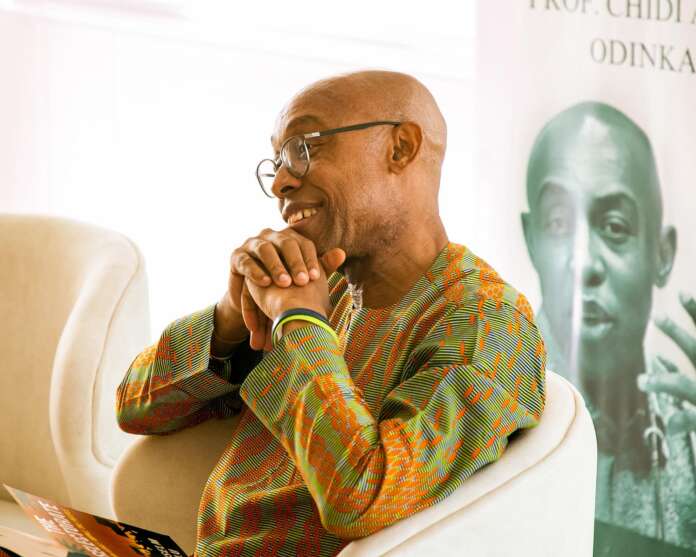
By Chidi Anselm Odinkalu

In January 1993, Ibrahim Babangida was Nigeria’s military ruler. He was supposedly in the last year of an interminable transition at the end of which he promised to hand over power to an elected civilian administration. Moshood Abiola was actively canvassing to inherit that mantle. As Chief Justice of Nigeria (CJN), Mohammed Bello was in his fourth year at the apex of the system for resolving disputes between Abiola and Babangida in that process of transition from military to civil rule. He had been CJN since 1987. At the time, Abiola was also Nigeria’s most influential newspaper publisher under the Concord Group. One of the titles published by the Concord Group was a weekly magazine called African Concord. Its editor was Bayo Onanuga.

The previous month, in December 1992, Bayo Onanuga’s African Concord ran a cover under the title: ‘‘Justice Mohammed Bello: Kick him out now! Lawyers demand.” Essentially, the story alleged that military ruler, Ibrahim Babangida, had bribed the Justices of the Supreme Court led by CJN, Mohammed Bello, with gifts of exotic Mercedes Benz cars. At the time, Mercedes Benz produced the most famous luxury brand of cars in Nigeria.

This story would not have amounted to much but for what followed. Shortly after New Year in 1993, nine of the Justices of the Supreme Court instructed Frederick Rotimi Alade (FRA) Williams, the doyen of Senior Advocates of Nigeria (SAN), to file a case before the High Court of Lagos State against the Concord Group, African Concord, and its editor, Bayo Onanuga, claiming that the story had defamed them. The Concord Group instructed stormy petrel, Gani Fawehimin, to represent them. At the Ikeja Division of the High Court of Lagos where the case was tried, Samuel Omotunde Ilori, who would later rise to become the ninth Chief Judge of Lagos, presided.

This case had many sub-plots. It turned out, for instance, that Chief Williams’s youngest son, Tokunbo, who was shortly thereafter to become a SAN himself, was married to the daughter of the presiding judge, Olusola. When Gani Fawehinmi asked the judge to disqualify himself from the case, he declined, describing the request as “unprecedented” and an invitation to “an abdication of his sacred duty as a judicial officer.”

The Secretary to the Government of the Federation (SGF) at the time, Alhaji Aliyu Mohammed, the Wazirin Jema’a, was a witness in the case. In cross examining him, Gani Fawehinmi asked for his qualifications. Reluctantly, the SGF ventured that he was the proud holder of a Teachers Grade 2 certificate, in response to which Gani spat out (to predictable courtroom mirth) “Teacher’s Grade Two certificate, and he rose through the ranks to become the SGF!”

Ultimately, the case was settled when Abiola elected to apologise to the Supreme Court Justices, who then instructed Chief Williams to withdraw it. In response, Bayo Onanuga resigned as editor of Chief Abiola’s African Concord

The underlying issue in that case, however, was judicial independence and integrity. 32 years ago, it was an affront to the independence and integrity of judges to suggest that they could be impressed with gifts of cars or imply that they were in the payroll of political office holders. Today, it is different. Senior judicial figures flaunt their propinquity to politicians and rely on that to subvert established rungs of authority among judges and between courts in the judicial hierarchy. It is now de rigeur for politicians to ply judges with cars.

Divining how the country got to this is not that difficult although it is not nearly as necessary as understanding when we did so.

When Mohammed Bello retired as CJN in 1995, Mohammed Lawal Uwais succeeded him. Justice Uwais was one of the justices affronted by the claims about collecting a car from the soldiers in 1992. Although Uwais well understood that “military rule had a corrosive effect” on the judiciary and had not made much of an effort to disguise their campaign to reduce the heads of the judiciary to the status of beggars before the soldiers, he was nevertheless not prepared to cede much ground to them on questions of personal and institutional integrity. Until his retirement in June 2006, the spectacle of politicians publicly gifting cars to judicial officers was not much part of Nigerian public life.

All that was the change under his successors. In effect, this business of the judges being reduced to beggars for Sub-Urban Utility Vehicles (SUVs) has all eventuated in less than two decades.  It is difficult now to trace exactly when this change began. It seem likely, however, that the index case was – as with many things in Nigeria – Lagos State. There are suggestions, at the time of writing difficult to verify, that the practice of lacing judicial office with gifts of political housing and transport was quietly in place before 2007.

However, a significant moment for policy purposes occurred in the first week of October, 2007 when freshly minted Governor of Lagos, Babatunde Raji Fashola, SAN, presented 18 cars to Magistrates in Lagos State. Daily Champion reported the presentation the day after it occurred under the caption “Lagos Government Dashes 18 Cars to Magistrates.” In presenting the cars, Governor Fashola declared: “Our commitment to continuously improve the welfare package and conditions of service of judicial officers in the state places a reciprocal demand on magistrates to display professionalism, integrity and above all a good work ethic.”

Of course, Magistrates Courts are state courts and subordinate ones at that. They are inferior to the High Court. But the significance of this moment was hardly lost on the politicians and the public. At the state level, the Judicial Service Commission oversees the work of Magistrates. The Chief Judge of the state heads the JSC. At the federal level, that role belongs to the CJN. The JSC also controls the budget of the magistracy. The issue was not that the government desired to uplift the wellbeing of magistrates. It was that it chose to do so through a public presentation of cars by the governor for their “welfare”. The same goal could have been achieved if the JSC received the budget to be administered for precisely that objective.

If the governor chose not to do so, it would have been because he desired greater say in the management of the funds or he did not trust the hierarchy of the judiciary to manage it properly if it had been given to them. It could, of course, be a matter of cause and effect between these two factors. Giving credence to this, former Justice of the Supreme Court, Ejembi Eko publicly accused heads of courts in 2024 of “vandalisation of the judiciary budget” notwithstanding the fact that they were in control of heads of courts in Nigeria controlled “enormous budgetary resources.”

There were many things about that event in Lagos in 2007 that should have warranted attention. The governor involved was a lawyer and SAN and the state involved was seen as one that set trends in Nigeria. Yet, when this occurred in 2007, most people missed both the event and its significance. The number of cars purchased by governors for the judiciary at various levels in the 18 years since then has gone off the charts. Hopefully, the judges are in a better state for it because, quite clearly, the courts are not.

It happens that the NJC Guidelines governing the appointment of judges requires as a precondition that every appointment round should be preceded by “proof of adequate Capital vote provision in the relevant approved Budget for the Superior Court of Record concerned.” In other words, before judges are appointed, the NJC requires proof from the head of the court system concerned that there are sufficient funds to take care of such things as both cars and housing for them. If politicians thereafter ply the judges with cars and other blandishments while the NJC looks away, it is not difficult to figure out what is happening.

A lawyer and a teacher, Odinkalu can be reached at [email protected]

Trump, UNICEF and sexualization of children

By Sonnie Ekwowusi

Most of us grew up, or were raised, under the illusion that the United Nations Children’s Fund (UNICEF) (originally named the United Nations International Children’s Emergency Fund) promotes the well-being of children in line with its stated objectives. However, any student of history who has consistently monitored the activities of UNICEF over the years—especially in developing countries—would readily attest that UNICEF has, in fact, been waging an insidious war against the world’s children.

UNICEF has been corrupting African children by teaching them how to perform abortions, how to masturbate, and how to have so-called “safe sex” without consequences. It indoctrinates children with the belief that religious instructions forbidding teenage sex are mere myths.

This is why the Trump administration has recently refused to endorse the 2026–2029 UNICEF Strategic Plan, which it says contains harmful LGBT ideology, sexualization of children, and the promotion of contraceptives among children. On 12 September 2025, Donald Trump stood alone at the United Nations (which has even developed an LGBT-themed postage stamp) and voted against UN Women’s three-year strategic plan to promote LGBT and gender ideology.

You will recall that Trump dismantled the United States Agency for International Development (USAID) for allegedly sponsoring Boko Haram in Nigeria and other places. Recently, Trump ordered the destruction of $10 million worth of abortifacient birth control pills, intrauterine devices (IUDs), and hormonal implants that were meant to be freely distributed among African women, including Nigerian women, by USAID as part of population reduction programmes in Africa. These birth control products were stockpiled by USAID during the administration of former Joe Biden to be given to women in African countries, including Nigeria. But today, the Trump administration, committed to protecting the lives of unborn children in Africa and all over the world, has ordered the destruction of these dangerous abortifacient products.

In contrast, the Federal Ministry of Health in Abuja is still stockpiling abortifacient birth control pills, intrauterine devices, and hormonal implants, which it freely distributes among Nigerian women to reduce the country’s population. I have repeatedly said that the Federal Ministry of Health is long overdue for a complete shake-up and reform.

I am a regular visitor to the Federal Ministry of Health office located at the Federal Secretariat in Abuja, and what constantly assaults my eyes are cartons of dangerous abortifacient birth control pills, intrauterine devices, and hormonal implants stockpiled at its offices. The Federal Ministry of Health has even printed vasectomy (sterilization of boys and men) and tubal ligation (sterilization of girls and women) booklets, which it uses to embark on campaigns across Nigeria to get men and women sterilized. The Federal Ministry of Health, Abuja, must be an evil institution.

Imagine a country such as Nigeria, where the majority of the people do not have easy access to basic primary healthcare, yet the Federal Ministry of Health in Abuja is mainly focused on getting Nigerian men and women sterilized, all in the name of population reduction. As I said earlier, the Federal Ministry of Health in Abuja is long overdue for a complete shake-up.

Back to Trump, UNICEF, and the sexualization of children: Faced with mounting criticisms—especially a recent report that exposed sexually explicit programs on UNICEF’s website targeting children—the agency has now removed sexual images and curricula from its website. Among the materials it pulled down was a Comprehensive Sexuality Education (CSE) program directed at children in Ukraine.

The curriculum, titled “Adulthood Without Secrets,” designed for children ages 10–14, explains the supposed fluidity of one’s sexual orientation during life, including identifying as homosexual, bisexual, pansexual, or asexual. In the section on “sex and relationships,” sex is defined as “one of the ways people interact, when they express their feelings for each other through physical contact.” Sex is described as something that is an “important part of a relationship” that “helps express intimate feelings and togetherness between partners” and can “strengthen relationships.”

Children are instructed on the “criteria” for “good sex,” which is defined as “sex during which you derive pleasure from all the processes and reach orgasm,” and they are also taught about the necessity of foreplay.

In recent years, Comprehensive Sexuality Education (CSE) has been rejected in many countries. Why? Because its content teaches school children how to indulge in masturbation, abortion, and LGBT practices. In fact, over the years, UNICEF has faced growing criticism for promoting sexualization programs for children under its euphemistic phrase “sexual and reproductive health and rights” agenda.

But this has not stopped UNICEF or other United Nations agencies from implementing it in country programs—often in partnership with groups like the International Planned Parenthood Federation or, in the case of Nigeria, with the Federal Ministry of Health in Abuja.

Now, the Trump administration has done the needful. It has refused to endorse the 2026–2029 UNICEF Strategic Plan because it contains harmful LGBT ideology, sexualization of children, and promotion of contraceptives among children.

Agreed, UNICEF promotes some laudable projects for the well-being of children. But the problem is that those good projects are so mixed up with LGBT ideology, abortion, teen masturbation, teen transgenderism, teen sexual “rights,” and teen contraceptives that UNICEF is unwilling to remove these controversial elements from its otherwise laudable programs. Instead, UNICEF imposes both the good projects and the LGBT ideology, abortion, teen masturbation, teen transgenderism, teen sexual “rights,” and contraceptives wholesale on developing countries.

“The United States strongly supports the work that UNICEF does to help children around the world, but we cannot endorse a plan that contains elements that are at odds with U.S. policy,”
said U.S. representative Jonathan Shrier.

However, the Trump administration insists that UNICEF should focus on its primary responsibility of protecting children and fostering their education, health, and well-being, and should stop giving children LGBT ideology, contraceptives, masturbation, transgenderism, abortion, and sexual “rights.”

Can you imagine UNICEF promoting teen LGBT ideology, abortion, teen masturbation, teen transgenderism, teen sexual “rights,” and teen contraceptives in poverty-stricken Thailand or war-ravaged Ukraine? What a shame. Instead of supplying Ukrainian children with food, milk, and other relief materials for their well-being, UNICEF is offering them masturbation, transgender, sexual “rights,” and teen contraceptive services.

A 2024 UNICEF brochure tells 15-year-olds that “it is normal to feel sympathy or attraction to members of your own or the opposite sex…” and that “masturbation is perfectly acceptable in relationships, both alone and with partners.” The brochure also says that masturbation may be “surrounded by myths, but it is actually a way to relieve stress, satisfy arousal, and explore your body, sexuality, and desires.” UNICEF tells children, “Only through experiments can you understand what really brings pleasure to you and your partner.”

UNICEF even lists “anal sex” as just another sex act that children should be familiar with:

“Sex happens… oral — stimulation of the genitals with the tongue or lips; vaginal — involves penetration of the vagina with a penis, fingers, or sex toys; anal — during which the penis penetrates the anus, fingers, or sex toys.”

Another UNICEF brochure tells 10-year-olds in JSS1–JSS3:

“Foreplay and caressing touch help you to relax, feel comfortable, and increase sexual arousal… In order to understand what caressing you and your partner like, you need to talk about it.”

The same brochure teaches the children that phrases like “traditional or non-traditional orientation” are incorrect, stating that “all types of sexual orientation are natural.”

Coming back home to Nigeria, UNICEF is reportedly teaching mothers and children in Internally Displaced Persons (IDP) camps how to perform abortions, masturbate, exercise their sexual “rights,” and take various harmful contraceptives. I recall that many years ago, UNICEF—ostensibly authorized by the Federal Government—went to the National Youth Service Corps (NYSC) Orientation Camp in Lagos to distribute condoms to the hapless youth corps members.

UNICEF arrived at the camp in the morning with a big truck bearing the inscription Condom. Thereafter, all the corps members were instructed to form a single file. They did. Then the UNICEF staffers began distributing condoms to them free of charge. Paradoxically, that same evening, a male corps member and a female corps member were caught by NYSC security agents misbehaving with the condoms. The next day, the NYSC camp authorities met and expelled the two corps members from the camp.

The logical question at the time was: If UNICEF gave the corps members condoms to misbehave with, why expel the two corps members for misbehaving with them? Obviously, UNICEF cannot commit this kind of wrong in its home country. But because Nigeria is treated as a dumping ground for all kinds of toxic materials, any foreign NGO can freely come to Nigeria, commit all kinds of crimes, and get off scot-free. For example, Marie Stopes, a UK-based abortion NGO, is in Nigeria running abortion clinics in almost all the states of the federation. Marie Stopes lures underage girls into their clinics to be given abortifacient injections without the consent of their parents.

Acting on a petition written by a parent, some policemen went and sealed off one Marie Stopes abortion clinic in Lagos. The police handcuffed the abortion doctor (name withheld) on duty at that time and took him to their police station.

The most tragic part is that almost all the good English literature books—such as Macbeth, Julius Caesar, Weep Not Child, Things Fall Apart, Zambia Shall Be Free, The Man Died, African Child, Akin the Drummer Boy, Mine Boy, The Gods Are Not to Blame, Gulliver’s Travels, Around the World in Eighty Days, Allan Quatermain, King Solomon’s Mines, and Eze Goes to School—which most Nigerian adults read in public secondary schools in the 70s, 80s, and even mid-90s, have been removed from the curriculum and replaced with sex-related textbooks and English literature books.

These sex-related English literature books, containing lewd subject matter, have been introduced into the curriculum to give unsuspecting young school pupils the wrong impression that self-control is unnecessary, repressive, and impossible; that casual sex makes them feel good; that they should engage in casual sex before marriage; that “safe sex” is the goal in life provided they don’t get pregnant—and if they do, they should procure abortions as soon as possible.

For example, one of the speakers at the Regional World Congress of Families held at the Nigerian Institute of International Affairs, Victoria Island, Lagos, from March 27 to 29, 2017, was Ahmed Akanbi. Ahmed is a parent and a Lagos-based legal practitioner.

Midway through his presentation, Ahmed did something that shocked most of the conference participants. He carefully dipped his hand into his bag, brought out two English literature books containing some lewd subject matter, and showed them to the participants. He told them that the two books were recommended for Primary Six pupils in the school attended by his daughter.

The title of the first book, authored by Oyekunle Oyedeji, is Tears of a Bride, while the second book, written by Queen O. Okweshine, is titled Precious Child.

According to Ahmed, his 9-year-old daughter in Primary Six came back home from school one day and engaged him in a conversation about some sexual experiences. At first, Ahmed was utterly stunned. But after he regained his composure, he asked his daughter where she learned about those sexual experiences. It was then she narrated how their school teacher had been using the two books to teach them how to practice “safe sex” and how to gain sexual pleasure.

Ahmed read aloud some sexual portions of the two books to the hearing of the participants, who rose to their feet in utter shock.

A society reaps what it sows. If our school children are taught in open classrooms that self-control is unnecessary, repressive, and impossible, and that casual sex, masturbation, and LGBT practices make them feel good—all in the name of sex education—then we are ruined as a people.

Consequently, we must protect our children from the bad influence of UNICEF. Did you know that UNICEF spends hundreds of millions of dollars promoting explicit—even pornographic—sexual content for children around the world? And we are letting them operate unchecked in Nigeria.

Did you know that the National Sexuality Education Curriculum, which was developed by the National Council on Education, is modeled after the book Guidelines for Comprehensive Sexuality Education in Nigeria published by Action Health Incorporated (AHI), a Lagos-based NGO? And this AHI book is an adaptation of the 1991 Guidelines for Comprehensive Sexuality Education produced by Sexuality Information and Education Council of the United States (SIECUS) in New York. And we are still allowing this so-called National Sexuality Education Curriculum to be used in Nigeria.

Small wonder Malam Adamu Adamu, former Minister of Education, had directed the Nigerian Educational Research and Development Council (NERDC) to expunge sex education from the school curriculum in Nigeria, noting that sex education should be left in the hands of parents and religious institutions and not taught in schools in a manner that would further corrupt little children who are already exposed to all sorts of sexual perversions on their mobile phones and electronic gadgets.

The Minister stated that his action was informed by the fact that, in Nigeria’s religious and cultural setting, the morals and values imparted to children by their parents and religious institutions are the superstructure for moulding their character and building our national ethos.

Current Nigeria’s Coordinating Minister of Health and Social Welfare, Muhammad Ali Pate, should follow the good example of his predecessor in office and direct that sex education or CSE should not be taught in Nigerian secondary schools because it corrupts the morals of students.

Rather than teaching unsuspecting young school kids in Nigeria sex education or CSE, they should be taught moral/religious instruction, civic education, history, basic hygiene, and basic cleanliness. Nigerian parents should be reminded—perhaps for the umpteenth time—that parents are the first and most important educators of their children and possess a fundamental competence in this area: they are educators because they are parents.

Therefore, no UN agency or NGO has a right to teach our children anything in school that goes against the faith and morals of their parents.

I know a government secondary school (name withheld) along Eric Moore Street, Surulere, Lagos, where hired teachers (paid ₦20,000 each) came to an open classroom with rubber penises and rubber vaginas and demonstrated to the school pupils how to wear condoms. Is this not criminal?

This reminds me: some Nigerian pro-abstinence NGOs took some distributors of condoms in Nigeria to court a couple of years ago on the ground that abstinence, not condoms, offers 100% protection against HIV. I remember I was the lawyer for the plaintiff pro-abstinence NGOs in that matter. Anyway, the pro-abstinence NGOs won the case. A copy of the court’s judgment is lodged in our law firm. No appeal has been filed by the defendants to date.

The views expressed by contributors are strictly personal and not of Law & Society Magazine.

Agba Jalingo recounts harrowing police arrests with Azuka Ogujiuba, says drugs, sex, everything available in Nigerian prisons

  • What’s going on now with press freedom didn’t even happen under military governments — Jalingo

By Dickson Omobola

The publisher of Media Room Hub, Azuka Ogujiuba, was recently arrested and detained in Abuja for three days by the police over publishing what she called a “court order”. Activist and publisher of CrossRiverWatch, Agba Jalingo, is also not new to unlawful arrests and detentions.

During the administration of ex-Governor Ben Ayade of Cross River State, he was illegally imprisoned for six months in Calabar for publishing a story that offended the governor.

After that, he was detained in Kuje prison, Abuja, for nine days for another story about the governor’s younger brother’s wife. In this joint interview on Perspectives, an Arise TV programme, both journalists shared harrowing stories about their unlawful arrests and detentions.

They also spoke about the Cyber Crime Act and defamation, among other interesting issues. Excerpts:

Azuka Ogujiuba

How did they (police) find out where you were in the first place?

They tracked me all over Abuja to know where they could arrest me.

Were you manhandled or anything like that?

They struggled to take my phone because I said I wanted to talk to my publisher, Nduka Obaigbena, and editor, Shaka Momodu. They refused. They took my phone.

How long were you there for (in a cell at Abuja)?

I was there for three days. When I found out that they were going to detain me, I started talking to the Ifeoma girl (a police officer). I told her: ‘you are a woman like me, and even if the men want to put me in a cell, you should be the one talking to them on my behalf, that I did nothing’. But she looked away.

What was the cell like?

Horrible. I do not even wish my enemy to be in any Nigerian police cell, if that is how they are. It was very smelly and dirty. Immediately I entered that cell, I said: ‘God, what have I done?’ I was almost losing my mind. The next cell was the male cell. In the male cell, they were more than 20 men there. Whenever the men used the toilet in their cell, the smell came directly to my cell. I could not breathe. I could not eat. I could not tell whether it was morning or night. The only time I knew that it was late was when mosquitos started feasting on my body. The mosquitos were not scared. They were not normal mosquitos. Due to those mosquitos, you could be hitting yourself like someone running mad. In those three days, I could not sleep.

Agba Jalingo

What is your take on this story (Ogujiuba’s) so far?

I would say vehemently that this is a pattern with the police these days. And it is getting worse under this IGP. The level of impunity. Last year alone, 751 people were arrested in connection with cyber crime allegations. 751 in Nigeria, and that is the highest number we have seen. I do not think we even saw (arrest of people rampantly in this manner) that under the military. This IGP has elevated this impunity to a level that is very shocking. The police are now used for renters. If you have money and anybody harasses you, just pay them (police) and they are off. They get themselves into some vans or hop into a plane.

They are off to go and drag these people to wherever they want to take them. Because defamation is not supported by any law in Lagos State, they usually want to drag the person out of Lagos. Defamation is a civil matter in Lagos State. Deliberately, Lagos State government has refused to criminalise defamation. Therefore, most of these people always send letters from outside Lagos.

Why is the law in Lagos different from other states?

It depends on the goal of the lawmakers in each of the states. All over the world, defamation is supposed to be a civil matter. But in Nigeria, we have criminal defamation. At all times, I have insisted that we cannot criminalise the right to speak or write and it should be stopped.

People do not have to always pass through a police station to get to court. We are not saying that people should go out there and speak rubbish or write nonsense about other people. But when people do, the courts are open. Call your lawyer and let people be sued. But in Nigeria, people always want to flex their power. They want to show you that they can deal with you. The only thing that satisfies them is to see you in handcuffs, a black Maria, being harassed left, right and centre. That is what gives them satisfaction. They are not looking for justice, actually.

If their goal is to seek justice, what will it cost to call a lawyer, file an action in court against that person? But that is not what they want. They want to see you in a police cell. They want to intimidate you, and show you that they have power. This has happened to me several times. I was arrested by police sent former Governor Benedict Ayade because I wrote a story on misappropriation in the Cross River State Microfinance Bank. They sent the police to bundle me from Lagos. The police kept me in the boot of a Toyota Highlander for 26 hours. In handcuffs, I defecated on my body twice. When we got to Uyo, they brought me out of there.

Why were you kept in the vehicle for 26 hours?

I didn’t know. I was in the boot, so I did not even know what was happening. When we got to Uyo, I was brought out. They allowed me to clean up myself, and then we drove into Calabar. I knew when they took me off, and I knew when we got down. I suspected that they actually wanted to kill me on the road, if not for the fact that the matter was already in the news. Very strongly, I suspect that because the journey ordinarily should not be up to 26 hours. I guess they wanted to do something with me on the road. But even when we got to Calabar, they kept me at the anti-cultism unit of the police for 43 days, then I was dumped in a lockdown prison.

Were you allowed to see a lawyer?

They were not ready to take me to court. They said I should write an apology. I refused because I did not do anything wrong. So, they charged me for terrorism, treasonable felony and attempts to overthrow the late former President Muhammadu Buhari and ex-Governor Ayade. I was dumped in prison for six months.

What made them release you in the end?

I was kept in prison and charged. It was the court that released me. I was on trial for three years until the court discharged and acquitted me. But that was not enough. One year down the line, they came again for me because I also wrote a story about the fact that the wife of the governor’s younger brother hired somebody to write her law school exams. They sent people again, who came and arrested me. Of course, we went to court which discharged and acquitted me. If I did not have evidence, the court would not have acquitted me. Again, they took me to Abuja. I was arraigned in Abuja for violating Section 24 of the Cyber Crime Act, and I was on trial for two years. Later, I was discharged and acquitted.

How long were you kept in Abuja?

After six months in Calabar, I was detained in Kuje prison for nine days. It is a recurring thing. Look at what they are doing to Sowore, for instance. Persistently, they do not want us to talk. The Cyber Crime Act was enacted mainly to deal with journalists and dissenters on social media. That law is of no other use than that. Section 24 is what they are using to run after us everywhere. And that is why civil society organisations and journalists are fighting tooth and nail to see that that law is repealed because it is now a tool in the hands of politicians to run after us.

Talking of rogue police officers. How much is it about politicians or vested interests using them as their private tool?

I think it is part of the reason they don’t pay the police well. They don’t allow them to have their independence. I think they pauperize them so they can continue to make them a militia for the elite. There are some very fine police officers and even the other ranks. In all my experiences with the police, if not for these few ones, there are occasions when you could almost have cases of mental illness. You could break down inside those detention centres. But everywhere they locked me up, there would always be a few of them who are very decent, concerned about my condition, knowing that I was innocent. In Calabar, where I was detained at the anti-cultism unit for 43 days, I also met some very nice policemen with whom I have kept a relationship.

Did you meet any prisoners who had harrowing stories to tell about their situation?

I also had very harrowing stories to tell, but it is just that within that harrowing story, you could meet a policeman that will take the risk of giving you a phone to make phone calls when it was very risky for him. There are some that could even give money, there are some that will give you some of those things that you need that the authority will not allow you to have. Some of them are humane, and I don’t want to wrap all of them in the same cloth. Even in the prison, there were decent warders, and there were others that were very horrible. There is no detention centre in Nigeria that you don’t pay. Whether it is in prison or the police station, I have not been to the NDLEA before, but wherever they lock you up, there is no way you don’t pay for it. It is not official.

What you are saying is that with the right amount of money, you won’t need to suffer in prison?

You will still suffer, but you will not suffer as much as those who do not have money. Most of the people in police detention, and even in prison, are innocent. There is only a minute percentage of people who are detained, whether in prisons or police stations, that have actually committed crimes. For instance, any IPO that has 10 detainees is counting the amount of money he would collect from those 10 people. One of the biggest lies in Nigeria is that bail is free. Or that visit to prison is free. It is a lie. None of them is free. If you don’t pay money, you will not see your relative in prison. I have slept in five prisons, and that’s why I am speaking from experience.

What kind of prices do you have to pay?

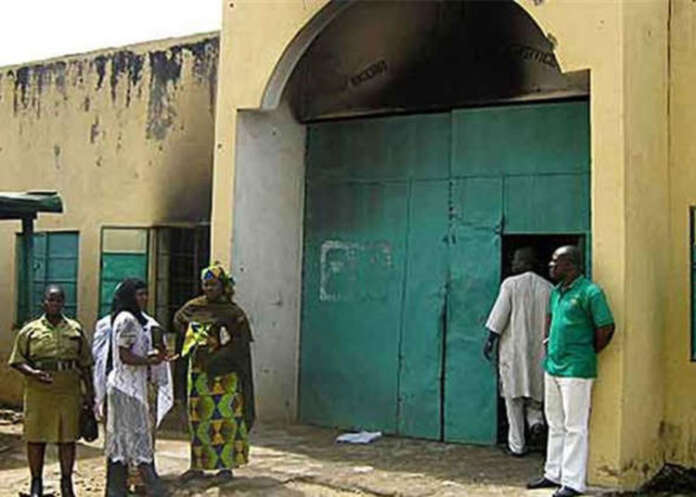
You must pay the warders before they allow you to see anyone. In Calabar, they collect as little as N50. If you bring them N10,000, N20,000, any amount of money you give them, they collect. That is the truth of the matter. Even in Kuje, that is supposedly the best prison in West Africa, as it were, because that one looks like a hostel, they still collect money from you. For now, we do not have a people’s police. If you have money, you can always have your way around this country. People stay in jail and do all kinds of things. There are those in jail with phones, they live large in prison. They have everything that they want. The only thing I did not see in jail is human parts and guns. Every other thing you want, including cocaine, it is in jail. If you want to have sex, you will have it. With the right amount of money, everything can be arranged. These things happen. The apartments are graded. Almost every Nigerian prison has a special cell.

Whenever these arrests happen, the Nigerian Union of Journalists, NUJ, and other media bodies release statements. Is it that they are barking louder than their bite?

We will continue to call on the NUJ to do more, but it is unfortunate that even salaries for members, the NUJ has not done anything about it. There are so many media organisations that will not pay their staff for many months and the NUJ cannot even raise a voice, not to talk about fighting the police. And then most of the people that emerge into the leadership of these organisations, these unions, not just the NUJ, could be state agents. It is common knowledge and I have also come to the conclusion that most of the people who leave the job, and go into the politics of the job, like unionism, are no longer impressed by what is happening in the newsroom. They are detached from the issue that concerns the everyday reporter that goes out there to do his job.

Another Cookout! Hilda Baci makes largest pot of jollof rice in second shot at Guinness World Record

The atmosphere was electrifying at Eko Hotel and Suites, Lagos, as celebrity chef Hilda Baci thrilled thousands of fans with another groundbreaking culinary feat. This time, she set a brand-new Guinness World Record for cooking the world’s largest pot of Nigerian jollof rice — a first-of-its-kind attempt that pulled a massive crowd of over 20,000 food lovers, celebrities, and influencers.

Before firing up the stove, Hilda rolled up her sleeves to personally wash the massive red pot. Updating her fans, she said, “Yes, I can officially confirm this pot is squeaky clean! I washed it myself.”

She also stressed that the process was carefully calculated to preserve the authenticity of the jollof by using accurate spices. Speaking to journalists, she explained, “To keep the authenticity of the jollof rice, I applied some mathematics, and we will still watch it while it is cooking to make sure that everything is right.”

Moments before the cooking began, Hilda had a short but emotional prayer session with the lead pastor of the Havesters Church, Bolaji Idowu.

As the jollof simmered, the crowd swelled, with guests beaming with excitement to get a taste of the steaming dish.

Notable personalities such as Veekee James, Tomike Adeoye, and Enioluwa joined the celebration, cheering her on. Even Guinness World Records showed support, writing on her Instagram post, “Best of luck, Hilda and team! ”

One of the highlights of the ceremony was when the multiple award-winning filmmaker, Funke Akindele, showed up to support Hilda and energise the crowd which she achieved with the few exciting dance steps she showcased to her fans.

Adding to the flavour of the event was a performance by Oludipe David, aka Spryo, who treated the audience to some of his hit songs.

This latest feat cements Hilda’s reputation as a record-breaking innovator. In 2023, she set a Guinness World Record for the longest cooking marathon by an individual, lasting 93 hours and 11 minutes — an event she famously dubbed “Cookathon.” Since then, her daring spirit has inspired a wave of similar attempts.

With the world’s biggest jollof rice now added to her list of achievements, Hilda has once again proven that her creativity knows no bounds.

PUNCH

Abia Airport: Unpacking the deceit, lies of the Nsulu project

By Bike Ogbuokri

Abia State’s ambitious Nsulu Airport project is increasingly mired in controversy.  Allegations of government insincerity, opaque land acquisition practices, and inadequate compensation are fueling discontent among affected communities, casting a long shadow over the project’s purported benefits and raising serious questions about its future viability. ‘BIKE OGBUOKRI dissects the discrepancies between official narratives and the realities experienced by Nsulu landowners, exposing a troubling lack of transparency and a potential for protracted conflict

The Nsulu Airport project, heralded as a catalyst for economic growth in Abia State, is instead enveloped in a miasma of distrust, ignited by accusations of government insincerity and a conspicuous lack of transparency in land acquisition and compensation. While the state government, led by Governor Alex Otti, propagates a rosy picture of amicable agreements and prompt payments, a closer examination, informed by the voices of disgruntled and cheated landowners, reveals a far more complex and disturbing reality.

The recent site inspection on September 12, 2025, led by Hon. Chaka Chukwumerije, Hon. Matt Ekwuribe, SA (Lands & Housing) Pastor Okorougo Aji, and a representative from Craneburg, the construction company, ostensibly aimed at addressing landowner grievances, instead underscored the deep chasm between official pronouncements and the lived experiences of affected communities. The issues raised by the Umuezenta and Umulenwa landowners – unauthorised land clearing, unpaid compensation for land outside the runway area, and delayed payments despite signed indemnity certificates – depict a disturbing portrait of mismanagement and potential malfeasance.

While Chief of Staff  to the governor, Dr. Caleb Ajagba acknowledged the need for “clarity to the somewhat opaque situation,” his subsequent observations served to further obscure rather than clarify the true state of affairs. He rightly questioned the absence of a surveyor on the Craneburg team, raising legitimate concerns about future “erroneous damage” to farm produce and the subsequent need for compensation. However, his assertion that landowners resorting to the press reflects “a demonstration of impatience” and “a sign of lack of trust and confidence” smacks of condescension and a failure to acknowledge the root causes of their discontent.

The very act of landowners seeking external recourse highlights a fundamental breakdown in communication and a perceived lack of responsiveness from government officials. As Dr. Ajagba himself stated, “The officials need to review and re-evaluate their engagement strategy to improve and sustain the confidence of the Landowners.” However, this acknowledgement rings hollow when juxtaposed with the government’s persistent downplaying of legitimate concerns and its attempts to portray dissenting voices as unreasonable agitators.

The Chief of Staff’s claim that the complaining landowners are those who “took the government to court” and “refused” to sign indemnity certificates is a blatant attempt to deflect responsibility and demonise those who dare to challenge the official narrative. While acknowledging that over “3500 claimants have been paid,” he conveniently ignores the critical questions surrounding the fairness, adequacy, and transparency of those payments.

This is where the voices of the affected landowners provide a crucial counterpoint. Sir Chinanu Uzoma’s impassioned plea exposes the fundamental flaws in the government’s approach: “Everybody cannot be hungry and too poor to accept your peanut in the name of compensation and sign off our lands to your government.” He directly challenges the integrity of the indemnity forms, branding them “a trap to commit people” and alleging that payments are often disproportionate to the actual land area being acquired. “Our people are literate enough to know that the indemnity form you want them to sign is a trap to commit people and thereby make claims that you have paid, while in essence you are paying some people who have about 20 portions of land for only 1 or 2 portions,” he argues. This raises serious questions about the accuracy of land surveys, the clarity of payment schedules, and the overall fairness of the compensation process.

Uzoma’s demand for transparency – “What is wrong with showing us the surveys of each person and captured and tell us what is paid per plot or per portion so you know what is being expected?” – is a reasonable request that the government has seemingly failed to address adequately. His further accusation that “the committee led by COS has refused to follow the due process of land acquisition and negotiate with the real land owners” paints a picture of a process driven by expediency and a disregard for established legal and ethical standards. This sentiment is echoed in his frustration with “people who have no stake or land in the airport runway are busy positioning themselves as actors in this airport land issue,” suggesting that personal agendas and political manoeuvring are impeding a fair and equitable resolution.

Joshua Onyenkwere further highlights the atmosphere of apprehension fueled by Governor Otti’s earlier statement that “all land owners have been duly compensated.” This premature declaration, seemingly aimed at projecting an image of success, has only served to exacerbate landowner mistrust and deepen the perception that their concerns are being dismissed. “Until that issue is properly addressed,” Onyenkwere warns, “land owners at the proposed airport site will continue to doubt every move by the government.”

The insistence on indemnity certificates also raises concerns. While seemingly a standard legal practice, the timing and context of their implementation in this case suggest an attempt to preempt future legal challenges and silence dissenting voices. By requiring landowners to sign away their rights in exchange for compensation, the government effectively shields itself from potential accountability and limits the avenues for redress available to aggrieved parties. This tactic is particularly troubling given the documented discrepancies and alleged injustices in the compensation process.

Furthermore, the seemingly dismissive attitude towards landowners who have sought legal recourse is deeply troubling. Dr. Emmanuel Dawari rightly asserts that “It is the right of any aggrieved person to go to court and seek redress.” The government’s attempt to portray these legal challenges as the root cause of the delays and discontent is a disingenuous attempt to shift blame and delegitimise legitimate grievances. “True leadership,” Dawari argues, “should wait for the outcome of the court process before proceeding.” By forging ahead with the project while simultaneously vilifying those who have sought legal redress, the government undermines the rule of law and reinforces the perception of insincerity and disregard for due process.

The observations of I.C. Nwankwere, while acknowledging that some payments have been made, further expose the uneven distribution of compensation and the existence of unresolved issues. He highlights the plight of communities like “Ubaha, Umuezeukwu and Umuosu Nsulu” who “have NOT been paid,” and points to “human errors” that have resulted in further delays and injustices. His call for the government to “expedite action and pay those who have not been genuinely paid and correct those anomalies” underscores the urgent need for transparency, accountability, and a genuine commitment to addressing the legitimate grievances of affected landowners.

The Nsulu Airport project, despite its potential economic benefits, is being jeopardised by a pervasive lack of transparency, allegations of unfair compensation practices, and a seemingly deliberate attempt to silence dissenting voices. The government’s narrative of amicable agreements and prompt payments clashes sharply with the lived experiences of the affected landowners, who feel marginalised, ignored, and pressured into accepting inadequate compensation for their ancestral lands.

For the project to truly succeed and benefit the people of Abia State, the government must prioritise transparency, engage in genuine dialogue with affected communities, and ensure that all compensation is fair, equitable, and in accordance with established legal and ethical standards. The current approach, characterised by defensiveness, obfuscation, and a dismissive attitude towards legitimate grievances, only serves to deepen mistrust and sow the seeds of future conflict. Until the government embraces genuine transparency and demonstrates a sincere commitment to addressing the concerns of the affected landowners, the skies over Nsulu will remain murky, and the promise of economic progress will remain grounded in a quagmire of distrust and resentment. The State Government must come clean on how much it has spent on compensation, the criteria used for assessment of land value and who the beneficiaries are. This is the only way to restore confidence and ensure the project does not create long-term conflict and litigation.

Governor Fubara, you are prohibited by both Ecowas treaty, Nigerian Constitution and the SOE Legislation from accepting any hand-over notes from the Sole Administrator

By Dr. Tonye Clinton Jaja

Your Excellency, Governor Siminialayi Fubara, Sir,

You are a very fortunate person, unknowingly, President Bola Ahmed Tinubu (PBAT) and the National Assembly has unwittingly granted you an extension of your tenure by their imposition of a six month suspension upon your good self.

You are entitled to a six month extension because the said state of emergency that was imposed upon your good self did not satisfy the requirements of Section 305 of the Constitution of the Federal Republic of Nigeria, 1999.

This is because the pre-requisite essential requirement of two-thirds majority of the 469 legislators of the National Assembly was not satisfied on 20th March 2025.

The Supreme Court of Nigeria has held that voice-votes are not acceptable as replacement whenever the constitution specifically provides for two-thirds majority. See the argument of the former Attorney-General of the Federation of Nigeria (AGF) in the case of National Assembly vs. President of the Federal Republic of Nigeria and the AGF (SC/214/2015).

Also, the precedent that was decided in the year 2008 which extended the tenure of former Governor of Anambra State, Peter Obi is a binding precedent. See PETER OBI V INEC
Legalpedia Citation: (2008) Legalpedia (SC) 91267. In the Supreme Court of Nigeria
Tue Jan 29, 2008
Suit Number: SC. 123 / 2007 CORAM available online at https://www.google.com/amp/s/legalpediaonline.com/peter-obi-v-inec/amp/

Therefore, let us await the pronouncement of the Supreme Court of Nigeria in the case filed by the Governors of the Peoples Democratic Party (PDP) regarding your suspension. Also, expected is the judgment of the judgment of the Economic Community of West African States (ECOWAS) Community Court of Justice regarding your suspension.

By a combined operation of the State of Emergency in Rivers State Act, 2025 (until it is repealed by either the Supreme Court of Nigeria or by its own sunset clause), Section 12 of the Nigerian Constitution and the ECOWAS Treaty, 1993 collectively do not name your good self.

Therefore, you are prohibited from receiving HAND-OVER NOTES from the Sole Administrator of Rivers State.

Only the President of the Federal Republic of Nigeria is authorised by the SoE legislation to perform the said function.

Also, pursuant to the ECOWAS Treaty, 1993 and Section 12 of the Nigerian Constitution, there is a 2001 ECOWAS Protocol that deems it illegal for any official who is not elected to administer any ECOWAS member state or its sub-national units.

So my legal advisory is that you ought to take medical report to avoid like a plague the attendance of the planned HAND-OVER on 18th September 2025.

Also, you are to avoid like a plague any interface with the purported Chairpersons of the Local Government Areas (LGAs) of Rivers State who were purportedly elected on 30th August 2025.

Until there is a definite pronouncement by both the Supreme Court of Nigeria and the ECOWAS Court of Justice respectively.

If you are in doubt about this position of the law, please kindly consult Senior Advocates of Nigeria (SAN) who are experts in constitutional law and litigation at the level of the Supreme Court of Nigeria and the ECOWAS Court of Justice respectively.

Prof. Amos O. Enabulele, a professor of international and ECOWAS law.

I thank you for your anticipated prompt and positive response.

Yours faithfully,
Dr. Tonye Clinton Jaja,
13th September 2025.

The views expressed by contributors are strictly personal and not of Law & Society Magazine.

Ex- Chief Justice Karki named Nepal’s first female PM after violent unrest

Nepal’s former Chief Justice Sushila Karki was sworn in as the country’s interim Prime Minister on Friday, becoming the first woman to lead the country after deadly anti-graft protests forced Prime Minister K.P. Sharma Oli to resign.

President Ramchandra Paudel administered the oath of office to Karki at the presidential palace in a ceremony broadcast live.

Karki’s appointment by the president followed negotiations between Paudel, army chief Ashok Raj Sigdel and the protesters who led Nepal’s worst upheaval in years.

Karki is tasked with holding fresh elections to the lower house of parliament by March 11, 2026, the president’s office said. She is expected to appoint other ministers in a few days, authorities said.

Fifty-one people were killed and more than 1,300 were injured this week in anti-graft protests by the ‘Gen Z’ movement, named for the age of its mainly young supporters.

Gen Z protester Manjita Manandhar said she had “mixed emotions” over Karki’s appointment, which came after the death of so many young people during the unrest.

“But we did it!!!! For them! For New Nepal! The journey has just begun. We all Nepalis have to stay strong and put our best foot forward to make Nepal the best in the world. This is just the beginning,” she said.

The protest was sparked by a social media ban that has since been rolled back. The violence subsided only after Oli resigned on Tuesday.

The only woman to have served as Chief Justice, Karki was the preferred choice of the protesters who cite her reputation for honesty and integrity and her stance against corruption.

She held the top judicial post for about a year until mid-2017.

Bipin Adhikari, a constitutional expert and analyst, said Karki’s first challenge was to investigate the violence and destruction of public property during the protest and bring those responsible to justice.

“She must provide good governance, control corruption, maintain law and order, assure the people about the security conditions and make policing strong,” he said, adding that all these were major challenges.

RESTORATION OF NORMALCY

Nepal has grappled with political and economic instability since the abolition of its monarchy in 2008, while a lack of jobs drives millions to seek work in other countries and send money home.

As the country of 30 million people inched back towards normality on Friday – with shops reopened, cars back on roads, and police replacing the guns they wielded earlier this week with batons – families reclaimed the bodies of those killed in the protests.

Some roads were still blocked, although streets were patrolled by fewer soldiers than before.

“While his friends backed off (from the protests), he decided to go ahead,” Karuna Budhathoki said of her 23-year-old nephew, as she waited to collect his body at Kathmandu’s Teaching Hospital.

“We were told he was brought dead to the hospital.”

Another protester who died, Ashab Alam Thakurai, 24, had been married only a month earlier, his relatives said.

“The last we spoke to him … he said he was stuck with the protest. After that we could not contact him … eventually we found him in the morgue,” said his uncle, Zulfikar Alam.

Reuters

Open Letter to Senator Natasha and Dr. Abiola Akiyode-Afolabi: Senator Natasha and Her Lawyers are Not Taking the Hint of the Nigerian Courts’…

… And Their JUDICIAL ATTITUDE of Minimal Interference and Preference for Out-Of-Court Settlement in Matters Involving The National Assembly and Constitutional Provisions Relating to The Legislatures (Lessons from Oliver Wendell Holmes and Distinguishing the Cases of Ali Ndume and Omo-Agege)

By Dr. Tonye Clinton Jaja

Dear Distinguished Senator Natasha Akpoti-Uduaghan, Ma,

And

Dr. Abiola Afolabi-Akiyode, Ma,

Recall that in the year 2021, the United Nations Women Agency (UN WOMEN) in Nigeria engaged us as legal consultants to produce a draft of the Gender and Equal Opportunities Bill (GEOB). Which was subsequently sponsored by Senator Biodun Olujimi at the National Assembly.

It is important to begin with a statement of our shared commitment to advancing the cause of increased women participation in the National Assembly.

Dr. Abiola, ma, further recall that both of us were schoolmates at the PhD in law degree programme at the University of London.

One of the Compulsory Courses for all PhD law students at the University of London was Legal Research Methodology.

During the said Legal Methodology course, we were introduced to different theories of law (schools of thought) in the study and practice of law.

One of the said school of thought is legal realism as espoused by Oliver Wendell Holmes.

It appears that both Senator Natasha Akpoti-Uduaghan and her lawyers are not paying attention or adopting a PRAGMATIC APPROACH TO THE LAW.

In other words, they are not approaching this case of Senator Natasha Akpoti-Uduaghan from a legal realism point of view.

They appear to be fixated on the legal outcomes (to be obtained from courts of law) that they themselves have conjured up inside their heads and in their brief of arguments.

The problem with this fixation is that it does not allow them to explore any other pragmatic approach such as out-of-court settlement and resolution of the issue of her resumption as a Senator of the Federal Republic of Nigeria by attending plenary sessions.

The legal outcomes that both Senator Natasha Akpoti-Uduaghan and her lawyers are fixated upon does not align with the judicial attitude of the Nigerian courts of law.

Ironically, both Senator Natasha and her lawyers appear to forget that the Nigerian courts inherited and still apply the common law legal system from our colonial masters, the United Kingdom.

The common law legal system is characterised by a predominant reliance on judge-made laws and pronouncements of the Nigerian courts which coincidentally is at the very heart of the legal realism school of law as propounded by Oliver Wendell Holmes.

In essence, it is bereft of a grounded understanding of the Legal Realism school of thought.

According to Oliver Wendell Holmes’s pronouncement that “The prophecies of what the courts will do in fact, and nothing more pretentious, are what I mean by the law” defines the law as a pragmatic prediction of judicial action. This prediction theory of law, articulated in his 1897 speech “The Path of the Law”.

Going by the foregoing definition of Oliver Wendell Holmes, both Senator Natasha Akpoti-Uduaghan failed to discern or take the hint of the judgment of 4th July 2025 by Hon. Justice Binta Nyako.

In the said judgment, Hon. Justice Binta Nyako while criticising the imposition of six months suspension (as a violation of Section 63 of the Constitution of the Federal Republic of Nigeria, 1999) upon Senator Natasha Akpoti-Uduaghan.

However, in the said judgment she refused to categorically direct the Senate of the Federal Republic of Nigeria to recall Senator Natasha Akpoti-Uduaghan.

Instead, she advised that the Senate of the Federal Republic of Nigeria should undertake a review and amendment of the Standing Orders of the Senate, 2023 to bring it’s provisions into harmony with the provisions of the Nigerian Constitution.

The underlying reason for this approach (judicial attitude of Nigerian judges) is the principle of separation of powers amongst the three arms of government namely the Judiciary, the Executive and the Legislature) as propounded by Montessique.

As a general rule of law, none of the said three arms of government ought to be seen issuing orders or directives to another arm of government about how to conduct their affairs. It could be deemed interference.

However, it is only when the actions of any of the three arms of government are in violation of the provisions of the Nigerian Constitution that, the judiciary is usually invited to intervene and make an interpretation and pronouncement to remedy the situation by way of judicial review.

Another recent example of this judicial attitude of Nigerian courts is the judgment of the Supreme Court of Nigeria that was delivered on 28th February 2025.

In the said judgment, the Supreme Court of Nigeria held that it is only the Speaker of the Rivers State House of Assembly (and by extension any other legislature in Nigeria) that has the right to declare whenever a legislator has satisfied the requirement of defecting from one political party to another.

The Supreme Court of Nigeria categorically stated that the Nigerian courts cannot descend into the arena by USURPING THE LEGISLATIVE FUNCTIONS OF LEGISLATORS by making pronouncements on when the circumstances arise that confirm defection of legislators.

The caveat is that a judicial review can be undertaken in the event that a legislator alleges that the process of declaration of defection by the said legislature has not complied with the provisions of the Nigerian Constitution.

The locus classicus (landmark judgment) that shows that the Nigerian courts as a general rule do not interfere with the internal affairs of the Nigerian legislatures is National Assembly of Nigeria vs President of the Federal Republic of Nigeria and the Attorney-General of the Federation and Minister of Justice (SC/214/2015).

In that case the Supreme Court of Nigeria categorically directed both the National Assembly and the Executive Arm of Government (represented by the then President of Nigeria, Dr. Goodluck Ebele Jonathan) and the then Attorney-General of the Federation (AGF) to explore out-of-court settlement to resolve the issues.

The issues arose because the then President of Nigeria refused to assent to certain Constitution Alteration Bills.

The then President alleged that he withheld assent because the National Assembly refused and failed to comply with the provisions of Section 9 of the Nigerian Constitution relating to the procedures for alteration of the Nigerian Constitution.

For example, “Non-compliance with the threshold specified in Section 9(3) of the 1999 Constitution on amendments
“Alteration to constitution cannot be valid with mere voice votes unless supported by the votes of not less than four-fifths majority all members of national assembly and two-thirds of all the 36 state houses of assembly;” This is reported online at: https://www.thecable.ng/supreme-court-halts-constitution-amendment/#:~:text=Non%2Dcompliance%20with,houses%20of%20assembly%3B

“Consequently, in Suit SC/214/2015 filed at the Supreme Court by Mohammed Adoke, attorney-general of the federation, the federal government argued that the bill was not passed by four-fifths of the two chambers of the national assembly as stipulated in Sections 48 and 49 of the Nigerian constitution.”

Finally, it is very important for Senator Natasha Akpoti-Uduaghan and her lawyers to apply the legal method of DISTINGUISHING OF JUDGEMENTS AS THEY ANALYSE the cases of suspension of legislators such as Senators Ali Ndume (2017) and Omo-Agege (2018) respectively.

The facts relating to the suspension Senator Natasha Akpoti-Uduaghan and the judgment of 4th July 2025 are majorly different from those of Senators Ndume and Omo-Agege respectively.

Unlike the Ndume and Omo-Agege respectively, the judgment in the case of Senator Natasha imposed a fine of ₦5,000,000 (five million naira only) and a letter of apology as a pre-requisite requirement before her resumption!!!

On this note, I rest my case.

Yours faithfully,
Dr. Tonye Clinton Jaja,
13th September 2025.

The views expressed by contributors are strictly personal and not of Law & Society Magazine.

TIPS