He drove the girls more than 130 miles to Mississippi where he and his partner Victoria Cox, 34, kept the six-year-old girl as a “s£x-slave”, according to a summary of facts signed by Callihan after he pleaded guilty to federal charges in August.
Callihan suffocated the youngest girl, 4, to de@th “by holding [her] closely against his chest” after he and Cox engaged in criminal s£xual activity with her, the documents said.
The eldest daughter was rescued by police on June 13 after they found Brunett’s stolen car parked close to Callihan’s property. She was found in a dirt pit, alongside her younger sister’s remains.
Callihan pleaded guilty to both federal and state charges in connection to the crimes, and will spend the rest of his life in prison.
Cox is only facing state charges and was offered a plea deal during her pretrial hearing on Monday, October 13. She stands accused of acting as an accessory in the shocking crimes, though was previously indicted on far more serious counts – including capital murd£r, kidnapping, and s£xual battery.
Couple kept girl, 6, as s x slave in pit next to body of her sister whom they k!lled after murd ring their mum
According to WJTV, prosecutors from the Hinds County District Attorney’s Office have extended a plea offer, which she has not yet accepted or rejected. She has until the end of the month to make a decision.
Callihan agreed to the same deal in the same court in September. He admitted to capital murd£r, two counts of kidnapping and two counts of s£xual battery.
Judge Debra Gibbs sentenced him to life in prison without the possibility of parole for the murd£r and s£xual battery convictions, along with an additional 30 years on each kidnapping charge.
Those sentences will be served consecutively with those he received in Louisiana – plus any future sentences that may come from the federal court.
At his sentencing, Brunett’s sister, Brandi Hosch, labelled the k!ller a “demon” as she spoke to him in court.
“We are forever changed in the worst possible way because of you,” she said, according to WLBT.
“You have no soul. You are a demon. Not one day goes by that we are not lost, angry, or sickened because of you. I hope every time you close your eyes, you have nightmares… When you look down at your hands, I hope you can’t unsee what they have done.”
Police arrested Callihan last June after they were alerted to a wooded area behind a property where the youngest girl’s body was found, not far from her sister. A coroner later ruled the four-year-old had di£d from asphyxiation due to suffocation.
Callihan admitted to his crimes while on the way to jail.
“I’m on Lexapro. Sober. No drugs in my system. I did it,” he reportedly told the officers who arrested him. “I have no reason for what I did. All I know is, I want to say I was sober and only on Lexapro… I think it was the side effects of the Lexapro.”
He later told cops he had borderline and multiple personality disorders, but wasn’t “pretending to be crazy”.
He said: “I would k!ll me… for what I did. Lethal injection is the easiest thing for me. I have only been out of the nut house for two weeks.”
The ascent of Mrs. Ekeoma Ezeibe, a Barrister and Solicitor of the Supreme Court of Nigeria, to the position of the third female President of the Nigerian Council of Registered Insurance Brokers (NCRIB) is more than just a professional milestone; it’s a masterclass in leadership, a beacon for women, and a source of profound pride and lessons for the Igbo community. Her story, a blend of rigorous education, dogged perseverance, and strategic partnership, offers a rich tapestry of takeaways for anyone aiming to shatter ceilings and redefine what’s possible.
Ezeibe’s journey unequivocally champions the mantra of empowerment through education.In a world that often seeks to diminish a woman’s voice, a solid academic and professional foundation is the undeniable shield and sword. It is about the power of the polished professional. Her credentials, which impressively include a law degree and critical insurance professional qualifications, serve as a potent reminder. For women and young girls, this is a clear call to action: treat higher education and professional certification not as optional extras, but as non-negotiable investments in your future. They are the keys that unlock doors in male-dominated industries, proving competence beyond gender. The lesson here transcends formal schooling. It’s about the continuous pursuit of knowledge and the strategic acquisition of skills that make one indispensable.
Success, however, is rarely a solitary endeavour. Mrs. Ezeibe’s trajectory underscores the transformative impact of strong leadership and the supremacy of mentorship. The influence of respected figures like Professor Joe Irukwu, SAN, in her formative years, illustrates the catalytic role that experienced professionals can play. A mentor is more than an advisor; mentors are a navigational tool, helping to chart a course through complex professional landscapes and avoid common pitfalls.
Women, especially those navigating male-dominated fields, must actively seek out these guiding lights. Mentorship provides not only career advice but also the essential psychological encouragement to persist when the journey gets arduous. It’s about building a ‘personal board of directors’ to support and challenge growth.
Perhaps the most inspiring element of her story is the sheer act of breaking barriers; a story of audacity in adversity.The insurance brokerage sector, like many high-stakes financial services, has historically been a male preserve. Mrs. Ezeibe’s achievement is a testament to unwavering perseverance, determination and professionalism. Her success is a powerful, non-verbal declaration that traditional boundaries are merely suggestions, not unbreakable rules.
For every woman who feels the pressure of being the ‘only one’ in a boardroom or on a project, her achievement offers a galvanizing example. It inspires the confidence to push beyond traditional boundaries and to view obstacles not as stopping points, but as challenges designed to test one’s resolve. The goal isn’t just to fit into the existing structure, but to reshape it.
Mrs. Ezeibe’s influence, extending into various professional organisations and her active role in shaping industry policies, highlights the indispensable value of strong networks and peer engagement. In professional life, isolation is a key vulnerability. The ability to connect, collaborate, and contribute to the broader industry is what elevates a career from personal success to industry leadership.
Professionals would do well to borrow a page from her playbook, prioritising networking, community involvement and peer engagement. These engagements are not just about exchanging business cards; they are about building reciprocal relationships with care, gaining diverse perspectives, and earning the collective trust and endorsement that allows one to lead an industry body like the NCRIB.
While the spotlight deservedly shines on Mrs. Ezeibe, her story subtly introduces another crucial element for high-achieving women: the strategic and emotional support of a partner. Many call this the “he-for-she.” Someone characterised it as the “supportive anchor – the unsung hero.” The modern, high-pressure career often demands a delicate, sometimes precarious, balancing act between professional ambition and family life. This is where a supportive husband becomes a significant factor in leadership success.
A partner who is understanding, encouraging, and willing to share domestic and familial responsibilities provides the essential stable foundation. This is not merely about ‘helping out’; it’s about a true partnership and shared ownership of the family unit, which then frees the woman to fully commit to her professional development trajectory. Two factors are distinct here: emotional support -the ballast against the stress and high stakes of a demanding role; and shared responsibilities. These combine to reduce the mental and physical burden, granting crucial time and energy to focus on career goals.
The fact that her husband co-founded Crystal Trust Insurance Brokers Limited with her suggests a deep, strategic partnership—a relationship where he is genuinely invested in, and actively contributing to, her professional success. This model of partnership is the quiet differentiator, allowing a woman to pursue a high-pressure role without the constant pull of an unmanaged home front. It’s a powerful model for modern relationships, proving that success is amplified when spouses act as a unified, strategic team.
But there is yet another dimension to Mrs. Ezeibe’s success story: She’s Igbo in Nigeria, and it matters, perhaps, curiously. For the Igbo community, Mrs. Ezeibe’s elevation is a moment of collective celebration and a mirror reflecting its core values. It is an affirmation of the importance of promoting and supporting female leadership, recognising the exceptional value and unique perspectives women bring to the national table. This is particularly so in the private sector where she is in good company with the other corporate leaders like Dr Adaora Umeoji, the first female Group Managing Director/CEO of Zenith Bank; Dr Nneka Onyeali-Ikpe, Managing Director/CEO of Fidelity Bank, and Ebelechukwu Nwachukwu, Managing Director and CEO of Royal Exchange General Insurance Ltd.
Mrs. Ezeibe’s background and achievements are a clear reflection of the Igbo culture’s traditional emphasis on hard work and community engagement. By celebrating her—a daughter of the soil who has reached the pinnacle of her profession—the community can build on these values to foster a supportive and enabling environment for women and girls. Her story becomes an immediate, tangible source of role modelling and inspiration, encouraging young women, particularly in the South-East, to enter fields once considered off-limits.
Mrs. Ekeoma Ezeibe’s triumph is a multi-faceted victory. It’s a lesson for the nation on the necessity of intellectual preparation; a roadmap for professionals on the power of networking and mentorship; and a powerful affirmation for the Igbo community on the boundless potential of its daughters. Hers is a playbook we would all be wise to study.
The Nigerian Bar Association (NBA) notes with serious concern reports of a Magistrate court in Kano allegedly ordering two popular TikTok content creators, Idris Mai Wushirya and Basira Yar Guda, to formalise their relationship through marriage within 60 days following a case arising from the publication of an indecent video.
This development reflects a grave misunderstanding of the limits of judicial authority under the Nigerian Constitution and constitutes an affront to the fundamental rights of the individuals concerned. No court has the power to compel any person to marry another persons or two persons to mandatorily marry. It is indeed unconstitutional and therefore unlawful for any court to purport to have power to make such an order.
Marriage, by its very nature, is a voluntary union between consenting adults. It cannot, under any circumstance, be imposed as a form of punishment, moral correction, or judicial remedy. No court in Nigeria possesses the constitutional authority to compel two persons to marry, and any attempt to do so violates the rights to personal liberty, dignity of the human person, and privacy as guaranteed under the 1999 Constitution (as amended).
The NBA stresses that such judicial overreach not only infringes on personal freedoms but also undermines public confidence in the judiciary. The courts must remain the bastion of justice and protectors of constitutional rights, not instruments for enforcing social conformity or moral compulsion.
We therefore call for an immediate review of this decision by Magistrate Halima Wali and urge the relevant judicial authorities to take steps to prevent a recurrence of such unconstitutional orders. The NBA Citizens’ Liberties Committee and Women’s Forum are hereby directed to monitor the situation to ensure that the rule of law prevails.
No person should ever be coerced, directly or indirectly, into marriage by any institution of state, including the courts.
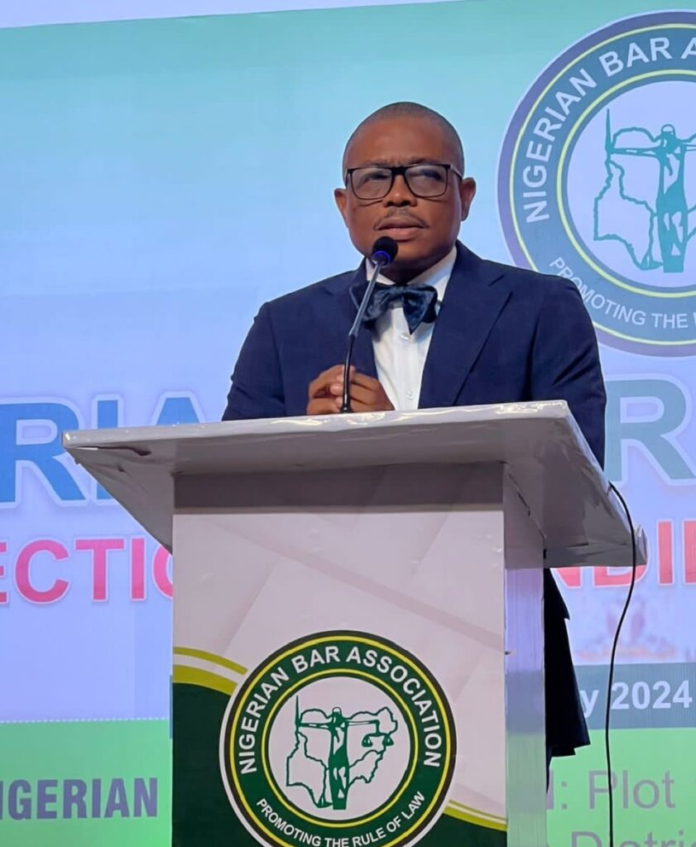
Mazi Afam Osigwe, SAN President, Nigerian Bar Association
Yesterday was October 20, the fifth anniversary of the Lekki Toll Gate Massacre, aftermath of the #EndSARS youth protest in Lagos. Scores of young persons were reportedly killed, maimed, made to inhale tear gas, or jump into the Lagoon and till date there has been no full closure on that event, despite attempts by the Federal and state governments to investigate what exactly happened, and make some form of restitution in some of the states. It was the equivalent of a Gen Z protest in Nigeria, an expression of youth affirmation and protest, similar to what has now happened in Nepal in September 2025. In Nepal, angry youths practically removed a government from office after protesting over social media ban and government corruption. The Prime Minister, KP Sharma Oli had to step down. Other government officials fled. Those who tarried were humiliated. There have been similar protests by young people in recent times in Madagascar, Peru, and Morocco. As in Nepal, the government in Madagascar was also toppled, providing an opportunity for the military to seize power, yet another major setback for democracy in the continent.
In the face of these youth-led protests in Africa, Asia and South America, the governments are frightened. The issues may differ: police violence and misconduct in Nigeria, social media ban and corruption in Nepal, economic disempowerment in Bangladesh in 2024, misplaced priorities, need for social services reforms as stated by the GENZ212 movement in Morocco, tax bill and cost of living crisis in Kenya, election issues, inequality, corruption in Mozambique in the words of GENZ Mozambique, and demand for better wages and pensions in Peru. A common denominator is the rise of youth power, and the determination by young people who constitute the majority of the populations in Africa, Asia and South America seeking to take charge of their own destinies, and demand the exit of non-performing governments. They ask for transparency, accountability, good governance, reforms and change. They come across as leaderless, a movement using both their voices and technology to get heard, and reject traditional political systems. In Nigeria, the slogan was “Sorosoke” (speak out loud and be heard), Moroccan youths used their country’s international dialling code: 212. The youths of the world seem to be taking cues from each other, inspiring a wave of global protests. They remind us afresh of Occupy Wall Street in 2011, the Arab Spring in 2010 -2012; the Umbrella Revolution in Hong Kong in 2014, and the all-dominating power of social media.
Are the leaders listening, frightened as they appear to be? Not quite. In Peru, one person died, 100 were injured; 72 persons were killed in Nepal in September, persons also died in Morocco (more than 3) and Mozambique (more than 33 killed, 15 injured) and in Madagascar, more than 22 persons were killed. The standard response of the incumbent authoritarian governments is to meet the people’s revolt with accustomed high-handedness. This raises concerns about the destiny of democracy and the fortunes of leadership and governance in otherwise representative systems.
Our main concern is how the emerging global trend is all too present and alive in Nigeria. The state either in Peru, Madagascar, Lagos or Abuja acts out of fear. In Lagos, to mark the fifth anniversary of #EndSARS alleged massacre in Lagos (please note that the word alleged is used allegedly), Opeyemi Adamolekun, a seasoned civil society activist who runs an active group known as Enough is Enough (EiE), yesterday had brought a bouquet of flowers to lay as a wreath at the Lekki Toll Gate in memory of those who fell at that location in 2000. Security operatives harassed her, and asked not to lay any wreath. No flowers. She was not carrying any weapon. Just flowers. But the state operatives of Nigeria were afraid of ordinary bush shrubs. What could have been frightening about ordinary flowers? The state is so scared it cannot even deal with ordinary symbolism. They pushed the poor lady. They asked her to get lost with her flowers. Flowers oh. The assailants wore brown uniform. There are so many agencies whose officials wear all kinds of uniforms in Nigeria, it is difficult to keep count or know their true identity. Can someone please help? Have they created an anti-flower bearing squad in Lagos? What part of state law makes it a crime to hold flowers on the streets of Lagos? They grabbed the flowers from Adamolekun and shared among themselves. Did they think the leaves would make good addition to their wives’ pots of soup? It is a crazy country, and the people in uniform are the most afflicted. They are victims themselves. They are poorly and rarely paid. When they retire, they rarely receive their pensions, but the moment they wear that uniform of whatever colour, their quick instinct is to oppress their fellow citizens.
The same drama played out in Abuja yesterday at the protest summoned by Omoyele Sowore, the 2023 Presidential candidate of the African Action Congress (AAC). Sowore is a professional civil society activist and pro-democracy campaigner. In the past week, he had tried to mobilise all categories of citizens to come forward to campaign for the release of Mazi Nnamdi Kanu – the detained leader of the Indigenous People of Biafra (IPOB) who has been standing trial since 2015, for criminal charges relating to terrorism, treason, defamation, and conspiracy to commit violence. He was released from detention in 2017, and was later re-arrested in Kenya in June 2021 by Interpol and extradited to Nigeria. He has been in state custody since then. He was accused of jumping bail. Sowore wants him released: #ReleaseNnamdiKanu. His plan was to put one million people on the streets of Abuja on Monday, October 20, to protest from the Transcorp Hilton, the convergence point, to be joined by “all online protesters, activists, citizens, and allies everywhere to turn every platform into a space for truth and resistance”.
In a tone reminiscent of the youth rebellion in Nepal, Sowore wrote: “From today, the internet becomes our rally ground, a united digital front for freedom and conscience. We are online, we are everywhere, and we are unstoppable”. Those words are ominous. A week ago, Sowore had announced that he had the consent of prominent national figures such as former Vice President Atiku Abubakar, President Goodluck Jonathan, Femi Falana SAN, and Senator Shehu Sani. He also called on South East leaders: Mr. Peter Obi, and the Governors – bCharles Chukwuma Soludo (Anambra) Alex Otti (Abia), Francis Nwifuru (Ebonyi) Peter Mbah (Enugu), Hope Uzodinnma (Imo), Ndigbo in general and other voices of conscience. He asked Igbo leaders and others to turn rhetoric into action. Yesterday, the protest held. As early as 6.30 am, the protesters had trooped onto the streets of Abuja: the Three Arms Zone, Transcorp Hilton, Jabi and elsewhere, they were out in their numbers.
Nobody sighted any prominent Nigerian among the protesters, but Aloy Ejimakor, Kanu’s counsel was among them. Mr. Bayo Onanuga, Presidential Spokesperson, has complained about the ugliness of a lawyer who is representing his client in a pending matter in a court of law also resorting to self-help on the streets. It is indeed an infamous act of a high proportion, and the whole exercise, by that objective fact alone, would seem like an attempt to intimidate and overwhelm the court. Nnamdi Kanu has an on-going case at the Federal High Court in Abuja. The Court of Justice James Omotoso had ruled, most recently that Kanu has a case to answer in response to a “No Case application” by his lawyers; on the basis of which his trial is scheduled to begin on Thursday. On the surface of it therefore, the judicial process in the matter has not been exhausted. But this is also what makes the matter delicate and complicated. There is an even an international dimension. Nigeria has a Mutual Legal Assistance pact with other countries including Finland where Simon Ekpa, associated with the Kanu charges has now been convicted. Should Nigeria abort the trial of Kanu, midway, on the basis of street sentiments?
The state security services felt obliged to defend the city of Abuja against the protesters. They barricaded the streets and unleashed cannisters of tear gas on the protesters, It has even been reported that when that was not enough, they resorted to live bullets. The protesters ran so fast in all directions, many of them lost their footwears. Abuja residents became hostages in their own city. Vehicular movement and businesses were affected. It must be re-emphasised that the right to protest, the right to assemble and the right to express an opinion are constitutional rights. The expression of those rights should not be met with bullets. By the same token, however, the same rights should be exercised within the bounds of reason and sanity. The protesters reportedly called for revolution and change. At this time, there had been speculations about the threat of coup-making, coup-thinking in Nigeria. This then would seem like the very wrong time to suggest anything remotely revolutionary. Nonetheless, that would not justify the excessive use of force even as dire as the situation in the Federal Capital Territory may have been: the 5th anniversary of #EndSARS and the #FreeNnamdiKanu protest, both converging as potent threats to the seat of government on the same day. There were no open protests elsewhere, but the entire South East was quiet. In Abia, Ebonyi, Enugu, Anambra, and Imo, the markets were closed. People stayed at home. In Abuja, the police harassed the protesters and arrested many, including journalists. Journalists do not deserve to be demonized, harassed or punished for doing their work. They should be released immediately. The protesters should be allowed to go too: non-violent protest is not a crime and there is nowhere in the books where a peaceful protest is a threat to the state. The security agencies can claim that they did not want a blow out, and having achieved that, they should allow the detained persons to go.
Two more things. The first is that there is a touch of irony to the Sowore-inspired protest. Sowore is an Ilaje Yoruba man, Arogbo-Ijaw from Ondo State. In this country, the politics of ethnicity and regionalism is at the heart of almost every relationship. His involvement in the Kanu struggle shows that the struggle for justice is above ethnic or regional considerations. It also exposes the contradictions at the heart of Igbo politics and the hypocrisy of the Igbo leadership elite. On the Nnamdi Kanu question, Igbo leaders are very good at diplomacy and rhetoric, none of them will ever dare identify pro-actively with Sowore’s revolutionary tactics. They would rather toe the line that I had identified earlier: that Nigeria has an obligation not to be seen to be sabotaging a live judicial process, or supporting mob action to truncate a judicial process. The court says Nnamdi Kanu has a case to answer, and that he is healthy enough to stand trial: Would it not be a better idea to wait for the process to run its course and then insist on Presidential pardon subsequently?
Secondly, this in itself is a proposal that many would pooh-pooh because we have reached a point in this country where nobody, including those running the same government, trusts government anymore. This is borne out of the haphazard manner in which government is run. In the days to come, the Tinubu administration is likely to be reminded that the argument about legal process and international legal co-operation cannot stand coming from a government that has just pardoned or commuted the prison sentences of 175 persons in line with Section 175 of the 1999 Constitution. The correlation between the number of pardoned persons and the actual section of the law shows a curious juvenile reasoning behind the exercise, made worse by the fact that most of the persons on the list are convicted murderers, drug traffickers, kidnappers, drug addicts, economic saboteurs and human rights criminals.
President Tinubu is therefore confronted with a moral question: why not Nnamdi Kanu, since this is a season of clemency, and he, the President has the powers within the Constitution to turn black into white, and make persons whole again? This is the urgent question of the moment in the eyes of Sowore and his band of protesters. But they may have to wait till sometime close to the 2027 general elections when President Tinubu may decide to use the Kanu matter as a potent political game changer in Nigeria’s game of chess and opportunism.
The views expressed by contributors are strictly personal and not of Law & Society Magazine
Years ago, when the sun used to rise and set at its time, a powerful farmer lived. History has it that at his coming of age, the man boasted that he would have the largest farm in his neighbourhood. He was said to have also told those who heard him boast that he would not work harder than any average farmer to achieve the feat. His strength, the powerful farmer told his listeners, is that he would do what nobody would ever do.
And true to his boast, the man’s farm became the talk of the town. He cultivated virgin lands and acquired old farms from their owners. Some voluntarily yielded their plantations to him. Many others were forced to give up their farmlands by circumstances beyond their control. Not a few ‘recalcitrant’ farmers, who resisted the acquisition of their farmlands, died mysteriously. The situation got to a point that nobody was willing to share farm boundaries with the powerful farmer.
He became the only farmer around. Other farmers ‘willingly’ turned farmhands on his plantation. At that point, the powerful farmer became a demigod. He decided who ate and who should go hungry. Even when a few others struggled to farm, the yields from their fields were too miserable. Yet, the harvests from the powerful farmer were bountiful. He sold, became rich and had in excess while others wallowed in abject poverty.
The elders of the land knew something was wrong. They knew that the trajectory was no longer normal. They decided to act. A powerful diviner was consulted. What came from the divination board was shocking. The Oracle revealed that the powerful farmer was not ordinary. Ifa disclosed that while the other farmers were relying on the strength of their hands, the powerful farmer did something esoteric.
According to Opèle, the powerful man consulted a sorcerer who made a charm that makes other people’s farm produce reduce in size while that of the powerful man grew in leaps and bounds. That metaphysics is known as Ako. Ako, Yoruba metaphysics says, is twofold. One, the worse of the two, kills individuals and makes their ghosts work on the charmer’s farm. The other simply makes the other farmers’ produce grow wretched while the charmer’s produce prospers. In the case of the powerful farmer, Ifa said he combined the two. That was why those who resisted him died prematurely.
What was the solution? The divination said that if they must get rid of the powerful farmer, the people must make a sacrifice of all edibles and add what is forbidden for the powerful farmer to eat. Once the man sees the sacrifice, the divination said, he would lose all his powers. And what was that item? They asked. Ifa responded that the people should find out by themselves. After all, it is said that there is nothing as accurate as a self-applied divination.
The elders left and made arrangements for the sacrifice. All the edibles were added and the pot placed on the farm road the powerful man takes to his farm. But after about three attempts and nothing happened, the elders returned to their diviner. The message they got was that there was something they did not add. Ifa asked them to go and think deeply at home.
To solve the riddle, the elders took counsel and decided to prepare another pot of sacrifice. But this time around, they appointed some men to hide in the bush to spy on the man and his reaction when he saw the sacrifice. The strategy worked. Early the following morning, when the man stumbled on the new pot of sacrifice, he laughed. He used his cutlass to check the items in the pot and laughed again. He then wondered aloud why the people would keep doing the same thing and expecting a different result. In his arrogance, he said, loudly to himself: “But they tried this time around. The only thing missing here is a lizard.” He upturned the pot and left for his farm.
Those hiding in the bush heard him clearly. They went back and reported their findings to the elders. The next day, another pot of sacrifice was waiting. But this time around, various types of lizards were added. The people did not want to take any chances.
When the powerful man got to the spot, he knew that something had happened to him. He did all he could to reverse the sacrifice. He chanted, moved to incantation; he did evocation and ended with invocation. All failed. The powers he had had been neutralised. The esikus (ghosts) of those working on his farm descended on him and clubbed him mercilessly. He was taken home half dead. His era of terror ended.
Our native upbringing does not allow a younger person to teach an elder the wisdom of life. But the name Ajáléonílébotìèléyin (A-já-lé-o-ní-lé-bo-ti-è-lé-yin) — he who plunders another’s house to fortify his own backyard — is instructive here.
It is also un-African for a child to say he has seen a lot when the elders are present. I subscribe to that native injunction. But it is equally safe for a child to say that the little he has seen is enough to teach a life lesson.
If President Bola Ahmed Tinubu is rejoicing today because all his political opponents are coming to his camp in droves, I will advise him to ask his diviners the implications. There is a reason why he should consult those who are wise on why nobody names his child Ajáléonílébotìèléyin.
This story above is derived from the legend of Ajáléonílébotìèléyin. Our elders say that we should tell he who removes other people’s roofs to cover his own porch to remember the day a whirlwind will remove his own roof (E so fún Ajáléonílébotìèléyin pé kó rántí ojó tí ìjì máa jà tó máa gbé ilé tiè lọ). When that time comes, they caution that there will be no place to take cover from the impending rain.
President Tinubu appears to be the luckiest man today in Nigeria. He should be happy about that. He has every reason to celebrate. His camp is also justified if the drums are rolled out in jollification. If the trend of defection continues, Tinubu will be contesting against Tinubu in 2027. But I don’t think President Tinubu should be happy because he is the only farmer whose farm harvest is bountiful.
Why do I think the President should not be happy? The story of Ajáléonílébotìèléyin tells me that. Names in my Yoruba background carry meanings. This particular one is not just a name but a legend. The wisdom of the name tells me that President Tinubu should not rejoice because he has no opposition to his painful rule over Nigeria.
Joy, in the African worldview, has a slender and delicate body. We call it ayò, abara tíntín (the tiny-bodied joy) in my place. Why did those before us give joy such a contrasting name? The elders of that era argued that within joy lies defeat, and at times, sadness.
When one is happy, they caution that such a person should not be overjoyed like the proverbial striped frog (Akere) which breaks its limbs while rejoicing. The story behind ayò àkèré (the joy of the striped frog) will, however, not be told today.
At the last count, President Tinubu’s All Progressives Congress (APC) has 24 governors in its kitty. Only God can tell if any governor will remain in the opposition parties before the 2027 general election. This is a great feat by the President. The simple implication is that President Tinubu today appears unbeatable. But is that true? Is there a man who cannot be defeated? Is there any champion for life? When a man is too powerful for his enemies to handle, what do our elders ask us to do? The answer to this last poser is the experience of life as taught by the name Ajáléonílébotìèléyin.
What President Tinubu is doing with the decimation of the opposition is exactly what the powerful farmer, Ajáléonílébotìèléyin, did to his fellow peasants. He can only thrive for a while. Those who believe that President Tinubu is the master strategist should know that very soon, the sacrificial pot waiting at the three-footpath for the President will contain an item that Tinubu is forbidden to eat. It will happen because nature does not allow an individual to answer the name “we-have-come” (Enikan kìí jé àwádé).
The president’s masquerade can dance alone for as long as he wants at the arena. It must surely exhaust all the stunts in its arsenal. Former Governor Rauf Aregbesola of Osun State hinted at that last week. We should pay more than a passing attention to the man known as Ogbeni. The whirlwind will surely come and blow off the roof of Ajáléonílébotìèléyin.
He cannot be the only one with a roof over his head. And because he had succeeded in the past in rendering other houses roofless, there will be no place of refuge from the impending inclement weather. Like they say on the street, everyone go chop breakfast. This is why I believe that it is too premature for Tinubu and his supporters to rejoice.
What the President and his APC are doing is not ordinary. The way the opposition bigwigs are rushing, like in Kwesi Brew’s poem Lest We Be The Last, to the ruling APC can only spell doom for the nation. The end, like Brew’s poem, will not be palatable to the defectors of today. Tinubu himself will find out too late that there is nothing to the defections. His harvested ‘friends’ have enough forbidden edibles in their bags.
This is one of the reasons I consider Governor Seyi Makinde of Oyo State’s reaction to the gale of defections that has hit the PDP as the most metaphorical reaction so far to the epidemic of defections sweeping across our political landscape. Looking at how politicians, especially fellow governors, are falling over one another to join the ruling APC, Makinde quipped that he was not moved by the number of the people defecting to the ruling party.
He added that he would “only be moved when hunger defects into the APC.” That was classic; that was deep in all ramifications. The statement has generated a lot of negative reactions, especially by the apologists of the ruling APC and the Dictator-General of Nigeria, President Tinubu, who today is the sole beneficiary of the harvest of defections.
Many have argued that it was ‘uncharitable’ of Governor Makinde to have mocked Nigerians for being hungry. Some said that it was ‘self-indicting’ and ‘insensitive’ to talk about poverty in the land. They argue that if indeed there is hunger in the land, Makinde is part of the people who inflicted that pain on the citizenry. I don’t hold the portfolio of Makinde’s publicist, and as such, I won’t defend him on that.
The views expressed by contributors are strictly personal and not of Law & Society Magazine.
A Magistrate Court in Kano has directed the Kano State Hisbah Board to facilitate the marriage of popular TikTok content creators, Idris Mai Wushirya and Basira Yar Guda, within 60 days.
The order followed their recent appearance in viral videos deemed “indecent” by the Kano State Films and Video Censorship Board.
Presiding over the matter on Monday, October 20, 2025, Magistrate Halima Wali warned that failure to conduct the marriage within the stipulated timeframe would be treated as contempt of court.
The court also mandated the Chairman of the Kano State Films and Video Censorship Board to oversee the implementation of the marriage order.
The Censorship Board maintained that the videos violated state laws prohibiting the production and distribution of sexually suggestive or obscene material.
The duo was arraigned before the court recently for allegedly producing and circulating the videos on social media.
The videos, which trended widely online, showed the duo engaging in romantic gestures.
The videos were described by authorities as contrary to the moral and religious values upheld in the state.
Mai Wushirya had been earlier remanded in a correctional facility after the clips of him shirtless and engaging in what authorities described as “immoral and demeaning acts” went viral online.
His co-creator, Yar Guda, was also questioned by the board’s enforcement team before the matter was transferred to court.
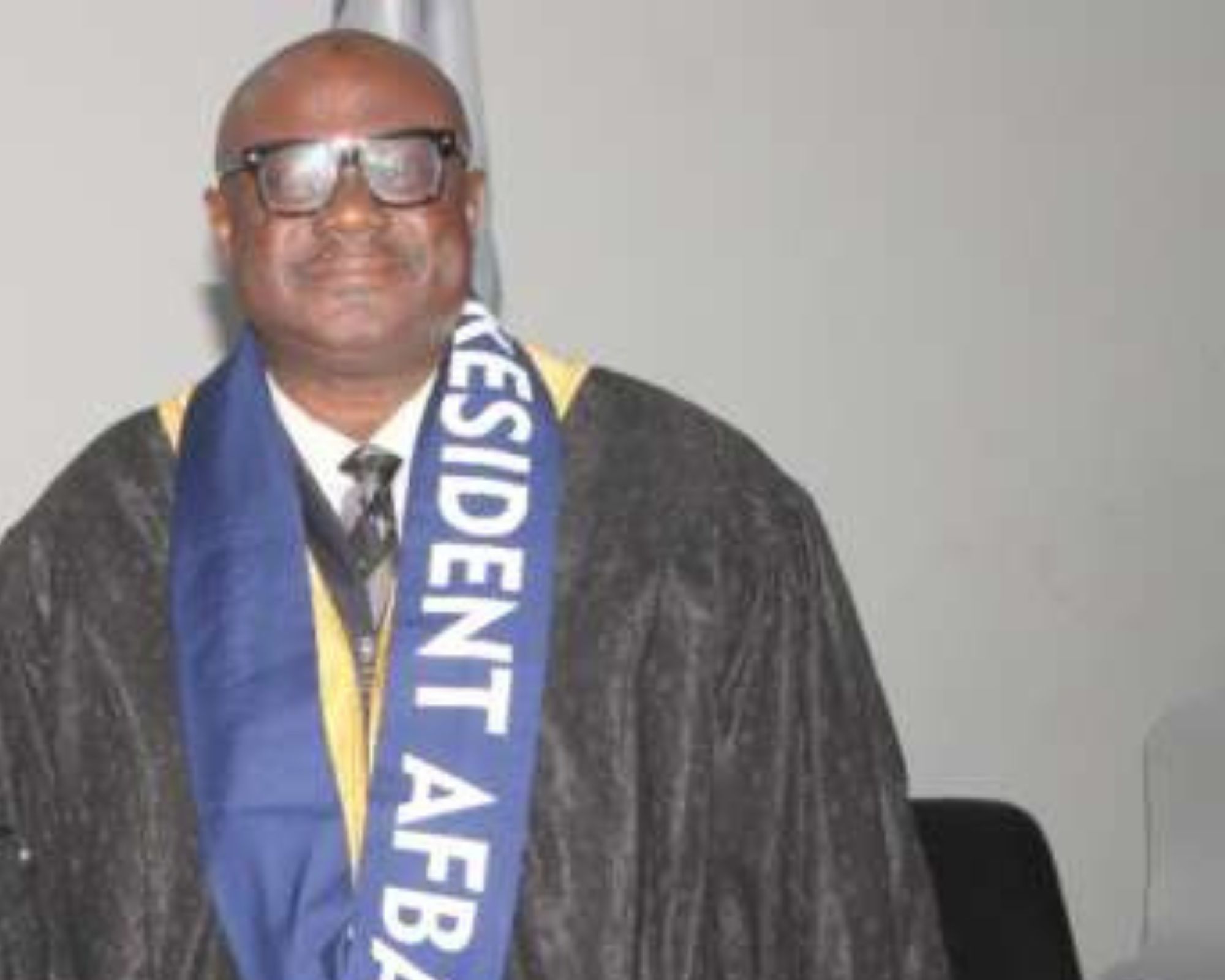
WELCOME ADDRESS BY HIGH CHIEF IBRAHIM EDDY MARK PRESIDENT AFRICAN BAR ASSOCIATION DURING THE OPENING CEREMONY OF THE 2025 ANNUAL CONFERENCE AT ACCRA, GHANA ON 20TH OCTOBER, 2025.
It is with great honor and humility that I welcome you to the 2025 Annual Conference of AFBA. This gathering provides us once again the unique opportunity to reflect, interrogate, and engage on issues that profoundly affect our continent, our people and indeed our future.
Our chosen theme for this year, “Foreign Interests in Africa – Investment or Exploitation,” is not only timely but deeply compelling. Africa stands today at a crossroads. On the one hand, we are courted as the last frontier of global economic growth, endowed with vast natural and human resources. On the other hand, we continue to grapple with questions of sovereignty, dignity, equity, and justice in our dealings with the outside world.
Foreign Investment or Modern Exploitation?
We must ask ourselves: do foreign investments truly build African economies or do they entrench dependence and exploitation? The exploitation of our minerals, oil, gas, and even agricultural products often leaves behind environmental degradation, poor wages, and shattered communities. True partnership must be built on fairness, respect for local laws, and genuine value addition within Africa.
Security and Travel Restrictions.
Equally, we cannot ignore the security challenges, across our continent-terrorism, piracy, transnational crime, and instability – which are sometimes exacerbated by foreign interference. Added to this are discriminatory visa regimes and travel restrictions that make movement within and outside Africa a herculean task for our professionals, business people, and students. Africa must advocate for reciprocal treatment in global travel and call for policies that do not criminalize or stigmatize African identity.
Intra-African Trade and Migration
The African Continental Free Trade Agreement (AfCFTA) remains a beacon of hope, yet it cannot thrive while artificial barriers remain. Migration within Africa must be seen not as a threat but as a strength. Our people have always moved, traded, and shared knowledge across borders. Let us modernise our travel policy to reflect this reality.
Transportation: Sea, Air and Land.
Our connectivity –whether by sea, air, or land-remains weak compared to our potential. Foreign airlines dominate our skies while African carriers struggle to survive. Our ports are largely controlled by foreign entities, dictating trade terms that disadvantage our economies. We must invest in our own transportation networks and demand fairness in global maritime and aviation regulations.
Labour and Fair Wages.
Too many African workers labour under poor and unfair conditions-be it in mines, farms, or factories- under foreign managed enterprises. This is unacceptable. Economic partnerships must translate into fair wages, decent work conditions, and respect for labour rights. The African Bar Association will continue to champion legal frameworks that protect workers’ dignity.
Sports and Youth Development
We must also remember that foreign interests extend beyond economics into culture and sports. Our young talents – footballers, athletes, creative – are too often exploited abroad without adequate protection. Africa must build stronger institutions to manage sports, protect our athletes, and ensure that their success benefits their families and communities back home.
The lion is not known by the stories others tell, but by the roar it makes itself. We must protect and empower our youths to roar for Africa.
AES States.
African Bar Association firmly believes that African States should always be united in tackling the issues that confront them. Furthermore, it believes that where unity is challenged, peaceful and amiable means are the best approaches to seeking restoration of that unity. Accordingly AFBA supports the approaches of the current ECOWAS leadership and our host, His Excellency the president of Ghana in tackling the matter of the departure of the AES states: Burkina Faso, Mali, and Niger from the Economic Community of West African stated (ECOWAS). The region’s strength lies in unity, cooperation, and shared development. No challenge, however serious, should divide or separate members permanently
While the grievances that led to their withdrawal – including issues of governance, justice, and mutual respect – must be honestly addressed, isolation is not the answer, dialogue, reform, and reconciliation are.
A united ECOWAS is essential for collective security, regional trade, the free movement of people and the defense of democracy and the rule of law. Fragmentation only weakens ECOWAS position globally and hampers Africa’s integration goals under the African Continental Free Trade Agreement (AfCFTA).
AFBA is willing and ready to assist with the peaceful resolution of this challenge to unity in West Africa and indeed any similar situation in other regions of Africa. AFBA has helped to resolve conflicts before -in the Gambia and Burundi to mention a few- and is willing to do so this time and anytime it is invited to assist.
The African Bar Association calls for genuine engagement, humility, and compromise from all sides. West Africa must stand as one family again – stronger, fairer, and more united.
Visa-Free Travel for Africans
Trade and integration have one thing in common. They involve movement of people, goods and services. They are hampered by undue restrictions to movement. The time has come for Africa to remove the artificial barriers that separate its own people. The African Bar Association calls for Visa-Free Travel across the continent for holders of passports of African States.
Freedom of movement is not a privilege – it is a right and a necessity for building the Africa we envision. The African Continental Free Trade Agreement (AfFCTA), the African Union Agenda 2063, and ECOWAS protocols all rest on the principle of integration – but integration cannot exist when Africans still need visas to visit their brothers and sisters next door.
Visa restrictions hinder trade, education, tourism, cultural exchange, and regional cooperation. They also send the wrong signal – that Africa is still divided by colonial-era borders and mistrust.
A Visa-Free Africa would:
Boost Intra-African trade and investment,
Strengthen cultural and professional exchange,
Encourage regional tourism and transport development,
Enhance continental solidarity and peace.
The African Bar Association therefore urges African leaders and regional blocs to implement a single African visa policy, starting with mutual visa waivers for all African Union members.
True independence increase the freedom for Africans to move, work, and live anywhere in Africa without restriction.
The Role of the African Bar Association
Colleagues, distinguished guests, the African Bar Association stands at the forefront of the struggle for development and improvement of Africa. As lawyers, we are defenders of justice, custodians of rights, and voices for the voiceless. We must interrogate exploitative contracts, challenge unfair trade agreements, and ensure that Africa engages with the World from a position of dignity, sovereignty, and strength.
In conclusion, let this conference be more than a meeting of minds. Let it be a rallying call to action – to ensure that foreign interests in Africa do not lead to exploitation but to genuine investment, development, and empowerment for Africa and her people.
Foreign investment must mean more than extraction. It must build industries here in Africa, create jobs for our people, and respect our environment. If it does not, then it is not investment – it is exploitation.
As one African proverb goes, “when the roots are deep, there is no reason to fear the wind”. The time has come for Africa to dig deep into her own strength and negotiate from a position of dignity.
I most profoundly welcome delegates and our esteemed guests to Accra, Ghana, a leading country in Africa with rich history of a respectful home for all.
This conference promises to meet the expectation of the attendees to the well-known hospitality of the people of Ghana.
I thank you all for your presence, your dedication, and your commitment to the noble ideals of justice and progress for Africa.
In mid-19th-century Ibadan, military expeditions under Balogun Ibikunle were so successful in slave-catching that by 1859, the city was gripped in the apprehension that it had harvested more slaves than it could control. Professor Bolanle Awe, citing missionary Hinderer’s Half-Yearly Report of Ibadan Station for that year, wrote that the oracle of Oke Badan had to intervene with a decree that Ibadan should desist from going to war for some time because there were “too many strange people in the town.”
People choke on their own success. If you doubt this, read Awe’s ‘Ajele System: A Study of Ibadan Imperialism in the Nineteenth Century’, published in December 1964. Power that eats with ten fingers, that feeds on endless acquisition will, sooner or later, find itself choking on its own gluttony.
At about the same period Ibadan trembled over the spectre of a slave insurrection, similar fears were roiling the American South. In May, 1939, distinguished professor of history, Harvey Wish (4 September, 1909 – 7 March, 1968), published his ‘The Slave Insurrection Panic of 1856’. In 1856, according to Wish, Stewart and Montgomery counties in Tennessee were gripped by panic. The combined slave population in those places stood at about 12,000 against 19,000 whites, but in many localities, the enslaved outnumbered their masters. In the iron districts along the Cumberland and Tennessee Rivers, eight to ten thousand slaves laboured in mines and furnaces under a handful of overseers. A house stuffed with captives soon loses peace especially when the enslaved start demanding rights. The fear that the captives in those American communities might rise became as real as the chains that bound them.
The twin anxieties of Ibadan and Tennessee of the 1850s should speak to today’s All Progressives Congress (APC), which seems to have embarked on its own form of political slave-raiding expeditions, capturing opposition governors, lawmakers, and chieftains in a frenzy of conquest. History teaches that those who live by conquest often reel in pains of indigestion. Ask Afonja of Ilorin. The slaves he encouraged to defect into his army proved his nemesis.
There is that Nigerian comedian who combs his bald head. He is there online feasting on APC’s defection binge. The jester’s conclusion is that by 2027, Nigeria’s epic contest will be between APC and APC, a scenario he says will burst the belly of the overfed. There is a limit to how much the human stomach can hold before it rebels against its own greed. All manner of gluttony, including the political, have their limits and dangers. What Tennessee feared in 1856 did, indeed, happen in some places. Read Harvey Wish.
The Yoruba have sweet street slangs. You’ve heard of curing madness with madness (“wèrè l’a fi nwo wèrè”). You’ve not heard of “ko were, ko were.” Packing all sorts into all sorts; orísirísi. The Yoruba word ‘were’ means madness or the mad themselves. In some contexts ‘were’ also means idiocy/idiot; stupid/stupidity. “Ko were, ko were” is what my village friends call men who go for anything in a skirt. It is also what the rapacious do with their molue: Forty-nine sitting, ninety-nine standing. The bus is “fully full”, yet, the driver and conductor still yell to the street to hop in: “Wolé! Enter! No change!” It is never enough until some cranial vessels yield to bursting.
Shakespeare’s Angelo says in ‘Measure for Measure’ that “we must not make a scarecrow of the law, setting it up to fear the birds of prey…” We do that here. All our laws are scared and afraid of power. People break the law and dare the law to say something.
A tributary is a smaller river or stream that flows into a larger river or lake. River Oba is a tributary of the Osun River; it flows into it. The law says you can divorce River Oba, if you like, but you cannot give Oba’s child to Osun, your new husband. The powerful can snatch the wife of the weak, but he cannot snatch the child of the weak. Our constitution expressly forbids lawmakers from hopping from bed to bed, party to party, doing what common prostitutes do. Section 68(1)(g) of the constitution bars senators and Reps from contracting the syphilis of defection. Section 109(1)(g) prescribes the same taboo for lawmakers at the state level. Those two sections say if you insist on courting leprosy, you must be prepared to live in a leper colony, alone.
Our constitution says that a legislator who strays from the banner that bore him to victory must surrender his seat.
That law is dead here even when the exception to the rule is not present. The exception, the law says, is that defection is allowed only when there is a division within the legislator’s party or the party has merged with another. There is no division, there is no merger, yet lawmakers after lawmakers have changed parties like pants without consequences.
When is a democracy dead? It is dead when opposition sells itself to power. It is dead when law is dead, or whenever it is helpless; when rule of men replaces the rule of law; when government of men overthrows government of laws. Rule of men is a personal rule; it is what sits on the throne in an unaccountable society; a society in the mouth of dogs.
Aristotle wrote that “It is more proper that law should govern than any one of the citizens.” American professor of Law, Paul Gowder, in the winter of 2018 wrote ‘Resisting the Rule of Men’. Gowder contrasts “the rule of men” to “the rule of law.” He says “I will say that we have ‘the rule of men’ or ‘personal rule’ when those who wield the power of the state are not obliged to give reasons to those over whom that power is being wielded—from the standpoint of the ruled, the rulers may simply act on their brute desires.” Is that not what politicians do when, with impunity, they cross the road and dash their husbands’ children to their more powerful, wealthy lover across the street? Yet, they say this is a democracy.
“Democracy—What Is It?” Theodore M. Hart in a 1948 edition of The Georgia Review asked as he threw the question at a class of veterans. He got 32 answers. The last of the answers, he says, is the “farthest thing from a definition that could well be imagined.” This is it: “The right to defy a ruler, the right to believe in the right, the right to read the truth, the right to speak the truth, the sky free of destruction, the water free of danger, the trees, the earth, the house I live in, my friends and relatives, the school I go to, the church I attend – that’s Democracy.” It is a mouthful. Before that definition, there have been shorter ones that we won’t like to teach our kids here. One of them says ‘Democracy’ is “that no man should have more power than another.” Another says it is “a government in which the source of authority (political) must be and remain in the people and not in the ruler.” The opposite holds sway here. Ruling party politicians are the law; it is into their maximum ocean that all rivers must empty their waters.
Politicians, governors and lawmakers of all tendencies are massing into one party, the ruling party, like the forces of Julius Caesar whose feet are already in the Rubicon. There is also the perception that the judiciary is collapsing (or has collapsed) its structures into the ruling party.
It is futile as it is dangerous, self-destructive and self-destructing to seek to have a Kabiyesi presidency, a democracy without opposition. French philosopher, Montesquieu, in his Esprit des Lois, published in I748, wrote: “There would be an end of everything if one man or one body, whether of princes, nobles, or people exercised these three powers: that of making the laws, of executing the public resolutions, and of judging the cases of individuals.”
William Shakespeare in ‘Measure for Measure’ warns that possessing great power tempts one toward tyranny.
Shakespeare’s character, Isabella, tells power-drunk Angelo, deputy to the Duke of Vienna:
“O! it is excellent
To have a giant’s strength; but it is tyrannous
To use it like a giant.”
Now, what is the value and essence of a presidential power that cannot crush, enslave or imprison governors? Where is the value?
In George Orwell’s novel, ‘1984’ we are shown that the party’s omnipotence is not freedom but imprisonment. The story teller asks humanity to accept that the pursuit of total power, total control over thought, over history, and reality, traps power and the power wielder in perpetual manipulation.
But power is powerful; it never listens to reason. Ikem Osodi, Chinua Achebe’s radical character says in ‘Anthills of the Savannah’ that “The prime failure of rulers is to forget that they are human.” Are rulers really human? In Yoruba history and belief, they are ‘alase’ (executive) deputy of the gods. Before Achebe there was Lord Acton who famously said that “Power tends to corrupt, and absolute power corrupts absolutely. Great men are almost always bad men.” Someone said power, when unrestrained, imprisons its possessor in illusion.
It is not the fault of power that it extends and distends and stretches itself thin. It is because the world seductively craves the king’s dominance. So, let us not blame power; we should blame the people as they query the worth of freedom that bears no food. Because literature is life, it is there in Fyodor Dostoevsky’s ‘The Brothers Karamazov’. There, we read in The Grand Inquisitor’s monologue, a story within a story: “For who can rule men if not he who holds their conscience and their bread in his hands?” The Inquisitor informs the Lord that humanity had “taken the sword of Caesar, and in taking it, of course, have rejected Thee and followed him.” They will always follow Caesar because he alone has bread to distribute from north to south.
The devil is not a liar; if he is a liar, he won’t say the truth. And what is the truth? It is in the Inquisitor’s mouth, it is that seeing freedom and bread walking together is inconceivable; that no science will give the people bread “so long as they remain free.” Governors, senators, Reps – all have surrendered to the bread and butter of power. Automatic tickets, automatic victory at the polls, cheap victory over the people. What power is saying in silence is said loudly by Dostoevsky’s Inquisitor: “In the end, they will lay their freedom at our feet and say to us, ‘Make us your slaves, but feed us.’”
The views expressed by contributors are strictly personal and not of Law & Society Magazine.
Former Chief of Army Staff and ex-Minister of Interior, Lt. General Abdulrahman Bello Dambazau (Rtd), will deliver the keynote lecture at the 7th Annual Lecture of Just Friends Club of Nigeria (JFCN), scheduled to hold on Tuesday, November 4, 2025, at Bolingo Hotel, Abuja.
The lecture, themed “Nigeria’s Security Challenges and the Quest for National Cohesion: A New Paradigm for Internal Security Architecture and Governance”, which is scheduled to start at 10 am, comes at a time of heightened public concern over Nigeria’s internal security crisis and the search for lasting solutions to terrorism, communal conflicts, and organized crime.
The Chairman of the event is Prof. Tonnie Osa Iredia, former Director General of Nigerian Television Authority (NTA), a former Director General of National Orientation Agency and founder of Tonnie Iredia University of Communication, Benin City, Edo State
According to Mr. Fred Ohwahwa, the President of JFCN, the high-profile event will provide a platform for deep reflection and policy-driven conversation on how Nigeria can rethink and rebuild its internal security systems in light of emerging national threats.
General Dambazau, who served as Chief of Army Staff from 2008 to 2010 and later as Minister of Interior from 2015 to 2019, is widely regarded as one of the country’s most experienced voices on security matters. A career soldier with a strong academic background in criminology and sociology, Dambazau is expected to deliver a lecture that bridges both theory and practice in national security governance.
He holds a Ph.D. in Criminology from the University of Keele, United Kingdom, and has authored several academic and policy papers on security sector reform, counterterrorism, and civil-military relations.
Ohwahwa explained that the keynote lecture is expected to examine Nigeria’s current security architecture, address its institutional weaknesses, and propose practical reforms that balance law enforcement, intelligence gathering, and community-based approaches. It will also touch on the importance of national cohesion and inclusive governance as tools for long-term peace and stability.
“We are delighted and honoured to host Lt. General Abdulrahman Dambazau (Rtd) at this critical time in our national journey. His wealth of experience and thought leadership in security matters come at a time when the nation is yearning for fresh, pragmatic ideas to address complex internal security threats. We believe his lecture will challenge orthodoxies and offer a bold, coherent vision for Nigeria’s security and unity,” Ohwahwa added.
The lecture will be followed by a high-level panel discussion featuring policy experts, former security chiefs, scholars, and civic leaders, who will provide critical reflections and practical responses to the issues raised in the keynote. The panelists include Air Vice Marshal Gbolahan Adekunle, a former Chief of Training and Operations and also ex-Chief of Policy and Plans of Nigerian Air Force; and Prof. Okey Ikechukwu, Professor of Strategic Management, Nnamdi Azikiwe University, Awka.
Just Friends Club of Nigeria is a non-partisan network of Nigerian professionals, technocrats, and public-spirited individuals committed to civic engagement, public policy reform, and good governance. Since its inception, the Club has positioned itself as a leading forum for cross-sector dialogue and national thought leadership.
The Club’s Annual Lecture Series is one of its flagship programs, aimed at promoting informed national discourse on critical socio-political and economic issues. Over the past six editions, the Annual Lecture has attracted a diverse audience of policymakers, academics, civil society actors, security experts, youth leaders, and media professionals.
With the topic of national cohesion woven into the conversation, the President of JFCN noted that the event is expected to draw a diverse audience of top government officials, lawmakers, retired military officers, traditional rulers, youth leaders, academics, civil society advocates, and members of the diplomatic community.
Nigerian professor of political economy and management expert Patrick Utomi has querstioned how “this continent that fascinated European explorers who were amazed at the absence of beggars on its streets become attractive for extracting slaves?”
Utomi who was a keynote speaker at the 2025 annual conference of the African Bar Association (AFBA), with the Theme “Foreign Interests in Africa, Exploitation or Investment”, noted that “we are not likely to reach negotiated equity.
The event is currently ongoing at Labadi Beach Resort, Accra, Republic of Ghana.
He also added that: “The creativity of the disadvantaged to escape the system seems to be the way that has worked. The South East Asia Miracle was precisely about that.”
Further more, Prof. Utomi pointed out that: “The amorality of international power politics and trade that goes with it requires that Africa’s elite use associational life, like the African Bar Association, to find institutional pegs that increase intra- African trade, and deploying strategy like building competitive play on value chains rooted in its value chains where its latent comparative advantage fuels limited Industrial policy.”
Below is the full text of his keynote address.
KEYNOTE SPEECH AT THE 2025 ANNUAL CONFERENCE OF THE AFRICAN BAR ASSOCIATION ON MONDAY OCTOBER 20, 2025 @THE LABADI BEACH HOTEL IN ACCRA, GHANA
FOREIGN INTERESTS IN AFRICA: EXPLOITATION OR INVESTMENT?
By Patrick Okedinachi Utomi
(Professor of Political Economy & Management Expert)
I want to begin by thanking the leadership of the African Bar Association for both the choice of topic and venue to discuss this topic, as well as for asking me to be keynote speaker.
I would like to set up a scheme for my remarks and conversation.
First, I would like to show the wisdom in your topic as it relates to the how law and commerce depend on each other, making the theme appropriate for a continental Bar conference.
I would then look at how trade has treated Africa and perhaps the role of the law and Lawyers.
I would then look at how colonial intervention has disrupted natural trade development and created conditions of dependency and exploitation but also of opportunities for collaboration and growth.
Finally, I will speak to issues of a new consciousness in AfCFTA, and continental development finance institutions becoming the basis of a new narrative on Africa’s economic prospects, away from the narrative of Afropessimism.
I am pleased this meeting is in Accra because it was here in 1958 that the legendary Ghanaian leader, Dr Kwame Nkrumah gathered leaders of emerging Africa to consider their future economic possibilities just as he was taking counsel from Sir Arthur Lewis who wrote the document on the Industrialization of the Gold Coast and would become the first black man to win the Nobel Prize in Economics.
How well have ideas of 1958 propelled forward the economies of Africa which were soon in a debt crisis and compelled to embark on structural adjustment programmes that did not deliver on promise?
INSTITUTIONS AND HUMAN PROGRESS
The growing consensus about how man’s life advance came about increasingly comes around institutions. Historians like Niall Ferguson, Economists like Oliver Williamson, Economic historians such as Douglass North, and Political Economists like my Head of Department in Graduate school, Elinor Lin Ostrom who became the first woman to win the Nobel Prize in Economics, agree that Institutions have been critical in separating history’s more prosperous from the poorer ones. Two of last year’s winners of the Nobel Prize for Economics Daron Acemoglu and James Robinson in the book Why Nations Fail show fitting examples of how the paradigm on Institutions and development subsists.
There are still competing but related explanations like the Princeton Economist Angus Deaton who won the 2015 Nobel Prize in Economics for his analysis of consumption, poverty and welfare who shows in the book The Great Escape: Health, Wealth and the Origins of Inequality, that advances in healthcare is a major sift of nation’s that prosper from those that stay poor; and those that focus on how values shape human progress. The latter school is captured in a Harvard colloquium in the late 1990s and the book Culture Matters which summed up proceedings of the colloquium. The consensus is that Institutions matter.
My own work which focuses majorly on the interdependence of Institutions, Culture, Entrepreneurship and Leadership to produce progress; from my 1998 book Managing Uncertainty, to the 2006 book Why Nations Are Poor, recognize the crucial play of Institutions in human advancement.
So, what are these Institutions?
They are essentially rules that set boundaries to conduct and when they become settled habits of a community, these boundaries allow people to evaluate possible outcomes of ventures.
Prime among institutions is the rule of law. Commerce does not thrive without the rule of law, property rights, smart bankruptcy rules and what the Peruvian Economist Hernando De Soto calls ‘representational’ systems like Land Registry which make assets fungible and transition them to access to capital.
The poor, de Soto argues, have assets that cannot be collateral security for a loan because they are not listed in a land registry with a market where they can be easily traded.
LAWYERS AND COMMERCE
The French Laissez faire parliamentarian, Frederic Bastiat, who wrote The Law, just before he passed away in 1850 could not have imagined he would gain folk hero status among students of Institutions and economic performance. Beyond Bastiat’s view of law as codification of power relations and therefore an instrument of oppression. Language of agreement has been a basis of cheating between peoples historically.
Commercial exchange required trust and precision of interpretation of what was agreed. The more powerful have used skill in that area to take advantage of the weaker.
AFRICA AND AFRICANS IN WORLD TRADE
In the last few years, I have been Chairman of PAFTRAC, the Pan African Private Sector committee on trade and Investment. It is a period during which I have reflected much on world trade and development.
Africa was in exchange relations with Europe before slavery and colonization. Why did the nature of the relationship change at each stage.
How did this continent that fascinated European explorers who were amazed at the absence of beggars on its streets become attractive for extracting slaves?
The changing means of economic production which required plantation Labour.
In the process one of those slave plantation economies rebelled and became independent. In 1789 that plantation Island had the highest per capita income in the World. It would end up the poorest country in the Western hemisphere. Today Haiti is a basket case.
Colonialism followed the onset of the Industrial Revolution driven by the redesign of the steam engine by Scottish inventor James Watt in the year of American Independence. Raw materials were required to feed the factories of Europe and the Berlin conference that partitioned Africa was to provide secure access to territories from which to procure cheap raw materials.
Even though the intention was exploitative, produce exports provided revenue source that the moral economy of the peasant would not have generated.
Perhaps the biggest harm to African economies was the fragmentation of economies in Africa with linkages northward to the metropolitan centre in Europe. The inequity in value adding allowed companies like Nestle to get Cacao from Cote d’voire, Ghana, and Nigeria and make profits far above what the three countries put together have as well revenues from exports. (of the raw materials)
It is easy to talk about How Europe Underdeveloped Africa, as Walter Rodney provided evidence but the key for me is in how you use knowledge and creativity to achieve a more equitable order.
Discontent with inequities in the global economic order resulted in pressures for a North South dialogue in the 1970s. A summit was agreed to for Cancun in Mexico. Then President Jimmy Carter lost the 1980 US elections. Ronald Reagan did to the trends on trade back then what tariff policies of Washington are doing today. We are not likely to reach negotiated equity. The creativity of the disadvantaged to escape the system seems to be the way that has worked.
The South East Asia Miracle was precisely about that. In the book, Culture Matters, Samuel P Huntington Jnr compares Ghana and Malaysia, just as my friend Peter Lewis of Johns Hopkins does for Nigeria and Indonesia in his book Growing Apart.
In my view little gain will come from reliving Dependency Theory which I called elegant theorizing without redeeming features that show a path out of the trap.
I am persuaded that intra-African trade with working groups to break the constrictions to cross border trade. (is the way to go).
Then there are opportunities to construct new narratives about the treasure at the bottom of the pyramid and elite to see prosperity in aggregation across borders that Agenda 2063 and AfCFTA offer.
HOW MUCH HAVE LAWYERS DONE
From the beginning I introduced Bastiat to show how lawyers help build institutions. Now let me compare with some of my own experience.
Rajan and Zingales give credit for easier access to capital to judicial activism and celebrate a jurist, Louis Brandeis for some laws that encourage venturing.
On the other hand, it seems like judges in Africa make it harder to venture by how they interpret laws. In Nigeria currently people are running from providing guarantees to entrepreneurs because of how Bank Verification Numbers are being used to broadly cripple such people. Bankruptcy laws in America are designed to give entrepreneurs another lease of life but in most of Africa it scares people from venturing.
Let me wrap up.
I am sorry a sudden health challenge has meant I am not present to speak to my talking points and expand the message as I speak. In spite of that I hope the heart of the message has reached home.
The amorality of international power politics and trade that goes with it requires that Africa’s elite use associational life, like the African Bar Association, to find institutional pegs that increase intra- African trade, and deploying strategy like building competitive play on value chains rooted in its value chains where its latent comparative advantage fuels limited Industrial policy.
Our site uses cookies. By clicking “Accept All Cookies”, you direct Law and Society Magazine to store cookies on your device and disclose information in accordance with our Cookie Statement: cookie policyACCEPTREJECT
Privacy & Cookies Policy
Privacy Overview
This website uses cookies to improve your experience while you navigate through the website. Out of these cookies, the cookies that are categorized as necessary are stored on your browser as they are essential for the working of basic functionalities of the website. We also use third-party cookies that help us analyze and understand how you use this website. These cookies will be stored in your browser only with your consent. You also have the option to opt-out of these cookies. But opting out of some of these cookies may have an effect on your browsing experience.
Necessary cookies are absolutely essential for the website to function properly. This category only includes cookies that ensures basic functionalities and security features of the website. These cookies do not store any personal information.
Any cookies that may not be particularly necessary for the website to function and is used specifically to collect user personal data via analytics, ads, other embedded contents are termed as non-necessary cookies. It is mandatory to procure user consent prior to running these cookies on your website.