Home Blog Page 195

Obasanjo, power ambition and national memory 

By IfeanyiChukwu Afuba 

A few weeks back, former military ruler and former President, Olusegun Obasanjo, came up with one of his maverick impulses. On Wednesday, September 24, 2025, the veteran of Nigeria’s power practice announced, once more, that he never sought tenure extension at the end of his presidential term in 2007. The latest denial was at a democracy forum of Goodluck Jonathan Foundation in Ghana. _Vanguard_ of Sunday, September 21, 2025 quoted the ex head of state saying: “I’m not a fool. If I wanted a third term, I know how to go about it. And there is no Nigerian dead or alive that would say I called him and told him I wanted a third term.” The declaration is typical Obasanjo’s grandstanding. It refrains from coming to terms with the heart of the matter. On what grounds then, can his dismissal of the subject be founded? The retired general’s posture rather evokes a familiar sense of infallibility; self assurance on fancies that often takes public consciousness for granted.

Barely a year after stepping aside as military dictator, Obasanjo was back in the public consciousness with the release of his war memoir, _My Command_ . The publication of the book in 1980 made it one of the first titles on the civil war literature. But the work drew attention not for it’s pioneering mark but for a reflexive historicity. The account reduced the war narrative to how one man won the civil war for Nigeria. Much of Africa had come under military rule in the decades of the 1970s – 1980s. For these same countries impatient to break with the strictures of regimented society, Obasanjo preached one party system as magic wand of unity and stability. With similar flight of fancy, the Ota farmer advocated the use of juju to bring apartheid to an end in South Africa. It was the same Obasanjo who in the midst of agitation for validation of June 12 1993 election, pronounced that MKO Abiola was not the messiah Nigerians were looking for. Who was the messiah? Olusegun Obasanjo? He never told us. But one thing is clear. Obasanjo is a man whose whims can easily dominate him.

While the former President is entitled to his version of event narratives, his personal views must contend with the weight of public information on such national issues. Government is a collective, a network involving different actors and layers of machineries for it’s operation. Even where their briefs are not openly stated, an analysis of activities of public officials can provide reasonable description of a common purpose. Other arisings, incidental to the originating subject, have a way of lending insights into the larger picture. The combination of these factors takes monopoly of the subject away from anyone so desirous. The principle of separation of powers, with provision for checks and balances between the three arms of government, puts certain issues beyond the authority of the President. Tenure extension is about constitutional amendment, which is a responsibility of the legislature. When all these are taken together, the testimony of the former President is isolated. It is seen to be weak, narrow, shallow, evasive and self serving. The retired general’s position is incompatible with the submission of other players with jurisdiction on the same subject matter. In the face of Obasanjo’s subjective and unreliable account, other competent sources provide objective parameters for situating the attempted tenure extension.

Here’s how the Voice of America reported the power plot that rocked Nigeria in 2006. “Nigeria’s Senate has rejected a proposed constitutional amendment to allow President Olusegun Obasanjo to seek a third term in office. Lawmakers threw out the measure in a voice vote Tuesday, prompting shouts and celebrations from senators opposed to the bill.” For his part, Senate President at the time, Ken Nnamani, confirmed the conspiracy in his book, _Standing Strong: Legislative Reform, Third Term & Other Issues_ . The third citizen wrote: ‘The battle against the third term bid of President Olusegun Obasanjo in 2006 was certainly the most defining task of my tenure as President of the fifth Senate of the Nigerian legislature.’ At the presentation of the book on October 22, 2021, Nnamani reiterated on the antidote. ‘We decided to televise the proceedings. Publicising the proceedings was not supported by those who wanted to smuggle into the Constitution the extension of tenure through undefined and darkened procedure. We overcame intense pressure from the highest level of government.’ Finally, Condoleeza Rice, the then United States Secretary of State observed that Obasanjo confessed to nursing tenure extension ambition. From her memoir, _No Higher Honour_ , _My_ _Years in Washington_ , we read: ‘In 2006, when President Olusegun Obasanjo sidled up to the President (George Bush) and suggested that he might change the Constitution so that he could serve a third term, the President told him not to do it. “You have served your country well. Now, turn over and become a statesman.” A glaring contradiction attends the former soldier’s posture. While he throws a vacuous, general challenge on establishing his involvement in the plot, he at the same time maintains shouting silence on the damning comments by competent authorities.

Robert Greene’s 1999 publication, _48 Laws _of Power_ is considered an important work on the science of acquiring and retaining power. Manipulation assumes a focal point in the study’s analysis of strategies. Quest for power may not in itself be viewed with disapproval. Every age and society boasts heroes who used their vantage position to uphold the common good. Indeed, every man has the potential for both virtue and vice. Nurture, socialisation and ultimately, self – will, make the difference. Personality or self – will can separate two students of power by the rules they bring into it’s pursuit. Quest for power and hunger for power would operate at two different levels. The former tends to be restrained whereas the latter borders on the compulsive. For the typical student of power, power is taken, not given. A serious candidate for power cannot ignore the reality of other contenders for the prized spot. And so, between acquisition and retention, it boils down to a survivalist game. The dedicated, if desperate competitor, is at alert to outfox his rivals and indeed, the society.

There’s a game of cards called ‘suspect.’ The fundamental of the game is to manage to escape indictment.

 Any number of cards can be shared between two or more players. You play by placing your card face – down on the table. As you do so, you call out the details of the card you played. It’s up to the other player(s) to challenge the authenticity of the card put out. It’s also up to the second player to drop their copy of the reigning card genuinely or by claim. Where there’s no challenge, that is to say, no suspicion, the party with the turn of play continues dishing out his or her cards. Otherwise, opportunity for the other party to play comes with a successful contest of the opponent’s card claims. An unsuccessful challenge of a card earns the challenger burden of an extra card and loss of turn to play. As it were, a daring player can snatch victory by disposing of his cards through cunning and deception. It’s a game that places premium on psychological deftness. Mind reading, sharp instincts and ability to take advantage of the other’s distraction are crucial elements of the game. The craftier a player, higher the chances of winning. To maintain relevance in the sport is to be dropping your cards consistent with the prevailing card. Since the cards are laid face – down, an A can become K – if you have the guile. How valuable keeping the face expressionless. Shakespeare was right. ‘There’s no art to read the mind’s construction in the face.’

Yet, some other actors, by naivety, simplicity or principle are plain both in intent and expression. Personality makeup varies, making outlook to life to also differ. Accordingly, disposition to the vexed issue of power ambition is not all negative and disappointing. Nelson Mandela made a conscious decision to forgo a constitutional right of second tenure as President. It was not a function of age, as erroneously interpreted by some commentators. Nelson Mandela was 81 years on completion of his mandate in 1999. Relatively strong, alert, riding immense goodwill, Mandela could have pulled off another five year term, and still be standing at 86.

Joe Biden at 82, was resolute on contesting the 2024 United States presidential election before health challenges stopped him. Contrast with Cameroun’s Paul Biya who is running for 8th term of office poll at 92. Not even the fact that physical frailty prevents him from coming out to campaign nor the daughter’s disassociation with his candidacy, has stopped the senile dictator. Teodoro Obiang Mbasogo has ruled Equatorial Guinea for 46 years this year. President of Ireland, Michael Higgins is 84 years. At 81, after 39 years in office in Uganda, Yoweri Museveni is still hungry for power. Contrast this with the legacy of Alao Aka Bashorun. In 1989, Bashorun, 68, was asked by the defunct Financial Post if he would vie for a second term as President of Nigeria Bar Association. His answer was a categorical no, but his reason was profoundly touching. Bashorun said NBA had thousands of bright, resourceful and committed members across age brackets. He pointed out that if he, less endowed than some members, could provide what was seen as meritorious leadership, it stood to reason that there were many others who could give even better service than he had done. The Association would be enriched by tapping into it’s wealth of human capital, not by recycling of leadership. What was the sense in running at the expense of the Association and the country? I fell in love with him after reading the interview.

Nigerians will have to keep to mind the maxim that the price of freedom is eternal vigilance. The threat of power corruption is ever-present, even in our supposedly democratic setting. Power intoxication was at play in the six-month illegal suspension of Rivers State Governor, Simnalaya Fubara. Perversion of state of emergency provision started from Obasanjo’s presidency with subversion of democracy in Plateau and Ondo states. Nigeria’s experience shows patterns of power addiction. History therefore, teaches that power grab must be constantly guarded against. Yakubu Gowon’s regime was overthrown in 1975 for seeking to perpetuate itself in office. After nine years of rulership, General Gowon was not ready to step down. General Ibrahim Babangida would not voluntarily relinquish power after years of dictatorial rule. It took a determined House of Representatives leadership under Agunwa Anaekwe to block Babangida’s for parliamentary endorsement for continuation in office. By the fifth year of his dictatorship, General Sani Abacha was in the process of decreeing himself civilian President before divine intervention stopped him. Obasanjo’s third-term presidential plot, emboldened by past local attempts and continental examples, was a heroic win by Nigerians against the virus of self succession.

The views expressed by contributors are strictly personal and not of Law & Society Magazine.

Nigeria @65: A reflection on the ethnicity–development debate

By Richard Odusanya


I stumbled on a long essay written by @Aminu Sa’ad Beli, Aminu posited with a caption:
“ROAD MAP TO SOLVE NIGERIAN ETHNICITY CRISIS, AND ECONOMIC DEVELOPMENT.”
This long essay is both passionate and provocative. It raises the fundamental question of whether Nigeria, as presently structured, can ever truly deliver equity, peace, and sustainable development to its diverse peoples.

The author marshals historical and comparative evidence, citing global cases of peaceful separation as well as failed unions, to argue for rethinking Nigeria’s future—whether through genuine restructuring or through an honorable, peaceful dissolution. Several insights emerge from his intervention:

(1) The Burden of the Colonial Inheritance
Nigeria, like many African states, is an artificial creation of colonialism. Unlike Ghana, Tanzania, or Burkina Faso—who redefined their identities by rejecting imposed names and re-imagining themselves—Nigeria has clung to a name and structure that reflect little of its internal plurality. The outcome has been a fragile federation in which ethnicity, rather than citizenship, remains the core currency of political mobilization.

(2) Comparative Lessons from Global Separations
The examples of Singapore/Malaysia, Czechoslovakia, and even Canada/Quebec show that ethnic and cultural pluralism requires either exceptionally inclusive governance structures (e.g., Switzerland’s canton system) or peaceful negotiated exits when accommodation becomes impossible. Nigeria has attempted neither seriously: federalism has been hollowed out by over-centralization, and dialogue about self-determination is criminalized rather than negotiated.

(3) Ethnic Nationalism vs. State Survival
The essay correctly points out that what Nigeria calls “ethnic groups” are, in European historical terms, “nations.” No European nation-state today tolerates perpetual domination by another. Where domination has persisted (e.g., Yugoslavia, USSR), fragmentation followed. This raises a sobering question: can Nigeria’s ethnic nations sustain a truly voluntary union without addressing the question of equity and autonomy.

(4) Economic Mismanagement as a Catalyst
The analysis of Nigeria’s cattle industry is instructive. Despite vast land and population, Nigeria is absent from the global top 20 in beef, milk, or cattle exports. Instead of modernization and ranching, the country tolerates violent open grazing conflicts. This reflects a broader truth: unresolved ethnic and structural tensions sap the political will for economic modernization. Development without peace, equity, and legitimacy is almost impossible.

Pathways Forward

While separation is one possible outcome, it need not be the first or only path. Three
strategic options present themselves:
(1) True Federalism/Regional Autonomy – A Swiss-style arrangement where ethnic nationalities retain significant self-governance, control over resources, and cultural recognition. This could preserve Nigeria while reducing the perception of domination.

(2) Negotiated Restructuring with Renaming – As other African states have done, Nigeria could rebrand and rebuild itself around a new constitutional identity, one that recognizes its nations as co-equals rather than forced dependents.

(3) Peaceful Separation – Where dialogue fails, managed separation—on the model of Czechoslovakia’s “Velvet Divorce”—remains preferable to violent implosion. The key is to ensure that if separation comes, it is negotiated, legal, and peaceful.

In conclusion, this essay is a timely reminder that Nigeria’s crisis is not simply about leadership failure but about structural design. No matter how virtuous, good individuals can not permanently fix a system designed to privilege domination and suppress diversity.

The task before Nigeria’s intelligentsia, political class, and civic leaders is to elevate the debate from whether change is necessary to how best to achieve it peacefully and productively. Nigeria must choose between restructuring, re-imagining, or re-partitioning. What it cannot do is continue on the current path of denial and dysfunction.

Richard ODUSANYA
A Public Affairs Analyst and Good Governance Advocate

The views expressed by contributors are strictly personal and not of Law & Society Magazine.

Governor Makinde calls out Umahi over coastal highway, says no need for the Minister to be dancing around the cost

Oyo State Governor Seyi Makinde has weighed in on the controversy surrounding the Lagos-Calabar Coastal Highway, criticising the Minister of Works, David Umahi, for what he described as evasiveness over the project’s true cost.

Makinde addressed the issue while speaking at a public event, saying there was “no need for the Minister to be dancing around the cost” of the project. His comments came days after Umahi engaged in a heated on-air exchange with Arise TV journalist Rufai Oseni, who had pressed the minister to disclose the cost per kilometre of the 700-kilometre highway.

During the interview, Umahi appeared visibly agitated by the question, declaring himself “a professor of practice in engineering” and dismissing Oseni’s inquiry as “elementary.” He argued that road costs could not be calculated uniformly because each kilometre presented unique engineering challenges. Watch the video here.

“These are elementary questions,” Umahi said during the live broadcast. “The money is meant for the project, and it will be paid according to the work done. The prices are different — the next kilometre is different from the next kilometre. Keep quiet and stop saying what you don’t know. I’m a professor in this field. You don’t understand anything.”

Oseni, refusing to back down, replied, “Minister, it’s alright. Keep dignifying yourself, and let the world know who you truly are.”

Weighing in on the exchange, Governor Makinde sided with the journalist, insisting that Nigerians have a right to know the average cost of such a massive public project.

“They asked a minister how much the coastal road is, and then you (Umahi) are dancing around and saying that the next kilometre is different from the next kilometre. Then what is the average cost?” Makinde asked.

Makinde then compared the coastal highway to road projects completed under his own administration, saying, “When we did the Oyo to Iseyin road, it was about ₦9.99 billion — almost ₦10 billion — for about 34 or 35 kilometres. That’s an average of ₦238 million per kilometre.

“When we did Iseyin to Ogbomoso, that was 76 kilometres at about ₦43 billion, averaging ₦500 million per kilometre. And that project included two bridges — one over the Ogun River and another at the Ogbomoso end.”

Makinde’s comments have reignited debate over the transparency and cost structure of the Lagos-Calabar Coastal Highway, one of Nigeria’s most ambitious infrastructure projects, stretching across nine states with two additional spurs leading northward.

The project, awarded to Hitech Construction Company Limited, was officially flagged off in 2024 by President Bola Tinubu, with the first phase comprising 47.47 kilometres of dual carriageway constructed with concrete pavement.

In a statement issued at the time by Umahi’s media aide, Uchenna Orji, the Minister stressed that all contractors handling federal road projects must deliver within record time, warning that delays would not be tolerated and that the government would not accept cost variations once mobilisation had been paid.

Video: Outrage over rape and impregnation of mentally and physically challenged teen

A TikToker has highlighted the tragic story of a mentally and physically challenged teen who was raped and impregnated. 

The teen, who can’t walk or talk properly, was seen with a bulging belly, and this caught the attention of the TikToker.  

When asked who impregnated her and how, her guardians, who live with the victim in a dilapidated one-room house, could not provide a definite answer. They suspect that she was molested while taking a bath in the backyard of their public compound. 

As for the man responsible, the victim, identified simply as Adamma, could not express herself to identify him. 

The TikToker questioned what kind of man would do such to a vulnerable person.  

She followed up by taking the victim to the hospital for proper medical attention. 

Watch the video below. 

Gov. Eno assures maximum support, world-class facilities for NBA-SPIDEL annual conference

The governor of Akwa Ibom state, Pastor Umo Eno, has pledged his “full support” for the eagerly awaited 2025 Nigerian Bar Association Section on Public Interest and Development Law (NBA-SPIDEL) Annual Conference.

Governor Eno gave the assurance on Wednesday at the Government House in Uyo during a breakfast meeting with a high-level NBA-SPIDEL delegation led by the Chairman, Prof. Paul Ananaba, SAN. The SPIDEL delegation was in Uyo to brief the Governor on preparations for the forthcoming SPIDEL 2025 Annual Conference scheduled to hold in Uyo, the Akwa Ibom State capital, from December 1 to December 5, 2025.

He noted that the State is developing world-class tourism and conference infrastructure in Uyo that is capable of hosting major national and international events, including the future NBA Annual Conference.

Governor Eno disclosed that ongoing landmark projects such as the 5,000-capacity International Convention Centre, the ARISE Resort, and major upgrades at the Ibom Hotels and Golf Resort are designed to position Akwa Ibom as a preferred destination for conferences, leisure, and investment.

His words: “We are building facilities that meet global standards so that Akwa Ibom can continue to attract major events and visitors. We thank the NBA–SPIDEL for this choice, which aligns with our efforts under the ARISE Agenda to promote tourism, investment, and intellectual collaboration.”

He expressed appreciation to SPIDEL for choosing Uyo as the host city for this year’s annual conference, assuring that his administration will fully support the successful hosting of the 2025 Conference.

Prof. Ananaba commended Governor Eno for his developmental strides and the sustainable growth recorded in Akwa Ibom over the years. He described the State as “one of Nigeria’s fastest-growing destinations.”

The Chairperson of the Conference Planning Committee (CPC), Associate Professor Uju Agomoh, described the upcoming conference as a platform for national transformation, adding that “This year’s conference will bring together thought leaders and change agents who are passionate about advancing governance, rule of law, and public interest advocacy in Nigeria.”

Former Akwa Ibom State Attorney-General and Commissioner for Justice and Chairman of the Fundraising, Sponsorship and Partnerships Subcommittee, Chief Assam Assam SAN appreciated the Governor for his support, adding that the conference is a major opportunity to showcase Akwa Ibom’s progress, hospitality, and serene environment.

Aside from Prof. Ananaba, other members of the CPC and Local Organizing Committee (LOC) at the meeting include Mr. Okey Leo Ohagba, SPIDEL Secretary; Mr. Paul Babatunde Daudu, SAN, CPC Alternate Chair; Mr. Enome Amatey, CPC Secretary, and Mr. Ejike Ezenwa, SAN. Others are Mr. Godswill Umoh, LOC Chairman; Mr. Assam Assam, Jnr, LOC Secretary, and Ms. Blessing Udofa-Poromon, NBA Treasurer and a member of the CPC/LOC.

The Governor’s delegation included the Secretary to the State Government, Prince Enobong Uwah; Executive Assistant/Chief Delivery Advisor, Aniefiok Johnson; Attorney General and Commissioner for Justice, Uko Udom, SAN; Commissioner for Local Government and Chieftaincy Affairs, Rt. Hon. Frank Archibong; Commissioner for Works and Fire Service, Prof. Eno Ibanga; Commissioner for Information, Rt. Hon. Aniekan Umanah, and Managing Director/CEO of Hensek Integrated Services, Engr. Uwem Okoko.

The 2025 NBA-SPIDEL Annual Conference promises a rich and engaging programme of plenary sessions, interactive workshops, exhibitions, networking opportunities, and cultural showcases, all designed to foster dialogue, strengthen accountability, and advance justice-driven development in Nigeria.

The conference is open to members of the Bar, civil society organisations, academia, public institutions, and development partners. To register, click here http://nbaspidel.ng/.

MIDEN Services: NGO pickets Sterling Bank for the second day

For the second consecutive day, protesters picketed the Sterling Bank, Muhammadu Buhari Way, Central Business District, Abuja, on Thursday, October 9, 2025.

The protesters, led by the Coalition of Civil Society Organizations Against Banks’ Fraudulent Practices and Customers’ Victimization, first stormed the bank on Wednesday, October 8th.

As no Sterling Bank official came to receive the petition they had brought against the bank, the protesters remained there for three hours before leaving. But they promised to resume their protest on Thursday. They kept their promise as they arrived at the Sterling Bank office by 10 am, in 14 Coaster buses that brought protesters from all around the Federal Capital Territory.

On Wednesday, the Coalition first visited the Central Bank of Nigeria and handed their petition letter against Sterling Bank to CBN officials.

Thursday, the story was different; the protesters focused solely on the Abuja Sterling Bank branch. Later, they roared joyously as a Sterling Bank official appeared a few minutes after 12 midday to receive the petition on behalf of Sterling Bank. She refused to give her full name and designation, though. She volunteered just a first name.

The Coalition didn’t plan on picketing the Sterling Bank on Thursday, but had informed protesters on Wednesday that they were likely to picket the First Bank and GTB instead. But their plan changed when no Sterling Bank official came to collect their petition.

Actually, the Coalition was protesting against the banking industry in general because of, as they put it, the suffocating banking charges and other failings. But the MIDEN SYSTEMS LTD and the Sterling Bank Plc disagreement over a loan the bank granted MIDEN SYSTEMS provided the lightening rod for this protest, which shook Abuja for two consecutive days, drawing crowds of passersby to it, as people narrated their own bitter experiences.

One passerby said he had just lost N3m from his account, and no explanation was given to him. Even when a military van full of armed soldiers arrived, a soldier there gave the protesters the thumbs up saying “this bank pays our salary late”, though he may not know if his organization was to blame…and not the bank.

According to the organizers, what caught their attention about Sterling Bank was the MIDEN SYSTEM’S claim that Sterling Bank failed to provide its bank transaction records to it. That pushed them to rally together as a group to support David in this fight (MIDENS SYSTEM) against the Goliath (STERLING BANK Plc).

The two-day protest was remarkably peaceful. The Police escorted the protesters and ensured there was no disturbance. And Sterling bank didn’t attempt to chase them away.

Once the protest letter signed by Comrade Dr. Sam Wilson, National Coordinator, Comrade Flora Elekwa, Director and Lady Cecillia Bisong, National Organizing Secretary, was received by Sterling bank, the protesters felt their duty had been done and began to disperse.

There was no rowdy scene at the bank; all was civil. Flora Elekwa kept stressing that they learnt of the MIDEN SYSTEM and Sterling Bank face-off through the news media and found enough justification to get involved because a large number of Nigerians have been so shortchanged and they don’t know how to seek redress.

She said that was why the protest started at the CBN, which oversees the banking sector. She said that a huge amount of money, over $200 million, was involved in the MIDEN SYSTEMS and Sterling Bank deal, and it had been on long enough to cripple a business. MIDEN SYSTEMS has not been able to access its funds at Sterling Bank for years, and its requests for statement of accounts were not met, she added.

For now, it appears that Sterling Bank’s officials who refused the letter on Wednesday saved some other banks from being picketed on Thursday. The protest may likely resume in future, but no date was announced to the protesters as they were exiting the Sterling Bank, CBD, Abuja, branch. So, the other banks that would have been picketed today have received a breathing space.

Ibori remembers Alamieyeseigha on the 10th anniversary of his death

As the Bayelsa state Government hosts a lecture today in remembrance of Chief DSP Alamieyeseigha, its governor from 1999 to 2005, who died 10 years ago, Chief James Onanefe Ibori paid an emotional tribute to his late governor colleague, friend and ally in the Niger Delta betterment struggle.

Titled “In Eternal Honour of a General: A Tribute to Chief D.S.P. Alamieyeseigha, 10 Years On” the tribute continues:

“My brother, Chief DSP Alamieyeseigha,

A decade has passed, yet the memory of you is etched in our hearts with a mixture of profound pride and enduring sorrow. Today, we remember you.

Even in mourning, we find solace in the unwavering veneration you receive from the people of Bayelsa, the Ijaw nation, and the entire South-South. This love stands in stark defiance of the political persecution and orchestrated disinformation that clouded your final years, culminating in a public hysteria that cost you your life.

On your triumphant return to Bayelsa from London in November 2005, our people rejoiced because they knew the truth, you suffered for championing their cause. Enraged, your traducers launched a vengeful assault, deploying troops and helicopters to Government House, Yenagoa, on a mission to kidnap or kill. Then they forced your impeachment, a grotesque parody of justice.

Spurious charges were levied against you, charges you denied to your last breath. You pleaded guilty when emissaries, including myself, seeing your broken state, urged you to end the torture. But it was too late. Denied even the most basic post surgery care, your body succumbed to infected wounds.

I recount these travails to remind your family that you died in action. To the Ijaw people, I reaffirm, you were, and remain, our true Governor-General. You fell from injuries sustained in the battle for our dignity. You are our martyr.

We know why you suffered. We know why you died. And we pledge to wipe the dust of unsubstantiated blame from your gravestone, to cleanse your name of the undeserved dirt thrown by mudslingers. The truth is already emerging, you made the supreme sacrifice, framed and hounded to death by a gang of enemies for the crime of representing your people.

When you became Governor in 1999, you inherited a backwater state. I remember visiting you and we traveled everywhere by boat. But within two years, you had transformed the state capital and its environs through a fire of development. You gave Bayelsa a stable power supply, integrating it into the Nigerian state and the modern world. You built the foundation we stand on.

You broke the waves ahead of us, paid with your life, and inspired unyielding devotion in the crew you left behind. Our people will surely find the shore, for your life will be our guiding compass.

Ten years on, I declare to you, my friend, this is not the end. The prize we sought will still be won.

Continue to Rest in Peace, our “General.”’

Ibori was
Governor of Delta State between 1999 and 2007.

The lecture titled “The Niger Delta Voice Through Nigeria’s Soul: Federalism, Resource Control and the Contemporary Nigerian State in the DSP Alamieyeseigha’s Legacies”, will be delivered by Professor Ibaba Samuel Ibaba, Prof of Political Science, Niger Delta University.

Breaking!! Soldiers feared dead as Boko Haram hits military base in Borno

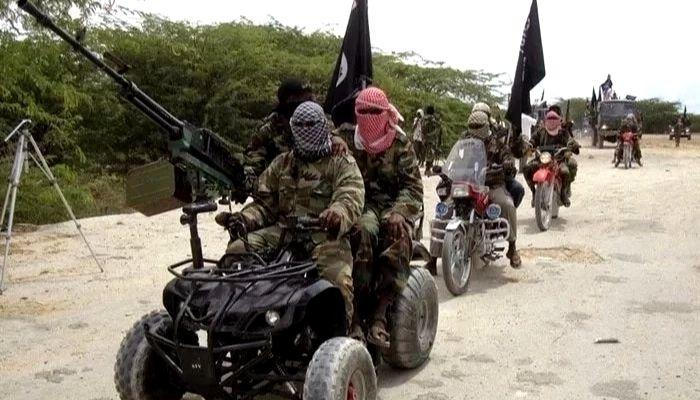
Suspected Boko Haram insurgents have attacked a military base in Ngamdu, Kaga local government area of Borno State.

Daily Trust gathered that the incident happened in the wee hours of Friday.

The insurgents, in large numbers, attacked the troops at the camp along the Maiduguri-Damaturu highway.

Motorists and commercial drivers said as a result of the attack, the military blocked Ngamdu road until around 11:20am.

“I left Damaturu very early with the hope of arriving Maiduguri around 9am for an engagement but on reaching Ngamdu, the road was closed.”

“Some security personnel told us to be patient that there was problem on the road. But residents said the Boko Haram attacked the soldiers and killed some of them,” a traveller who did not want to be quoted said

Sources in the town revealed that terrorists took the soldiers unawares.

“The attack lasted for hours before the insurgents retreated, but they killed and wounded soldiers,” he said

A security source told Daily Trust that the casualty was not as much as reported.

“Well, the terrorists attempted an ambush but our gallant soldiers have repelled them, and we have fought a good fight,” he said.

When asked about the casualty, he said, “Yes, some soldiers were wounded and taken to hospital, but many insurgents were also killed.”

The military is yet to react to the development as of the time of filing this report.

Daily Trust

Israeli President says President Trump deserves Nobel Peace Prize

Israel’s President Isaac Herzog has praised U.S. President Donald Trump’s role in brokering an agreement between Israel and Palestinian militant group Hamas to end the war in Gaza.

Herzog said Trump deserves the Nobel Peace Prize for his efforts.

“There is no doubt that he deserves the Nobel Peace Prize for this,” Herzog wrote on X on Thursday, calling the deal a chance to mend, to heal, and to open a new horizon of hope for our region.”

Trump announced earlier that indirect negotiations in Egypt had produced a breakthrough.

Under the first phase of the U.S. peace plan, all hostages held in Gaza are to be released, and Israeli forces will withdraw to an agreed line.

Hamas has confirmed its participation in the agreement.

Red Also: Maria Corina Machado, Venezuela opposition leader wins Nobel Peace Prize

Speaking recently at the UN General Assembly in New York, Trump said he had already ended several wars since taking office earlier this year and should be recognized with the Nobel Peace Prize.

On Friday, the Nobel Committee announced Venezuela’s opposition leader and democracy activist, Maria Corina Machado, as this year’s laureate.

(dpa/NAN)

Joy Ezeilo, SAN, warns about rising cases of sexual attacks in religious places, makes case for teenage siblings raped by pastor

Life Bencher and Executive Director of Women Aid Collective (WACOL), Prof. Joy Ezeilo, SAN, has expressed concern over the alarming cases of gender-based violence in religious organisations and institutions across the country.

Her alarm is coming in the wake of the Enugu State Police Command’s arrest of a pastor who allegedly raped two teenagers during a deliverance session.

The Senior Advocate spoke during a two-day training organised by WACOL for selected religious leaders from the six geopolitical zones on responses to gender-based violence.

Addressing the gathering at the conclusion of the training held in Ikeja, Lagos State, on Tuesday, Prof. Ezeilo, SAN, disclosed that the daily reports of abuses against females in churches have reached an alarming level.

She said such abuses were often perpetrated by supposed men of God who were meant to be guides to their victims.

“At WACOL/Tamar SARC, we get reports daily about abuses going on around us, especially sexual and gender-based violence perpetrated by supposed men of God and in supposed places of worship,” she said.

“We are currently handling a matter where two sisters, aged 15 and 17, in Enugu, were raped during a supposed deliverance by the pastor in charge of the place of worship.

“Cases of sexual assault continue to be trivialised and the ‘blaming the victim’ mantra is very much alive. Women are treated as liars.”

She referenced several instances of gender-based violence, adding that the problem cut across all religions.

Ezeilo said cultural beliefs and practices also contribute to GBV in Nigeria, and that the training aimed to equip women to champion gender equality.

“By strengthening grassroots organisations, the project seeks to build the capacity of women to challenge harmful cultural and religious practices, promote gender-equitable norms, and provide community-based support systems that address the root causes of GBV.

“Through education, advocacy and leadership development, the project will foster safe, inclusive communities where women and girls are protected, valued and able to thrive,” she added.

Ezeilo said the religious leaders were selected as part of a train-the-trainer initiative, with a target of reaching 1,000 women across the country. She added that trainers would be funded with support from the Ford Foundation.

Also speaking, Stella Okoroafor, chairperson of the Women’s Wing of the Christian Association of Nigeria, Lagos chapter, blamed gender-based violence on victims’ ignorance and lack of information.

She stressed that providing the right information and training would help victims and curb GBV in religious organisations.

A participant and executive director of the Justice, Development and Peace Centre, Reverend Father Benedict Onwugbenu, urged states to domesticate and enforce the Violence Against Persons Prohibition Act as a means of curbing GBV.

TIPS