Home Blog Page 1432

Notes on domestic violence and sexual exploitation in Nigeria

By Dolapo Aina

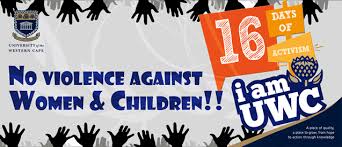
This is a 2015 article but as Nigeria joins the rest of the world to mark the 16 days of activism against Gender-Based Violence it is worth reproducing.

According to the Oxford Advanced Learner’s dictionary; domestic violence is defined as violence between members of the same family. It can also be defined as violence that/which occurs in the home or can be referred to as a pattern of abusive behaviour between intimate partners. In Lagos, acts that constitute domestic violence include; physical abuse, emotional verbal and psychological abuse, economic abuse and exploitation, sexual exploitation including rape, incest and sexual assault, denial of basic education, intimidation, harassment, stalking, damage to property, deprivation, entry into complainants residence without consent where parties do share the same residence.

Domestic violence and abuse in its entirety is viewed somewhat as a controversial issue in Nigeria; not brought to the fore or talked about in the public domain. No thanks to the culture of pretence in the society. This piece would not tow that line or thinking of pretence which has permeated this society.

Now, domestic violence and abuse in Nigeria tends to be accompanied with the “it is a family affair and it is not my business or your business” rhetoric until the abused or abuser is fatally incapacitated or killed; as several reports tend to reveal. When one picks up some dailies with a social section or read some popular blogs; known for gossip news items; usually it is not out of place to come across domestic violence news items. When the “it is a family affair” rhetoric comes up; you tend to find that family members of the abused or abuser tend to hush-hush the crime, given the society we live in. For those who know domestic violence is now a crime. And known as the Violence Against Persons Prohibition Act.

At a gathering on Thursday, the 27th of November 2014, organised by ACTS Generation (www.actsgeneration.org; a gender based violence and abuse advocate, counselling, restoration organization); which was tagged International Conference on Domestic Violence, Sexual Assault and Trafficking. The issue of domestic violence is quite an alarming problem which is tearing at the delicate fabric of society through the home but it would appear it is not given the needed attention. But we can not deny the fact that it is easy to spot individuals (especially women) who are physically abused in their homes; the same can not be said for those suffering emotional domestic violence etc.
During the event, the executive director of ACTS Generation; Laila Jean St Matthew-Daniel in her speech stated that physical and sexual violence are two main forms of violence that women and young girls are often subjected to, both in the public and private spheres. While physical violence is the use of physical force with weapons that are visible (eg hand, knife, gun stick etc); sexual violence is any form of non-consensual or forced sexual activity which includes rape, incest etc. Both forms of violence are carried out with the intent to cause bodily harm, suffering and psychological trauma to women and young girls.

On human trafficking; Mrs Laila Jean St Matthew-Daniel said that human trafficking is estimated to be a $32billion annual industry and is a type of slavery that involves the transport or trade of people for the purpose of work. According to the United Nations, about 2.5million people around the world are ensnared in the web of human trafficking at any given time. Human trafficking impacts people of all backgrounds and people are trafficked for a variety of purposes. Men are often trafficked into hard labour jobs, while children are trafficked into labour positions in textile, agriculture and fishing industries. Women and girls are typically trafficked into commercial sex industry.

Mrs Laila Jean St Matthew-Daniel further posited that sex trafficking or slavery is the exploitation of women and children, within national or across international borders, for the purposes of forced sex work. Commercial sexual exploitation includes pornography, prostitution and sex trafficking. Each year, it is estimated that 800,000 women and children are trafficked across international borders.

Also, she posited that “some sex trafficking is highly visible, such as street prostitution. But many trafficking victims remain unseen, operating out of unmarked brothels in unsuspecting and sometimes suburban neighbourhoods. Sex traffickers may also operate out of public and private locations such as massage parlours, spas and strip clubs.”

My knowledge of the severity of the scourge called domestic violence was further illuminated when other female speakers spoke. A lot chorused that women’s rights should not be trampled upon by religious doctrines or using religion to violate women. A lady opined that views have been globalised and the downside of this is that a lot of these global values are detrimental. A lot of elements in global culture have dehumanised women’s bodies. Some global values have made a lot of young women believe they need to dress indecently. Global culture professes the glorification of indecently dressed ladies which is a ready excuse for some men to violate and harass them.
Other speakers opined that gender-based violence are mostly perpetuated against women and young girls by people that they know, love and trust. A speaker reported that some years ago, a research in South West Nigeria; discovered that apart from rape; South West women fear verbal abuse. And that cultural values and norms in Nigeria serve to condone the impunities of a lot of people. One of the revealing facts that shocked me was the fact that when gender/domestic violence occur; a lot of Nigerians are guilty of secondary victimization by differentiating between “what happened” and asking the “what did you do?” question.
Another revelation was of a female police officer who was the officer in charge of a special unit called the Family Support Unit at the Adeniji Adele Police Station in Lagos State. Reading through Lagos State Gender Advocacy Team (LASGAT)’s brochure handed to guests at the event; I came across some interesting statements and facts which are quite useful to all (if you can get a copy).

According to the brochure, these Special Police Units are model police stations in Lagos State where grieving parties’ complaints about domestic violence and sexual assaults can be lodged. These special units can be found in the IlupejuIsokoko and Adeniji Adele police stations. These units called the Family Support Units (FSU) allow victims or complainants to bypass the charge room and come directly to the unit. And from the Female police officer’s comments, one could deduce that a lot of cases were being handled by her unit.
Some of the speakers posited that for the minimization and eventual eradication of domestic violence (which can be inflicted on women and men), it is apparent that our society or rather Nigerians especially the men-folk need a new definition of masculinity.

They went further to state that there is no place for those who demean and abuse the place of girls and women. Men are not born violent but learn it. Also, the society should not hide behind religion and cultural beliefs to violate women. Real men don’t raise hands against women. Also, women in the corridors of the corporate and government worlds should begin to influence the decision making processes of the government in relation to the rights of women. Also, laws bordering on gender/domestic violence have to be strengthened-where found weak.

In East Africa (a region I am familiar with), the society empowers women (whether they are independent or not); ours doesn’t empower independent women (it must be frustrating for an independent lady who isn’t empowered.) We need to begin to have a shift in this regard. Also, the society should not hide behind religious and cultural beliefs to violate women. Those experiencing domestic violence and abuse should speak out and break the silence. Domestic violence and abuse is not a “family affair.” It is a crime against the state. As at 2014, there were over 109 organisations rendering support services in Lagos and their names can be gotten from Lagos State Gender Advocacy Team’s email- [email protected].

On a final note; pertaining to sexual slavery and exploitation (prostitution, adult movies and strip bars etc), which Laila Jean St Matthew-Daniel talked about in her speech at the event; my understanding of this aspect was broadened by some recent findings. My observations concur with that of the executive director of ACTS Generation; Laila Jean St Matthew-Daniel, about such places (synonymous with ladies and silver poles) being abodes of sexual exploitation. With all candour, positing that such places are like sweat shops found in Bangladesh or India would still be putting it mildly.

Honestly, as a society, we have a simmering problem in our hands. Alas, this society pretends and in such matters would want to remain oblivious. We don’t want to believe there is a problem until it hits us in the face. The reality is that this problem of domestic violence and sexual exploitation are simmering and the society should not keep quiet. The society (the government, appropriate laws and citizens) should speak out. Answers to questions like what is the root problem; what are the underlying issues and what would happen if nothing is done; have to be proffered.

Our Trophy of Economic Illogic

By Ikenna Emewu

Nigeria border closure is amazing economics that shuts doors against 13% exports to track and checkmate 4% imports from neighbouring countries into Nigeria.
It is also about Nigeria closing border against 4% imports/smuggling from neighbouring countries while 96% imports from the rest of the world still comes in through the sea and air borders, even smuggled goods.
It’s a war against African neighbour states.
It’s a war that celebrates the inability and failure of the Nigeria Customs to do its work of manning the borders.

We seem to deliberately kill all sectors, including manufacturing to save rice and poultry markets.
In 2002, Obasanjo’s government argued this same way in favour of increase in pump price of petroleum products to deter its illegal move across borders into Niger and Chad. Jackson Gius-Obaseki, NNPC GMD had a career in this ill argument.
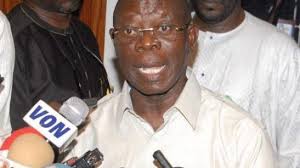
And you know who opposed him on this economic illogic? It was Adams Oshiomhole, NLC president, now APC national chairman who supports the be same argument today.

Nigeria never changes or makes progress. It only changes characters in the saddle.

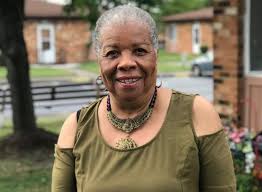
Woman earns bachelor’s degree at age 82

Bessie Person firmly believes you are never too old to learn. She recently earned a degree at the age of 82 and wants to put her knowledge to good use.

“When I started this, I didn’t know how far I was going to go, but it’s something I’ve always wanted to do,” the Portsmouth resident said.

Person is a graduate of I.C. Norcom High School, but she moved around the country to New York state, Connecticut and elsewhere.

She attended a data entry school in Syracuse, N.Y. and was sent by her employer, the pharmaceutical company Bristol-Myers Squibb, to Post University, called Teikyo Post University at the time, in Connecticut. She started a degree course, but was unable to complete it because her tuition assistance stopped, she said.

“I didn’t complete any of those courses at Teikyo,” she said. “I also had some courses at (a school in) Cambridge, Mass. I tried to get a degree at every school I was at.”

Person retired at age 57 from Bristol-Myers Squibb as a data entry supervisor and moved back to Virginia in the 1990s. During that time she lived in Chesapeake, Virginia Beach and Newport News. She then moved to Missouri for 11 years to work as a call center representative.

When she was in her seventies, Person was talking to her sister about getting a degree. She said her sister told her to just do it. She went online and found Colorado Technical University. She enrolled in an associates degree in business administration. She worked on a bachelor’s degree in business administration and digital marketing after she gained her associate degree in 2½ years. Person studied the courses online from her home.

“I didn’t think about age,” she said. “It was something I wanted, and I thought I could do it.”

After more than four years of study on two degrees, she graduated with honors. Her GPA was 3.74, she said.

As well as learning the subject matter, Person taught herself the technology needed for the online course. “It was a little hard,” she said.

Person said the Colorado Technical University degree quickly became easier. The only part she struggled with initially was the math component. She received As on all her writing research papers.

“I’m still a bit surprised I was able to finish it,” she said. “I did it all on my own.” Person said she studied for 4 to 6 hours every day, six days a week.

Person wants to do consulting work. She plans to teach people how to write resumes and network. She has other plans, too.

“I’ve got a book in me,” she said.

Kermitt Smith, one of Person’s four children, said his mother has always been creative.

“I’m really amazed,” he said. “I told her when she told me she finally graduated, ‘you have done something none of your four children accomplished.’ I have been to college, military and trade school but don’t have a four-year academic degree.”

pilotonline.com

Global terrorism watch says herdsmen killed more Nigerians in 2018 than Boko Haram

… Nigeria worse than Syria, Pakistan, Somalia

By Ikenna Emewu

The Global Terrorism Index (GTI) 2019 has released a bombshell on the Nigerian security situation, noting that herdsmen attacks cost the country more lives than Boko Haram in 2018.

GTI published the report on Wednesday also for the fifth consecutive year ranked Nigeria the third country in the world with terrible cases of terror attacks, trailing Afghanistan and Iran that are first and second respectively.

Syria, Pakistan, Somalia, and India are ranked fourth, fifth, sixth, and seventh respectively in the GTI report, while Yemen, Philippines, and Democratic Republic of the Congo are eighth, ninth, and 10th.

The report indicated that terror-related incidents in Nigeria increased by 37%, from 411 in 2017 to 562 in 2018 and also deaths from terrorism in the country rose to 2,040 in 2018, a 33%increase.

“The increase was due to a substantial escalation of violence by ‘Fulani’ extremists, whilst Boko Haram recorded a decline in deaths from terrorism,” the report said.

Dispute over ownership and usage of land has remained the major cause of the violence conflict between Fulani herdsmen and farmers in Nigeria.

The report raised a major concern on the shift of terrorism from the far north east to the Middle Belt of Nigeria due to the increased killings by the herders of farmers in this new region of blood.

The worst of the 2018 terrorism incidents, according to the GTI report occurred in the Gwaska village of Kaduna State on May 5, an assault still attributed to the Fulani herders. The death toll of this incident was 58.

 “Violence between Nigerian herders and farmers intensified in early 2018 with approximately 300,000 people fleeing their homes. The most recent escalation in violence follows increased militia attacks and implementation of new anti-grazing legislation,” the latest report said.

“In 2018, Fulani extremists were responsible for the majority of terror-related deaths in Nigeria at 1,158 fatalities. Terror-related deaths and incidents attributed to Fulani extremists increased by 261 and 308 per cent respectively from the prior year. Of 297 attacks by Fulani extremists, over 200 were armed assaults. Over 84 per cent of these armed assaults targeted civilians.

“However, also active and not recorded as terrorist activity are pastoralist militias who target the Fulani, increasing the likelihood of reprisals,” the report said.

The GTI report attributed the decline in Boko Haram attacks to a multinational task force fighting the terrorist group.

The GTI, which is in its seventh edition, is produced annually by the Institute for Economics & Peace, an independent, non-partisan, non-profit think tank with offices in Sydney, New York, and Mexico City.

Credit: Africachinapresscentre.org

Data price reduction call: How not to solve regulatory issues with emotional decisions

By Prince Osuagwu, Hitech Editor

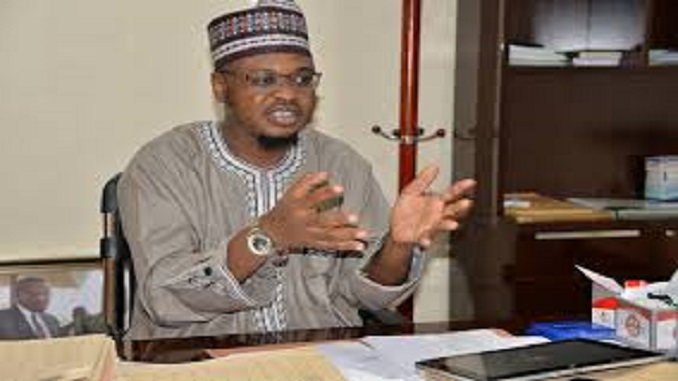
The Minister of Communications and Digital Economy, Dr Isa Ali Ibrahim Pantami, last week directed the Nigerian Communications Commission, NCC to review downwards, the price of data within five days.

Pantami issued the directive during the presentation of the new board member and Executive Commissioner, Mr Adeleke Adewolu. Adewolu replaced Mr Sunday Dare who left the board to become the sports minister. After the presentation, the minister pointed to numerous complaints from Nigerians regarding illegal data deduction and high price of data, adding that he had personally experienced illegal data deduction.

Apparently irked by that frustration, the minister fired a directive: “I am urging the management of NCC to work towards reducing the price of data in Nigeria. It is too costly and people are complaining every day. If you go to other countries, even countries that are not as largely populated as Nigeria, data prices are not this high. I am also a victim of some of the infractions that are so common in the industry. You load your data but you barely use 20 per cent of it and the entire data is wiped off.

“Please go, sit down and review that issue. It is very important and I want to get your feedback with that report in the next five working days with the decision on it because the complaint from Nigerians is beyond what I can handle as it is today, people are complaining,” This is not the first time Pantami had issued such emotional directives.

When MTN Nigeria recently issued a notice to  subscribers of its intention to commence charges on Unstructured Supplementary Service Data,USSD, on mobile transfers, the minister also  directed the NCC to ask MTN to suspend the decision, because he was not earlier informed. Ordinarily, these are the kinds of intervention governments should make to deliver dividends of democracy to its citizens.

On that basis, the tendency to applaud Pantami’s calls could be high. However, interventions made outside the law or in total disregard of constitutional provisions and set rules, have very grave implications. Some,can erode  progress.

The telecom industry has been one of the strongest pillars of the Nigeria’s economic growth since about two decades the sector was liberalised. It has attracted Foreign Direct Investment, FDI investment of well over $70 billion and contributed more than 10.11 percent to the country’s Gross Domestic Product, GDP in 2019, surpassing oil, the mainstay of the economy.

These achievements were made possible by adhering to standard principles and international best practices. It is apparently why Pantami’s recent calls appear to have irked Information and Communications Technology, ICT professionals. They are described as not only arbitrary but also capable of negating the standard principles upon which the sector has blossomed so far.

The NCC is guided by the Nigerian Communications Act 2003, and Section 108 of the Act forbids the commission to prescribe retail prices by fiat. It only allows it to ensure that tariffs reflect costs of providing services. It means that the NCC is mandated to carry out cost-based studies from time to time and as may be deemed fit to fix price floors and /or ceilings. That way, no operator can under-price to kill competition.

Section 108 of the Act, sub section(1) says: “ Holders of individual licences shall not impose any tariff or charges for the provision of any service until the Commission has approved such tariff rates and charges except as otherwise provided in this Part.

(2) The licensees specified in subsection (1) of this section shall provide services at the tariff rates and charges so approved by the Commission and shall not depart therefrom without prior written approval by the Commission of such proposed changes in tariff rates and charges.

(3) All licensees mentioned in subsection (1) of this section shall publish the tariff rates charged to customers for their respective services and the modifications thereto as may be approved from time to time by the Commission.

(4) The tariff rates established by a licensee mentioned in subsection (1) of this section shall be on the basis of such principles as the Commission may from time to time stipulate in its guidelines or regulation including the following—

(a) tariff rates shall be fair and, for similarly situated persons not discriminatory ;

(b) tariff rates shall be cost-oriented and, in general, cross-subsidies shall be eliminated ;

(c) tariff rates shall not contain discounts that unreasonably prejudice the competitive opportunities of other providers ;

(d) tariff rates shall be structured and levels set to attract investments into the communications industry ; and

(e) tariff rates shall take account of the regulations and recommendations of the international organisations of which Nigeria is a member.”

Meanwhile, a survey recently released by Cable.co.uk indicated that 10 of the top 50 cheapest countries in the world for mobile data were in Sub-Saharan Africa.

Also, seven North African countries included in the report appeared higher up in the table than majority of countries in Sub-Saharan Africa. The report included data from 6,313 mobile data plans in 230 countries around the world between October 23 and November 28, 2018.

It however shows Nigeria is not the worst hit, contrary to the allegation of the minister. In Africa, countries in the south pay the most for 1GB of data. South Africa pays $7.19,  Namibia, $11.2  and Botswana, $14.12. The survey says that in West Africa, Nigeria’s 1GB of data is obtained at $3.22, while in Chad it is $23. 3.

In Cameroon, it goes for $1.71. It goes for  $4.1 in Ivory Cost and $2.92 in Niger. In the North African region, Algeria’s 1GB goes for $5.15; Egypt’s IGB goes for $1.49, Libya’s $4.87and in Sudan it cost $0.6.

The survey said India had the world’s cheapest data plan at $0.10 for 1GB, adding that in the US, it goes for $12.37 and $6.66 in UK. The global average of 1GB data plan is $8.53.

Zimbabwe pays the highest price in the world at $75.20 per 1GB, followed closely by Equatorial Guinea at $65.83, Saint Helena at $55.47 and Djibouti at $37.92.

Interestingly, the Executive Vice Chairman of the NCC, Prof Umar Danbatta, at an event in Lagos recently, revealed that even before the minister’s call, the commission had consulted the KPMG to carry out cost based study to determine if the price of data consumers currently enjoy will be increased or reduced in line with the reality of the markets.

The Executive Vice Chairman, NCC, Prof Umar Danbatta

Industry experts believe that if this is already ongoing, the five day ultimatum by the minister will only spell doom because the outcome will not be supported by scientific data. They warned the commission to be careful how it panders to the whims of the ministry before it loses its independence status.

Chairman of the Association of Licensed Operators in Nigeria, ALTON, umbrella body of the telcos, Engr Gbenga Adebayo has expressed shock at the call, describing it as unrealisable.

Adebayo said that the call amounts to forcing the commission to destroy the gains it made over the years that has made the sector a beautiful bride constantly toasted by global investors.

According to him, such arbitrary price reduction calls are unfair to operators who suffer consistent cases of vandalism, multiple taxation and regulations, indiscriminate shutdown of their base stations, high cost of RoW, among other things hindering service delivery. A telecom lawyer, Mr Chukwu Umeoha, berated Pantami’s call, saying it was borne of little knowledge of the oversight functions of a minister to an independent agency.

He advised ministers to arm themselves with the Public Service rules to avoid abuse of their oversight functions.

Hi-Tech’s check, actually reveals that Pantami’s calls appear to run fowl of the federal government’s gazetted Public Service Rules. Chapter 16 of the rule, section 1, describes a  Parastatal as  “a government-owned organization established by statute to render specified services(s) to the public. It is structured and operates according to the instrument establishing it and also comes under the policy directives of Government.

Section 2 (a) says “Statutory Boards/ Councils shall set operational and administrative policies in accordance with government policy directives and supervises the implementation of such policies. The administrative policies may include those relating to appointment, promotion and discipline of staff.

(b) A Board shall not be involved directly in the day-to-day management of a Parastatal.

(c) A Minister exercises control of Parastatals at policy level through the Board of the Parastatal only.

This means that even the monthly briefing which the NCC has subjected itself to, at the ministry is a distraction that will not benefit the industry.

Vanguard

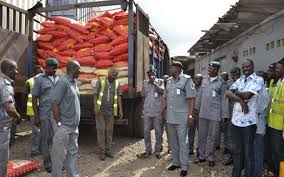
Fresh telecom sector threat from border closure

The Federal Government’s land border closure with her West Africa’s neighbours since August 19 in an exercise code-named ‘Swift Response’ has unwittingly brought about trade tension between the country and her neighbours leading to unintended consequences. One of them is the threat to telecom services, reports LUCAS AJANAKU.

President Muhammadu Buhari appears not to be bothered by the wailings that have greeted the closure of the country’s land borders with its neighbours in the West African neighbours. While cross border crimes such as smuggling of rice, small arms and many others are said to have reduced tremendously, the action has nonetheless recorded devastating unintended consequences.

Government said it will curb illicit importation and improve local manufacturing of goods.

Ostensibly encouraged by the ‘successes’ the action has recorded, the Federal Government has extended the closure to Jan. 31 next year

The extension is necessary to achieve the government’s strategic objectives, the newspaper reported, an official the Nigerian Customs Service (NCS) Victor Dimka, was quoted to have said, adding that the operation has resulted in security and economic benefits.

The blockade has had a ripple effect across West Africa, with factories and traders struggling to import key raw materials and having to use alternative routes for their exports, according to the Lagos Chamber of Commerce and Industry (LCCI).

“That date is not the terminal date for the border closure, it is the end of the first phase. The border will remain closed until set objectives are achieved,” Customs spokesman, Joseph Attah said confirmed.

Threat to telecoms services

Telcos under the aegis of the Association of Licensed Telecoms Operators of Nigeria (ALTON) has warned that the directive of the NCS to suspend the supply of petroleum products to filling stations within 20km of all border areas, could compromise telecoms operations in the country with serious devastating effect on quality of service (QoS).

Its Chairman, Gbenga Adebayo, said due to the directive, trucks that supply diesel to all telecoms sites and base transceiver stations (BTS) around the border areas were denied passage to reload telecoms sites.

He warned that if the directive was not reversed immediately, it could lead to shutdown of telecoms sites that are interlinked to others in the area and eventually lead to service disruption and degradation in the country.

The carriers therefore urged the telecoms regulator, the Nigerian Communications Commission (NCC), and the Federal Government to urgently intervene to avoid breakdown of telecoms services in the country.

In a letter dated November 8, 2019, addressed to the Executive Vice Chairman of NCC, Prof Umar Garba Danbatta, the ALTON Chairman raised the implications of the Customs directive and called for quick intervention.

In the letter, ALTON chairman, Adebayo, said: “So far, the Nigeria Customs Service has stopped our members’ trucks in Kebbi, Kano and Calabar from supplying diesel to the telecoms sites within the border areas, which may lead to total shut down of Communications systems and services and by implication worsen the security operations within those areas.

“We urgently request the immediate intervention of the NCC and the Federal Government because by midday of November 9, major hub sites carrying heavy traffic will be shut down due to lack of diesel.”

Pantami steps in

The Minister of Communications and Digital Economy, Dr Isa Pantami has urged the NCS to allow fuel trucks access to border towns and remote villages.

His spokesperson, Mrs Uwa Suleiman, in a statement, said the access is to enable mobile network operators to power their generators to provide services to their customers.

The NCS had also announced a ban on petroleum products to Nigerians living within 20 kilometres of an international border.

No fewer than 57 borders have been shut across the country since August as the government intensified steps to limit foreign products into Nigeria.

In the statement, Mr Pantami said officers of NCS deployed to border towns should identify drivers carrying petroleum supplies and grant them concession.

Mr Pantami urged the Office of the National Security Adviser (ONSA) to address the vexed issue of telecoms infrastructure vandalism in many parts of the country.

He advised the governors of the affected states to take prompt actions to ensure protection of critical infrastructure.

“Numerous complaints reaching the Minister’s office allege that men of the service(Customs), especially around border towns where BTS (Base Transceiver Stations) are located, deny passage to petrol tank drivers, thereby denying them access to refuel generators supplying power to these base stations. The effects of these acts are a threat to national security and economic growth and cannot be ignored.

“The Federal Ministry of Communications and Digital Economy, while applauding the revived efforts of the NCS in tackling the activities of smugglers, however, urges the Service to direct its officers deployed to these locations, to identify and grant concession to genuine drivers carrying petroleum supplies to remote locations and are a critical link in the chain. The Economic Recovery and Growth Plan (ERGP) of President Muhammadu Buhari is centred around a Digital Economy and the telecoms sector, occupies a central position in the scheme of things. It is of utmost importance that public institutions collaborate and form partnerships that will ensure the security and prosperity of all Nigerians,” Dr Pantami was quoted to have said in the statement.

No respite

ALTON has put the nation on notice about its helplessness on the inevitability of service disruptions.

Its Head of Operations, Gbolahan Awonuga, in a statement, said: “Please be informed that our members have not received any intervention from the Federal Government in order to discharge fuel to the BTS sites around border town.

“Our members diesel trucks on legitimate duties were impounded by the Customs officials and due to inability to supply fuel, some of the cell sites are already shutting down for lack of diesel.

“We appeal to the government to grant our members permit to deliver fuel to their various sites.

“Please be informed that any network downtime in the border towns is not necessarily the fault of the service providers but as a result of embargo placed on supply of fuel.”

Credit: The Nation

Nigeria emerges first in West Africa to test run 5G technology

By Opeyemi Kehinde, Lagos

Nigeria on Monday became the first country in West Africa to testrun 5G technology and applications. A statement by the telecom giant, MTN Nigeria, said the feat became possible as a result of the strong collaboration between the Ministry of Communications and Digital Economy, the Nigerian Communications Commission, (NCC), MTN Nigeria, Huawei (Abuja), ZTE (Calabar) and Ericsson (Lagos.)

“This immersive demo and experience will travel across three Nigerian cities to showcase the capabilities of 5G and its potential to enable economic growth, and social inclusion.

“By working together, MTN and its partner – Huawei, were able to provide a glimpse into a range of 5G use cases and applications at a test Lab designed to show proof-of-concept in Abuja.

“Standing alongside former Super Eagles captain, legendary Joseph Yobo, attendees got to match their skills against an artificial-intelligence powered goalie; immerse themselves in a high-speed, low-latency virtual reality gaming world; experience ultra-high speed streaming and downloads on 5G devices; and engage in discourse with life-like holographic projections.

“3D holographic communication has potential applications for education, medical imaging, video conferencing and gaming, and requires about four times as much data as a streamed 4K video.

“That means that 5G is best suited to support this kind of application on a mobile network and to enable its use.

“It also demonstrates how 5G has the potential to support key socio-economic objectives Nigeria has set for itself, and to be a key contributor to the emergence of a fully digital economy,” the statement read partly.

It noted that the test run was witnessed in Abuja by the Minister of Communications and Digital Economy, Dr. Isa Pantami; the Chairman of NCC, Senator Olabiyi Durojaiye; the Executive Vice-Chairman of NCC, Prof. Garba Danbatta; House of Reps Committee on Communications, Hon. Akeem Adeyemi.

Speaking shortly after taking a tour of the exhibition booths, Dr. Pantami underlined the potential of 5G for sustainable growth.

“I believe as long as we are able to handle the potential challenges, the deployment of 5G is very critical to our economy, because of so many advantages of 5G, the issue of latency, speed and many more,” he added.

Stressing the importance of an enabling regulatory framework and protecting telecommunications infrastructure, Dr. Pantami stated that on the instruction of the President, he has signed a draft Executive Order declaring telecommunications infrastructure ‘critical national infrastructure’ which has been forwarded to the Office of the Attorney-General of the Federation for review.

The Minister referred to the proposed Executive Order as a short-term measure, stressing that the President has instructed that a proper legislation be facilitated to deal conclusively with threats to telecommunications infrastructure.

Also speaking, Ferdi Moolman, the Chief Executive Officer, MTN Nigeria said: “Pushing boundaries is easier when your aspirations are supported by likeminded people.

“We are here today because of the support and guidance of the Ministry of Communications and Digital Economy and the Nigerian Communications Commission who provided the trial spectrum used for this.

“Also key to this achievement are our equipment vendors who shared our vision, and whose capabilities were brought to bear in making the 5G trials across the country a reality.  We are grateful for these partners, our customers and everyone who made it possible. Today’s success underlines the fact that we are good together.”

Also commenting, Mazen Mroue, the Chief Operating Officer, MTN Nigeria said that “in collaboration with our technical partners and the support of the Federal Government, we are proudly putting Nigeria on the 5G technology map.”

He added: “As we continue to invest in technology solutions to meet the wide needs of our customers, MTN will continue to strengthen these partnerships as we move to build our 5G capacity in future, guided by the standards and spectrum set by the Nigerian Communications Commission.”

“5G offers tremendous benefits in terms of speed, latency (less delays), efficiency and security. This pilot offers a unique opportunity for us to explore use-cases and applications in Nigeria, and we are excited about its potential for our country and our company,” Mohammed Rufai, Chief Technical officer, MTN Nigeria, said.

Read more: https://www.dailytrust.com.ng/nigeria-emerges-first-in-west-africa-to-testrun-5g-technology.html

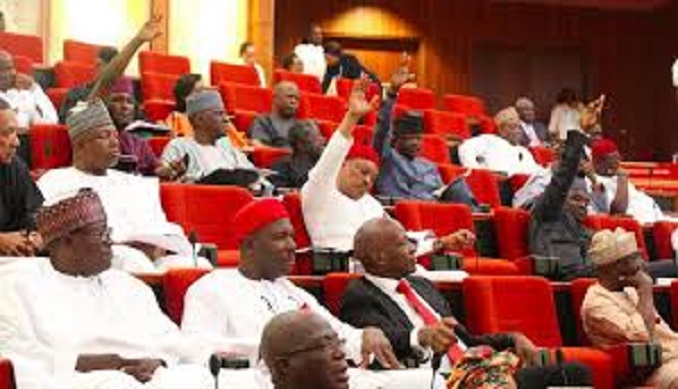
Nigerians Kick as Senate Introduces Bill Prescribing Death Penalty for ‘Hate Speech’

The Senate has introduced a  bill which seeks to establish a  federal government agency to check hate speech in the country.

The Senate announced deliberations on the bill during its plenary on Tuesday via twitter.

The bill, sponsored by a former Senate spokesperson, who is now the Deputy Senate Whip, Sabi Abdullahi,  passed first reading on the floor of the red chamber on Tuesday.

It is titled, “National Commission for the Prohibition of Hate Speeches (Earn, etc) Bill 2019.

A similar bill sponsored by Abdullahi in the 8th Senate prescribed among others, death by hanging for anyone found guilty of the offence.

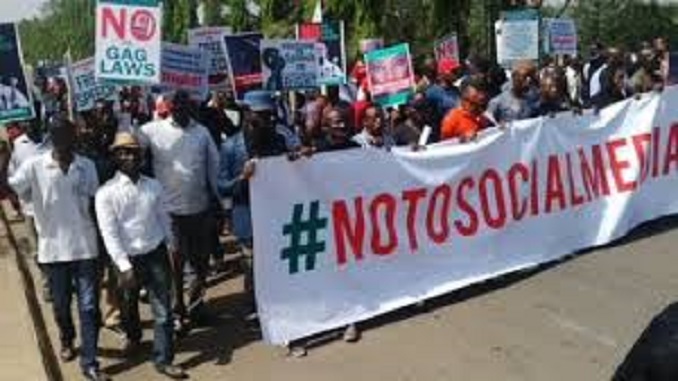
Nigerians have reacted swiftly on social media, to the development, which many think is an avenue for the government to become more dictatorial and it may give powers to the government that enables it to harass its opponents.

Read more: https://www.todaysecho.com/politics/nigerians-kick-as-senate-introduces-bill-prescribing-death-penalty-for-hate-speech/

Lawyer Drags Buhari, Senate To Court Over Social Media Bill

The lawyer stated that the bill would infringe on Section 39(1) of the constitution which gives Nigerians the right to freely express themselves, hold opinions and receive and impart ideas and information without any let and hindrance.

Barrister Tope Akinyode has sued President Muhammadu Buhari and the Nigerian Senate seeking a halt of the proposed ‘Protection from Internet Falsehood and Manipulations Bill 2019′.

Akinyode, in a suit filed before the Federal High Court in Lagos, Akinyode prays the court to grant an order of perpetual injunction prohibiting the respondents from enacting the bill, “which was introduced on the floor of the Nigerian Senate on November 5, 2019 and targeted towards regulating the use of social media in Nigeria”.

The suit was filed against the National Assembly of the Federal Republic of Nigeria; Federal Republic of Nigeria; President of the Federal Republic of Nigeria; and the Senate President as respondents.

The lawyer stated that the bill would infringe on Section 39(1) of the constitution which gives Nigerians the right to freely express themselves, hold opinions and receive and impart ideas and information without any let and hindrance.

He said, “In Nigeria’s democracy, the second respondent under the watch of the 3rd respondent is notorious for arbitral disregard for court orders and the rule of law, therefore, the bill seeking to regulate the social media is not reasonably justifiable under Nigeria’s democracy, as there is a grave danger that citizens’ voices will be silenced if the bill is allowed; just as there is no end in sight to the continuous disregard for the rule of law.”

Source: Sahara Reporters

Hate Speech: People close to power also guilty ― Chidi Odinkalu

BY VICTOR OGUNYINK

Human Right Activist, Professor Chidi Odinkalu, has stated that people close to the government make hate speeches with impunity and some persons not guilty have been punished for less. Odinkalu, while speaking with Vanguard on a Twitter post, calling for the execution of Ahmad Salkida, Farooq Kperogi, the activist said that while it is okay for anybody to abuse his person, wishing one dead is way out of proportion hence, his decision to report the account to Twitter.

Professor Odinkalu, had, on 1st of November, tweeted that he would request Twitter to take down the account of a Twitter user, @Witan17 and @Ishakaa, for advocating for the killing of some persons and he also revealed he had also notified “Nigeria’s security authorities.”

“There are different rules guiding the different social media platforms, they have their Dos and Donts. When you violate those rules, they take their actions. It is okay for anybody to express their freedom to speak anywhere, but for someone to wish me dead and others is not acceptable. “Yes, I reported that account to Twitter for them to do the needful. The government said recently that they are going to control and prevent hate speech on social media.

“Some of the people violating and promoting hate speech on social media are people close to power, but the government is not doing anything about it. “Some of the people that have been arrested are not people that didn’t violate hate speech rule; take Agba Jalingo for instance. Those that indeed violate those rules are left to walk scotfree.” Professor Odinkalu included that he would not “join issues with people attacking him on social media for various reasons, but for someone to go as far as wishing another dead is the height of hate speech and it is not pardonable.”

Vanguard

https://www.vanguardngr.com/2019/11/hate-speech-people-close-to-power-also-guilty-%E2%80%95-chidi-odinkalu/

TIPS