Home Blog Page 1425

Approaching the End of a Decade of Corruption Violating Human Rights in Nigeria: A Clarion Call on the Legislature to amend the Constitution to wit the Fundamental Right to Eradicate Corruption as enshrined in the 1995 Draft Constitution

By Munir Shuaibu Ishaq

In the last 9 years, the country has witnessed more than ever massive corruption involving the diversion of billions of dollars from the government treasury by public officials, and as a result leading to the blatant violation of the human rights of the Nigerian citizens, this article first attempts to define the concepts of corruption and human rights and how the former violates the latter, the article further proceed to highlight notable instances of massive financial corruption in the last 9 years, show how they affect the human rights of Nigerians, and further proffer solution by appealing strongly to the Legislature (National and states Houses of Assembly) to save the situation by amending the Constitution, in light of the provision of the 1995 Draft Constitution in respect to the Fundamental Right to Eradicate Corruption, in order to ameliorate or perhaps put an end to the fight against the age long monster bedevilling the country, by making the fight a fight for all.

Munir Ishaq

Corruption as a universal phenomenon does not enjoy an accepted universal definition, even the most celebrated International instrument on corruption, the United Nations Convention Against Corruption (UNCAC) did not define the concept of corruption, but rather listed offences that amount to corrupt practices, however attempts have been made to define it, key is the definition of Transparency International (TI) defining corruption as the ‘misuse of entrusted power for private gain’ worthy also is the definition of the World Bank defining corruption as ‘an abuse of public authority for the purpose of acquiring personal gain’. While the former definition suffers the defect of limiting corruption to the recipient of proceeds of corruption alone while it actually involves the giver too. The latter definition by the World bank falls short of limiting corruption to people occupying public offices only. Chair of Transparency International, Ms. Delia Ferreira Rubio, describing financial corruption in government operations explained thus: “Corruption is like tango; you need two to dance tango, and that is the one who asks for bribe and the one who pays the bribe for the procurement arrangement…” for the purpose of this article however, the writer shall adopt the definition given by the World Bank i.e the abuse of public office for private gains.

Human rights on the other hand are the rights a human being has simply because he is a human being. Internet Encyclopedia of Philosophy defines human rights as basic moral guarantees that
people in all countries and cultures allegedly have simply because they are people. Human Rights Scholar, Amparo Tomas defined human rights as “universal legal guarantees that belong to all human beings and that protect individuals and/or groups from actions and omissions of the State and some non- state actors that affect fundamental human dignity.” Human Rights are provided for under international, regional as well as national laws, the Universal Declaration of Human Rights, International Convention on Civil and Political Rights, International Convention on Economic, Social and Cultural Rights, African Charter on Human and People’s Rights and other treaties are relevant in this regards. They are also provided for under Chapters 2 and 4 of the Nigerian 1999 Constitution, while the provisions of chapter 2 are said not to be enforceable in courts, the provisions in chapter 4 are however fundamental rights which are enforceable.

Corruption may violate Human Rights directly or indirectly, corruption violates human rights directly when the act per se amounts to a violation of human rights, like when a bribe is offered to a judge, it affects the impartiality of that judge and as such affects the right to a fair trial, or in cases when a State (or somebody acting in an official capacity) acts or fails to act in a way that prevents individuals from having access to that right. Corruption may also affect human rights indirectly when it serves as an essential factor
contributing to a chain of events that eventually leads to a violation of those rights. The role of bribery received by public officials in this regards cannot be overemphasized.

In the past 9 years, the country witnessed more than ever massive cases of corruption involving public officials diverting humongous funds, leading to the violation of the fundamental as well as the socio economic rights of Nigerians, notable among these cases is the infamous $2.1 billion arms gate. The Economic and Financial Crimes Commission after serious investigations led to the revelations of how these funds were siphoned under the leadership of the then National Security Adviser, renown human rights lawyer, Mr Femi Falana in a premium times column on the 10th of December 2015, painstakingly explained the travails of the 70 Nigerian soldiers who were convicted of mutiny and condemned to death, 12 of these soldiers were convicted for simply protesting the brutal killing of 10 of their ill-equipped colleagues by the boko haram terrorists, while the remaining 58 were convicted for refusing to advance to the battlefront until they were supplied with adequate arms and ammunitions. He went further to recount the case of Nigerian Army v Brig-General Enitan Ransome-Kuti where the defendant arraigned before the special courts martial was said to had repeatedly requested the late Chief of Defence Staff, Air Marshal Alex Badeh to provide military equipment and demanded that the military camp in Baga be fenced to prevent the Boko Haram sect from invading the town. The Chief of Defence Staff each time turned down the requests on the basis that there was no money. A few weeks later, Baga was attacked by the insurgents, leading to the deaths of soldiers and civilians. The learned human rights lawyer further submitted that by diverting the huge fund for arms procurement, the suspects deliberately caused the death of not less than 25,000 ill-equipped soldiers and unarmed civilians including children, as such leading to the flagrant violation of their fundamental Right to life as enshrined in section 33 of the 1999 Constitution.

Notable also is the case of John Yakubu Yusufu, former head of the police pension funds who was convicted by an FCT High Court sometimes in 2013 after he admitted to converting to his own personal use the sum of about N24 Billion from the police pension funds, these funds were meant to go to police officers who have retired after serving the country, by admitting to embezzling these funds, it follows that these retired officers were left with little or zero income coming in after retiring from service, hence affecting their means of livelihood. Notable also is the case of the former secretary to the government of the federation, who was sacked by the president for allegedly diverting millions of naira earmarked for the welfare of internally displaced persons thrown out of their homes by the boko haram insurgency, similarly is the case of the former head of the National Intelligence Agency who was equally sacked for being allegedly connected to the mysterious $43 million NIA funds recovered from an apartment in Ikoyi, Lagos. Worthy of note also is the case of the former minister of petroleum, Mrs Diezani Allison Madueke facing along others corruption charges to the tune of millions of dollars siphoned from petroleum funds under her leadership, this is just a few to mention in a host of other financial corruption cases we’ve witnessed in the last 9 years.

It is pertinent to note that the devastating effect of the above mentioned cases of diversion of public funds is the role it plays in depriving Nigerians the enjoyment of their Right to adequate standard of living as provided for under international and regional instruments, since monies meant to be used in advancing the development and welfare of the people are diverted to private use, it only follows that the people be thrown into poverty and untold suffering inimical to a dignified life, the truism of this assertion is seen in the report of the World Poverty Clock in June 2018 when it christened Nigeria as the poverty capital of the world with statistics showing 87 million Nigerians living in abject poverty.

The Right to Adequate Standard of living can be seen in the express provisions of Article 25(1) of the Universal Declaration of Human Rights (UNDHR) Article 11 of the International Convention for Economic, Social and Cultural Rights (ICESR), and Article 14 of the Convention on the Elimination of All Forms of Discrimination Against Women (CEDAW) and the decision of the ECOWAS Court in SERAP v Federal Republic of Nigeria ECW/CCJ/APP/08/09 interpreting the provisions of the African Charter on Human and People’s Rights, all of which are applicable in Nigeria.

In view of the above, it is glaring that for each act of financial corruption successfully perpetrated by these government officials, the aforementioned rights of Nigerians are violated, it is in the spirit of a deep understanding of this monstrous phenomenon and calamitous situation that the framers of the 1995 Draft Constitution in their own wisdom provided as a fundamental right the Right to Eradicate Corruption, for the sake of emphasis, the provision is contained in section 35 of the Draft Constitution and it provides thus:

Every person shall have the right to:
(a) ensure the eradication of corrupt practices, and
abuse of power;
(b) protect and preserve public property;
(c) fight against misappropriation and squandering of
public funds.

Only God knows why the Framers of the 1999 Constitution refused to incorporate this fundamental provision into the 1999 Constitution. No doubt indeed, the Nigerian state has shown so far its commitment in fighting corruption, the enactment of the Corrupt Practices and Other related Offences Act 2000, the creation of the Independent Corrupt Practices and other related offences Commission, the Economic and Financial Crimes Commission Act 2004, the Code of Conduct Tribunal established in the 1999 Constitution, the Money Laundering (Prohibition) Act 2011, the Presidential Advisory Committee Against Corruption 2015, and a host of other steps are indeed laudable strides of the Nigerian government in the fight against corruption. The truth however is, leaving exclusively the prosecution of these cases to the preserve of the government alone has not been forthcoming as we’ve seen in several cases, it may be true that in some developed climes, the government exclusively, albeit successfully handle corruption cases, Nigeria however is an exception to this case, because the office of the Attorney General who is seen as the lead public prosecutor is not unattached from the reins of government, as a government minister with no clearly defined years of tenure, chances are he is bound to act based on the whims and caprices of his ‘oga’.

In light of the foregoing, it is said that ‘No one knows where the shoe pinches, but he who wears it’ it is the people whose rights are been violated as a result of corruption that feel the impact of the corrupt act, since it has been shown that corruption indeed violates the human rights of the citizens, it is only logical that the affected citizens be given the right to fight against what affects and throw them into untold suffering, it is on this note I am calling on the legislature, i.e the National and States Houses of Assembly, in approaching the end of this decade, to equally open the gates to the battlefield to all persons in the fight against the ugly monster, by swiftly amending the 1999 Constitution to include the Fundamental Right to Eradicate Corruption as envisaged above in section 35 of the 1995 Draft Constitution, this will grant private persons the locus standi to challenge corruption cases in our courts. We’ve tried many methods, yet the monster keeps rearing its ugly head, perhaps its time we adopt more radical and progressive measures by making the fight a fight for all, as we prepare to enter into a new decade.

Munir Shuaibu Ishaq is a Final Year Law Student of Bayero University Kano, who is keenly interested in the study of Corruption and Human Rights related issues, he is presently the National Director, Directorate of Students’ Rights, Law Students Association of Nigeria, he can be reached via +2348147841027 or [email protected]

Base instincts and the law

The undue protection of class interests, the neglect of interests of large classes; the legislation which consults, chiefly and above all else, the profit of the legislator, whether he be king, or noble, or popular assembly; the legislation which postpones moral to material interests, and which makes havoc of man’s highest good in order to gratify his lower instincts, his passing caprice, his unreasoning passion — all this and much else appears to forbid enthusiasm for human law.” – HENRY PARRY LIDDON

What the law says about Next-of-Kin in Nigeria

By O. G Chukkol

Are you among those that think by giving a name to financial institutions (bank for example) as next-of-kin you have chosen that person to automatically inherit your wealth in the event of your demise? In other words, do you think by merely picking someone as your next-of-kin you have made that person a beneficiary to your wealth or entitlement(s) in the event of your death? Let us attempt a little legal analysis based on two factors: whether the deceased has a Will (a document written by a deceased when he was alive that prescribes how his property is to be shared when he dies) or whether he dies without a will

In law when a person dies leaving behind a will, he is said to have died testate. In such a circumstance, Issue of next-of-kin becomes useless. The reason is that the wealth of the deceased will simply be shared in line with the contents of the will.

The position is still the same even where the deceased dies without leaving a will. The position is that when a person dies without a will, the question as to who to inherit his wealth is determined by law, that is to say, customary law, or Islamic law or English Law or the Administration of Estates law (or equivalent legislation) not whom the deceased mentioned in his bank or place of work as next-of-kin.

How then do we know the law to be applied in sharing the property of the deceased? The law to be applicable in distributing the estate of the deceased shall be determined by the incidence of marriage of the deceased. If a deceased contracted a statutory marriage, succession to his wealth will be effected in accordance with either the English law or the Administration of Estates Law (or equivalent legislation), depending on the jurisdiction. See Obuzez V. Obuzez (2007) 10 NWLR (Pt. 1043) 430.

Under English Law and the administration of estate laws of various state, the surviving spouse together with the children of the deceased inherit his estate to the exclusion of every other person. The parents of the deceased takes next after the surviving spouse and children, followed by brothers and sisters of the full blood, brothers and sisters of half blood, grandparents, aunties and uncles of full blood relation to the parents of the deceased etc. See Kekereogun & Ors v. Oshodi (1971) LPELR-1686(SC) subject however to contrary provisions under the administration of estate laws of various states.

Where however the deceased contracted a customary marriage, then customary law will determine who will inherit the property of the deceased. That is to say in the circumstance, heirs are those who are under native law and custom entitled to inherit his estate. For Muslims, Islamic law determines who to inherit the deceased estate.

Therefore, under the Nigerian law of intestate succession, one cannot choose his heir under the pretext of next-of-kin; the law imposes heirs on him. For example it is the surviving spouse and children of an intestate who married under the Act that are his heirs. The intestate cannot therefore, by naming only one of them or any of his other blood relatives his next-of-kin, scheme them out of inheritance as the act of naming his next-of-kin does not amount to testamentary disposition.

In view of the foregoing, there is nothing special about next-of-kin as far as succession is concerned. Next-of-kin is merely the first contact point if anything happens to you. He is someone empowered to make decisions for you in times of emergency or where you are not readily available or unable to make the decisions yourself. He is someone empowered to provide necessary information about you where needed such as confirming your identity. He is also someone positioned to make medical decisions such as providing consent for a medical procedure. At best, what a next-of-kin can do after the demise of the deceased is perhaps to ensure that necessary steps are taken towards obtaining letter of administration from the probate. The typical Nigerian’s conception of the term, “next-of-kin” is therefore erroneous.

A next-of-kin can inherit only if he is named in a Will as a beneficiary or by his status he is entitled by law to inherit but not actually because he is named as the next-of-kin of the deceased in a bank or place of work.

O. G Chukkol, student of ABU, Zaria. September 8, 2019

Lady Justicia – The blind godess

She is a symbolic personification of the coercive power of law and the courts; a sword representing state authority, scales representing an objective standard, and a blindfold indicating that justice should be impartial.

You will meet her statue around almost every institution associated with law or justice, like the courts, law faculties, law offices etc. She stands towering and imposing, blindfolded, wielding a sword on one hand and a balancing scale on the other. You might have heard her being called the blind goddess or Lady Justitia, and wondered about her.

The modern Lady Justice originates from the ancient mythology of the Greek goddess(es) Themis and Dike. However, it is possible to trace her even further back to the Egyptian goddess Maat, whom the Egyptians believed to be the personification of truth, order and justice and the upholder of the laws of the creator.

The Romans referred to her as Justitia, and considered her to be a virgin who first lived among men but later left the earth to become the constellation Virgo. Justitia was considered to be one of the four virtues alongside prudence, fortitude and temperance.

The blindfold signifies dispensation of justice in an impartial and objective manner.

The scale signifies weighing of two sides in every dispute, and depicts a fair balance between the interests of one individual/group and those of another. It shows that justice must be interested in weighing and sifting evidence to arrive at truth, and should employ empirical means to arrive at truth.

The sword is a symbol of authority and affirms that justice must be enforceable. It declares that justice should be swift and have might of enforcement. The sword is double-edged signifying both the punishment of the offender and the protection of the innocent.

In summary, the ancients understood justice, truth and order as being administered by a goddess who was impartial and could sift between cases and weigh the comparative strengths and weaknesses of a party’s case and administer justice swiftly and authoritatively.

Lawyers are called as ministers in her temple and must develop these qualities in order to serve effectively.”

THE LAW SERIES®

Outrage As Buhari’s Daughter Is Seen Using Presidential Jet For Personal Engagement

A debate has been raging on social media following the decision of President Muhammadu Buhari to allow his daughter, Hanan Buhari, to use the Presidential jet.

This is despite complaints by Nigerians that the budget of N8.5bn for the Presidential jets in the 2020 budget is too high.

Hanan, according to Daily Nigerian, was conveyed by the Presidential jet to attend the Durbar in Bauchi on Thursday.

The President’s daughter, who recently graduated with a first class in Photography from Ravensbourne University, London, was said to have been invited by the Emir of Bauchi, Rilwanu Adamu, as a special guest of honour.

In photographs which have since gone viral on social media, Hanan could be seen disembarking from the plane and being welcomed by Gombe State officials.

It was gathered that the durbar was specially organised to avail the President’s daughter of the opportunity to take photographs of the traditional durbar, Bauchi architecture and other cultural sites in the state.

As a professional photographer, Miss Buhari is expected to document her experiences in pictorial form in her gallery.

The incident has since sparked a debate on social media.

Pro-transparency activist, Inibehe Effiong, described the use of the Presidential jet by Buhari’s daughter as an abuse of office and a waste of tax payers’ money.

“Buhari is only fooling himself and his supporters with this fake integrity,” he added.

Some Buhari supporters, however, said there was nothing wrong with the President allowing his daughter to use the Presidential jet.

When contacted on the telephone, the Senior Special Assistant to the President on Media and Publicity, Garba Shehu, said a statement would be issued soon.

“We will soon put out a statement,” he said.

The PUNCH reports that by convention, only the President, first lady, Vice-President, Senate President, Speaker, Chief Justice of Nigeria, former Presidents and a Presidential delegation are allowed to use the Presidential jet.

Recall that Buhari had before becoming President, criticised past governments for misusing public funds.

The All Progressives Congress had promised to sell off some of the jets in the Presidential fleet due to the high cost of maintenance.

However, only two helicopters out of the fleet of 10 was donated to the Nigerian Air Force while two presidential aircraft, a Falcon 7X executive jet and Hawker 4000, that were advertised for sale in October 2016, had yet to be sold as of 2018.

About N8.5bn was allocated for the maintenance of the Presidential fleet in the 2020 budget.

Weighing into the matter, the Buhari Media Organisation (BMO) said President’s daughter, Hanaan did not fly a Presidential jet on a private visit but that she was on an official assignment to represent her father, at an event in the town.

BMO in a press statement, contended that, convention and protocol allowed her to use the aircraft since she was acting in a representative capacity. They also added that this had happened in the past.

The organisation in the statement signed by its Chairman Niyi Akinsiju and Secretary Cassidy Madueke, BMO said the Peoples Democratic Party (PDP) was only playing politics in its comment on the matter.

The question remains, when did the President’s children begin to represent him at official events?

Sundiata Post

How data price war hurts telecoms service quality

• ‘Nigeria’s Internet speed, one of slowest globally’
• Operators task minister on suitable environment

Data price ‘war’ among telecoms operators is one of the major causes of poor service quality faced by Nigerian subscribers, especially in the download and upload of content. But while consumers have enjoyed the conflict and its attendant slash in prices, they have had to endure drop in quality and speed.

Speed is the performance of a connection based on the number of bytes per second that data travels to and from a user’s device. Depending on the type of connection, the speed differs dramatically; the download rate is higher than the upload because a short request to the website (upload) results in a much larger download of Web pages, images and videos.

As at October, the Nigerian Communications Commission (NCC) statistics showed that the country had 123 million Internet subscribers, largely via the GSM platform (narrowband), while broadband users were 72 million. It should, however, be noted that there were dual users.

The claim of 4G service offerings by operators has equally not assuaged the pains of subscribers when it comes to quality, as speed remains unsatisfactory. According to OpenSignal, in 2018, Nigeria ranked 75th out of 77 countries in the quality of 4GLTE network offerings.

A November speed test survey carried out by Ookla put global average download speed at 30.93Mbps, while upload speed is 11.38Mbps. In the survey, Nigeria ranked 107 out of 139 countries at 16.74Mbps. According to Ookla, a Seattle, USA-based firm, South Korea and Qatar ranked first and second respectively with 117.79 Mbps and 77.07 Mbps download speeds.

Checks by The Guardian showed that while operators have cut down prices amid offerings of several bonuses, subscribers are unable to enjoy the packages either because they get exhausted too quickly or are fluctuation-prone, leaving users frustrated.

While this ‘snail speed’ offering persists, Nigeria also ranked 10th among countries with the most affordable data prices in Africa. According to Research ICT Africa, data price is relatively cheaper in Nigeria.

Research ICT Africa noted that data pricing remains a contentious issue on the continent where average incomes are low and where a significant portion of paycheques are often spent on mobile communication costs, including data.

In the survey, West Africa’s prices were varied, with low prices in Guinea ($2.20), Nigeria ($2.78) and Burundi ($3.02). In Benin, Niger and Senegal, it is also quite affordable at $3.39 for 1 Gbyte. But the price for 1 Gbyte of data is higher in countries such as Sierra Leone ($6.56) and Togo ($8.48). Some of the most expensive prices across the continent were in this region. For example, in Guinea-Bissau, it’s $16.95, Chad ($11.87) and Mauritania ($9.78).

Nigeria’s $2.78 (over N1,000) is in tandem with checks carried out by The Guardian when comparing the prices. The checks revealed that most of the Mobile Network Operators (MNOs) have slashed their prices by half. For instance, 1.5GB, which was sold for as much as N3000 some six months ago now goes for between N1,200 and N1,500 depending on the network. In fact, on the MTN network, subscribers can get 4.5GB for N2,500 and 8GB for N3000, depending on the plan.

Globacom has a number of data plans suited to different groups of individuals on Android, iPhone, Blackberry and other smartphones. They include N100 for 100MB, which lasts for two days, especially for students. It also has the same plan for daily users.

Apparently, because of its submarine cable system and huge bandwidth capacity, Glo also offers 2GB/N1000 for 30 days. On the network, subscribers who are willing to pay N2,500 can get 7.2GB data valid for 30 days.

Airtel has various plans, from daily 50MB for N100 to 16GB for N8000 with a validity of 30 days, among others. 9Mobile customers can enjoy 10MB, 40MB for as much as N50 and N100 respectively. The telecommunications firm, which used to be the toast of subscribers of data services before it faced some challenges about two years back, also offers 11.5GB for N8000 and 15GB for N10,000.

Internet Service Providers (ISPs) are not left out. For instance, Spectranet sells 8GB for N3,000; 10GB for N3,500; 14GB for N5,000 and 30GB for N7,000. Smile Communications offers 1GB for N1,000; 2GB for N2,000; 10GB for N9,000 and 15GB for N10,000.

While the prices continue to vary and steeply fall, customer satisfaction is also nose-diving. To buttress this, ‘Trend Analysis on Complaints Received from January 2018 to October 2019’ by the NCC showed that complaints about poor quality of service both on voice and data topped the platform.

A report from the UK-based price comparison website, Cable, revealed that Nigeria’s Internet download speed is one of the slowest in the world. According to the report, Nigeria’s Internet download speed is ranked 176th of 207 countries measured globally.

The report further showed that it takes an average of over seven hours (7:18) to download a High Definition (HD) movie of 5GB in Nigeria. This means that Nigeria’s Internet download speed has nosedived in the past two years from 95th in 2017 to 176th in 2019.

A telecoms expert, Kehinde Aluko, while describing the report as apt, said lack of access and slow Internet connectivity, apart from hampering economic growth and job creation, also inhibit Nigeria’s move to keep up with global trends on innovations and creativity.

On the price war, which supposedly is a contributing factor to the quality of service, the chief executive officer of Spectranet, Ajay Awasthi, in an interview with The Guardian, said war of any kind is destructive by nature, and a price war is no exception.

Awashti, who called for a review of the suspended Data Price Floor policy, described price war as a shortsighted ploy to gain market share. “It may be touted as a ‘customer friendly’ move. But over a period of time, a price war results in a significant destruction of value for the industry, forcing the players to degrade quality of services. A price war is not sustainable in the longer term and is a lose-lose proposition for both the operators and the customers,” he said.

The Spectranet CEO explained further: “The hapless customers finally end up at the receiving end and are made to suffer through poor quality of service. For our firm, we stay committed to providing high quality, high speed broadband to our customers. We believe in delivering a superior customer experience through better understanding of their needs and through differentiated tariff plans backed by excellent customer service.”

Explaining how Internet speed affects the economy, a telecoms expert, David Venn, said: “If a subscriber is located in an area with access to faster technologies such as fibre or 4G, he will have a fast Internet access at home and business. For instance, let’s say the average Internet speed in Nigeria is 3.9Mbps. But if you are in Lagos, you could choose to buy a 4G connection and experience 10 to 20Mbps. If faster speeds are available, you do not need to worry about the average speed, hence it should not be a cause for slowing down economic activity.”

Venn continued: “However, if you live or work in an area without fast access, then, for certain types of business, this would be an impediment to growth. Note also that if you do not have a fast access, your average speed is likely to be considerably worse than the nation’s average, because that’s the way averages work. This is the ‘Digital Divide’.”

The president, Association of Telecommunications Companies of Nigeria (ATCON), Olusola Teniola, in one of his interviews with The Guardian, believed that with increases in Internet speed, there is a corresponding increase in efficiency and productivity in the workplace where ICT is embedded. He argued that with interconnected systems and collaborative working relationships in place, it is important that ideas, innovation and development are harnessed in a speedy manner, not only to secure the intellectual patent rights, but to also fully leverage the multiplier effect that digitalisation brings to the value chain that might already be in place.

Meanwhile, the executive vice chairman of the NCC, Prof. Umar Danbatta, said that experience of early depletion and rise in data consumption by telecoms consumers may not necessarily be the results of illegal deductions or sharp practices by mobile network operators.

Danbatta, at a recent telecoms gathering in Abuja, spoke on what the NCC had been doing in key areas of its regulatory mandate which include reduction of cost of data, stemming the tide of ‘illegal deduction’ of data, improving service quality, as well as efforts to ensure a continuous compliance with the maximum two per cent Call Drop Rate (CDR) directive to telecoms operators on quality of service.

Read more:https://guardian.ng/technology/how-data-price-war-hurts-telecoms-service-quality/

Breaking: FG Commences Regulation of Online Media

Dede Ifayemi

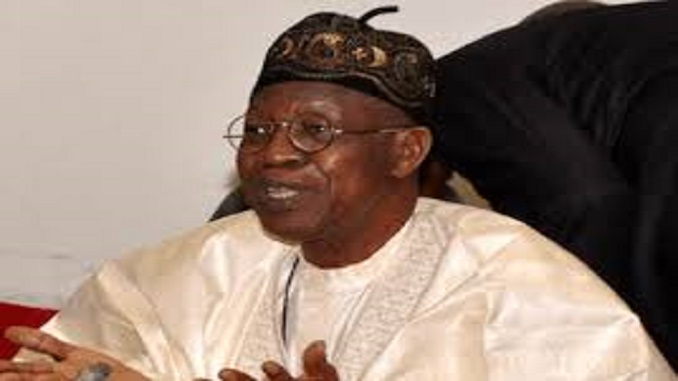
Lai Mohammed, minister of information and culture, has directed the National Broadcasting Commission (NBC) to implement regulations for online media and other broadcasting platforms.

Mohammed was quoted as giving the directive in a statement issued by Segun Adeyemi, his media aide, on Thursday.

The Federal Ministry of Information and Culture tweeted about it:

The minister also directed the NBC to implement measures that will reposition the broadcast industry, create jobs and promote local content.

According to him, the directive became necessary following the approval of recommendations of a committee set up by President Muhammadu Buhari.

“Following my satisfaction with the report which was very professional and detailed, I wish to direct the commission to take the necessary measures to effect the implementation of the various provisions therein,” Mohammed said.

This directive covers the provision for the regulation of the web and online TV/radio; regulation of international broadcasters beaming signals into Nigeria; hate speech; human resource and staff welfare; funding for the reforms implementation; monitoring; Independence of the regulator and ease of issuing licenses as well as competition and monopoly issues.”

The minister said the commission must ensure that broadcasters utilise the content and services of Nigerian independent producers in line with regulatory requirements for 70 percent local content.

“This will empower local producers with proper funding and investment, enhance foreign collaborations, develop the local industry, raise the standard of local productions and ultimately lead to job creation,” he said.

“The new regulations will also ensure that producers of content are paid promptly for adverts and sponsored content placed on all TV, radio and broadcast platforms, ensure that the production of adverts are localized to create and promote local production and, where it is not, to attract a charge every time such an advert is aired, with the charge being put into a fund to help develop local expertise in production.

“For musical content, a new regulation will ensure that broadcasters are prevented from illegal and unpaid use of musical works without payment of the applicable license fees and/or royalties required by music rights owners.”

The minister added that the new regulations “will re-energise the broadcast industry,deliver real value in the sector and grow the creative industry for the benefit of the practitioners”

Major highlights of the Minister’s directive include new regulations to compel broadcasters to utilize the content and services of Nigerian independent producers .in fulfillment of the regulatory requirements for 70% local content, rather than the current abuse of the rules which allow many loopholes for the production of such content in jurisdictions outside Nigeria

Similar provision will prohibit exclusivity of sporting rights in Nigeria, as a new regulation now mandates broadcasters and exclusive licensees to share such rights with other broadcasters to boost reach and also maximize utilization by all broadcasters of premium content, in order to grow their platforms and investment in other content, according to the Ministry of Information and Culture.

Media Group Sues NNPC For Consistently Violating FOI Act, Claims N15m Damages

The Media Rights Agenda has filed a suit at the Federal High Court in Abuja, accusing the Nigerian National Petroleum Corporation of consistently breaching its statutory duties under the Freedom of Information Act, 2011 in flagrant violation of the organisation’s right of access to information under the Act.

In the suit filed on its behalf by Abuja-based lawyer, Mrs Mojirayo Ogunlana-Nganga, MRA is asking the court to compel the NNPC to perform its statutory duties under the FOI Act within 30 days of the court’s order as well as to pay the civil society organization N15m as exemplary and aggravated damages for the “flagrant and unlawful violation” of its right of access to information established and guaranteed by the Act.

Also named as a respondent in the suit is Attorney-General of the Federation, who according to MRA, has oversight responsibility under the FOI Act by virtue of Section 29(6) to ensure that all public institutions to which the Act applies complies with its provisions.

MRA, in an ex-parte motion, is praying the court to make a declaration that the failure and/or refusal by the NNPC to proactively publish the information specified in Section 2(3)(a)-(f) of the FOI Act and widely disseminate the information as required by Section 2(4) of the Act amounts to a breach of the corporation’s statutory duty under Section 2(3) and (4) of the Act and constitutes a violation of MRA’s rights of access to information established and guaranteed by Section 1(1) and 2(4) of the Act.

The media group is also seeking an order compelling the NNPC to comply with the provisions of Section 2(1), (2), (3), (4) and (5) of the FOI Act by publishing and widely disseminating and making readily available to members of the public the information specified in Section 2(3)(a) to (f) of the Act within 30 days of the order of the court.

Other reliefs sought by MRA includes: “an order compelling the NNPC to ensure the provision of appropriate training for its officials on the public’s right of access to information and records held by it for the effective implementation of the Act within 30 days of the court’s order.

“An order compelling the NNPC to submit to the Attorney-General of the Federation its annual reports on its implementation of the FOI Act covering the fiscal years 2011, 2012, 2013, 2014, 2015, 2016, 2017 and 2018, as required by Section 29(1) of the Act within 30 days of the court’s order; and an order directing the NNPC and its Group Managing Director to pay MRA N15m as exemplary and aggravated damages for the flagrant and unlawful violation of the organisation’s right of access to information established and guaranteed by Sections 1(1) and 4 of the Act.”
TheCaveat.info

SERAP To EFCC: Release Senator Shehu Sani, His Prolonged Detention Contravenes His Right To Presumption Of Innocence

The Socio-Economic Rights and Accountability Project, SERAP, on Thursday called on the Economic and Financial Crimes Commission, EFCC, to release Senator Shehu Sani from detention.

However, SERAP, in a statement on Thursday by Yinka Olomojobi, accused the anti-graft agency of violating both the national and international law for detaining the Senator.

The statement said: “The Economic and Financial Crimes Commission (EFCC) should immediately release activist, Senator Shehu Sani detained on allegations of extortion or charge him with a recognizable criminal offence. I will return in 2023, Shehu Sani boasts

“By prolonging his detention without charge or trial, Mr Sani is being treated like a convicted criminal, in violation of national and international law.

“The continued detention of Mr Sani without charge is against the principle of being innocent until proven guilty.

“Nigeria is a state party to the International Covenant on Civil and Political Rights. Article 9 of the ICCPR states that “anyone who is arrested shall be brought promptly before a judge or other officer authorized by law to exercise judicial power.”

“There are similar provisions in the Nigerian Constitution 1999 (as amended). The EFCC should promptly investigate any allegations against Mr Sani and release him on bail pending the conclusion of any such investigation.”

According to Mr Olomojobi, “The right to personal liberty is one of the most central human rights as it is connected to the essentialist rudiments of an individual’s physical freedom.

The right to liberty requires that the arrest or detention of an individual must be in accordance to the law.

“The right therefore protects the individual against the excesses of the government and its agents.

“The right to personal liberty is essentially a personal freedom in which no government can abridge.“This right is juxtaposed with other human rights and can be formally traced back to the English Magna Carta of 1215.”

Recall that Mr Sani, who represented Kaduna Central in the 8th Assembly, was arrested on the 31 of December 2019, for alleged extortion of $20,000 (N7.2m), from the owner of ASD Motors, Sani Dauda.

Court jails NCAC DG, Runsewe for violating court order

Ade Adesomoju, Abuja

The High Court of the Federal Capital Territory, Maitama, Abuja, on Thursday, jailed the Director-General, National Council for Arts and Culture, Olusegun Runsewe, for contempt of court.

Justice Jude Okeke in a ruling ordered the Inspector-General of Police to arrest him and hand him over to the Nigerian Correctional Service in Kuje, Abuja.

The judge ordered him to remain in prison “until he purges himself contempt”.

Runsewe was committed to prison on Thursday following his disobedience of an order made by the court on December 15, 2017.

The order was in respect of a suit filed by Ummakalif Ltd for the sealing of the Arts and Crafts village in Abuja.

The suit was instituted against the Director-General of NCAC, the FCT Minister, the Federal Capital Development Authority, and the Minister for Culture and Tourism.

The plaintiff had alleged in his suit that the sealing of the village was a violation of the contractual agreement for him to develop a part of the village.

He filed a June 21, 2019 motion seeking Runsewe’s imprisonment for allegedly violating an order of the court made on December 15, 2017 directing parties to maintain status quo.

The order, according to the plaintiff, implied that no step should be taken to shut the village.

The plaintiff’s motion filed in line with Order 47 Rule 10 (1), (2)and (3) of the High Court of the FCT Civil Procedure Rules 2018, prayed that Runsewe be committed to prison for disobeying the court order.

Granting the application on Thursday, Justice Okeke held that committing Runsewe to prison for contempt would serve as a deterrent to others in the habit of abusing their office and disobeying court orders.

Justice Salisu Umar who was handling the case before his elevation to the Court of Appeal, had on March 6, 2018, descended on the NCAC for sealing up the village in violation of the earlier order of the court.

The matter was reassigned to Justice Okeke following Justice Umar’s elevation.

PUNCH

TIPS