A vision without a
corresponding mission will end up as a mere delusion. Welcome to vision 2020.
Years ago, we set national goal and we named it vision 2020 to be among the first
most developed nations on earth by the year 2020.
The discerning knew then we
were up to our usual jokes. Those were the words of my Senior and mentor, Jide
Ogunyi. But how do we expect to attain
such a height, when there’s no legal framework to deal with negligence in our
professional endeavors like, medicine, law, building engineering and even the
government, apart from, leave am for God?!.
How can we achieve a vision
for the Nigerian education, when it is not good enough to educate the custodian
of the same educational system? When they would rather send their kids abroad.
How can one translate a vision of making a country, a medical hub, when a world
class hospital built by a former governor wasn’t found good enough to treat the
same former governor’s minor bruises sustained in a motor accident?
How can a nation, whose
pastors are the richest in the world with a congregation of the poorest people
on earth achieve greatness by mere vision without corresponding effort and
mission?
We must be joking. Our
manufacturing companies are being bought over by churches and would rather
build a 13km auditorium than build a 10 km expressway or a 5km juice making
factory, despite the abundance of natural fruits. Let someone shout hallelujah!
Who do you want to achieve
such a huge feat, when the worst of us are the ones ruling over the affairs of
the best of us? Which country can achieve greatness when its government
officials would rather invest in properties in Dubai than set up businesses
that would create employment opportunities for the teeming youths?
Dubai had a similar vision
40years ago. They created a mission to actualize same, and today, they are one
of the most visited countries on earth with 50 million visitors annually,
including our politicians who go there to hold meetings, spending an average of
$5000 per visit.
We mouth farming as if that’s
all there’s to development. Until we realize that farming without value added,
like transportation, storage and processing is poverty, if we like, let us
close our borders for a 100 years, we will wake up one day find out that the
world has moved on without us.
We celebrate a governor for
tarring roads four times the cost price as though he spent his personal money
and yet, we expect the realization of a vision.
A politician will rig an
election or a close friend is given an appointment, and we troop out to
churches and mosques to do thanksgiving, yet we expect them not to steal. A
custom officer at our airport border control gateway into the country turns his
duty post to a begging post, “oga wetin you bring come for us? Oga, your boys
are here” without sanctions, yet we want the world to take us seriously.
Hear Jide again: “Since then
the aimless sightedness, will continue to grope. It is clear we are not as
serious as we often boasts. When the vision was set two wasted decades ago,
year 2020 was a faraway landing post. Now the year is here, but we are in a
deeper hole than the one in which we were many years ago.
Hurry, let’s set another
vision based on divine hope, with no work, we’ll still reach our destined
Eldorado. We need not plan or think to set new goals, after all, our rich land
still spills the inexhaustible black gold.
My advocacy today is, until
government and every one of us today in position of authority show selfless
leadership by example, even if we set visions for eternity, without a
corresponding mission, it will still end up a vision of delusional grandeur.
One of my tragic realisations is that there are very few people who have your interest in this world. You really hardly have real friends because people really care only about themselves. Therefore, I have tagged many people in my life as USER-FRIENDLY friends who only use you.
Such tactical friends are in your life for your possible usefulness to them one day. They really don’t care about you. Not that you are indispensable because they ‘ll turn to another the moment you are no longer around or relevant.
The reason why many are tempted to make themselves relevant is to avoid the loneliness and the deprivation of social intercourse. It is a mental health issue.
A greater tragedy that I have come to realise is that the larger majority of self acclaimed followers of the Lord, Jesus Christ, appear to be the biggest culprit of self interest. I mean plain selfishness. They have transferred the USER-FRIENDLY mentality into matters of faith.
So Jesus Christ is now meant to be used they way they use people. It is not He using them but they using Him. So it goes like this: “You need anything? Turn to Jesus”. You want to be president? You want to make money? You want a wife? You want a child? You want promotion? Whatever you wants, masked in needs, Jesus will provide. That has been the popular neo- christian message. After all, Jesus Christ, the Lord is quoted to have promised He will supply every need according to His riches in glory.
Meanwhile, who really cares whether the Lord Himself needs anything? I thought even if He didn’t need anything, He does need, more than anything, for the name of His Father (and our Father) to be hallowed, magnified and glorified on earth. He also wants the Kingdom (Government, and God’s way of doing things) done on earth; and equally, importantly, the will of God to be done here on earth as it is in heaven. Does anyone really care how much He needs these to be done? That is the crux of the prayer He taught us.
In the once very prosperous Western worlds of America and Europe, not much fervour has been put into the pursuit of the Saviour for things they already have. People over there have been mostly saved and become the followers of Jesus Christ when touched by the power of His love and the working of His eternal Spirit in the heart and mind of a man.
Now, have we forgotten the message that the Lord’s death as an example of no greater love is to cause us to share His love and life?
Our encounter with the power of His love is to share His blessings and not make a career of amassing transient wealth which takes much of our time and attention?
Jesus’ power has been purveyed to be used to achieve anything. We now have a Christianity that exists only to meet fleshly needs.
Jesus Christ has been marketed as the meeter of all needs hence, the masses have thronged to congregations drawn more out of intimidating assertions of digital prelates who, rather than draw the people to the Saviour’s love, they promote themselves as so highly anointed and thereby draw the people to themselves. They are building kingdoms and empires for themselves rather than for Jesus Christ.
I sometimes see most of these preachers atimes as ‘jazzmen’. They talk and act like magicians by their claims, some of which are factual anyway, yet with skewed motives and wrongful appropriations.
They have wrongly defined successful Christianity by a measurement of how much a believer has used Jesus to acquire material things and not how much he or she looks like Jesus. In fact, dare to look too much like Jesus these days and you might be mocked by the Church till you crave obscurity.
Would Jesus still be needed if all our perceived needs are met? I have recently come to see the poverty of mainstream Christianity. Its empty boasts and a parade of unregenerated lives which have little or no impact in today’s crazy world.
There is no much difference in the style, manner, means and motivation between how adherents of mainstream Christianity pursue material things with how the rest of the world does.
Therefore, like the apocalyptic Laodicean Church, many of today’s churches are poor. I mean those churches that have plenty of money without commensurate good works to all persons whether or not they share the faith in Jesus Christ.
In fact, much of the modern church is very bankrupt on account of biblical standards. The lack of good works which naturally flow from the Saviour’s love is evident that a revival is sorely needed.
One of the biblical principles of good works is that since the Father God gives rain and sunshine to be enjoyed by good and bad people so should Christians do good to all men without distinction, with some preference for believers. That is the principle that caused early missionaries in Nigeria to build hospitals and schools with scholarships even in places, predominantly occupied by non-believers in Jesus Christ. They only hoped their love and faith would become contagious by their good works. They didn’t discriminate.
When modern Christians fail to do good works, it seems they no longer believe in the faith principle of storing treasures in heaven.
Modern churches spend much of their resources in preaching material success and not really to broadcast the power of God’s love to save the soul.
One area one can see so clearly how bereft the modern churches have become is how much the majority of Christians now fear death. They are more afraid of leaving the earth that they have come to so love by over-indulgence. They prefer the earth to meeting with their beloved Saviour in heaven’s sublime. They easily forget the words used to describe saints who made it to Heaven.
A voice in Heaven said concerning the saints: “They have conquered (him) Satan by the blood of the Lamb and by the word of their testimony. And they did not love their lives so as to shy away from death”.
Secretly, most materially successful christians really don’t like the heaven idea because they don’t know what is up there awaiting. Heavenly life has not been much of modern Christian theology. Heaven has been presented by the way, as a place where the soul of a Christian will go to by Jesus’s insurance, on account of accident or unavoidable death.
Heaven is secretly considered by many Christians to be a boring idea.
Majority of modern day Christians are a very weak and fearful people who are full of compromise in order to maintain a puny status quo. They cringe at the enormity of the demands of living out the will of God with a declared public faith in Jesus Christ of Nazareth.
Modern Christians have become like everyone else. No more marked distinctions even in ethical matters. Thus, traditional Africans have even become more vociferous against ills, than the church has been.
When Christians lie and compromise it is considered as wisdom, sometimes sacrilegiously attributed to the Holy Spirit. They have forgotten the import of the injunctions to be light of the world and Christ ambassadors.
Abuse the interests of the Lord Jesus Christ and the Christians might be quiet but touch a material interest of the church and the real stuff would be made manifest. Anger and viciousness even against and among Christians will set in from nowhere.
This modern twisted Christian worldview is not without repercussions. It has opened all of us to deceptions. We now even deceive ourselves. Shall we continue in this manner of self-deception?
Well, it looks like the signs of the end, one might say, but do we as Christians still believe as part of our creed that the world will come to an end? That sounds too old-fashioned now.
Therefore, Father, Lord have mercy on us and by Your grace in Christ, lead us in the pathways that You have laid for each of us. Save us from ourselves. May we fulfil the reason and purpose for which You have created each and everyone of us.
May we look to your grace to help us do Your Will. I ask that you bless our country and its leaders. Give peace, love, protection and prosperity to all the people of Nigeria whether or not they believe in You. For Christians and non-Christians, manifest Your goodness to them all. I pray with all that I am in the name of Jesus Christ, by Whose shed blood we are forgiven and restored. Amen.Thank You Father.
▪Tietie, a lawyer & human rights defender, writes from Abuja
PS Frank first published this writing in September, 2013. This revised edition of the article is published in honour of all Christian martyrs in North Eastern Nigeria, particularly in honour of the Reverend Lawan Andimi, the Christian Association of Nigeria (CAN) Chairman of Adamawa State who was recently beheaded by Boko Haram terrorists. It is by the blood of such martyrs that revival and victory will emerge for they overcame evil and the devil by the blood of the lamb and they loved not their lives unto death. The memory of all Christian martyrs will forever remain blessed.
Hauwa Haruna said the man who raped her young daughter lived nearby in an inner-city slum in Jahi area of Abuja. Once, the man asked the 12-year-old to fetch water for him, but when she did, he took her to a security post where he worked as a guard and raped her. The attacker threatened to kill the girl if she screamed.
The second time, the man asked the minor to help get firewood but raped her yet again. The attacks continued whenever Mrs Haruna and other neighbours left for work, and did not stop until the suspect was caught in the act.
But when Mrs Haruna went to the police in November 2017, the officers demanded money to take her daughter to a hospital for examination. Unable to pay, the family agreed to settle out of court. The police released the girl’s attacker, Sanni Abubakar, a father of eight children, who had earlier been detained at the anti-robbery unit.
No one pressed the case further, in many ways conforming to the unstated but widely used approach of the Nigeria police to rampant cases of rape. Activists, who for years have campaigned for a stricter model that involves a comprehensive investigation, prosecution of offenders, and rehabilitation of victims, say that template leaves thousands of Nigeria’s rape victims without much help.
Sexual violence
The United Nations International Children’s Emergency Fund reported in 2015 that one in four girls and one in 10 boys in Nigeria experience sexual violence before the age of 18. Findings from a national survey carried out in 2014 on Violence Against Children in Nigeria confirmed one in four females reported experiencing sexual violence in childhood with approximately 70 per cent reporting more than one incident of sexual violence.
It means that of the 99.1 million estimated number of women in Nigeria, 24.8 million may have experienced some form of sexual violence. And for almost 70 per cent of that number, it was more than a happenstance.
To further explain how grim the climate is, it is interesting to note that it was found that 24.8 per cent of 14,560,417 (3,610,983) females age 18 to 24 years experienced sexual abuse prior to age 18, of which 5.0 per cent (108,549) sought help, with only 3.5 per cent (126,384) receiving any services.
The criminal and penal codes of 1990 are the laws guiding rape justice in Nigeria. The code is deficient in many ways.
For instance, the law defines rape as having unlawful carnal knowledge of a woman or girl without her consent, or with her consent if it was obtained by force or by means of intimidation.
This definition excludes other methods and orifices of penetration, save penile penetration of the vagina. Experts said such is not all-encompassing to help protect citizens.
To mitigate some of the challenges, the Violence Against Persons (Prohibition) Act of 2015 (VAPPA) was enacted with the aim of checking sexual and gender-based violence. It brought with it the expansion of the previously narrow definition of rape, sexual assault and violence.
Heralded as a ground-breaking legislation and proof of government’s refusal at normalising or excusing sexual abuse, the law was drafted to close the cracks through which offenders escape justice.
These gaps include elevating unlawful anal and oral sex to the status of rape, recognising gang-rape and setting a minimum penalty of 12 years imprisonment away from the judge’s discretion for the crimes.
However, despite the grim situation, the law, its implementation and agencies responsible for implementation have all put Nigerian females in a disadvantaged position.
This analysis beams a searchlight on some of the grey areas in the provision of the laws, loopholes in implementation and excesses of implementing agencies.
Absence of rape kits
In organised societies, the first step towards establishing a claim of sexual violation is getting medical examination done with a rape kit. A Rape Kit is a container that includes a checklist, materials, and instructions, along with envelopes and containers to package specimens collected during a sexual assault and forensic examination.
With its innovative methods of thorough data and sample collection, investment in such tools bring an added advantage of “more in-depth documentation, beyond the baseline assessment of Post Exposure Prophylaxis,” explains Dorothy Njemanze, head of the Dorothy Njemanze Foundation, a non-governmental organisation with the focus on amplifying rights of women, children, youth and People Living with Disabilities.
On September 21, this reporter visited the Federal Medical Centre in Jabi, a tertiary health care institution in the FCT. She was told by medical personnel that the kits were not available.
“I suppose that the rape kits are available in some hospital in Nigeria, whereas some hospitals haven’t got them. Ideally, the federal government through the ministry of health is supposed to provide these kits to the hospitals where these cases are reported, but that is not the case. Most hospitals, general hospitals and including my hospital where I work, have never gotten these kits,” a consultant in the hospital said. He did not want to be named since he had no permission to speak on the matter.
The consultant further explained how rape victims are treated in the absence of kits. He added that even though it does not exist, some personnel in Nigeria are trained on how to use it.
“We take vaginal swabs to look out for infections, but hardly take sample for forensics, because that is where the kits come in and because we rarely have it, taking samples for forensics is very difficult”
Mboko Christopher, the Head of the Gender, Adolescent, School Health and Elder (GASHE) Division of the Federal Ministry of Health, said rape kits are only available in specialised clinics in Nigeria.
“There are Rape Kits available but most government-owned clinics in Nigeria may not have it because it is specialised clinics that do such processing and definitely not primary healthcare centres. Doctors are trained to know how to refer their patients to those who have it.”
However, Ms Njemanze, countered the claims, saying that the kit does not exist anywhere in Nigeria.
“A rape kit is not a kit if it doesn’t have specific labelling, that protect the security of the specimens. Even in the Police Hospital in Area 1, Garki that have been a huge support in our work of taking care of victims of sexual abuse, it is only the baseline tests that is available. These sorts of tools should be made available to healthcare facilities, schools, police stations etc. so that every report of abuse can be easily documented even by someone with little experience, speedily,” she said.
Processing of Survivors and Forensics
Looking at investments into forensics testing, which could strengthen medical evidence, the situation is just as grim as ever. Forensics is scientific tests or techniques used in connection with the detection of crime. This is very useful as medical evidence, especially in cases where the perpetrator is unknown, to prove if an accused person committed the crime.
Ms Njemanze told this reporter about two girls, aged five and seven, who while attending primary school in Dutse Alhaji in Abuja were lured with biscuits and raped by multiple people this year. When brought to the hospital, it was seen that one had large deposits of semen and she couldn’t identify who was responsible.
To find out who the perpetrator was, Mr Mboko said this survivor would have to pay for forensics.
“It cost about N150, 000 per sample,” he said. The medical personnel said that the reason for the high cost is the low level of technological development in Nigeria. He added that there are only 2 forensic laboratories in the country, in Lagos and Police Headquarters Abuja.
Ms Njemanze proposed a solution; “These costs and gaps are where policy should come in. We don’t have victim sensitive response protocols. There is supposed to be government support for survivors who have suffered violations. We have beautiful policy action reports on paper but in reality, we don’t have support for abused survivors in Nigeria.”
Zero compensation, huge cost of prosecution.
Reports on rape in Nigeria show that there is a culture of the society normalising or generating excuses for sexual abuse. It is a culture that ignores rape victims’ trauma in complicity with the rapist. Mr Mboko said: “If people do not understand the seriousness no government will go spending so much money to provide these forensic testing facilities.”
The VAPP Act which has established rights of Victims of Violence in Section 38 provides that victims of rape receive the necessary materials, comprehensive medical, psychological social and legal assistance through governmental or non-governmental agencies providing such assistance.
In reality however, victims pay a lot to seek justice and in the end, get little or no support from the government.
Miss Njemanze captured the situation, “If a two-year-old is raped now in Abuja, when this law applies, that two-year-old is expected to pay for filing in the police station, mobilise the police to take the survivor to the hospital, pay for the baseline assessment test for herself and the accused which may end up costing almost N10,000 and then proceed to pay all the necessary filing fees when the case has begun (if not supported by some form of legal aid either from the government of Civil Society organisations).
“This is the plight of those who may already be economically and socially disadvantaged in the society. We make laws to order society in a way that would be beneficial to all, irrespective of one’s status and standing in life. However, if such laws do not empower those seeking redress, can it be said that the law has done its job?”
Furthermore, she explained that even though the government is meant to be working hand in hand with non-governmental organisations, most times officials antagonise the work of NGOs. There is not enough being done to support the work of NGOs to make this law a reality. This was shown in her case against the Nigeria police won in the ECOWAS court.
Psychogical Care and Rehabilitation
Recent studies have shown that it is vital for sexual assault victims to talk about rape. This is vital to the survivors’ healing from the trauma and psychological damage caused by rape and sexual assault.
A six-year-old rape survivor, Omodasola Omibeku, was first abused by a distant relative. Ms Omibeku said she began to rise above the trauma after she met other victims of sexual abuse at Osowobi’s Stand to End Rape Centre. Ms Omibeku wants her story and how she healed to help other women know it is possible to move past the trauma.
All these stories, point to the fact that psychological care is integral to the welfare of survivors of abuse. Section 38 of the VAPPA states that victims/survivors should be provided with mental, social and psychological care and warns against victim/survivor being discriminated against or punished. This duty was given to both governmental and non- governmental agencies.
This reporter reached out NAPTIP to comment on the present situation of facilities for rehabilitation of survivors of SGBV. Contrary to some victims’ account, the agency said the government has provision for rehabilitation.
“There are government sponsored rehabilitation programmes for victims of sexual abuse being implemented through NAPTIP shelters, Ministry of Woman affairs, Social Development etc. The agency has shelters in Zonal Commands namely Enugu, Uyo, Makurdi, Benin, Lagos, Kano, Sokoto, Maiduguri, Osogbo and Abuja HQ. The agency also collaborates with reputable NGOs and caregivers like WOTCLEF, MeCHAT, Idia Renaissanse, etc. in the rehabilitation of sexual abuse victims,” the agency wrote in an email response.
The claim was countered by Miss Njemanze.
“There is no government-owned shelter for victims of sexual and gender-based violence. NAPTIP has a shelter and it mainly has victims of trafficking. All the times we have had with women and children that need to flee their abuser, there was nowhere to keep them, talk more of providing psychosocial care”.
The Way Forward
A lawyer, Nureini Jimoh, said getting relief for victims is a joint task.
“No single agency of government can address sexual assault prevention alone. Portfolios across all levels of government, including education, health, justice, and crime prevention, as well as the non-government sector and community stakeholders, each have a significant contribution to make.”
Miss Njemeze wants the government to show more will in tackling this menace.
“Many organisations like FIDA, Global Rights have come up with protocol documents based on their experiences and research into best practice, to bridge the gaps found. But the institutions that are meant to provide services keep failing and the reason they are is because the government does not see them as important enough to invest in.
“Deliberate investment by the government is necessary. We have a lot of wonderful things on paper like The National Action Plan on the implementation of the UNSCR 1935 and other related offences, it provides for a wide synergy amongst various institutions yet no implementation, the laws are not feasible without a deliberate push from Government and its agencies.”
Japanese Prime Minister Shinzo Abe’s cabinet on Tuesday approved bills to call on businesses to allow their employees to work until the age of 70.
The step was taken to help mitigate a chronic labour shortage and cover growing social security costs in the rapidly ageing country.
The legislation urges corporations to pick one of five options, including abolishing the retirement age, raising it, or allowing employees to work beyond the age limit, Kyodo News reported.
The government is expected to introduce the bills to the current parliament session and hopes to enforce them from April 2021.
The government also plans to cut benefits given to employees aged between 60 and 64, whose salaries drastically drop when they turn 60, Kyodo reported.
Japan is facing an increased demographic burden after decades of rapid ageing of the population and falling birth rates.
Critics argue Abe’s government has done little to reverse the trend.
People aged 65 or older are expected to reach nearly 40 per cent of the population by 2060, according to the National Institute of Population and Social Security Research.
The Chief Judge of Katsina state, Hon Justice M.D Abubakar has assured that Kaduna state is determined to address issues that are critical and that can pose challenges in the administration of criminal justice in the state.
Justice Abubakar droped the hint on Monday at the commencement of the two-day Administration of criminalJustice retreat for Katsina state judges and stakeholders holding in Abuja.
The Justice who gave a historical evolution of Administration of Criminal Justice System(ACJS) said as at the time Katsina state was created in 1987, recalled how the pioneer Chief Judge , Hon Justice Umaru Adbullahi initiated the institutional framework which was then lacking.
According to him, as at then there was no institutional framework but through his initiatives, we since then started reforms in the criminal Justice sector through the setting up of the administration of criminal justice committee at the state level and various divisions and since it was not backed by law, the impact, was not very significant, he said.
“With time the criminal cases increased geometrically because in year 2000, you have 5,000 cases 2001it will increase to 10,000 and the rate of disposal of cases was equally hampered with so many impediments such as: trialwithin trial, transfer of officers, logistics problems of courts, absence of witnesses, transfer of witnesses and so on”.
So they came up with some laws which went through some rigorous processes and eventually passed. As soon as the laws were passed, the ACJS monitoring committee was constituted and inaugurated by the government and we quickly went into action . All the stakeholders were brought under one umbrella and if there is any problem, we solve it there and then.
Also, the Hon Justice Umaru Abdullahi has charged Judges to give Nigerians their due rights and ensure that citizens are protected. Justice Umaru who exoressed worry about what is happening in the judiciary these days asked: what was happening? Are Nigerians benefitting anything from the Judicial system?
He lamented that the protection of citizens in effect is the duty of the state. He bemoaned the situation where alleged offenders are kept in detention longer than necessary without trial and said that by so doing many people are hurt.
It was observed that administration of criminal justice is bedeviled with plethora of problems and one of the things the law is able to do is the speedy disposal of justice.
However, it was suggested that judges should be given the latitude to exercise his discretion.
It was emphasized that the fact that Judges are not involved in plea bargaining is a good development .
The judges were asked to ensure the speedy trial of cases, adding that once one is elevated to the position of Judges, he is no to be guided or supervised.
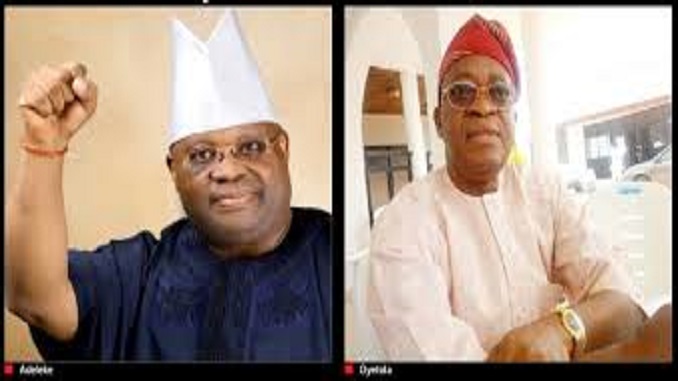
When the news broke on Friday, July 5, 2019 that Nigeria’s Supreme Court has affirmed the election of Gboyega Oyetola of the All Progressives Congress, APC, as governor of Osun state, many concluded that the Supreme Court has mired itself in politics and corruption. What many do not know is that the Senator Ademola Adeleke v. Adegboyega Isiaka Oyetola, Osun state election petition determined by the Supreme Court had nothing to do with who won the election. Also many do not know that the question of electoral violence, rigging, over voting and all never arose at the apex court and that Hon. Justice Olabode Rhodes-Vivour did not affirm the election of Oyetola as winner of Osun state governorship election. It was the opinion of many Nigerians that the Independent National Electoral Commission, INEC merely paved way to edge Adeleke out by cancelling 3, 498 votes and ordering a rerun in seven polling units when he was already leading in the election. All that is history now and Governor Oyetola has since been enthroned while the amiable dancing Senator Adeleke of the Peoples Democratic Party, PDP, is quietly licking his wounds somewhere. What has not settled is the role of the Supreme Court in all this as Hon. Justice Rhodes Vivour who wrote the leading judgment has been described as a corrupt and unfair judge who turns justice on its head. Essentially, the Supreme Court held that the judgement of the trial tribunal is a nullity because one of the judges that make up the three man panel did not sit on the day the testimonies of Respondents’ Witnesses 12 and 13 were taken. The nagging question is – Did Hon. Justice Obiorah sit on February 2019? Now the Record of Appeal is the only document that gives an indication of what took place in court. The court has a task of taking notice of its contents and resolving issues as in this case as to whether the said judge sat or not. It turned out that when Oyetola’s counsel, Chief Wole Olanikpekun, SAN pointed out that Obiorah that not sit on 6th February, 2019, Adeleke’s counsel, Dr. Onyechi Ikpeazu, SAN agreed that it was so. Dismissing the non-participation of Justice Obiorah in the 6th February, 2019 proceedings at the Court of Appeal, Ikpeazu said: “…non-participation of Obiorah J in the proceedings of 6 February, 2019 thereby rendering the proceedings a nullity is a mistaken postulation because the fact that all members of the Tribunal or that the Chairman of a Tribunal did not sit in on all the proceedings of the Tribunal is neither an issue of lack of jurisdiction nor a matter of nullity of the proceedings.” He did not dispute the accuracy of the proceedings to the effect that Justice Obiorah did not sit on 6 February, 2019. It must be noted that in every proceeding before the Tribunal, Obiora signed at the end of the proceedings for the day except on February 6, 2019. In his processes at the Court of Appeal, Ikpeazu maintained that Justice Obiorah did not sit on February 6, 2019 but did a summersault at the Supreme Court saying that there are conflicts in the Record of Appeal. In his judgment, Rhodes Vivour cited Oputa JSC thus: “‘A party should be consistent in stating his case and consistent in proving it. He will not be allowed to take one stance in the pleading then turn summersault during trial. Justice is much more than a game of hide and seek. It is an attempt on our human imperfections notwithstanding to discover the truth…’ Continuing, he revealed that: “An appeal is a rehearing of the case. Parties must maintain the same stance on the facts rights up to the Supreme Court. Though counsel, at times present the semblance of truth, the judge is expected to pursue the truth. “The appellant cannot say in the Court of Appeal that the non-participation of Obiorah J in the proceedings of 6 February, 2019 is neither an issue of lack of jurisdiction nor a matter of nullity of the proceeding then in the Supreme Court say that the Record of Appeal is in conflict, but fail to say what the conflict is. “A party must be consistent with the case he sets up and not shit ground in another court as it suits his fancy. That is precisely what the appellants are doing and that is legally wrong. “Finally, I must observe that the heading of the day’s proceedings are written by the Registrar of Court signifying the Judge/s that would sit on the day. This may not necessarily be so. “The signature/s at the end of the proceedings for the day indicates which judge sat to hear the proceedings. on 6 February, 2019 Obiorah’s name appears on the top of the page for the proceedings of the day, but at the end of the day’s proceedings Obiorah J did not sign and that was the only proceeding that he did not sign at the end of the day. “Right from the Court of Appeal, Dr. O. Ikpeazu SAN and Chief Wole Olanikpekun, SAN agreed that Obiorah J did not sign. The Record of Appeal supports their stance. I am in the circumstances satisfied with the decision of the Court of Appeal that, on 6 February, 2019, Obiorah J did not sit and so did not sign the proceedings for the day…” After citing a plethora of previously decided cases by the Supreme Court and the West African Court of Appeal, WACA, Rhodes-Vivour further stated thus: “…His absence during the hearing on 6 February, 2019 affects the soundness of the judgment since he never saw or heard the testimony of RW 12 and RW13… “…It is elementary that in such a situation Obiorah J cannot come back to sit as if he never absented himself. The Proper order in such a situation is for the case to start de novo (all over) and for counsel to try and suggest before this court that there might be conflicts in the Record of Appeal. “The correct order is to declare the judgment of the Trial Tribunal a nullity as a result of one of the panellists not sitting on a day proceedings were held. “Learned counsel for the appellants ought to have advised his clients that failure of Obiorah J to sit on 6 February, 2019 and then return to court and prepare and deliver majority judgment is a fundamental error. “The Tribunal was not properly constituted as regards numbers of the panellists on 6 February, 2019. The absence of Obiorah J, from the proceedings …affected the competence of the Tribunal to deliver a judgment in any form…” Ordinarily, the matter should have been referred back to the Trial Tribunal for retrial so that the testimonies of RW 12 and 13 could be taken before the proper number of judges. Unfortunately, the 180 days designated for hearing of election matters had elapsed at this time. Sending the matter back would have been futile. A Trial Tribunal is properly constituted when three judges sit. That is the quorum. Anything to the contrary becomes a nullity. More so, when a judge who was absent on a day’s proceedings comes back to write the lead judgment, the action would negate the entire process. This is because he did not fully participate and so do not have knowledge of the whole hearing.
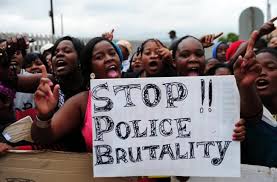
Official Press Statement on the Police brutality at WACOL office, Enugu
By Joy Ngozi Ezeilo
On Monday the 27th day of January 2020, one Miss (Name withheld) a 21 year old lady made a distress call to Women Aid Collective (WACOL)’s office in Enugu, Enugu State that she was raped that evening by one Mr. Uchenna James Emenike, a 22 year old man at Corridor Layout Maryland Enugu.
Our legal team considered her report and thought it wise that rape was such a serious criminal matter that should require Police intervention and investigation. To that effect, one of the lawyers in our office, Ibangah Goodness Esq. took the victim to Area Command Enugu, Enugu State with a petition informing the Police of the development and requested that the matter be investigated.
She handed the victim over to them and was also present when they obtained a statement from her. At that point, it was reasonably expected that the Police had formally taken over investigation of this matter from us.
The Police later called Ibangah Goodness Esq. requesting that she provides the victim to them as the parents of the suspect had plans of settling the issue with the victim and her family. She told them that she had handed over the matter to them and therefore they should source the victim by themselves with the contact details she provided in her statement with them.
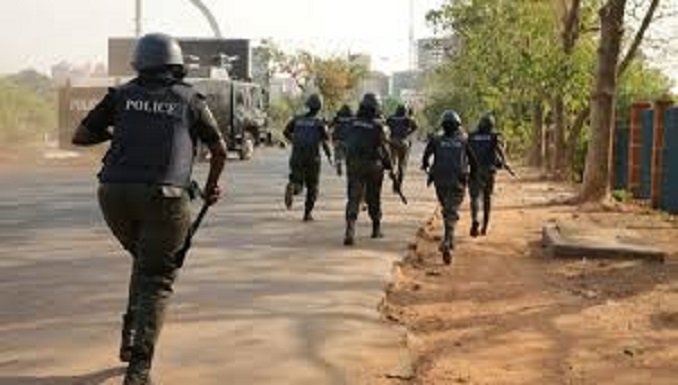
Rather, the Area commander and some other officers at the station kept calling Ibangah Goodness Esq and trying to intimidate her and coerce her to provide the victim for settlement with the boys parent. To our utmost dismay, Yesterday, 30th January, 2020 four Police officers from Area Command Enugu, Enugu stormed our office and still requested that our office should provide the victim for them.
The legal unit repeated to them that they had already handed over the matter to them and that they should look for the victim themselves using the contact details she provided in her statement at their office and still in their presence tried to contact the victim who said that she was on her way to the station.
These officers failed to listen but instead began entering all the rooms in the office building and when they saw Ibangah Goodness Esq. who happened to be in a meeting. They mercilessly beat up Ibangah Goodness Esq. to a state of near unconsciousness. They extended the beating to Miss Nneka Okwor, another member of our staff when she made to plead with them to stop beating Goodness.
These police Officers took the phone of Ibangah Goodness Esq. and confisticated the phone of anyone who dared to take pictures, record or video their hideous acts. They also destroyed some WACOL’s office doors in the process. It was such a dastardly beating that at a point Goodness ran into the office toilet to save her dear life, yet the four of them chased her like a hardened criminal into the toilet, dragged her out and continued beating this helpless and unarmed lady who was assisting the Police to curb crimes in the state.
And what was her offence? She brought a lady who reported to our office to have been raped to them. After beating her to their satisfaction, they whisked her away to their office alongside Ezeani Esq.who was outside when the incident happened. While this was going on, the crowd of people who came to WACOL with their different matters ran away. This happened around 2pm. At Area Command the two lawyers were detained and their two phones collected from them and seized.
The officers insisted that the victim must be provided by the lawyers before they would be released. On getting to the station the parents of the alleged rapist and the police officers started abusing and maltreating Ibangah Goodness esq. and the other lawyer who was also with her. Ibangah Goodness told them that she was having breathing difficulty and needed her medical attention as a matter of urgency, they turned a deaf ear to her plea and continued to force her to make a statement and also produce the victim for settlement.
Around 3:00 pm Goodness Esq. fainted and collapsed while still in custody and was not rushed to the hospital until after 20 minutes when Daniel Onyeonagu Esq. one of our Pro Bono Lawyers who saw Police reluctance to provide their own vehicle took her in his car to the National Orthopeadic Hospital, Emergency Unit.
Two Police officers accompanied him in his car. Just before they got to the hospital, Goodness Ibangah Esq. became totally unconscious and lifeless. It took the timely intervention of the doctors at the hospital who used their Oxygen and other necessary medical equipment to revive her. Immediately they arrived at the hospital and before she was revived, the two police officers who had her in their custody and who accompanied Daniel Onyeonagu Esq. to the hospital thought she had died and ran way.
They detained Ezeani Esq. who was outside WACOL office when they were beating Goodness Esq. inside our office. She remained in their custody from around 2pm noon till 6:00pm when she was finally released after obtaining a statement from her. Up till now, they have not inquired the state of the lady who they beatup and who fainted while in their custody and who they also guarded to the hospital.
This is the height of abuse of Police power, harassing and beating up a human rights lawyer working in an office that has set unprecedented records of assisting the Police in curbing crimes in the country. It is a mockery to an office such as ours and is totally unacceptable and must be fully investigated to bring the culprits to book.
A 14-year-old student has gained widespread praise and recognition for being a master of a dying art – amazing handwriting skills.
Year 8 student Prakriti Malla first gained national attention in her native Nepal last year, was subsequently given an award by the Nepalese government and has in recent months gone viral worldwide on a range of social media platforms.
In a page written by Malla circulated by users of Facebook, Twitter and Reddit, she writes that “handwriting is an essential skill for both children and adults.”
“Even in the age of technology, it remains the primary tool of communication and knowledge assessment for students in the classroom.”Dr Kirstin Ferguson✔@kirstinferguson
This is the handwriting of Nepalese Yr 8 student Prakriti Malla which was recognised as the most beautiful handwriting in the world #writing
Thousands of netizens have shared her work, with some suggesting that Microsoft adopt Malla’s handwriting as an official font in their products. One person tweeted: “Reminds me of my father’s writing, he left school at 13, would have been 101 now. That’s the way kids were taught to write once upon a time.”
Nepal’s government has even recognised the student as having the country’s most beautiful signature, reported the Maharashtra Times.
“A 1992 study … found that 85 percent of all fine motor time in second – fourth – and sixth-grade classrooms was spent on paper and pencil activities. A more recent study … noted that kindergarten children are now spending 42 percent of their fine motor time on paper and pencil activities,” writes Malla.
“Furthermore, good handwriting is important long after graduation.”
Prakriti Malla is a goddess of handwriting, so skilled in the art of writing that she is being recognized all over the world now. She is 14 years old and a secondary school student.
Her writing has been argued to beat that of computer fonts, they are just too beautiful.
She was barely known until her handwriting made it’s way into the social media, and now she has gotten the attention of the world, she has gone viral with her perfect calligraphic skill.
Prakriti Malla is a goddess of handwriting, so skilled in the art of writing that she is being recognized all over the world now. She is 14 years old and a secondary school student.
Her writing has been argued to beat that of computer fonts, they are just too beautiful.
She was barely known until her handwriting made it’s way into the social media, and now she has gotten the attention of the world, she has gone viral with her perfect calligraphic skill.
Her writing skills wasn’t learnt, it was innate, she had only to practice and become perfect at it.
How much influence should aunties have on their nieces? In many African cultures, aunties provide counselling to their young nieces as they age from adolescence to adulthood. When it comes to marriage, these aunties prepare their nieces for the challenges that lie ahead.
But for the Banyankole people in Southwestern Uganda, the aunt had more than the above, especially during the marriage.
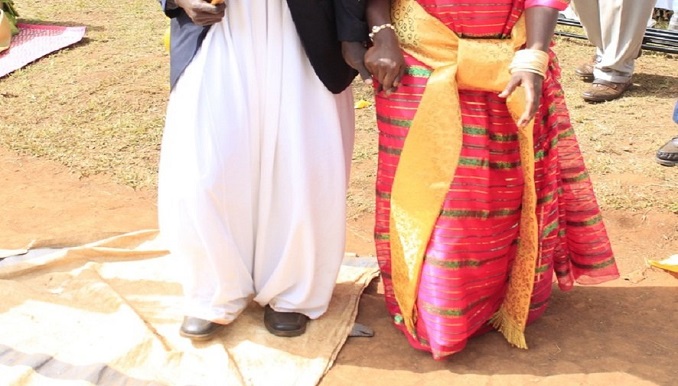
The primary responsibility of the aunt was to confirm that the groom is potent and that the bride has defended her virginity before the marriage is consummated. As a potency test for the groom, the aunt was sometimes required to have sex with the groom for confirmation of his potency and virility.
She also had to “test” if the bride is still a virgin before they are allowed to consummate their marriage.
In other traditions, the aunt is said to go as far as listening in or watching as the bride and groom have sex in order to prove the couple’s potency.
A marriage ceremony in Uganda — UGPulse.com
Inasmuch as this outdated practice may sound weird, it shows how the people of Banyankole, particularly the Bahima tribe hold virginity in high esteem.
As soon as a Banyankole girl is eight, she goes through a lot of restrictions to prepare her for marriage.
When other children her age in other cultures are out having fun and playing, a girl in this part of Uganda is mostly kept indoors, where she is fed beef and millet porridge and forced to drink milk in large quantities so that she becomes fat.
Being fat is synonymous with beauty among the Banyankoles.
When she starts developing breasts, she is also asked by her parents to abstain from sexual activities.
It is the duty of a Banyankole father to find a wife for his son as he pays the bridewealth as well. This consists of some cows, goats and pots of beer, depending on how rich a person is.
Once the bride price is paid, the marriage preparations begin. On the wedding day, there is a lot of feasting at the bride’s home, where the father is expected to slaughter a bull.
At the bridegroom’s home, there is another feast where the marriage is consummated. This is after the bride’s aunt has “tested” her niece’s purity and slept with the groom to also check his potency.
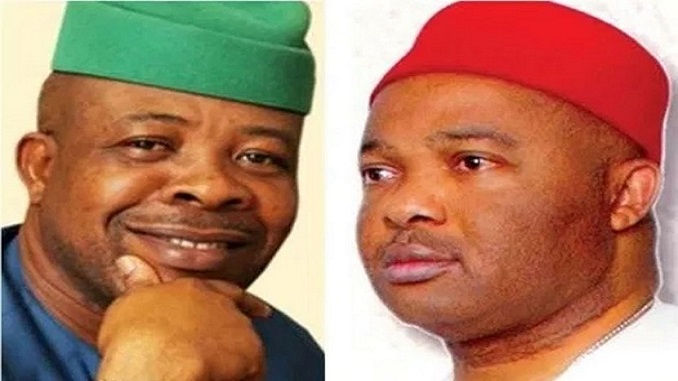
Imo State of Nigeria and the whole country was thrown into shock when the news broke out that on 14 January 2020, the Supreme Court sacked Mr Emeka Ihedioha as the Governor of the State. Mr Ihedioha became the first Governor among the set of Governors elected in 2019 to be removed from office through judicial means. The Supreme Court came under heavy attack by those who found it difficult to contain the shock. We shall present a highlight of the Court’s decision and discuss same with a view to determining whether the apex Court went out of line.
Imo Governorship Election and INEC’s Results
Recall that Governorship Election was conducted in Imo State on 9th March 2019. Senator Hope Uzodinma contested under the platform of the All Progressives Congress (APC). Mr Ihedioha contested under the platform of the Peoples Democratic Party (PDP). Other contestants were Mr Uche Nwosu of Action Alliance, Mr Ifeanyi Ararume of All Progressives Grand Alliance (APGA) and 66 others. Mr Ihedioha was returned as the winner by the Independent National Electoral Commission (INEC). Mr Nwosu came second while Mr Ararume and Mr Uzodinma came third and fourth respectively.
Mr Uzodinma’s Petition
Mr Uzodinma and his Party, APC, challenged the outcome of the election at the Election Petition Tribunal on two grounds – That Mr Ihedioha was not validly elected by majority of lawful votes cast; and that the declaration and return of Mr Ihedioha was invalid by reason of non-compliance with the Electoral Act. Mr Uzodinma sought several reliefs including the nullification of Mr Ihedioha’s return and declaration that he (Mr Uzodinma) was the winner of the election.
It was alleged that election held in 27 Local Government Areas, 305 Electoral Wards and 3,523 polling units – that INEC cancelled election in 252 polling units, collated results from 2,883 polling units and excluded results from 388 polling units. (This alleged exclusion of some lawful votes is the crux of the case of Mr Uzodinma). Mr Uzodinma and APC contended that they scored overwhelming majority in the 388 polling units – they argued that they were entitled to 213,695 votes from the 388 polling units while Mr Ihedioha was entitled to 1,903 votes from the same 388 polling units – that Mr Ihedioha was returned based on wrong computation of votes from the 2,883 polling units.
The Tribunal dismissed the petition. Mr Uzodinma and APC appealed to the Court of Appeal. On 19/11/2019, the Court of Appeal, in a majority of 4 to 1, dismissed the appeal filed (Oho, JCA dissented).
Appeal to the Supreme Court
Mr Uzodinma and APC appealed to the Supreme Court as 1st and 2nd Appellants while Mr Ihedioha, PDP and INEC were the 1st, 2nd and 3rd Respondents.
Challenge of Mr Uzodinma’s Nomination by APC
At the Supreme Court, the 1st Respondent (Mr Ihedioha) challenged the validity of the nomination of the 1st Appellant (Mr Uzodinma) by the 2nd Appellant (APC). This issue (a pre-election issue) was raised for the first time at the Supreme Court without seeking and obtaining leave (permission) of the Supreme Court. The Supreme Court held, in line with established principles, that a fresh issue cannot be raised for the first time at the Supreme Court without the Court’s permission. More so, the Supreme Court lacks the jurisdiction to hear a matter bordering on pre-election issue as the court of first instance – meaning that it is only the High Court of a State (Imo State in this regard) that has the jurisdiction to hear the same as the Supreme Court can only hear an appeal (from the Court of Appeal) resulting from any emanating decision. The Court, per Kekere-Ekun, JSC, in dismissing the application rightly concluded as follows (at page 10 of the Judgment):
It is for these reasons that I agree with learned Counsel for the Appellants that the validity of the 1st Appellant’s nomination as a candidate of the 2nd Appellant for the Governorship Election in Imo State is a fresh issue raised for the first time in this Court without leave. Furthermore, it is a pre-election matter, in respect of which this Court lacks original jurisdiction to determine same in a post-election appeal.
It may be a point of confusion (especially to non-lawyers) why the highest Court in the land would hold that it lacks the power to hear and determine any case, whether pre-election or post-election matter. The answer is that jurisdiction (power) to hear a case is not about whether a court is high or low in status. The jurisdiction to entertain any case is prescribed by statute. Thus, if a statute donates the power to hear a case to the High Court, the Supreme Court cannot hijack same based on its status as the highest Court. The statute in this instance is the Electoral Act, 2010 (as amended). Section 87 (9) gave power to the Federal High Court or the High Court of a State or High Court of the Federal Capital Territory to deal with pre-election matters. Therefore, the Supreme Court was right in its holding.
Respondents’ Contention
The gist of the Respondents’ contention was that the Appellants’ pleadings (that is the statement of facts relied on by the Appellants) were contradictory and unreliable in terms of the calculation of scores allegedly excluded. Also, that the Appellants failed to call the makers of the documents (result sheets and other documents) relied upon and the relevant polling unit agents who claimed to be witnesses. The Respondents also challenged the signatures on the results from 388 polling units presented by the Appellants on the basis that the results were allegedly fake or forged.
Supreme Court’s Findings that Changed the Tempo of the Game
Failure of Election to Hold and Exclusion of Votes
An allegation that an election did not hold in certain polling units is clearly different from an allegation that lawful votes were excluded from a polling unit. Parties in this case were only at crossroads regarding the issue as to whether or not the Respondents excluded votes due to the Appellants from 388 polling units and not on whether election took place in those units.
The Tribunal and the Court of Appeal had held that in order to prove unlawful exclusion of results in the 388 polling units, the Appellants must call the polling unit agents to testify to the fact that elections took place in their respective units. This is notwithstanding the fact that parties were not at dispute as to whether election held in those units.
The Supreme Court however found that the Appellants did not at any stage challenge the holding of elections in any polling unit and that their position was simply that elections held, they scored votes but that their votes from 388 polling units were excluded at collation stage. The apex Court also found that INEC did not deny that elections held at the 388 polling units. Rather, INEC’s contention was that the results relied upon by the Appellants were false. They undertook to produce the genuine results. The allegation of the falsity of the results tendered by the Appellants are of a criminal nature that needs to be proved beyond reasonable doubt. But INEC and the other Respondents woefully failed. The Supreme Court held (at pages 36-37 of the Judgment):
Although they relied heavily on the assertion that Exhibits PPP1 – PPP366 were fake, no evidence was adduced to prove the assertion at all, let alone beyond reasonable doubt. The Respondent failed to produce the “genuine” results as pleaded.
Duplicate copies of results require no certification
Meanwhile, the Court of Appeal had held that Exhibits PPP1 – PPP366 required certification and based on same not being certified, the documents were ignored. The Supreme Court had no difficulty in upturning this holding on the basis that the said documents were merely counter-part/duplicate of an original and therefore required no certification in line with Section 86(2) of the Evidence Act, 2011.
Results Tendered by Police Officers are reliable
Exhibits PPP1 – PPP366 were tendered by a Deputy Commissioner of Police (PW54) based on subpoena issued on him by the Court. The Supreme Court held that the exhibits tendered by the Police Officer was reliable. The law has since recognised that election results from police officers are reliable in that election result forms given to police officers at the polling booths constitute an internal and inbuilt control mechanism or measures designed to unravel unlawful cancellations, alterations, mutilations, and juggling of figures. This was the position as stated in the case of Nnadi v. Ezike [1999] 10 NWLR (Pt. 622) 228 at 238 relied on by the Supreme Court (at page 39 of the Judgment). The apex Court also upheld the dissenting views of Oho, JCA of the Court of Appeal in this regard.
Although the Nigeria Police do not enjoy so much of public trust per se and are no leading examples on issues of integrity, yet it was the Respondents’ undoing in that they failed to disprove the allegation that the votes were excluded from the 388 polling units and that the results tendered by the respected senior Police officer on behalf of the Appellants were fake, as required by Paragraph 12(2) and 15 of the First Schedule to the Electoral Act, 2010 (as amended). INEC failed to produce the results it considered genuine. The implication of the failure of the Respondents to discharge their burden of proof was that the 388 polling units’ results tendered by the Appellants were deemed unchallenged.
Court of Appeal Failed to Consider Credible Evidence
The Supreme Court also held that the Court of Appeal failed to give any consideration to the evidence of the witnesses (collation agents) who testified that they witnessed the exclusion of the results.
Court of Appeal Misconstrued Appellants’ Case
Above all, the Supreme Court held that the crux of the Appellants’ case was misconstrued by the Court of Appeal (and of course, the Tribunal) and that the Court misplaced the burden of proof, leading to the erroneous decision arrived at. This was in line with the holding of Oho, JCA where his Lordship took the position that “In the instant Appeal, having been so clearly demonstrated that the trial Tribunal misconstrued the issues thrown up by the Appellants’ Petition, what then becomes of the position where a Court or tribunal is said to have misconstrued the nature of what it is called upon to decide? The inescapable answer is that it will in all probability arrive at a wrong conclusion.” (Page 39 of the Dissenting Judgment).
Conclusion
Flowing from the foregoing, we are unable to fault the decision of the Supreme Court on any strong ground. The dissenting Judgment of Oho, JCA at the Court of Appeal is commended too.
We must note that the public sentiment that Mr Uzodinma came 4th in the election is not material on the face of the allegation of exclusion of some lawful votes. The implication is that if such unlawfully excluded votes were added, Mr Uzodinma’s scores will naturally topple that of everyone else including Mr Ihedioha and other contestants.
Perhaps the Respondents took it for granted that any person who loses an election has a battle of a lifetime to unseat the person declared as the winner. This accounts for the reason the Respondents took the posture that the Appellants have it all to prove, thereby neglecting their own burden of proof. This case will certainly go down in history as one of the most remarkable election petition cases in Nigeria.
Our site uses cookies. By clicking “Accept All Cookies”, you direct Law and Society Magazine to store cookies on your device and disclose information in accordance with our Cookie Statement: cookie policyACCEPTREJECT
Privacy & Cookies Policy
Privacy Overview
This website uses cookies to improve your experience while you navigate through the website. Out of these cookies, the cookies that are categorized as necessary are stored on your browser as they are essential for the working of basic functionalities of the website. We also use third-party cookies that help us analyze and understand how you use this website. These cookies will be stored in your browser only with your consent. You also have the option to opt-out of these cookies. But opting out of some of these cookies may have an effect on your browsing experience.
Necessary cookies are absolutely essential for the website to function properly. This category only includes cookies that ensures basic functionalities and security features of the website. These cookies do not store any personal information.
Any cookies that may not be particularly necessary for the website to function and is used specifically to collect user personal data via analytics, ads, other embedded contents are termed as non-necessary cookies. It is mandatory to procure user consent prior to running these cookies on your website.