Home Blog Page 1417

Oh Allah, where is the government?

By Muyiwa Adetiba “They came in numbers, wielding dangerous weapons. I heard my late husband reciting prayers from the Qur’an. They shot and killed him….in our presence. Oh Allah!!! Where is the government? Who will take care of our numerous children? Is this how the government will allow these bandits to be killing us? Oh Allah, where is government? Where….’ This was the anguished submission of a wailing woman whose husband, a local monarch, was  killed by bandits in the ‘Yantumaki Community’ of Kaduna State recently according to a Sunday Vanguard report which took the story from VOA Hausa service.

I can just picture the scene. You are surrounded by ferocious bandits whose sole mission is to loot, rape and kill. You are begging with everything you have but they are acting deaf and contemptuously because they know you have nothing to bargain with. Everything you have – including your body and those of your young daughters – is already theirs to take if they so desire. An hour stretches into eternity as you hope for a miracle, any miracle. The waiting is in itself torture. The bandits take their time, prolonging your humiliation, your torture. You both know help is not going to come until it is all over when their thirst for blood and hunger for flesh would have been satiated. They leave after stripping you of everything; property, dignity and faith – if you are lucky to be spared. Even then you know it is not all over. They can come at will; in the brightness of day, or in the darkness of night. And who is to say if you will survive the next time. So the vigil starts. You see them in the shadows of night; you hear them in the faintest of noises. They dominate your thoughts. They dominate your dreams. They become your nightmare. Oh Allah, where is government? This is the story of many villagers in certain areas of the north as we speak. They sleep with the proverbial one eye. They have become rootless and are completely at the mercy of bandits. Some of the bandits are from outside the country. Some from within. Like a Northern Governor said in the Vanguard report ‘it is becoming harder and harder to distinguish us from our enemies’. This is because the jobless, roaming youths have teamed up with outside marauders to terrorise the land. It is a classic situation of a failing State where law and order has collapsed and crime pays. The cause of the present situation in the north is complex and multifaceted. I don’t pretend to have all the answers but if I may summarise, I will opine that it has to do with religion and the manipulation of it. It has to do with population and the manipulation of it. With ethnic divisions and the manipulation of them. It has to do with education and the neglect of it. With grinding poverty and the denial of it. It has to do with governance and the abuse of it.It all boils down to the leadership style which the north has chosen. This same governor put it succinctly when he said ‘there was no shortage of early warning signs but we ignored them all. We are paying for our collective negligence.

As it is, we are trapped in a prison of mirrors where lies are answered with new lies. Violence is taking root because our leadership model has been exposed as a lie, an empty ideology used to satiate greed instead of addressing social inequality and injustice’. Even when some bandits were infiltrating some parts of the north like Benue and Taraba and could have been dealt with swiftly and decisively, leadership was still using other considerations. The time so called Fulani herdsmen started using AK47 to kill and destroy farmlands would have been the time to be decisive with crime and criminals. But government stayed its hand until other groups joined to enjoy the spoils of crime and the situation became hydraheaded. Oh Allah, where is government? Unfortunately, indecisive or outright dearth of governance is everywhere you turn. It starts from Aso Rock itself where there was reportedly an incident involving gun shots between First Lady’s security details and a President’s aide. It goes on to the President’s party where the Chairman played jury and judge in a case that also had him as a litigant. It is compounded by the resultant undisciplined scramble for the chairmanship position. One gets the impression in the three scenarios, of people grabbing power because there is no control, no line in the sand and the more brazen you are, the more you can get away with. Another area of our lives is COVID 19 which is threatening to get out of control; where all the guidelines that should lead to a better containment are observed more in the breach. You find people travelling from the farthest part of the north to the deepest part of the south in spite of inter-state travel restriction. Yet the roads are littered with law enforcement officers. A governor from the north recently gave up and opened his borders because he said he was merely making money for the border patrol officers. The officers are not punished for gross dereliction of duty. You find people congregating in large numbers without respect for face masks or social distancing. There are no sanctions or even the will to sanction. Even the rank and file senses the absence of authority in the country. This also reflects in the way we are treated by foreign countries. I can’t imagine what happened in South Africa and Ghana recently happening under Murtala Mohammed and Joe Garba, his Foreign Minister. Oh Allah, where is government? I don’t know whether it is apt or not, but my mind keeps going to Genesis 1 vs 2 in the bible where the account of creation was mentioned. This portion claimed the earth had no form and was void until God put it in order. Nigeria seems to be in that state of void andcrying for a leadership that will put it in order; that will care for her. She needs men and women on a salvage mission. Then the bereaved lady’s plaintive cry of ‘Oh Allah, where is government?’ can be answered in a more positive way.

Credit: https://www.vanguardngr.com

$10m Bribe: I Stand By My Words, Ugochinyere Say After Release, Dares Gbajabiamila

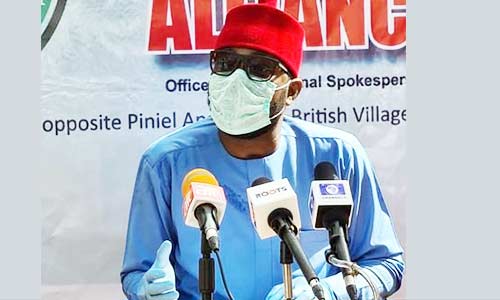
A spokesperson for the Coalition of United Political Parties, Ikenga Imo Ugochinyere, has said that he stands by his words that Nigeria’s House of Representatives through Speaker, Femi Gbajabiamila, collected the sum of $10m to work on the Control of Infectious Diseases Bill.

He disclosed this while addressing journalists on Tuesday in Abuja after his release by the police

He said he was stronger and determined to fight and would not abandon the struggle to wake up incapacitated leaders even with a gun to his head.

He said, “I seize this opportunity to restate my commitment to the struggle for the liberation of Nigeria. This illegal detention is one of the numerous benefits of being a soldier of truth and apostle of the rule of law.

“We were not cowed, neither did we negotiate nor trade-off our right to free speech as our oppressors desired. We have come out stronger and more determined.

“I was shown a petition authored and engineered by the lawless Speaker, Femi Gbajabiamila, and the Clerk of the House of Representatives forwarding a resolution of the House where the police was directed to arrest me following the comments I made about the shady attempt to pass the Control of Infectious Diseases Bill.!

The CUPP spokesperson said he would commence public action to ensure accountability and uphold good leadership both in the executive and legislature.

He added, “We are coming out hotter and harder and iron bars and chains of the oppressors cannot stop us.”

Practical Considerations to Negotiate an Enforceable Joint Operating Agreement in Civil Law Jurisdictions (Netherlands: Kluwer Law International, 2020) By Professor Damilola S. Olawuyi, LL. B (1st Class), BL (1st Class), LL.M (Calgary), LL.M (Harvard), DPhil (Oxford), Professor of Law and Deputy Vice-Chancellor, Afe Babalola University, Ado Ekiti, Nigeria, www.damilolaolawuyi.com. Professor Eduardo G. PereiraLL. B (Brazil), LL.M (Aberdeen), PhD (Aberdeen),www.eduardogpereira.com   

Book information For more information or to order your copies, please contact Mr. Keji Kolawole: [email protected] , Tel: +234 81 40000 988

Send your press release/articles to [email protected], [email protected], Follow us on Twitter at @Nigerialawyers and Facebook @ facebook.com/thenigerialawyer

Credit: https://thenigerialawyer.com

BREAKING: Nigerian Soldier Arrested After Making Video Saying Buratai, Service Chiefs Have Failed Nigerians

soldier of the Nigerian Army, Lance Corporal Martins, has been arrested after making a video blasting the Chief of Army Staff, Lt. Gen. Tukur Buratai, and other security chiefs in the country.

The soldier was arrested on the orders of Buratai, sources revealed to SaharaReporters.

According to the source, the soldier was picked by senior military officers, who said they were acting based on an “order from above”. 

In the 12-minute video, the soldier expressed his anger at the security chiefs especially Buratai, and Chief of Defence Staff, General Abayomi Gabriel Olonisakin, for not being committed to end the incessant killings of Nigerians by terrorists and armed bandits. 

He revealed how the military ordered the illegal detention of some soldiers, who demanded better weapons and ammunition to combat Boko Haram and other terrorist groups in the country.

He stated that though he might be arrested and probably killed for the video, he is ready to sacrifice himself for the country.

Credit: http://saharareporters.com

Covid-19: Hollywood Writer Commits Suicide Due To Loneliness

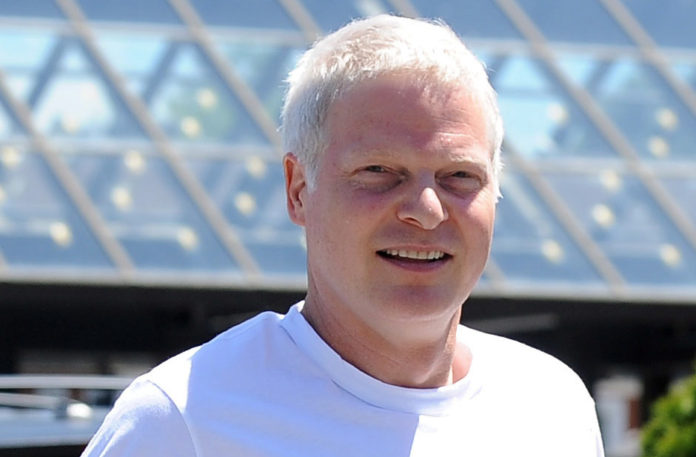
Mandatory Credit: Photo by Andrew Gombert/EPA/Shutterstock (7633743i) American Real Estate Developer Film Producer Steve Bing Walks Around Rhinebeck New York the Morning of the Wedding Between Chelsea Clinton and Investment Banker Marc Mezvinsky at the Astor Court Estate About 90 Miles North of New York City 31 July 2010 United States Rhinebeck Usa Clinton Wedding - Jul 2010

By Oyinlola Awonuga (The New Diplomat’s Entertainment, Fashion and Sports Desk)

Steve Bing, an American producer, philanthropist, and writer has died by suicide at the age of 55.

According to reports, he died on Monday June 22nd after jumping from the 27th floor of a luxury apartment building in L.A.’s Century City neighborhood.

He was reported to have been suffering from depression due to lack of human contact during quarantine.

Bing, who founded Shangri-La Entertainment inherited a fortune of some $600 million from his grandfather, L.A. real estate developer Leo S. Bing.

After dropping out of University, Bing pursued a career in Hollywood and became the executive producer of the Sylvester Stallone film, “Get Carter,” in 2000

In 2003, he co-wrote the action-comedy “Kangaroo Jack,” and he also contributed to “Missing in Action” and wrote an episode of “Married With Children.”

The philanthropist later invested some $80 million in “The Polar Express,” the Tom Hanks-voiced 2004 film directed by Robert Zemeckis. Bing had producing credits on films including “CSNY/Deja Vu,” “Rock the Kasbah,” “Get Carter,” “Girl Walks Into a Bar” and a Jerry Lee Lewis documentary in the works.

Bing is survived by his two children, Damian Hurley from his relationship with Elizabeth Hurley and daughter Kira Bonder, who he had with former pro tennis player Lisa Bonder.

Credit: https://newdiplomatng.com

She’s on the frontline of a rape epidemic. The pandemic has made her work more dangerous By Bukola Adebayo, CNN

Editors Note: CNN is committed to covering gender inequality wherever it occurs in the world. This story is part of As Equals, an ongoing series.

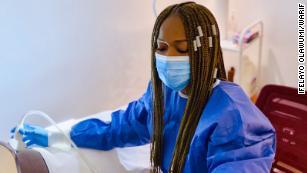
Lagos, Nigeria — At the start of each day, Dr. Anita Kemi DaSilva-Ibru and her team put on gloves, facemasks and other personal protective equipment to see their patients.They’re not treating people for Covid-19, but they are on the frontline of the pandemic, working at the Women at Risk International Foundation (WARIF), a rape crisis center in Lagos, Nigeria.Wearing protective gear is the new reality for crisis center workers, like DaSilva-Ibru.”We change these kits each time we see a survivor as we are mindful of the risk of transmission of the virus between the survivor and us and the cross-contamination between a survivor and the next,” she told CNN.US-trained gynecologist DaSilva-Ibru has spent most of her career treating hundreds of sexual violence victims but it was the growing scale of the crisis in Nigeria that prompted her to set up WARIF in 2016.The clinic in Yaba, a suburb of Lagos, provides medical treatment, legal assistance therapy and space for rape victims and survivors of sexual abuse to get back on their feet.One in four Nigerian girls has been the victim of sexual violence, according to UN estimates but DaSilva-Ibru says the numbers are higher as many cases go unreported due to the stigma attached.In recent weeks, two high profile cases of gender-based violence have brought Nigerian women out onto the streets demanding change.Uwaila Vera Omozuwa, a 22-year-old microbiology student, was found half-naked in a pool of blood in a local church where she had gone to study after the Covid-19 lockdown left universities across the country shut.

“Rape is an epidemic in this country.”Dr. Anita Kemi DaSilva-Ibru, Women at Risk International Foundation

Her family said her attackers raped her and the student died while being treated at the hospital. A few days later, another student, Barakat Bello, was allegedly raped and killed during a robbery at her home, according to human rights group Amnesty International.“Rape is an epidemic in this country,” DaSilva-Ibru told CNN.She says her work with survivors of sexual violence has become more critical during the outbreak, with restrictions to curb the virus from spreading fueling a surge in calls.It’s a story echoed in other parts of the region, as authorities grapple with a growing number of Covid-19 cases and the impact restrictions are having on women.Related: A transport ban in Uganda means women are trapped at home with their abusersDaSilva-Ibru said she initially closed the center after authorities locked down the city in March, she had to reconsider the decision as the organization became inundated with SOS messages from sexual violence victims and their guardians.Staff operating the 24-hour helpline at the center also reported a 64% increase in calls during this period, according to DaSilva-Ibru.”Our phones were ringing. Women were calling and desperately asking how we can help them, these were women in fear of their lives, as many have now been forced into quarantine with their abusers, in an already volatile environment,” DaSilva-Ibru told CNN.For the center to re-open, DaSilva-Ibru said she had to source PPE, face masks and other protective gear personally and when that was not enough, the center launched an online appeal for funds from donors to buy the equipment at no cost to survivors, she said.”We carry out forensic examinations on survivors and our frontline health workers who triage and examine patients are in close proximity to the survivors. As much as we need to carry out our duties, we also need to ensure our workers are adequately protected,” DaSilva-Ibru told CNN.The challenges Ibru faces to keep the center open, doesn’t compare to what sexual violence victims have experienced as a result of this pandemic, she said.DaSilva-Ibru recalls a woman who told staff at the center that her male friend had raped her in her home during the lockdown.Dr. Anita Kemi DaSilva-Ibru. Dr. Anita Kemi DaSilva-Ibru.”The first day we re-opened, we attended to women who had walked many miles in spite of the mandatory lockdown to get to the center. These are women who had been terrorized in their homes,” she added.”She (a survivor) had repeatedly been calling (the center) to find out how she could get help. She feared she might have contracted HIV and wanted to be tested,” Ibru said.Speaking to CNN, the woman, who didn’t want to use her name to protect her identity, said a co-worker raped her after he came to her apartment unannounced in April.The young banker said she had previously rebuffed his attempts to visit, but on that Sunday afternoon in April, he showed up at her doorstep.”He’s a friend, not a stranger, so I opened the door for him. I was still asking him what was so urgent that made him leave his home. He said he wanted to check up on me and I told him he could have done that over the phone,” she told CNN.But a few minutes into his visit, the conversation became uncomfortable between them.”He kept coming towards me, and when I told him to stop, he put his hand over my mouth and pinned me on the floor,” she said.She says he apologized after raping her and hurriedly left her house.The survivor told CNN she did not make a police complaint because she was worried about the stigma and strain that the rape might have on her parents.A friend she confided in told her to reach out to the Lagos Domestic and Sexual Violence Response Team who put survivors in touch with treatment centers for help.After several calls to the centers on their website, she was referred to WARIF.When she went to the clinic, she says staff ran some tests and placed her on Post Exposure Prophylaxis, a HIV prevention treatment for possible exposure.”Sometimes I get really angry, and sometimes I feel numb,” she said, reflecting on the assault.She says she was sick every night for 28 days because of the drugs.”…even though the doctor prepared me for the side effect, it has not been easy,” she told CNN.Gender-based violence is a problem in many countries, but the coronavirus pandemic has worsened the situation.The UN says the raft of measures deployed by governments to fight the pandemic have led to economic hardship, stress, and fear — conditions that lead to violence against women and girls.Equality Now Regional Coordinator in Africa Judy Gitau told CNN that the wave of unemployment and school closures has put victims in a precarious situation.She recalls a similar situation in Sierra Leone during the 2014 Ebola outbreak when teenage pregnancies spiked in the countryThe government enforced strict stay-at-home orders that closed businesses and schools across the West African nation to curb the spread of the virus, she said.The restrictions made schoolgirls vulnerable to abuse as some were assaulted in their homes by relatives, and at the same time, a majority of girls from low-income families were coerced to exchange sex for money for food, Gitau said.”Many of them wound up pregnant but the evidence became available when people were plugging back to life as they knew it as a normal society,” she said.Gitau says authorities must know that perpetrators often take advantage of the strict measures to abuse victims without arousing much suspicion.As state resources are being re-focused to tackle the spread of coronavirus, law enforcement agencies should also respond quickly to reports of abuse and create shelters for victims in need of immediate rescue, she said.But placing women in shelters, especially in countries battling an outbreak, comes with the additional burden of proof, according to DaSilva-Ibru who said shelters in Lagos city are asking survivors to take coronavirus tests before they can be admitted to prevent infection in their facilities.

“Violence against women and girls is one of the most pervasive forms of a human rights violation and should be recognized by all countries.”Dr. Anita Kemi DaSilva-Ibru, Women at Risk International Foundation

Authorities in Lagos designated gender-based violence services essential in May as it eased lockdown into curfews to allow service providers to get to work more smoothly, DaSilva-Ibru said.The police force says it has now deployed more officers to its stations across the country to respond to the “increasing challenges of sexual assaults and domestic/gender-based violence linked with the outbreak of the Covid-19 pandemic.” And last week, governors across the country resolved to declare a state of emergency on rape, according to the Nigerian Governor’s Forum (NGF).Related: Nigerian women are taking to the streets in protests against rape and sexual violenceIt’s the first time federal and state authorities are coming out with a united voice to condemn gender violence, DaSilva-Ibru said and it validates the outcry of women in the country and the scale of the problem in Nigeria, she added.”Violence against women and girls is one of the most pervasive forms of a human rights violation and should be recognized by all countries,” DaSilva-Ibru said.”In Nigeria, it has become a national crisis that needs urgent attention. I am pleased that this has been recognized.”

Click here for more stories from the As Equals series.

Covid-19: Our pain over the burial of our father, Joseph Obochi Idoko

The family of Mr. Joseph Obochi resigned to their fate to lay him to rest in line with the Federal Government directive, after all appeal to release his corpse fell on deaf ears.

5th of June 2020 was the day agreed by the family and the public health service of the F.C. T Command to bury (the remains of) Mr. Joseph Obochi. Between the hours of 8am – 9am, the family received a call from the public health service in respect to their preparation for the burial which was scheduled for 11am. The caller informed the family that the family should produce two body bags for the burial. The son of late Joseph protested that if the father actually died of COVID-19 as they were meant to believe, why won’t the federal government provide the bags? The caller angrily ended the call.

However, all efforts to reach the caller when the family were at the National Hospital by 11am was to no avail; he did not pick the calls neither did he return the calls. He was called five (5) times. By 12pm he was called again and this time, he picked and complained that the family should stop harassing him; he added that they have been busy trying to arrange experts that will handle the burial process.

​In addition, the caller also informed the family that they should go to Gudu Cemetery, Apo- Abuja to register with the sum of N10, 000.00 for the grave to be dug but at the cemetery, they ended up paying N20, 000.00 after much plea for the sum to be reduced from N30, 000.00.

At the mortuary, they were told to provide four family members that will wear the PPE materials as against the earlier provision of experts that will facilitate the corpse to the cemetery for burial.

The attitude of officers that were assigned to carry out the burial was inhuman. Having paid N20,000 for the grave at the Gudu cemetery, it was still the family that dug the grave! The officers from the Public Health forcefully tried to stop the digging of the grave when it was not up to 4 feet while they stood at a distance and watched the family carrying out the burial rites. They only ensured the fumigation of the corpse and the environment. They also collected the sum of N1000 from the family for burning of the PPE materials that was used for the burial.

Late Joseph was buried by the family as against what we were meant to believe that COVID-19 patients will be solely buried by the Federal Government.The family is pained because they know that their father did NOT DIE OF COVID-19 as was recorded. On the 5th of June 2020 when he was buried made it three weeks and 6 days; no contact tracing has been done and none of the family members, colleagues, neighbors, or sympathizers have exhibited any symptoms related to COVID-19.

The Role of National Hospital

We are very regretful that we ever took our brother to National Hospital, Abuja. While little was done (except that they fixed him on Oxygen briefly) to save his life, it is surprisingly questionable that the hospital became more interested in his corpse after his death. The hospital was quick to contact NCDC to come take his sample for a very questionable COVID-19 test, the same hospital couldn’t prevail on NCDC to test his relatives (even his son and daughter that were with him until he died), let alone do any form of contact tracing.

How can a National Hospital descend so low into questionable ethical practices that can not be boldly presented in intelligent clinical discussions? Can the hospital justify such a COVID-19 test? We suspect an unhealthy deal or interest of the National Hospital in the COVID-19 pronouncement as the cause of Joseph’s death.

National Deception

The reason put forward for the refusal to release Joseph’s corpse to the family was because he died of COVID-19, he has to be buried by government and by experts. It was shocking that it was not so. From the mortuary to the final internment at Gudu cemetery, his son and three other members of the family were made to wear the PPE to handle the corpse and to bury it. If that was what was intended, why would the hospital refuse to handle the burial in the family way? If it is government that should handle the burial, why would they subject the family to dig the grave at the Gudu cemetery and do the internment? With such deceptions experienced in Joseph’s death and burial, how does government expect the public to believe any news about COVID-19? The integrity of NCDC in the case is very questionable.

In conclusion, we want justice done in the questionable positive test for COVID-19 of Joseph, and the questionable handling of his burial.

Credit: https://everyday.ng

Buhari On National Security: Too Little, Too Late, Too Narrow

What really would be the legacy that President Muhammadu Buhari would want to live behind? Many writers have been wasting their time asking such inane questions since Mr. President won his first presidential election. I do not think that Buhari is bothered about such things. Legacy? What legacy? Before asking such questions, it should not be out of place to check if the man Buhari is bothered about how the public opinion judges him. 

From what I have seen of the man, public opinion means nothing to him. Or, how many people have written and spoken against the way his government has become a cluster of family and friends. He has just finished the first year of his second term, and he has not bothered to prove his critics wrong. No; he has remained unfazed in the way his appointments have been made. This is especially so in the way he has made up his national security agency heads; the top brass of the military, the Police, and security agencies, in fact the military and para-military agencies. 

Unfortunately, it did not stop there, but his filially connected close appointees and non-government appointees but who pull powerful and consequential strings in the corridors of power, not only abound, but recently, caused a national scandal when a shot, yes, a gunshot, rang out in the hallowed grounds of the Aso Rock Presidential Vila. 

What really could have been going on there to the extent that it reached the level of firing a gunshot? Well, action has been said to have been taken on that score and thus dozens of security agents previously posted to the Villa, may have been redeployed. But has that addressed the matter of non-security Aso Rock types whose frosty relationships cause the hoopla in the first place? No, is the answer! It has been swept under the carpet, but it may resurface again, unfortunately. 

Apart from the makeup of the apex of the national security agencies, their poor performances, especially in taming the varied sources of insurgency in the country, has been under unrelenting condemnation for years. That national security has fallen to its lowest ebb is not the issue here, at least, no one will creditably blame Buhari for the insurrections. He could not have caused the Boko Haram insurgency and the group’s murderous campaign began ever before Buhari emerged President. But in what way has he tackled it? 

It is amazing what great difference the pronouncements of Northerners have made in the President Buhari administration. For years, Southern Youths, various Southern Nigerian bodies and organisations and even Southern monarchs and religious leaders have shouted themselves hoarse denouncing the insecurity that has blanketed the southern part of the country. The President simply turned a deaf ear to their cries. Even before the cries of the Southerners rent the air, such cries have been bellowing from the Middle Belt. Somehow, Nigerians other than Middle-Belters largely pretended they did not hear that cry until Lt. General T. Y. Danjuma asked his Junkun people to defend themselves the best way they could because they had been abandoned. 

Terrible denunciations were all that Danjuma reaped. He was denounced. He was abused. He was maligned. He was smeared. But he had breached the dam and so the flood gates opened. Talks about how states could, instead of lying prostrate for insurgents to trample on their backs, build outfits that would complement the efforts of the Nigeria Police Force, and give their people a modicum of defence against criminals, began to be taken seriously. Today, Amotekun has a meaning in Nigeria, though its roar has not been heard and its bite has not wounded anyone. But it is there. It can only grow stronger and its example will be copied by others. 

Here, there and everywhere, talks about a certain kind of insurgency, that of the herdsmen, gained momentum over the years as the excesses of the herdsmen kept multiplying. But the government acted as though it never heard such complains. Instead of checking the herdsmen’s extravagances, pillaging, immoderations and robbery with violence and large-scale murder, the government came up with pro-herdsmen’s postulations such as cattle routes, cattle colonies and RUGA whereby land would be provided by communities or states to enable some cattle owners carry on with their totally private businesses of nothing but animal husbandry. 

Then within the week, there was a convergence of cries as various Northern groups and personalities wailed about the state of insecurity in the nation. Leading the group was The Sultan of Sokoto and President-General of the Nigerian Supreme Council for Islamic Affairs, Muhammad Sa’ad Abubakar. He said: “Buhari, others should have sleepless nights over insecurity” as the Daily Trust newspaper titled its story. 

Credit: https://www.independent.ng

With 258m widows worldwide, Nigeria needs to stop social stigmas that create exclusion, and discriminatory or harmful practices on hers

By Ms Hauwa E. Shekarau, Founder/Executive Director, Women, Law and Development Initiative (WOLDI)

The 23rd day of June every year has been set aside by the United Nations, by virtue of Resolution A/RES/65/189, as “International Widows Day” to draw attention to the voices and experiences of widows and to galvanise the unique support that they need.

There is, currently around the world, an estimated 258 million widows and this number is on the increase in light of the current corona virus pandemic ravaging our planet and occasioning devastating human loss, likely to render a lot of women new widows. The corona pandemic and the attendant lock downs and economic closures that has afflicted the world today has wrought untold hardship on widows; most of whom have no access to pensions, family support, healthcare or even basic necessities to support themselves and their children.

Asides the pandemic, most widows around the world have been subjected to diverse forms of harmful traditional practices, victimisation, discrimination and abuse. These vices are regularly on the increase, especially in the developing societies such as Sub-Saharan Africa and Nigeria in particular. The voices, needs and experiences of these widows are often suppressed and absent from government and societal policies that are likely to impact on their survival.

This year, the attention of the International Widows Day is on creating an opportunity for action towards achieving full rights and recognition for widows, by providing Widows with information on access to a fair share of their inheritance, land and productive resources;
pensions and social protection that are not based on marital status alone;Decent work and equal pay; and Education and training opportunities.

There is also the need to empower widows to support themselves and their families by addressing social stigmas that create exclusion, and discriminatory or harmful practices. Government must take steps to ensure that Widows rights and needs are enshrined in International and domestic laws in line with the Convention on the Elimination of All Forms of Discrimination Against Women (CEDAW) and the Convention on the Rights of the Child.

Government Policies and Programs directed at eradicating violence against Widows and their children, poverty alleviation, education, free access to justice and other supports, must be undertaken within the context of action plans to accelerate achievement of the Sustainable Development Goals.

Thus, in line with these set goals, we at WOLDI and our partners around the world are proud to join hands with the United Nations by restating our commitment to ensuring that Widows have access to justice and are free from every form of discrimination against them and their children. We recognise the unique importance and value of widows within our society, and are dedicated to ensuring that their rights, needs and voices are heard around the world.

WOLDI therefore calls on the Government at all levels, Public and Private Organisations, media houses and the general public to join in the fight to eliminate all forms of discrimination against widows and their children, alleviate poverty, and also, elevate the standard of living of widows and their families in Nigeria. We welcome every case of discrimination against widows and their children, as our doors are always opened and ready to listen and fight for their rights.
Happy International Widows Day!

Credit: https://everyday.ng

Edward Colston, History Wars and the Legacies of Slave Owners In Nigeria, By Abdulbasit Kassim

Should our society continue to honour the legacies of slaveowners and those who played active roles in the trans-Atlantic and trans-Saharan slave trade? Should our society continue to name monuments, schools, streets, stadiums, and other landmarks after them, even though we are all aware of their dark legacies?… This is about historical accountability and the need to hold people’s legacies to account for the actions they perpetrated in the past.

One of the great liabilities of history is that all too many people fail to remain awake through great periods of social change” – Martin Luther King

“We live in a moment of history where change is so speeded up that we begin to see the present only when it is already disappearing” – Ronald David Laing

On Sunday, the statue of Edward Colston, the deputy governor of the Royal African Company, was toppled by Black Lives Matter protesters and thrown into the Bristol harbour. Barely 56 hours later, the 150-year-old statue of King Leopold II of Belgium, whose colonisation of and slave holding regime in Congo began in 1885 and led to the deaths of millions, was removed from a public square in Antwerp and deposited at the Middleheim Museum. More than 65,000 people have signed a petition to remove all statues of King Leopold II across Belgium. The removal of the statue of King Leopold II took place two years after the United Nations called on the Belgian government to apologise for the crimes committed during its colonial enterprise and a year after Belgium apologised for the tremendous harm inflicted on Central African nations during its 80 years of their colonisation.

In London, the statue of Robert Milligan, the 18th-century slave trader, who owned two sugar plantations and 526 slaves in Jamaica, was removed from its plinth outside the museum of London Docklands. London’s Mayor Sadiq Khan also announced that more statues of imperialist figures would be removed from the streets of London. The statue of Cecil Rhodes, a Victorian imperialist in southern Africa, whose name fronts Oxford University’s Rhodes scholarship, may also be removed, following the ‘Take it Down – Rhodes Must Fall’ protest. The University of Liverpool also announced that one of its halls of residence named after the former U.K. prime minister, William Gladstone, would be renamed due to his views on slavery and his family connections to slaveholding.

The Plymouth City Council also announced that the public square named after Sir John Hawkins, the Elizabethan seafarer, who is considered to be the first English slave trader to have transported captured Africans to work on plantations in the America in the 16th century, would be renamed because of his role in slave trade.

Edward Colston is gone. Robert Milligan is gone. King Leopold II is gone. Good. Now, let us revisit how the legacies of indigenous slaveowners have been honoured.

According to the British-Nigerian historian, David Olusoga, the toppling of the statue of Edward Colston and other statues is not an attack on history; it is history. Edward Colston was known for his philanthropy and charitable contributions to the city of Bristol. Yet, the previously suppressed dark legacy of his active role in the trans-Atlantic slave trade have surfaced to haunt his memory. The toppling of the statues and relics of colonialism is a domino effect of the global protests in the wake of George Floyd’s death and the call for the removal of Confederate monuments in the U.S., considered by many people as symbols of oppression and racism. Like Edward Colston, the statues of John Castleman in Louisville and Charles Linn in Birmingham and others across the United States have been torn from their plinths and disposed away from public display. The State of Virginia has also initiated the move to remove the huge statue of Confederate General Robert Lee in Richmond, the state capital. The seismic historical change taking place around the world might appear distant and far from Nigeria, however, it should serve as a wake-up call.

There is no better time to revisit how we have honoured the legacies of slaveowners like Madam Efunroye Tinubu, the wife of Oba Adele, who was also one of the ferocious slave dealers who operated the Lagos-Ibadan slavery corridor, delivering slaves for Brazilian and Portuguese export.

What we are witnessing now are “history wars” – the political struggles in which versions of the past – the silenced history – that have long gone largely uncontested are being exposed and challenged. Historical memory is not merely an entity altered by the passage of time; it is the prize in a struggle between rival versions of the past; a question of will, power, and persuasion. The past does not speak for itself, rather actors, institutions, and discourses speak for and shape the meaning of the past through the construction of historical memories. And as with any power struggle, there are actors and interpretations that are winning and those that are not. The previous decades have been times of particularly vigorous public debates about the meanings of the past in many places. More people are beginning to question what has so far been codified as the dominant representations of the past. This is ultimately a battle of ideas, and sooner or later, we will feel the contagious and domino effect here in Nigeria. It is time to revisit the legacies of the slaveowners and those who played active collaborative roles in the trans-Atlantic and trans-Saharan slave trade.

How have we memorialised the legacies of indigenous slaveowners?

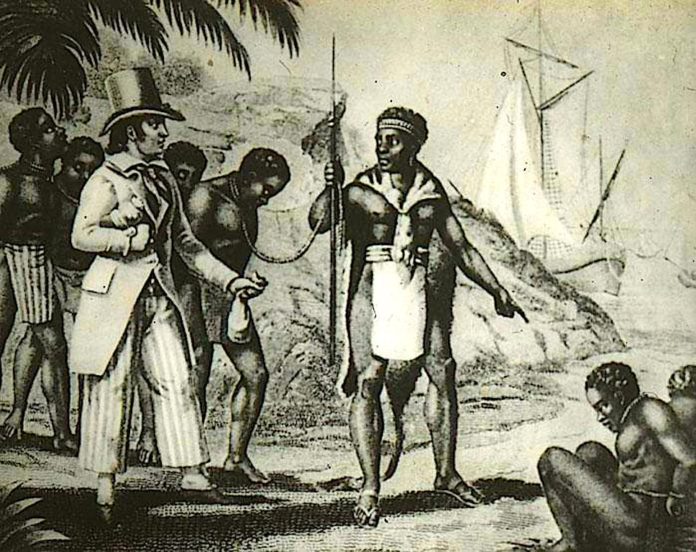
There is no better time to revisit how we have honoured the legacies of slaveowners like Madam Efunroye Tinubu, the wife of Oba Adele, who was also one of the ferocious slave dealers who operated the Lagos-Ibadan slavery corridor, delivering slaves for Brazilian and Portuguese export. To demonstrate her commitment to the trade, Madam Tinubu once boasted of drowning her slaves, rather than selling them at a discount. Her statue is honoured and preserved in Tinubu Square on Lagos Island. In his book, Madame Tinubu: Merchant and Kingmaker, Oladipo Yemitan argues that contrary to the projected image of Madam Tinubu as a repentant slave trader, who fought against slave trade, she secretly continued trading in slaves until her death in 1887. Madam Tinubu was not alone. Efunsetan Aniwura was probably the most ruthless of all the slave dealers in South-West Nigeria. She was an extremely wicked slave dealer. This woman made it an abomination for her female slaves to get pregnant, and when they did, she openly beheaded them in cold blood at the Ibadan Town Square.

How exactly is the crime of Edward Colston and Robert Milligan different from the legacies of Madam Tinubu and Efunsetan Aniwura? Why should Edward and Robert be dishonoured abroad, while we continue to honour Efunsetan and Madam Tinubu at home? People still honour and revere the legacies of Oba Akintoye, Kosoko, Ologun Kutere, Akinsemoyin and others, who were the biggest slave traders in Lagos. How exactly are they different from Edward Colston and Robert Milligan? It is even on record that Oba Kosoko bought Nigerian slaves who were previously sold and transported to Bahia, because he needed their skills to build Brazilian type houses and produce European items in Lagos. Oshodi Tapa, Dada Antonio, Ojo Akanbi and others who were former slaves and later became big time slave merchants themselves built generational wealth from the slave trade that survives till present. Today, the legacies of these slaveowners are not only revered and whitewashed, but their children are still benefiting from the wealth their ancestors passed down from slavery. These are examples from the South.

In Northern Nigeria, there are too many examples to cite. According to some estimates, by the late 19th century, slaves constituted about 50 per cent of the population of the emirate in Adamawa. The Lamido of Adamawa received an estimated 5,000 slaves in tributes annually, in addition to those captured during the expeditions conducted by his brothers. As Chinedu Ubah explains in his article on the suppression of slave trade in the Nigerian emirates, the emirate of Adamawa was among the last emirates in northern Nigeria to abandon the traffic in slaves. Even after the abolition of slave trade, Catherine Vereecke argues in her research on slave trade in Adamawa that linguistic markers that differentiate the rimdinabe (freed slaves) and their descendants from the rimbe (free persons and true Fulbe) are still prevalent in Adamawa till date.

…Adaobi Tricia Nwaubani emphasised the need for Africans to reckon with the complicated legacy our ancestors played in the slave trade. This act of reckoning should usher a moment for posing questions of historical guilt and a culture of apology for the injustices perpetrated against fellow Africans…

Although ex-slaves and their descendants have immersed themselves in the Fulbe society, they have not been able to fully escape their marginal slave status. Indeed, some ‘true Fulbe’ still take pride in the legacies of their ancestors as slaveowners and others still hold the belief that slave lands belongs to the ‘Fulbe’ by the right of conquest. Those ‘true Fulbe’ who take pride in the slave-raiding of their ancestors are not different from the Brits defending the slave legacies of Cecil Rhodes, Edward Colston and Winston Churchill in England. Beyond Adamawa, virtually all the emirates in Northern Nigeria were once bastions of slave dealers, with emirs who serially abused young girls and religiously justified their sexual enslavement under the guise of “concubinage”. The cruelty of slavery in northern Nigeria is documented in the book The Diary of Hamman Yaji: Chronicle of A West African Muslim Ruler, edited by James Vaughan and Anthony Kirk-Greene. Sean Stilwell and Heidi Nast also wrote excellent books on the noxious enslavement and concubinage that took place across the emirates in northern Nigeria, such as in Paradoxes of Power: The Kano Mamluks and Male Royal Slavery in the Sokoto Caliphate 1804-1903 and Concubines and Power: Five Hundred Years in a Northern Nigerian Palace.

This is not a regional issue. From the North to the South, there are people who were complicit in the same crimes perpetrated by Edward Colston and Robert Milligan but whose legacies are still revered and honoured. In fact, we should look at Port Harcourt city. The city is named after Lewis Vernon Harcourt, the British secretary of state, who was also a sex maniac. Lewis Harcourt was a serial child abuser and he abused both young boys and girls. Today, the hub of the oil industry in Nigeria is named after him. Some of our streets are named after colonial officers and local slave warriors with very dark histories. One of the most popular streets in Ikoyi is named after Algernon Willoughby Osborne, who was a British official responsible for the administration of colonial law in Southern Nigeria. In his book, Black Edwardians: Black People in Britain 1901-1914, Jeffrey Green writes about how Algernon Osborne and his wife Mary Osborne treated their Gambian slave girl. Algernon Osborne did not only display racist character during his wife’s court case with the National Society for the Prevention of Cruelty to Children (NSPCC) at St. Albans in September 1908, he also held the belief that “the only way to correct black people was to flog them.” Today, a major road is named in his honour.

The questions here are: Should our society continue to honour the legacies of slaveowners and those who played active roles in the trans-Atlantic and trans-Saharan slave trade? Should our society continue to name monuments, schools, streets, stadiums, and other landmarks after them, even though we are all aware of their dark legacies? What would this official recognition say about how we honour certain versions of the past? Should we just forget and overlook this? Or should we follow the Donald Duke approach and build a slave museum to document the dark histories? Some people might argue that: Why are we speaking about this history now? What exactly is the goal? Is this driven by the penchant to mimic the current trend of protests across Western capitals? Or are we revisiting this history to re-traumatise or stir up ethnic hatred? This is not about the West or the East. This is about historical accountability and the need to hold people’s legacies to account for the actions they perpetrated in the past.

In her Wall Street Journal article “When the Slave Traders Were Africans”, Adaobi Tricia Nwaubani emphasised the need for Africans to reckon with the complicated legacy our ancestors played in the slave trade. This act of reckoning should usher a moment for posing questions of historical guilt and a culture of apology for the injustices perpetrated against fellow Africans, whose ancestors were killed and whose lineages were disrupted by the business of slave trade. The Europeans could not have gone into the interior themselves, they had to rely on African merchants and middlemen who traded their fellow Africans as slaves. Those middlemen like Efunsetan and Madam Tinubu and others who participated in the trans-Atlantic and trans-Saharan slave trade also deserve to be held accountable. I hope that when this seismic historical change manifests itself in Nigeria, the descendants of slaveowners in Nigeria would be brave enough to act and speak like Robert Wright Lee (the descendant of Robert Lee): “We have a chance here today…to say this will indeed not be our final moment and our final stand. This statue of my ancestor is a symbol of oppression and I support its removal.”

Abdulbasit Kassim is a PhD Candidate in Islam and Africana Studies at Rice University and a Visiting Doctoral Fellow at the Institute for the Study of Islamic Thought in Africa at Northwestern University. @scholarakassi1

credit: premiumtimesng.com

Coronavirus: 38 days when Britain sleepwalked into disaster

Boris Johnson skipped five Cobra meetings on the virus, calls to order protective gear were ignored and scientists’ warnings fell on deaf ears. Failings in February may have cost thousands of lives

On the fourth Friday of January a silent and stealthy killer was creeping across the world. Passing from person to person and borne on ships and planes, the coronavirus was already leaving a trail of bodies.

The virus had spread from China to six countries and was almost certainly in many others. Sensing the coming danger, the British government briefly went into wartime mode that day, holding a meeting of Cobra, its national crisis committee.

But it took just an hour that January 24 lunchtime to brush aside the coronavirus threat. Matt Hancock, the health secretary, bounced out of Whitehall after chairing the meeting and breezily told reporters the risk to the UK public was “low”.

This was despite the publication that day of an alarming study by Chinese doctors in the medical journal The Lancet. It assessed the lethal potential of the virus, for the first time suggesting it was comparable to the 1918 Spanish flu pandemic, which killed up to 50 million people.

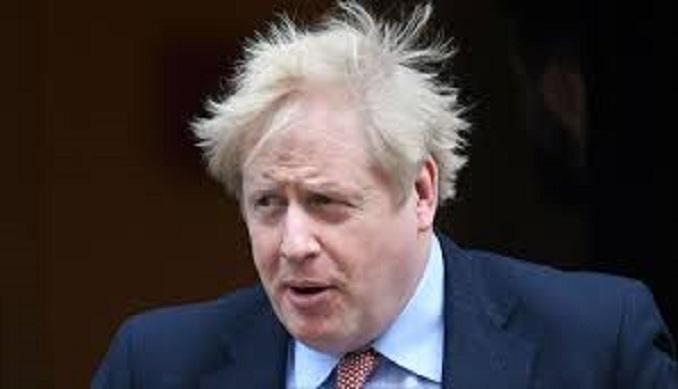
Unusually, Boris Johnson had been absent from Cobra. The committee — which includes ministers, intelligence chiefs and military generals — gathers at moments of great peril such as terrorist attacks, natural disasters and other threats to the nation and is normally chaired by the prime minister.

Johnson had found time that day, however, to join in a lunar-new-year dragon eyes ritual as part of Downing Street’s reception for the Chinese community, led by the country’s ambassador.

It was a big day for Johnson and there was a triumphal mood in Downing Street because the withdrawal treaty from the European Union was being signed in the late afternoon. It could have been the defining moment of his premiership — but that was before the world changed.

That afternoon his spokesman played down the looming threat from the east and reassured the nation that we were “well prepared for any new diseases”. The confident, almost nonchalant, attitude displayed that day in January would continue for more than a month.

Johnson went on to miss four further Cobra meetings on the virus. As Britain was hit by unprecedented flooding, he completed the EU withdrawal, reshuffled his cabinet and then went away to the grace-and-favour country retreat at Chevening where he spent most of the two weeks over half-term with his pregnant fiancée, Carrie Symonds.

It would not be until March 2 — five weeks later — that Johnson would attend a Cobra meeting about the coronavirus. But by then it was almost certainly too late. The virus had sneaked into our airports, our trains, our workplaces and our homes. Britain was on course for one of the worst infections of the most insidious virus to have hit the world in a century.

Last week a senior adviser to Downing Street broke ranks and blamed the weeks of complacency on a failure of leadership in cabinet. The prime minister was singled out.

“There’s no way you’re at war if your PM isn’t there,” the adviser said. “And what you learn about Boris was he didn’t chair any meetings. He liked his country breaks. He didn’t work weekends. It was like working for an old-fashioned chief executive in a local authority 20 years ago. There was a real sense that he didn’t do urgent crisis planning. It was exactly like people feared he would be.”

One day there will be an inquiry into the lack of preparations during those “lost” five weeks from January 24. There will be questions about when politicians understood the severity of the threat, what the scientists told them and why so little was done to equip the National Health Service for the coming crisis. It will be the politicians who will face the most intense scrutiny.

Among the key points likely to be explored are why it took so long to recognise an urgent need for a massive boost in supplies of personal protective equipment (PPE) for health workers; ventilators to treat acute respiratory symptoms; and tests to detect the infection.

Any inquiry may also ask whether the government’s failure to get to grips with the scale of the crisis in those early days had the knock-on effect of the national lockdown being introduced days or even weeks too late, causing many thousands more unnecessary deaths.

We have talked to scientists, academics, doctors, emergency planners, public officials and politicians about the root of the crisis and whether the government should have known sooner and acted more swiftly to kick-start the Whitehall machine and put the NHS onto a war footing.

They told us that, contrary to the official line, Britain was in a poor state of readiness for a pandemic. Emergency stockpiles of PPE had severely dwindled and gone out of date after becoming a low priority in the years of austerity cuts. The training to prepare key workers for a pandemic had been put on hold for two years while contingency planning was diverted to deal with a possible no-deal Brexit.

This made it doubly important that the government hit the ground running in late January and early February. Scientists said the threat from the coming storm was clear. Indeed, one of the government’s key advisory committees was given a dire warning a month earlier than has previously been admitted about the prospect of having to deal with mass casualties.

It was a message repeated throughout February, but the warnings appear to have fallen on deaf ears. The need, for example, to boost emergency supplies of protective masks and gowns for health workers was pressing, but little progress was made in obtaining the items from manufacturers, mainly in China.

Instead, the government sent supplies the other way — shipping 279,000 items of its depleted stockpile of protective equipment to China during this period in response to a request for help from the authorities there.

The prime minister had been sunning himself with his girlfriend in the millionaires’ Caribbean resort of Mustique when China alerted the World Health Organisation (WHO) on December 31 that several cases of an unusual pneumonia had been recorded in Wuhan, a city of 11 million people in Hubei province.

In the days that followed, China at first claimed the virus could not be transmitted from human to human, which should have been reassuring. But this did not ring true to Britain’s public health academics and epidemiologists, who were texting one another, eager for more information, in early January.

Devi Sridhar, professor of global public health at Edinburgh University, had predicted in a talk two years earlier that a virus might jump species from an animal in China and spread quickly to become a human pandemic. So the news from Wuhan set her on high alert.

“In early January a lot of my global health colleagues and I were kind of discussing ‘What’s going on?’” she recalled. “China still hadn’t confirmed the virus was human to human. A lot of us were suspecting it was because it was a respiratory pathogen and you wouldn’t see the numbers of cases that we were seeing out of China if it was not human to human. So that was disturbing.”

By as early as January 16 the professor was on Twitter calling for swift action to prepare for the virus. “Been asked by journalists how serious #WuhanPneumonia outbreak is,” she wrote. “My answer: take it seriously because of cross-border spread (planes means bugs travel far & fast), likely human-to-human transmission and previous outbreaks have taught overresponding is better than delaying action.”

Events were now moving fast. Four hundred miles away in London, on its campus next to the Royal Albert Hall, a team at Imperial College’s School of Public Health led by Professor Neil Ferguson produced its first modelling assessment of the impact of the virus. On Friday January 17 its report noted the “worrying” news that three cases of the virus had been discovered outside China — two in Thailand and one in Japan. While acknowledging many unknowns, researchers calculated that there could already be as many as 4,000 cases. The report warned: “The magnitude of these numbers suggests substantial human-to-human transmission cannot be ruled out. Heightened surveillance, prompt information-sharing and enhanced preparedness are recommended.”

By now the mystery bug had been identified as a type of coronavirus — a large family of viruses that can cause infections ranging from the common cold to severe acute respiratory syndrome (Sars). There had been two reported deaths from the virus and 41 patients had been taken ill.

The following Wednesday, January 22, the government convened the first meeting of its scientific advisory group for emergencies (Sage) to discuss the virus. Its membership is secret but it is usually chaired by the government’s chief scientific adviser, Sir Patrick Vallance, and chief medical adviser, Professor Chris Whitty. Downing Street advisers are also present.

There were new findings that day, with Chinese scientists warning that the virus had an unusually high infectivity rate of up to 3.0, which meant each person with the virus would typically infect up to three more people.

One of those present was Imperial’s Ferguson, who was already working on his own estimate — putting infectivity at 2.6 and possibly as high as 3.5 — which he sent to ministers and officials in a report on the day of the Cobra meeting on January 24. The Spanish flu had an estimated infectivity rate of between 2.0 and 3.0, whereas for most flu outbreaks it is about 1.3, so Ferguson’s finding was shocking.

The professor’s other bombshell in the report was that there needed to be a 60% cut in the transmission rate — which meant stopping contact between people. In layman’s terms it meant a lockdown, a move that would paralyse an economy already facing a battering from Brexit. At the time such a suggestion was unthinkable in the government and belonged to the world of post-apocalypse movies.

The growing alarm among scientists appears not to have been heard or heeded by policy-makers. After the January 25 Cobra meeting, the chorus of reassurance was not just from Hancock and the prime minister’s spokesman: Whitty was confident too.

“Cobra met today to discuss the situation in Wuhan, China,” said Whitty. “We have global experts monitoring the situation around the clock and have a strong track record of managing new forms of infectious disease . . . there are no confirmed cases in the UK to date.”

However, by then there had been 1,000 cases worldwide and 41 deaths, mostly in Wuhan. A Lancet report that day presented a study of 41 coronavirus patients admitted to hospital in Wuhan, which found that more than half had severe breathing problems, a third required intensive care and six had died.

And there was now little doubt that the UK would be hit by the virus. A study by Southampton University has shown that 190,000 people flew into the UK from Wuhan and other high-risk Chinese cities between January and March. The researchers estimated that up to 1,900 of these passengers would have been infected with the coronavirus — almost guaranteeing the UK would become a centre of the subsequent pandemic.

Sure enough, five days later, on Wednesday January 29, the first coronavirus cases on British soil were found when two Chinese nationals from the same family fell ill at a hotel in York. The next day the government raised the threat level from low to moderate.

On January 31 — or Brexit day, as it had become known — there was a rousing 11pm speech by the prime minister promising that withdrawal from the European Union would be the dawn of a new era, unleashing the British people, who would “grow in confidence” month by month.

By this time there was good reason for the government’s top scientific advisers to feel creeping unease about the virus. The WHO had declared the coronavirus a global emergency just the previous day, and scientists at the London School of Hygiene and Tropical Medicine had confirmed to Whitty in a private meeting of the Nervtag advisory committee on respiratory illness that the virus’s infectivity could be as bad as Ferguson’s worst estimate several days earlier.

The official scientific advisers were willing to concede in public that there might be several cases of the coronavirus in the UK. But they had faith that the country’s plans for a pandemic would prove robust.

This was probably a big mistake. An adviser to Downing Street — speaking off the record — said their confidence in “the plan” was misplaced. While a possible pandemic had been listed as the No 1 threat to the nation for many years, the source said that in reality it had long since stopped being treated as such.

Several emergency planners and scientists said that the plans to protect the UK in a pandemic had once been a priority and had been well funded for the decade following the 9/11 terrorist attacks in 2001. But then austerity cuts struck. “We were the envy of the world,” the source said, “but pandemic planning became a casualty of the austerity years, when there were more pressing needs.”

The last rehearsal for a pandemic was a 2016 exercise codenamed Cygnus, which predicted the health service would collapse and highlighted a long list of shortcomings — including, presciently, a lack of PPE and intensive care ventilators.

An equally lengthy list of recommendations to address the deficiencies was never implemented. The source said preparations for a no-deal Brexit “sucked all the blood out of pandemic planning” in the following years.

In the year leading up to the coronavirus outbreak key government committee meetings on pandemic planning were repeatedly “bumped” off the diary to make way for discussions about more pressing issues such as the beds crisis in the NHS. Training for NHS staff with protective equipment and respirators was also neglected, the source alleges.

Members of the government advisory group on pandemics are said to have felt powerless. “They would joke between themselves, ‘Ha-ha, let’s hope we don’t get a pandemic’, because there wasn’t a single area of practice that was being nurtured in order for us to meet basic requirements for a pandemic, never mind do it well,” said the source.

“If you were with senior NHS managers at all during the last two years, you were aware that their biggest fear, their sweatiest nightmare, was a pandemic, because they weren’t prepared for it.”

It meant that the government had much catching-up to do as it became clear that this “nightmare” was turning into a distinct possibility in February. But the source said there was still little urgency. “Almost every plan we had was not activated in February. Almost every government department has failed to properly implement their own pandemic plans,” the source said.

One deviation from the plan, for example, was a failure to give an early warning to firms that there might be a lockdown so they could start contingency planning. “There was a duty to get them to start thinking about their cashflow and their business continuity arrangements,” the source said.

A central part of any pandemic plan is to identify anyone who becomes ill, vigorously pursue all their recent contacts and put them into quarantine. That involves testing, and the UK seemed to be ahead of the game. In early February Hancock proudly told the Commons the UK was one of the first countries to develop a new test for the coronavirus. “Testing worldwide is being done on equipment designed in Oxford,” he said.

So when Steve Walsh, a 53-year-old businessman from Hove, East Sussex, was identified as the source of the second UK outbreak on February 6, all his contacts were followed up with tests. Walsh’s case was a warning of the rampant infectivity of the virus: he is believed to have passed it to five people in the UK after returning from a conference in Singapore, as well as six overseas.

But Public Health England failed to take advantage of our early breakthroughs with tests and lost early opportunities to step up production to the levels that would later be needed.

This was in part because the government was planning for the virus using its blueprint for fighting the flu. Once a flu pandemic has found its way into the population and there is no vaccine, the virus is allowed to take its course until “herd immunity” is acquired. Such a plan does not require mass testing.

A senior politician told this newspaper: “I had conversations with Chris Whitty at the end of January, and they were absolutely focused on herd immunity. The reason is that with flu, herd immunity is the right response if you haven’t got a vaccine.

“All of our planning was for pandemic flu. There has basically been a divide between scientists in Asia, who saw this as a horrible, deadly disease on the lines of Sars, which requires immediate lockdown, and those in the West, particularly in the US and UK, who saw this as flu.”

The prime minister’s top adviser, Dominic Cummings, is said to have had initial enthusiasm for the herd immunity concept, which may have played a part in the government’s early approach to managing the virus. The Department of Health firmly denies that “herd immunity” was ever its aim and rejects suggestions that Whitty supported it. Cummings also denies backing the concept.

The failure to obtain large amounts of testing equipment was another big error of judgment, according to the Downing Street source. It would later be one of the big scandals of the coronavirus crisis that the considerable capacity of Britain’s private laboratories to mass-produce tests was not harnessed during those crucial weeks of February.

“We should have communicated with every commercial testing laboratory that might volunteer to become part of the government’s testing regime, but that didn’t happen,” said the source.

The lack of action was confirmed by Doris-Ann Williams, chief executive of the British In Vitro Diagnostics Association, which represents 110 companies that make up most of the UK’s testing sector. Amazingly, she said her organisation did not receive a meaningful approach from the government asking for help until April 1 — the night before Hancock bowed to pressure and announced a belated and ambitious target of 100,000 tests a day by the end of this month.

There was also a failure to replenish supplies of gowns and masks for health and care workers in the early weeks of February — despite NHS England declaring the virus its first “level 4 critical incident” at the end of January.

It was a key part of the pandemic plan — the NHS’s Operating Framework for Managing the Response to Pandemic Influenza, dated December 2017 — that the NHS would be able to draw on “just in case” stockpiles of PPE.

But many of the “just in case” stockpiles had dwindled, and equipment was out of date. As not enough money was being spent on replenishing stockpiles, this shortfall was supposed to be filled by activating “just in time” contracts, which had been arranged with equipment suppliers in recent years to deal with an emergency. The first order for equipment under the “just in time” protocol was made on January 30.

However, the source said that attempts to call in these “just in time” contracts immediately ran into difficulties in February because they were mostly with Chinese manufacturers, which were facing unprecedented demand from the country’s own health service and elsewhere.

This was another nail in the coffin for the pandemic plan. “It was a massive spider’s web of failing; every domino has fallen,” said the source.

The NHS could have contacted UK-based suppliers. The British Healthcare Trades Association (BHTA) was ready to help supply PPE in February — and throughout March — but it was only on April 1 that its offer of help was accepted. Dr Simon Festing, the organisation’s chief executive, said: “Orders undoubtedly went overseas instead of to the NHS because of the missed opportunities in the procurement process.”

Downing Street admitted on February 24 — just five days before NHS chiefs warned a lack of PPE left the health service facing a “nightmare” — that the UK government had supplied 1,800 pairs of goggles and 43,000 disposable gloves, 194,000 sanitising wipes, 37,500 medical gowns and 2,500 face masks to China.

A senior Department of Health insider described the sense of drift witnessed during those crucial weeks in February: “We missed the boat on testing and PPE . . . I remember being called into some of the meetings about this in February and thinking, ‘Well, it’s a good thing this isn’t the big one.’

“I had watched Wuhan but I assumed we must have not been worried because we did nothing. We just watched. A pandemic was always at the top of our national risk register — always — but when it came we just slowly watched. We could have been Germany, but instead we were doomed by our incompetence, our hubris and our austerity.”

In the Far East the threat was being treated more seriously in the early weeks of February. Martin Hibberd, a professor of emerging infectious diseases at the London School of Hygiene and Tropical Medicine, was in a unique position to compare the UK’s response with Singapore, where he had advised in the past.

“Singapore realised, as soon as Wuhan reported it, that cases were going to turn up in Singapore. And so they prepared for that. I looked at the UK and I can see a different strategy and approach.

“The interesting thing for me is, I’ve worked with Singapore in 2003 and 2009 and basically they copied the UK pandemic preparedness plan. But the difference is they actually implemented it.”

Towards the end of the second week of February, the prime minister was demob happy. After sacking five cabinet ministers and saying everyone “should be confident and calm” about Britain’s response to the virus, Johnson vacated Downing Street after the half-term recess began on February 13.

He headed to the country for a “working” holiday at Chevening with Symonds and would be out of the public eye for 12 days. His aides were thankful for the rest, as they had been working flat-out since the summer as the Brexit power struggle had played out.

The Sunday newspapers that weekend would not have made comfortable reading. The Sunday Times reported on a briefing from a risk specialist that said Public Health England would be overrun during a pandemic as it could test only 1,000 people a day.

Johnson may well have been distracted by matters in his personal life during his stay in the countryside. Aides were told to keep their briefing papers short and cut the number of memos in his red box if they wanted them to be read.

His family needed to be prepared for the announcement that Symonds, who turned 32 in March, was pregnant and that they had been secretly engaged for some time. Relations with his children had been fraught since his separation from his estranged wife Marina Wheeler and the rift had deepened when she received a cancer diagnosis last year.

The divorce also had to be finalised. Midway through the break it was announced in the High Court that the couple had reached a settlement, leaving Wheeler free to apply for divorce.

There were murmurings of frustration from some ministers and their aides at the time that Johnson was not taking more of a lead. But Johnson’s aides are understood to have felt relaxed: he was getting updates and they claim the scientists were saying everything was under control.

By the time Johnson departed for the countryside, however, there was mounting unease among scientists about the exceptional nature of the threat. Sir Jeremy Farrar, an infectious disease specialist who is a key government adviser, made this clear in a recent BBC interview.

“I think from the early days in February, if not in late January, it was obvious this infection was going to be very serious and it was going to affect more than just the region of Asia,” he said. “I think it was very clear that this was going to be an unprecedented event.”

By February 21 the virus had already infected 76,000 people, had caused 2,300 deaths in China and was taking a foothold in Europe, with Italy recording 51 cases and two deaths the following day. Nonetheless Nervtag, one of the key government advisory committees, decided to keep the threat level at “moderate”.

Its members may well regret that decision with hindsight, and it was certainly not unanimous. John Edmunds, one of the country’s top infectious disease modellers from the London School of Hygiene and Tropical Medicine, was participating in the meeting by video link, but his technology failed him at the crucial moment.

Edmunds wanted the threat level to be increased to high but could not make his view known as the link was glitchy. He sent an email later making his view clear. “JE believes that the risk to the UK population [in the PHE risk assessment] should be high, as there is evidence of ongoing transmission in Korea, Japan and Singapore, as well as in China,” the meeting’s minutes state. But the decision had already been taken.

Peter Openshaw, professor of experimental medicine at Imperial College, was in America at the time of the meeting but would also have recommended increasing the threat to high. Three days earlier he had given an address to a seminar in which he estimated that 60% of the world’s population would probably become infected if no action was taken and 400,000 people would die in the UK.

By February 26 there were 13 known cases in the UK. That day — almost four weeks before a full lockdown would be announced — ministers were warned through another advisory committee that the country was facing a catastrophic loss of life unless drastic action was taken. Having been thwarted from sounding the alarm, Edmunds and his team presented their latest “worst scenario” predictions to the scientific pandemic influenza group on modelling (SPI-M), which directly advises the country’s scientific decision-makers in Sage.

It warned that 27 million people could be infected and 220,000 intensive care beds would be needed if no action were taken to reduce infection rates. The predicted death toll was 380,000. Edmunds’s colleague Nick Davies, who led the research, says the report suggested the need for wider measures to control the spread of the virus.

The team later modelled the effects of a 12-week lockdown involving school and work closures, shielding the elderly, social distancing and self-isolation. It estimated this would delay the impact of the pandemic but there still might be 280,000 deaths over the year.

The previous night Johnson had returned to London for the Conservatives’ big fundraising ball, the Winter Party, at which one donor pledged £60,000 for the privilege of playing a game of tennis with him.

By this time the prime minister had missed five Cobra meetings on the preparations to combat the looming pandemic, which he left to be chaired by Hancock. Johnson was an easy target for the opposition when he returned to the Commons the following day: the Labour leader, Jeremy Corbyn, labelled him a “part-time” prime minister for his failure to lead on the virus crisis or visit the areas of the UK badly hit by floods.

By Friday February 28 the virus had taken root in the UK, with reported cases rising to 19, and the stock markets were plunging. It was finally time for Johnson to act. He summoned a TV reporter into Downing Street to say he was on top of the coronavirus crisis.

“The issue of coronavirus is something that is now the government’s top priority,” he said. “I have just had a meeting with the chief medical officer and secretary of state for health talking about the preparations that we need to make.”

It was finally announced that he would be attending a meeting of Cobra — after a weekend at Chequers with Symonds where the couple would publicly release news of the engagement and their baby.

On the Sunday there was a meeting between Sage committee members and officials from the Department of Health and the NHS that was a game-changer, according to a Whitehall source. The meeting was shown fresh modelling based on figures from Italy suggesting that 8% of infected people might need hospital treatment in a worst-case scenario. The previous estimate had been 4%-5%.

“The risk to the NHS had effectively doubled in an instant. It set alarm bells ringing across government,” said the Whitehall source. “I think that meeting focused minds. You realise it’s time to pull the trigger on the starting gun.”

At the Cobra meeting the next day, with Johnson in the chair, a full “battle plan” was finally signed off to contain, delay and mitigate the spread of the virus. This was on March 2 — five weeks after the first Cobra meeting on the virus.

The new push would have some positive benefits such as the creation of new Nightingale hospitals, which greatly increased the number of intensive care beds. But there was a further delay that month of nine days in introducing the lockdown as Johnson and his senior advisers debated what measures were required. Later the government would be left rudderless again after Johnson himself contracted the virus.

As the number of infections grew daily, some things were impossible to retrieve. There was a worldwide shortage of PPE, and the prime minister would have to personally ring manufacturers of ventilators and testing kits in a desperate effort to boost supplies.

The result was that the NHS and care home workers would be left without proper protection and insufficient numbers of tests to find out whether they had been infected. To date 50 doctors, nurses and NHS workers have died. More than 100,000 people have been confirmed as infected in Britain and 15,000 have died.

This weekend sources close to Hancock said that from late January he instituted a “prepare for the worst” approach to the virus, held daily meetings and started work on PPE supplies.

A Downing Street spokesman said: “Our response has ensured that the NHS has been given all the support it needs to ensure everyone requiring treatment has received it, as well as providing protection to businesses and reassurance to workers. The prime minister has been at the helm of the response to this, providing leadership during this hugely challenging period for the whole nation.”

The Sunday Times

TIPS