Home Blog Page 1400

As women in politics advance elsewhere, Nigeria's diminish

It’s election season in Nigeria, but where are the women? Screams a headline on the UN Women website.

Sequel to the February 16 presidential elections, UN Women and partners trained women candidates, documenting political violence and advocating for measures to boost women’s low representation in Parliament.

Did many Nigerian women eventually contest for the 2019 elections? The answer is in the Negative. But the few who made attempts have sour stories to tell. That is those who survived it.

Women were attacked, threatened with violence and forced to give up their places to men during the party primaries. Some party leaders pressured women to step down, while others irregularly removed winning women’s names from their lists of candidates submitted to the Independent National Electoral Commission (INEC).
INEC said only 62 women out of the 2,970 who contested for different political offices in the 2019 general elections were elected

Only about 18 Women are at the 9th National Assembly. The men are 451.

To underscore the situation, Mufuliat Fijabi, head of the Nigerian Women’s Trust Fund, an advocacy group in Abuja, said: “Nigeria is still strictly a patriarchal society and most times we find people paying lip service to the advancement of women political participation.’’

A number of women were assaulted. One was burnt alive. Natasha Akpoti was pushed down thrice during a meeting held at the instance of INEC while law enforcement operatives in that meeting did nothing. Several others have their story.

Mrs Salome Abuh, women leader of the Peoples Democratic Party (PDP) in Kogi State was set ablaze in her house on November 18, shortly after the announcement of the Kogi State governorship poll result, which the ruling All Progressives Congress (APC) won.

Meanwhile, the Universal Declaration on Democracy adopted by the Inter-Parliamentary Union in September 1997 states that: “The achievement of democracy presupposes a genuine partnership between men and women in the conduct of the affairs of society in which they work in equality and complementarity, drawing mutual enrichment from their differences.”

While this scenario persists in Nigeria, other countries are moving ahead; including Nigeians there.

Nigerian-born Chinyelu Onwurah won the first seat to be declared for Labour in the December 12 general election in the United Kingdom.

According to The Independent, Onwurah took Newcastle-upon-Tyne Central with 21,568 votes, compared to her Conservatives rival’s 9,290.

Chinyelu Onwurah

Onwurah’s victory was swiftly followed by success for Labour’s Bridget Phillipson in Houghton and Sunderland South.

Onwurah’s 12,278 margin of victory was down from 14,937 two years ago, the medium reported.

Also, the election witnessed a landmark victory for women in the UK as a record 221 women won seats as members of the Parliament.

As the UK celebrates the rise of women in its politics, recall Finland has also elected its third female Prime Minister, Ms. Sanna Marin.

34-year-old Marin, who was sworn into office on Monday December 10, is the youngest prime minister in Finland’s history, and the youngest sitting head of government in the world.

Before her, the New Zealand’s Jacinda Ardern, who was 37 years old when she took office in October 2017 used to be youngest head of state in the world.

Marin, who belongs to the Social Democratic Party of Finland, will form a coalition government with four other parties, which are also led by women, three of whom are younger than 35 meaning her cabinet will be dominated by young women.

Katri Kulmuni, 32, head of the Centre Party, will take on the role of Finance Minister, while Maria Ohisalo, 34, of the Green League, will serve as Finland’s Interior Minister.

Rounding up the female-dominated cabinet will be Left Alliance chairwoman Li Andersson, 32, as the Education Minister, and Swedish People’s Party leader Anna-Maja Henriksson, 55, who will be serving as the country’s Justice Minister.

Whither way Nigeria?

ECOWAS Court: Pregnant adolescent girls has a right to be in school

… As Ekiti takes the lead in Nigeria

The Community Court of Justice, ECOWAS, has upheld the right of pregnant adolescent girls to education and to attend main stream schools.

The court in a landmark judgment held that the government policy which barred pregnant adolescent girls from mainstream/regular schools was as discriminatory as the establishment of irregular schools for them.

ECOWAS court insists the establishment of separate schools for pregnant teenage girls with a three day a week attendance and four taught subjects is discriminatory and impacts on the right to education.

Meanwhile, Ekiti State in southwest Nigeria has in November adopted a policy to ban the expulsion of girls from schools during and after pregnancy.

Although Nigeria’s Child Rights Act protects the rights of girls to education during and after pregnancy, many continue to face expulsion because there is a lack of awareness and no policies in place to ensure their continuation in school.

Ordering that the prohibitive policy in the Republic of Sierra Leone be immediately revoked, the court also directed the abolishment of separate schools established for the pregnant girls.

Likewise, it instructed that the said girls be absorbed in the main stream schools.

The three member panel of the Court had held that the Respondent (Sierra Leone ) is in breach of Articles 2, 3, 17(1), 18(3) & 25 of the Charter; Articles 28(1) of the Convention on the Rights of the Child; Articles 1 & 3 of the Convention against Discrimination in Education and ordered the country as follows:

  1. To immediately revoke the prohibitive policy
  2. To abolish the separate school established for the pregnant girls and absorb the said girls in the main stream schools
  3. To develop strategies, programmes and nation-wide campaigns that will remove the negative societal attitudes that support the discrimination and bias against pregnant girls attending schools.
  4. To integrate sexual and reproductive health education into school curricula to minimise the high rates of teenage pregnancy.

Women Against Violence & Exploitation (WAVES), a Non-Governmental Organization (NGO) registered under the laws of Sierra Leone (the Respondent State) with focus on women and girls’ rights brought an action before the ECOWAS Court against the Republic of Sierra Leone on behalf of Pregnant Adolescent School Girls alleging violation of their rights right to education and non-discrimination as provided for under Articles 2, 3, 17(1), 18(3) & 25 of the African Charter; Articles 1 & 3 of the Convention against Discrimination and Articles 28(1) of the Convention on the Rights of the Child.

The Applicant alleged that the Respondent’s Minister of Education, Science & Technology via a policy statement bared all pregnant adolescent girls from attending school when their pregnancies became visible in line with the said policy.

While they were prohibited from attending the main stream schools, as an alternative the Respondent State established other schools for pregnant girls where subjects offered are limited to only four (4) and operating three (3) days a week, essentially offering limited education. Furthermore all such students are accommodated in one classroom irrespective of age and academic progress.

The Respondent State while challenging the jurisdiction of the Court to entertain the matter on the basis that the Applicant has no locus standi to institute the action on behalf of anonymous victims of the alleged violation, also submitted that the Minister’s statement released without due recourse to the cabinet, which is the final decision making body of the Respondent State should not be attributed to it. However, it did not deny that these special schools are operative in the State.

Delivering the judgement of the Court, Hon Justice Dupe ATOKI who read judgement dismissed the Respondent’s objection with regards to jurisdiction and admitted the case.

The court explicitly held in line with its jurisprudence that “the law recognises the rights of individuals and corporate bodies who are not victims to bring an action in a representative capacity under the principle of action popularis…”Thus under this principle, NGOs and public spirited individuals are allowed to institute action on behalf of class of victims based on public interest in so far as the relief sought is not to the benefit of the Applicant.

The court equally held that, contrary to the submissions of the Respondent, the Minister’s statement is attributable and imputable to the Respondent State and same amounted to a ban on pregnant adolescent girls from attending school.

It further held that the ban is discriminatory and impacts negatively on the actualisation of the right to education of the pregnant girls, similarly the establishment of separate school for the pregnant adolescent girls with four (4) taught subjects operating three (3) days a week not being at par with the main stream schools thus providing lesser quality of education is equally discriminatory and a violation of the right to education.

Insecurity, Christmas: Majiyagbe, others sue for peace

… as Awomolo & Associates host Christmas Carol

As insecurity remains an ever present threat to peace and development of Nigeria, notable Senior Advocate of Nigeria Mr Jonathan B. Majiyagbe, SAN has restated the place of peace, reconciliation and unity to political, social, economic development in a nation.

Mr. Majiyagbe, SAN

Majiyagbe who was special guest of honour at the 20th anniversary Christmas Carol of Awomolo & Associates in Abuja at the weekend cautioned that without peace and stability, Nigeria will be unable to attain the heights desired by its founding fathers.

Calling on Nigerians to emulate the sterling qualities of Jesus Christ, guest speaker at event themed: ‘Jesus, the fulfilment’, Rev. Dr. Akindeji Falaki disclosed that through the Christmas story, God demonstrated to man his capacity and faithfulness to fulfil His Promise.

Thereafter, it was all celebratory as lawyers and administrative workers at the firm constituted themselves into a mass choir led by Asiwaju Adegboyega Awomolo, SAN and his wife Chief Mrs. Victoria Awomolo, SAN.

Plaques and awards were equally given to many deserving personalities.

The event was graced by several members of the legal profession, technocrats and many more.  


Reminiscences with Jonathan Majiyagbe

By Yusha’u A. Ibrahim

Jonathan Babatunde Majiyagbe (OFR), 85, became the first lawyer practising in northern Nigeria to be elevated to the rank of a Senior Advocate of Nigeria (SAN) in 1980. After settling in Kano in the 1970s, he became a doyen of the legal profession in the state. He also rose through the ranks in the Rotary Club to become the president, Rotary International. In this interview he spoke about his early days as a lawyer, his experiences in the North, the civil war, and other interesting issues.

Tell us about your early years?

I was born on July 10, 1934 in Lagos, so I have just celebrated my 85th birthday.  My father, Jacob Mofolorunsho Majiyagbe was from Abeokuta, Ogun State, and my mother, Victoria Olatilewa Majiyagbe, also from Abeokuta, was a princess from the Ogunbona royal family.   My father was a civil servant who worked as an almoner in the health department. He was transferred from place to place.   I remember following him to Kaduna, Kano, Jos and Bamenda in Cameroon.  That was how I became very familiar with the northern part of Nigeria. I returned to the North when I graduated in England.

Which part of Lagos?

I was not there when I was born, but I was told I was born somewhere in Central Lagos.

Were you a favourite of your father or mother?

I was everyone’s favourite, especially my four sisters, because I was the youngest and the only son in the family.  They pampered me so much within the limits of what a humble family could afford.  I remember that they would not even let me go out to play football in the streets as young boys did in those days because they were worried that I would injure myself.

Where did you have your early education?

I started school at Holy Trinity, Ebute-ero in Lagos. When my father was transferred to Jos, I went with him and attended St. Joseph Primary School.  Not long after that, we moved again, this time to Kano, where I was enrolled into the Holy Trinity School. I vividly remember that the Seriki, Sabon Gari, Kano, was Mr. Ballat Hughes, a Ghanaian. Till date, there is a street named after him in Kano.  When we moved to Kaduna, I attended a Government School, which has been demolished, before proceeding to Ilesha Grammar School, where I completed my secondary school. I was quite a rascal in school.  I mimicked my teachers and played all kinds of pranks with other students.  I was a member of the Boys Literary Society, headed by Senior Lateef Jakande.   At Ilesha Grammar School, I met the late Michael Okuboye and former Chief Justice Alfa Belgore.  When we had any play or drama, we represented the North. I would sing Hausa songs and take Hausa roles.  We spoke English with an accent that was different from the others too.  They used to call Alfa Belgore, ‘Alkali’, because his father was a Qur’anic scholar and judge, and they called me ‘Yaro’.  I am very proud of Ilesha Grammar school, which trained such personalities as Justice Kayode Esho, G.O Adegoye, the late Fajemiroku, Wale Olanipekun, Ayo Oni and several other young men, who later in life held prominent positions.  Our principals in those days were strict disciplinarians. The Rev NOA Lahanmi and The Rev Akinyemi, the father of Bolaji Akinyemi, are the two I remember very well.

What about your tertiary background?

I travelled to England in 1957.  I did my advance level course at Kennington College, after which I read Law at the Council of Legal Education and was called to the English Bar (Middle Temple Inns of Court) in 1964.  Around the same time, I graduated as Bachelor of Law from Holbon College, University of London.  At that time the Law School in Nigeria was carrying out three-monthly courses for students from abroad.  I rushed back home in 1965 so that I could attend the last three-month course before it became a compulsory one year course for Law School. After Law School in Lagos, I came to Kaduna to my brother-in-law and worked with an old lawyer called Mr. Francis Ayinde Thanni.  He had offices in both Kaduna and Kano, so I was sent to the Kano office in 1966. In those days of working with Mr. Thanni, there were not many Nigerian lawyers. There was a preponderance of English and Pakistani lawyers over Nigerians, but gradually, Nigerians took over the practice of law from the foreigners, particularly when the indigenisation decree was promulgated.  In Kano, we had the law firms of Irving & Burner, E. Noel Grey, who dominated the practice and quite a number of lawyers like John Huges.  But when I got there, I began practising with legal giants like Agbamuche, who later became attorney-general, C.A.J. Nwajei, Ebele Nwokoye, E Lewis Thomas and a few others.   In 1971, I registered my firm, J.B. Majiyagbe & Co and opened my own chambers.  It is still there in Kano. My son, Mr. John Folorunsho Majiyagbe manages the branch in Abuja.

Majiyagbe seated with the late Emir of Kano, Ado Bayero at an official function

How would you describe your experience in the North, having come from Lagos?

It has been quite an interesting experience. My father was a civil servant, so travelling around Nigeria, particularly the North, gave me a sense of being an all-round Nigerian.   In other words, I became detribalised.  I understand some of the major languages.  It was a mixture of different tribes, but we were all Nigerians – there was no tribalism. And it was very peaceful in those days, particularly in Kano.  The indigenes were very kind and welcoming to everybody until we started seeing issues like Maitatsine, Aware, and others that followed after independence, particularly after the 1966 crisis that led to the war.

When I arrived in Kaduna, my brother-in-law, Mr. A.B. Salako, a land surveyor, was friendly with the late Alhaji Tijjani Hashim and the then minister of lands in northern Nigeria, Alhaji Musa. They both encouraged me to move to Kano, where I made a lot of friends, notably, Alhaji Haruna Kassim; Justice Wali; Mr. Abdullahi Ibrahim, who later became attorney- general; Justice Uwais, who later became Chief Justice of Nigeria, and the late Justice Mustapher Akanbi and Justice Dahiru Mustapha.  Others included Dr. Datti Ahmed, my personal doctor; Tanko Yakasai; Alhaji Garba Bichi; Alhaji Inuwa Wada, and of course, Emir Ado Bayero.  

In fact, I was called the emir’s friend – Abokin mai Martaba.  Indeed, I was close to the emir, always visiting the palace and leading visitors and delegations to him. I was very proud of being acquainted with the late Alhaji Ado Bayero because he was a broad-minded person.  I invited him and he accepted to become the patron of the Rotary Club of Kano. 

I also remember Sabo Bakin Zuwo, former governor of Kano State; Miko Abdallah; Alhaji Danlami Zango and Alhaji Dan Bappa, to mention a few.  I cannot forget another old friend and ‘tutor’  Babba Dan Agundi, who was close to the late Aminu Kano and was always talking politics and Islamic law.  He would walk straight into my office unannounced and say ‘Zan Koya maka doka’ (I will teach you the law).  He was a very good friend.  Then there was Kaloma Ali, a lawyer, who later became a minister.  I was partly practising with him. I got a house close to Kaloma Ali in Fagge Ta Gabas, and people were bringing me clients through word of mouth. My landlord was a brother of Isiaka Rabiu, and that was how I became the lawyer to that family. I became a member of the Nigerian Red Cross.  I was also a member of the Kano Lebanon Club and the French Club.  My circle of friends grew. People hardly knew that I came from Abeokuta. Kano was my home and I felt very comfortable living there.

Did the civil war start while you were in Kano?

Yes, it came as a big surprise because we were living peacefully together before then.    Most people ran away from Kano, but I did not leave.  I felt safe. I still have many friends there.

What about your Rotary experience?

Rotary started in Kano in 1961 with people like Mandrides and other expatriates. When I got there and heard about Rotary, naturally, with my religious background, I knew there was the need to care for the less privileged people, so I became a Rotarian in 1967.  As I was celebrating 50 years of my practice in Kano, I was also celebrating 50 years as a Rotarian.

All these happened because of the friendship and sympathy I had for the under privileged, I got to know them very well, particularly some beggars in the street near the Kano post office. I never had to lock my car because the beggars would always watch over my car till I returned. I even sent one of them to school, intending for him to be a lawyer, but obviously, begging was more profitable because he went back to begging.  I sent him to Mecca, where he continued with begging. I paid for his marriage too.

Majiyagbe, left, in a handshake with the late Emir of Kano Ado Bayero

How would you describe your active years in law practice?

I had a wide commercial law practice all over the North. I represented many international companies like the KLM, British Airways, Nigeria Airways, Royal Exchange Assurance in courts and gave advice where necessary.  For many years, my firm has proudly represented ABU.  Several of the banks were among my corporate clients –  First Bank, Union Bank, Nigeria-Arab Bank, UBA.   People like Sheik Alhaji Isiaka Rabiu,   Alhaji Aminu Dantata, Alhaji Sanusi Dantata became our clients.

I was blessed by God and I give thanks to him. I was the coroner for Kano for many years.  I wasn’t paid, it was just a selfless service. I was also a notary public, and of course, we had a very strong Bar association, which I helped to build up.  I was the secretary for many years and later appointed chairman.  By then, people of Kano origin started joining. I am very proud of my background as a lawyer in Kano, especially as I became the first lawyer practising in northern Nigeria to be elevated to the rank of a Senior Advocate of Nigeria in 1980.

Were Kano conservatives averse to law?

Oh no! Kano people could be stubborn, but they were never averse to law.  They were sufficiently enlightened and took their grievances either to the sharia or regular courts.

When did you get married?

I got engaged just before my return to Nigeria.  I had met my wife in Nigeria years before we both worked for the Bank of British West Africa in Lagos. I worked there from 1953 to 1957. She was from the Rotimi Williams family.  She caught my fancy then, but I was just eyeing and admiring her from a distance.  I did not talk to her.  When we got to England, we met again and a romance started and blossomed.  We got married in 1966.  Sadly, my first wife, Adeola, died in 2000. My present wife, Abike and I got married in 2007.

When did you build your own house?

I left the Fagge area of Kano when my landlord started building another floor on top of us, then he put up another building in the front.  When he increased the rent I knew it was time to move on.  A friend told me: “Maigida, why don’t you apply for a plot of land?  They will give you.’’  I applied and was given a land in Bompai, where I built my own house in 1972.   The law chambers were on Ado Bayero Road until 1978 when I moved the office to the building adjacent to my house, close to Kano Club.

How did Rotary start in Kano?

The expatriates introduced it.  The Rotary Club of Kano got its charter as the first in Nigeria and held meetings at the Central Hotel.  Two or three weeks later, the Rotary Club of Ikeja was chartered.  I rose to become the secretary of the club, then a director and club president in 1972.  I took over from one Mr. Essam Moukarim of the Mouka Foam fame.

We started attending district conferences. The first one was in 1974, and eventually, I became a governor in 1980, responsible for 15 countries of West Africa. And I visited all those countries.  I served on the Rotary International scene first as a trustee of the Rotary Foundation, then director of the Rotary International Board.  In 200l, I was elected as president-nominee.  In 2002, I was president-elect and became president of Rotary Worldwide for 2003-2004.   I was the chairman of Rotary Foundation four years later.

As a governor you were responsible for 15 countries in West Africa and you visited all of them; how did you get all the energy to travel?

It was the help of God. Apart from Rotary I was also very active in the Bar association. I was going to become the president of the Nigerian Bar Association, but delegates came to Kaduna where the conference was holding and pleaded with me to let Babatunde Benson become president and I would become president the following year. In fact, there was much pressure from Mr. Coker, Nigeria’s High Commissioner to Britain,  that I gave in.  Thereafter, I lost interest, so the highest position I occupied was vice president.

Of all the cases you handled, which one stands out in your memory?

Yes, I represented the Isiaka Rabiu family when Nafiu Rabiu was accused of homicide. I was briefed to defend him.  I remember that I said the magistrate was not competent to try him; a case of murder must go to a higher court. I, therefore, applied for bail.  What I said probably annoyed some people as they kept threatening me, calling my telephone and saying, “You are defending someone that everyone knows is guilty of an offence. You are saying the magistrate is incompetent, and all that. They threatened to kill me, so I requested the commissioner of police to provide me with security. However, eventually, I had to withdraw.  I invited Chief Rotimi Williams to assist; he used to come to court from Lagos.  In the end, Nafiu Rabiu was convicted.   This case stands out. It’s a case I cannot forget.

Majiyagbe, second right, with prominent Kano citizens in the 1980s

Do you have district memories as a Rotarian?

Yes, when I travelled around the world, Rotarians always showed great respect. I remember that even as a district governor, when I visited Cote d’Ivoire, my aide came to meet me at the airport in his car, and the next day he brought a brand new Mercedes Benz.   He said his old car was not good enough. Again, during my visit to Australia, my next stop was New Zealand. When we got to New Zealand, my aide had to hand me over to another person because he was recalled to Australia.  

My new aide in New Zealand met us in a red car, but the next day he came with a brand new car too. As president of Rotary International you are privileged to meet heads of governments.  You are treated like royalty. Another incident was when I went to Fiji Islands and the Rotarians were showing me their projects. They took me to an old people’s home where I saw a funny looking young man. I asked what he was doing in an old people’s home and they told me they rescued him from his grandfather who had been treating him like a chicken because he did not like children. He had him tied and fed with the chickens.  The poor boy was picking food with his mouth. 

That’s man’s inhumanity to man. So they rescued him and there was no other place to put him than the old people’s home.

Is the stigma attached to Rotary all over the globe?

In the past, yes; they thought it was a secret society, but there’s nothing secret or cultist about it. Our activities cut across religion and politics. Everything is done in the open; that is why we meet in a hotel or restaurant so that people can see what we are doing.

What values have you learnt over the years?

One of the core values of Rotary is diversity. Our strength is to bring in all kinds of people, there is no barrier. And diversity is one thing I have come to admire.   One past Rotary president had as his theme, ‘Mankind is one.’   As RI president I emphasized that as well. Every month in the magazine, ‘The Rotarian’  I wore a different costume and hat to show that though we wear different garments, it is the same person. That’s what we need in Nigeria. Politics should not divide us, nor should religion drive us apart.

How did you spend your time away from work?

I was too busy working. In fact, it was only after one Alhaji Adidas came from Saudi Arabia that I travelled out after 11 years of practice without break.  Some Nigerians were owing him money, the amount was mounting and he was too old to travel to Nigeria, so with all expenses paid, I went to meet him; otherwise it was working hard all the time.

But as I mentioned before, I belonged to so many clubs, including the Lebanon Club and French Club, where my wife was secretary; so occasionally, we would go there, but mostly, it was my work, my Bar association, Rotary and my church. Incidentally, my church, St Georges, was just in front of my house, so I just crossed the road. I was a member of the Anglican Diocese and became the first chancellor of the New Kano Diocese.

When did you retire?

I did not plan to retire that early. Nine years ago, by force of circumstance, health challenges due to renal failure I had to take things easy. I am presently on dialysis, two or three times a week, which would affect my work if I had to continue in practice.  In search of the best medical facilities, I relocated to Abuja.

How do you see the legal profession as practised today?

There is no doubt that standards were higher. Those were the days of Justices Fatai-Williams, Kayode Eso,  Ademola,  Oputa, Bello, to mention few. There was FRA Williams, the doyen of the Bar.  Indeed, standards were high, both of the judges and the legal practitioners who appeared before them.  Lawyers were well dressed in their best tradition. I am saddened these days when I see how young lawyers dress and the standard of those joining the practice. What’s your favourite food? Tuwon shinkafa, egusi soup and pounded yam, Quaker Oats with raisins or kosai and pap for breakfast are my favourites.

What were your hobbies?

I started playing golf but later abandoned the game. I took up table tennis and enjoyed early morning walks as a form of exercise.  I have a piano but I can’t play much. However, I can make a few tunes on the mouth organ. I used to have a farm along Hadejia Road in Kano, where I kept cattle, poultry, rabbits, turkeys and peacocks.  I used to spend many peaceful relaxing weekends on the farm. These days, because of the pain in my knees, I only walk around the garden aided by my doting wife.  Once a week, I attend my Rotary meeting at the Rotary Club of Abuja Metro.

Read more: https://www.dailytrust.com.ng/reminiscences-with-jonathan-majiyagbe.html

No means No! Speak out! Group tells teenagers

the Constitution has failed the girl child! Says FIDA Abuja

As the 16 days campaign against gender based violence continues to heat up, teenagers and preteens in Abuja have been urged to speak out against rape and other violent behaviours.

Admonished never to assume the word ‘NO’ means another thing, they were re-orientated on the values of positively impacting their society.

Spurring students of Stella Maris International School, Abuja at their morning school assembly, Media & Teens Network (M&T) a not-for-profit organization geared towards values education and reorientation for young people in Nigeria drew attention to key provisions of the Violence Against Persons (Prohibition) (VAPP)Act, 2015 and its likely impact on violators.

Meanwhile, the International Federation of Women Lawyers (FIDA) Abuja has lampooned the Constitution positing that “the Supreme Law of Nigeria which should protect the girl child fails her.”

M&T in conjunction with Law & Society Magazine and FIDA Abuja encouraged the students to desist from violence and other anti-social conducts that could infringe on other persons rights, while charging them on the dangers of bullying, intimidation and forcing an action on someone against his or her will.

Leading the school children to resounding chants of “No means no!”, Co-ordinator of the organisation, Lillian Okenwa and some representatives of FIDA, Obianuju Peter and Sokoajirin Aleku tasked the students to maximise every opportunity to make a difference in their lives and their environment.

Okenwa who is also Editor in Chief of Law & Society Magazine donated copies of the magazine and VAPP Act, 2015 to the school.

Receiving the donation on behalf of the school, the School’s Vice Principal, Administration, Mrs. Njideka Ofoma expressed their immense appreciation.

The 2019 theme for the International Day of Elimination of Violence Against Women focuses on rape. This is given the high rate of rape cases reported all over affecting every category and ages of women and children.

According to UN Women, 35 percent of women worldwide have experienced physical and/or sexual violence in their lifetime while 11 percent of Nigerian women have experienced physical and /or sexual violence by an intimate partner in the last twelve months.

In view of the culture of silence, several cases of rape, defilement and violence go unreported. Stigmatisation of survivors, fear of intimidation and many more stand as a barrier.

This challenge according to the Chairperson of FIDA Abuja, Rachel Adejo-Andrew has become even more exacerbated when the Nigerian Constitution fails to protect young girls from all forms of sexual violence.

Speaking at Abuja during a press conference, Adejo-Andrew, noted that: “Section 29 (4) (b) of the 1999 Constitution of the Federal Republic of Nigeria as amended states that: any woman who is married shall be deemed to be of full age.

“This is recognition that a girl below the age of 18 years becomes a woman once she is married. This is unfortunate as the Supreme Law of Nigeria which should protect the girl child fails her and rather entrenches the trivializing of the place of women in Nigeria…

“We have received reports of rape of girls of two months old, three years old, 10 years old, 13 years old and 16 years old. This is not inclusive of adult women who have also been victims of rape who have come to us for help.”

She noted that the VAPP Act is a landmark legislation on the prohibition of all forms of violence against persons, especially the marginalised in Nigeria. “It is a great improvement on the Criminal and Penal Codes which are operational in Southern and Northern Nigeria respectively.”

The FIDA Abuja Chair further called for an overhaul and repeal of all laws that discriminate against women and girls adding: “there is no better place to start than by repealing Sections 29 (4) (b) of the 1999 Constitution of the Federal Republic of Nigeria as amended.

In all, FIDA Abuja made the following demands:

“The Federal Government should put in place necessary and appropriate mechanisms, facilities and processes to ensure safe spaces for victims and survivors of Gender Based Violence, particularly victims of rape.

“Quick proactive steps must be taken in the reform of our criminal justice system to ensure speedy investigation and prosecution of offenders.

“The different States of the Federation must fast track processes to adopt and implement the administration of Criminal justice act (ACJA) (2015) to ensure speedy dispensation of criminal trials…

“Rape is rooted in a complex set of patriarchal beliefs, power and control. This must stop.”

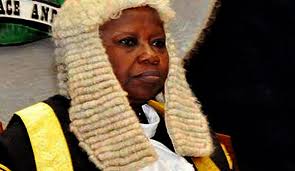
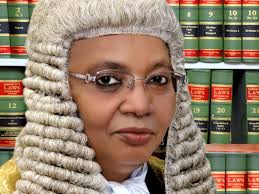
As governor swears in male judge, condemnation, anger trail non-confirmation of Justice Beatrice Iliya

Despite protests by women groups and rights activists, Gombe state governor, Alhaji Muhammad Inuwa Yahaya has defiantly sworn in Hon. Justice Mu’azu Abdulkadir Pindiga as acting Chief Judge of the state.

The deed drew wide spread outrage as various placard bearing groups stormed the streets of Gombe in protest.

Hon. Justice Beatrice Lazarus Iliya, the most senior judge in the state, yesterday completed her statutory three months period as Acting Chief Judge. Instead of being confirmed as the substantive Chief Judge (CJ) of the State, the governor went against convention and swore in a junior judge who is male.

Governor Yahaya claims the appointment was based on the fact that Pindiga was the most senior judge in the state, describing him as reputable judge who deserved to occupy the exalted seat.

Earlier, Rhoda Tyoden, National President, International Federation of Women Lawyers (FIDA and Eliana Martins, National Publicity Secretary in a press statement described the governor’s action as a violation of women’s rights.

In March 2018, the National Judicial Council (NJC) recommended the compulsory retirement of Justice Obisike Oji of Abia State High Court who was appointed by Governor Okezie Ikpeazu to serve as Acting Chief Judge when the state House of Assembly suspended Justice Theresa Uzokwe.

Justice Obisike Oji was queried by the Council for allowing himself to be sworn-in as acting Chief Judge, thereby colluding in, and aiding an unconstitutional process.

Likewise, in June this year, governor Atiku Bagudu of Kebbi state sacked the acting chief judge of the state, Elizabeth Asabe Karatu instead of confirming her as CJ. He replaced her with a junior male judge, Justice Muhtar Imam Jega.

Karatu had written a petition to the NJC alleging that she was denied her rights to confirmation because she is a Christian.

FIDA suspecting that Yahaya had hatched a sinister plot quickly condemned the delay and non-confirmation of Justice Iliya as CJ but the governor had refused to be swayed.

The organisation described the action as unjust, particularly in this period when the whole world is raising awareness against Gender-Based Violence and Violence against Women.

Part of the statement reads:

“Hon. Justice Beatrice Lazarus Iliya, a noble lady is not due for retirement for another three years minimum period; and has served diligently.

“We therefore strongly object to the planned swearing in of a junior male judge as Chief Judge in her place for whatever reason.

“FIDA Nigeria views the act of swearing in a male judge who is junior to other female judges as the substantive Chief Judge as act of gender discrimination!!

“This is more painful as the UN 16 days activism against Gender Based Violence and Human Rights Violations is on-going.

“We therefore call on His Excellency, the Governor of Gombe State to do the right thing in compliance with the Law by swearing in the most senior Judge who has been effectively acting. This is the only action that can prove that His Excellency is not gender biased and upholds justice.

“FIDA Nigeria stands against all forms of discrimination and injustice.”

Hon. Justice Beatrice Lazarus Iliya’s travails first came to light sometime in August this year when it appeared she would be sidestepped as the former CJ’s retirement became imminent.

Nigerian women rose in unison and criticised the attempt.

The then CJ was to retire in about three weeks. Beatrice Iliya was the most senior but some controversy arose to the effect that she is from the same senatorial zone (Gombe South) with the retiring CJ.

You may bag 10 years in jail or more!

Day 8 of 16 Days Activism in SGBV

Do you that VAPP Act prescribes 10 years imprisonment for drugging someone with the intention to have sex with that person? Or to embolden the person to do so with another person?

Did you know?

Did you know that the population of the people in slavery in Nigeria is 1,384,000, more than the total number of all the other 16 West Africa countries when added together, which is 1,081,000?

Did you know that December 2 is International Day for the Abolition of Slavery?

Data from the National Agency for the Prohibition of Trafficking in Persons (NAPTIP) shows that the employment of children as domestic workers, as well as the procurement of persons for sexual exploitation and forced labour, are some of the numerous examples of modern day slavery in Nigeria.

The focus of this day is on eradicating contemporary forms of slavery, such as trafficking in persons, sexual exploitation, the worst forms of child labour, forced marriage, and the forced recruitment of children for use in armed conflict.

Slavery is not merely a historical relic. According to the International Labour Organisation (ILO) more than 40 million people worldwide are victims of modern slavery.

Although modern slavery is not defined in law, it is used as an umbrella term covering practices such as forced labour, debt bondage, forced marriage, and human trafficking. Essentially, it refers to situations of exploitation that a person cannot refuse or leave because of threats, violence, coercion, deception, and/or abuse of power. In addition, more than 150 million children are subject to child labour, accounting for almost one in ten children around the world.

Facts and figures:

An estimated 40.3 million people are in modern slavery, including 24.9 in forced labour and 15.4 million in forced marriage.

There are 5.4 victims of modern slavery for every 1,000 people in the world.

1 in 4 victims of modern slavery are children.

Out of the 24.9 million people trapped in forced labour, 16 million people are exploited in the private sector such as domestic work, construction or agriculture;

4.8 million people in forced sexual exploitation, and 4 million people in forced labour imposed by state authorities.

Women and girls are disproportionately affected by forced labour, accounting for 99% of victims in the commercial sex industry, and 58% in other sectors.

ILO has adopted a new legally binding Protocol designed to strengthen global efforts to eliminate forced labour, which entered into force in November 2016 and the 50 for Freedom campaign aims to persuade at least 50 countries to ratify the Forced Labour Protocol by the end of 2019.

1.Nigeria is not just the most populous nation in Sub-Saharan Africa. It also has the continent’s largest number of people living in conditions of modern slavery.

2.This figure is according to the Walk Free Foundation’s 2014 Global Slavery Index, which defines modern slavery as any practice that traps people in modern servitude, including human trafficking and forced labor.

3.Examples include women tricked into migrating for non-existent jobs (who are then forced to work in brothels or enter into forced marriages), household workers who are promised paid work (but are then forced to work without wages and often without legal immigration status) and others.

4.This number also include children who are forced to work as street vendors or beggars and boys who are forced to work in mines, stone quarries and domestic service.

5.The definition additionally covers children who are forced to fight for military groups. In Nigeria, increasingly frequent reports have suggested that the northern insurgency is incorporating child soldiers more heavily.

6.In April 2014, after the Boko Haram jihadist insurgent group abducted more than 200 girls in northern Nigeria, leader Abubakar Shekau threatened to sell the girls into slavery. Their fate remains uncertain.

7.Many girls are trafficked out of Nigeria, with or without the northern insurgency. The European Union has estimated that 60% of all sex workers in Italy and Belgium are Nigerian women.

8.Nigeria’s total of 834,000 people accounts for about 15% of the 6.4 million people living in modern slavery in Africa.

9.Africa as a whole accounts for about 17% of all the people trapped in modern slavery today.

Sources: Walk Free Foundation with additional analysis by The Globalist Research Center.

https://www.un.org/en/events/slaveryabolitionday/

Confirm Justice Beatrice Iliya as CJ Gombe – FIDA tells Governor

… condemns plot to swear in junior male judge

… calls for respect and non-violation of women’s rights

The International Federation of Women Lawyers, FIDA Nigeria has called on the executive Governor of Gombe State, Alhaji Muhammad Inuwa Yahaya to confirm Hon. Justice Beatrice Lazarus Iliya, as the substantive Chief Judge (CJ) of Gombe State.

Condemning the delay and non-confirmation of Justice Iliya as CJ Gombe State, having completed her statutory three months period as Acting CJ, FIDA said this is unjust, particularly in this period of 16 Days of Activism, when the whole world is speaking against Gender-Based Violence and Violence against Women.

FIDA, in league with other groups revealed there are moves to swear in a junior male judge as Chief Judge, notwithstanding that Iliya is the most senior serving judge of the state’s high court.

Part of the statement signed by Rhoda Prevail Tyoden, FIDA Country Vice President/National President and Eliana Martins, National Publicity Secretary reads: “Hon. Justice Beatrice Lazarus Iliya, a noble lady is not due for retirement for another three years minimum period; and has served diligently.

“We therefore strongly object to the planned swearing in of a junior male judge as Chief Judge in her place for whatever reason.

“FIDA Nigeria views the act of swearing in a male judge who is junior to other female judges as the substantive Chief Judge as act of gender discrimination!!

“This is more painful as the UN 16 days activism against Gender Based Violence and Human Rights Violations is on-going.

“We therefore call on His Excellency, the Governor of Gombe State to do the right thing in compliance with the Law by swearing in the most senior Judge who has been effectively acting. This is the only action that can prove that His Excellency is not gender biased and upholds justice.

“FIDA Nigeria stands against all forms of discrimination and injustice.”

Hon. Justice Beatrice Lazarus Iliya’s travails first came to light sometime in August this year when it appeared she would be sidestepped as the former CJ’s retirement became imminent.

Nigerian women rose in unison and criticised the attempt.

The then CJ was to retire in about three weeks. Beatrice Iliya was the most senior but some controversy arose to the effect that she is from the same senatorial zone (Gombe South) with the retiring CJ.

Allusions then were made to the case in Kebbi State where Governor Atiku Bagudu sacked the acting chief judge, Elizabeth Asabe Karatu, and replaced her with Muhtar Imam Jega.

Hon. Justice Beatrice Iliya Karatu had written a petition to the Nigerian Judicial Council, NJC alleging that she was denied her rights to confirmation because she is a Christian. The State House of Assembly refused to confirm Karatu.

The governor refuted her allegation but women groups and rights activists poked holes in his defence.

Five electrocuted at Ikoyi prisons, several injured

...the Dutch are closing prisons, Nigeria gropes in the dark

The dilapidated state of Nigeria’s correctional centres demonstrates a condition that cannot guarantee the reformatory process of the inmates. The disregard for welfare of inmates and failure to implement recommendations for prisons reform only worsens an already perilous situation.

Not less than five inmates were on Monday morning killed and 10 others injured by a loose electric cable inside the Ikoyi Correctional Centre, Lagos.

How can anyone come out here sane? Nigeria!

It was gathered that those injured were being treated at an undisclosed hospital. Although details of the incident were still sketchy at the time of this report, spokesman for the Nigerian Correctional Service (NCoS) in Lagos Rotimi Oladokun confirmed the incident.

He revealed that the Comptroller General of the NCoS Jaffaru Ahmed would yet brief the press on the incident.

The minister of interior confirmed the incident through a release issued by the press officer Jane Osuji on Monday as well a series of tweets on the ministry’s official Twitter handle.

“The attention of the Minister of Interior, Ogbeni Rauf Aregbesola has been drawn to an electrocution incidence at the Ikoyi Medium Security Prison in Lagos,” the statement reads.

“The minister has directed a quick investigation into the root cause and the ministry will in the next few hours share a comprehensive update on the incident.

“While we commiserate with victims of the incident, the minister has ordered immediate medical attention for those affected.”

While Nigeria is still grapling with the basics, the Dutch Are Closing Their Prisons. The number of prisoners in the country has halved in a decade and experts say alternative sentencing programs can further decrease the number.

The Bijlmerbajes prison complex in Amsterdam, Netherlands, was closed in 2016 because of low crime rates in Netherlands. For 158 years, this was where the central Dutch city of Utrecht sent its prisoners. And then five years ago – along with almost half of the country’s prisons – it shut down.

A prison cell in Netherlands

A drop in the country’s crime rate in part explains why the Netherlands‘ prisons are emptying. A 2016 government study on capacity also noted that a focus on sentencing, with both an increase in shorter sentences and examining how crimes impact society, have helped reduce the prison population, says Wiebe Alkema, spokesperson at the Ministry of Justice and Security.

The Netherlands now has just 61 prisoners per 100,000 people in the general population, ranking among the lowest in Europe. In comparison, the United States has more than 10 times that figure (655 per 100,000), the highest in the world, according to data from the World Prison Brief, an online database hosted by the Institute for Criminal Policy Research at the University of London. The Dutch justice department predicts that by 2023, the total prison population will drop to just 9,810 people.


TIPS