The Academic Staff Union of Universities, (ASUU), has faulted the recent Bill passed by the National Assembly on sexual harassment and rape,describing it a design to victimize university lecturers.
ASUU insisted that the Rape Bill is ostensibly targeted at its members.
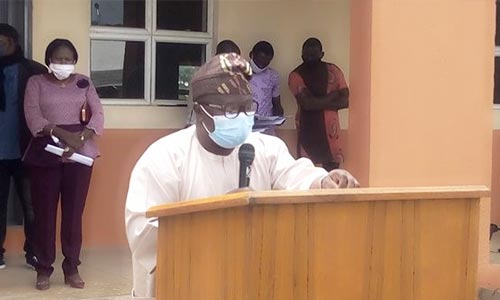
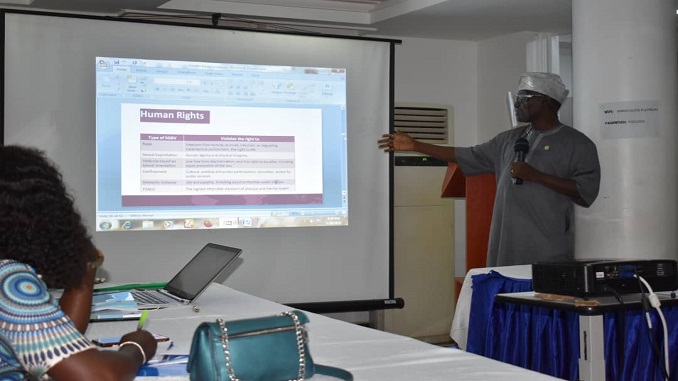
Prof. Biodun Ogunyemi, the National President of ASUU, expressed concerns at a Town Hall meeting on Monday, with critical stakeholders in Jos, noting that, the Bill passed by the Assembly, though, yet to be signed into law, does not go well with ASUU.
The Town Hall meeting was organized by the University of Jos chapter of the union.
Prof.Ogunyemi maintained that, the Bill is discriminatory and also targeted at the male lecturers.
According to him,” our reaction to that Bill is that, it is discriminatory and is targeted at male lecturers.
“We don’t want a situation, where male lecturers will begin to say they don’t want to teach female students, because they say we should not smile to female students.
“So a time may come, when male lecturer will say, we won’t teach female students, let them get female lecturers, let them get female supervisor.
“l’m not sure, we want that, and that is not also healthy for the society. Because at one point or the other, there will be a point of interface. So, what we are seeing is that, we have laws in the society, that already addressed issues of sexual harassment, issues of rape.
“Another form of victimization is that male students can also be raped in one way or the other and this has not been taken into account or has this type of bill passed.
“We went to the public hearing and we read our objections, well, we have not seen the newly passed bill, but, what we are told is that our views will be taken into account and we said, if they are laws in the society that already addressed the issues of harassment and rape, why are we duplicating efforts?”
Prof. Ogunyemi further argued that, “if it meant to cover all and some strata of the educational system, which means it could be a bill meant to cover all genders or both genders, male or female, which we have not seen. Our worries is that, all their talks is centred on the higher institutions, which should stop, because they are stigmatising and is like they are labelling lecturers as criminals or potential criminals.”
Ogunyemi said,” we can still raise our voices against that bill to ensure that it will promote equity, fairness and then, that is where we can have justice for all. We are against sexual harassment of our students. We do not support it in any forms.”
Foremost Abuja doctor and Chairman of Zankli Medical Center in Mabushi area of Abuja, on Prof. Loveth Lawson Monday morning died at the National Hospital, Abuja aged 72.
The retired Professor of Infectious Disease at Bingham University, Auta in Nasarawa State, studied and obtained a PHD in Tropical Medicine at the Liverpool University.
Prior to his retirement from the University in 2018, the Professor built and donated a sophisticated laboratory to Bingham University. Several researches and investigations from the Northern part of Nigeria have been carried out in the lab famed for its high tech equipment.
Prof. Lawson earlier practiced at New Crescent Hospital, Jos where he was Medical Director from 1977-1990. That was before he set up Zankli hospital in Abuja in 1990.
He and his wife, Funke (a Consultant Pediatrician) built Zankli Hospital to be the most consulted private clinic for children in the Federal Capital Territory
The cause of his death has not been made public.
One of his students wrote on social media: “This is just a shocker. A man full of wisdom and inspiration. One of the people in my life that makes practicing medicine worth it. You are truly an inspiration to medical students in Bingham. Your generosity was also inspiring. A father, husband, a Doctor, a man full of passion for teaching and engaging his students. I am thankful I had the opportunity to learn under you and know a little about you. May your soul rest in peace”.
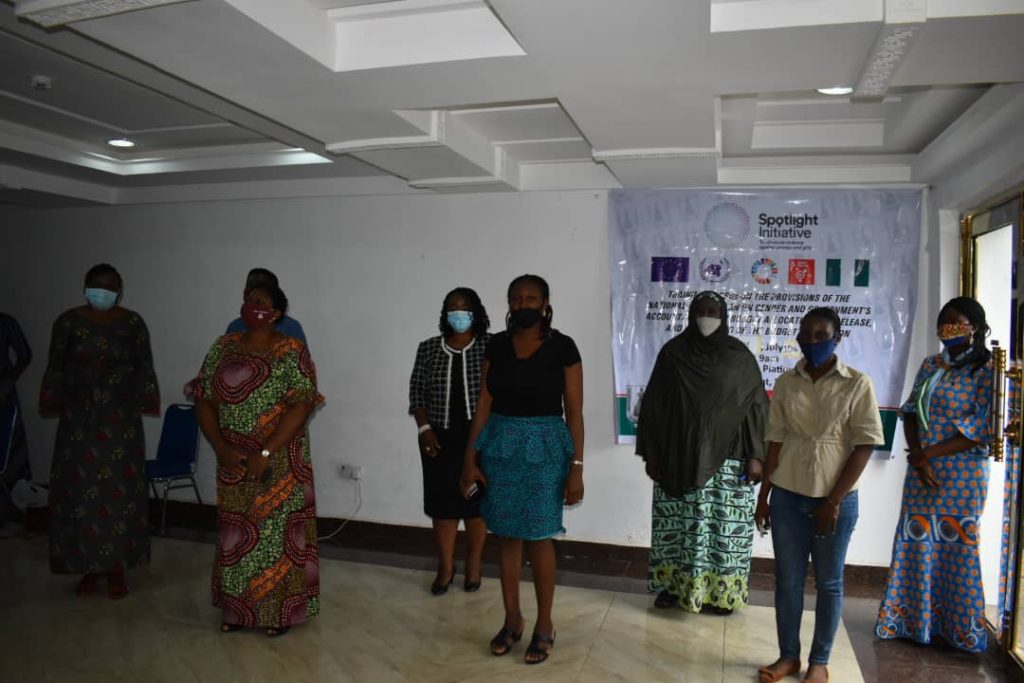
The International Federation of Women Lawyers (FIDA) Nigeria Abuja branch implemented a two-part Spotlight Initiative project targeted at training other Civil Society Organizations.
The trainings which were successfully executed include:
Concept of Gender Based Violence, which held on the 23rd of June 2020. The training addressed salient issues on gender based violence, reproductive health rights and considered all relevant applicable laws. In attendance were CSOs like FHI 360, DEVATOP, LEDAP, and more.
The other was: Provisions on the National Action Plan on gender and government’s accountability for budget allocation and release and monitoring of the budget utilization. This held on the 10th of July 2020. In attendance were CSOs like WRAPA, WLI, SGBVRT, SOAR, etc.
Both trainings were successfully executed.
Meanwhile, as part of their commitment to supporting women and children, the Abuja branch of the organisation on the 11th of July 2020, partnered with their national body, FIDA Nigeria in distributing palliatives at Aso Pada Community in Mararaba: border settlement between Nasarawa and Abuja.
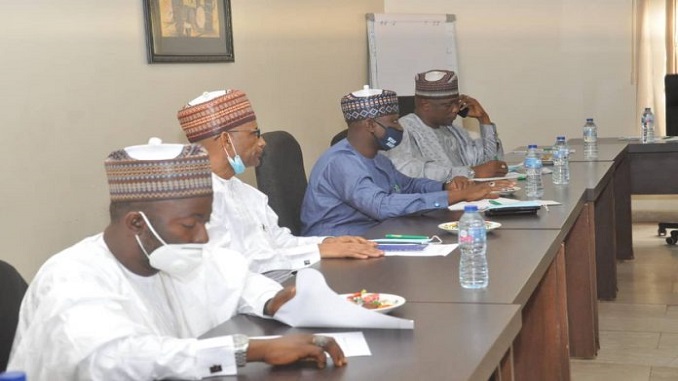
The Speakers of the 19 States of northern Nigeria have resolved to domesticate the Violence Against Persons Prohibition (VAPP) Act in their respective States.
A report from the spokesman of the Bauchi state assembly speaker, Comrade Abdul Burra on Sunday said that decision followed a briefing on the recent domestication of the VAPP Law in Bauchi state by his Principal, Rt. Hon. Abubakar Suleiman at the Northern Speakers Conference which took place in Kaduna.
A communiqué signed by the speaker of Gombe state house of assembly, Rt Hon. Abubakar Sadiq Ibrahim, the Chairman Communiqué Committee of the Conference, the speakers resolved to domesticate the VAPP Act in all northern states with cognizance to administration of criminal justice.
According to the Communique, the speakers also expressed concern on the insecurity bedevilling the northern part of the country.
“While commending the efforts of Mr President, state governors and security agencies, we appeal to the federal government to redouble its efforts in curbing the insecurity in northern Nigeria as security of lives and property is our primary objective”, the communiqué read. On the COVID-19 pandemic, the Speakers agreed that it is real and appreciate Federal and States Governments for preventing and containing the widespread of the deadly virus.
While appealing to the federal government to provide more testing kits to all states and local governments of the country, the Forum call on all state assemblies to continue to observe NCDC’s protocols to fight the disease.
The Speakers commended President Muhammadu Buhari for signing the Executive Order 10 for financial autonomy to state legislatures and judiciary which they described as timely.
They equally commended the federal government’s N-power scheme and other related programmes to empower youths and alleviate poverty.
Burra said that the Communiqué further explained that the speakers unanimously resolved to work in conformity with the legislative agenda provided by each assembly for the year 2019-2023.
For lawyers, inspiration needn’t come from just within the legal world. We look at how looking further afield at individuals outside the law can help galvanise your legal career.
As a young lawyer, it is not uncommon to aspire to be like the idealised legal professionals we see on TV or in films, but there are many inspirational individuals beyond the world of law. We can draw on insight from every field, so why not venture outside the box to take a look at some successful businessmen and women? You might just gain some fresh motivation or a new perspective on the corporate world.
BILL GATES
Bill Gates is primarily known as the founder of Microsoft, currently the 71st largest company on Fortune Global 500 list. From March 2014 to July 2017, he was Forbes’ richest man in the world, which was actually after he had stepped down as Chairman and CEO of Microsoft completely. This well-known entrepreneur and billionaire can be admired for a lot of his clever career moves, but the most commendable is what he did post-Microsoft.
With the profits gained from building this innovative and successful corporation, he launched the Bill & Melinda Gates Foundation in 2000. Since resigning from Microsoft in 2014, Bill Gates has worked at the charity full time. The foundation has made a difference in so many areas of global development, that it’s difficult to choose one to focus on. Overall, the foundation aims to enhance healthcare, reduce extreme global poverty, and increase education opportunities. They donate money to other charities, work with government agencies, oversee funding, and invest in new methods of eradicating problems.
Zoning in on one example, of HIV in sub-saharan Africa, the foundation has “committed more than US$3 billion in HIV grants to organisations around the world”. They fund medical research and are committed to working towards an HIV vaccination. Increasing the accessibility of antiretroviral drugs in affected countries has led to a decrease in mortality rates, though there is still much work to be done. All aspects of humanitarism require legal work, which in turn has a significant impact on the developing world. So whatever the reason for deciding to venture down the path of becoming a lawyer, always bear in mind the broader work that can be done.
Denise Coates is a billioniare businesswoman, a role model for female lawyers as she made her wealth on the back of her own entrepreneurial spirit. Born into business as the daughter of Peter Coates (Chairman of Stoke City FC), Denise strove to become a successful business owner in her own right. She had experience working with bookmakers from a fairly young age, working her way up from the cashiers department (keeping record of payouts and marking up bets), to training as an accountant within the family business, to owning a small chain of shops, called Provincial Racing. Through smart investments and hard work, she took a big step towards her own dynasty by acquiring a small betting chain, which led to her becoming the managing director of a betting shop estate.
While these betting shops were turning a profit, Coates was working behind the scenes on an online betting site, for which she bought the domain bet365. For a year she worked on perfecting the site so when it eventually launched in 2001, it was already set for success. She ended up selling the betting estate to Coral for a hefty sum which helped fund the move to the online site. Coates bought and sold at the right times and created something innovative and new, predicting market trends.
Denise persuaded her brother, a lawyer himself, to get involved as co-CEO. In an interview, Denise remarked on the capital needed to finance the new site, saying “We knew the industry required big startup costs but… we gambled everything on it. We were the ultimate gamblers, if you like.”
As defined by Oddschecker, bet365 has become a “betting behemoth”, generating millions in monthly revenues. As of 2017, Denise Coates is the UK’s highest paid boss, which is massively empowering for women in business, a good aspirational figure for young female lawyers. In recent decades, female representation has significantly improved in the legal sector, however the number of female barristers still falls behind that of their male counterparts.
“Not only did she pioneer the tabloid talk show, spawning a thousand imitations, but through it, she also popularised the emotional, empathetic, intimate communication that we now demand from figures in public life and even politics.”
Unlike Gates and Coates, Oprah was not born on a path destined for success. Her parents had little to do with her early upbringing, so she spent the first 6 years of her life in poverty, living with her grandmother. Her grandmother was strict and made sure Oprah could read and write at a very young age. She began ‘play acting’ to the animals on the farm, and this began a life passion for talk-performance.
When Oprah was 6 years old, she moved to live with her mother in a poor and dangerous Milwaukee ghetto, which left her vulnerable and subject to sexual abuse from the age of 9. She had an extremely tough childhood and truly made it through hard work, studying and motivation. At 12, she was earning her own money by making speeches at social gatherings and churches. Oprah knew from a young age she wanted to be ‘paid to talk’, and went above and beyond achieving this goal.
Through being a dedicated and committed student, Oprah was awarded a scholarship to Tennessee State University. It was there that she was given the opportunity to turn her talent into her career. She joined different societies and clubs, read afternoon news on a local radio station, became Miss Tennessee and Miss Black Nashville, and was invited to a White House conference on youth, before ultimately being offered a job at CBS. People recognised the work that Oprah had put into her art and success followed. At 19 years old, Oprah had become Nashville’s first African American female co-anchor of the evening news.
Oprah’s background is tragic, motivational and inspiring. The hard work she put in from such a young age resulted in her pioneering more than just the tabloid talk show. She has always given minorities a voice, proving that you can still make it without a silver spoon. Hard work can take you to places far beyond where money can take you. Being the best talk show host, business woman or lawyer depends more on your commitment, your hard work and character, not how much money you have to begin with. That is an important lesson to drive you towards any success, and one that Oprah herself tells others in her motivational speeches. It is not about ‘what roles you take on’ but a deeper question of ‘who you are’.
Whether you’re training to be a lawyer, or you’re newly qualified, it can be completely overwhelming and your goals can feel out of reach. It is important sometimes to look outside the law bubble, to the many people out there, who you can take inspiration from. Of course, researching talented lawyers and important cases is valuable, but there is a lesson to be learned from every success story. After all, looking above and beyond what is right in front of you is what being a lawyer is all about.
If you’re aiming to be charitable, entrepreneurial, or motivational on your own success story, never forget the important lessons to be learned from others.
According to Black’s Law Dictionary ninth edition, plea bargain is a negotiation between a prosecutor and a criminal defendant whereby the defendant pleads guilty to a lesser offense or to one of multiple charges in exchange for some concession by the prosecutor, usu. a more lenient sentence or a dismissal of the other charges.
It is also important to emphasize that plea bargain was alien to criminal justice administration in Nigeria but was introduced into our justice system by the virtue of Section 14(2) of the Economic and Financial Crimes Act, the said Section provides thus: “Subject to the provisions of Section 174 of the Constitution of the Federal Republic of Nigeria 1999 (which relates to the power of the Attorney-General of the Federation to institute, continue, takeover or discontinue criminal proceedings against any person in any Court of law), the Commission may compound any offence punishable under this Act by accepting such sum of money as it thinks fit not exceeding the maximum amount to which that person would have been liable if he had been convicted of that offence.
Plea bargain as a concept originated from the American jurisprudence and became established in the case of Robert M. Brady v. United States 397 U.S 742 (90 S. Ct.1463, 25 L.Ed. 2d 747). Permit me to state that plea bargain can be said to be a form of pre-trial negotiations between the Defendant and the prosecution during which the Defendant agrees to plead guilty in exchange for certain concessions by the prosecution.
Plea Bargain is a deal offered by the prosecutor to induce the defendant to plead guilty in-order to avoid the full trial which might takes years. It is my humble believe that in an attempt to reduce the delay in disposing criminal cases, the National Assembly introduce plea bargain by virtue of Section 14 of the Economic and Financial Crimes Act as an alternative method to deal with huge arrears of criminal cases.
The arrangement usually involves the prosecutor, the accused and the court. The parties negotiate, subject to the approval of the court. Lagos State was the first state to localize the plea bargain system in Nigeria. Sections 75 & 76 of the Administration of Criminal Justice Law of Lagos State provides as follows: 75. Notwithstanding anything in this law or in any other law, the Attorney-General of the State shall have the power to consider and accept a plea bargain from a person charged with any offence where the Attorney-General is of the view that the acceptance of such plea bargain is in the public interest, the interest of justice and the need to prevent abuse of legal process and 76.(1) The prosecutor and a defendant or his legal practitioner may before the plea to the charge, enter into an agreement in respect of- (a) A plea of guilty by the defendant to the offence charged or a lesser offence of which he may be convicted on the charge. (b) An appropriate sentence to be imposed by the Court if the defendant is convicted of the offence to which he intends to plead guilty. (2) The prosecutor may only enter into an agreement contemplated in subsection (1) of this Section- (a) after consultation with the Police Officer responsible for the investigation of the case and if reasonably feasible, the victim and (b) with due regard to the nature of and circumstances relating to the offence, the defendant and the interests of the community. (3) The prosecutor, if reasonably feasible shall afford the complainant or his representative the opportunity to make representations to the prosecutor regarding- (a) the contents of the agreement, and (b) the inclusion in the agreement of a compensation or restitution order (4) An agreement between the parties contemplated in subsection (1) shall be in writing and shall be signed. (5) The presiding Judge, or Magistrate before whom criminal proceedings are pending shall not participate in the discourse contemplated in subsection (1): Provided that he may be approached by the counsel regarding the contents of the discussions and he may inform them in general terms of the possible advantages of the discussions, possible sentencing options or the acceptability of a proposed agreement. (6) Where a plea agreement is reached by the prosecution and defence, the prosecutor shall inform the court that the parties have reached an agreement and the Presiding Judge or Magistrate shall then inquire from the defendant to confirm the correctness of the agreement.
The apex court of the land when enunciating the concept of plea bargain in the case of PML (NIG) LTD v. FRN (2017) LPELR-43480(SC) held thus:
Plea bargain boils down to a negotiation between an Accused and the Prosecution, in which the Accused agrees to plead “guilty to some crimes in return for reduction of the severity of the charges, dismissal of some of the charges, and the Prosecutor’s willingness to recommend a particular sentence or other benefit to the accused.
Though the question been raised in some quarters is whether plea bargain has not derogated from the concept of not allowing any person who has break the law from going scot free, the court in the case of PML (NIGERIA) LTD v. FRN (2014) LPELR-22767(CA) at the court of appeal of the above earlier mentioned case, the penultimate court stated thus:
The concept of plea bargain has in no way derogated from the purpose or objective of criminal prosecution given the fact that before an accused can benefit from the arrangement the accused in question must plead guilty to some form of offence and of course be convicted for what he has pleaded guilty to.
It is on the premises above I conclude this piece of mine that the concept of plea bargain is a welcome development to our jurisprudence, but we always forget when coping some of all this laws to check our domestic affairs and the attitude of our people towards certain idea before incorporating verbatim, modification where necessary should be looked into before passage. I realized that since the dispensation of Ibrahim Magu as the Acting Chairman of the anti-graft commission he has put a stop to the commission putting forward plea bargain unless introduce by the court, this is the unforeseen circumstances that our laws always face, we must strive to improve on the legislature so that one man who wakes up on the wrong side would not determine the tone of the law.
Adedayo Samuel Adesheila is an Associate in the law firm of Neplus Ultra.
Every now and again we like to write something to put a smile on your face. That’s why this week, we’re giving pricing and legal project management a break. Instead. we’ll be running through five of our favourite court judgements of all time. So grab a biscuit and a nice cup of tea and avoid your emails for half an hour.
To golf, or not to golf
That is the question. Or it sort of was. In this instance, the case before the court was to determine whether walking was integral to the game of golf. Casey Martin, a professional golfer, was born with a syndrome that prevented him from walking long distances. Unfortunately, when he applied to take part in a tournament with the use of a buggy instead of walking, the PGA turned down his request. In their words, it would give Martin an advantage and walking was an important part of the game of golf.
Enter Justice Antonin Scalia, to deliver a withering assessment of the PGA’s discriminatory practices. Ouch.
“We Justices must confront what is indeed an awesome responsibility. It has been rendered the solemn duty of the Supreme Court of the United States … to decide What Is Golf. I am sure that the Framers of the Constitution … fully expected that sooner or later the paths of golf and government, the law and the links, would once again cross, and that the judges of this august Court would some day have to wrestle with that age-old jurisprudential question, for which their years of study in the law have so well prepared them: Is someone riding around a golf course from shot to shot really a golfer? “
In this instance the details of the case come second to the format of the verdict itself. Namely, that the judge wrote his verdict in the form of a limerick. Clearly the judge could do with polishing his skills as the first two lines don’t really rhyme. Perhaps stick to the day job?
Some farmers from Gaines had a plan. It amounted to quite a big scam. But the payments for cotton began to smell rotten. T’was a mugging of poor Uncle Sam.
Number three on our list also makes the cut more for format than the case being argued. In this instance a High Court judge in India handed down a verdict so convoluted it was returned by the Supreme Court. To be honest, we’ve been puzzling over the meaning of the following passage for about an hour. Anyone care to shed some light?
“The summum bonum of the aforesaid discussion is that all the aforesaid material which existed before the learned Executing Court standing slighted besides their impact standing untenably undermined by him whereupon the ensuing sequel therefrom is of the learned Executing Court while pronouncing its impugned rendition overlooking the relevant and germane evidence besides its not appreciating its worth. Consequently, the order impugned suffers from a gross absurdity and perversity of misappreciation of material on record.”
One can imagine the life of a judge could become boring. Listening to defendant after defendant and lawyer after lawyer as each side tries to argue their case. Thankfully, some judges like to use their judgments as a way of livening proceedings. If only for those paying attention.
Take the case of Grille v San Antonio. In it, the state of San Antonio was trying to prevent exotic dancers from wearing anything less than a bikini top. When a club attempted to secure an injunction to prevent the cities from enforcing this rule they verdict was a heaven of double entendre. Sadly the plaintiffs we’re unsuccessful. Highlights of the judgement, however, include:
“Should the parties choose to string this case out to trial on the merits, the Court encourages reasonable discovery intercourse as they navigate the peaks and valleys of litigation, perhaps to reach a happy ending.”
and
“An ordinance dealing with semi-nude dancers has once again fallen on the Court’s lap.”
Our final entry, as the name suggest, didn’t even make it to court. A dispute scheduled for trial was instead settled out of court. In response, Justice Martin Sheehan of Kentucky, wrote a cancellation order of such enthusiasm that it deserves a spot.
Judge Sheehan noted that the news made him “happier than a tick on a fat dog because [the Court] is otherwise busier than a one-legged cat in a sandbox and, quite frankly, would have rather jumped naked off a twelve-foot stepladder into a five-gallon bucket of porcupines than have presided over a trial of the herein dispute, a trial which, no doubt, would have made the jury more confused than a hungry baby in a topless bar and made the parties and their attorneys madder than mosquitoes in a mannequin factory.”
A young man named George had surgery to correct an ugly scar on his hand. The surgeon grafted skin from George’s chest onto his hand… except George had a hairy chest…so now he had a hairy hand as well. George sued the surgeon and was awarded “the difference in value between a 100 per cent good hand… and a hairy hand.”
You won’t believe these lawsuit stories are true—but they truly are!
Poetic justice
Judges have latitude when it comes to how they write their opinions and some run with it. For example, here’s how Justice Goldberg (a federal appeals court judge in Texas) began his 1986 opinion in the case of United States v. Batson:
Some farmers from Gaines had a plan. It amounted to quite a big scam. But the payments for cotton began to smell rotten. T’was a mugging of poor Uncle Sam.
Justice Goldberg keeps up the hilarity right until the very end, even as he breaks the bad news to the farmers: they’re still in big trouble.
Party on, Garth
“After an extreme close-up review of the record and excellent authorities, the court enters the following order.” So begins the opinion of Federal District Judge Paine in Noble v. Bradford Marine, a clear shout-out to the hilarious film, Wayne’s World. The first section is captioned, “Hurling Chunks.” The last: “A Schwing and a Miss.” In between, Judge Paine calls the defendant’s case “bogus” and “not worthy” and ultimately denies the defendant’s motion with a curt, “Party on.”
The ole stiff shoes excuse
More legal hilarity comes from Frank Caprio, Providence’s Chief Municipal Judge in Rhode Island and now the star of Caught in Providence, who, “judging” by the stories he recently shared with Reader’s Digest, has clearly has heard everything. For example, a man charged with speeding actually told Judge Caprio that he didn’t realize he was speeding because he was wearing a stiff, new pair of shoes and couldn’t feel how hard he was pressing on the gas.
TMI
Another man accused of speeding seemed really, well, anxious, as he stood before Judge Caprio. “Is there something you want to say?” Judge Caprio asked the man. “Actually, yes,” the man replied. “My wife and I are trying to have a baby, and she’s ovulating right now.” What could be said beyond, “Thank you for sharing”?
The Heimlich “maneuver”
Another man stood before Judge Caprio defending himself for having parked in a handicapped spot, despite not having a sticker or a visible handicap. The man claimed he’d meant to park for just a moment to go into a restaurant to bring his mother a glass of water (she was dehydrated, he explained). But when he was on his way out, he saw someone choking and felt obliged to administer the Heimlich maneuver. The only problem was when Judge Caprio asked him how one does the Heimlich maneuver, the man had not a clue. Guilty as charged!
Well, that was awkward
In the “Only in Rhode Island,” category, Caprio tells Reader’s Digest that everyone knows everyone in the tiny New England state, and sometimes it gets super awkward. For example, one time a guy came in for a hearing on a parking ticket. So far so good… until his lawyer showed up. The lawyer, who was the husband of the defendant’s ex-wife, was also the former governor of Rhode Island. Spoiler alert: it turned out the parking ticket was issued in error, so everyone went home happy (except the police officer who wrote the ticket).
“The dumpster made me do it”
Judge Caprio recalls the time a woman argued against a parking ticket she’d received for parking in what had clearly been marked a loading zone. Not only was the sign clear on that, but the woman said she typically parked legally in an adjacent spot.
“So why not park legally this time?” the judge asked.
“Because a dumpster parked in that spot. So I took the spot the dumpster should have taken.”
She had to, hm? She also had to pay her parking ticket…obviously.
Sparkling wit
Speaking of funny judges, Judge Rosemarie Aquilina had us in tears when she told us about an exotic dancer who, having pleaded guilty on a drug charge, was sentenced to wearing an ankle monitor. Just a few days after sentencing, however, the woman was back in the courtroom, seeking an exception because the ankle monitor was kind of “ruining her vibe” at the strip club. In response, Judge Aquilina offered a veritable Solomon-esque solution: “Bedazzle that thing to match your outfits. Motion denied.”
Up the down hairdo
Attorney Allison Margolin, partner at Margolin Lawrence, has her own rather amusing drug-related story, only her is from the other side of the bench. “I was defending a criminal client on a drug charge,” she tells Reader’s Digest, “and I smelled pot in the courtroom.” Weirded out, she kept looking around trying to determine where it was coming from. She even looked in her own purse to see if her client had used her as a “mule.” No dice… until Margolin got home and took down her hair. “My client had stuck a joint in my up-do,” she realized.
The “end” of a promising career
Alex Ozols, founder of Personal Injury Lawyers San Diego, fervently hopes that this anecdote did not prove to be career-“ending” for the intern it involved. “I was working in criminal law and had a case where a man had set up cameras to watch women go to the bathroom,” he tells Reader’s Digest, “and oh, by the way, what he really liked was to watch them making… Number 2.” The D.A. provided Ozols and his team with videos, which went to an intern to review. “Poor kid had to watch four hours of bowel movements,” Ozols explains. Hopefully, the story had a happy “ending.”
The Ex Files
Jonathan Rosenfeld, founder of Rosenfeld Injury Lawyers, tells Reader’s Digest, “I get a ridiculous amount of correspondence from people wanting to sue their exes for allegedly giving them STDs.” Oh? Do tell, Counselor. “I always tell them it’s difficult to prove they contracted it from a specific person, and their response is almost inevitably to send me a photo of the affected area.” As if that would establish the connection!?
There’s a difference between an actuary and a psychic
When Arkady Frekhtman, founding partner of Frekhtman & Associates, had a personal injury case involving an injured young man, winning a big judgment hinged on the young man having a life expectancy of 87. So Frekhtman called in an actuarial expert. When all was said and done (and won), the client asked to be put in touch with the expert. Why? Because he wanted to know exactly when he would die and how… as if the expert were a psychic and not an actuary.
Against attorney advice
Scott Trout, a leading divorce attorney with Cordell and Cordell, had a client who claimed he wasn’t making enough money to afford to pay spousal support. The thing was, the guy was a CEO of a big company and clearly could afford it. Nevertheless, the guy insisted on making the claim, and the day of the trial, he came to court dressed in dirty work clothes and testified he worked as a landscaper and barely made ends meet mowing lawns for a living. It did not go well.
Nothing like getting a Christmas delivery from a gang member
Sheryl A. Sanford, a partner at Black Marjieh & Sanford LLP, has done quite a bit of criminal defense, which has led to some rather funny scenarios. For example, she once received a Christmas card with a puppy dog…from a Bloods gang member. Another time, she received an urgent message from a prisoner at Rikers. The only problem? He called himself “John Doe,” making it impossible for Sanford to call back.
Is a gourmet lunch an inalienable right?
Sanford’s partner at BMS, Lisa J. Black, has had some pretty out-there exchanges with her criminal defense clients as well. “This one guy thought the Department of Corrections was trying to turn him into a cyborg. Another came to me claiming the jail was violating his Constitutional rights by serving bologna sandwiches for lunch.”
There’s performing
Personal injury attorney Byron Browne tells Reader’s Digest of a woman who’d been injured in an accident and claimed she could no longer perform at work. While it may be true that there were some activities she could no longer perform, a private investigator unearthed a treasure trove of professional adult films the woman had shot since the accident, proving there’s performing, and then there’s performing, and this woman was performing just fine, apparently.
Feeling bullish
James Gray Robinson, a third generation trial attorney and self-proclaimed “cattle enthusiast,” was once hired by an insurance company to defend a farmer who was being sued for rear-ending a vehicle… with a bull, thus putting a whole new meaning to the notion of rear-ending.
He really tied one on
Attorney David Reischer, founder of LegalAdvice.com once had a client who was not into wearing business clothing. Not even business casual. This doesn’t always go over so well with judges, so Reischer tried to convince the man to at least wear a tie. Just this once. The client obliged…he showed up the next day wearing a huge clown tie!
Ever hear the one about the voir dire?
Voir dire, the process of jury selection, isn’t always “funny,” but here’s an exception. “I always ask the jury pool if they know of my law firm,” explains Adam Funk, a partner at the Potts Law Firm. This one time, an elderly woman raised her hand and volunteered she’d worked there as a secretary, albeit decades ago.”
That shouldn’t be a problem, Funk thought, but still had to ask if the long-ago job would in any way impact her ability to be impartial with Funk representing the firm.
“Well, I know your boss, and he’s a real jerk,” the woman said sweetly.
Juror, dismissed.
A family affair
Family law attorney, Russell Knight, still chuckles over this story of a woman who wanted help in proving who was the father of her child. What should have been a no-brainer, unfortunately, was a bit more complicated. Turned out, the child was the result of a one-night stand. The problem, however, wasn’t that she couldn’t locate the father. The problem was she could.
“Do you know any of his relatives,” Knight asked her.
“I know his brother.”
“OK, how do you know his brother?”
“He’s my husband.”
The “I Love Lucy” defense
Randolph Rice, founder of Baltimore’s Rice Law Firm, always appreciated slapstick comedy but never thought it would turn up in a case he was trying. “I was defending a woman on criminal charges, trying hard to convince the judge to sympathize with her, when the woman went to pour herself a glass of water from the pitcher on the defense table,” Rice tells us. “As she poured, the pitcher’s lid fell off… sending water everywhere.” At least the judge had a good laugh!
The Director-General of the National Centre for Women Development (NCWD), Mary Ekpere-Eta, has commended the Senate for passing the Sexual Harassment Prevention Bill.
Ekpere-Eta gave the commendation in a statement she personally signed and made available to Sunday Sun in Abuja.
Ekpere-Eta described the passage of the bill as a poignant moment in the struggle for women empowerment.
‘The passage of the bill to criminalize sexual harassment of female students in tertiary institutions in Nigeria by the Senate stands as a poignant moment in the push for women empowerment.
‘I joined other critical stakeholders at the public hearing on this important law. I am glad that our voices were heard, as we fully supported the bill which will act a legal framework for protecting female students from unprofessional lecturers who practice and promote the dehumanizing culture of sex-for-grades,’ Ekpere-Eta said.
The NCWD Director-General expressed appreciation to the sponsor of the bill, the Deputy President of the Senate, Senator Ovie Omo-Agege.
She called on the House of Representatives to pass the bill on time in order for President Muhammadu Buhari to sign it into law in the nearest future.
‘Nigerian girls and women face different challenges in their quest for education. We still have places in our country where girls are overlooked when poor families are compelled to pick the children who will be sponsored in school.
‘We have stories of girls dropping out of school because they or other girls they know were raped in footpaths that lead to their schools. We also have girls who are married off at a young age to save money in their homes. It is girls who are sent out to hawk wares to augment their family’s income, despite the fact that they are exposed to danger.
‘It is gratifying that after women some of whom surmount the above challenges to make it into tertiary institutions, they will not have to contend with lecturers who harass them for sex, as a condition for passing their exams,’ Ekpere-Eta also said.
Ekpere-Eta further commended the National Assembly on its plan to host a public hearing on Sexual and Gender-Based Violence (SGBV) for which it appointed Senator Omo-Agege whom she described as women’s hero and another strong supporter of women’s rights, the Speaker of the House of Representatives, Honourable Femi Gbajabiamila as co-chairs.
‘I believe that at the planned public hearing, issues around Gender-Based Violence, rape, sexual abuse and sexual harassment will again be discussed with the goal of developing legislative instruments to curb the spike in sexual assault.
‘The planned meeting by the gender-friendly leadership of the 9th Assembly will also be a platform to repeat the call for states which haven’t, to domesticate other laws that protect women such as the Childs Right Act and the Violence Against Persons Prohibition Act.
‘Using the Police Trust Fund as established by a legislation of the 8th Assembly to equip the Nigerian police with modern facilities and train its personnel to scientifically investigate and prosecute rape and sexual assault, this will be one of the issues I look forward to seeking the support of the National Assembly in making a reality,’ Ekpere-Eta added.
The bill against sexual harassment in tertiary institutions passed by the Senate last Tuesday prohibits the offence of sexual harassment of students in tertiary institutions and criminalizes the act of neglect or failure of administrative heads of tertiary educational institutions to address complaints of sexual harassment within a specified period of time.
The proposed legislation also creates strict liability offences by removing mutual consent as a defence in the prosecution of sexual harassment cases in tertiary educational institutions and maintains the fiduciary relationship that exists between educators and students.
It stipulates that any person who commits the offences of sexual harassment of students listed under the Bill shall in conviction be sentenced to imprisonment for 14 years or to a fine of five million Naira or both.
Despite protestations by the Christian Association of Nigeria (CAN), Pentecostal Fellowship of Nigeria (PFN) and members of the Civil Society, the Hon. Minister of Interior, Ogbeni Rauf Aregbesola, is still insisting that all Christian churches in Nigeria must comply with his directive and pay the increased marriage tax or licence of N30,000 in order to continue to conduct Christian marriages in their respective churches or worship centres in Nigeria. This is contained in the circular from the Minister’s office currently making its rounds. July 1 2020 was the deadline given by the Minister for compliance. As one staff of the Ministry of Interior later clarified, the said tax is not payable by one Christian church as a legal body but also payable by all the branches or parishes of the same church within Nigeria. That is, if, for example, the Redeemed Christian Church of God,(RCCG) has 5,500 branches or parishes in Lagos State alone, each of those branches or parishes will be expected to pay N30,000 to Aregbesola’s Ministry of Interior. In the same vein, all the parishes of the Catholic Church or Anglican Church or Baptist church or Methodist church or other churches are also expected to pay the tax failure for which they shall be barred from conducting Christian marriages.
This is quite disturbing. How can the Hon. Minister expect every branch or parish of a particular church to pay marriage tax or licence to the Ministry of Interior? Do the calculation yourself. You can imagine the enormous amount of money Aregbesola’s Ministry would rake from different branches and parishes of different Christian churches in Nigeria. To begin with, there is no law in Nigeria that empowers Hon. Minister Aregbesola to levy the aforesaid marriage tax on every branch or parish of a particular church. Agreed, celebration of marriages in Nigeria is governed by the Marriage Act. Despite the avalanche of conflicting views on the issue, the formation, annulment and dissolution of marriages other than marriages under Islamic law and Customary law in Nigeria, is a matter reserved for the Exclusive Legislative List as contained in the Second schedule, item 61, of our 1999 Constitution. By virtue of this all matters connected with conduct of marriage under the Marriage Act and issuing of marriage certificate are outside the purview of the State and/or Local Government Areas. Specifically, section 7 (5) (under item 1(i) of its fourth schedule) of our 1999 Constitution vests the “registration of all births, death and marriages solely on the Local Governments Areas in Nigeria. It is not surprising therefore that in the case of *Haastrup & others V. Eti-Osa local government & others, and, the popular class case of *Olumide Babalola V Ikeja Local Government Area & Others* and other cases, the lower courts had relied heavily on the Supreme Court decisions in Anyaegbunam V Anyaegbunam (1973) and Mobil Producing (Nig.) Unlimited. V Lagos State Environmental Protection Agency (LASEPA) (2002) in holding that marriages can be contracted under a licence granted by the Director General, Ministry of Internal Affairs (now Ministry of Interior) but that registration of marriages is within the exclusive authority of the Local Government Areas in Nigeria in accordance with the provisions of section 30(1) of the Marriage Act and section 7(5) of our 1999 Constitution. But, as I said earlier, there is no law authorizing the Minister of Interior to slam the aforesaid marriage tax on every branch or parish of a particular church.
The great danger in Minister Aregbesola acting ultravires his powers is that it is a recipe for the emasculation of Christian churches in Nigeria in violation of the right to freedom of religious worship as enshrined in section 38 (1) of our 1999 Constitution. Sincerely speaking, I can’t make any sense any more in many things happening in our country at the moment. Not long ago, an attempt was made to control NGOs and Civil Society Organizations (CSOs) in Nigeria. Several attempts had been made to control free speech in Nigeria. An attempt is being made to control Social Media in Nigeria. An attempt is also being made to force Nigerians to take compulsory COVID-19 vaccines. As I have consistently argued on this page and elsewhere, government does not exist in vacuo. Government drives its origin and survival from mediating structures-civil society, churches, mosques, town union and so forth. In this context, government should see mediating structures as partners in progress not as enemies to be scuttled or destroyed. I may be wrong but this is the first time a Minister of a government in Nigeria is fashioning out a policy capable of emasculating the Christian churches. Before Aregbesola was appointed the Minister of Interior, Christian churches in Nigeria had been conducting their respective church marriages upon the payment of the token statutory licence fee without any inhibitions. How come that it is now that Aregbesola has been appointed Minister of Interior that the Christian churches in Nigeria are having this problem?
In his defence, Minister Aregbesola alleges that he duly consulted stakeholders before taxing the Christian churches. With the greatest respect, this is not true. The leaders of CAN, PFN, other church bodies and the civil society were not consulted prior to slamming the tax on the Christian churches. This is sad. This testifies to the utter contempt for the people of Nigeria by the government. We claim to be practising presidential democracy yet the views of stakeholders are excluded in policy-making processes. You see, life is live and let live. Treat the others as you would want them to treat you. What is good for the goose is equally good for the gander. We are all united in the worship of one God. We are all brothers and sisters, members of one household of God. Therefore there is no need to discriminate against any religion. We must constantly remind ourselves that by virtue of section 10 of the 1999 Constitution Nigeria is a secular State. Consequently, the government of Nigeria must not make a policy perceived by the public as giving one religion an advantage over the other. More importantly, we must be careful with religious issues. Religious issues can be volatile as much as they can be divisive. At this time in the life of our country in which the government claims to be fostering national unity, integration, social justice and social equality anything capable of fanning the embers religious disunity, mutual suspicious and hatred should be avoided.
Therefore Minister Aregbesola is respectfully advised to rescind the order imposing taxes on Christian churches. Nigerians are opposed to the sudden imposition. Nigerians are equally opposed to the emasculation of Christian churches under any guise. If Minister Aregbesola is trying to generate revenue for his Ministry he should devise other means to do so not taxing Christian churches. In any case, the churches are broke. They have been closed down now for months to avert the spread of COVID-19 pandemic. The priests, pastors, and other church men and women do not have money. Many no longer eat three times a day. Even church goers today are faced with multiple worsening living conditions. Many churchgoers have lost their jobs to the COVID-19 pandemic. So, why should Aregbesola’s Ministry of Interior compound the woes of the churches and church goers in Nigeria by placing unnecessary tax burden on them?
Our site uses cookies. By clicking “Accept All Cookies”, you direct Law and Society Magazine to store cookies on your device and disclose information in accordance with our Cookie Statement: cookie policyACCEPTREJECT
Privacy & Cookies Policy
Privacy Overview
This website uses cookies to improve your experience while you navigate through the website. Out of these cookies, the cookies that are categorized as necessary are stored on your browser as they are essential for the working of basic functionalities of the website. We also use third-party cookies that help us analyze and understand how you use this website. These cookies will be stored in your browser only with your consent. You also have the option to opt-out of these cookies. But opting out of some of these cookies may have an effect on your browsing experience.
Necessary cookies are absolutely essential for the website to function properly. This category only includes cookies that ensures basic functionalities and security features of the website. These cookies do not store any personal information.
Any cookies that may not be particularly necessary for the website to function and is used specifically to collect user personal data via analytics, ads, other embedded contents are termed as non-necessary cookies. It is mandatory to procure user consent prior to running these cookies on your website.