Home Blog Page 1382

Our value system, paradise lost? By Dakuku Peterside

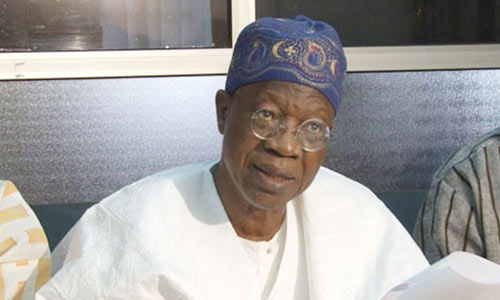
•Dr Dakuku Peterside

Historically and traditionally, many African communities cared about the source of wealth of their father’s members. They avoided questionable wealth so as not to taint the moral high standing or reputation of families or the entire community.  There were consequences for those who acquired ill-gotten wealth. They couldn’t flaunt it freely as they stood the risk of being excommunicated from the community. Other town men and women were wary of them and maintained “social distance” from them. They were the butt of jokes, limericks and caricature, often providing material for local bards. The reputation of the community was a common heritage of all so nobody was allowed to destroy it. That was our traditional setting where moral standing and values were everything. This inbuilt system to check character deficit at the community level worked well. Individuals knew they owed family and community responsibility of ensuring they didn’t bring shame or disrepute to the family name. 

That was how it used to be. Now things have changed, taking a turn for the worse. Persons with questionable character and inexplicable  source of wealth are celebrated and honoured with different titles. They have become the new role models of what “hardwork and smartness” should be. Questionable wealth is not just affecting the reputation of families and communities but it has assumed a dimension that has rubbed off on the dignity of every Nigerian and disincentivised the desire and passion for enterprise. 

Nothing demonstrates the change in our values system better than the  daring flamboyant lifestyle of some of the persons whose means of livelihood is obviously questionable. One was arrested in Dubai recently and handed over  to the US Federal Bureau of Investigation. He is currently standing trial for multiple internet scam cases in Chicago and later in Los Angeles in the US.

All of this is worrisome. Most parents who should ordinarily be the first set of persons to confront their children on their source of wealth welcome them home with fanfare. Daughters are  expected to bring home a booty with no questions asked while mothers look forward to celebrate in blissful “ignorance”. Spiritual leaders happily pray over houses, land, cars, businesses and much wealth, after all, the whole world belongs to God.

 Inexplicable money provides the leverage for politicians to win elections as the political space is heavily monetised; traditional rulers confer on them some funny titles or admit them into their traditional council. On the face value, it appears nobody is immune to the power and efficacy of questionable wealth. People who managed to summon courage to ask questions based on conviction are called  or termed envious, even evil minded. Our value system has completely been eroded and turned upside down to the extent that we ought to apologise to our forebears. 

Nothing demonstrates the change in our values system better than the  daring flamboyant lifestyle of some of the persons whose means of livelihood is obviously questionable. One was arrested in Dubai recently and handed over  to the US Federal Bureau of Investigation. He is currently standing trial for multiple internet scam cases in Chicago and later in Los Angeles in the US. Before his arrest he was the toast of a section of Nigerian youths and  social media influencers, and was naturally their idea of who a successful person is. Under 24 hours, everything he represented and “worked“ for crumbled under the watchful eyes of international security network. The case in Dubai is alleged to be internet fraud which is the most alarming of all fraud related issues, assuming an epidemic dimension in our country comparable only to Covid-19.

 In that same week, a different  young Nigerian, who recently featured in Forbes Magazine’s “30 under 30 billionaires “ pleaded guilty to internet scam in Virginia USA.  Another riddle was a Nigerian who is in prison yet succeeded in scamming a European one million pounds sterling. One of the most embarrassing situations is the revelation by the Federal Ministry of Justice that three countries;the US, India and Ghana have recently written to the country requesting for the extradition of 11 Nigerians to come and answer to internet fraud related cases.The stories abound and are embarrassing. 

Internet fraud has become quite attractive to a few young persons and has eaten so deep in our system that global statistics believe that one in every five cases originates from Nigeria or must involve a Nigerian. A famous economist described it as illicit economy, partially fueling  the economy without we acknowledging it; however, the major difference with other economic activities is the difficulty in reporting or recoding it. A 2013 data said it accounted for $12.3billion movement of funds around the world, more than the size of the economy of many sub-Saharan African countries. 

Internet fraud, which is one of the building blocks of the illicit economy is thriving because it offers an option for young people who cannot find legitimate jobs that is either  unavailable or disappearing faster than the population is growing. It is also a tool to address, albeit negatively, the rising inequality and poverty in Nigeria.

The negative impact of internet fraud and other financial crimes on our economy is known; from  funding other criminal activities, heightening inflation, undermining free trade to scaring away investors. However, society seems to inadvertently confer legitimacy on it by the acceptance it accords those who benefit from it, to the lame excuse made to justify what is clearly against our most cherished values. 

More scary is the impact on our reputation as Nigerians. Our citizens who are traveling or living abroad are first viewed from the prism of criminality, no matter how legitimately they operate or how harmless they look. This is responsible for the treatment they get at various points of entry. Nigerians doing business with western nations now have to work extra hard to prove their credibility. Investors are losing confidence in our economy and environment bearing in mind that we are not the investors’ first choice destination. This also fuels anti-immigrant campaign going on in some parts of Europe and America targeted at mostly Nigerians.

I must acknowledge that government has tried at different times to take steps to confront this menace that does a lot of harm to our reputation and economy, from creation of Economic and financial crimes commission (EFCC), Nigerian Financial Intelligence Unit (NFIU) to the passage of relevant laws by our National Assembly. The EFCC has investigated thousands of internet fraud-related cases and has achieved a few convictions.

 However, the wire scam or internet fraud “industry” continues to grow instead of abating. The import of this is that law enforcement is good but principally serves deterrent purposes and do not deal with the root causes. This takes us back to our old time cherished value system that worked for us in times past.

At the root of quest for wealth at all cost in our society today, especially amongst young people, is our value system and breakdown of social morality. Our values are a reflection of who we are and things that are important to us. It also says something about our needs, hunger and thirst. At the most basic level  Nigerians value trust and care about integrity and reputation. I acknowledge the fact that needs change from time to time and so do values. What is happening now is a reflection of changing value system which we must tackle head on. Values can change but our core cannot and should not change. We cannot allow the few unscrupulous ones amongst us define our values or who we are. Values are shaped by beliefs, education in the broadest sense, exposure, experiences and our environment. A Search for solution to the  restoration of our value system brings to the fore the content of our education curriculum, family grooming, leadership models and influences our young people are exposed to.

It was Theodore Roosevelt, a former President of the US who said “to educate a person in mind and not morals is to educate a Menace to society“.   We need to make a provision in our primary and secondary school curriculum for moral and civic education to strengthen whatever moral fibre our young people bring from home. 

Parents have a critical role to play in resetting the value system of their children. Children learn values by observation and drawing conclusions about what their parents think is important. Regardless of what you say it is what you do that influences their values. Unfortunately mass poverty has degraded the corrective power of family as impoverished parents now look up to their errant children for sustenance. 

Leaders represent the aggregate of who their society is, so have a role to play in shaping values. Typically, leaders should have positive influence on young people but a situation such as we are currently  facing where persons of questionable character are now in leadership cadre portends danger for society. The political system which is the source of government leadership and authority has been monetised. Political parties hawk their tickets to persons with incredible wealth irrespective of their source of livelihood or background. Religion has become commoditised. Imams and pastors are now self-appointed and confer status in mosques and churches according to the size of an individual’s financial support. Our society has developed a skewed reward system making hardwork  unattractive. We tend to reward material accomplishments at the expense of intangible intellectual achievements.

It makes sense that as government, community leaders, religious leaders , entrepreneurs, and parents we should be seriously concerned about the future of our nation as our young people get more and more obsessed with the quest for wealth at the cost of our reputation and our values. It is time to demonstrate willpower and press the reset button.

Dr Dakuku Peterside, former DG of NIMASA, can be reached via [email protected]

Credit: https://sundiatapost.com

Widowhood: S’ East has highest barbaric practices – Human Rights Group

The South East geopolitical zone has the highest form of barbaric harmful widowhood practices in Nigeria, including shaving of the hair on a woman’s private parts, a Non-Governmental Organisation (NGO), Initiative for Women and Girls Right Advancement (IWOGRA), has stated.

The organisation said eight out of ten Nigerian men do not have a Will at the age of 45, while seven out of ten men die without a Will.

“Widows constitute a significant proportion of women in Nigeria. The 2015 World Widows Report estimated that there are about 258 million widows in the world, while about 2.2 million of them are Nigerians. Eight out of ten Nigerian men do not have a Will at the age of 45, while seven out of ten men will not still write a Will until they pass on”, IWOGRA emphasised.

Other harmful traditional practices, IWOGRA said, included keeping the widows in isolation and having them inherited and slept with by any of her husbands brothers and denying them of inheritance rights to everything belonging to the man, especially when they don’t t have a male child.

The Executive Director of IWOGRA, Nkechi Obiagbaoso-Udegbunam, stated these in an interview after submitting the report of a webinar it organised in commemoration of this year’s international widows day.

She said that in the South East, women were forced to drink the water used in cleaning the decomposed corpse of their husband to ascertain their innocence in his death while most times, the widows were compelled to marry the brother of her husband.

According to her, most times, if the widows refuse to marry their brothers-in-law, they would be forced to leave the family.

Obiagbaoso-Udegbunam said that Nigeria has the highest number of widows in Africa because “their husbands die early due to some factors including wars, ailments, insecurity and violence associated with it.”

She said, “The South East has the highest form of barbaric harmful widowhood practices in Nigeria because the women themselves have been made to believe that these are the normal ways of life which they must comply with. But the irony of this is that the women are the ones perpetrating these widowhood practices against their fellow women.

“It is not the men who come after the widows, it is their fellow women called Umuada. They shave her, put her in isolation, maltreat her and blame her for the death of her husband. These women have been made by the men to believe that it is their role which they must have to do. So, we still have to work on the women themselves to make them realise that they should not be allowed to use their fellow women and treat them badly.

“In fact, if all the Umuada said the are not going to do it, the men will not do it. So, we need to talk to the women, the Umuada and women leaders to say no to all these acts against their fellow women.

“The practices would include shaving of a woman’s hair (even the hair on her private parts); forcing her to drink the water used in cleaning the decomposed corpse of her husband to ascertain her innocence that she was not responsible for her death; keeping her in isolation and having her inherited and slept with by any of her husband’s brothers.

“Most times, they compel the widow to marry the brother of her husband, especially in the South East. If she refuses to marry them, she will be forced to leave the family. Other practices include denial of inheritance rights to everything belonging to the man, especially when she doesn’t have a male child.”

Coronavirus found’ in China from bats in 2013

Virus samples sent to the Wuhan Institute of Virology seven years ago closely resemble Covid-19, according to a report in the Sunday Times that highlights unanswered questions about the origins of the global pandemic.

Scientists in 2013 sent frozen samples to the Wuhan lab from a bat-infested former copper mine in southwest China after six men who had been clearing out bat feces there contracted a severe pneumonia, the newspaper said.

Three of them died and the most likely cause was a coronavirus transmitted from a bat, the Sunday Times reported, citing a medic whose supervisor worked in the emergency department that treated the men. The same mine in Yunnan province was subsequently studied by Shi Zhengli, an expert in SARS-like coronaviruses of bat origins at the Wuhan Institute of Virology.

Shi, nicknamed ‘bat woman’ for her expeditions in bat caves, described Covid-19 in a February 2020 paper, saying it was 96.2% similar to a coronavirus sample named RaTG13 obtained in Yunnan in 2013. The Sunday Times said RaTG13 is ‘almost certainly’ the virus that was found in the abandoned mine.

China’s ˜Bat Woman’ Warns Coronavirus Is Just Tip of the Iceberg

The differences between the samples may still represent decades’ worth of evolutionary distance, according to dissenting scientists cited in the article. The Sunday Times said the Wuhan lab did not respond to its questions.

In May, the director of the Wuhan Institute of Virology said there was no live copy of the RaTG13 virus in the lab, so it would have been impossible for it to leak. There is no evidence the lab was the source of the global outbreak that began in Wuhan. But U.S. President Donald Trump claimed in May he’d seen proof of the theory, contradicting intelligence services.

Yahoo.com

Exclusive: Covid-19 may not have originated in China, Oxford University expert posits

Coronavirus may have lain dormant across the world and emerged when environmental conditions were right for it to thrive – rather than starting in China, an Oxford University expert believes.

Dr Tom Jefferson, senior associate tutor at the Centre for Evidence-Based Medicine (CEBM), at Oxford, and visiting professor at Newcastle University, argues that there is growing evidence that the virus was elsewhere before it emerged in Asia.

Last week, Spanish virologists announced they had found traces of the disease in samples of waste water collected in March 2019, nine months before the coronavirus disease was seen in China.

Italian scientists have also found evidence of coronavirus in sewage samples in Milan and Turin, in mid-December, many weeks before the first case was detected, while experts have found traces in Brazil in November.

Dr Jefferson believes that many viruses lie dormant throughout the globe and emerge when conditions are favourable. It also means they can vanish as quickly as they arrive.

Where did Sars 1 go? It’s just disappeared,” he said “So we have to think about these things. We need to start researching the ecology of the virus, understanding how it originates and mutates.

“I think the virus was already here, here meaning everywhere. We may be seeing a dormant virus that has been activated by environmental conditions. 

“There was a case in the Falkland Islands in early February. Now where did that come from? There was a cruise ship that went from South Georgia to Buenos Aires, and the passengers were screened and then on day eight, when they started sailing towards the Weddell Sea, they got the first case. Was it in prepared food that was defrosted and activated? 

Strange things like this happened with Spanish Flu. In 1918 around 30 per cent of the population of Western Samoa died of Spanish Flu, and they hadn’t had any communication with the outside world.

“The explanation for this could only be that these agents don’t come or go anywhere. They are always here and something ignites them, maybe human density or environmental conditions, and this is what we should be looking for.”

Dr Jefferson believes that the virus may be transmitted through the sewage system or shared toilet facilities, not just through droplets expelled by talking, coughing and sneezing.

Writing in The Telegraph, Dr Jefferson and Professor Carl Henegehan, Director of the CEBM, call for an in-depth investigation similar to that carried out by John Snow in 1854, which showed cholera was spreading in London from an infected well in Soho.

Exploring why so many outbreaks happen at food factories and meatpacking plants could uncover major new transmission routes, they believe. It may be shared toilet facilities coupled with cool conditions that allow the virus to thrive.

“We’re doing a living review, extracting environmental conditions, the ecology of these viruses which has been grossly understudied,” said Dr Jefferson.

“There is quite a lot of evidence that huge amounts of the virus in sewage all over the place, and an increasing amount of evidence there is faecal transmission. There is a high concentration where sewage is four degrees, which is the ideal temperature for it to be stabled and presumably activated. And meatpacking plants are often at four degrees.

“These meat packing clusters and isolated outbreaks don’t fit with respiratory theory, they fit with people who haven’t washed their hands properly. 

“These outbreaks need to be investigated properly with people on the ground one by one. You need to do what John Snow did. You question people, and you start constructing hypotheses that fit the facts, not the other way around.”

Yahoo.com

Who Xi Jinping wants to occupy the White House in 2021; US expert hazards a guess

The election was one more of many signs (see my column of May 2nd) that China sees the current global situation, accelerated by COVID-19’s outsized blow to the United States, as a unique moment to gain global influence at Washington’s expense. Kiribati helps that effort in two respects: narrowing the number of countries in the world recognizing Taiwan to just 15 and expanding its presence in waters dominated by U.S. Pacific Command.

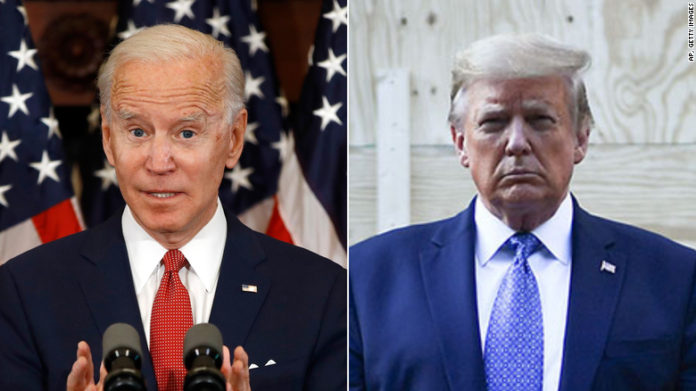
And that brings me to the stale debate in Washington over whether President Xi Jinping, the most dominant Chinese leader since Mao Tse Tung, wants President Donald Trump or former Vice President Joe Biden to win November’s presidential elections. And might tilt everything from trade decisions to intelligence operations to extract his preferred outcome.

Xi’s power preference

The reality is that President Xi has already decided who he prefers to be the victor in our 2020 elections – and that would be China.

We’re in the systemic struggle of our age, and the U.S. democratic system is facing one of the great stress tests of its history without any certainty about the outcome. The situation is bound to get messier through the elections and, perhaps, far beyond.

The United States won its global role on the attractiveness of its values and the effectiveness of its institutions, charms that were tarnished even before the country’s worst-in-class performance in the face of coronavirus. Deaths this week in the U.S. hit a world record 124,468, and new covid-19 cases passed the 40,000 mark for the first time, leaving allies around the world bewildered about their favorite superpower. 

Chinese leaders are telling their global partners this confirms further that the United States is a declining leader with a faltering model. Beijing underscores the value of their brand of leadership, which focuses more on being at the center of global influence that on being atop the heap.

Over time, the United States may well self-correct, as it has done so often in history. It’s also true that China continues to hurt its global cause through overreach, unfair trade practices and diplomatic bullying.

This week also produced new signs that Europe has grown warier of the Chinese embrace. “We continue to have an unbalanced trade and investment relationship,” said Ursula von der Leyen, European Commission president, after a summit with Chinese leaders. She pressed Beijing to deliver on last year’s commitments on market access and to close negotiations on an investment agreement.

At the same time, U.S. Secretary of State Mike Pompeo surprised on Thursday his European partners by accepting their proposal, which he had seemed cool on earlier, to launch a new U.S.-EU dialogue on China. Josep Borrell, the EU’s de facto foreign minister, raised the idea earlier in the week but soft-pedaled it when it initially seemed the U.S. lacked interest.

The U.S. also recently stepped up military reassurance efforts on behalf of its Asian allies. This month, three U.S. carriers navigated the Philippine Sea and farther east, bringing with them a flock of fighter jets. Congress is working on a Pacific Deterrence Initiative, a special budget that would spend nearly $7 billion over two years aimed, among other outcomes, at bolstering naval forces in the Western Pacific.

Seizing opportunities

Even with all that activity, China remains even busier, seizing opportunities wherever it senses a global leadership vacuum worth filling. In the face of COVID-19, it has demonstrated a remarkable ability to multi-task. The evidence of that would fill volumes, but here are some fronts worth watching.

Beijing is accelerating its work toward creating a digital currency, planning for the moment that it may be able to shift its creditors to repayment in yuan. Over time, it would hope to curb the power of the dollar in global transactions and to sanction and print money.

Kristine Lee in Politico Magazine reports on how, with the Trump administration’s reduced interest in multilateral institutions, “Beijing has systematically positioned Chinese nationals at the head of a wide range of U.N. agencies.” That reflects “Beijing’s savvy diplomatic maneuvering as a rising power, and its position as the world’s second largest-economy,” she writes.

China also continues to expand its military capabilities in its region, defining 80 new geographic features in the South China Sea as its own, some 55 submerged features, and moving toward the declaration of an Air Defense Identification Zone to tighten its air domain.

Perhaps most crucial to watch is Taiwan. Chinese rhetoric is growing more aggressive, and its military activity in Taiwan’s air defense space is growing more frequent. Beijing has sailed a new aircraft carrier through the Taiwan Strait, and it launched new destroyers last year.

Chinese military leaders have said they’d like to make Taiwan their own by the time of the Chinese Communist Party’s 100th anniversary in July of next year.

It will take a far more focused and consistent Washington, acting with greater cohesion alongside its global allies, to deter any such birthday aspirations.

Frederick Kempe is a best-selling author, prize-winning journalist and president & CEO of the Atlantic Council, one of the United States’

SERAP Gives Buhari 14 Days To Probe Over N300bn Missing Public Funds

Socio-Economic Rights and Accountability Project (SERAP) has given President Muhammadu Buhari 14 days to “direct the Attorney General of the Federation and Minister of Justice Mr Abubakar Malami, SAN, and appropriate anti-corruption agencies to urgently investigate allegations that over N300bn of public funds are missing, mismanaged, diverted or stolen, as documented in the 2017 audited report by the Auditor General of the Federation (AGF).”

SERAP also urged him to “ask Mr Malami and the anticorruption agencies to promptly investigate the extent and patterns of widespread and endemic corruption in the ministries, departments and agencies (MDAs) indicted in the audited report. We urge you to take meaningful and effective measures to clean up an apparently entrenched system of corruption inthese MDAs.”

In the letter dated 4 July, 2020 and signed by SERAP deputy director Kolawole Oluwadare, the organization said: “The 2017 audited report reveals grim allegations of mismanagement, diversion and stealing of public funds, as well as unaccounted-for spending. The report suggests a grave violation of the public trust, and that the indicted MDAs and the National Assembly lack effective and credible internal processes to prevent and combat corruption.”

According to SERAP, “Investigating and prosecuting the alleged grand corruption documented by the AGF would improve the chances of success of your government’s oft-repeated commitment to fight corruption and end the impunity of perpetrators. It will improve the integrity of MDAs, serve the public interest, as well as improve Nigerians’ access to public services and goods.”

SERAP said: “Any failure to promptly investigate the allegations and prosecute suspected perpetrators would breach Nigeria’s anti-corruption legislation, including the Public Procurement Act, the 1999 Nigerian Constitution (as amended) and the country’s obligations including under the UN Convention against Corruption and the International Covenant on Economic, Social and Cultural Rights to which Nigeria is a state party.”

The letter, read in part: “It would also mean that Nigeria is failing to fulfil the obligations under the covenant to use its “maximum of available resources” to progressively realize and achieve basic economic and social rights, including access of Nigerians to public services and goods like quality education, healthcare, clean water and regular electricity supply, as well as the right to honest public services.”

“SERAP has carefully analysed the 2017 audited report by the AGF and our analysis reveals the following grim allegations of mismanagement, diversion and stealing of public funds, as well as unaccounted-for spending.”

“The Federal Civil Service Commission spent ₦25,856,279.00 on behalf of Federal Ministry of Foreign Affairs to develop online recruitment in April 2014 without any supporting memo from the Ministry of Foreign Affairs, and without due process. Although the project was suspended, the Commission went ahead and paid ₦25,856,279.00 for contract not executed. The AGF recommended the full recovery of the public funds.”

“The Commission granted cash advances totalling ₦8,590,000.00 to 25 officials between February and December, 2016 but failed to retire or account for the money. Also, ₦6,850,000.00 was paid for store items that were never supplied. Another ₦2,619,210.00 was spent without receipts. The AGF expressed concern that the money may have been misappropriated or stolen, and recommended the full recovery of public funds.”

“The former Chairman of the Commission whose tenure of office ended in May 2017 took away with him four vehicles (One Toyota Hilux, one 407 Classic Peugeot, One Toyota Land Cruiser Jeep and One Toyota Corolla) belonging to the Commission, despite the Monetization Policy of Government clearly stating that all vehicles of MDAs belong to the pool, and are not expected to be taken away as part of severance package at the expiration of an officer’s appointment.”

“The Ministry of Foreign Affairs failed to show any receipts for the payment of ₦4,385,230,763.25 between January and December 2016. The Ministry also had no insurance cover for all its motor-vehicles, despite the budgetary allocation of ₦11,805,802.00 for insurance premium. The Ministry spent ₦105,000,000.00 to buy computer consumables, photocopy machine consumables, papers and other store items, contrary to official circular, and without any receipts. The AGF recommended the return of the money to the public treasury.”

“The Ministry also spent ₦72,000,030.00 to improve power supply to the Ministry but the contract for this was not captured in the 2017 appropriation. Despite the purported spending, power supply to the Ministry has not improved. Also, ₦7,520,000.00 was spent by 20 officials to visit 8 out-stations of the Ministry without due process and without any receipts. ₦234,622,718.00 was also spent but remained unretired or unaccounted for. The AGF recommended the full recovery of public funds.”

“The Ministry also paid ₦83,719,500.00 to a company for the rehabilitation and re-integration of released Chibok girls in August, 2017 without any agreement between the Ministry and the contractor, and without any evidence of purchase of the back-to-school materials, and job completion certificate. The AGF recommended the full recovery of public funds.”

“The Ministry also transferred a take-off grant of ₦83,317,257.00 for Consulate-General of Nigeria, Guangzhou to the personal account of the Ambassador of Nigeria in Rome in 2013 to be remitted to Guangzhou. But the money was never remitted to Guangzhou and has remained outstanding till date. The AGF expressed concern that the money may have been diverted and misappropriated, and recommended that the Ambassador of Nigeria in Rome whose account was used be asked to account for the money.”

“The Ministry of Justice disbursed ₦10,460,950,841.00 judgment debt in 2017 without due process. The committee to manage the funds was dissolved after 2013 financial year was not reconstituted as at the time of the 2016 and 2017 appropriations but funds were nonetheless disbursed. Also, ₦32,353,693.00 was spent between March and September 2017 on international travels without approval or evidence of spending. The AGF recommended the full recovery of public funds.”

“At the National Assembly, the House of Representatives spent ₦95,212,250.00 without due process and without any receipts. The National Assembly Management Accounts also showed spending of N673,081,242.14 between April–October 2017 without any documents. The AGF expressed concerns that the money may have been misappropriated and recommended that the Clerk of the National Assembly should fully recover the money and return it to the treasury.”

“The Senate also spent ₦1,364,816,397.95 to renovate a store at the National Assembly but the AGF was denied access to the store and records, thus expressing concerns that ‘public funds may have been diverted for unappropriated purposes.’ The AGF recommended that the Clerk of the National Assembly account for the money.”

“The National Institute for Legislative and Democratic Studies misappropriated ₦67,296,478.00, as payments were made to unknown persons. The AGF expressed concerns that the money may have been diverted and recommended that the Director-General should fully recover the money and return it to the treasury.”

“The Public Complaint Commission spent ₦63,826,941.30 on contract to renovate State offices in Delta, Kwara, Akwa– Ibom, Taraba, Borno, Ekiti and Niger States without due process, valuation certificates, and without receipts. The AGF expressed concerns that the money may have been diverted and recommended the full recovery of public funds.”

“The Federal Ministry of Water Resources spent ₦343,957,350.60 without due process, receipts, and without any evidence of work done or services rendered. Also, ₦14,993,950.00 granted as cash advances to staff was not accounted for. The AGF expressed concerns that the money may be missing and recommended that the Permanent Secretary is made to account for it.”

“The Lower Benue River Basin Development Authority, Makurdi misappropriated ₦42,277,285.50 of contract money for project management. Similarly, the National Agricultural Extension and Research Liaison Services, Ahmadu Bello University, Zaria paid a contractor ₦33,425,000.00 in March 2017 for awareness training but there was no evidence that the contract was executed. The AGF expressed concerns that the money may have been diverted and recommended that the Executive Director should recover and return it to the treasury.”

“The Cross-River Basin Development Authority, Calabar, overpaid a contractor to the tune of ₦10,387,490.00 for construction of Link Road between Cross River and Ebonyi State without any justification. Also, ₦30,616,110.00 was spent for construction of erosion control works at Nguzu but remained unaccounted for. The AGF expressed concerns that the contractor may have received money for project not executed, and recommended that the Managing Director should recover the money and return it to the treasury.”

“The Lake Chad Research Institute, Maiduguri, Borno State failed to account for 2 Nos. Toyota Prado Jeeps which were purchased in 2013 and 2014 with registration No. 45KOIFG for one Jeep but the second Jeep was not registered, and no reason was given for this. The AGF expressed concerns that the Jeeps may have been diverted to private use, and asked the Executive Director to account for the vehicles.”

“The National Water Resources Institute, Mando Road, Kaduna paid ₦84,401,940.74 to a company on 4th May 2017, being 10% payment on the construction of a 2-story building for UNESCO without any existing contract, and without receipts. The AGF recommended the recovery of the money.”

“The Nigeria Hydrological Services Agency, Abuja paid ₦24,800,000.00 into a staff private account for production/prevention of the 2016 annual flood outlook (AFO) and without evidence of services performed. Another ₦31,439,300.00 was paid in September 2016 into the account of another staff for sensitization workshops. The AGF expressed concerns that the money may be missing and asked the Director-General to recover it.”

“The Hadejia – Jama’are River Basin Development Authority, Kano State paid ₦204,893,978.09 to contractors without any receipts. The Nigeria Institute for Oil Palm Research, Benin City, Edo State paid ₦210,921,849.66 and ₦30,010,963.65 without any receipts. Another ₦15,630,050.00 cash advances to staff in 2017 was also not accounted for, as at 2018. The AGF expressed concerns that the money may have been mismanaged and asked the Accounting Officer to recover it.”

“The Federal Capital Territory Administration spent ₦393,254,000.00 to support security agencies without due process and without receipts. Another ₦362,481,173.52 was paid for the procurement of stores locally without due process. The AGF expressed concerns that the money may be missing and asked the Permanent Secretary to recover it.”

“The Ecological Funds Office misappropriated ₦1,257,791,992.86 meant for contract for Canalization and Desilting of OKOKO and Ogbagba Rivers in Osogbo Township, Osun state. There was no evidence that ₦30,000,000.00 meant for compensation to owners of marked-to-demolish structures and economic trees affected by the project, received any payment. The AGF expressed concerns that the money may be missing and asked the Permanent Secretary to recover it.”

“The Office of The Head of The Civil Service of The Federation paid ₦301,984,103.00 for projects without accounting for it. ₦36,641,528.00 was also paid for seminars, conferences and workshops without any receipts. Also, ₦16,096,712.00 was spent on projects not executed. The AGF expressed concerns that the money may have been diverted and asked the Permanent Secretary to recover it.”

“The Federal University of Petroleum Resources, Effurun spent ₦830,267,951.23 as Special Presidential Needs Assessment Phases I and II to the Federal University of Petroleum Resources, Warri for the Construction of Building, Procurement of Laboratory Equipment and Capacity Building/Staff training but the funds were misapplied. ₦190,495.824.75 was approved for a project to construct and furnish workshop and laboratory but the contractor was paid ₦199,324,657.10 and without any evidence of request by the contractor.”

“The University also spent ₦990,621,753.29 to construct and furnish a 3-storey, 4-floor structure Student Residential Building Complex but the contract for the spending was awarded without due process. Also, only a 2-storey, 3-floor building was constructed. Several other infractions are documented in the report. The AGF expressed concerns that the money may have been diverted and asked the Vice-Chancellor to account for it.”

“The National Office for Technology Acquisition and Promotion spent ₦2,270,000.00 for a 2-day workshop but without any receipts. The AGF asked the Director-General to recover the money. The Nigerian Railway Corporation failed to remit ₦122,242,337.63 in taxes to the authorities. The National Power Training Institute of Nigeria (NAPTIN) paid ₦20,569,398.20 for supply of Power System Simulator without evidence of supply. It gave ₦6,187,393.50 as cash advances to 17 officers which remained unaccounted for.”

“The Advertising Practitioners Council of Nigeria paid ₦3,604,000.00 for the services of solicitors without the consent of the Attorney-General of the Federation. Another payment of ₦13,542,822.82 for the completion of machine tools workshop was made without contract agreement or receipts. In total, ₦126,533,197.08 was paid without contract agreement or receipts. The AGF expressed concerns that the funds may have been misappropriated and asked the Managing-Director to recover the money.”

“The National Health Insurance Scheme paid ₦4,931,475,094.63 as cash advances to staff without due process. ₦72,383,000.00 was also supposedly paid for verification exercise but the AGF found no evidence that the verification took place. Another ₦31,478,400.00 was purportedly paid for accreditation of Health Maintenance Organizations (HMOs) but again the AGF found no evidence of this.”

“The National Information Technology Development Agency paid ₦28,525,000.00 to a Security company for the production of procurement manuals for the Agency. 300 copies of the manual were produced although only 5 copies were needed and utilized, with a copy of the manual costing ₦95,083.33. The agency also paid ₦15,842,970.00 printer tonners.”

“There are several other infractions documented in the report, a copy of which can be obtained from the Auditor-General’s office.”

“We request that you take the recommended action within 14 days of the receipt and/or publication of this letter, failing which SERAP will institute legal proceedings to compel your government to act in the public interest.”

The letter was copied to Mr Abukabar Malami; Professor Bolaji Owasanoye, Chairman Independent Corrupt Practices and Other Related Offences Commission (ICPC); Ibrahim Mustafa Magu, Acting Chairman, Economic and Financial Crimes Commission (EFCC); and Mrs Zainab Ahmed, Minister of Finance, Budget and National Planning.

Credit: https://thenigerialawyer.com

Buhari Angry As Boko Haram Attacks UN Helicopter In Borno

President Muhammadu Buhari on Sunday in Abuja condemned what he called “the dastardly attack on UN aid helicopter in the Northeast on Saturday by the Boko Haram terrorists”.

In a reaction to the reports of the incident, Malam Garba Shehu, one of the president’s spokesmen, quoted Buhari to have said:

“This latest cowardly attack on the UN humanitarian helicopter is yet another desperate rear guard action by the Boko Haram terrorists who have been under intense pressure from the Nigerian military.

“Let me reassure the international community and Nigerians that this latest cowardly attack on a UN helicopter, which claimed the lives of two people, including a five-year-old baby, would not go without severe consequences.

“Boko Haram terrorists are clearly on the back foot and their increasing attacks on innocent civilians, including UN humanitarian workers, was part of their desperation to prove that they are strong in order to cover up their dwindling fortunes,”Buhari said.

According to the president, the security of foreigners and Nigerians remained the top priority of his administration, adding “we shall leave no stone unturned until we eliminate these remorseless enemies of humanity”.

Buhari however, underscored the need for all humanitarian and other aid workers in the region to, at all times, properly coordinate movements – air or land, with the Theatre Commander and other military authorities. (NAN)

Credit: https://dailyasset.ng

Kaduna Refinery generated zero revenue in 2018, incurred 65bn loss – NNPC report

Kaduna Refinery

The Kaduna Refining and Petrochemical Company Limited (KRPC) generated no revenue in 2018, the first audited financial statements of the Nigerian National Petroleum Corporation (NNPC) after 43 years of its operation have shown.

Details of the report showed that the refinery, however, incurred an operating loss of N64.5 billion, throwing up concerns over the continued operation of refineries by the corporation.

The newly released annual reports and financial statements for the year ended December 31, 2018, were for 20 of the state-owned national oil company’s subsidiary companies operating within and outside the country.

The companies covered in the reports published in the corporation’s website last Friday included the Nigerian Petroleum Development Company (NPDC), Warri Refining & Petrochemical Company Limited (WRPC), Port Harcourt Refining Company Limited (PHRC), Kaduna Refining & Petrochemical Company (KRPC), and Integrated Data Services Limited (IDSL), Nigerian Products and Marketing Company Limited (NPMC), Nigerian Pipelines and Storage Company (NPSC).

The others include the National Engineering & Technical Company Limited (NETCO), Nigerian Gas and Marketing Company Limited (NGMC), Duke Oil Services (UK) Limited, Duke Global Energy Investment Limited, Duke Oil Incorporated, NNPC Retail Limited, National Petroleum Investments Management Services (NAPIMS), The Wheel Insurance, NIDAS Shipping Services, NIDAS UK Agency, and NIDAS Marine.

Refineries

Details showed that Kaduna refinery spent N24 billion in direct costs to record zero revenue and an operating loss of N64 billion for 2018, as against N2 billion naira revenue and N112 billion losses in 2017.

A breakdown of the direct costs and administrative expenses showed that it incurred N447.7 million in Training Expenses, Security expenses of N230 million, Communication expenses of N37.3 million, and Consultancy fees of N843 million.

For the Warri Refining Company, the audited financial statement showed that the company earned N1.98 billion as revenue while it incurred N12.74 billion as cost of sales, resulting in a gross loss of N10.57 billion and an operating loss of N45.39 billion.

The Port Harcourt Refining Company recorded total revenue of N1.45 billion in 2018 with expenses of N24.04 billion, resulting in a gross loss of N22.58 billion.

Directors’ Payments

Meanwhile, a breakdown of the payments made to directors at the Kaduna Refinery showed that total employee cost was put at N23 billion in 2018, compared to N27 billion in 2017. The payments include salaries and wages, death benefit, administrative expenses, among others.

Aside that, details showed that in 2018, there were a total of 32 higher-paid employees of the company, other than directors, whose works were done in Nigeria. The remuneration for this set of employees range from those who earned between N100,000 and N1 million and those who earned N15 million and above. Earlier in 2017, the number of this category of staff was put at 1,022, representing about 340 percent difference in both years.

As per the directors’ remuneration for 2018, excluding pension contributions and certain other benefits, the figure was put at N109 million, as against N249 million in 2017.

Also, the highest-paid director earned N33 million in 2018, as against N27 million in 2017.

Should Refineries be sold?

Details of the NNPC financial statement have raised concerns yet again about the continued operation of refineries by the NNPC.

Earlier in 2018, a PREMIUM TIMES’ report showed that none of Nigeria’s refineries worked up to 50 per cent of their capacity at any time during 2017, according to official figures from the NNPC.

The NNPC has four major refineries, two in Port Harcourt, Rivers State, which combines to form the Port Harcourt Refining Company (PHRC) with a combined installed capacity of 210,000 barrels per stream day (bpsd); the Kaduna Refining and Petrochemical Company Limited (KRPC) with an installed capacity of 110,000 bpsd; and the Warri Refining and Petrochemical Company Limited (WRPC) with an installed capacity of 125,000 bpsd.

All the refineries have a combined installed capacity of 445,000 barrels per day.

For 2017, the Warri refinery functioned highest in January, utilising 42.6 per cent of its capacity. The Port-Harcourt refinery, for the year, functioned at its peak in December, utilising 41.7 per cent.

The Kaduna refinery had the worst performance in terms of capacity utilisation in 2017. It functioned most in February utilising just 34.4 per cent of its capacity.

Last year, Atiku Abubakar, presidential candidate of the Peoples Democratic Party in the 2019 general elections, said that he would privatise the Nigerian National Petroleum Corporation(NNPC).

READ ALSO: THREE REFINERIES LOST N1.6TRILLION IN 5 YEARS, SAYS NNPC AUDIT REPORT

He said that the NNPC had failed to serve the purpose for which it was established in 1977 and selling-off the Corporation and all the refineries was the best option for the country.

But Mele Kyari, the Group Managing Director of the corporation, made a case for change in management of the refineries. He said the refineries would no longer be managed by the NNPC after rehabilitation. Speaking in April, he said a company would be engaged to manage the plants on an Operations and Maintenance (O&M) basis upon the completion of the rehabilitation exercise.

The rehabilitation of the four refineries in the country have gulped billions of naira since 1999 but none of them is yet to operate at full capacity.

Against the background of resources expended on Turn Around Maintenance over the years despite their moribund state, many Nigerians have called on the government to shut down the refineries and sell them to willing investors.

Other Subsidiaries

Meanwhile, details of the NNPC financials show that the Pipeline Product Marketing Company (PPMC), NNPC’s supply and refined petroleum products marketing subsidiary, reported revenue of N29.5 billion in 2018 as against N113 billion in 2017. It reported a profit after tax of N9.3 billion in 2018 as against a loss of N27 billion that was recorded in 2017.

The Wheel Insurance, another of its subsidiaries, experienced a decrease in insurance liabilities from $9 million in 2017 to $8.2 million in 2018.

With total assets valued at N18.6 trillion, the National Petroleum Investment Management Services (NAPIMS) posted revenue of N5.04 trillion in 2018 and profit of N1.01 trillion,

The National Engineering and Technical Company (NETCO) recorded a profit after tax of N4.5 billion for 2018, up from the N2.4 billion reported in 2017 while the Petroleum Products Marketing Company (PPMC) recorded gross profit of N24.3 billion in 2018.

Credit: https://www.premiumtimesng.com

BREAKING NEWS: Nigeria’s KING of Cyber-fraud, HUSHPPUPI hires Micheal Jackson’s former attorney

, Mark Geragos for defense in court…to help wriggle out of multi-million dollar scam, reduce 20-year-jail term * Defense lawyer expected to convince United States Department of Justice officials on how suspect can help track similar internet crimes around the world for the government * Suspect’s inner circle friend, music producer, singer, Samklef confirmed the up-coming legal firework plan on Instagram, saying: “This movie go sweet pass Netflix… he might not even spend all his time.. he will work with the government and regain his freedom” * America’s famous attorney in highbrow case earlier represented celebrities like Winona Ryder, Chris Brown, Colin Kaepernick and Scott Peterson * Naija Standard Newspaper editors reached out to defense lawyer, Principal Attorney at Geragos & Geragos law chamber located on 644 South Figueroa Street, Los Angeles, LA 900 17 left an urgent voice mail message on subject matter at: +1-213-625-3900 while awaiting response *GEORGE ELIJAH OTUMU/AMERICA Foreign Bureau Chief.

Credit: http://nigeriastandardnewspaper.com

One too many: In Abuja, sexual and gender-based violence happens frequently but perpetrators often walk free

Priscilla Ubani - Domestic violence victim CREDIT: The ICIR

Sexual and Gender-based Violence, SGBV, is on the increase in Abuja, the Federal Capital Territory, despite the domestication of Violence Against Persons Prohibition, VAPP Act signed in 2019 by President Muhammadu Buhari.  Seun DUROJAIYE reports the travail of victims of SGBV during the lockdown in Abuja.

Photographs and video by Uthman SAMAD.

One too many: In Abuja, sexual and gender-based violence happens frequently but perpetrators often walk free

Featured NewsiNewsiReportsBy Seun DUROJAIYE On Jul 5, 2020

Priscilla Ubani – Domestic violence victim CREDIT: The ICIR

Sexual and Gender-based Violence, SGBV, is on the increase in Abuja, the Federal Capital Territory, despite the domestication of Violence Against Persons Prohibition, VAPP Act signed in 2019 by President Muhammadu Buhari.  Seun DUROJAIYE reports the travail of victims of SGBV during the lockdown in Abuja.

Photographs and video by Uthman SAMAD.


ON May 10, in Nyanya, a satellite town in the Federal Capital Territory, FCT Abuja, during the COVID-19 lockdown period, 14-year-old Angela Hosana picked the phone of her guardian, who was observing siesta and dialled a number. After a brief exchange, she hung up, stepped out of the house and stood by the gate. She remained there for several minutes, agitated.

It was a Sunday.

As she waited, one of the other girls in the house noticed her anticipation and asked why she was outside.

“Nothing,” she responded, adjusting her red dress as she looked away while still waiting.

Hours passed. Then, a car pulled up. Hosana recognised who it was and she climbed into the front seat. Once the door was shut, Anna’s friend, 31-year-old Emmanuel Kamalu, drove off.

The car came to a stop as they approached a lonely road. Kamalu advised that they move to the back seat and Hosana obliged. As they sat together at the back of the car, Kamalu raped her.

“He pulled my dress. Then he removed my pants. He pulled his trouser also and he held me tight and put me on his legs,” Hosana told The ICIR.

It took several hours before she returned home to her guardian, Joy Ogbonna, who had been worried about her whereabouts. After long persuasion, Hosana revealed that Emmanuel Kamalu, a neighbour of theirs, had slept with her.

Ogbonna needed a confirmation and Kamalu, who is married, with a son never denied he raped the minor. At her insistence, he agreed to visit a hospital with Hossana for tests.

On the way to the hospital, they were intercepted by military officers who were enforcing the lockdown curfew. Upon hearing the case, the officers, driven by moral rage, descended on Kamalu, only releasing him after he had sustained several bruises and cuts.

“The officers made him strip and they started beating him up. They asked him to submerge himself in a pool of dirty water and didn’t want to release him. They asked if I could drive and when I said yes, they asked me to go without him.

“But I refused because he also had to get tested so we could gather evidence. We spent over three hours at the checkpoint before they released us,” Ogbonna recalled.

When they arrived Nyanya General Hospital hours later, they were greeted by another obstacle. The doctor on duty refused to attend to them, demanding that they first get a police report. It was around 10:00 pm.

As regular practice, following an implicit rule of the Nigerian police, hospitals often demand a police report before treating victims of assaults or accidents, even in cases of emergency, a practice which Anjuguri Manzah, FCT Police Public Relations Officer (PPRO), describe as outdated.

Hospitals are now mandated to treat all patients including those with gunshot wounds without a police report, he said.

Manzah told The ICIR that hospitals are only required to report cases after commencing treatments and not before.

Ogbonna was not privy to this information, else she would have tried harder to convince the doctor. She however managed to reach a friend who intervened and got a doctor to help them out.

“It took several pleadings and the intervention of a doctor friend of mine whom I called before they agreed to test Hosana. The doctor was pissed and asked why I had to go through back channels to compel him to do his work. He said under normal circumstances, they are required to get a police report before doing anything.

“Even at that, they couldn’t do most of the required tests because they didn’t have the equipment. The examination room was dark because there was no light and the doctor had to use a flashlight,” Ogbonna said.

According to Ogechukwu Dike, a medical doctor at Chivar Specialist Hospital and Urology Center, tests such as Hepatitis B and C, HIV, syphilis, a swab (vaginal if possible) for microscopy and culture are routinely carried out on rape victims to establish the absence of preexisting infections before the incident, and thereafter, post-exposure prophylaxis is commenced to prevent certain diseases.

But only a physical examination and urine tests were carried out on Hosana that day.

After the examination, the doctor told Ogbonna that Hosana’s hymen was broken but further tests would need to be taken to determine if the secretion from her private area was semen. He directed them to the laboratory for more tests but the nurse on duty at first declined to attend to them.

“She said most of the tests couldn’t be carried out because they didn’t have a rape kit for testing.”

The nurse also said the time (around 12.00 AM) in which they came was only for emergencies and that Hosana’s case wasn’t an emergency. However, she agreed to do a urine test, advising them to return at another time for the other tests to be carried out.

By daytime, Kamalu was taken to Karu police station, where the case was reported. The police confirmed that he was a repeat offender and had previously been arrested for molesting two young girls but got bailed after spending a few days in detention.

Again, he was detained and asked to write a statement.

In his statement, Kamalu described Hosana as his girlfriend, saying that he was friendly with everyone including underaged girls in the neighbourhood.

“Hosana and I are very close. I’m a free man in the neighbourhood, I’m always free,” Kamalu said.

Kamalu also said he has no bad intention towards Hosana. However, when asked if he would accept if another person rapes his own child, he said no.

“I won’t take it if another man does it to my child but I can forgive him if I know he is sorry for his actions,” Kamalu said, pleading for forgiveness.

It is eight weeks since Kamalu had carnal knowledge of the teenager, yet police said the case is still under investigation, as at the time of filing this report.

The ICIR in an earlier report found that only 65 suspects have been convicted of rape in the whole country, in the last 46 years.

Of all these convictions, 32 took place in 2015 and the years before, while 33 took place after 2015, the report highlighted.

The low convictions directly reflect how the police have handled the administration of criminal justice concerning SGBV victims in Nigeria. But the Nigerian police is not the only law enforcement agency that records low conviction of sexual crimes. The National Agency for Prohibition of Trafficking in Persons, NAPTIP, which has the mandate to protect women and children also appears to have performed below expectations.

For the year 2020 alone, NAPTIP has only convicted 11 out of 22 sex offenders, representing 50 percent of all verified reported cases. Though local media report cases of rape and domestic violation almost daily, only few of these cases are successfully prosecuted.

The abuse of Destiny Ejike, a 17-year-old student is one of those that may not go to trial because of the way it is being handled by NAPTIP.

Ejike and her older jealous lover

In October 2019,  Ejike met Job Ikan, a mid-thirties businessman, while she was closing from work in Lugbe area of the Federal Capital Territory (FCT). Ejike recalls that he approached her with confidence and convinced her to share her phone number.

He never stopped calling and Ejike, feeling wanted, agreed to be his girlfriend. Within a short period of knowing her, he started promising marriage and a lifetime of happiness. And at the time, Ejike was seeking admission into university and thought he could make her dreams come through.  He showered her with attention and promised to sponsor her education.

True to his word, he gave her money to enrol in a state university in the north. However, once she resumed school, he became possessive.

Ejike narrating how Ikan subjected her to several forms of violence.
CREDIT: ICIR

According to Ejike, he would call every time, demanding her exact location in the school premises and when he felt uncomfortable with her response, he would show up at the school unannounced and demand to see her. The first time it happened, he made her spend the night with him at a hotel.

“He didn’t care if I missed lectures, he made me spend the weekend at the hotel he booked. We had sex and he disvirgined me,” Ejike recalled.

All the while, Ejike kept her love affair a secret from her parents, only opening up when it became too rough to handle. Once they started sleeping together, Ikan became even more obsessed with Ejike. He had the contact details of security men at her school and would grease their palms for information about her movement around campus.

His care metamorphosed into abuse. He would show up at the school, take her to a hotel and beat her up, accusing her of cheating on him. When she tried to end the relationship, he got suicidal.

“I told him I was no longer interested in the relationship and wanted to break up and he started threatening to commit suicide and, on several occasions, he attempted suicide.

“He always said that he would kill himself and make sure that it was only both of us in the room, so that if he died, people would think I killed him and I would be jailed for the rest of my life,” Ejike recounted.

The semester ended and Ejike planned to surprise her parents. When she shared her plans with Ikan, he offered to pick her from the bus stop and drop her home.

On the day, he showed up with a car and convinced her to follow him to his apartment. At his house, he locked the door and forced her to spend the night with him.

“He said I wanted to come to Abuja without visiting him. That he would kill himself if I don’t spend the night at his house. He didn’t let me go home that day,” Ejike said.

He eventually released her but the abuse went on for seven months.

Ejike started seeking a way out and told her parents about her affair with Ikan. Her parents reported the case to NAPTIP and as the case was being investigated, Ikan became a human camouflage. He sought the goodness of Ejike’s parents, promising that he was going to marry their daughter and ease them of their financial burden.

He started showing up at their home. When Ejike’s parents voiced their uneasiness with him coming over, it angered him and he recruited them as new victims.

“He would shout and abuse my parents and siblings. He said they were standing in between our love,” Ejike said.

Ejike’s parents again reached out to NAPTIP for help. This time they were assured that he would be stopped.

Emeh Magnus, head of NAPTIP’s Rapid Response Squad (N-RRS) in Abuja, told Ejike and her parents to reach out to him anytime they sensed danger. He told them the case was being investigated and, sooner than later, the suspect would be apprehended.

Weeks after the case was reported, Ikan was still a free man.

In fact, during an interview with the family in their home on May 10, Ikan showed up with a friend, pleading to be forgiven and demanding that the case be withdrawn from NAPTIP.

Ikan described Ejike as his betrothed to The ICIR. When questioned about the abuse and violence, he suspected he was being recorded and refused to answer questions.

“The case is with NAPTIP and I can’t discuss it because it is under investigation,” the accused told The ICIR before he left the house in anger a few moments later.

Afterwards, a call was placed to his cell and when he realised who was on the line, he ended the call abruptly.

As at the time of filing this report, Magnus told The ICIR that the case is still under investigation and things were moving slowly because of the COVID-19 pandemic. Meanwhile, the accused has continued to have unfettered access to Ejike and her family.

Aside from the challenges that COVID-19 pandemic presents, NAPTIP commonly struggles to secure justice for victims of SGBV.

According to Godwin Morka, Director of Research and Programme Development in NAPTIP, it takes about three to six months for cases to be addressed in court due to ‘sensitivity’ of the issues.

However, most cases never get to court for a myriad of reasons. For Priscilla Ubani, a domestic violence victim, justice was a luxurious option.

She found the man of her dreams but he wouldn’t stop hitting her

Priscilla had a tough childhood. From a tender age, she fended for herself and had to engage in menial jobs to pay for her university education.

Right after secondary school she secured admission into a University in her hometown but struggled due to meagre funds. To get money she worked as a hair stylist and did neighbourhood promotions for local brands.

She then decided to reach out to her dad.

“He advised me to find a man and get married. He said once I find someone to marry, the person would support me with my education and that was the end of that discussion,” Ubani recalled.

In 2008, Ubani met Joseph and after dating for a few months, she took in and they decided to keep the child. They got married in a small ceremony just before she put to bed.

While pregnant, Ubani secured a job as a teacher and almost very quickly was made to start footing bills for the family.

“The little money I was earning was used for feeding both of us. My husband at the time was taking professional exams and so all his earnings were diverted to his professional development,” Ubani recalled.

When she finally put to bed, it was another mouth to feed. Ubani suggested they start a business that would fetch more money and Joseph agreed with her. They settle on beginning a transportation business.

“We opened a joint account and began saving towards buying a car. We were able to save over N400,000 and we used it to buy a small Mazda car,” Ubani told The ICIR.

But it was never used for transportation business.

“The car became another burden. He would collect money to fuel the car and return home with nothing. All I kept hearing was ‘I fuelled my car, I took my car for maintenance’,” Ubani recalled.

In the same period, Joseph asked Ubani to quit her job. He had complained of her closing hours and demanded that she stopped working in order to take care of their child at home and she agreed.

Not long after he got fired from work, he got into a fight with a colleague and was reported to the police. It was his ninth year on the job as a Mathematics teacher.

“The owner of the school locked him (Joseph) up for beating up a staff member and said he had enough because it wasn’t the first time he was fighting in the school. So he was fired,” Ubani said.

Joseph, however, told The ICIR that he didn’t get fired. He said he resigned because he was planning to get another job which his wife had promised him. At the time, Ubani was a jobless, stay-at-home mum.

Their living condition worsened.

“He asked me what I had done to him. He said people get married and progress but things are even tougher for him as a married man and I must be the cause of his struggle,” Ubani said with teary eyes.

Most times, he would blame her for their struggles and quiz her about it. When she couldn’t respond, he would beat her up. The violence never stopped and Ubani, wanting to save her marriage, kept it a secret.

“I would tell people I brushed my arm on a hard surface by mistake. I was also wearing long sleeves and extra clothing to cover up the marks,” Ubani said.

One night, he approached her as usual and asked her to think deeply about her family origin and what they must have done in the past to worsen his luck.

When she didn’t answer, he battered her.

Priscilla Ubani – domestic violence survivor.
CREDIT: Priscilla Ubani

“The beating that day was severe. He wouldn’t stop and I tried to reach my phone to call my neighbour for help but as I tried, he smashed the phone on the floor. It was one of the worst days,” Ubani recounted.

She survived the night.

Through the help of her neighbour, she got a job as a secretary and started earning N50,000 monthly. The job was lucrative. Aside from her monthly earnings, she got tips from visitors who came for meetings at the office.

As she worked to keep her family afloat, the beatings continued.

Some days it was a slap on the face and other days, it was several punches in different parts of her body.

In January 2019, Ubani approached the International Federation of Women Lawyers (FIDA) Nigeria, a non-governmental organisation whose core mission is to protect, promote and preserve the rights of women and children in Nigeria, to seek help.

“I went to FIDA to get help but on getting there, I met with Barrister Chinwe Okenwa and she asked me to bring N150,000. I told them that I didn’t have any money and if I did, I would use it to help myself. Money has always been my problem,” Ubani said.

The ICIR reached out to Okenwa through her mobile phone and though she said she couldn’t recall Ubani or her case, she disclosed that many cases come to their office and each peculiar case (or victim) is expected to pay a litigation fee, based on its subject and the court it will be tried.

However, on its official website, the group states that it “actualizes its objectives through free legal representation for indigent women and children,” a far cry from what Ubani says she experienced.

The ICIR reached out to FIDA’s National president, Rhoda Prevail Tyoden, and she promised to get to the bottom of it, iterating that FIDA offers pro bono services for victims of SGBV.

“What you saw on our website is what and who we are. Since I have a name, I will transfer to the Fida Abuja Branch for verifications. Thanks for bringing up. Will get back to you with my findings,” Tyoden said in a WhatsApp message.

As at the time of press, she was yet to share any findings.

For Ubani, the police appeared to be a cheaper option.

When she visited Efab Estate, Lokogoma Police Station for the first time in February, she filed a report against Joseph and sought custody of the kids.

Officer Juliana, the female officer who heard the case and Assistant Superintendent of Police (ASP) Yunisa Mutari, the head of the unit, both intervened and made Joseph sign an undertaking, promising to seek permission before visiting his kids.

They let him go after he dropped his signature.

“We took down her statement. So we intervened and called the husband (Joseph) to sign undertaking that he will not go to the house to see the kids until he gets permission.” Officer Juliana told The ICIR in a phone interview.

She further explained that though Ubani reporteda case of domestic violence, it wasn’t a recent incident and they couldn’t do much except settle amicably.

As at the time of filing this report, Joseph still walks around as a free member of the society and he believes he has been dealt a blow. According to him, he has only ever hit his wife, Ubani, once in 2018.

“I have only hit my wife once and that was in 2018. I don’t know why she is punishing me for that singular action which I regret everyday of my life.

He admitted that he did so under the influence of alcohol and pressure, and he couldn’t fathom why she hadn’t forgiven him.

“Since that time, she sent me out of the house and I have waited for her to come back to her senses but she never did, even as I’m talking to you right now,” Joseph said during an interview with The ICIR.

For Joseph, alcohol was the trigger. Same is for David, who abused his wife for a decade and finally pulled the camel’s back during the COVID-19 lockdown period.

10 years of domestic violence

Ebere Owens in an interview with The ICIR described the pattern of abuse she suffered in the hands of her husband.
CREDIT: ICIR

“The abuse started from the moment I got pregnant with our first child,” Ebere Owens, a young mother of two, told The ICIR couched on the bed in her single room apartment.

Owens migrated to Nigeria from Cameroon in 2009 and when she met her husband, David, she believed he was her knight in shining armour. They began dating and during the course of their relationship, she got pregnant and had their first child.

“Most times, he comes back home drunk and after drinking and smoking, the next thing is to start beating me,” Owens narrated.

By the time she had her second child, he had started laying his hands on her kids too.

“You can ask them, if it’s beating, he beats them (the children) very well,” She said.

The final straw happened during the COVID-19 pandemic.

They took a trip to her hometown and when she was asked about her husband, she blurted that they were no longer together.

“I rejected him because the abuse was too much. There are many times he has beaten me and I will be unconscious,” Owens recalled.

For rejecting him, Owens got the beating of her life. For two months he didn’t show up in the house. On the day he finally showed up, it was during the lockdown period, his presence startled the kids.

“As he came back, he was drunk and he pounced on me. He was angry that I denied our relationship and when he was done, he started throwing my things out of the house,” Owens narrated.

At that point, she went to the police. The police intervened and arrested David. Days later, he was released on bail, according to Owens.

“I haven’t seen him in four months and I don’t know where he is. I’m afraid that he might come back,” Owens told The ICIR.

The police closed the case.

Sexual and gender-based violence prevalence in Nigeria

Not less than 80 million Nigerian women and girls are victims of sexual and gender-based violence in the country. According to a Nigeria Demographic Health Survey (NDHS) 2013 report, 28 percent of women and girls experience some form of physical abuse and sexual violence, while 11 percent experience sexual abuse, 62.6 percent are forced into child marriage and 25.3 percent women suffer female genital mutilation.

The NDHS survey also showed that 45 percent of the women who had experienced violence never sought help or told anyone about the incident. It was found that among women aged 15–49 who have survived physical or sexual violence, only 31 percent sought help from any source, and 12 percent told someone about their experience but did not seek help.

In a 2019 World Bank report on Gender-based violence in Nigeria, it was highlighted that one in “three surveyed women agree that a man is justified in beating his wife in some cases, including if she burns the food, argues with him, goes out without telling him, neglects the children, or refuses to have sexual intercourse with him.”

Due to cultural beliefs and tradition, most cases of SGBV in the country are tolerable. According to a Lancet Global Health 2015 report, tolerant attitudes represent the highest correlated risk factor contributing to the incidence of intimate partner violence in Nigeria.

In some other cases, justice-sector institutions, such as the police and the judiciary, lack the knowledge, understanding, or capacity to address cases of GBV with a survivor-centred approach. It was found that the police often refuse to intervene in cases of intimate partner violence and often describe it as a ‘domestic issue’ or a ‘family matter.’

In defence of the police, a senior officer who does not want to be named because he is not the force spokesperson, said that Nigerians cannot blame the Police Force for failing in the fight against SGBV, as it is not equipped to do so.

“It is easy to blame the Nigerian Police but is it equipped to fight gender based violence? Does the police budget have special sub heads to enable it do forensic investigations? Yes, there is now a gender unit, but are its officers given any special training in the psychology of handling such cases?,” he queried.

The officer stated that for the police to be able to properly handle SGBV cases, it has to have special funds to conduct forensic investigations, “to examine evidence such as body fluids, semen, blood and so on to determine the culpability of an accused person”, noting that one of the biggest challenges of prosecuting rape cases is the lack of forensic evidence.”

Besides, he said that officers of the force, not just those of the gender unit, have to be trained and re – trained “in the special area of handling such cases (SGBV), even in the psychology of dealing with victims.”

The Violence Against Persons Prohibition (VAPP) Act

The VAPP Act, signed into law by President Muhammadu Buhari in 2019, is a legal framework which transcends the criminal and penal code in guaranteeing justice and protection of rights and properties of victims of sexual and gender-based violence in the country.

However, of the 37 states in Nigeria, including the FCT, only 14 have domesticated the law, while 23 states are yet to adopt the Act. Majority of the states are in the north.

Inactions which Lemmy Ughegbe, a children’s advocate and Director of Make a Difference Initiative, concludes is “incalculable damage to the efforts to rid the society of sexual abuse, child sexual abuse and Gender-based violence.”

“We must point out that whereas the constitution recognises that no one under 18 years can lawfully and validly consent to sex, the Penal Code as operated by Northern Nigeria says a girl of 14 years or who has attained puberty can be engaged in a sexual relationship,” Ughegbe said in an interview with The ICIR.

Civil Society Organisations (CSOs) bridging the gap

Against all odds, CSOs such as Dorothy Njemanze Foundation (DNF) exist to bridge the gap. With a mission to end sexual and gender based violence through direct support for survivors, DNF uses a community-based approach to provide responses to cases of SGBV.
According to Dorothy Njemanze, founder of the organisation, real time responses aren’t provided to SGBV victims and that’s where DNF comes in.
“We liaise with law enforcement agencies and as much as challenges arise ever so often, things are picking up. For instance, the police hospitals are more inclined to help victims and doctors in these hospitals offer to testify in a situation where the case gets to court.
“However, we have funding challenges. Most times we fundraise for victims through social media and rely on the donations received from well-meaning Nigerians,” Njemanze said.

Nevertheles, The ICIR found that the VAPP Act is a good law on paper, but poorly enforced by the police.

And this is the reason why the likes of Hosana, Priscilla, Ebere and other victims of sexual violence may not obtain justice before they are violated again.

This report was funded by IWPR.

TIPS