Home Blog Page 1374

Meet The Family Whose Members Including Father And Mother Are All Involved In Kidnapping

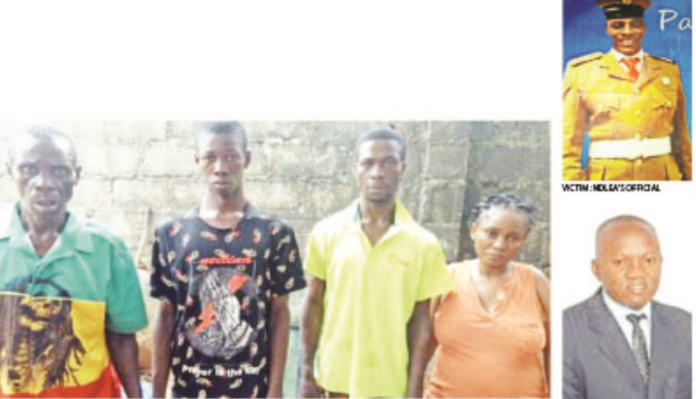
The story of Fabian Obioha, 60, and his family, from Ogamma Awara Ohaji in Egbema local government area of Imo State, reads like that of Pablo Escobar, the ruthless Colombian drug lord of the notorious Medellin cocaine cartel whose entire family – wife, son and daughter – were said to be involved in the illicit drug trade until the long arm of the law caught up with them.

In Obioha’s case, it is not the drug but kidnapping that is the source of their inspiration. Himself, his wife, sons, son-in-law, daughter-in-law, just name it, are all united by this criminal enterprise.  

In fact, never in the history of kidnapping either in Nigeria or in the wider world has a whole family been so deeply involved and so united by one criminal trade!  From the letter “M” standing for the man, the patriarch of the family, to the letter  “I” standing for his in-laws, kidnapping seems to be one opium from which a long line of his offspring and descendants had refused to be weaned, no matter what law enforcement and anti-crime strategy that was applied to make them do so.

Kidnapping runs in their blood

But like in all criminal cases, whatever has a beginning always ends up having an end. For Obioha’s family, the beginning of the end started for their criminal career when his first son, David, was arrested, charged to court, tried and sentenced to prison. At the moment, he is serving out his term at the Kirikiri Correctional Centre in Lagos.

Not long after his incarceration, his immediate younger brother, 28, picked up the gauntlet. Having learned fairly well from David, the rope of kidnapping, the intrigues and intricacies involved, and armed with sophisticated guns, arms and ammunition, a bit of luck, charms and prayers, Ebenezer and his gang went into it headlong.  In their outings, they terrorized residents of Imo, Abia, Rivers, Ebonyi, Anambra and Enugu states at will and with uncanny impunity. Facts unearthed by police investigations so far about their criminal activities are said to be mind-boggling.

The organised gang

Revelations from the police show that the gang is well-organised. While Ebenezer and members of his gang roamed the streets seeking whom to kidnap and ask for huge sum of ransom from, thereafter, his father, Fabian, and mother, Happiness, served as their armourers, who kept their weapons from time to time, to stave off suspicion and prying eyes. The arrangement was such that their weapons for operations were never kept in one place or in one basket at the same time. Their calculation was that if some of them were confiscated at any given time, they could still have some left with which to continue their operations until they are back into shape, arms and ammunition-wise, one way or the other.

Fabian’s younger son Victor, 18, served as their most trusted and dutiful courier who helped to transport the arms and ammunition from one place to another, without raising eyebrows. Ogechi, Ebenezer’s wife served as their accountant and cashier who collected, kept and distributed the ransom cash, according to directives given to her. Kennedy Okwuonu, their son-in-law, provided the gang with the hard drug as well as other logistics.https://www.youtube.com/embed/Th4qAkjSEX8?autoplay=1&controls=1

Besides these are other characters who played one or two roles to oil the wheel of the criminal enterprise and kept it going. They include Pastor Caleb Agu, said to be the “spiritual director” of the gang. He provided them with prayers, luck charms and “bulletproof” that make it difficult for bullets to penetrate their bodies whenever they were shot at by the police or other law enforcement agents, during a shootout. One of the suspects who simply identified himself as Ikechukwu Njoku and “a protocol officer” to Pastor Agu said he used his motorbike to convey victims to pick up points while another suspect, Chief Andrew Okweregbuwa provided his ash-coloured RX300 Jeep for all the operations.

The police raid that ended their career

But they were all rounded up recently when a security operation led by Linus Nwaiwu (Superintendent of Police) and Commander of Imo State’s Anti-Kidnapping Squad burst the kidnap gang’s activities. The Igbo say that what a bird sang while it was out there in the air enjoying its freedom is not what it will sing when it is caged in captivity. So, it is with Ebenezer and his gang. Now in police custody, following the raid and arrest, and under investigations, they have all began to sing like canary, to explain how culpable or otherwise they are in the things they are being accused of.

The Imo State Commissioner of Police, Mr Isaac Akinmoyede told Saturday Sun that Ebenezer and his gang members kidnapped over 40 victims in the course of their criminal career said to have spanned about two years. Some of their victims include Dr Lewis Nonye Obodo, 50, of Mgbala Agwa Oguta Local Government Area of Imo State; Inspector Oscar Mbaeri, 40, of Agwa Oguta LGA, Imo State; Chigozirrn Festus Nneji, 39, of Egwelu Atta Njaba Local Government Area of Imo State; Anyanwu Amarachi, 30, of No. 76 Lobo Street Owerri, and Desmond Okonkwo, 38, of Nnempi Oru West Local Government Area of Imo State.

He explained that they came forward to identify the notorious kidnapper, after he was arrested by Nwaiwu and his operatives, on July 28, 2020, in his house in Owerri. During the operation, the operatives recovered N4.2 million cash from him and his wife, right in their house. They also recovered four AK-47 rifles, 120 rounds of 7.6mm live ammunition, and Lexus 330 SUV with Reg No EDO URM 404 EL. One of the most celebrated of the cases in which they were involved was the killing of a Nigerian Drug and Law Enforcement Agency (NDLEA) officer in Imo State, Uwakwe Celestine Amauche Chukwu, 34, on May 15, 2020. They gunned him down in cold-blood and severely wounded his colleague, during a shootout.

But when operatives stormed their camp located in a thick forest in Omoku, Rivers State, they recovered the gun snatched from the slain NDLEA officer. In all, the hull of recovered arms includes four AK-47 rifles, one light assault rifle (LAR) and one submachine gun belonging to NDLEA. They reportedly combed the forest for four days and it led to the arrest of the other gang members.

Ebenezer’s account of involvement

In a chat with Saturday Sun, Ebenezer said: “I attended Central School Awara, I dropped out in Primary 3. Thereafter I learnt electrical work. My elder brother, David, was an armed robber/kidnapper. I joined his gang until he was arrested in Lagos State. He is currently serving prison terms at Kirikiri Maximum Security Prison.  He handed over the leadership to me and I formed my own gang and served as the operational commander and an executor for the gang. I started operation in September 2019. Since then, I have kidnapped over 40 victims.

“I kidnapped victims even on Sundays. On May 13, 2020, we kidnapped two victims, husband and wife at Amakohia flyover in Owerri. The wife raised alarm. At Orji road junction, we saw two NDLEA officials.  I killed one of them and seriously injured the other. He dropped his gun and ran. We carted away the rifles – a submachine gun and one light assault rifle. We escaped with the kidnapped couple and took them to our camp. We collected N1.8m ransom.”

On how his wife, Ogechi, got involved in the kidnapping business, he said: “I got married to my wife, a graduate, by lying to her that I am a banker and oil dealer. It was in April 2020 that my wife discovered that I am a kidnapper. All the same, she joined me in the operation.  The ransom we collected from victims ranged from N1.5m to N3m. It was my wife’s duty to come to our camp in Omoku to collect the ransom and share the money to my gang members and use the remaining for our capital projects. We are building a house in Awara Ohaji in Egbema Local Government Area of Imo State.

“My father, Fabian, is my armourer who kept for me some of my AK-47 rifles. Any time, I went to the village, I do give him between N20, 000 and N30, 000. My younger brother Victor, always receives two guns to take to the village and he would hand them over to my mother, Happiness, who was also my arms keeper.”

The chat swings to the role of Pastor Agu and he confessed that he always prayed for them whenever they went for operations. “He gives us drinks to take in his shrine and after taking the water drawn from his shrine, no bullet would penetrate us. Whenever we collected any ransom like N7 million, the Pastor would come to our camp to collect his share – sometimes N500, 000 and sometimes N900, 000, depending on the amount of money we collected from victims.  Pastor Caleb visited us at Omoku to motivate and give us some charms to help us overcome our enemies. I was arrested when operatives stormed my house at Work Layout, Owerri. They arrested me and my wife who is currently seven months pregnant. I have confessed to police detectives my criminal activities in various states.”

His wife’s account of participation

His wife, Ogechi, 30, took over the narrative as she told Saturday Sun her life history: “I attended Community Primary School, Naze, and from there proceeded to Community Secondary School, Naze in 2009. I read Accounting at Alvan Ikoku College of Education, Owerri, Imo State. I graduated in 2018. But for COVID-19, I was supposed to go for NYSC in August 2020. I met my husband, Ebenezer and we had courtship for about two months. We got married in 2019. He told me that he was a banker and also engaged in oil deals. I didn’t know he is a kidnapper until April this year when I listened carefully during his discussion with his gang members. I confronted him afterwards. I moved my luggage out of his house and went to stay in my sister’s place in Owerri.  I didn’t tell my parents what I was passing through. He came and pleaded with me and my sisters. I am already pregnant for him. I moved back to the house and we started living as husband and wife.https://www.youtube.com/embed/KDb6_tU7f-4?autoplay=1&controls=1

“I didn’t inform my father-in-law too that his son is a kidnapper. But I didn’t know that everybody in my husband’s family is a kidnapper until we were all arrested on July 28, 2020. It was a big shame for me. I cannot even understand the mystery of life. I started to visit my husband in the camp at Omoku in Rivers State and collected ransoms like N2m, N3m, N7m and shared the money to other gang members and used the remainder to continue the project we are doing in our village My husband spends two weeks and sometimes, two months in the camp at Omoku depending on the activities going on.”

Giving further insight into her life, she said: “I attend Winners Chapel on Port-Harcourt Road, Owerri. I am a protocol officer/usher. I hail from Ogamma Awara Ohaji Egbema. I listen to the word of God in church. I never thought my husband and I can be arrested, until July 28, when we were both arrested in the house. I am seven-months pregnant.”

A father’s part in the infamy

Fabian, said:  “I am a farmer by profession. I have eight children, my first son, David, is an armed robber and a kidnapper. But he is currently in Kirikiri Prison, Lagos.  My second son, Ebenezer is a kidnapper who always keeps his AK-47rifles in my custody. My wife, Happiness, also keeps guns for my son. He used to give us N20, 000, N30, 000 depending on his capacity. My fourth son Victor, is an errand boy who collects the gun from Ebenezer and brings it to the village for my wife to keep. Police detectives arrested and recovered from us some rifles which prompted my wife to run away from the house. It a shame that all my family members are kidnappers including, my daughter-in-law. We thought we were enjoying the money until we were arrested.”

How I became a gun courier – younger brother

Victor, 18, said:  “I attended Central School, Awara, and proceeded to Great King and Queen International School, Orji, Owerri. I am in JSS3. It was my brother, Ebenezer who is sponsoring my education.  I know that he is a kidnapper. He always gave me AK-47 rifles to take to the village and I usually hand them over to my mother to keep for him.”

Agu, 42, the “anointed” Pastor, told Saturday Sun:  “I hail from Umuoni Agwa in Oguta Local Government Area of Imo State. I am the Founder of Excellent Jesus Ministry. I attended Umuoni Primary School and later proceeded to Agwa Secondary School. I attended School of Theology but I didn’t finish. I am a prayer warrior. I met and knew Ebenezer where he used to sell Indian hemp and one day he told me that his business was not making much progress. I prayed for him. Later, I got to know that he is a kidnapper. I became his spiritual leader and director of the gang.

“I do visit them in their camp in Rivers State. I used to pray for them and often go there to collect my own share of ransom; sometimes N350, 000, N900, 000 or N700, 000.  I do give them charms and hot drinks to take so that whenever policemen shot at them, they would not die. I always took them to my shrine inside my church where I live and do some incantations for them to succeed. Immediately they come back after the operation I would collect my own share. My wife, Favour, is an evangelist in the Apostolic Church in Anambra State. I have seven children.”

But he narrowly escaped death when the youths of his area got to learn about his true identity, a man they had supposed to be a man of God and respected as such. “The youths in Agwa wanted to mob me when the Anti-Kidnapping operatives arrested me in my shrine,” he said. “They know me as a pastor; it was when the youths learnt that I am part of the kidnappers that they became angry.”

More suspects’ confessions

Another suspect, Ikechukwu Njoku, said:  “I am the protocol officer and a boy to Pastor Caleb Agu. I used to “bike” (transport) victims through the track road to the point of pick-up at the creek. I didn’t know Pastor Caleb was a member of the kidnap gang until he sent me to give fuel to Ebenezer and his gang members. That time they were stranded along Port-Harcourt Road, with kidnapped victims inside their car. I gave them the fuel and it was that day that I knew that Pastor Caleb is a member of the gang. He didn’t give me kobo (a dime).”

Kennedy Okwuonu, 40, who hails from Onicha in Obingwa Local Government Atea of Abia State explained: “I am Ebenezer’s-in-law. I do provide the gang with hard drugs as well as other logistics at the camp in Omoku, Rivers State.”

Victims’ accounts of ordeals

All said and done, people, especially the victims, are happy, that, at last, nemesis has caught up with this gang which once made their lives miserable. In interactions with Saturday Sun, they heaved a sigh of relief at the development. When our reporter visited the NDLEA office in Owerri and spoke with its state commander, Mr Jack Inam, he did not hide this fact: “I and the entire command are in happy mood over the arrest of the killer of our staff. He was killed on May 15, 2020, during an official assignment with the Imo State “Operation Search and Flush” team.  He was killed by Ebenezer and his gang members. When the incident happened, I visited the Commissioner of Police, Mr Isaac Akinmoyede. He gave me the assurance that they would arrest the perpetrators.

“On July 28, 2020, the members who were arrested confessed to having killed an NDLEA official during their operation. The Anti-kidnapping Commander and his operatives recovered the officers’ rifles from them. I realized that the death of my gallant officer was not in vain. I want to thank the Nigerian Police. We will continue to partner them, being the mother of all the security agencies. The deceased officer was buried on June 13, 2020, in Enugu Ezike, Igbo Eze North Local Government Area of Enugu State. We are grateful to God.”

A kidnap victim, Dr Lewis Nonye Obodo, 50, who hails from Mgbala Agwa Oguta Local Government Area of Imo State is also happy over their arrest. His testimony: “I attended Central School for my primary school education, Holy Ghost Juniorate, Ihiala, for my secondary school and Abia State University Uturu, for my university education. I graduated in 1996 in Optometry. I am an accomplished medical practitioner, businessman, politician and philanthropist. At present, I am on the governing board of the Lagos University Teaching Hospital (LUTH).

“On July 19, 2020, I was kidnapped at the inland Road Akanchawa at about 7:45pm. I was in the company of friends when we ran into the kidnappers. They shot into the air to scare away people and used the opportunity to kidnap me and my friends. They took us to an unknown destination. After we got to their camp, they tied me up and beat me to the state of coma. It was Ebenezer and his gang members that kidnapped us. They started calling my relations to bring two hundred thousand dollars. Later they insisted on them bringing the money in naira.  They collected N7.5 million from my relations. They picked up the money in the bush where they asked them to drop it. They threatened to kill me. I spent nine days in their captivity. I was panicking as to whether I would be allowed to come out alive after the ransom had been paid. But as God would have it, they later released me.”

Saturday Sun gathered that Ebenezer and his gang members had been terrorizing people for some time now. At a time, their activities prompted the immediate past governor of Imo State, Chief Emeka Ihedioha, to launch “Operation Iron Gate” to go after them. But when Governor Hope Uzodinma came in, he gave a marching order to the Commissioner of Police, Mr Isaac Akinmoyede, to go after the kidnappers. It was Operation ‘Search and Flush” which was launched after the marching order that led to the arrest of the notorious gang which will soon be charged to court after the police investigation.

Lottery, Pools, Betting Operators To Pay N20million License Fee In Lagos

Operators of lottery, pools and betting in Lagos are to pay license fee of N20million when a bill being considered by the state House of Assembly becomes law.

The bill entitled; “Lagos State Lotteries and Gaming Authority Bill Arrangement of Sections” went through public hearing on Friday 14th August, 2020 at the state House of Assembly.

According to the bill, “before a license is granted to an operator, the Authority shall be satisfied that the applicant is a registered company in Nigeria with a minimum share capital of N20, 000,000 (Twenty Million Naira) or as may be directed by the Authority.”

It also specified that the local content shareholder shall abide by the regulations, policies, terms and conditions issued by the Authority.

It was also revealed at the public hearing that the new bill, when it becomes law, will consolidate all the laws in the sector and repeal existing laws such as the Lagos State Lotteries (Amendment) Law 2008, the Lagos State Lotteries Law (2004), and the Casino and Gaming Regulatory Authority Law (2007).

Others are Casino and Gaming Regulations (2007), Pools Betting Control Law (2003) and Pools Betting Tax Law (2003).

The Speaker of the House, Hon. Mudashiru Ajayi Obasa said “the world wide gaming is worth $200 Billion. Several Nigerians are involved in games and sports betting.

“Its addictive nature calls for caution, and it is our view that the 2008 lottery law needs an amendment as the bulk of the game are done on mobile gadgets,” he said.

The state’s commissioner for Finance, Dr. Rabiu Olowo, said in his comments that a lot has changed in the Nigerian gaming sector in the last 10 years, and that most of the people involved are youths.

“The future of gaming in Nigeria is bright. The regulations are very robust. The Bill addresses cyber security and addresses the concerns of many people. I want to urge all stakeholders to take it serious,” he said.

The Chairman of the House Committee on Finance, Hon. Rotimi Olowo, said in an interview that the bill was meant to consolidate, gaming and virtual lottery in the state.

“We have different licenses for individual products in the sector. The people have ventilated their opinions and we will work on them.

“The law is not meant for the operators alone; it is also meant for the regulators, we will look into all the areas.”

The lawmaker said that the Bill would help the state to gather enough money that would be used in the health sector, environment and even sports sector.

Olowo stated further that the money is not coming into the consolidated fund of the state, and that it is meant to take care of the welfare of the citizenry.

He explained that the state wanted a law that would consolidate all the laws in the sector.

“The issue of N20 Million would be looked into by the regulators. We would look at the socioeconomic reality and allow sanity into that sector.

One of the stakeholders at the event, Mr. Adebagun Nojeem from Lagos Pool Promoters requested that the stakeholders in the gaming sector should be involved in the State Lottery Board and that the issue of N20 Million share capital should be looked into.

“The issue of N20 Million share capital should be looked into. It would have retroactive effect on the companies that have been registered. Pool is a game of the senior citizens. With the new capital base, we may go under.

“The 10% charges on sales should be reduced to about 2.5%. Penalty of N2.5 Million should be reduced to 1 Million or N500, 000 and the issue of imprisonment should be removed,” he said.

Also speaking, Mr. Tokunbo Akande from the Lagos Internal Revenue Service (LIRS) said that licensing fees or royalties should be used in the bill instead of taxes and that there should be rooms for dispute resolutions in the bill.

On his part, Mr. Niyi Adekunle from Grand Lotto said that the first license fee for lottery was issued in 2008 for N200 Million, which he said, was huge money.

Second recession in four years looms, says FG

Hints at debt sustainability crisis

The Federal Government has said the likelihood of Nigeria sliding into another recession in the Third Quarter of 2020, making it the second time within four years.

The government said the COVID-19 pandemic resulting in crash of global oil prices among other economic factors had adversely affected the nation’s economy, with the Gross Domestic Product growth for Q2 most likely to be negative.

The Minister of State for Finance, Budget and National Planning, Clement Agba, said this in Abuja on Thursday at the beginning of a five-day interactive session on the 2021-2023 Medium Term Expenditure Framework and Fiscal Strategy Paper.

The event was organised by the House of Representatives’ Joint Committee on Finance; Appropriation; National Planning and Economic Development; and Aids, Loans and Debt Management.

The World Bank had in July warned that the collapse in oil prices resulting from COVID-19 pandemic was expected to plunge the Nigerian economy into a severe economic recession, the worst since the 1980s.

The global bank had stated this in its latest Nigeria Development Update.

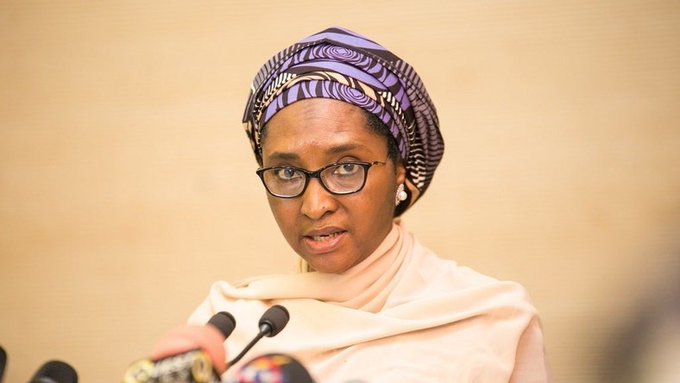
Agba had read out a written presentation by the Minister of Finance, Budget and National Planning, Mrs Zainab Ahmed, titled ‘Draft 2021-2023 MTEF/FSP: Presentation to the House Finance Committee.’

The minister said the Nigerian economy faced serious challenges in the first half of 2020 with the microeconomic environment significantly disrupted by the pandemic.

The document partly read, “The impact of these developments is about 65 per cent decline in projected net 2020 government revenues from the oil and gas sector, with adverse consequences for foreign exchange inflows into the economy.

“Nigeria is exposed to spikes in risk aversion in the global capital markets, which will put further pressure on the foreign exchange market as foreign portfolio investors exit the Nigerian market.

“Nigeria’s Q2 GDP growth is in all likelihood negative, and unless we achieve a very strong Q3 2020 economic performance, the Nigerian economy is likely to lapse into a second recession in four years, with significant adverse consequences.

“In response to the developments affecting the supply of foreign exchange to the economy, the Central Bank of Nigeria adjusted the official exchange rate to N360/USD1, and more recently to N379/USD.

“The disruptions in global trade and logistics would negatively affect Customs duty collections in 2020.

“The COVID-19 containment measures, though necessary, have inhibited domestic economic activities, with consequential negative impact on taxation and other government revenues.

“Consequently, the projections for Customs duty, stamp duty, Value Added Tax, and Company Income Tax revenues were recently reviewed downwards in the revised 2020 budget.

“Customs revenue has generally performed close to target over the last few years, exceeding target in 2019.”

While noting that there had been some improvement in Company Income Tax and VAT remittances, the minister said the Federal Government expected significant improvements in VAT collections with the new VAT rate of 7.5 per cent.

The minister said, “Over the past five years, actual revenue performance averaged 61.4 per cent.

“Some of our reforms are yielding positive results, with significant improvements between 2018 and 2019. We believe we can do more to improve revenues, especially remittances from GOEs, possibly up to N1tn per annum.”

Speaking on the key assumptions of the MTEF/FSP, the minister, among other, said, “Inflation, however, is expected to remain above single digit over the medium term, given the structural issues impacting on cost of doing business, including high cost of distribution.”

On management of the fiscal crisis, the minister noted that fiscal measures were being instituted to improve government revenue and entrench a regime of prudence, with emphasis on achieving value for money.

“The goal of fiscal interventions will be to keep the economy active through carefully calibrated regulatory/policy measures designed to boost domestic value addition, de-risk the enterprise environment, attract external investment and sources of funding, etc.,” the minister stated.

The minister noted that the draft 2021-2023 MTEF/FSP was prepared against the backdrop of a global recession and heightened global economic uncertainty.

The document further read, “The medium-term outlook for Nigeria suggests that fiscal risks are somewhat elevated, largely due to COVID-19 related disruptions, which have exacerbated structural weaknesses in the economy.

“Nigeria faces significant medium-term fiscal challenges, especially with respect to its revenues, which, if not addressed, could snowball into a debt sustainability crisis.”

Already, Nigerians are becoming agitated by the rising debt profile of the country, with the National Assembly raising concerns over external loan agreements between Nigeria and global bodies, especially the China Export Import Bank.

PUNCH

UNILAG: From Voting Pattern Analysis, 4 Persons Voted For Removal Of Prof. Ogundipe As VC, 6 Against & 1 Abstained —Senate Representative In Council

A Senate Representative in Council, Professor Afolabi Lesi has alleged that the voting pattern leading to the removal of the Vice Chancellor of University of Lagos (UNILAG) was fraught with irregularity owing to the fact that it is only 4 persons that voted in support of the removal.

This is contained in a statement issued by him which was made available to TheNigeriaLawyer, which he titled “UPDATE ON EMERGENCY COUNCIL MEETING OF 12TH AUGUST 2020”.

“It has become necessary to provide further updates on the voting that took place to remove the Vice-Chancellor, Professor Oluwatoyin Ogundipe FAS. Fifteen members attended the Council meeting physically ad virtually and two were asked to leave, the Vice Chancellor and the Deputy Vice Chancellor (DS). Thirteen members had the opportunity to vote, even though Dr. Wale Babalakin did not vote (as stated by him), leaving twelve (12) members.” He said.

Meanwhile, he noted that six persons had acknowledged that they did not vote for the removal.

“Six (6) persons have given information that they voted against the removal of the Vice Chancellor:

1. Prof. Bola Oboh (Representative of Senate, UNILAG).

2. Prof. Afolabi Lesi (Representative of Senate, UNILAG).

3. Prof. Olukemi Odukoya (Representative of Senate, UNILAG)

4. Dr John Momoh (President, National Alumni, UNILAG).

5. Prof. Ben Oghojafor (Deputy Vice Chancellor, MS, UNILAG)

6. Prince Adetokunbo Adebanjo, Representative of the Ministry of Education who declared his vote openly.”

Furthermore, he noted that one person abstained from voting.

“Also, from further information, one person abstained from the voting processing:

1. Prof. Eddy Omolehinwa (Representative of Senate, UNILAG)”

“However, the very first vote message that Dr. Wale Babalakin read out as having received was ONE SUSPENSION.” He added.

Meanwhile, he stated that the suspension could only be from anyone amongst five persons.

“From the recount so far, the suspension vote is from one of the following:

1. Alhaji Hussain Ali (Former Commissioner)

2. Oluwarotimi Sodimu Esq (Representative of Congregation, UNILAG)

3. Dr. Saminu Dagari (Senior Lecturer of Chemistry, Federal University, Gashua)

4. Dr. Bayo Adaralegbe (Babalakin’s Chamber)

5. Revd Yomi Kasali (Senior Pastor, Foundation of Truth Assembly).”

Consequently, he noted that there remains only four persons.

“Therefore, what is remaining is four (4) persons, who voted for the removal of the Vice Chancellor.” He said.

In this light, he submitted that six persons voted against while four voted in support of the removal.

“From the analysis of the voting pattern above, SIX (6) persons voted that Prof. Oluwatoyin Ogundipe should not be removed as the Vice Chancellor of the University of Lagos while FOUR (4) persons voted for the removal of the Vice Chancellor.”

“Conscience is an open wound, only the TRUTH can heal it (attributed to Usman dan Fodiyo).” He concluded.

Tragedy of Niger Delta region development, By Jonas Odocha

The glaring need to develop the Niger Delta Region was earlier recognised by the colonial government in Nigeria in 1957, and this translates to over six decades ago. The colonial office in London had then set up the Sir Henry Willinks, QC; intervention commission, to study the concerns and fears expressed by the communities of the region, referred to as minorities. The Commission Report [1958] detailed the peculiar problems of this region, associated with the natural geomorphological difficulties of the terrain, which necessitated a government decision to classify the region as a special area. The initial effort to accomplish this developmental goal culminated in the setting up of a federal board known as the Niger Delta Development Board [NDDB], which was eventually inserted into the Nigerian Constitution [1963]. 

It is worth noting that this initial concern for this region predated the much later and on-going impact of oil exploration and production activities  in the region which brought about subsequent environmental degradation and concomitant socio-economic deprivation. As oil and gas activities further escalated in the region with obvious humongous revenue generation to the coffers of the government, so also did the environmental concerns and economic deprivation equally escalate. However, the expectations of the needs and concerns of the affected host communities remained dashed which eventually led to community agitations, restiveness and disruptions of operations of the international oil companies [IOCs]. Meanwhile government being an intangible entity, the ubiquitous IOCs were seen and regarded as proxy for government and had to bear the brunt of this neglect of the region, which culminated in kidnappings and hostage taking of individuals, particularly foreign operators, for ransom payment.

It should also be noted that the government of the day did not completely fold its hands on the effort to develop this region as some institutions had solely been set up for this purpose for the region. This was how and why the Oil Minerals Producing Area Development Commission [OMPADEC] was set up. This body was later to be replaced and renamed the Niger Delta Development Commission [NDDC], with increased sources of revenue for the execution of the desired development projects. It must also be placed on record that the IOCs and the indigenous operators that were allocated marginal fields, were also on their own carrying out development projects within their various respective host communities as part of their corporate social responsibility [CSR]. With all these combined development efforts there were still persistent agitations and disruptions from within the communities which prompted the intervention of the newly-elected democratic government in 1999 to seek for more positive ways to address the ugly trend. The NNPC management was therefore assigned the task to figure out a lasting solution for the appeasement of the communities which led to a meeting in August 1999 in Abuja with all the chief executives of the Oil and Gas operators in the region. The starting point for the assessment of the development efforts in the region was the production of an ACTIVITY MAP of the region detailing all the development efforts in all the nine states of the Niger Delta Region. It was my assigned responsibility as the chairman of the technical committee to ensure that all the projects were identified, were auditable and that they were also verifiable. This exercise was very revealing and instructive as it brought to the fore the fact that most development efforts recorded were duplicated, some were abandoned while some others were non-functional as the communities themselves could not maintain or sustain such development projects. It was then resolved that henceforth perators of contiguous fields must come together and agree with the communities on which priority projects they would prefer to own. It was also decided that henceforth communities should be the prime drivers of their projects and at the beginning of each budget year should endeavour to map out their priority projects, discuss them with their various state governments and industry operators, so that such projects would meet the needs and concerns of the communities themselves. Unfortunately this noble idea of COMMUNITY-BASED DEVELOPMENT STRATEGY died in its infancy, before implementation in 2000, as the governors later made a u-turn and rejected the whole idea, as being equivalent to “dictating projects” to them in their own respective states and communities.

With this warped mindset of the governors of the region, one could very readily understand why earlier intervention efforts could not yield the desired results. We need to check out this list of reports received and reviewed by various regimes, both military and civil, which at the end of the day did not fast-track implementation efforts and therefore left this region in the state of neglect as it is today. The following are some of these reports:

  1. The Belgore Report of 1992
  2. The Etiebet Report of 1994
  3. The Vision 2010 Report of 1996
  4. The Report of the UN Special Rapporteur on Human Rights Situation in Nigeria of 1997
  5. The Popoola Report of 1998
  6. The Ogomudia Report of 2001
  7. White Paper Report of the Presidential Panel on National Security, 2003
  8. Report on First International Conference on Sustainable Development of the Niger Delta, NDDC/UNDP, 2003
  9. The Niger Delta Regional Development Master Plan of 2004
  10. The National Political Reform Conference Report [NPRC] of 2005
  11. The UNDP Niger Delta Human Development Report [UNHDR] of 2006
  12. Report of the Presidential Council of The Social and Economic Development of the Coastal States of the Niger Delta, 2006.

Is it not instructive, highly lamentable and an obvious tragedy that with all the above reports, recommendations and interventions spanning over half a century, that the Niger delta Region is still bedeviled with glaring under-development. It even becomes more worrisome when we recall that in September 2008 a committee, Technical Committee On The Niger Delta, was inaugurated by the then Vice President, Dr Goodluck Jonathan. This committee was tasked to collate and review all past reports on the Niger Delta Region, the Willinks’ Report of 1957/58 inclusive. Comprised of 44 eminent members the committee was to appraise the various recommendations of these earlier reports enumerated above and make proposals that were supposed to help the Federal government achieve sustainable development, peace, human and environmental security in the Niger Delta Region.

Is it not mind-boggling that even with a “son of the soil” at the helm of affairs at the time, that no concrete outcome could be accomplished in the concerted effort to develop this region after seven years [2008-2015]. We have had the NDDB of 1963. We have had OMPADEC under military regime. We have had NDDC under a democratic setting, and with all these bodies majorly under the supervision and management of Niger Delta Region eminent citizens. So what is the issue?

The year 2020, thanks to COVID-19 introspection, a year that has turned out to be the year of revelations of how funds allocated to NIGER DELTA REGION DEVELOPMENT BOARDS OR COMMISSIONS had either been misapplied or misappropriated, leading to non-execution or abandonment of the development projects that they were meant to execute for the development of this region. The current investigations by the National Assembly of the allegations tabled on malfeasance in the commission have thrown more light on how this region was merely being developed on paper. There is no point for us to begin to shed crocodile tears over the poor state of the Niger Delta Region all these decades. We must now tell ourselves the adamantine truth: WE HAVE ALL COLLECTIVELY REAPED WHAT WE COLLECTIVELY SOWED. And it is indeed a great TRAGEDY!!!

•Sir Jonas Odocha, fnape; fnmgs

Author of “The Way We Are: Ideas for a better Nigeria.” 2012.

Former Group General Manager, NNPC. Chairman JONAKOD FARM ENTERPRISE.

Southern Kaduna: Shari’ah Council seeks execution of Lekwot, 5 others

The Supreme Council for Shari’ah in Nigeria (SCSN) has called for the revisit of the death sentence passed on prominent sons of Zango-Kataf following the 1992 bloody crisis saying the law must be allowed to  take its full course.

The 1992 incident which claimed the lives of hundreds of persons occurred during President Ibrahim Babangida regime, which set up a tribunal, headed by the late Justice Pius Okadigbo to try Maj-Gen. Zamani Lekwot (retd), late Major James Atomic Kude (retd) and other Kataf indigenes alleged to have been complicit in the crisis.

Justice Okadigbo in his judgment had sentenced Lekwot, Kude, Yohanna Karau Kibori, Marcus Mamman, Yahaya Duniya and Julius Sarki Zamman Dabo to death by hanging over complicity in the crisis. Lekwot and the other convicts, however, were granted state pardon in 1995 by  Gen. Sani Abacha.

Secretary of the SCSN, AbdurRahman Hassan, at a press conference, yesterday,  said all those sentenced to death, but pardoned by the  military regime, should be executed by the present government.

“We want those pardoned in 1992 during Zango-Kataf crises, after being condemned to death to be executed now, because that is the only way peace will return to the area. Till now Zonkwa is still a ghost town. Surprisingly  Christian Association of Nigeria (CAN), Southern Kaduna People’s Union ( SOKAPU) and their allies had never cried foul in the massacre of innocent law abiding citizens on the account of their faith. Many more ethno-religious crises continued to occur in Kasuwan Magani, Kajuru, Zangon Kataf and some other places,” Hassan said.

Hassan said after every crisis in the area,  a commission of enquiry is usually inaugurated, but the reports submitted to the government never implemented.

“For instance, late Justice Pius Okadigbo’s tribunal on the Zangon Kataf crises, found Gen. Zamani Lekwot and others guilty of the massacre that took place there and were sentenced to death, but they were later pardoned.  That was what opened the floodgate of violence, mayhem, upheavals and total breakdown of law and order in that axis, which is ravaging the area till today,because some people felt they are above the law. The Council have been saying time without number that all those found guilty in these crimes against humanity, must face the wrath of the law,” he said.

When asked to react to the position of the Shari’ah Council, President of the Southern Kaduna People’s Union (SOKAPU), Jonathan Asake said: “I can’t comment on it without seeing the press briefing.”

Military deploys special operations 

The Defence Headquarters has said  in its efforts to curb the recent attacks and isolated killings in Southern Kaduna, it has deployed special operations forces to various flash points in the area.

Coordinator, Defence Media Operations, Maj.-Gen. John Enenche, stated this at the updates briefing on military operations across the country in Abuja.

“In a bid to curb the recent attacks and isolated killings in Southern Kaduna, troops of Operation Safe  Haven have continued to intensify efforts aimed at securing the lives and property in the general area. Particularly, Special Operations Forces have been deployed to the Joint Operations Area covering the various flash points. This move is expected to achieve the desired result with the provision of credible and actionable intelligence specifically from primary sources,” he said.

Enenche, however, urged the locals to cooperate with the military by supplying credible and reliable information that would help troop in their operations.

He also urged  the public not to give false information on the issue of terrorism or banditry in Kaduna.

Eneche denied the allegation that the troops in Baga were indulging in other activities other than fighting the war, stressing that the allegation was unfounded and baseless.

According to him, “for the past one month, we have witnessed downward trend in the activities of armed bandits and cattle rustlers in the general areas of Katsina, Kebbi, Zamfara, Sokoto and adjoining states.

“Most of these criminal elements have been decimated. Gradually there is restoration of human activities in the zone. Farmers have returned to their farms, while other economic activities have picked up across the zone. The troops have continued to dominate the general area with clearance patrols, aggressive fighting patrols and confidence-building patrols.

“The High Military Command congratulates the troops for the feat recorded and encourages the good people of the zone to continue to provide credible information to the troops,” he said.

Enenche said the military had also continued to sustain the tempo in the fight against terrorism in the North East with attendant successes.

He said that within the period under review, there had been reduction in the number of incidences recorded so far from the zone.

“That is an evidence of  troops overwhelming superiority over the criminal elements which have drastically degraded the operational capabilities of the BHT/ISWAP elements. Troops have also sustained the clearance operations, aggressive patrols and intelligence surveillance reconnaissance missions, sustained air offensive operations as well as artillery and aerial bombardments in the theatre of operation,” he said.

Cleric chides Presidency on spike in crime rate, Southern Kaduna killings

General Supervisor of ThankGod Awaited Liberation Ministry, Ikeja, Lagos, Prophet Francis Onwudiwe Otukwu, has flayed the Presidency over the continued killings in Southern Kaduna and the increasing rate of blood-letting by criminal elements in the country.

He also decried  the sleaze by political office-holders and civil servants amid crushing  poverty, debilitating unemployment and absence of social nets, despite the fast-spreading pandemic in an environment of inadequate health-care facilities.

Prophet Otukwu was speaking at the 14th anniversary of the church with the theme “Jesus is the way” (John 14:6). He regretted the growing incidents of crimes, like ritual killings and rape in which some churches have been implicated, adding: “It is unfortunate that even at this end-time, people who call themselves Christians engage in shameful immoral and despicable acts because of their inordinate quest for instant wealth, fame and funs of life.”

On rising wave of killings by bandits, herdsmen, kidnappers, cultists and armed robbers across the country, he reiterated his earlier call on the Federal Government to urgently re-examine the nation’s security architecture in the light of the near-total breakdown of law and order in parts of the country, including the performance of the Nigerian military against the terrorist Boko Haram fighters in the North-East, which governors in the zone berated last week.

“What convincing reasons will the Presidency and Kaduna State government offer for the prolonged one-sided killings going on in Southern Kaduna, in the presence of Nigerian soldiers and policemen?”  he queried.  The cleric said the trend  leaves much to be desired about equity and fairness in the country.

He also wondered how the Presidency hopes to persuade Nigerians on commitment to the war against corruption, when public office holders and civil servants, including federal legislators are being implicated in stealing public funds, either directly or through inflated contracts that were not executed even after the politicians have been fully paid.

APC-Led Govt Has Failed Nigerians – Wike

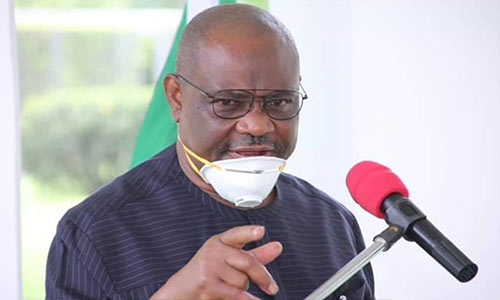
Rivers State Governor, Nyesom Wike says the All Progressives Congress-led Federal Government has failed Nigeria.

Wike disclosed this on Thursday while receiving the newly inaugurated Executive Council members of the Peoples Democratic Party (PDP) who paid him a courtesy visit at the Government House in Port Harcourt, the state capital.

While charging the PDP members to focus on governance rather than playing politics, he said the move is necessary to demonstrate a commitment to the people.

According to him, the ruling APC has failed to deliver on its electoral promises, adding that Nigerians are hoping on the PDP.

“APC has failed Nigeria. Nigeria is hoping on PDP. There is nothing anybody can talk about again. This is no more time for politics.

“You have promised and you have failed, nothing to try you again. We have tried APC and it has not worked.

“Nigerians have realised that it is better they stay with PDP that has the future, that has the interest of Nigeria than the party that gives excuse every day.

“We are tired. You know there is a problem with Nigeria and you make promises that if you vote for me, I will do this. Now they have voted for you, yet you cannot solve the problem. The party cannot solve any problem,” he said.

Speaking further, the governor charged the party exco members to respect COVID-19 safety protocols.

He also asked them to run an inclusive party for all in order to maintain victory in future polls in the country.

Validity Of Electronic Signatures Under Nigerian Laws

By Sunday Agaji

Technology is one of the hallmarks of civilization, and has had a positive impact on all areas of society. In the area of commerce, technology has simplified and amplified activities to a ridiculous extent. Prior to the digital era in which we live in, geography was a significant barrier to commercial transactions. It was difficult to procure goods and services from other regions without a physical presence there, a phenomenon that has since changed with the advent of technology. In the present day and age, one can purchase goods or acquire services anywhere around the world from the comfort of their home using electronic devices such as phones, tablets, laptops etc. The use of electronic devices to carry out commercial transactions over the internet gave birth to the term electronic commerce. Electronic Commerce has grown at an incredible rate since its birth. It has permeated every continent in the world and arguably all countries likewise, thereby essentially making the world a global market. 

The continuous rise in electronic commerce has raised novel issues in the areas of contract and business transactions between organizations, firms and individuals in Nigeria. Germane amongst the issues that have arisen is that of validity or otherwise of the use of electronic signatures in contract and other business transactions in Nigeria. This article is aimed at addressing same.

Definition.

An ‘E-signature’ may simply be defined as any mark, symbol or data in digital form which is attached to an electronically transmitted document to serve as verification of the sender’s intent to sign the document and to attest to its validity. It is a distinctive way of identifying the signatory in relation to the data message sent in an electronic form, and to indicate the signatory’s approval of the information contained in the data message.[1] Examples of e-signatures include but are not limited to; a typed name underneath a digital document, a hand signature created on a tablet using your hand or a stylus, a scanned image of a person’s ink signature, a signature signed using a specialized application which is protected using crypto digital software and cannot be easily tampered with, a person agreeing to the terms and conditions by ticking a box on a web form which expressly provides that the person ticking the box agrees to be bound by all the relevant terms etc.

Legal framework for use of e-signatures in Nigeria

In Nigeria, the use of electronic signature is valid and recognized under extant laws.[2] Section 17(1) (a) of the Cybercrimes (Prohibition, Prevention, etc) Act, 2015 (herein after referred to as Cybercrimes Act) provides that;

 “Electronic signatures in respect of purchases of goods, and any other transactions shall be binding”.

The implication of the above is that e-signature is a legally acceptable means of attesting to the validity of digitally transferred documents or electronically completed transactions in Nigeria. An e-signature is generally presumed valid unless otherwise proven. Whenever the genuineness or otherwise of an e-signature is in question, the burden of proof that the signature does not belong to the purported originator of such e-signature shall be on the contender who contends its validity.[3]

E-signatures may be proved in any manner, including by showing that a procedure existed by which it is necessary for a person, in order to proceed further with a transaction, to have executed a symbol or security procedure for the purpose of verifying that an electronic record is that of the person.[4]

Exceptional cases where e-signatures shall not be valid.

Where a law provides that a document must be signed for it to be valid or provides for certain consequences if a document is not signed, an e-signature shall satisfy the provision of that law and shall avoid those consequences when used.[5] A contract or a transaction shall not be declared invalid merely because it was conducted and signed electronically except for transactions or contract that have been expressly excluded by the Cybercrimes Act.

Below are the lists of transactions that cannot be concluded using e-signature;[6]

  • Creation and execution of wills, codicils and or other testamentary documents
  • Death certificate
  • Birth certificate
  • Matters of family such as marriage, divorce, adoption, and other related issues
  • Issuance of court orders, notices, official court documents such as affidavit, pleadings motions and other related judicial documents and instruments
  • Any cancellation or termination of utility services
  • Any instrument required to accompany any transportation or handling of dangerous materials either solid or liquid in nature.
  • Any document ordering withdrawal of drugs, chemical and any other material either on ground that such items are fake, dangerous to the people or the environment or expired by any authority empowered to issue orders for withdrawal of such time.

Practical issues associated with the use of e-signatures in Nigeria.

One of the practical issues associated with the use of e-signatures in Nigeria is security and confidentiality. E-signatures are arguably less secure than the traditional signatures because of the possibility of a third party intercepting electronic documents and extracting same for dubious purposes. Also, contents of documents already signed electronically may be altered when intercepted. E-signatures may be easily forged and used by internet fraudsters unless they are  adequately protected. Individuals, firms and organizations are therefore advised to incorporate the use of ‘digital signature’ which is more secure and has sophisticated security measures. Digital signature is a form of e-signature which is more secure and less likely to be intercepted, copied or altered when transferred electronically. It is an advanced form of e-signature and was specifically developed to solve security problems associated with the use of e-signature.

Unauthorized interception, alteration and use of e-signatures

It is a crime for any person to unlawfully intercept, forge or fraudulently alter the e-signature of another with the intent to defraud or misrepresent to another person that he owns the signature.[7] Any person found wanting for engaging in unauthorized interception, alteration and or use of e-signature of another shall upon conviction be sentenced to 7 (seven) years imprisonment.

Conclusion

The use of e-signature is highly essential to the conclusion of transactions or contract entered to over the internet. This is moreso when the parties are resident in different countries or continents. The enactment of a legal framework by the Nigerian parliament to regulate its use and validate same is commendable. Businesses, organizations and individuals who regularly conduct transactions over the internet are advised to use digital signature as against e-signatures for the execution of such transaction. Digital signatures as mentioned above are highly secure and cannot be easily intercepted or altered.

Sunday Agaji is an Associate at Giwa-Osagie & Co., [email protected]

[1]See Article 2 of United Nations Commission on International Trade Law (UNCITRAL) Model Law on Electronic Signature.

[2] See section 93 of the Evidence Act 2011 and section 17 of the Cybercrimes (Prohibition, Prevention etc) Act 2015

[3] See section 17(1) (a) Ibid.

[4] See section 93(3) of the Evidence Act 2011

[5]See section 93(2) Ibid.

[6] See section 17 (2) of the Cybercrimes (Prohibition, Prevention etc) Act 2015

[7] See section 17 (1) (c) ibid.

Court Of Appeal Affirms Lawyer’s Automatic Membership Of The NBA

This is Born out of the fact that some believe that the mandatory membership of Lawyers in the NBA is not provided in statute for Constitutional reference and as such a breach of the Right to freedom of Association as stated in the 1999 Constitution. Most recent of such arguments are the articles titled ‘The Freedom of Association and the NBA” written by Seun Lari Williams and a rejoinder on same topic written by his learned friend, Ebi Robert.

However, the court seem to have given a judicial pronouncement on the issue following the case of N.B.A. v. KEHINDE (2017) 11 NWLR (PT 1576) 225 AT 250 -251 paras H- A where His lordship NIMPAR.JCA observed as follows:

“The Nigerian Bar Association (NBA) was established for the purpose of regulating the affairs and conduct of all legal practitioners in Nigeria and upon being called to the Nigerian Bar, there is automatic membership to the NBA on a lawyer. See Chinwo v. Owhonada (2008)3 NWLR (Pt.1074)341. Hence, as long as one has elected to join and remain within the noble profession, he is a member and ought to comply with the directive of the Association”

The court went further to speak on the status of the NBA, and whether it has the authority to regulate the legal profession.

The Court of Appeal per TUKUR, JCA at page 246 in the NBA v. KEHINDE

(supra) put the points lucidly as follows:
“I agree with the arguments of appellant’s counsel to the extent that the NBA is statutorily recognised by the Legal Practitioners Act. This was why my Lord Hon.Justice Obaseki,(JSC) in the case of Chief Gani Fawehinmi v. Nigerian Bar Association & Ors (No.2) (1989) LPELR-1259( SC)PP. 92-93,paras. C-E, (1989)2 NWLR (pt.105) 558 at p.628, paras. G-H while commenting on the status of the Nigerian Bar Association stated thus: “The Constitution of the Nigerian Bar Assocition is not a statutory instrument. It is not a subsidiary legislation to the Legal Practitioners Act….It was accorded its due superior position by the Legal Practitioners Act, 1975 in the conduct of the affairs of the Nigerian Bar Association by the General Council of the Bar”

A recent example of the recognition of the Nigetian Bar Association’s regulatory role in the Legal Profession is the issue of seal and stamp, which flows from the provisions of the Rules of Professional Conduct 2007, which is a subsidiary legislation.

Rule 10( 1) of the Rules of Professional Conduct provides thus:
” A Lawyer acting in his capacity as legal practitioner, legal officer or adviser of any Governmental deparment or Ministry or any Corporation, shall not sign or file a legal document unless there is affixed on any such document a seal and stamp approved by the Nigerian Bar Association”

In the case of Bello Sarkin Yaki v. Senator Atiku Bagudu (2015) LPELR 2571 (SC), (2015) 18 N.W.L.R (Pt. 1491)288 the apex Court held that failure to affix the seal and stamp as approved by the Nigerian Bar Association, on a legal document renders such document voidable.”

Following the foregoing, it is obvious the Court of Appeal’s point of view concerning ”The Election to join the profession” as a road to automatic enrolment. This is to say that every lawyer called to the Nigerian Bar automatically becomes a member of the NBA. This seems to be close to the argument of the learned writer, Chioma Unini and Ebi Robert, Co-Editor of TheNigerialawyers, and until the Supreme Court says otherwise, the mandatory membership of the NBA remains the Law.

TIPS