Daily Law Tips (Tip 633) by Onyekachi Umah, Esq., LL.M, ACIArb(UK)
There are no prisons in Nigeria! Yes, prisons in Nigeria are now Correctional Centers, following a statutory change of name in mid 2019. The former Nigerian Prisons Service is now the Nigerian Correctional Service, headed by a Controller-General. Following the enactment of a new federal law in 2019 (ie, Nigerian Correctional Service Act 2019), laudable changes were ushered into the Nigerian Correctional Service; they include the introduction of non-custodial services/measures and a self-purging mechanism that allows Correctional Centers to reject prospective inmates when full to capacity (out of space).
The Controller- General of Nigerian Correctional Service is the man/woman that must superintend over all correctional services, both custodial and non custodial. He/She must prepare yearly plans for custodial and non custodial services as well as deploy officers. And, also create platform for interfacing with criminal justice institutions, while He/She performs duties and exercise powers vested by Administration of Criminal Justice Act.
The President of Federal Republic of Nigeria has powers to appoint the Controller-General of the Nigerian Correctional Service (NCS) upon the recommendation of the Board and subject to the confirmation by the Senate. An appointee must be one out of the serving Assistant Controller-Generals of the Nigerian Correctional Service, who have attended and performed satisfactorily on mandatory courses and field command positions, with vast experience in correctional management and service as well as good leadership and track record in the NCS.
My authorities are:
Sections 1, 3, 46 and 47 of the Nigerian Correctional Service Act, 2019.
#SabiLaw
#DailyLawTips
#SabiBusinessLaw
#SabiElectionLaws
#SabiHumanRights
#SabiLawOnBeatFm
#SabiLawLectureSeries
#CriminalJusticeMonday
#SabiLawVideoChallenge
Speak with the writer, ask questions or make inquiries on this topic or any other via [email protected] or [email protected] or +2348037665878. To receive our free Daily Law Tips, follow our Facebook Page:@LearnNigerianLaws, Instagram: @LearnNigerianLaws and Twitter: @LearnNigeriaLaw
Please share this publication for free till it gets to those that need it most. Save a Nigerian today! NOTE: Sharing, modifying or publishing this publication without giving credit to Onyekachi Umah, Esq. and “LearnNigerianLaws.com” is a criminal breach of copyright and will be prosecuted.
This publication is the writer’s view not a legal advice and does not create any form of relationship. You may reach the writer for more information.
Powered by www.LearnNigerianLaws.com {A Free Law Awareness Program of Sabi Law Foundation, supported by the law firm of Bezaleel Chambers International (BCI).}
Daily Law Tips (Tip 632) by Onyekachi Umah, Esq., LL.M, ACIArb(UK)
English marriage is highly regulated in Nigeria, from venue and time to the number of witnesses that must be present. By the way, there are two types of marriages in Nigeria; English Marriage and Customary Marriage. Customary marriage (Traditional, Native, Cultural marriage or Pure religious/church marriage without government notices) is a marriage conducted according to the native law and customs which often allows a man to marry more than one wife. English marriage (Statutory, Court or Registry marriage) is a marriage between one man and a woman in accordance with the federal government laws and policies on marriage.
In English marriage there is a minimum number of witnesses that must be present before a marriage will be valid. This is because, unlike courtship/friendship, marriage must be conducted and known to more persons part from the couple and the Clergy/Minister/Registrar conducting the marriage. The federal law that regulates English marriage in Nigeria, is the Marriage Act; made since 31 December 1914.
After issuance and expiration of valid marriage notices at a Marriage Registry, an English marriage can then be conducted by a Registrar of Marriage or a Minister/Clergy of a recognised church/religious denomination in the presence of at least two (2) witnesses, excluding the Registrar/Minister himself. Marriage must be conducted only in the office of a Registrar of marriage or licensed place of worship/any other licensed place. And, marriage must be conducted between the hours of 8.00 am and 6.00 pm if in a licensed place of worship, or between the hours of 10.00 am and 4.00 pm with open doors if in a Marriage Registry/court.
My authorities are:
1. Sections 1, 21, 27, of the Marriage Act 1914.
#SabiLaw
#DailyLawTips
#SabiBusinessLaw
#SabiElectionLaws
#SabiHumanRights
#SabiLawOnBeatFm
#SabiLawLectureSeries
#CriminalJusticeMonday
#SabiLawVideoChallenge
Speak with the writer, ask questions or make inquiries on this topic or any other via [email protected] or [email protected] or +2348037665878. To receive our free Daily Law Tips, follow our Facebook Page:@LearnNigerianLaws, Instagram:@LearnNigerianLaws and Twitter: @LearnNigeriaLaw
Please share this publication for free till it gets to those that need it most. Save a Nigerian today! NOTE: Sharing, modifying or publishing this publication without giving credit to Onyekachi Umah, Esq. and “LearnNigerianLaws.com” is a criminal breach of copyright and will be prosecuted.
This publication is the writer’s view not a legal advice and does not create any form of relationship. You may reach the writer for more information.
Powered by www.LearnNigerianLaws.com {A Free Law Awareness Program of Sabi Law Foundation, supported by the law firm of Bezaleel Chambers International (BCI).}
The Companies and Allied Matters Act 2020 (“CAMA 2020”) which came into force on 7 August 2020 has been described as long over due, given the many good amendments, the updates and innovations it introduced since it was earlier passed thirty years ago. The bulky piece of legislation contain certain provisions whose core objectives and effects would be better appreciated as time go on with implementation.
Suspension of trustees and appointment of interim managers
One of the new introductions into the CAMA is the provisions seeking to regulate the activities of religious bodies and other associations. Section 839 provides that the Corporate Affairs Commission (“the Commission” or “CAC”) may by order, suspend the trustees of an association or a religious body and appoint an interim manager(s) to coordinate its affairs where it reasonably believes that there has been any misconduct or mismanagement, or to secure the property of the association or religious body (or the application of the property to the objects of the association or religious body), or where the affairs of the association or religious body are being run fraudulently or where it is necessary or desirable for the purpose of public interest.
A look at the provisions clearly shows that an Order is required before the Commission can take the regulatory steps mentioned such as suspension of trustees and appointment of interim manager(s) over the affairs of an association or religious body. The order in question must be an order of a court of competent jurisdiction as Section 839(6) states and not an order by the Registrar-General of CAC or the President of Nigeria.
The process of securing the order would require the filing of an application/petition by way of a motion in court supported by a strong affidavit evidence showing reasons why a suspension order and/or order for appointment of interim managers should be made. The application may be made by the Commission or one-fifth of members of the association or religious body. See Section 839(2). Meanwhile, Section 839(6)(a) states that the suspension cannot last forever as it must not exceed 12 months.
The provisions of Section 839 are robust in that the Section provides for the procedure for the possible suspension and appointment of interim managers. The court, the Commission and members of the association and religious bodies are all involved as stakeholders.
Clearly, the provisions touch on other associations. The extention to religious bodies including the churches is the cause for alarm and below are some of the reasons.
Reasons for alarm
A country where a former Chief Justice of Nigeria (Hon. Justice Walter Samuel Nkanu Onnoghen) was suspended based on an ex parte motion, brought pursuant to no known law or Rules of Court, contrary to the established procedure in the Constitution, calls for attention. Due process does not particularly enjoy a pride of place in Nigeria. Thorough investigation of allegation of facts cannot be guaranteed at all times. The provisions as it pertains to religious bodies pose worries considering the fact that Nigeria is made up of people of diverse religions, predominantly Muslims and Christians. Anything related to religion in Nigeria is considered delicate. The Commission can move against any association and there will not be much problem or agitation. But with religious bodies, care must be taken because matters of faith in Nigeria appears to be a matter of life and death. Recently, Pastor Oyedepo was reported to have expressed his reservations concerning the provisions with some less than accurate information. For example, he inadvertently failed to reckon with the fact that the order for suspension was to be made by a court. In a country where many Southern Christians have concerns over the dominance by Northern Muslims of virtually all sensitive top positions in Government today, there is growing discomfort that cannot be simply wished away.
The above are some of the reasons it is ordinarily important to avoid certain loopholes that can be easily exploited and to be more circumspect when a religious body is involved. For instance, it ought to be expressly stated in the statute that in the case of religious bodies, an interim manager must be a person who is a member of the faith and shares the same or similar religious beliefs. A Muslim cannot be made to act as interim manager in a church and vice versa. The Catholic Church cannot entertain a pentecostal acting as interim manager and vice versa. The courts are encouraged to exercise high discretion along these lines in the absence of clear express provisions.
Call to action
Beyond the above, the provisions make it clear however that the suspension of trustees and appointment of interim managers is to be invoked where there is misconduct or mismanagement, or where the affairs of the associations or religious bodies are being run fraudulently or where it is necessary or desirable for the purpose of public interest. This means that ordinarily, the State is willing to protect either the association or religious body and even the public as a whole. This is a call for religious bodies and other associations to remain on the path of righteousness and manage their affairs properly like a people who have the fear of God.
No constitutional violation
Let us quickly note that it cannot be safely concluded that the provisions gag freedom of religion. No. So, any agitation in this respect should be jettisoned. Aside the instant provisions, religious bodies are under the authority of the Government. That is why they are all registered with the Commission in the first place. Also, the Government in the wake of Covid-19 banned religious activities and the ban stood. Religious bodies also enjoy the mandate to work hand in hand with the Government. For instance, religious bodies especially the churches assist the Government to administer marriages under the Marriage Act, by issuance of valid Government marriage certificate after the celebration. Religious leaders assist the Government in making certain critical decisions.
How necessary are the provisions as it pertains to religious bodies?
On a close look, this question is pertinent in that we do not have any report establishing compelling reasons the Government wants to move against or in support religious bodies in this fashion. Whichever way one looks at it. It is common knowledge that religious bodies have effective internal mechanisms for sorting out issues of mismanagement or misconduct, even criminal allegations such as fraud. In appropriate cases, religious bodies will report allegation of criminality to the relevant authority for action. Where Dispute relating to property arises, we have seen religious bodies resort to court for determination of rights. It is submitted that whatever the good wishes of the Government might be in introducing Section 839 to apply to religious bodies, it is unnecessary! The Government should focus her attention to other important areas of governance and manage her own affairs more effectively.
Conclusion
In view of the foregoing, it is advised that the Government and its agencies should rise up to the occasion and ensure that due process is followed at all times and that the Constitution is respected and upheld. The Government and its agencies, especially the Commission, must not allow any act of dictatorship and reckless show of power. When a Government is responsible and enjoys credibility and integrity, the people will exercise more faith in its mission.
We call on the Government to take steps to expunge the provisions of Section 839 of CAMA 2020 as it relates to religious bodies.
There are two ways to kill in human community: you can kill a human being or you can kill the citizen. The first is biological; the second is sociological but no less real. The former is called homicide; the latter is civicide. Both are wrong, unlawful, and criminal. In addition, civicide is an egregious act of abuse of power.
Most people are quite familiar with homicide, which can occur as either murder or manslaughter. Most have not heard of civicide, although they may recognize it when described. Civicide destroys the existence of a political community or accomplishes the same goal with respect to the existence of a person as a citizen. In other words, civicide changes the citizen into a stateless person. In one stroke, civicide reduces an individual to a non-person.
In her book, The Origins of Totalitarianism, Hannah Arendt describes citizenship as “right to have rights…and a right to belong to some kind of organized community.” The United States Supreme Court considered in the case of Trop vs. Dulles, 356 U.S. 86, at p.101, that civicide or the creation of statelessness is “a form of punishment more primitive than torture, for it destroys for the individual the political existence that was centuries in the development.”
In October 2009, Nigeria’s Federal Government was caught in the act of civicide. On 17 September 2009, the Permanent Secretary in Nigeria’s Ministry of Foreign Affairs, Joe Keshi, an Ambassador, communicated to all of Nigeria’s foreign Missions a decision “taken at the highest level” not to grant any Consular assistance to Nuhu Ribadu and Nasir El-Rufai, two former senior public officials now exiled from Nigeria. The Nigerian government agrees that they are both citizens and confesses that it seeks to curtail their freedoms of movement and expression by denying both of them access to basic obligations owed to citizens by the Nigerian State to offer and facilitate their access to consular protection and assistance.
Nearly one month later, on 13 October, public indignation that followed the leaking and subsequent publication of this official directive forced the government to announce a climb down. A directive signed by Minister of State for Foreign Affairs, Bagudu Hirse, claimed that the first directive of 17 September “had no authority of Mr. President”, and reversed it. In the latest installment of this tortured tale, the government let it be known that the original directive was issued at the instruction of the Director of the National Intelligence Agency (NIA), Mr. Emmanuel Imohe, who thereafter became the latest victim of natural attrition in the public service.
None of this makes sense because it was not meant to make sense to begin with. To believe the official line in this sorry saga would require us to accept that the institutional channels of the Nigerian government have collapsed.
Article 5(d) of the Vienna Convention on Consular Relations, 1963, clearly enumerates the functions of consular officials to include “issuing passports and travel documents to nationals of the sending State”.
Citizenship is a human right. The Universal Declaration of Human Rights, now recognized as customary international law, recognizes this right in Article 15 and prohibits its arbitrary denial. Article 13 of the same Declaration also guarantees a right to freedom of movement, prohibits forced exile and binds all countries to the promise that “everyone has the right to leave any country, including his own, and to return to his country.”
The denial of consular services is one of many ways through which African States procure civicide. There are many others such as the denial or destruction of identity documents like passports, official acts of de-nationalization of citizens, or forced deportation, expulsion and exile. All these measures involve abuse of power. Many of them rely on faceless public officials reading the history of post-colonial state succession and Africa’s complicated post-colonial boundaries upside down.
The list of African countries involved in this condemnable practice grows longer not shorter. In addition to Nigeria, Zimbabwe, Zambia, Tanzania, Kenya, Eritrea, Ethiopia, Equatorial Guinea, Cote d’Ivoire, and Botswana are some examples of other recent culprits.
Yet, unlike homicide which is recognized as a crime in every African country, civicide isn’t. Unlike the Universal Declaration of Human Rights, the African Charter on Human and Peoples’ Rights does not even guarantee a right to nationality and many African countries behave as if they can unilaterally decree solutions to the problems caused by post-colonial state succession.
The only way to address these problems is to adopt a regional treaty that recognizes the right to nationality, prohibits civicide or statelessness, establishes mechanisms of dispute resolution in cases of disagreement over nationality and allocates incidence of burden of proof in such processes. Such a treaty would, for instance, clearly prohibit the denial of consular protection and assistance.
Refusals to issue a passport and denial of access to consular assistance are all acts of civicide. These acts cannot be condemned enough because they destroy the very bases of statehood and the duties of the government towards the citizens from whom it derives its legitimacy.
Governments that feel able to deny or exclude their citizens from the civic space lose the right to exist or essentially assert that the citizens are irrelevant to their existence and legitimacy. Such regimes perfect the art of stealing elections. In the outpouring of indignation that greeted this latest installment of civicide in Africa, Nigerian citizens make it clear that any attempt to steal citizenship will be fought bitterly. That is as it should be. The point is that Africa cannot afford the cost of any such conflicts. A regional treaty on citizenship and stateless is the surest way to prevent this.
*Chidi Anselm Odinkalu is Senior Legal Officer, Open Society Justice Initiative
*Constitutes Electoral Reforms Committee To Be Headed By Ayo Akintunde, SAN *Calls For Unity In The Bar *Promises To Improve Welfare Of Lawyers *Pledges To Ensure The Continuation Of The NBA Members’ Life Assurance Scheme.
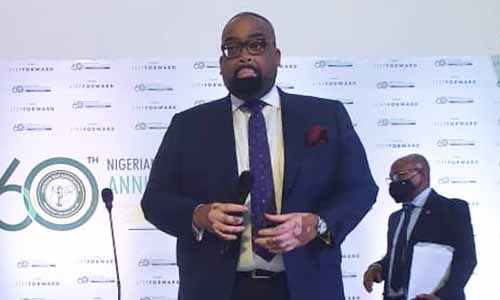
The President of the Nigerian Bar Association (NBA), Olumide Akpata, has called on lawyers to unite as the work ahead of the Association is enormous.
He said this during his inauguration as the new president of NBA on the 28th of August, 2020
Akpata, in his inaugural speech made available to TheNigeriaLawyer (TNL), said he considers it a great honour and privilege on the epochal 60th anniversary of the NBA, “to be sworn in as the 30th President of the foremost professional membership association in Nigeria and the most influential network of legal practitioners in Africa.”
He attributed his emergence as President of the Association to God “Anyone who keenly followed the process that culminated in today’s event can attest to the fact that my election victory was neither my making nor that of any mortal. It was divinely orchestrated by the Lord Almighty, the creator of the universe who oversees the affairs of men, and in whom we live, and move, and have our being. I return all the praise to Him. I say this as someone who has, on more than one occasion, stood at the throes of death, and survived. I am grateful for the gift of life and convinced God who sees the end from the beginning, preserved my life for a day like this.” Akpata said
He appreciated his family for their support and his English teacher at Kings College Lagos and Prof. Azinge, SAN, who taught him jurisprudence at University of Benin
“I acknowledge the role of my family and, in particular, my dad, Dr Henry Ogieva Akpata who turned 80 on 29 May 2020. It was my dad who, after getting over his initial disappointment that I was not going to take after him and study medicine, ultimately guided me towards making a career choice to study law and as they say, the rest is history. He is watching online as I speak, and I am grateful to God that he is alive and well to see this day. I cannot help but wish that my dear mother who passed on 28 years ago when I was in my final year at the University of Benin, was also here with us today. Her death pushed me more to excel and become who I am today, and I am confident that she is looking down from heaven and beaming with pride.
“It is often said that the reward of the teacher is in heaven. Permit me to buck the trend and place on record the role played by my teachers in shaping me into who I am today. Watching today is Mr. Clement Chukwudifu who taught me English Language at King’s College Lagos, and who was one of those who told me early on that I would end up becoming a lawyer. I also recognise Prof Epiphany Azinge, SAN who taught me Jurisprudence at the University of Benin and who has remained my friend and mentor. He has been one of my staunchest supporters throughout my career and was very much in my corner during the election. I use them as a point of contact to represent my other teachers.”
He appreciated first employer, Dr. Mudiaga Odje, SAN, OFR, of blessed memory, and his law firm “The last twenty-five years of my life have been devoted to building, with my Partners, our law firm, Templars. It is just the interesting irony of life to see the firm which I helped in building, grow to become my life and a support base for me. I must single out for special recognition, the Managing Partner of Templars, who also doubles as my big brother, Oghogho Akpata with whom I have worked together for the past twenty-five years. I am also deeply grateful to all my Partners in the firm and in particular, Wale Atake, SAN; Mr Godwin Omoaka, SAN; Chike Obianwu; Inam Wilson; Ijeoma Uju; Dayo Okusami and the rest of the Templars team who have not only been my colleagues and friends, but also my family and my support base. I am truly appreciative of the role they have played, and continue to play, in my life. Indeed, it was the Partners that gave me their blessing to embark on this journey and without them it would have been virtually impossible to even dream about this. The entire firm stood by me throughout the election period and in recognition of the magnitude of the job at hand, they gave me their blessing to embark on sabbatical for the next 24 months to focus on the job. I cannot thank them enough.” He said
Akpata extended his appreciations to his Campaign Team, the Director General of the campaign, Tobenna Erojikwde, the Directors Deputy, Desmond Ogba (Templars Partner), and Branch Coordinators from all 125 Branches of the NBA. He said he is “eternally grateful to these group of people who in more ways than one, gave credence to the quote by Margaret Meade that I never get tired of referencing, which says, ‘[n]ever doubt that a small group of thoughtful, committed people can change the world; indeed, it’s the only thing that ever has’. Without a doubt, just by the fact of this election alone, we have already changed the narrative in the NBA.”
The other people he acknowledged were: Mr George Etomi; Mr Ama Etuwewe, SAN; Alhaji Femi Okunnu SAN, CON; Hairat Balogun OON; Chief T. J. O. Okpoko, SAN; Chief Oladipo Odujinrin, MFR; Prince Adeyemi Adefulu, MFR; Mr Henry Odien Ajumogobia SAN, OFR; Mr Austin Alegeh, SAN; Mr Olasupo Shasore, SAN; Mr Dele Belgore, SAN; Mr Aderemi Ogunsanya, SAN whose father Adebayo Ogunsanya, SAN also occupied this office; Mr. Emeka Ozoani, SAN, Mr Seni Adio SAN; Mr. Osaro Eghobamien, SAN, Mr. Oluseye Kosoko, Mr. Ayuli Jemide; Prof Kingsley Moghalu; Dr Joe Abah; and young lawyers for their support.
He did not forget to thank the immediate former president of the Association, and his Co contestants. He said he holds them in high esteem. “I must specially thank the outgone President, Mr Paul Usoro, SAN and the outgone National Officers for the role they played in navigating the affairs of our Association in the past two years. It has been a difficult year for everyone all over the world and it is to their credit that they did not crumble under pressure and were able to pilot the affairs of the NBA until the end. I also thank the Electoral Committee of the Nigerian Bar Association (ECNBA) headed by Mr Tawo E. Tawo, SAN. There were clearly moments of tension between me and the Committee, but I am gratified that they understood that those were borne out of a strong desire for things to be done the right way.
“In the same vein, I wish to, once again, appreciate Deacon Dele Adesina SAN, and Dr. Babatunde Ajibade SAN, against whom I had the privilege of contesting for the office of President. As I said in my acceptance speech, one thing that remained unshaken throughout the election process was my utmost respect for these distinguished and respectable gentlemen of the Bar who have contributed in very significant ways to the growth and development of our Association. I want to reassure them that my respect for them remains intact. Very importantly, I must restate that the election is over but the work ahead of us is immense. We must now unite as one family to achieve our common goal of revitalising the Bar and ensuring that our voice is heard as one strong family. I therefore intend to count on their support and counsel as we work towards Securing the Future through a United Bar that Works for All.”
The inaugural speech reads in part:
“It is apposite to begin the formal part of the address by tackling two major issues arising from the 2020 NBA election – the seeds of discord that were sown during the election campaigns and the issues pertaining to the election process itself.
“The Need for Unity at the Bar
I am not oblivious of the cleavages that emerged during the campaign and the attempt to pitch senior members of the bar against their younger counterparts. We were all witnesses to the widespread agitations against the holders of the enviable rank of Senior Advocates of Nigeria to the extent that some people were eagerly anticipating a revolution. In some ways, this was understandable, having regard to the issues that characterised the election and the uniqueness of my candidacy, being the first non-Senior Advocate of Nigeria to win an election as NBA President in thirty years. However, the elections are now over, and we must, of necessity, retrace our steps.
“One of the cardinal pillars of my campaign and on the basis of which I made myself available to run for this high office, was the promise to run an all-inclusive Bar. There is no gainsaying the fact that this necessarily includes giving due recognition and deference to the senior members of the Bar who are the builders of, and significant contributors to, our noble Association. Even as a candidate, I never saw myself as a harbinger of division between senior and young members of the Bar, but as bridge candidate to build better rapport between young and senior lawyers. This is a role I will approach will all seriousness.
“One of the first things I did after the result declaration was to call on my supporters to desist from joining issues or otherwise attacking other lawyers, especially senior members of the Bar, but instead to be magnanimous in victory. Permit me to repeat what I said in that publication. Ours is a noble profession that prides itself on a high sense of discipline, learning, respect for seniority and character for which its members are reputed. Let us therefore join hands to move the NBA forward. The mandate that I have from Nigerian lawyers is to work for all members of the Bar irrespective of who they voted for. There is so much work to be done to revitalise our Bar and make it work for everyone without discrimination.
“I am also not unaware of very recent events and agitations that have tended to divide our Bar along regional and religious lines. This is rather unfortunate for an egalitarian Association like ours. The Bar that I want to lead henceforth is one that is united on all fronts and that recognises that our diversity is, perhaps, our greatest strength. I plead with all Nigerian lawyers to bear this philosophy of unity in mind as we commence a new journey together today.
“This enormous task cannot be achieved if we continue to fan the embers of division at a time when we desperately need to unite and speak with one firm voice. We must be kind, magnanimous, respectful, and sensitive in our words and actions, as doing otherwise would be a great disservice to our vision of building a stronger and formidable Bar. Now is the time to come together because a divided Bar is a defeated Bar.
Electoral Reform
“It is pertinent to state categorically that, in my view, the 2020 Election – the voting and result of which were monitored live by a significant proportion of Nigerian lawyers and non-lawyers alike – was ultimately free and fair, and the result was, by all estimation, truly reflective of the will of Nigerian lawyers. The above notwithstanding, it would be remiss of me not to acknowledge that there were several glitches in the build up to the Election. As Nigeria’s foremost professional Association, our electoral process ought to be the standard for others to follow and should, to the extent humanly possible, be devoid of the glitches that we witnessed. It was with this in mind that I personally wrote two separate letters to the ECNBA Chairman on 20th July 2020 and 29th July 2020 to highlight the issues that threatened the conduct of a credible election and to recommend measures to immediately address those concerns.
“The consensus is that there is need to urgently review the 2020 elections and to institute urgent reforms of our electoral systems. Indeed, the Board of Trustees of the NBA in their letter of 19 August 2020 to Deacon Dele Adesina, SAN called for a major transformation of our electoral process and framework. Let me repeat what I said to the Board of Trustees in my letter to them in response to the petition of Deacon Dele Adesina, SAN; “as an Association that prides itself as Nigeria’s foremost and oldest professional membership organisation, we need to manage our electoral processes better. I pledged during the electioneering period to introduce an efficient data management system for the NBA and to follow that up with other institutional and structural reforms that would enable NBA to serve the benefit of its members and the Society. In the wake of the criticisms that trailed the Election, this is now a top priority issue for me.”
“One major complaint about the last election was the issue of the database of lawyers and resultant difficulties in coming up with a credible voters’ register. To address this, my administration will improve upon the membership portal introduced by the President Paul Usoro administration. Additionally, I am immediately constituting an Electoral Audit and Reforms Committee, comprising distinguished practitioners of the highest standards to audit our 2016, 2018 and 2020 elections and recommend reforms for our electoral systems and processes. The Committee is made up of the following lawyers each of whom I have already spoken to:
S/No.
Name
Designation
NBA Branch
Ayo Akintunde, SAN
Chairman
NBA Lagos
2
Mike Igini
Vice-Chairman
NBA Ikeja
3
Nnenna Ukoh
Secretary
NBA Enugu
4
Basil Udotai
Member
NBA Abuja
5
John Owubokiri
Member
NBA PH
6
Ama Etuwewe, SAN
Member
NBA Warri
7
Oludayo Olorunfemi
Member
NBA Ikere-Ekiti
8
Rotimi Ogunyemi
Member
NBA Lagos
9
Mas’ud Alabalewe
Member
NBA Kaduna/Barnawa
10
Hadiza Nasir Ahmad
Member
NBA Kano
11
Andrew Odum
Member
NBA Asaba
12
Altine Ibrahim
Member
NBA Damaturu
“I pledge to implement whatever recommendations they come up with well ahead of time to ensure that the 2022 election is devoid of those glitches that we noticed in the 2020 election and that we truly set a standard that others will aspire to.
The Task Ahead
“I must share with you all a nagging concern that I kept ruminating about throughout the election period. There is an unfortunate erosion of the ethical values and professionalism that once characterised our Noble Association. Instead of devising means through which the Association can reengineer the profession, we have unwittingly enthroned an unhealthy appetite for over politicking at the Bar and some of us seem to now believe that holding office in the NBA is a short cut to achieving distinction in the profession. It appears that we have long paid lip service to the ethical values and disciplinary standards for which we were known. It is to our collective shame that we are on this sorry path. But this must stop. I am also worried about the lack of institutional capacity that the Association has suffered over the years. A lot of work needs to be done.
“As I informed the new national officers during our strategy retreat last weekend, hitting the ground running immediately will not be enough, we also need to hit it flying. Nothing short of that would match the expectations of our members and Nigerians. It is in this regard that I now restate the promises I made which are delineated into six areas of focus as discussed below.
I. Welfare of Lawyers
“The improved welfare for our members was a cardinal part of my campaign. I assure you today that those were not mere rhetoric. I hereby restate my promise to ensure that we improve on the welfare of our members along the lines that I promised in my manifesto.
“I also stated that it is at the core of my mandate to expand and deepen the market for legal services in Nigeria and consequentially improve the financial standing of our members. In the coming weeks I shall constitute an NBA Task Force to determine the scope of legal work that is statutorily prescribed to be the exclusive preserve of Nigerian lawyers and to work out modalities for ensuring that only members of our Association get to do such work. In recent times we have witnessed the brazen encroachments into our turf by other professions and private organisations like banks, consulting firms, property firms, amongst others. I will personally engage the leadership of these organisations and prevail on them to refrain from the practice of encroaching into areas that are the exclusive preserve of lawyers. In cases where this is not heeded, we shall not hesitate to challenge such encroachments in court. It is no longer business as usual.
“One hallmark of my administration shall be the constructive engagement with the heads of the major regulatory agencies to ensure better synergy with the NBA in the interest of our members. In this regard, one of my first tasks as President of our Association shall be to engage with the Registrar General of the Corporate Affairs Commission (CAC) to resolve some of the outstanding issues that led to the recent protests by members of our Association and to find a lasting solution to them. Criticisms from some quarters have also trailed the passage of Companies and Allied Matters Act 2020. We shall constructively engage with the CAC in this regard to allay the fears of our members and indeed the general populace. In this regard I must immediately commend the NBA Section on Business Law for their illuminating and timely Webinar on the CAMA 2020. More of such events will be promoted under my administration. Where however, there are provisions of the Act that cannot stand the test of time, the NBA shall not hesitate to advocate their urgent amendment so that they do not constitute a clog in the wheel of progress. This shall be the template to engage other regulatory agencies throughout my administration.
“On the vexed issue of the poor remuneration which has made the legal profession in Nigeria a laughingstock, I said during the campaign that the NBA can no longer afford to fold its hands in the face of this most unfortunate state of affairs. I hereby restate that the NBA under my leadership will devise measures to tackle this issue. I will in the coming weeks, establish an NBA Remuneration Committee to recommend feasible ways to improve the poor remuneration of legal practitioners.
“One of my major tasks as President of the NBA will be to table before the Legal Practitioners Remuneration Committee a request for the review of the Legal Practitioners (Remuneration for Legal Documentation and Other Land Matters) Order to reflect current economic realities. It is my strong belief that the standardisation of the fees charged by legal practitioners holds the key to the resolution to the poor payment of legal practitioners.
“On the NBA Stamp and Seal, I pledged in my Manifesto that the NBA under my administration shall issue at no costs, one pack of 24 Stamps to legal practitioners between 1-5 years of call, upon payment of practising fees. After due consultations, we have decided to extend the gesture by issuing two packs of 48 Stamps for free to all verified legal practitioners who pay their Bar Practising Fees not later than 31 March 2021. Those who require fadditional copies of the NBA Stamp and Seal would then free to request additional pages at extra costs to them. I also restate my promise to ensure further improvement on the Stamp and Seal application, collection process and the digitization of the stamp and seal.
“I also pledge to ensure the continuation of the NBA Members’ Life Assurance scheme. Considering our numerical strength, I will negotiate a more favourable deal with our current insurance policy provider for an upward review of benefits to members. We shall also institute a comprehensive health insurance scheme and establish a medical health fund to help deserving members subscribe to the scheme. In addition to the above, my administration will, working with the leadership of the various branches of the NBA, establish working relationship with good hospitals across Nigeria to agree discounts on bills for members of our Association.
“One major promise I made to Nigerian lawyers is to tackle the menace of harassment and brutality of lawyers by the security agencies. As I have said in the past, while it is part of the aims and objects of the NBA to promote and protect the fundamental rights of citizens, which we take very seriously, charity must necessarily begin at home and the NBA must take steps to forestall the breach of the fundamental rights of lawyers. For the past few years, there is hardly a month that passes without an incident of harassment of lawyers by men of the security agencies. This is completely unacceptable. While we are still on the case of Emperor Ogbonna a lawyer from Abia State who has been in custody despite being granted bail twice by the courts, we also heard just last week, of the case of a senior member of the Bar, Mr Paul Igwe, who was detained and brutalised by the Divisional Police Officer of Eastern Ngwa Police Division of the Nigerian Police also in Abia State. To say that lawyers have become endangered species is putting it mildly. This dangerous trend and we must immediately address.
“The NBA that I now lead will strengthen the NBA Human Rights Institute and also engage the heads of the various security agencies proactively and constructively from the outset, to set the tone for a collaborative and mutually beneficial relationship between their respective agencies and our Association. The engagements would secure assurances that any officer of the security agencies found to have abused a lawyer would be sanctioned and such sanction made public. Where these engagements fail, we shall not hesitate to bring our full weight as an Association to bear to challenge any instance of abuse and harassment of lawyers. It is also for that reason that I announce the setting up of a special Lawyers’ Defence Fund to cater for the free representation of lawyers who are financial members of the association and are victims of human rights violation by the securities agencies.
II. Capacity building for members
“At the core of my mandate for the NBA is the championing of a structured reformation of the system of legal education in Nigeria and actualise a system that produces knowledgeable, competent and ethically conscious lawyers. It is also top of my agenda to initiate programmes that are designed to enhance the capacity of Nigerian lawyers and equip them with the tools required to improve on their ability to meet the expectations of a highly sophisticated clientele. The truth is that we are not even scratching the surface in terms of what we can contribute to the servicing of not just the Nigerian economy but for the wider Africa in view of the coming into effect of the Agreement establishing the African Continental Free Trade Area.
“In this regard I promise to reconstitute the Board of the Institute of Continuing Legal Education (ICLE) and charge the Board with the responsibility for the operation of the Continuing Professional Development (CPD) programme of the NBA. Through the ICLE, the NBA will collaborate with the Sections and Fora regarding annual programming/plan of actions that would ensure effective coordination and delivery of capacity building programmes at the Branch and national levels. We shall also undertake a review of the Mandatory Continuing Legal Education Rules (MCLE Rules) 2007 to ensure that the Rules accord with modern realities, especially in a post COVID–19 world.
“My administration will engage actively with the Council of Legal Education (CLE) to promote and advance legal education in Nigeria. I pledge to commission a study with a view to submitting a proposal for the review and upgrade of the structure and content of courses taught in the law faculties of Nigerian universities and the Nigerian Law School.
“We will also set up a Committee to deliver on our promised mentorship initiatives across all NBA branches. I also announce today the establishment of the NBA Career Development Centre with the main objective of providing career guidance to our members. The Centre would be responsible for gathering information on skills and training gaps in the profession which would play a large part in determining the training programmes to be developed by the ICLE for providing trainings across the country.
III. Improvement of the system of administration of justice
“I listened with great delight as the highest-ranking legal practitioner in government, His Excellency Professor Yemi Osinbajo SAN (GCON) delivered an address on behalf of the President of Nigeria during the Opening Ceremony of our just concluded Annual General Conference. His Excellency hit the right notes and expressed views that are completely consistent with mine. I also listened to the address of the Chief Justice of Nigeria Honourable Dr. Justice Ibrahim Tanko Mohammed during the Conference and I am happy that we are thinking in the same direction.
“Mr President tasked the NBA and the Nigerian judiciary to come up with urgent reforms that will improve the justice delivery system in the country and decried the slow pace of trial of cases in our courts, the incidence of conflicting decisions by the courts and continuing triumph of technicalities over substance. His Excellency also advocated for the nomination of the best hands for appointment as Judges and Justices of the superior courts of record in Nigeria. In the same vein the Chief Justice of Nigeria lamented the filing of frivolous cases by lawyers.
“Thankfully, we need not go far in finding solutions to these seemingly intractable issues. The answer lies in effective collaboration among the Executive, the Legislative and the Judicial arms of Government, with the NBA as a key stakeholder. As I stated in my tweet to the President in response to his congratulatory tweet after my election victory, I am gratified by the President’s acknowledgment of the NBA as a crucial stakeholder in our democracy and on behalf of all lawyers in Nigeria, I accept the President’s offer of cooperation because it is a partnership that can only be beneficial to the Nigerian populace.
“I unequivocally throw my weight behind the call by the Honourable Chief Justice of Nigeria for the provision of speedy and qualitative administration of justice, the strengthening of the structures of the courts and the need to stamp out corruption from the judicial system.
“I am truly committed to doing all that we can to improve our system of administration of justice and my colleagues and I have set out a clear roadmap for achieving this. We will be unveiling this roadmap in the coming weeks.
“The necessary question that I am sure will be asked, is how the NBA under my leadership intends to achieve these reforms. As a first step, my first official duty will be to seek audience with President Muhammed Buhari, the Chief Justice of Nigeria, the leadership of the National Assembly, and the Honourable Attorney-General of the Federation. The purpose of these working visits will be to put forward practical ideas on behalf of the NBA for the reform of Administration of Justice in Nigeria. I am well aware that an important obstacle to achieving sustainable reforms in the sector is that we have done a lot of talking and limited implementation of the many reasonable proposals that have been agreed to by justice sector stakeholders over the years. I am determined to make progress on these issues during my tenure
“Charity, it is often said must begin at home. In proposing these reforms, it is important that we reawaken the culture of public interest advocacy in the NBA. It is regrettable that there are too few lawyers working in the public interest. We need to bring back the culture of pro-bono work in our association. Indeed, this in my view is critical to the role of the NBA in facilitating justice sector reform. As a first step, my administration will revisit the pro-bono declaration adopted by the NBA with a view to affirming its importance in the professional development of all members of the NBA. One of the proposals I will be suggesting to the CJN is to consider a special recognition scheme under which lawyers who can show concrete evidence of public interest advocacy are considered for elevation to the rank of Senior Advocate. It is my respectful view that the conferment of the rank of Senior Advocate must not simply be considered largely on the number of cases completed but on concrete contributions to the growth of Nigeria’s justice system.
“Very importantly, I am in complete agreement with the President that we need to do better in terms of the calibre and quality of legal practitioners appointed as judicial officers. The NBA will henceforth monitor compliance with the NJC Rules and Procedure for the selection and appointment of superior court judges strictly.
IV. Promotion and protection of the rule of law and respect for the fundamental rights of the citizenry
“The NBA under my administration will regain its position as the conscience of the Nigerian society. We must be the bulwark against tyranny and injustice in Nigeria, stand up against all forms of injustice, condemn unpopular government policies and check abuse of power. I promise you today that we shall not shy away from these responsibilities.
It is also my pledge today that the NBA under my administration shall restore the voice and glory of the Bar and the Bench. We shall as a matter of priority advocate for the proper funding of the judiciary to enhance its independence and the integrity of the Bench. The NBA that I am honoured to lead will exhibit zero tolerance for disobedience of lawful orders of courts and will not hesitate to take all legal steps available to it to protect, defend and maintain the rule of law in Nigeria.
“The NBA under my administration shall take seriously our mandate of promoting and protecting the fundamental rights of the generality of citizens. We shall also enter into partnerships with the Nigerian Judiciary and statutory bodies such as the National Human Rights Commission, Legal Aid Council of Nigeria, the Nigerian Police, the Nigerian Correctional Service and other stakeholders in the Nigerian Criminal Justice Sector, as well as international partners/donor agencies to undertake a holistic reform agenda of the Criminal Justice System in Nigeria. I welcome, and accept on behalf of the NBA, the recent call for collaboration, in this regard by the Honourable Attorney General of the Federation.
“Lastly, under my administration the NBA Law Reform Committee will be adequately resourced to play its role as a liaison between the NBA and the National Assembly; to represent the Bar at National Assembly public hearings, to make meaningful input into our laws for the betterment of the society and our profession. For too long we have shied away from that responsibility. That stops today. I accept the invitation of the Senate President and the Speaker of the House of Representatives to partner with the National Assembly to reform our laws, through strategic amendments, in order to bring the Law up to global standard. Just yesterday, the Senate Ad-hoc Committee on the Review of the 1999 Constitution announced the commencement of the process for the further alteration of the Constitution and called professional bodies and interest groups to submit memoranda for that purpose. This form part of our first assignment, and I assure you that we will no longer be found wanting.
V. An All-Inclusive Bar
“My emergence as President of the NBA is a victory for the corporate counsel, law officers, lawyers in other forms of salaried employment; the police and military lawyers, etc and for the different segments of the legal profession who have long been seemingly treated as outsiders instead of as equal members of the Bar. Having once been a victim myself of such discrimination, I promised, and hereby restate, that the NBA under my leadership shall ensure that the different constituencies in the profession are given a voice. My Presidency has today ushered in a truly all-inclusive Bar.
“To this end, I will in consultation with other NEC Members table before the general meeting of the Association, an amendment to the NBA Constitution to accord statutory recognition to the Chairpersons of the NBA Women Forum, the NBA Young Lawyers’ Forum, the NBA Law Officers’ Forum and the NBA Corporate Counsel Forum. I will also lead the charge for the creation of an NBA Lawyers with Disabilities Forum and other important fora to ensure that all segments of our profession are carried along.
“I promise to ensure adequate representation of young lawyers in all appointments made in the two years of my administration. It is my long-held belief that it is impossible to have a conversation about the future of the legal profession without the young lawyers, who are the putative owners of that future, having a seat at the table. For an Association with a National Executive Committee of about 450 members, it is sacrilegious that there is no single statutory representation of young lawyers-constituency.
“To ensure that NBA programmes and schemes are better felt by majority of members, we shall pursue greater synergy between the national secretariat of the NBA and the leadership of the various Branches. We shall ensure that NBA programmes and activities, especially the capacity building and continuous legal education programmes, are spread round the country to give members and Branches a better sense of belonging. We shall also wholeheartedly support the activities of the various Sections and Fora of the NBA. As NBA President, I will provide immense support and the enabling environment for the smooth operation of the NBA Sections and Fora.
VI. Ethics and Discipline of Members
“Lastly, we shall champion an improvement in the disciplinary procedure in the legal profession. As a self-regulatory organisation, if we continue to take actions that erode the respect we once commanded from the public, we risk having the power to self-regulate taken away from us. My administration is determined to change the narrative. We shall work together with the Body of Benchers to instate a process that makes our members accountable.
“Another area that must not be overlooked is the need for the urgent review of our Rules of Professional Conduct and the amendment to the Legal Practitioners Act. These two fundamental documents must be reviewed to bring them into conformity with modern trends. They have held us back for too long. In this regard, my administration will table the extant Legal Profession Regulation Review Committee Report and the KPMG Diagnostic Report for consideration, before the NBA-NEC to enable us take appropriate next steps. We will need to partner with the relevant National Assembly Committees on Judiciary, Human Rights and Justice sector to ensure the quick passage of a new Legal Practitioners Act and work with the General Council of the Bar under the leadership of the Attorney General of the Federation, for the review of the Rules of Professional Conduct.”
Akpata concluded by saying that the promises and all other actions required to achieve the objectives of the NBA can only be achieved if the Bar builds an administrative structure that preserves the institutional memory of the Association beyond respective two-year administrations, ensures operational efficiency of the Association, enables effective branch and member liaison and achieves an efficient delivery of the programmes and projects undertaken by the NBA.
“Consequently, one of the first tasks that my administration will undertake would be to create an administrative structure that ensures that we are able to deliver on our blueprint for the progress of the NBA as an institution. To achieve this, I will require your cooperation and understanding.” He said
He once again appreciated the members of the Association for electing him. He said the election is not about him, but his passion for the progress of the Association.
“As I said on the day after the election, when I decided to throw my hat in the ring, I was certain that the election was not about me. I was driven by the passion to use my time, talent and resources to improve our Association by making it fit-for-purpose, beneficial to all members, and responsive to the needs of the society. The experience of the electioneering process reinforced this drive. I saw many Nigerian lawyers who had either lost faith or had never been interested in the NBA participate with utmost enthusiasm in the hope that things would become better.
“I restate that this victory is for our colleagues who have become disillusioned with the NBA and how the Association appears to be disconnected from the challenges that face its members. It is for the progressive lawyer who refused to accept the status quo and took firm steps to ensure that things are done better. Likewise, this victory is for non-lawyers and the general populace who took an unusual, but very keen interest in the conduct of our elections. By doing so, they lent credence to my long- held belief that the Nigerian society has always yearned for a legal profession and indeed a Bar that stands tall as an unwavering bastion of the rule of law, an advocate for the sanctity and independence of the judiciary, and a bulwark against tyranny and oppression.
“As I have consistently stated, it is out of immense respect for you, a deep understanding of the value of the mandate thrust upon me, an appreciation of the factors that have bedevilled our noble Association and with humility to the will of God, that I made myself available to serve our Noble Association and wholeheartedly accepted the mandate. I thank you, once again, for the confidence that you have reposed in me, and re-assure you that I shall do my best to deliver on your mandate. May God bless you all and may God bless the Nigerian Bar Association.” Akpata ended
● Concerns about CAMA can be addressed through NASS amendment, VP adds
Churches and other organisations that have a problem with the recently passed Company and Allied Matters Act (CAMA 2020), they should use the instrumentality of the National Assembly to pursue amendments to the law.
The Christian Association of Nigeria (CAN), churches and some Non Governmental Organisations have kicked against CAMA 2020, with CAN totally rejecting it.
And to effectively deal with the Southern Kaduna crisis, the Buhari administration will not sweep the major issues underlying the conflict under the carpet, according to Vice President Yemi Osinbajo, SAN.
According to him this includes “ensuring justice, fixing economic marginalisation and the prosecution of persons responsible for these murders -this is to ensure that the impunity doesn’t worsen.”
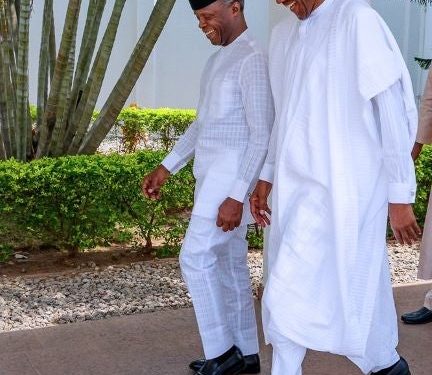
Prof. Osinbajo spoke at the ongoing Nigeria Bar Association Annual General Conference during a Special Conversation featuring him and the Speaker of the House of Representatives Mr. Femi Gbajabiamila.
The Vice President also urged those who have concerns about the recently signed CAMA legislation to approach the National Assembly for possible amendments, since “we are in a democracy.”
Speaking on the way forward in the Southern Kaduna conflict and making reference to his personal experience, the Vice President said, “I have been involved since 2001 through the work of the Macedonian initiative, an NGO that focused on providing relief materials to displaced persons in Southern Kaduna and several other places especially in North Central part of Nigeria. There have been judicial commissions and all sorts, but the problem remains. So, there is the need to address the underlying issues. You can’t sweep under the carpet, justice and the cries of economic marginalization.
“The fact is that we must prosecute persons responsible for these murders or otherwise impunity will worsen. And also support those who have lost their bread winners.”
Continuing, the Vice President said “the mindless callous killings in Southern Kaduna are heartbreaking. And again we must condole those who have lost loved ones and those injured or who have suffered loss of property. These tragedies are unacceptable and they are avoidable.”
Highlighting what the Federal Government has done and is currently doing to deal with the situation, Prof. Osinbajo said, “First is the improvement of security in Southern Kaduna. Now, we have a military base there, for the first time. We also have a lot of Air Force surveillance.
“We have about 500 conventional and Mobile Policemen in Zangon-Kataff and Kaura Local Government Areas and then the combined military team of the Army and the Navy who are also on ground 24 hours. This is basically to just take care of the volatile situation there.”
Continuing, the Vice President said “the President has also had several Security Council meetings and I have attended all of those, where the issues were discussed and the possibilities of engagement have also been discussed.”
On a personal note, the Vice President added “I have also engaged with community leaders in Southern Kaduna and also I have engaged with the governor to look at what peacemaking efforts are possible.”
The Vice President expressed optimism that the issues would be resolved noting that “some of the peacemaking efforts have been fairly successful” as recent peace efforts between the Zangon-Kataff and the Fulani communities would yield positive results.
He said “but there is also a lot of work going on to ensure that some of these fundamental issues are being addressed and it’s an evolving situation, but it’s something we can’t afford to ignore and it’s gone on for far too long and it’s redressable and possible for us to resolve.”
Responding to the issue of the Companies and Allied Matters Act (CAMA) 2020, the Vice President said the solution to the concerns is evident, noting that an amendment to the CAMA Act could be sought by those expressing concerns about sections of the law.
He said “we have a process by which this can be redressed. Whatever the proposal for amendment may be, whatever the view of the leadership of the church may be, regarding the question of how the trustees, whether they are interim trustees or not, can be put into a proposal that will be brought to the National Assembly for consideration for amendment to the law, that is the process which is entirely opened and ought to be pursued.
“We are in a democracy and there is a process by which things can be done and that process is the one where you bring forward amendments to the National Assembly and they will do whatever is considered useful in the circumstance.”
Speaking on the Federal Government’s reaction to the contraction of the economy as a result of the COVID-19 pandemic and related issues, Prof. Osinbajo said the Buhari administration’s response is robust and focused on local production using home-grown resources.
Citing the example of specific efforts of wealth and job creation using local resources, the Vice President said under the agriculture component of the National Economic Sustainability Plan (NESP-AGRO), 5 million farmers whose produce would be off-taken by government have been registered.
He added that progress is also been made under the housing component of the plan known as NESP-HOUSING with 11 State governments already given land and more states expected to join with the target of building about 100, 000 housing units, including 2-bedroom apartments at between N1.8 – N2 million cost, and in the process, engaging young architects, builders, among others.
Commenting on the other aspects of the stimulus package, the Vice President said, the Federal Government has, as part of the NESP, a survival fund and payroll support for artisans, private school teachers and small businesses.
The Speaker of the House of Representatives, Hon. Femi Gbajabiamila, spoke about the collaboration between the Executive and the Legislature under the Buhari administration in addressing some of the critical issues facing the country.
He said the actions of the House of Representatives would continue to be guided by the legislative agenda adopted by the House at its inauguration in 2019 which is in line with the vision of President Muhammadu Buhari.
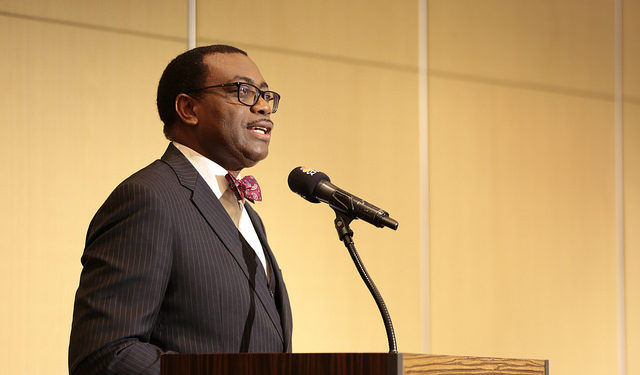
Dr. Akinwumi Adesina re-elected as President of the African Development Bank Group Abidjan, Côte d’Ivoire August 27, 2020 – Dr. Akinwumi A. Adesina has been re-elected to serve a second five-year term as President of the African Development Bank Group on Thursday, August 27, 2020 by the Board of Governors of the Bank.
A globally renowned development economist and a World Food Prize Laureate and Sunhak Peace Prize Laureate, Dr. Adesina has distinguished himself in driving a bold agenda to reform the Bank and accelerate Africa’s development. He was first elected as President of the Bank on May 28, 2015.
As newly re-elected President, Dr Adesina, a former Nigerian Minister of Agriculture, will begin his new term on September 1, 2020.
The election result, which gave him a hundred percent of votes of all regional and non-regional members of the Bank, was announced by the Chairperson of the Board of Governors of the Bank, Mrs. Niale Kaba, Minister of National Planning of Côte d’Ivoire.
The election took place on the final day of the 2020 Annual Meetings of the African Development Bank Group, which was held virtually for the first time in the Bank’s history.
Minister Niale Kaba, said, “I am delighted that the Board of Governors have re-elected Dr. Adesina for a second term in office as President. As shareholders, we strongly support the Bank and will give him all the necessary support to carry forward and implement his compelling vision for the Bank over the next five years.”
Adesina’s first term focused on the bold new agenda for the Bank Group based on five development priorities known as the High 5s: Light up and Power Africa; Feed Africa; Industrialize Africa; Integrate Africa; and Improve the Quality of Life for the People of Africa.
During Adesina’s first term, the Bank achieved impactful results on the lives of 335 million Africans, including: 18 million people with access to electricity; 141 million people benefiting from improved agricultural technologies for food security; 15 million people benefiting from access to finance from private investments; 101 million people provided with access to improved transport; and 60 million people gaining access to water and sanitation.
The Bank has maintained its AAA-ratings by all major global credit rating agencies for five years in a row. The Board of Governors of the Bank Group approved a 125% increase in the General Capital of the Bank, raising its capital from $93 billion to $208 billion, the largest in the history of the Bank.
The African Development Fund received a $7.6 billion pledge from donors, a 32% increase, for support to lowincome countries and fragile states. The Bank was ranked the 4th most transparent institution globally by Publish What You Fund, bolstering its strong governance credentials for transparency and accountability.
Under Adesina’s leadership, the African Development Bank’s Board of Directors approved a $10 billion facility to support African countries to address the COVID-19 pandemic. The Bank also launched a $3 billion COVID-19 social bond on the global capital markets, the highest US dollar denominated social bond ever in world history, which is listed on the London Stock Exchange, Luxembourg Stock Exchange and NASDAQ.
Adesina said, “I am deeply grateful for the collective trust, strong confidence and support of our shareholders for electing me for a second term as President. It is yet another call for selfless service to Africa and the African Development Bank, to which I will passionately devote myself.” The African Development Bank is Africa’s premier development finance institution, comprising 54 regional and 27 non-regional member countries.
“The future beckons us for a more developed Africa and a much stronger and resilient African Development Bank Group. We will build on the strong foundations of success in the past five years, while further strengthening the institution, for greater effectiveness and impacts,” Adesina said.
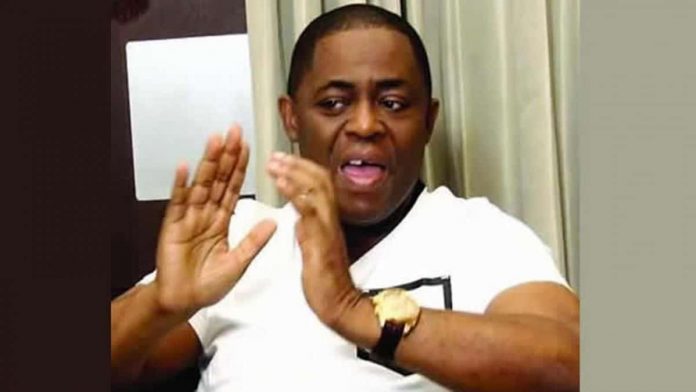
I really didn’t want to comment on Femi Fani-Kayode’s viral communicative primitivism toward Daily Trust’s Calabar correspondent because of my knowledge of the state of Fani-Kayode’s mental health, but I’ve read senior Nigerian journalists on social media rail against the Daily Trust reporter for asking a “rude question,” and feel an obligation to intervene.
Rude question? Well, there’s no such thing as a “rude question” in journalism. A Chicago journalist and humorist by the name of Finley Peter Dunne once said, more than a century ago, that, “the job of the newspaper is to comfort the afflicted and afflict the comfortable.” In other words, journalists have no obligation to comfort the comfortable. Their duty is to afflict the comfortable or, if you like, to be “rude” to the comfortable.
Asking questions that get a politician’s dander up, that inflame a politician’s passions, is a prized skill in journalism. Here’s why: Politicians reveal the most headline-worthy information when reporters cause them to lose control of their emotions. Loss of emotional control forces them to depart from their scripted, predictable, choreographed, and often mendacious and boring performances.
It’s precisely because the Daily Trust reporter asked a “rude question” (which is a charlatan’s term for a great question) that an otherwise unremarkable news conference is now grist for social media and editorial mills.
Journalists who think the Daily Trust reporter’s question to Fani-Kayode was “rude” and worthy of censure should go look for another job. They’d do well as publicists.
Malcolm Muggeridge once said, “News is anything anybody wants to suppress; everything else is public relations.” Many Nigerian “journalists” are actually public relations practitioners polluting a noble craft.
That’s why some of them apologized to an emotionally disturbed mental midget for asking him a legitimate, probing question. One of them even said to the Daily Trust reporter, “You see your life?”
I, like every journalism teacher worth the name, teach my journalism students the skill to ask politicians trenchant questions that have the capacity to cause the politicians to throw tantrums because politicians, in a state of meltdown, such as we saw in Fani-Kayode’s news conference histrionics, let their guards down and involuntarily divulge the truth.
Smart politicians know this. Instead of allowing themselves to be immobilized by impotent anger, they respond to high-pressure, “embarrassing” questions with poise, and disarm adversarial reporters with humility, grace, and gentleness.
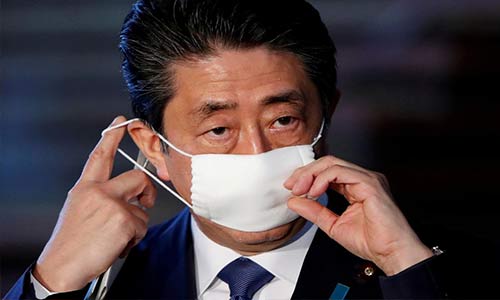
Abe Shinzo, Japan’s longest-serving and most consequential prime minister in decades, has resigned from his post over health complications.
After weeks of speculation fueled by recent hospital visits, Abe made official what many suspected: Though his chronic ulcerative colitis is not life-threatening, he is just too sick to govern.
“I don’t want to make mistakes in important political decisions” as he deals with a worsening bout of the bowel disease, he told reporters on Friday. “I decided I shouldn’t continue sitting in this seat as long as I cannot respond to the mandate of the people with confidence.”
Abe will stay in the role he assumed for a second time in 2012 (he resigned after only one year in charge in 2007, also because of his health), but will step aside once his conservative Liberal Democratic Party picks a new leader to helm the party. That choice will likely occur by the end of September. He’ll remain a member of the parliament’s lower house afterward and key party member.
He did not name a favorite to succeed him, opening up a political scramble to lead the world’s third-largest economy — and potentially carry on his legacy.
How Abe changed Japan — and the world The 65-year-old’s resignation is a stunning development with profound implications for the country, East Asia, and US foreign policy toward the region.
An avowed nationalist, Abe came into office eight years ago making two big promises.
The first was to jump-start Japan’s long sputtering economy — and his record on that was mixed. Japan’s economy didn’t skyrocket under his leadership, but overall it grew modestly after two preceding decades of deflation. And it recently entered a coronavirus-induced recession.
Still, he made some pretty remarkable reforms, such as allowing foreign workers into the country for five-year periods, championing major stimulus investments and changes to monetary policy, reforming the nation’s tourist industry, and making it easier — although still far from easy — for women to work outside the home by expanding kindergarten and home care.
But the recent hit to the economy, exacerbated by the nation’s coronavirus outbreak Abe failed to fully control, plunged his approval ratings into the 30s. That may have contributed to his decision to cede control now.
His second promise was much more visible to the world and controversial: Japan would pursue a muscular foreign policy with a special focus on countering China — a major break from Tokyo’s ways in the post-war era.
“I’ve realized that Japan is expected to exert leadership not just on the economic front, but also in the field of security in the Asia-Pacific,” he told the Wall Street Journal in October 2013, just 10 months after taking office. “There are concerns that China is attempting to change the status quo by force, rather than by rule of law,” he continued, adding that “it shouldn’t take that path, and many nations expect Japan to strongly express that view.”
Many Japanese allies approved of that more aggressive Japanese stance. “Abe set Japan on a grand strategy to secure a free and open Indo-Pacific that was embraced by the United States, India, and Australia and welcomed by much of South and Southeast Asia and Europe,” said Mike Green, a Japan expert at the Center for Strategic and International Studies think tank in Washington.
Such a policy required Japan to have a very close relationship with the United States, which Abe pursued and cultivated throughout his time in power. For example, he was the first foreign leader to visit President elect Donald Trump in November 2016, spending about 90 minutes with him in Trump Tower. Those advances didn’t always work, though, as Trump berated Japan over trade issues and for not paying more to host the roughly 50,000 US troops in the country.
He had other global failures, too. He didn’t complete a major effort to revise Japan’s US-created pacifist Constitution to allow for a more traditional military banned since World War II, didn’t reach deals with Russia or China over long-disputed islands, exacerbated tensions with South Korea, and failed to curb North Korea’s nuclear program alongside allies.
But for many experts, his overall record more than makes up for such shortcomings. “He did not accomplish everything Japan needed, but he accomplished more than any Japanese leader in many decades,” Green told me. “And above all, he demonstrated that Japan can lead.”
That last point is important. Despite his many mistakes, Abe’s legacy likely will be taking Japan from a country timid about acting boldly in the world to one more confident taking on global challenges.
Abe may soon be gone, then, but his impact on Japan — and the world — is primed to be felt for years to come.
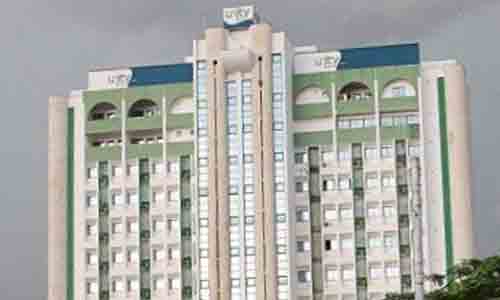
Following the unauthorized exposure of over 53,000 job seekers on Unity Bank’s job portal, the Digital Rights Lawyers Initiative have commenced a data protection action at the Federal High Court against the bank for a personal data breach.
In Suit No. FHC/AB/CS/85/2020, filed today, 28 August 2020, the Applicant sought:
1. A DECLARATION that the Respondent’s privacy policy on its website –
1. A DECLARATION that the Respondent’s unauthorized exposure of personal data of data subjects on the Internet constitutes a personal data breach under regulation 1.3(xx11) of the Nigeria Data Protection Regulation 2019.
2. A DECLARATION that the Respondent’s unauthorized exposure of personal data of data subjects on the Internet constitutes violation of the data subjects’ right to privacy guaranteed by section 37 of the Constitution of the Federal Republic of Nigeria 1999 (As Amended).
3. A DECLARATION that, by virtue of regulation 2.10(a) of the Nigeria Data Protection Regulation 2019, the Respondent is liable to a fine of N10, 000, 000.
4. AN ORDER mandating the Respondent pay the sum of N10, 000, 000 (Ten million Naira only), to the account of the Federal Republic of Nigeria through the remita platform within seven days of delivery of judgement in this suit.
5. PERPETUAL INJUNCTION restraining Respondent, its officers, agents and/or data processors from further interfereing with the privacy rights of its data subject.
The suit is yet to be assigned to a Judge of the court.
Our site uses cookies. By clicking “Accept All Cookies”, you direct Law and Society Magazine to store cookies on your device and disclose information in accordance with our Cookie Statement: cookie policyACCEPTREJECT
Privacy & Cookies Policy
Privacy Overview
This website uses cookies to improve your experience while you navigate through the website. Out of these cookies, the cookies that are categorized as necessary are stored on your browser as they are essential for the working of basic functionalities of the website. We also use third-party cookies that help us analyze and understand how you use this website. These cookies will be stored in your browser only with your consent. You also have the option to opt-out of these cookies. But opting out of some of these cookies may have an effect on your browsing experience.
Necessary cookies are absolutely essential for the website to function properly. This category only includes cookies that ensures basic functionalities and security features of the website. These cookies do not store any personal information.
Any cookies that may not be particularly necessary for the website to function and is used specifically to collect user personal data via analytics, ads, other embedded contents are termed as non-necessary cookies. It is mandatory to procure user consent prior to running these cookies on your website.