Home Blog Page 1348

ACJA/ACJL: Panacea to Orderly Society

By Maroof Asudemade

Different despicable episodes of human rights violations by security operatives have been a common feature of the Nigerian society. Nigerian citizens are not safe from the public paid operatives saddled with securing their lives and property. Citizens suffer arbitrary arrests for civil issues and prolonged detention for bailable offences. In order to extract confessions, suspects are subjected to inhuman tortures. Suspects are arrested without being told reason(s) for the arrest. The result of all these security anomalies is an unsafe, chaotic society.

Nigeria used to have two principal statutes on criminal justice: Criminal Procedure Act and Criminal Procedure Code. The two enactments were defective and inefficient, while the people they were meant to protect were at the serious receiving ends. Because of the long use of CPA and CPC, without appropriate reforms, some lawyers leveraged on their defects to delay cases unnecessarily in courts.

The glaring lapses found in CPA and CPC led to the promulgation of Administration of Criminal Justice Act, 2015 (ACJA) and the Oyo State Administration of Criminal Justice Law, 2016 (ACJL) respectively. The principal aim of ACJA is to engender formal compliance with human rights issues. The provisions of ACJA have brought about certain innovations, including improving issues of human rights and proffering solutions to the challenges of prolonged trials in courts.

With ACJA in place in Nigeria and in some states, a number of human rights issues that beset members of the public in the hands of security operatives is set to experience rapid reduction or total eradication. Issues of human rights that will be things of the past include unlawful arrests, proxy arrests, arrests without warrant, arrests for civil wrongs like breach of contracts, application of torture and unleashing of inhuman treatment to suspects. So far, some states in the country have replicated ACJA in their respective states. These states include Oyo, Lagos, Ekiti, Kaduna, Anambra, Rivers, Abuja and few others.

ACJA/ACJL, as lifesaving as they appear, cannot function effectively without some forms of advocacy in terms of sensitization and education. This advocacy is what CLEEN Foundation, formerly called Centre for Law Enforcement and Education, has been in the forefront of. Established in 1998, its mission is to ‘promote public safety, security and accessible justice through the strategies of empirical research, legislative advocacy, demonstration programmes and publications in partnership with government, civil society and the private sector ‘. CLEEN Foundation has field offices in many states of the federation and they organise regular interactions with relevant stakeholders. During one of such monthly virtual interactions occasioned by the Covid-19 pandemic, the 5th Bi-Monthly Meeting of Oyo State Working Group, held on 28 August 2020, the state partner of CLEEN Foundation in Oyo State, Barrister Kehinde Adegbite, stressed the need to ensure that security could only be guaranteed when the criminal justice system was effective.

In his opening remarks, the chairman, Nigerian Bar Association, Oyo State branch, Barrister Olayinka Esan, expressed delight at the regular meeting as he said it’s an avenue to educate lawyers, members of the public and other stakeholders on the provisions of ACJL. In his contribution, Barrister Fola Awoyemi proffered solutions to the problem of police officers who are not lawyers prosecuting criminal cases. He suggested that states could grant fiat to private lawyers so as to prosecute criminal cases pro bono since there are private legal practitioners who are ready, willing and capable to offer such free legal services to shore up their status in the legal profession.

Present at the virtual meeting sponsored by CLEEN Foundation included lawyers, human rights activists and other relevant stakeholders.

Maroof Asudemade is a Media Practitioner, Publisher, Author and Public Affairs Analyst., [email protected]

How Chadwick Boseman Died, And The Pains He Went Through

By Nehru Odeh

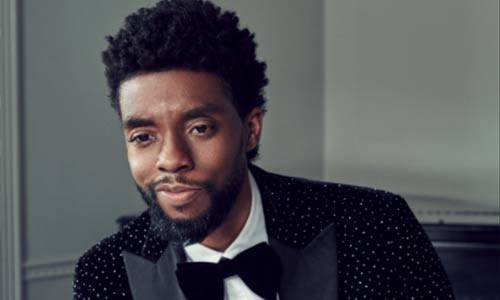
Chadwick Boseman, the American actor who played Black icons Jackie Robinson and James Brown before finding fame as the regal Black Panther, has died of colon cancer. Boseman who had been battling the disease for four years died at his home in Los Angeles with his wife and family by his side. He was 43

Boseman was truly the boss man. According to the statement released by his family, he was diagnosed with colon cancer four years ago.

But the intriguing thing about this actor who was so loved by fans across the globe is that he had been living with cancer, undergoing several chemotherapy and surgeries and still acting to bring joys to families. Yet he bore his pains stoically and never spoke about his diagnosis.

“A true fighter, Chadwick persevered through it all, and brought you many of the films you have come to love so much,” his family said. “From Marshall to Da 5 Bloods, August Wilson’s Ma Rainey’s Black Bottom and several more – all were filmed during and between countless surgeries and chemotherapy. It was the honor of his career to bring King T’Challa to life in Black Panther.”

Another intriguing thing about his death is that he died on a day that Major League Baseball was celebrating Jackie Robinson day. “His transcendent performance in ‘42’ will stand the test of time and serve as a powerful vehicle to tell Jackie’s story to audiences for generations to come,” the league wrote in a tweet.

Since news of his death broke, social media has been buzzing with tributes for him: “This is a crushing blow” actor and director Jordan Peele said on Twitter, one of many expressing shock as the news spread across social media.

“This broke me,” said actor and writer Issa Rae.

Captain America actor Chris Evans called Boseman “a true original. He was a deeply committed and constantly curious artist. He had so much amazing work still left to create.”

Democratic presidential nominee Joe Biden tweeted that Boseman “inspired generations and showed them they can be anything they want — even super heroes.”

Born in South Carolina, Boseman graduated from Howard University and had small roles in television before his first star turn in 2013. His striking portrayal of the stoic baseball star Robinson opposite Harrison Ford in 2013′s “42” drew attention in Hollywood and made him a star.A year later, he wowed audiences as Brown in the biopic “Get On Up.

His T’Challa character was first introduced to the blockbuster Marvel movies in 2016′s “Captain America: Civil War,” and his “Wakanda Forever” salute reverberated around the world after the release of “Black Panther” two years ago.

“I don’t think the world was ready for a ‘Black Panther’ movie before this moment. Socially and politically, it wasn’t ready for it,” he told AP at the time.

Even at the outset of his Hollywood career, Boseman was clear-eyed about — and even skeptical of — the industry in which he would become an international star.

“You don’t have the same exact experience as a Black actor as you do as a white actor. You don’t have the same opportunities. That’s evident and true,” he told AP while promoting “42.” “The best way to put it is: How often do you see a movie about a black hero who has a love story … he has a spirituality. He has an intellect. It’s weird to say it, but it doesn’t happen that often.”

In addition to Robinson and Brown, Boseman portrayed the future U.S. Supreme Court Justice Thurgood Marshall in 2017′s “Marshall.” He humanized the larger-than-life historical figures with the same quiet dignity — interrupted by flashes of sparkling wit — that he would later bring to T’Challa. . However, it was his role as T’Challa, the king of Marvel’s mythical African land of Wakanda, that gave him international recognition.

He took on his first producing job in last year’s action thriller “21 Bridges,” in which he also starred, and was last seen on-screen in Spike Lee’s film “Da 5 Bloods” as the leader of a group of Black soldiers in the Vietnam War.

Boseman completed one last performance, in an adaptation of August Wilson’s “Ma Rainey’s Black Bottom.” The Netflix film, which reunited Boseman with his “Get On Up” co-star, Viola Davis, finished shooting last summer.

It took some time for Boseman’s moment to come. He first got into theater, acting and writing plays as an undergrad at Howard. He visited Africa for the first time during college with director and theater professor Mike Malone, working in Ghana to preserve and celebrate rituals with performances on a proscenium stage. He later called the trip “one of the most significant learning experiences of my life.”

Boseman had roles on TV shows like ABC Family’s “Lincoln Heights” and NBC’s “Persons Unknown,” but before “42” he had only acted in one film, 2008’s football drama “The Express.” Boseman attracted notice, but missed out on big parts.

“2011 was a rough year,” he said. “I was up for everything that was happening that year, really good roles. I would get down to the end and then it would go to someone else.”

Asked about his own childhood heroes and icons, Boseman cited Black political leaders and musicians: Malcolm X, Martin Luther King Jr., Bob Marley, Public Enemy, A Tribe Called Quest and Prince. Deeply private and often guarded in his public appearances and interviews, he made clear that he understood the significance of his work and its impact on the broader culture.

At the 2019 Screen Actors Guild Award, “Black Panther” won best ensemble, electrifying the room. Before an auditorium full of actors, Chadwick Boseman stepped to the microphone. He quoted Nina Simone: “To be young, gifted and black,” and put the moment in context.

“We know what it’s like to be told there isn’t a screen for you to be featured on, a stage for you to be featured on. … We know what’s like to be beneath and not above. And that is what we went to work with every day,

“We knew that we could create a world that exemplified a world we wanted to see. We knew that we had something to give,” Boseman said

CBN grants 9Mobile first payment service bank licence


The Central Bank of Nigeria (CBN) has granted final approval to Nigeria’s lifestyle and first payment service bank, 9PSB (Payment Service Bank) to commence operations in fostering financial inclusion drive in the ecosystem.

It is owned by mobile giant 9Mobile.

This is expected to help ease the challenges of long queues in the banking halls, consistent network failure, stringent documentation to assess credit facilities and frequent transaction/dispensing error, delay in transaction completion, and process among others.

Speaking on the vision of 9PSB’s entrant to the financial sector, 9mobile CEO Alan Sinfield, stated that there was a huge potential in the market and “9PSB is strategically positioned to expand its operations into financial services”.

He said: “We are happy to be the first Payment Service Bank to provide all Nigerians with access to banking services and open up a digital world of possibilities to improve everyday lives.

“We know that this new development will further improve the country and the people going forward. In 2018, 9mobile partnered with Nigerian bank, UBA to roll out 9Pay, a mobile payment solution while also pushing for a fintech license.

“We are delighted that we have now secured finale approval for a Payment Service Bank.”

The CFO of 9mobile, Mr. Phillips Oki, said: “The financial inclusion that 9PSB will provide will be an enabler to achieving unparalleled benefit in everyday transactions.

“The *990# allows Nigerians to perform all financial transactions including utility payment from the comfort of their phones and homes on any mobile network at no charge.

“With a large network of agents strategically located in both urban and rural communities, 9PSB is going to make sending and receiving money possible, easier, seamless, and less stressful for all Nigerians.

“9PSB is also available on mobile App and internet banking for ease of banking and simplicity. Over the coming weeks, 9PSB will unveil its products and services to Nigerians.”

In October 2012, the CBN introduced the National Financial Inclusion Strategy (NFIS) to provide Payment Service Banks across Nigeria with the aim of breaking the traditional barrier preventing financial inclusion and promoting low cost, secure convenient financial services across the country.

ICPC quizzes NDDC officials over alleged corruption

The Independent Corrupt Practices and Other Related Offences Commission (ICPC) says it recently quizzed top officials of the Niger Delta Development Commission (NDDC) over various allegations of corruption.

Mrs. Azuka Ogugua, Spokesperson of the Commission, said this in a statement on Saturday in Abuja.

Ogugua said the allegations included the diversion of funds, procurement fraud, and misappropriation of the agency’s COVID-19 funds.

The ICPC spokesperson said some directors of the NDDC, who she did not identify, were arrested and quizzed at the ICPC headquarters recently.

According to her, this came after months of intelligence gathering, following the receipt of petitions from Nigerians on the alleged illegalities and contract fraud by some officials of the agency.

“Top officials of the agency are being investigated for their complicity in an alleged diversion of N5.474 billion meant for the purchase of Personal Protective Equipment (PPE) for health workers handling the COVID-19 pandemic in the nine states of NDDC.

“The commission is also investigating the payments of millions of Naira to the staff of the agency for foreign training during the COVID-19 full lockdown which were never attended.

“As well as the nonpayment of entitlements to students on foreign scholarships.

“Other allegations being investigated by ICPC include the selling of backdated contract award letters for projects and awards of contracts that were not captured in the budget of the NDDC,’’ she said.

She added that ICPC had already retrieved relevant documents with which to continue investigations towards the recovery of diverted funds and prosecution of breaches of the law.

It would be recalled that NDDC has dominated headlines in recent times following a corruption probe launched by the National Assembly.

During one of the hearings, the Acting Managing Director of the NDDC, Prof. Kemebradikumo Pondei, admitted that the commission spent N1.5 billion as COVID-19 palliatives first on its staff.

The Senate later disclosed in a report that top management of the commission paid themselves N85.6 million to attend a graduation ceremony in the United Kingdom during the lockdown in Nigeria.

The legislative investigation became controversial when the commission’s management accused some senators and members of the House of Representatives of benefiting from several NDDC contracts. (NAN)

Senate Has No Plan To Secretly Pass Social Media Bill ― Sen. Basiru

The Senate on Saturday described as false the report making the rounds that it was considering passing the contentious Social Media Bill.

Rather, it said the passage of the bill was not on the card of the upper legislative chamber as the relevant committee is yet to complete necessary legislative work on it.

The Chairman of the Senate Committee on Media and Public Affairs, Senator Ajibola Basiru, in a release titled: “On That False Story On Social Media Bill by SaharaReporters”, also noted that:
“The story made up by SaharaReporters that the Senate of the Federal Republic of Nigeria is to pass Social Media Bill despite rejection by Nigerians is false and a lie concocted by the medium to ridicule and tarnish the image of the Senate.

“This report is yet another example of irresponsibility taken too far as there has not been any recommendation for passage of the bill by the Senate. By deliberately publishing falsehood, SaharaReporters is not only doing no good to the nation but it is also shooting itself down as its recklessness and incredulity would always speak against it.

“The Senate wishes that Nigerians will be circumspect, shunning gullibility which makes them to lap up those invidious write ups and begin to comment on non-existent issues. If some people have chosen the path of perfidy wanting to bring the nation and its sacred institutions down, Nigerians must be wary and unwilling to be led by those to believing the false fabrication.”

According to him, the Senate conducts its sittings in the open and matters for consideration are well laid out “and therefore, would not require anyone’s investigation to ‘dig’ out what the Senate would do”.

He added that the relevant committee of the Senate has not submitted its report for the bill to be passed at all or surreptitiously as claimed by SaharaReporters.

“We will not allow unscrupulous writers to denigrate the Senate and ridicule the great work that is on-going. SaharaReporters must be afraid to see the platform where they peddle their trade of falsehood tampered with, even at that, there should be no need to lie so brazenly,” the Senate spokesman said.

Water Resources Bill: Plans To Grab Land For Fulani Herdsmen ― Gov. Ortom

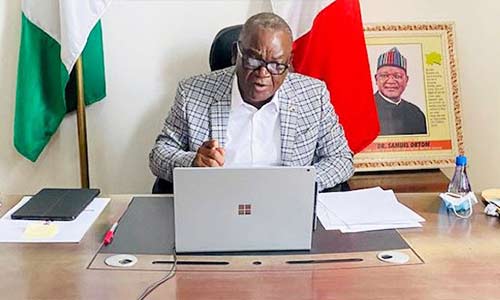
Governor Samuel Ortom of Benue State on Saturday described the report of the federal government in conjunction with the National Assembly plans to bring back National Water Resources Bill as a guise to grab land for Fulani herdsmen.

The governor who said that the bill was rejected in 2018 by the 8th national assembly called on the present lawmakers in both the Senate and House of Representatives to reject the bill in the interest of the country.

In a statement issued and signed by his Chief Press Secretary, Terver Akase, the governor said the bill which seeks to bring all water sources (surface and underground) as well as river banks under the control of the Federal Government through its agencies is anti-federalism and negates the right of Nigerians to their God-given resources.

Ortom said Section 13 of the Bill, states thus: “In implementing the principles under subsection (2) of this section, the institutions established under this Act shall promote integrated water resources management and the coordinated management of land and water resources, surface water and groundwater resources, river basins and adjacent marine and coastal environment and upstream and downstream interests.”

He described as curious, the reintroduction of the National Water Resources Bill, which was rejected in 2018 by the 8th Assembly, stating that those pushing for the passage of the bill at all costs have a surreptitious motive which is not yet clear to other Nigerians.

“He (Ortom) says the bill, in addition to its provisions which are at variance with the Land Use Act, is disguised land-grabbing legislation designed to grant pastoralists unhindered access to river basins, adjacent marine and coastal environments across the country.

“The Governor maintains that the bill is another version of Ruga which objective is to create grazing areas in the 36 states of the federation for herders and their livestock.

“He commends socio-cultural organizations such as Afenifere, Ohaneze and Middle Belt Forum for speaking against the reintroduction of the bill at the National Assembly.

“Governor Ortom urges the federal lawmakers to act as true representatives of the people for the sake of posterity and to remember that the destiny of the country lies in their hands.

“He advises Senators and Members of the House of Representatives to toe the path of honour by rejecting the National Water Resources Bill like the 8th Assembly did,” the statement read in parts.

Human Rights Violation: Laws Are Many But Labourers Are Few — Falana (SAN)

  • ”The harvest is plenty but the labourers are few; there are numerous provisions but where are those to enforce them? – Femi Falana, SAN

A popular human rights lawyer and human rights activist, Mr. Femi Falana, SAN, has compared the state of things in Nigeria with the biblical saying “the harvest is plenty, but the labourers are few”.

Falana said that on the 27th of August, 2020, during a webinar organized by the Legal Torch Initiative (a dedicated and result-driven initiative for law students in Nigeria and Africa) on Human Rights in Nigeria with the topic “Human rights violations in Nigeria; time to end impunity and the way forward”.

The learned silk further explained that  there are numerous human right laws operative in Nigeria however, there are few individuals to drive home the provisions.

Other various human right issues he discussed ranged from incessant arrest, disobedience to court orders, abuse of rights, police harassment and so many others.

The renowned human rights activist and lawyer out of his vast knowledge of the law advised that in cases of harassment by law agencies, action should be brought against the law enforcement agency as well as the officer or officers involved to ensure that justice takes it full course.

The discussion was put together by the Initiative under the leadership of the Founder/President , Oluwatosin Olaniran and Vice President, Peace Adebayo. The discussion was geared towards evaluating and repositioning human rights in Nigeria and its attendants laws and perspectives and also to proffer solutions to the abuse of human rights in Nigeria.

Others at the event include Executive Secretary, NHRC, Femi Aborishade, Tope Akinyode, ACP Ishaku Basiran and Prince Henry Shield.

The virtual discussion was wonderfully moderated by a popular broadcast journalist in Ibadan, Mr. Oluwaseun Akinola.

Mr. Femi Aborishade, a legal practitioner and human rights activist expressed concerns that we live in a society where not everyone’s life matters and added that when there is injustice, resistance is inevitable.

Quoting a reputable African author, he described the present situation as “the African state waging war against the African people” adding that “the African state is arbitrary”.

Femi Aborishade explained that in this part of the world, rights are not given but fought for and won.

He urged Nigerians to take advantage of Section 40 of the 1999 Consitution of the Federal Republic of Nigeria (as amended), campaign and take their stands against medical tourism and campaign for the equality of the power of the rulers and the ruled.

On the other hand, Tony Ojukwu, Esq (Executive Secretary, National Human Rights Commission) stated that human rights issues in Nigeria are always a challenge to discuss.

He further explained that there has been a notable improvement in human rights in Nigeria considering what used to be during the Military Regime and what is happening in the present.

Tony continued that  “the fact that you can approach the law enforcement agencies and report a violation of your right shows there is improvements.”

Being the Secretary to the NHRC in Nigeria, he gave a statistics of the commission’s activities per annum.

He said, in 2019, the commission received about one million two hundred thousand complains and was able to resolve about eight hundred thousand cases.

He concluded further that  some cases are often resolved instantly and the ones that lingers are often the complex ones.

Tope Akinyode, a human rights activist and lawyer expressed concerns that  that Nigeria as a country is doing bad with regards to human rights.

According to him, considering the level at which Human rights issues are handled in other countries particularly developed countries, Nigeria is seriously lagging behind.

Tope added  that the government and the Nigerian elites are the ones trying to supress human rights in Nigeria adding that the government of the day is particularly ‘intolerant’.

He said the government ought to learn from what is happening in Mali and amend it’s ways.

In his own part, Prince Henry Shield discussed the constant and unrepentant action of the government on defiling court orders.

He also emphasized the need for practical actions to be taken much more than the numerous virtual human right conferences.

Henry Shield further made a personal plea to Mr. Aborishade, admonishing him to create a platform where people can be unified and where the voices of the masses can be heard in oneness.

ACP Markus Ishaku Basiran, Head, Complaints Reponse Unit, FHQ, Nigeria Police Force in his own address advised and admonished every Nigerians to be delicate and intelligent when dealing with irrational and armed police officers.

He also made public the NPF complaints lines and the unit’s official email.

When asked about what can be done when Police Harass citizens, the police unit head as this to say “my style of policing is seeing my self as a victim, so when you see yourself as a victim dealing with an officer who is armed and is unwilling to listen, the best thing to do is to play along and follow him to the station so one can easily identify him with the particular location and then make complaints”.

ACP Markus also reiterated the Nigeria Police Force commitment towards safeguarding the rights and interests of every Nigerians at all levels.

In his closing remarks, the Founder, Oluwatosin Olaniran appreciated the distinguished panelists and participants for making it down to the platform. And expressed optimism that every points raised by the panelists will be put into consideration in order to reposition human rights in Nigeria. He further appreciated the entire team for the support and contributions.

It should also be recalled that the initiative in the month of June, 2020 organised the first and largest virtual gathering of Female Law Students in Nigeria tagged “Female Law Students Summit 2020” with the theme “The Phenomenal Woman”.

Section 893 Of The Companies And Allied Matters Act 2020 (CAMA 2020): Much Ado About Nothing?

By Sam Omotoso Esq.

Much ado about nothing is an expression that implies making a fuse about something little. Example will be when a child is crying “Help she is in labour and needs to see a Doctor” because his/her mummy’s Hen at the backyard is about to lay an egg. Since CAMA 2020 became a law, almost everyone is saying something. Is it much ado about nothing? “or much ado about something?”

Introduction

On 7th August, 2020, President Muhammadu Buhari signed the Companies and Allied Matters Bill, which was recently passed by the National Assembly, into law.

Following the passage of the Bill by the senate, and the eventual signing into law by President Buhari, it was not a surprise, that he received commendations from various stakeholders in the business community and otherwise. The new CAMA has been described by the stakeholders as Nigeria’s most significant business legislation in three decades due to its new innovations which includes; remote or virtual general meetings, business rescue provisions for insolvent companies, provision for electronic filing and a lot moreBut you probably know all that already. So let’s skip all that and move to the cloudy controversial area.

Section 839 (1) & (2) CAMA 2020

According to the new law, “Section 839 (1) empowers the Commission to suspend trustees of an association and appoint interim managers to manage the affairs of the association where it reasonably believes that-

(a) There is or has been misconduct, mismanagement in the administration of the association. or

(b) It is necessary or desirable for the purpose of; i. Protecting the property of the association. ii. Securing a proper application for the property of the association towards achieving the objects of the association, the purpose of the association of that property or of the property coming to the association,
iii. Public interest; or (c) the affairs of the association are being run fraudulently.”

Subsection 2 provides as follows:”1. The trustees shall be suspended by an order of Court upon the petition of the Commission or Members consisting of one-fifth of the association, and the petitioners shall present all reasonable evidence or such evidence as requested by the Court in respect of the petition.”

For better understanding, let us also consider subsection 3.

Subsection 3 provides for the hearing of the petition and the appointment of the Interim Managers by the Court with the assistance of the Commission. The Interim managers are designated by the Court or the appointment of any person who cannot do as otherwise instructed without the approval of the Court.

Why the controversies?

  1. Let us start with the part that the new law empowers the Commission to suspend trustees of an association and appoint interim managers to manage the affairs of the association.

First of all; incorporated trustee involves any community of persons bound together by custom, religion, kinship or nationality or anybody or association of person established for any religious, educational, literary, scientific, social, development, cultural, sporting or charitable purpose. Hence any organization that falls under this category can be registered as an incorporated trustee. N/B: Most churches in Nigeria are registered as INCORPORATED TRUSTEE.

Hence, this provision implies that the trustees (owners) of an organization; school, church, Ngo etc. can be suspended and a manager can be appointed to manage the affairs of the organization. For example- The owners of a school can be suspended and a manager can be appointed in their stead. Or the owners of a church (in most cases ministers in the church) can be suspended and a manager can be appointed. The law did not specify the qualification, religion or ethnic background of the manager which is a red flag. Meaning; for a church a Muslim can be appointed, for a Mosque a Christian can be appointed and for a school an illiterate can be appointed as a manager. Hilarious, isn’t it?

  1. The suspension can take place only when according to section 893(1)(a)(b)(c) there is or has been misconduct, mismanagement in the administration of the association, to protect the property of the association, for public interest sake or where it is sufficiently believed that the association is being run fraudulently.

While the major duty of the corporate affairs commission is to supervise, this provision is overreaching. Every organization has a constitution and should be independently left to manage their affairs internally. Moreso, the Act does not define what amounts to misconduct or mismanagement leaving room for deadly assumptions.

Subsection 2 of 839 provides as follows – The trustees shall be suspended by an order of Court upon the petition of the Commission…. the petitioner shall present all reasonable evidence or such evidence as requested by the Court in respect of the petition.

This simply implies that the commission cannot just suspend the trustees of an organization except by the authority of a court order after sufficient evidence in the eyes of the law has been tendered. This is still not a safe haven because “juria novit curia” it is for the court to know the law. Whatever the court considers “sufficient evidence” is sufficient evidence. Not forgetting that the Judge is a human and might be opposed to the beliefs and objects of that organization.

  1. ”Subsection 3 provides for the hearing of the petition and the appointment of the Interim Managers by the Court with the assistance of the Commission. The Interim managers are designated by the Court or the appointment of any person who cannot do as otherwise instructed without the approval of the Court.”

In my opinion, this is the most offensive part of the entire provision. The commission that brings a petition against an organization is still the same entity that “assists” in the appointment of a manager? This is just like reporting a fellow student to a teacher and the teacher gives the student who reports, a cane to flog the reported student. How unfair does that sound? This could imply that the commission still has the power to appoint anyone it deems fit to manage the organization, because the law expressly states with the assistance of the Commission. This further implies that the court will appoint from the recommendation of the commission.

What can be done?

Henry Ford once said “Don’t find the fault, find the remedy”. The provision of section 839 of CAMA 2020 is beyond all doubts faulty and can be considered draconian in a democratic society. However, what is the way out?

  1. The Court: The Socio-Economic Rights Accountability Project (SERAP) described the signing of CAMA 2020 as an illegality and has vowed to challenge it in court. Steps are already being taken in this direction.
  2. Outcry on social media and other media outlets. The social media is a very viable tool. The Christian Association of Nigeria (CAN) as a body, leaders of churches have been crying out on social media, blogs, and exclusive interviews and so on. Christians seem to be more affected by this law due to the fact that churches in Nigeria are registered as Incorporated Trustees. The outcry should not stop until the law is amended.
  3. Ultimately, the first and second remedy will still fall under this remedy. The court can order for an amendment, and the outcry on social media ultimately is for an amendment of the provision of section 893 of CAMA 2020.

Conclusion

Section 10 of the Constitution of the Federal Republic of Nigeria clearly makes Nigeria a secular state. Meaning anyone can adopt any religion he/she pleases. Any law that implies a direct opposition against any religion in Nigeria is definitely inconsistent with the provisions of section 10 of the constitution.

The CAN have asked questions like the three below and no reasonable answers have been given-

a) How can the government sack the trustee of a church which it contributed no dime to establish?
b) How can a secular and political minister be the final authority on the affairs and management of another institution which is not political?
c) For example, how can a non-Christian head of Government Ministry be the one to determine the running of the church?

As a friend will chose to put it, “we are scared of this new law because there is reasonable apprehension that this law tends to vest even more power in the centre”.

A bit of advice: To put it mildly, we might have played a role in the passage of this law. Our attitude to public hearing as Nigerians has always been it is their business. And then we are indolent and something happens we now run to equity whereas equity says it aides the vigilante not the indolent. The message to Nigerians is that whenever there is a public hearing please be interested and make use of it to advocate your concerns.

Sam Omotoso Esq[email protected]

Senior Lawyers, Ali, Ozekhome, Aliu, Call For Caution In Forming Parallel Association To NBA, As Olumide Akpata Assures Members Of A United Bar

By Yejide Gbenga-Ogundar

SOME senior lawyers on Friday asked aggrieved Northern members of the Nigerian Bar Association (NBA) to stop their bid to pull out of the association over allegations that the lawyers’ body is biased.

Some Northern lawyers had on Thursday claimed that they had formed a new Bar association called New Nigerian Bar Association (NNBA). Malam Yusuf Ali (SAN) told Saturday Tribune on Friday that aggrieved members of the NBA should imbibe the spirit of forgiveness and save the association from fragmentation.

“I want to appeal to our colleagues that an eye for an eye will make the whole world blind. The spirit of forgiveness is not just a religious issue, it permeates all human affairs. Two wrongs can never make a right. The solution does not lie in balkanising the NBA.

“The Bar association commands respect because of the strength and size of its membership. Creating a parallel structure is not the solution. I just want to appeal. If we balkanise the NBA, each part becomes weaker. “We should allow reason to prevail. This is a matter that should be sorted out. We should not behave like Nigerian politicians who jump ship at the slightest disagreement to create new platforms. The result is the large number of weak political parties in the country,” the Senior Advocate pleaded.

However, speaking with Saturday Tribune, Abuja-based human rights activist and constitutional lawyer, Mike Ozekhome (SAN), described the move as a wrong venture which is dead on arrival. “It is wrong and dead on arrival. They have no reason to attempt ethnicising and religionising an innocuous dis-invitation of Malam Nasir El-Rufai, governor of Kaduna State. He was invited not as a Muslim or northerner but as a governor.

And NBA NEC bowed to popular pressure about his bad governance style, especially the daily slaughter of Southern Kaduna Christians and disinvited him,” Ozekhome said. Also speaking, Special Counsel to the Oyo State Governor, Chief Bolaji Ayorinde (SAN), described the action of the northern lawyers as one that is not feasible because they do not have the support of other lawyers.

“It is not feasible. I think it is just a few individuals and they do not have the support of the members of the Bar,” he said. Chief Yomi Aliu (SAN) said the dis-invitation of El-Rufai, in the first place, was an indication that the NBA had been taken over by politicians.

He said the withdrawal of the invitation to the governor was an unnecessary political move that has caused dissension among members. Chief Aliu said: “The NBA has been hijacked by political lawyers to the disaffection of real practitioners of law. “Elections from 2016 or so vide e-voting had been manipulated to favour members of this class.

They often engage in class wars as could be seen from the dis-invitation of El-Rufai. “One may ask what crime El-Rufai had committed that Obasanjo or Wike had not committed. Or what do we say of Iraqi warmonger, British ex-prime minister, Tony Blair?

Before the northern lawyers’ resolution, disenfranchised and cheated members of the Bar from the last election that produced Olumide Akpata had perfected schism of NBA and have over 10,000 lawyers across the country on its roll. “In fact, the last election had produced a Rehoboam and as such, a Jeroboam must arise to save the Bar from the biennial rape of majority decisions by the over-rich minority spending billions on professional elections as in the Israel of old.

However, there is one militating issue of law calling for clarification. “Have I signed away my right to freedom of association by choosing law as a profession and as such, bound legs and feet to an association to wit NBA registered as a private organisation with the Corporate Affairs Commission or whether as a Nigerian I can take benefit of the freedom of association enshrined in the constitution? From Fawehinmi case in 1985, we had our freedom to freely associate and disassociate from NBA but over time, the Court of Appeal had held that anybody that read law is in eternal bondage to NBA.

“The NBA has failed woefully, neglected and refused to protect the interest of the majority of its members. It has refused to speak to power but rather it hobnobs with power, albeit in a beggar-like manner. “The ship is filled with filth and any occupant not used to dirt is free to disembark and join or form another organisation that will protect his interest.

“Law Society of Nigeria was incorporated in 1994 as a fallout of the Port Harcourt conference imbroglio of 1992. Today, we have in the offing New Nigerian Bar Association, Nigerian Bar Society and Northern lawyers should stop bid to real NBA —SANs Bar Society of Nigeria. Some members of the Board of Trustees that could save the NBA from imminent schism became partisan by congratulating the declared winner, even when a candidate had protested in the course of the election.

“They thereafter sat and decided the petition of the declared loser, thereby throwing away the avowed principle against bias. “Certainly, this cannot be the Bar of our dream and nobody can put the rope on the neck of any lawyer to join by force. Let there be the choice as obtainable in other civilised climes or accountancy profession that has ICAN and ANAN.”

Meanwhile, the 30th president of the NBA, Olumide Akpata, has called for a united Bar to take the legal profession to a greater height. Akpata, in his inaugural speech on Friday, said the mandate he had from Nigerian lawyers is to work for all members of the Bar, irrespective of who they voted for, saying that there is so much work to be done to revitalise the NBA and make it work for everyone without discrimination. “Ours is a noble profession that prides itself on a high sense of discipline, learning, respect for seniority and character, for which its members are reputed.

“Let us, therefore, join hands to move the NBA forward. I am also not unaware of very recent events and agitations that have tended to divide our Bar along regional and religious lines. “This is rather unfortunate for an egalitarian association like ours. The Bar that I want to lead henceforth is one that is united on all fronts and that recognises that our diversity is perhaps our greatest strength. “I plead with all Nigerian lawyers to bear this philosophy of unity in mind as we commence a new journey together today,” he declared.

According to the new NBA boss, the enormous task cannot be achieved if lawyers continue to fan the embers of division at a time when they desperately need to unite and speak with one firm voice. “We must be kind, magnanimous, respectful, and sensitive in our words and actions, as doing otherwise would be a great disservice to our vision of building a stronger and formidable Bar.

Now is the time to come together because a divided Bar is a defeated Bar,” he said. Akpata said the 2020 NBA election, the voting and result of which were monitored live by a significant proportion of Nigerian lawyers and non-lawyers
alike, was ultimately free and fair and the result was, by all estimation, truly reflective of the will of Nigerian lawyers.

He added: “The above notwithstanding, it would be remiss of me not to acknowledge that there were several glitches in the build up to the election. “As Nigeria’s foremost professional Association, our electoral process ought to be the standard for others to follow and should, to the extent humanly possible, be devoid of the glitches that we witnessed.

“It was with this in mind that I personally wrote two separate letters to the ECNBA Chairman on 20th July 2020 and 29th July 2020 to highlight the issues that threatened the conduct of a credible election and to recommend measures to immediately address those concerns.

“The consensus is that there is need to urgently review the 2020 elections and to institute urgent reforms of our electoral systems.” He constituted a 12 member committee which he pledged to implement whatever recommendations they come up with well ahead of time to ensure that the 2022 election is devoid of those glitches noticed in the 2020 election and to set a standard that others will aspire to.

The forming of the NNBA was announced through a statement on Thursday, signed by the conveners of the new group, Mr Nuhu Ibrahim and Mr Abdulbasit Suleiman. The aggrieved Northern lawyers insisted that their action was based on Section 40 of the 1999 Constitution which provides that “every person shall be entitled to assembly freely and associate with other persons, and in particular he may form or belong to any political party, trade union or any association for the protection of his interests.”

The statement reads: “The New Nigerian Bar Association members, gleaning from the above constitutional provision, feel that their interests are no longer taken into consideration in major decisions of the NBA hence the formation of this association.

“What has been happening recently has exposed the inability of the NBA to manage and contain the heterogeneity of its embers as well as their various interests. Its penal powers have been deployed discriminatively on the basis of ethnicity and regionalism.

“As a body of lawyers who have undergone training towards ensuring the promotion and protection of human rights and liberties, the NBA is supposed to live above sentiments, regionalism and discrimination on any basis and of any kind.

“Therefore, the NBA cannot afford to be seen not to be upholding the rights and freedom of its own members, if at all it should be seen to be practising what it preaches. “As the Hausa saying goes: Idan Kura tana magainin Zhao, ta yi ma kanta (if hyena has cure for diarrhea, let her use it for herself).

“The New Nigerian Bar Association has been watching the activities of the NBA, an association we all looked forward to joining with high hopes before being called to the Nigerian Bar, forcing idiosyncrasies of a few on the majority of its members, especially in recent times. “No wonder NBA NEC, which is the highest decision-making organ of the association failed to uphold the fundamental principles of fair hearing which, in itself, is the fundamental aspect of the rule of law on the allegations against the Executive Governor of Kaduna State, Malam Nasir Ahmad El-Rufai, as contained in a petition by Chidi Odinkalu Esq., a longtime foe of His Excellency and a lawyer of the eastern extraction.

“But the NBA failed to extend the same treatment to Southern invitees who were also petitioned and are also alleged to have committed similar or more human rights abuses than those alleged against Malam El-Rufai. “It is pertinent to state that the NBA membership as currently constituted can be termed ‘Mandatory Membership Association’ which, for all intents and purposes, is against the provisions of the constitution since the ground norm recognises freedom of membership of every association.

“As Section 40 of the Constitution of Federal Republic of Nigeria1999 provides as follows: ‘Every person shall be entitled to assembly freely and associate with other persons, and in particular he may form or belong to any political party, trade union or any Association for the protection of his interests.

“The New Nigerian Bar Association members, gleaning from the above Constitutional provision feel that their interests are no longer taken into consideration in major decisions of the NBA hence the formation of this Association. “A cursory chronicle of the membership composition of major organs of the NBA would reveal lopsided representation despite having large numbers of lawyers from all parts of the country and especially Northern Nigeria who have diligently paid their Bar practising fees and have distinguished themselves in the legal profession.

“The New Nigerian Bar Association feels that lawyers, as professionals like doctors and accountants, should have more than one association regulated by the General Council of the Bar. “The Legal Practitioners Act (LPA), which regulates the legal profession in Nigeria, did not establish the NBA. In fact, the NBA was established as an Incorporated Trustee by the Corporate Affairs Commission (CAC).

“It is no longer gainsaying that a group of lawyers can freely join any lawful association for the protection of their rights and interests as lawyers and citizens of Nigeria pursuant to the above-cited Section 40 of the constitution. “Even Section 1 of the Legal Practitioners Act, which seemingly conscripts all Lawyers in Nigeria to Mandatory Membership of NBA, is, for all intents and purposes, at loggerheads with Section 40 of the constitution which makes the former null and void and of no effect whatsoever.

“The constitution remains the supreme law of the land to which all other laws, including the LPA are subject. “Section 1(3) of the constitution states that: ‘If any other law is inconsistent with the provision of this constitution, this constitution shall prevail, and that other law shall, to the extent of the inconsistency, be void’.

“On the basis of the foregoing, some lawyers of like mind and duly called to the Nigerian Bar have decided to form the New Nigerian Bar Association with the aim of protecting their interests as encapsulated under Section 40 of the constitution.

“Members of this Association have commenced consultations with very Senior Lawyers of Northern Nigeria extraction and those practising therein with the view to constituting the Trustees and for purposes of fixing a date for the formal inauguration of the Association. “The inaugural date of the association, being apolitical and geared at taking and protecting the interests of lawyers of like minds, shall be communicated. Please watch out.”

Nigeriantribune

What Is Wrong With Section 839 Of CAMA 2020 – The Power To Suspend The Board Of Trustees Of An Association?

By Prince Uzeme Olomu-Agbodo

The recently passed Companies and Allied Matters Act (CAMA) 2020 has been generally hailed as a positive move in the right direction. That is, until someone pointed out the new powers granted to the Registrar General of the Corporate Affairs Commission (CAC) via Section 839 of the Act. This article attempts to analyse the “offending” Section 839 to bring out its defects, if any. This will be done seriatim.

The section grants the CAC the power to suspend the trustees of an association and appoint an interim manager(s) to manage the affairs of that association upon a reasonable belief of the occurrence of any of 6 conditions. The conditions are misconduct/mismanagement, need to protect the association’s property, need to redirect the association’s property towards its objects, public interest or fraudulent running of the association’s affairs.

But is this power absolute? Absolutely not!

The section goes on to state the authorized body that can actually suspend the trustees. That body is the Court. What this means is that the CAC can only petition the Court for the suspension of the trustees but do not possess the power to suo motu suspend the trustees, contrary to what sub-section (1) suggests.

The second point to note is that it is not only the CAC that can make the petition. The petition can also be made by one-fifth (that is 20 percent) of the members of the association.

Another point of note is the fact that the petition cannot be bare. The petition, whether by the CAC or the stated members, must be supported by reasonable evidence, or such evidence requested by the Court to be presented.

And the CAC cannot bring any suspension petition to the Court unless the Minister’s approval is first sought and obtained.

The last point to bring out is the fact that the section clearly provides that suspension of trustees shall not exceed 12 months.

So let us take a look at the checks and balances contained in the law.

  1. The CAC cannot unilaterally suspend the Board of Trustees of any association.
  2. The CAC must first gather reasonable evidence before commencing the process that should culminate in the suspension of the offending trustees.
  3. Such reasonable evidence must be evidence that can stand up to scrutiny in court.
  4. The CAC must secure the approval of their supervising Minister before applying to Court. It is implied here that the reasonable evidence gathered must first be presented to the Minister for his approval.
  5. After obtaining the Minister’s approval, there is one more hurdle for the Commission: File a Petition for Suspension of Board of Trustees to the Court.
  6. The gathered evidence will then go through a second scrutiny by the Court.
  7. It is only when the Court is satisfied that the Order to suspend the trustees would be made.
  8. The Court’s power to suspend the Board of Trustees is limited to 12 months only. After 12 months, there would be a reversion.
  9. As a side note, the power to petition the Court for this Order can also be exercised by 20 percent of the members.

At this point, the question needs to be asked. What is wrong with Section 839? It is this writer’s opinion that the section is very much in order. The fear that the Commission has been given wide ranging autocratic powers to take over or annex NGOs, religious bodies and other associations is, to my mind, unfounded. There are enough checks and balances contained in the said Section to prevent any autocratic or high handed execution.

This writer is also aware that there are far onerous laws guiding associations and incorporated trustees in other countries, especially in the western world. A lot of the bodies complaining about the Section 839 obey far worse governing laws in UK, USA and other countries. So it smacks of double standards to obey the same laws in other countries but the same organisation then turns around to rail against the laws of their own land.

For example, in the United Kingdom, the right to remove a trustee of a charitable organisation is contained in the Companies Act 2006 and in the Trustee Act 1925.

There are four ways in which a trustee can be removed from office:

[a] by express provision in the trust deed;

[b] under section 36 of the Trustee Act 1925;

[c] under section 41 of the Trustee Act 1925; or

[d] under the court’s inherent jurisdiction.

The court in UK enjoys an inherent jurisdiction to force a trustee out of office. Guidance on this ability was offered by the Privy Council in Letterstedt v Broers

Furthermore, the Charity Commission for England and Wales in its published Guidance titled, “The essential trustee: what you need to know, what you need to do” states in paragraph 3.2 thus: “CIOs must include provisions in their constitutions for appointment and removal of trustees. The Commission can use its powers to appoint or remove trustees if the charity’s trustees (or members, if applicable) are unable to do so. CIO means Charitable Incorporated Organisation which is the same as Incorporated Trustees in Nigeria.

The United States also has similar provisions regarding the appointment and removal of charitable trustees. And it is a constant across all these nations that trustees can be removed for breach of trust, conflicts of interest, costs, and the need to tie up loose ends, etcetera.

The argument has been raised about whether the Nigeria section 839 will be administered neutrally and impartially. The first response is that that same fear can be raised against any laws anywhere in this world. That fear cannot prevent the enactment of laws reasonably designed for a civilized society. Else, as Thomas Hobbes stated, our lives would be nasty, brutish and short.

The second response would be what has been stated severally in this piece. The section contains enough balances to prevent the actualization of such fears. For the exercise of the Commission’s power of suspension of the Board of Trustees, three levels of approval must first fall in line – the Commission itself, the Minister and the Court.

In summary therefore, we should all applaud the inclusion of Section 839 in CAMA. It would earnestly grow the culture of proper corporate governance, engender financial transparency, record keeping and the reduction of profligacy among our non-governmental organisations, religious bodies and other incorporated trustees.

Prince Uzeme Olomu-Agbodo, Legal Practitioner

TIPS