Home Blog Page 1346

“CAMA, Mailafia, Governing Authorities and Perception Management”, By Martins Oloja

Inside Stuff With MARTINS OLOJA
‘The Guardian’, August 30, 2020, Back Page

This is yet another time to advise the authorities in Abuja and other state capitals on the expediency of taking perception management as a serious national security issue – before it is too late. I have written on this matter several times here but then we will continue to pray about this until something happens. I believe it is a weightier matter of public policy that Abuja should not ignore at the moment.

We do not need to speak in tongues about the fact that there is growing but unmanaged perception that Christians are being officially persecuted in Nigeria. This is dangerous and should be dealt with immediately. We have a social responsibility as gatekeepers to ensure that the country remains peaceful and securely so because we can only talk of economy, federalism and even elections when we are peaceful. We are aware that we need to get people to believe in Nigeria, a multi-religious state, as an indivisible entity according to our constitution.

But suddenly, for some curious reasons, the country is being seen as divided between Christians and Muslims. And so it is unfortunate today that when even public service appointments are announced, data analysts begin to count how many Christians and Muslims are there. Most times, we run away with the old western media fallacy that the fight for the soul of Nigeria is between the Muslim-dominated North and Christian-dominated South.

The annulled June 1993 presidential election outcome had threatened to wipe out this perception with a Muslim-Muslim ticket that no Christian protested at the time. But the annulment of the result by the military government then has since destroyed the foundation of coherence, tolerance and basis for unity in the country.

Most people believe that the beauty of Abiola-Kingibe 1993 presidential ticket would never happen again, no thanks to mismanagement of politics in Africa’s richest and most populous nation. That is why the way perception is fast growing again that Christians are generally not safe in the country is unfortunate and it must be dealt with now. This is not a time to be pinpointing who is who in government. This is not a time to be listing who occupies where in the ministries, departments and agencies of government. It is just a time to advise the duty bearers in the country to get experts in risk analysis who can speak to the power of negative perception and the need to recognise understanding of its danger at this time. Here is the thing, a government may be working on a particular public policy in public interest but the people may see the policy as evil unless it demonstrates and explains to them clearly that it is in public interest. Where good opinion polls are conducted, results of public perception will show how the people view certain policies.

That is why the federal authorities should get experts to do ‘risk analysis’ and ‘perception index’ on the way various publics have been affected by three current events as amplified by the media, which didn’t create them.

The issues: Dr Obadiah Mailafia, former deputy governor of Central Bank of Nigeria (CBN), a Christian from Southern Kaduna (now in the eye of the storm) spoke to an FM station on an issue State Security operatives considered hateful shortly after a retouched National Broadcasting Code was released. The DSS had twice interrogated him on the alleged hate speech. The FM station has been fined N5 million for the Mailafia interview. The latest was that the police authorities too had invited Mailafia for the same ‘offence’ and he had to rush to court to enforce his right as a citizen. The immediate consequence of the incessant interrogations of this Oxford-trained technocrat is that he just resigned from the National Institute for Policy and Strategic Studies (NIPSS), Kuru, Plateau State where he has been a resource person to the policy research centre. In the absence of open information to others in this complex federation of complicated diversity, some perception is growing that Dr. Mailafia is facing this alleged harassment because he is a Christian from Southern Kaduna whose people are perceived too to be facing ‘state terror’. Who’s analysing this risk to the authorities in Abuja and Kaduna? Do the authorities know too that where rebellion is being cooked in the minds, there is another subset that nurtures the perception that most of the intelligence and security units interrogating the Mailafias are headed by Muslims? That is another element in the complex perception mix. That too should not be ignored.

‘The CAMA Uproar’:
It is also relevant to alert the authorities that the brouhaha about the implications of the new Company and Allied Matters Act (CAMA) has been largely worsened by Christian bodies’ perception that they are being targeted for persecution. It may not yet be reality but I hope the authorities have realised that as Pastor Femi Ayoyebi, a Senior Advocate of Nigeria (SAN) and a senior pastor of RCCG has noted, most of the angry commentators on the voluminous CAMA might not have read all the provisions. But that is what perception management should target. This CAMA controversy cropped up like a sore thumb at a time another controversy about the National Population Commission (NPC) was brewing so dastardly.

There was a credible report early last week that Ali Silas Agara, a Christian nominated to take over as Chairman of National Population Commission, (NPC) had been replaced with a Muslim, Hon Kwarra Nasiru Isa.

President Muhammadu Buhari had in two separate letters dated March 20 and August 12, 2020, nominated Agara, a former deputy governor of Nasarawa State to head the NPC.
The letter by the President also contained names of individuals, who would serve as members of the Commission for five years as stipulated by an extant law. Others recommended alongside Agara are Muhammed Chuso A. Dottijo, member from Sokoto; Alhaji Razaq Gidado, member from Kwara; Ibrahim Mohammed, member from Bauchi; Joseph Kwai Shazin, member from FCT; Engineer Bala Almu Banya, member from Katsina; and Mrs Bimbola Salu-Hundeyin, member from Lagos.
“The positions to which appointments are to be made include the office of the Chairman from Nassarawa State, four new commissioners representing Sokoto, Kwara, Bauchi and the FCT, as well as the renewal of the appointment of others,” one of the letters by the President reads.
But according to another letter dated August 21, Isa also from Nasarawa State, was named as NPC Chairman while Agara was reportedly downgraded to a member of the Commission.
An online newspaper had earlier scooped how some officials within the Nigerian Government were not comfortable with Agara’s nomination being a Christian.
A source had confirmed to the digital newspaper that Abdullahi Sule, the Governor of Nasarawa state, a Muslim was among top Northern Muslims, who worked against a Christian being appointed to head the Commission. The governor has since denied his involvement but the report heightens the growing contention between perception and reality, in this regard. As I was saying, this is not a time to be using data about who’s is where as that can put another pin in the balloon of this complex and fragile nation.
The specific objective here is to advise the authorities not to allow their actions to promote what we call the fault lines – religion and ethnicity in Nigeria, our Nigeria.

But for poor public relations management strategy here, the CAMA provisions wouldn’t have been so secret. The amendment bill was in the National Assembly and it went through all the stages. Dr. Chidi Odinkalu, a vigilant lawyer, drew attention to it earlier. The federal legislature is made up of representatives from 360 federal constituencies and 109 senatorial districts across our 774 local government councils. Members are Muslims and Christians. What I would like to ask is why our representatives did not envisage the kind of reactions we are getting now from the Christian community. Reading through the entire CAMA provisions including Sections 823-835, which provide for the registration of voluntary organisations such as religious, educational, customary, social, cultural, sporting, charitable, and so on, by their trustees, I think what we need at this moment is management of perception.

Besides, our representatives, our local Nigerian Bar Associations, local Legal Aid Council offices, law enforcement agencies, NGOs, our dormant local and national orientation agencies and judicial desks of the news media should be involved in civic education on the meaning and consequences of accepting to be Trustees of some of the associations, or non-profits we incorporate and even faith-based ones. There is a general misconception about regulation here. There is also a great deal of misunderstanding about the role, function, responsibility of Trustees we always bandy. Pastor Atoyebi was quite sincere and resourceful about this when he touched on the implications, in this regard.
In this country, you will have a big hit if you take people in authorities to the cleaners whenever they talk about regulation and responsibilities of ‘Trustees of Organisations’.

‘Understanding ‘Governing Authorities’:

Le’s restate here that the Nigerian Bar Association (NBA) and lawyers in the management of our faith-based organisations, especially churches and mosques need to know that we cannot continue to understand the rule of law only in the context of how our leaders and public officials only obey the laws. So, lawyers in our families, in our organisations should begin to educate all of us about the implications of accepting nominations to be ‘Trustees’ of any Foundation, Societies, Organisations, etc. We need civic education on “Corporate Governance and Legal Aspect of Organisation or Ministry” we run at this moment within this CAMA context.

We need to know key corporate governance issues on registration of ministry/organization and board of trustees. For faith-based organisations, we need to know that the law that guides an NGO is the same that guides the church or mosque. The same law that registers a church, for instance is the same that registers an organisation that can also become a terrorist organization regardless of who is in power. We need to understand that once you register your coming together, there are rules you must abide by. Once you register your church, or mosque or organization or Foundation or society, you make yourself susceptible to the rule of law.

So, being a trustee is not a title, it is a sensitive and even dangerous responsibility. You will be made to hold in trust ‘assets and liabilities’ of that company or organization or church or mosque. There are grave implications embedded in CAMA as in most societies. So, even as we criticise the new provisions in CAMA, we need to seek legal education on our rights and fiduciary responsibilities as Trustees of not-for-profit organisations. Ignorance of this, in the end, will not be an excuse. We should begin to teach our people basic things about corporate governance. It doesn’t matter whether you are a small or mega organisation. Let’s begin to understand the simple side of how the law should rule us and our organisations, too.

theconclaveng

ONE-PERSON COMPANY IN THE NEW CAMA: A BOW TO AN EXISTING PRACTICE

by Stephen Azubuike

By the provisions of section 18(2) of the Company and Allied Matters Act 2020 (“CAMA 2020” or “the New CAMA”), the Nigerian Legislature merely bowed to the already existing practice of one-person company ownership in the country by giving it a statutory approval.

Concept of Company in History

Historically, the idea of company incorporation is a product of statutory invention. Before that invention, individuals carried on their businesses in the usual manner. They did not only own properties in their personal capacities, they were also held personally liable for any contractual obligation and other legal obligations.

As commerce grew, people learnt to come together in groups to promote and own businesses and to also venture into the deep for opportunities. They pool resources together and map out what their stakes in the business would be. This idea and the growing need to absolve themselves from personal legal liabilities gave rise to what is known today as a company. The resources pooled together and the individual stakes translated into shares. The promoters themselves became shareholders and directors of the company.

In order to properly address the development, parliament decided in its wisdom to create an artificial being in the form of a company. Thus, upon incorporating a company, the company becomes an artificial person recognized by law, and attains what is known as ‘legal personality’. It can own properties in its name, other than in the names of the individual promoters and shareholders. It can sue and be sued in its name. It can practically live forever (perpetual succession) if it pleases (since ownership can change over time) and subject to the power of the promoters and the State to take away its life by liquidation and winding up procedures as we know it today. The company can be a member of other companies in its name and hold shares. To a large extent, the company enjoys virtually everything a person can possibly enjoy in relation to corporate and business matters.

Emergence of Bubble Companies

After the creation of this legal being in form of a company, parliament later came to witness a highly unanticipated development. There was an increase in the level of fraudulent activities perpetrated by individuals in the name of companies. Individual merchants started registering bubble companies, hiding under the veil of incorporation to defraud and harm unsuspecting citizens economically. The courts and the parliament responded by making provisions for the lifting of the veil of incorporation to hold those hiding behind the veil personally responsible for the conducts and acts attributed to the company.

It was in keeping with the idea of preventing bubble companies from rising and also to focus on the original process of at least two people coming together to form a business that company law mandated that a company can only be formed by two or more people. In other words, if an individual is comfortable doing business alone and owning all the stakes/shares, he can proceed in his individual capacity without the need for incorporation.

But this idea was rendered cosmetic when it became possible for one person to own a business and merely invite another person just to meet the statutory requirement of two. He or she takes 99.9% of the shares and gives the other “figure head” 0.1%. The Figure Head has no idea about the business and contributes nothing to the running of it. In some cases, the individual who ordinarily owns the business is left inviting some other person who might even be unsuitable just to comply with the compulsory requirement of two. Interestingly, it is worthy of note that some of these one-man (or one-woman) companies have been thriving for years.

The Reality: One-person Company

Therefore, becoming aware of the realities, the Nigerian Legislature moved to face it by making it statutorily possible for one person to incorporate and own private companies in Nigeria through the introduction made to the New CAMA. While section 18(1) retained the requirement of two or more persons, section 18(2) expressly provides that one person can form a private company. Private limited liability companies are small companies having a membership of not above 50. Private companies however have limitations as it is not every business in every sector that can be carried on by a private company, let alone private company formed and owned by one person. For a one-person company specifically, getting a banking and insurance license for example, may be mission impossible in Nigeria.

The natural consequences of the development in the New CAMA is that many people who had earlier been unable to navigate the former statutory requirement of two or more people coming together to register a company will now step forward and incorporate since the “burden” has been lifted.

Conclusion

The move by the Nigerian Legislature and the support of the President with his assent is undoubtedly part of the idea of promoting ease of doing business in Nigeria. With this ease also comes the ease of creating more bubble companies. Perhaps, in recognizing this, section 18(3) provides that no company should be formed for any unlawful purpose. It is however expected that stricter measures will be deployed in bursting bubbles with the sledge hammer of the law. Those who have the authority to handle the hammer must be firm and proactive. Members of the general public are advised to conduct due diligence and seek adequate legal protection in dealing with companies, especially now.

With this legal development, any person looking to incorporate a private company can do so without any hindrance and at Infusion Lawyers, we are ready to provide needed guidance throughout the process.

Credits: This post was originally published on Stephenlegal.ng by Stephen Azubike, legal practitioner, consultant and social entrepreneur.

EXCLUSIVE: Nigerian Senate To Pass Social Media Bill Despite Rejection By Nigerians

The Protection from Internet Falsehood and Manipulation and Other Related Matters Bill 2019 popularly known as the social media bill, is one of the bills before the Nigerian Senate led by Ahmed Lawan.

SaharaReporters gathered that the Nigerian Senate has concluded a “signed, sealed and delivered” plot to pass the social media bill once the it resumes plenary on September 15. 

According to a top source in the Senate, who pleaded anonymity, the upper legislative arm is determined to pass the heinous bill despite the immense rejection by majority of Nigerians. 

“They have already concluded plans to pass the bill. They are going to hide behind the COVID-19 issue and other national issues and pass the bill without delay. Their plan is to do it once they resume. It is already signed,” the source told SaharaReporters.

Recall that SaharaReporters reported that the social media bill was rejected by majority of Nigerians during the public hearing of the bill in March. 

It will also be recalled that the bill had been rumored to be an “executive bill”, thus making its passage non-negotiable by the lawmakers, who have shown that they were willing to support anything from the presidency.

When asked whether the Senate’s plan had always been to pass the bill without considering public opinion, the source told SaharaReporters, “I am not sure about that, but they believe that Nigerians will accept it and move on the same way they have accepted the Broadcasting Code.”

The reviewed Broadcasting Code was recently passed into law for media organizations in Nigeria. 

The reviewed code increased the fine for hate speech from N500,000 to N1m among other things and has already been used in sanctioning Nigeria Info, a radio station, following a recent interview in which a guest criticized the government on one of its popular programmes. 

According to its objectives, the social media bill will enable the Nigeria Police Force to “detect, control and safeguard against coordinated inauthentic behaviour and other misuses of online accounts”.

The bill proposes up to N5m or three years imprisonment or both for defaulters.

All attempts to reach Senator Muhammed Sani Musa; sponsor of the social media bill, and Senator Opeyemi Bamidele; Chairman, Senate Committee on Judiciary, Human Rights and Legal Matters, on the issue proved abortive as both were unreachable on their official telephone lines.

saharareporters

Refineries idle for 12 months, incur N142bn expenses

’Femi Asu

 The nation’s refineries did not refine a barrel of crude oil in the 12 months to June this year but incurred a combined operating expense of N142.07bn, the latest data from the Nigerian National Petroleum Corporation have shown.

The NNPC attributed the declining operational performance of the refineries to ongoing revamp aimed at further enhancing their capacity utilisation once completed.

The refineries, which are located in Port Harcourt, Kaduna and Warri, have a combined installed capacity of 445,000 barrels per day but have continued to operate far below the installed capacity.

The country relies largely on importation of refined petroleum products as its refineries have remained in a state of disrepair for many years despite several reported repairs.

“No white product (Premium Motor Spirit and Dual Purpose Kerosene) was produced in June 2020 and apparently for the past 12 consecutive months. The lack of production is due to ongoing rehabilitation works at the refineries,” the NNPC said in its monthly report for June.

The corporation said the combined value of output by the refineries (at import parity price) for the month of June amounted to about N40m.

“No associated crude plus freight cost for the three refineries since there was no production but operational expenses amounted to N10.27bn. This resulted in an operating deficit of N10.23bn by the refineries,” it added.

The Kaduna refinery incurred an operating expense of N60.20bn from July 2019 to June 2020, according to the NNPC data.

Port Harcourt refinery’s operating expense in the period under review was N43.37bn while that of Port Harcourt refinery was N38.49bn.

The Chairman, SPE Nigeria Council, Joseph Nwakwue, said the refineries should have been sold some years ago to private investors.

He said, “Our position is that the refineries are key national assets and it is in our interest that they are optimally run from a commercial perspective. And we think that the private sector will do a better job of running it.

“I think it is important that we recognise that it serves no purpose that we have refineries that are sitting idle. They don’t just sit idle; we spend money to keep them idle. That is a huge drain. So, it is not in our national interest to continue to pump money into things that are not adding value.

“From that perspective, it is only reasonable that one would say we should have sold these things a long time ago to those who can run them.

“Maybe if we did, we won’t be importing the quantity of fuel we are importing today. So, I think that we should have sold them 10 years ago.”

The Group Managing Director, NNPC, Mallam Mele Kyari, said on July 30 that the refineries were all idle, adding that the country was importing practically every petroleum product being consumed in the country.

In June, 767.42 million litres of PMS were supplied into the country through the Direct Sale Direct Purchase arrangement as against the 495.10 million litres of PMS supplied in May.

Under the DSDP scheme, selected overseas refiners, trading companies and indigenous companies are allocated crude supplies in exchange for the delivery of an equal value of petrol and other refined products to the NNPC.

In the first term of the President, Major General Muhammadu Buhari (retd), the NNPC had planned to rehabilitate the refineries to attain a minimum of 90 per cent capacity utilisation.

The plan was to use third-party financiers and the original refinery builders to provide the requisite funding and technical support.

However, after over one and a half years, negotiations with financiers were stalled in December 2018 due to varying positions on key commercial terms.

Kyari, who took over the NNPC leadership in July 2019, had reiterated his plan to revamp the refineries and end fuel importation by 2023.

punchng.

Chadwick Boseman died from colon cancer and was just 43. What’s the risk for young people?

Actor Chadwick Boseman, 43, died Friday from colon cancer – a leading cause of cancer-related deaths in the U.S. and one that is increasingly affecting young Americans.

While deaths from colon and rectal cancers have been declining for several decades due to improved screening and treatment measures, deaths among young people have been increasing slightly in recent years, according to researchers.

https://www.usatoday.com/videos/entertainment/2020/08/29/chadwick-boseman-black-panther-star-dies-43/5664889002/

“We are seeing more people in their 30s and 40s who are developing colorectal cancers – often because they’re having symptoms that aren’t thought to be cancers,” said Dr. Nilofer Azad, an associate professor of oncology at Johns Hopkins Medicine.

About 30% of colorectal cancer diagnosed today is in people under the age of 55, she said. Symptoms of colorectal cancer include a change in bowel movements, rectal bleeding, blood in stool, abdominal pain and more.

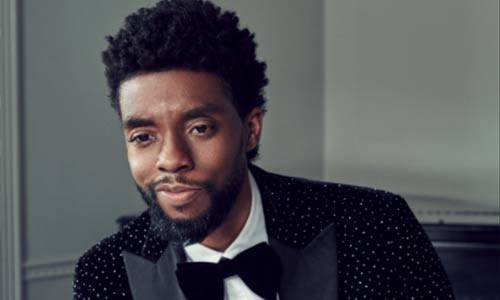
Actor Chadwick Boseman poses for a portrait in New York to promote his film, "Black Panther," on Feb. 14, 2018.

Boseman, who made a global impact bringing “Black Panther” to life in the Marvel Cinematic Universe along with playing Black icons on the silver screen, was diagnosed with stage III colon cancer in 2016 and battled with it as it progressed to stage IV, his family said in a statement Friday.

Colorectal cancer – which includes colon and rectal cancer – is expected to cause more than 50,000 deaths in 2020 – including 3,640 deaths in people younger than 50 years.https://db5f80b171e5298a14a361d354323257.safeframe.googlesyndication.com/safeframe/1-0-37/html/container.html

The lifetime risk of developing colorectal cancer is about 1 in 23 for men and 1 in 25 for women, the American Cancer Society says. This year, more than 100,000 people will be diagnosed with colon cancer and more than 40,000 with rectal cancer, including 18,000 colorectal cancer cases in people younger than 50, the group estimates.

On Chadwick Boseman:His death gives me the courage to keep going

More young people are being affected

For younger people, those numbers are rising. Deaths from colorectal cancer among people younger than age 55 have increased 1% per year from 2008 and 2017, according to the American Cancer Society.

In 2017, about 130 people in their 20s died from colorectal cancer, 720 in their 30s and 2,700 in their 40s, with older age groups accounting for higher and higher death tolls, according to the Centers for Disease Control and Prevention.Get the Coronavirus Watch newsletter in your inbox.

Stay safe and informed with updates on the spread of the coronavirusDelivery: VariesYour Email

During the late 1970s and early 1980s, colon cancer diagnoses were declining in age groups younger than age 50 years and increasing in those age 50 years and older, according to a 2017 study in the Journal of the National Cancer Institute.

But that trend flipped in the mid-1980s, when rates declined in adults age 55 years and older, while increasing by 2.4% per year in adults age 20-29 years and by 1% per year in adults age 30-39 years, the study found.

Rectal cancer rates saw an even more extreme version of this trend.

“If you were born in 1990 or afterward, you were two times more likely to get colon cancer or four times more likely to get rectal cancer than those born before 1990,” said Michael Sapienza, CEO of the Colorectal Cancer Alliance. “It is, unfortunately, becoming a bigger and bigger epidemic.”

Sapienza, whose mother died of colon cancer at age 56, said oncologists are seeing more late-stage diagnoses of colorectal cancers, which are often mistaken for other illnesses.

“What’s happening is, young people are going into the doctor having symptoms, and it’s usually taking them to see three or four doctors until they’re getting a diagnosis,” he said. “Especially now, in the telemedicine world, people are going to be afraid to recommend a colonoscopy. If you’re having rectal bleeding, night sweats, cramping – especially dark blood – you really to emphasize that with your physician.”

Chadwick Boseman’s best quotes:On ‘Black Panther,’ James Brown and more

Baltimore Orioles outfielder Trey Mancini was diagnosed in March, days before his 28th birthday. He was at spring training when a pair of blood tests revealed low iron levels. What he initially thought may have been a stomach ulcer or celiac disease turned out to be stage III colon cancer. Manci had a malignant tumor removed a week later and began chemotherapy in April.

“If you’re young like me, you don’t think you’re getting colon cancer,” Manci told USA TODAY. His father was diagnosed with stage II cancer at 58. “I was shocked.”

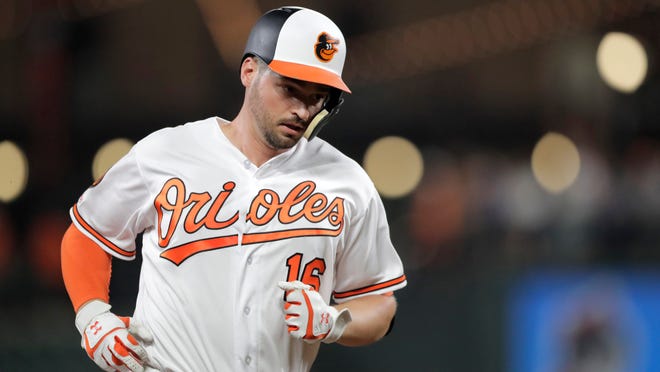
Baltimore Orioles' Trey Mancini runs the bases after hitting a solo home run on Aug. 1, 2019.

Oncologists don’t yet know what’s causing the rising number of cases among young people, but there are several theories.

“We really can’t hone in on one cause,” Azad said. “There could be diet changes, obesity, increasing prevalence of diabetes. All of these things are also associated with colorectal cancer.”

High consumption of processed meat and alcohol, low levels of physical activity and fiber consumption, and cigarette smoking are also known risk factors, researchers said.

“It is not surprising that the timing of the obesity epidemic parallels the rise in colorectal cancer because many behaviors thought to drive weight gain, such as unhealthy dietary patterns and sedentary lifestyles, independently increase colorectal cancer risk,” researchers said in the 2017 study.

Black Americans disproportionately affected

Overall, colorectal cancer disproportionately affects Black Americans. The cancer incidence is about 20% higher in Black men and women compared to their Caucasian counterparts, and Black patients are about 40% more likely to die of colorectal cancer, said Rebecca Siegel, a cancer epidemiologist and scientific director of surveillance research at the American Cancer Society.

“The mortality difference is what’s striking,” Siegel said. “It’s also the elephant in the room of systemic racism that has been going on for decades and affects everyone in the Black community, regardless of their wealth status.”

Among young people, the difference in the rate of cases between Black and white Americans narrows, Siegel said. White Americans under 50 account for a large portion of the increase in cases in the younger age group, she said.

Colon cancer:Baltimore Orioles’ Trey Mancini will likely miss 2020 season due to chemotherapy treatment

When should people get a colonoscopy? 

To combat the rising prevalence of colorectal cancer among young people, researchers suggest educating clinicians and the public about symptoms and screenings, and expanding health care access to young people, who are less likely to have access to a primary care physician and more likely to declare bankruptcy from their cancer treatments, Siegel said.

Researchers also suggest developing new strategies to curb the obesity epidemic and shift Americans toward healthier eating and more active lifestyles.

It’s also important to end the stigma around colorectal cancer, experts say.

“A very common symptom is bleeding in the stool, and that’s embarrassing. Young people are not accustomed to talking about these symptoms with their friends,” Siegel said.

Reducing the stigma and increasing awareness both of the symptoms and the increasing risk in young people directly translates to saving lives, she said.

“It might be tough for some people to talk about their colon and bowel movements, but it’s the third most common cancer and we need to talk about it more,” Manci said.

In 2018, the American Cancer Society updated its guidelines to recommend that people at average risk for colorectal cancer start regular screening at age 45, or at 40 for people with a personal or family history of colorectal cancer, a history of inflammatory bowel disease and more.

“Everybody’s always told that you don’t need colonoscopies until you’re 50 years old, and that’s clearly not the case,” Manci said. “In hindsight, I wish I would have gotten screened at 25 or so.”

More groups are planning to revisit their guidelines in the next year or two, Azad said.

“I wouldn’t be surprised if we started to see screenings moving earlier across other guideline committees as well,” Azad said. “This is a very treatable cancer, and it’s a fully preventable cancer if people get their screening.”

usatoday

Cabal Has Hijacked NBA, Balkanisation Is Imminent — Falana, SAN

By Lanre Adewole

In another lengthy analysis of the crisis rocking the association, Falana alleged that a cabal had seized the body, dictating its affairs as desired, including at branch level.

He said, “Regrettably, the house has been turned upside down, once again, as its foundation is under serious attack from a cabal of bar leaders who have institutionalised the biennial imposition of national officers through e-fraud elections. “Even branch elections of the NBA are also manipulated with impunity by the same reactionary forces.

Hence, many branches of the NBA are managed, from time to time, by caretaker committees imposed on them by national officers whose own mandate is questionable. “If the NBA does not arrest the ugly development in a decisive manner, as soon as possible, there is going to be an implosion with dire consequences.

Therefore, the lawyers who are desirous to have a united bar should be prepared to ensure that the elections of the officers of the NBA are conducted in a credible and transparent manner while the affairs of the body are managed in a democratic manner.

“Otherwise, the Balkanisation of the NBA is a matter of time. After all, it has just been confirmed that only 18,000 out of the over 200,000 lawyers on the role of legal practitioners in Nigeria participated in the just concluded controversial 2020 NBA election.”

Falana also commented on the withdrawal of the invitation to the Kaduna State governor to speak at the NBA conference, saying the governor was rightly disinvited by the NBA but “the leaders embarrassed Nigerian lawyers when they allowed other fellow abusers of the rule of law and violators of human rights to address the 60th-anniversary conference of the NBA.”

“On realising the discriminatory treatment meted out to el Rufai, the immediate past president of NBA, Mr Paul Usoro SAN was full of apologies. In principle, the NBA had disinvited Professor Maurice Iwu of the Independent National Electoral Commission (INEC) in 2008.

So, a body may be compelled to disinvite its guest, but the grounds must be solid and not self-serving. “By the way, the NBA could not have disinvited Governor Nyesom Wike, having regards to the investment of his government in the NBA. That was why he was made a life bencher by his friends in the echelon of the NBA. So, the NBA cannot afford to embarrass its own life bencher.

“The NBA is the richest professional body in Nigeria. Yet, it goes around cap in hand, begging governors to sponsor its conferences and other programmes. In the process, the NBA has compromised and traded off its autonomy. “Unfortunately, the New Nigerian Bar Association members are breaking away on a wrong footing. No group of lawyers should dismember the NBA in defence of a man who has a penchant for treating court orders with absolute contempt.

“My firm view is that if the NBA is going to break up, let it be on the basis of serious ideological disagreements over the fact that the body has abandoned its aims and objectives for opportunistic reasons.

“Let the promoters of the Northern Nigerian Bar Association challenge the NBA by defending democracy, human rights and public accountability. Let them undertake to defend people the rights of children to education. Let them be prepared to fight against child marriage.

“Lawyers who want to give the NBA a fight should be ready to join the human rights community in promoting the socio-economic rights of the people through public interest litigation. “However, let the defenders of the “united bar” of fraud continue to defend themselves. They will soon realise that the NNBA members are not alone in the planned Balkanisation of the NBA on the grounds of fraudulent elections, financial malpractice, and dictatorship by a tiny cabal that has privatised the NBA,” he said.

In a telephone conversation with Sunday Tribune, the rights advocate said the revolting Northern lawyers were doing the right thing the wrong way. “They are leaving on a wrong footing. You can’t be protesting for (Governor Nasir) el- Rufai, a man who breaches court orders at will.

And they can’t call it New NBA. It is the Northern Bar, but nobody can force anybody to remain when you keep conducting fraudulent elections. “Three times now, you have conducted fraudulent elections and no law says everybody must belong to one professional association.”

Culled from Nigerian tribune

NBA CRISIS: South-West May Likely Follow North

By Lanre Adewole

THE crisis rocking the Nigerian Bar Association (NBA) is not going away any time soon. Apart from the formation of a splinter group in the North, the South West NBA with the highest number of lawyers has also not abandoned its threat to break away from the national body.

In protesting the outcome of the just-concluded election of the association, South West Lawyers’ Forum known as Egbe Amofin, unequivocally said it would likely lead its members elsewhere, if the election that produced new president, Olumide Akpata, is not voided.

In a letter to the Trustees of the association, Egbe Amofin, which supported the candidacy of Deacon Dele Adesina, SAN, alleged electoral fraud and demanded wholesale cancellation of the election. Responding to the petition from Adesina who lost the presidential contest to Akpata, a member of the Outer Bar, the Trustees, led by a former president of the association, Olisa Agbakoba, SAN, regretted the shortcomings of the poll, but pleaded with the petitioner to accept the outcome in the “larger interest of the NBA.”

Adesina and Egbe Amofinhave yet to make their next line of action known regarding the refusal of the Trustees to void the election. Chief Niyi Akintola, SAN, a frontline leader of Egbe Amofin, who signed the Forum’s disavowal and threat to form a new lawyers’ association, told Sunday Tribune at the weekend that the Forum would meet this week to deliberate on the developing issues within the association.

He didn’t give a specific day of the week for the meeting and was certain a decision had not been taken. He lamented the crisis rocking the association, adding that the leaders of the Bar in the South West are monitoring the situation.

In the heat of the postelection protestation by lawyers from the South West, a name and logo of a supposed new association flew around. The supposed new association’s name was Nigeria Lawyers’ Association (NLA).

Another prominent South West lawyer not opposed to new associations coming out of NBA is Mr Femi Falana, SAN. Immediately after the disputed poll, he had penned an accusatory op-ed, condemning the process and the outcome, noting that nothing made membership of NBA mandatory.

Scion of one of the longest-serving presidents of the association, Chief Ladi Rotimi- Williams, SAN is against factionalisation, but he insisted that if it must be, then it should be in a larger context. Quoting him, “First, I don’t subscribe to NBA being split.

We met it as NBA when we became lawyers and it must remain, except the country itself is split into parts and it is not happening. “I believe in an election someone must win and whoever loses should approach the tribunal or court. Two, (Olumide) Akpata is part of the greater Yoruba nation outside the South-West, so he is one of us. Three, Yoruba themselves are not united,” he said.

Culled from Nigerian tribune

NNPC Remittance to Federation Account Hits N1.87trn in One Year

*Zainab Ahmed Named African Finance Minister of the Year

The Nigerian National Petroleum Corporation (NNPC) remitted a total of N1.87 trillion to the Federation Account Allocation Committee (FAAC) between June 2019 and June 2020, the latest report from the national oil company has indicated. The full financial report for June also showed that compared to May, NNPC’s operating revenue increased by 32 per cent, but that was wiped out by the corporation’s cumulative expenditure, which equally went up by 32.8 per cent.

Payments are made to the Federation Account by NNPC after the adjustment of crude and product losses as well as pipeline repairs and management cost incurred during the period.
According to the corporation, for the month under consideration, all its Strategic Business Units (SBUs) suffered various levels of losses, except four, with operating deficit on the non-functional refineries standing at over N10 billion.

The corporation disclosed, “In June 2020, NNPC remitted the sum of N68.42 billion to the Federation Account Allocation Committee (FAAC). From June 2019 to June 2020, total NNPC remittances to FAAC is N1.870.13 trillion. Out of this, Federation and JV (Joint Venture) with government priority projects received the sum of N845.42 billion and N1.024 trillion, respectively.
“June 2020, group operating revenue as compared to May 2020, increased by 32.05 per cent or N76.39 billion to stand at N314.72 billion.

“In the same trend, expenditure for the month increased by 32.80 per cent or N77.30 billion, at N312.95 billion. This month (June) expenditure as a proportion of revenue is marginally below par at 0.99; just as was recorded in the previous month.”
NNPC further said it experienced a lower trading surplus of N2.12 billion compared to the N2.68 billion surplus in May 2020, when the world began a fragile recovery from the impact of the COVID-19 pandemic.

However, it noted that there was a 21 per cent net increase in performance, which it attributed primarily to the 166 per cent rise in surplus posted by the Nigerian Petroleum Development Company (NPDC), one of its subsidiaries. The corporation noted that this was a reflection of the on-going global rise in market fundamentals for the second consecutive month, explaining that in addition, the Pipelines and Products Marketing Company (PPMC) continued to enjoy a drop in average product landing cost as profit increased by 22 per cent.

According to the corporation, takings from the Nigerian Gas Company (NGC), Nigerian Gas Marketing Company (NGMC), and Duke Oil Incorporated grew by 16 per cent, one per cent, and 127 per cent, respectively.
Besides NPDC, PPMC, NGC, and NGMC, which it said recorded relatively commendable performances, all other SBUs, NNPC said, recorded further loss positions with the headquarters’ deficit increasing by 71 per cent compared to May, due to increased terminal benefits made to retired staff that reduced the group surplus for the month.

Still following the trend in the last couple of months, there was no sale of special products in the month, but 767.42 million litres of petrol were supplied into the country through a Direct Sale Direct Purchase (DSDP) arrangement.

The combined value of output by the three refineries (at import parity price) for June 2020 amounted to just about N0.04 billion, with no associated freight cost since there was no production, but operational expenses amounted to N10.27 billion, resulting in an operating deficit of N10.23 billion by the refineries for the month.

While the average crude oil price for the month further increased by $10.04 or 34.7 per cent month-on-month, NNPC projected that the world economic growth will remain unchanged in 2020 at 3.4 per cent.

The corporation said it expected the global economy to grow by 4.1 per cent in 2021 based on the assumptions that COVID-19 will largely be contained on the global level by the fourth quarter of 2020. NNPC said it also expected that no further significant issues will derail economic developments. It stressed that national gas production in June decreased by 0.26 per cent at 231.28BCF compared to output in May 2020, translating to an average daily production of 7,709.38mmscfd.

Meanwhile, Minister of Finance, Dr (Mrs) Zainab Ahmed has been named the African Finance Minister of the Year.

In choosing Zainab as the finance minister of the year, the organisers noted that despite difficult circumstances she was able to push through a set of difficult reforms as well as successfully engaging international partners to help the country navigate an extremely challenging economic environment.

Similarly, the Managing Director of Access Bank, Herbert Wigwe was named African Banker of the year.

Nigeria’s Bank of Industry was awarded the Small and Medium Enterprises Bank of the Year.

Ecobank also won the Innovation in Banking Award.

The awards, were held virtually held under the high patronage of the African Development Bank.

It was sponsored by the African Guarantee Fund as Platinum Sponsor, the Bank of Industry as Gold Sponsor and Moza Banco as Associate Sponsor.

The organisers said the awards were pushed back to August to coincide with the African Development Bank Annual Meetings which took place this week, with the election of the new president of the bank expected tomorrow.

Following on from what was seen as a lack of inclusion last year, the organisers put an emphasis to reward institutions that ensured that women and financial inclusion at the forefront of their agenda.

The awards are considered the Oscars of the African banking community and given the impartial selection and judging process are the most respected in the field.

The Central Bank Governor of the year went to Caroline Abel, from the Seychelles.

African Banker Icon was given to Vivien Shobo, who was the CEO of ratings and advisory firm, Agusto & Co up until last December. She was recognised for playing an instrumental role in developing Nigeria’s credit markets and also for helping grow a truly world class organisation that is competing against much better resourced international players.

Tunisian pioneer Ahmed Abdelkefi won the Lifetime Achievement Award.

Culled from Thisday

Innocent Ike appointed acting MD of Polaris Bank


The Board of Polaris Bank Limited and Asset Management Corporation of Nigeria (AMCON), the bank’s shareholder, today appointed Innocent C. Ike as the bank’s Acting Managing Director/CEO. He replaces Tokunbo Abiru, who will be proceeding on his retirement, having successfully completed his two terms of two years each, first as Group Managing Director/CEO, Skye Bank Plc and Managing Director/CEO Polaris Bank Limited. This takes effect from 31 August 2020. We all wish him the best in his future endeavours.

“In line with a culture of good corporate governance and succession planning, the Board of Polaris Bank Limited and Asset Management Corporation of Nigeria (AMCON), the Bank’s shareholder, have announced the appointment of Mr. Innocent C. Ike as the Acting Managing Director/CEO of Polaris Bank Limited effective 1 September 2020,” the bank said in a statement signed by the Company Secretary, Babatunde Osibodu.

The incoming Acting Managing Director/CEO was until now the Executive Director, Technology & Services while also overseeing the South-South/South East Directorate of the Bank.

Accordingly, not only has he been a pivotal part of the Bank since July 2016, but a major driver of the Corporate Transformation journey.

This gives an assurance of continuity: a definite continuation of the strategic plans and initiatives that brought the Bank the successes it has recorded till date. Mr. Innocent Ike has garnered over three decades’ professional experience in the Banking Industry. He is a graduate of Accounting from the University of Lagos, a Fellow of the Institute of Chartered Accountants of Nigeria (ICAN), a Certified IFRS Expert and an Honorary Senior Member of the Chartered Institute of Bankers of Nigeria (CIBN). He holds an Executive Certificate in Strategy & Innovation from MIT Sloan School of Management; Boston and he is also a Member of Institute of Directors (IOD).

With this change of baton, the Bank is set to continue to deliver on the sterling performance reflected in the full year 2019 results in which the Bank posted Profit After Tax (PAT) of N27billion. To buttress the fact that this is sustainable, the Bank’s first half 2020 result showed a PAT of over N18billion, despite the tremendous headwinds brought on by the COVID-19 pandemic.

The Board of Directors of the Bank is confident that Polaris Bank will benefit immensely from Mr. Ike’s skills and wealth of experience. With his hard work and diligence, the Bank is bound to continue to thrive under his leadership. Polaris Bank is a future-determining Bank committed to the delivery of industry-defining products, and services, across all sectors of the Nigerian economy.

SERAP Sues Buhari Over ‘Failure To Publish Details Of N800bn Recovered Loot’

Socio-Economic Rights and Accountability Project (SERAP) has filed a lawsuit against President Muhammadu Buhari over failure to “disclose information and documents relating to the names of people from whom N800 billion in looted public funds have been recovered, specific dates of the recovery, and details of projects on which the money has been spent.”

The President had in paragraph 78 of his speech to mark the occasion of the Democracy Day on June 12, 2020, stated that: “the government has recovered looted funds in excess of N800 billion. These monies are being ploughed into development and infrastructure projects.”

In the suit number FHC/ABJ/CS/1064/2020 filed last Friday at the Federal High Court, Abuja, SERAP is seeking: “an order for leave to apply for judicial review and an order of mandamus to direct and/or compel President Buhari to publish a comprehensive list of names of people from whom N800 billion in looted funds have been recovered, the details of spending of the money, and the specific dates of the recovery.”

SERAP is also seeking: “an order of mandamus to direct and compel President Buhari to instruct appropriate anti-corruption agencies to promptly, thoroughly and transparently investigate alleged payment of N51 billion of public funds into individual private accounts in 2019.”

Joined in the suit as Respondents are Mr Abubakar Malami, SAN, Attorney General of the Federation and Minister of Justice, and Mrs Zainab Ahmed, Minister of Finance, Budget and National Planning.

In the suit, SERAP is arguing that: “The court ought to compel the Respondents to disclose the details and whereabouts of the public funds. There is no legally justifiable reason why the information should not be made widely available to Nigerians, especially as the Nigerian Constitution of 1999 (as amended) requires the government in section 15(5) to abolish all forms of corruption. That means ensuring transparency and accountability in the management of public resources and wealth.”

The suit followed SERAP’s Freedom of Information (FoI) request dated 13 June, 2020 to President Buhari, stating that: “The public has a right to know how recovered N800bn loot has been spent, and the details and purpose of the alleged payments of N51bn into individual private accounts. Transparency over transactions by the government is critical to ensuring public confidence in the integrity of management of public resources and wealth.”

SERAP is also arguing that: “Granting the reliefs sought will ensure transparency and accountability, as the information sought to be published will reveal the truth of where money is going and why it is there, and allow Nigerians an opportunity to assess the impacts of any projects carried out with the recovered loot and the alleged payments into individual private accounts.”

The suit filed on behalf of SERAP by its lawyers Kolawole Oluwadare and Opeyemi Owolabi, read in part: “As a signatory to the UN Convention against Corruption, the African Union Convention on Preventing and Combating Corruption, and the African Charter on Human and Peoples’ Rights, Nigeria has committed to ensure transparent management of public resources, and unhindered access to public information. These commitments ought to be fully upheld and respected.”

“Transparency and accountability in governance is in the public interest. Publishing the details regarding the N800 billion recovered loot and investigating the alleged suspicious payments into personal accounts would be entirely consistent with Nigeria’s international anti-corruption commitments.”

“The authorities are required to set the highest standards of transparency, accountability and probity in the management of these resources and wealth, and the programmes that they oversee.”

“Disclosing the details of projects on which the N800bn recovered loot have been spent and publishing a comprehensive list of names of people from whom they have been recovered, as well as investigating alleged payment of billions of naira into individual private accounts, would be entirely consistent with the oft-expressed anti-corruption commitments by the government.”

It would be recalled that BudgIT, a civic tech organization, recently reported that “the open treasury portal by the federal government allegedly showed that payments totalling N51bn were made into individual accounts in 2019.”

No date has been fixed for the hearing of the suit.

TIPS