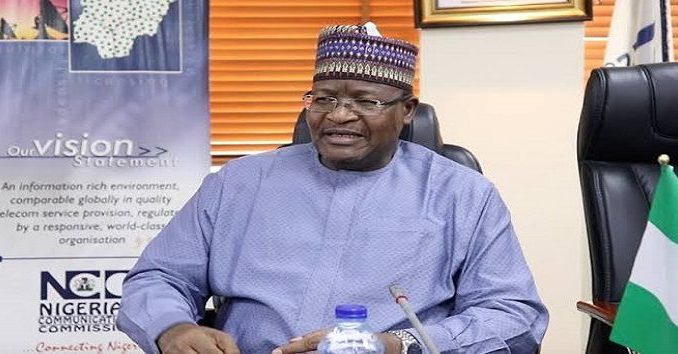
SPEECH BY THE EXECUTIVE VICE CHAIRMAN/CHIEF EXECUTIVE OFFICER OF THE NIGERIAN COMMUNICATIONS COMMISSION (NCC), PROF. UMAR GARBA DANBATTA, FNSE, FAEng., FRAES, FNIEEE, AT THE INTERACTIVE SESSIONWITH MEDIA CHIEFS AND NEWS EDITORS ON FRIDAY, SEPTEMBER 4, 2020
I am indeed very delighted to be with you at this exclusive first virtual interactive media session and it is my pleasure to welcome you all. Let me begin by thanking you on behalf of the Board and entire Management team of the Nigerian Communications Commission (NCC) for the immeasurable support you have given to the Commission over the years in reporting our regulatory activities accurately, timely and adequately.
An event of this nature should ordinarily be taking place in a location outside Abuja, as has been our practice. However, the prevailing COIVD-19 situation with the attendant restrictions has forced us to hold this important meeting via a virtual platform. That notwithstanding, I am very hopeful that our interactions will be engaging, interactive and fruitful.
As you are aware,at the expiration of my first-term of five years in office as the Executive Vice Chairman/Chief Executive of the NCC on August 3, 2020, I was reappointed by President MuhammaduBuhari, GCFR, in June, 2020 and subsequently confirmed by the Senate of the Federal Republic of Nigeria on July 21, 2020. I, therefore, consider myself privileged to be entrusted with the task of steering the regulatory affairs of our telecoms industry for another five years, and I am grateful to President MuhammaduBuhari, Minister of Communications and Digital Economy, Dr. Isa Ali Ibrahim Pantami and the Senate for the vote of confidence and more importantly, for your unreserved support.
The current Board of the NCC is comprised of technocrats and seasoned professionals.
- AdeoluAkande assumed Chairmanship of the Board of the Commission in February 2020 after his nomination by President MuhammaduBuhari.
- UbaleMaska remains Executive Commissioner, Technical Services,
- Barrister AdelekeAdewolu is the Executive Commissioner, Stakeholder Management.
- Non-executive Commissioners include Mr. Clement OmeizaBaiye, Prof. Millionaire Freeborn Abowei, Mr. AliyuSaiduAbubakar, Malam Salman Abdulazeez and Chief UcheOnwude. Together, the new board of Commissioners will raise the bar of leadership and ensure positive industry growth.
- Strategic Vision Plan (The 8-Point Agenda)
Gentlemen of the Press, the last five years have been very exciting for me as the task of leading the regulation of a dynamic sector such as the Nigerian telecommunications industry presents enormous opportunities and challenges.
- Let me begin,however,with our Strategic Vision Plan(SVP).
- The 8-point agenda rested on a tripod of ‘A’s which include Availability, Accessibility and Affordability of service.
- Through diligent implementation of each of the elements of the agenda,has significantly and measurably improved digital access and deepened broadband penetration thus expanding the frontiersfor a truly national digital economy.
2.1 Facilitating Broadband penetration
- In 2015, broadband penetration in Nigeria was less than 6%;
- We have an impressive 42.02% in broadband penetration as at July, 2020.This achievement is as a result of key policy initiatives to improve broadband penetration embarked upon by the Commission.These include increasing the number of licensed Infrastructure Companies (InfraCo) to six across the geo-political zones, spectrum refarming,spectrum re-planning, spectrum auctions, and administrative spectrum assignments, among others. The Commission is presentlyin the process of finalizing the six Infraco’s counterpart funding agreement to ensurethefull rollout of broadband infrastructure on an Open Access Model (OAM) and this will ensure there is Point of Access in each of the 774 local governments in the country.
The increase in broadband penetration has enabled the growth of the subscriber base which was 199,307,796 as at June 2020. Teledensityhas risen to 104.41 while the percentage contribution to GDP in Q2 2020 was 14.2%.
The NCC is working with the Nigeria Industrial Policy and Competiveness Advisory Council(Critical Infrastructure Sub Committee) under the auspices of the Vice President,YemiOsibanjo GCON, on various initiatives towards improving Broadband Penetration.
To underscore the importance of the sector to the economy, in June 2020, the Federal Government designated telecoms facilities as Critical National Infrastructure (CNI). The Office of the National Security Adviser (ONSA) and all security agencies have since been notified of Mr. President’s directive to that effect.
2.2 Improving Quality of Service
On assumption of office in 2015, the Commission gave priority to Quality of Service and observed that two prominentfactors identified as “technical” and “non-technical” were impacting its delivery. We took steps to address the issues by constitutingan Industry working group on QoS, Short codes and Multiple Taxation; Deployment of QoS and SpectrumTools, Internet Service Providers (ISPs) and Colocation Service Providers.In 2018, the adoption of 3G and 4G KPIs was formalised, as well as thatof Internet Service Providers (ISPs) and Collocation Service Providers (CSP) and their monitoring has since fully commenced. These regulatory initiatives have put operators on their toes to improve quality service delivery to consumers.
2.3 Optimising usage and benefits of spectrum
To optimize the usage and benefit of spectrum, a number of initiatives such as spectrum trading, infrastructure sharing, satellite infrastructure and wirelessinfrastructure have been put in place to drive socio-economic development. For instance, the transfer of the spectrum licence of 2X 10MHz in the 900MHz E-GSM Spectrum band from Intercellular Nigeria to Airtel networks Limited amounted to the sum of N8.9 billion. The amount generated through that singular initiative has brought significant revenue to Government.
The Commission has also remitted N362.34 billionfrom 2015 to date to the Federal Government Consolidated Revenue Fund (CRF) through spectrum fees and operating surplus, which has helped to boost the revenue-generation drive of the current administration.
It is interesting to mention that all the initiatives above have helped the Commission in identifying potential frequency bands to be harmonized for 5G deployment, which include26 GHz, 38GHz and 42GHz.
2.4 Promoting ICT Innovation & Investment Opportunities
In recognition of the fundamental role of research in innovation, in 2016, theCommission created a Research and Development Department. The department has continued to collaborate with the academia to support the development of innovative services and life-changing solutions with the use of Information and Communications Technologies (ICTs) to promote Indigenous Content Development.The Commission has so far awarded the sum of N336.4 million as research grants to the academia and has endowed professorial chairs in two Nigerian universities.
More importantly, we have empowered Nigerian youths by promoting their ingenuity and innovation in the development of locally-relevant technology solutions. The latest of such was the 2020 NCC Virtual Hackathon, where we gave N9 million in grant to three top promising tech startups for solutions aimed at addressing the impact of the COVID-19 pandemic and epidemic diseases in the thematic areas of Health, Community, Productivity, Economy and Transportation.
TheCommission recognizes that the key to the survival and growth of the telecommunications industry in Nigeria is sustained investments. In the last five years, the Commission has deliberately and consistently engaged investors in different fora to attract Foreign Direct Investments (FDIs). We showed investors the Commission’s roadmap for Broadband, which includes the Open Access Model Initiative, the Infraco Project, our 5G readiness and the AccessGaps for market opportunities that new entrants could leverage on in the Nigeria’s telecom space.
To build confidence in the sector and ensure that current investors and new players flourish, the NCC has activated mandatory compliance tothe Code of Corporate Governance for the telecoms industry. This initiative seeks to further strengthen telecoms entities, sustain sector’s role as a driver of economic growth and social transformation, and attract investments.
2.5 Facilitating Strategic Collaboration and Partnerships
One of the areas I identified as deserving increased attention on assumption of office in 2015 was the need for the Commission to increase stakeholders’ partnership and collaboration. Accordingly, we made this one of the cardinal pillars of the 8-Point Agenda.
In the last five years, the Commission has engaged key stakeholders, includinggovernment agenciesand the Nigerian Governors’ Forum (NGF)in several consultations, which have helped to address the issues ofmultiple taxation, multiple regulations and minimum uniform Right of Way (RoW) charges, as well as address other issues impeding telecoms infrastructure deployment in some states. Ekiti,Imo, Plateau and Katsina States have complied with the National Economic Council (NEC) resolution, with Kwara State reducing RoW charges to N1 per linear meter of fibre, while Anambra and Kaduna States, waived the charge. Ogun State, also, waived 250km for Mainone to lay fibre in Ogun State.
The NCC has continued to collaborate with the Central Bank of Nigeria (CBN) and the banks in the area of National Financial Inclusion Strategy (NFIS). Today, Mobile network Operators (MNOs) participate fully in the provision of mobile money services to help actualize the 80% financial inclusion target of the Federal Government by the end of 2020. Through the issuance of USSD Short Codes to banks and other financial institutions, we have helped to boost financial inclusion.
2.6 Protecting and empowering consumers
The consumer is king, hence our consumer-centric regulatory initiatives to ensure consumer protection, information and education have continued to top our agenda. To further empower consumers, in 2016 we introduced the Do-Not-Disturb (DND), 2442 Short Code, which gave consumers the power to opt-in or -out of unsolicited messages on their respective networks.
We prioritised consumer satisfaction by declaring 2017 as “the Year of theConsumer”, and set out with various projects to bring telecoms consumers closer to the Commission and their various network operators.
The Commission also upgraded the NCC Toll-free Number 622 as secondary complaints mechanism to further empower and resolve consumer complaints.
We also issued Directions on Data Roll-over and another on Forceful Subscription of Data Services and Value-added Services (VAS). The two directions have ensured effective protection of telecoms consumers.
In 2019, we revised the NCC Consumer Complaints and Service Legal Agreement (CC/SLAs) with the Operators in order to ensure prompt response to consumer complaints while we have also reviewed the Consumer Code of Practice Regulations at a Public Inquiry. The draft regulations are being concluded for publication in official Gazette.
We initiated the Mobile Devices Management Systems (DMS) in collaboration with other agencies aimed at protecting consumers from the negative effects of substandard devices on the networks and the health of telecom consumers. The DMS project, when fully implemented, will help in combating the proliferation of fake, counterfeit and cloned communication devices in the telecommunications industry.
Similarly, we have developed Regulations on E-Waste. The Regulations will ensure that, we are also able to rid our environment of indiscriminate disposal of malfunctioning and disused gadgets, which are capable of posing health risks to consumers.
I also need to mention our commitmentin protecting the lives and property of telecoms consumers bygetting rid of improperly registered Subscriber Identification Module (SIM) cards. We conduct periodic audit of the networks to ensure the MNOs do not harbour improperly registered SIM cards on their networks any further.
I am happy to reportthat nineteen (19) Emergency Communications Centres (ECC)have been activated across the country. The 112 National Emergency Numberallows Nigerians in distress toget helpin emergencies. The Commission has received special recognitions for its role in enhancing security of lives and properties of Nigerians and by implication, promoting the protection of telecoms consumers.The 112 number hasbecome a major channel of communication during this COVID period asover one thousand two hundred and nine (1,209) COVID-19 related calls were made to the 112 national emergency toll free number between March and June 2020 from the various ECCs across the country.
2.7 Promoting fair competition and inclusive growth
Ladies and Gentlemen of the Press, also worthy of mentionis the NCC’s proactive intervention in nipping the cases of call masking and call refiling in the bud. In the wake of 2017, the Commission started receiving complaints about cases of call masking/call refiling and SIM boxing, which was an anti-competitive practice and a threat to national security. Working with the Office of the National security Adviser (ONSA), wetook drastic actions to identify culprit licensees, sanctioned them accordingly and barred mobile numbers identified to have been involved in masked calling from their networks. We also went further to carry out a Proof of Concept (PoC) and MNOs have now developed technology solutions to prevent, detect and filter masked calls on their networks.
Our regulatory interventions in the area of issuance of Unstructured Supplementary Service Data (USSD) Short Code to banks and Other Financial Institutions (OFIs) have helped in deepening financial inclusion. To further ensure fair play between the MNOs and the banks regarding applicable charges for USSD, the Commission in July 23, 2019, issued a Determination for USSD Pricing. The Determination defined a USSD session as 20 seconds, the price floor per USSD session is N1.63k, while the Price cap per USSD session is N4.89k.
As you may be aware, an attempted commencement of the end-user billing by the MNOs for USSD usage was greeted by public outcry, necessitating a temporary suspension of the provision of the USSD determination by the Hon. Minister of Communications and Digital Economy, pending when there would be proper understanding among stakeholders. However, the NCC has revised the USSD determination putting an end to a protracted dispute between MNOs and financial institutions on the applicable charges for USSD services and the method of billing.
The Commission also determined that MNOs must not charge the consumers directly for the use of USSD channels for financial services in the form of end-user-billing. Rather, the transaction should be between the MNOs and the entity to which the service is provided (i.e. banks and OFIs).
Ladies and Gentlemen of the Press, I am sure you are aware that the efforts of the Commission, through its firm regulatory approach and foresight, also culminated in the listing of telecoms companies on the Nigerian Stock Exchange (NSE). I am proud to say that the telcos’ listing has helped to translate into action an important objective of the Commission, which is to promote indigenous investment and ownership in the telecom sector. Since their listing, the quoted telecoms companies have been keeping the Nigerian bourse upbeat and bullish with prospects for more listings in the future.
3.FOCUS FOR THE NEXT FIVE YEARS
Ladies and gentlemen, our plan for the increased growth of telecom in Nigeria is clear. We will leave no stones unturned, we will not on oarsto ensure we achieve our goals. We have our job cut out for us andwe willstart with broadband because that is the key to touching the lives of every Nigerian. We hope to takebroadband penetration to 70 per cent to at least 90 percent of the population by 2025 in line with new target in the Nigerian National Broadband Plan (NBBP), 2020-2025.
We want to continue to protect consumers and ensure they have value for their money. We want to continue to support and fast-track the digital economy drive of the Federal Government of Nigeria and this has led to the creation ofa Digital Economy Department in the Commission.
The Commission is placing emphasis on growing the digital economy in collaboration with sister agencies under the Federal Ministry of Communications and Digital Economy (FMoCDE).
We hope to consolidate onspectrum trading to ensure maximum and efficient usage of available frequencies; continuous SIM registration audit to provide security and curtail incidences of banditry, kidnapping and armed robbery; completion and commissioning of Emergency Communications Centres (ECCs) in the remaining states to enhance security and provide relief to citizens in distress.
Finally, we are committed to the execution of the counterpart Funding Agreements with the Licensed InfraCo to facilitate increase in fibre deployment in the country and ensure, at least one Point of Access (PoA) in each of the 774 Local Government Areas (LGAs) in Nigeria to enhance digital transformation.
0.4 CONCLUSION
Gentlemen of the Press, the foregoing is by no means, the complete portfolio of our focus. As you are aware, our role is to drive major digital initiatives and policies of the government, hence, we have continued to work with government as a critical stakeholder.
The NCC remains committed to driving the National Digital Economy Policy and Strategy (NDEPS) and the NBBP 2020-2025 for advancing the digital economy vision of the Federal Government.
I will not conclude this address without making reference to the recently unveiled new NCC Strategic Management Plan (SMP) 2020-20204. The SMP is the NCC’s visioning document for planning and defining its strategic goals and set objectives. The strategic plan has five strategic pillars, which include regulatory excellence, universal broadband, promote development of digital economy, market development; and strategic partnering.
The SMP provides the focus for us, as a regulator of the telecoms sector, for effective and efficient utilisation of internal processes and resources towards growing the sector and satisfying external stakeholders. It provides for us the pedestal for meeting government’s expectations from the Commission with respect to delivering on its mandates of driving digital economy by advancing industry growth through strategy, professionalism, innovation and regulatory excellence in the next five years.
I also want to use this opportunity to, once again,extend my gratitude to you all and to request your continued support for the programmes and activities of the Commission. We will continue to work with the various media institutions as partners in achieving our goals because you are a critical stakeholder in the sector. In the spirit of this partnership which we share, I will also expect that you will be very objective in your coverage of our regulatory activities and the industry, as you have been over the years.
I, therefore, invite you to be part of our aspirations to create more awareness of the Commission’s regulatory activities among our stakeholders, especially the consumers of telecommunications services.
Thank you for listening.
Professor Umar GarbaDanbatta, FNSE, FAEng, FRAES, FNIEEE
Executive Vice Chairman/CEO
September, 4, 2020