Home Blog Page 1317

MultiChoice hikes DSTV, GOTV rates

Subscribers are to pay more to view channels on DStv and GOtv networks, following an announcement on Sunday by MultiChoice to adjust subscriptions with effect from tomorrow.

MultiChoice said the price adjustment was arrived at after careful consideration of the market and a review of its business operations.

In a statement, its Chief Executive Officer, John Ugbe, said: “We have made efforts to contain any price adjustments on subscription prices. However, to ensure the sustainability of the business, we have to consider financial impacts, including inflation as well as increased content and operational costs.
=
“As such, we have reviewed the prices of some of our bouquets so that we can continue to survive as a business and bring quality entertainment to our customers.

“To arrive at the decision to adjust prices, we took into account many factors, including the impact on the customer, current inflation, content costs and efficiencies within the company.”

Ugbe said the packages will continue to be available at varying pricing points to allow subscribers flexibility in price and choice without compromising quality or variety.

“To this end, only the prices of some of the bouquets have been reviewed upwards while the lower bouquets have been left untouched,” he said.

Thenigerialawyer

{REGISTER} SRJ Webinar Themed “Ease Of Doing Business: Inheritance Taxes And Tax Incentives In Estate Planning And Administration In Nigeria”

SRJ Legal Practitioners holds a Webinar on Friday 4th September 2020 at 5p.m WAT on the theme “Ease of doing business: Inheritance taxes and tax incentives in estate planning and administration in Nigeria”.

The Panellists are leading key industry experts that include (a) Dame Gladys Olajumoke Simplice, FCIT, the 14th President/Chairperson of the Council of Chartered Institute of Taxation of Nigeria (b) Luqman Balogun TEP, Founder, Carrot Technologies Ltd ( a leading E-Will application in Nigeria) and (c) Mrs. Omotola Rotimi, Lagos State Administrator-General & Public Trustee.

The Webinar will be moderated by Michael Dugeri and Osita Enwe, both of SRJ Legal Practitioners.

The Webinar fosters discussions on Inheritance taxes and tax incentives available to Nigerians under different Estate Planning and Administration Laws that applies to States in Nigeria in view of Governments commitments to enable the Nigerian business environment and to ease costs of doing business with it.

There is a need to look inward: how does our Estate Administration Laws and all other applicable legislations and policies impact on estate planning and administration across the Nigerian States? How does Inheritance tax impact on Will and estate administration and practices in Nigeria. Does it encourage estate planning and administration? What other pro-active policy recommendations can Governments absorb?

Register to attend to discuss these issues and more on Friday 5th September at 5p.m WAT.

Register here: http://bit.ly/SRJ_sept_webinar

CRC Credit Bureau Sensitises Bank Customers on New GSI Policy

In light of the mixed reactions around the Global Standing Instruction (GSI) introduced by the Central Bank of Nigeria (CBN), the CRC Credit Bureau has moved to give more insights around the new policy that is aimed at reducing the incidence of non-performing loans in the Nigerian Banking and thereby encourage economic growth.

The GSI Policy which has taken effect since August, 1, 2020 allows financial institutions to leverage on the Biometric Verification Number (BVN) and Credit Risk Management System (CRMS) platforms to recover bad loans.

While speaking on the new policy as a game-changer, the Director, Financial Policy and Regulation Department, CBN, Dr. Kelvin Amugo, explained that the policy would not only guarantee the financial stability in the financial system, but would also reduce the rate of unserviced loans, improve loan recovery efforts and uphold responsive borrowing in the banking system.

He further mentioned that the new policy would help in ensuring bank customers become more responsible in upholding their character when borrowing from financial institutions, saying the Central Bank was working towards including more financial institutions.

“CBN has commenced GSI enlistment for other financial institutions, especially the microfinance banks. We also want to onboard the mobile money operators, because at the end of the day, we want the chain to be complete,” he added.

Stating the implications of the policy on customers, the Chief Risk Officer, Union Bank of Nigeria Plc, Olajumoke Odulaja announced that the policy would go a long way in correcting situations where a customer who has the capacity to pay back a loan refuses to pay. She further explained that the policy would improve lending confidence, thereby bringing a decrease in interest rate.

“It is safe to also note that banks are not allowed to wrongly trigger the GSI mandate against a customer, as there are stiff penalties for banks that do that, ” she added.

Global COVID-19 cases top 25 million – Johns Hopkins report

WASHINGTON –  The number of coronavirus cases recorded worldwide has topped 25 million, according to data compiled by U.S. researchers.

In the United States, which has the highest case tally of any country, infection numbers are nearing six million, according to figures from Johns Hopkins University updated on Sunday night.

Brazil has the second-highest number of cases, at almost 3.9 million, followed by India, which has recorded more than 3.5 million.

The U.S. has the highest number of COVID-19 deaths, at more than 183,000, followed by Brazil with more than 120,000 and Mexico with over 64,000.

The figures from the Baltimore-based University put global deaths at more than 845,000.

The Johns Hopkins tracker website is regularly updated with incoming figures and tends to show higher numbers than those officially counted by the World Health Organisation (WHO).

However, in some cases, figures have been later corrected downwards.

Experts expect that official numbers do not reflect the full picture of the spread of the coronavirus, as it is unlikely all COVID-19 deaths and cases of infection have been recorded. (dpa/NAN)

The Concept of Netting Under The Nigerian Law -By Precious Okoh

Netting arises when several contracts between the same two parties are settled concurrently. The amount due from the several contracts is collated and the obligations to pay or be paid are combined into a single obligation of the net amount. The process of collating these several off-setting claims into a single claim is generally called “netting’’.

An example is: Where Company A enters into a contract with Company B (first contract) amounting to about N10 million in favour of Company A on the 1 January 2020; and a second contract on the 2 February 2020 amount to N20 million between the same parties now in favour of Company B and a third transaction on the 3 March 2020 amounting to N30 million in favour of company A; these three different agreements are individually valid and enforceable, however they may be combined by the process of netting so that eventually Company A is settled by a single payment of N20 million from Company B.

In a swap transaction for example, assume two parties enter into a swap agreement on a particular security whereby they both owe money to each other. At the end of the swap period, the following is due:

  • If Investor X is due to receive N100,000,000 from Investor Y
  • And Investor Y is due to receive N25,000,000 from Investor X
  • Then, instead of Investor Y paying Investor X N100,000,000 and Investor X giving Investor Y N25,000,000, the payments would be netted
  • Consequently, Investor X would give Investor Y N0, while Investor Y would give Investor X N75,000,000

Netting, as it relates to insolvency, dates back to the beginning of commercial relations. The early history of insolvency law provides some fundamental perspective for understanding the efficiency implications of netting.

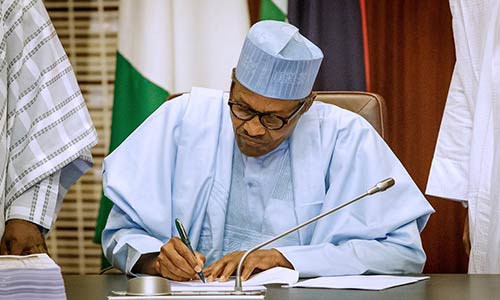
In Nigeria, the concept of netting was codified in the recent Companies and Allied Matters Act signed into law by President Muhammadu Buhari on the 7 August 2020 to provide explicitly for circumstances where multiple transactions/contracts relating to insolvency may be combined and settled.  The amounts due for the contract may involve obligations to pay under one contract and a right to receive under another, are summed together and the several obligations to pay or be paid are combined into a single obligation for the net amount.

By Section 718 of the CAMA 2020, netting means the occurrence of the following:

  1. Termination, liquidation or acceleration of any payment or delivery obligation or entitlement under one or more qualified financial contracts entered into under a netting agreement;
  2. Calculation or estimation of a cl0se-out value, market value, liquidation value or replacement value in respect of each obligation or entitlement or group of obligations or entitlements terminated, liquidated or accelerated under paragraph (a)
  3. Conversion of any value calculated or estimated under paragraph (b) into a single currency; and
  4. Determination of the net balance of the values calculated whether by operation of set-off or otherwise;

Netting is a reconciliation, settlement and payment mechanism under which competing rights or interests are terminated and valued, resulting in amounts payable between contracting parties being consolidated into single, smaller payment from one party to another. That is, the party’s gross obligations are offset against each other and treated (for payment purposes, but not for regulatory capital purposes) as a single obligation such that there is, effectively, only one claim in existence at any given time.

Netting is also used when a company is in bankruptcy and the parties wish to settle or offset the balances owed to each other. It is similar to set-off clause or set-off law. A company carrying on business with another company ‘defaulting company’ may ‘net’ any money owed the defaulting company with money that’s owed them. The final balance is the amount owed by them or to them, which can be used in bankruptcy proceedings.

In high transactions, companies may enter into ‘Qualified financial contracts’.  Qualified financial contracts mean financial agreements, contract or transaction, including any terms and conditions incorporated by reference in any financial agreements, contract or transactions, pursuant to which payment or delivery obligations are due to be performed at a certain time or within a certain period of time and whether or not subject to any condition or contingency.

While a netting agreement means any:

  1. Agreement between two parties that provide for netting of present or future payment or delivery obligations or entitlements arising under or in conjunction with one or more qualified financial contracts entered into under the agreement by the parties to the agreement called the master netting agreement.
  2. Master agreement between two parties that provides for netting of the amounts due under two or more master netting agreements known as master-master netting agreement; and
  3. Collateral arrangement related to or forming part of one or more of the foregoing.

Benefits of Netting and Netting agreements

Netting saves companies unnecessary waste of time and costs by reducing several deals entered into by corporations into a single transaction by narrowing the transaction and deal.

In the foreign exchange market, companies or banks can consolidate the number of currencies and foreign exchange deals into larger trades, reaping the benefits of improved pricing.  In situations where companies have more organized time frames and predictability in settlements, they can more accurately forecast their cash flows.

Netting is a method of reducing risks in financial contracts by combining or aggregating multiple financial obligations to arrive at a net obligation amount. Netting is used to reduce settlement, credit, and other financial risks between two or more parties.

Precious Okoh is a legal practitioner called to the Nigerian bar in 2019. He is currently a member of the Nigerian Bar Association and passionate about commercial litigation, Arbitration and Dispute Resolution and very curious about digging into novel fields of law like technology, artificial intelligence and Energy law.

Supreme Court upholds election of Yahaya Bello as Kogi governor

The Supreme Court has upheld the election of Yahaya Bello as the Governor of Kogi State.

In its Judgment, delivered Monday, August 31, the Apex Court disagreed with the appeal filed by the candidate of the Peoples Democratic Party (PDP) in the Kogi Governorship Election, Musa Wada..

The appeal was predicated on five grounds.

Mr Wada claimed that the election held on November 16, 2019, was characterised with serious electoral infractions; rigging and over-voting.

He averred that Governor Bello didn’t secure the highest number of valid ote.s In the election to be declared thw winner.

Aside from the Chief Justice of Nigeria, Justice Tanko Muhammad, other members of the panel included Justices Olabode Rhodes-Vivour, Sylvester Ngwuta, Kudirat Kekere-Ekun, Inyang Okoro, Amina Augie, Uwani Abba-Aji.

(Opinion) Water is not crude oil, stop National Water Resources Bill!

Intended Federal Government Control of Water Resources is Going Too Far. Call to Resist the National Water Resources Bill, 2020

By Frank Tietie

The requirement for licensing is the most legally oppressive manner to take over the natural resources of a people.

The preamble of the 1969 Petroleum Act vests the control of the exploration of petroleum and ownership of all on-shore and off-shore petroleum resources in the Federal Government of Nigeria

The sad story of the impact of the above provision is clear for the whole world to see. We have witnessed over 50 years of mindless exploitation and degradation of the Niger Delta region of Nigeria by International Oil Companies (IOCs) who, in cahoots with the Nigerian Federal authorities have continued from independence to date, to mine and sell crude oil to fund the most profligate and irresponsible management of petroleum wealth so far, in the history of the whole world,

Crude oil, like water is a blessing but it became a curse to Nigeria and the people of the Niger Delta because it was poorly managed and controlled by a central Federal government which used it to fuel corruption and other nefarious interests, without caring in the least for the people and environment of the region from where the crude oil is produced.

The people of the Niger Delta region are the most conquered people in the world. They watch daily, helplessly as their environments are being degraded with the exploitation of the crude oil that is naturally deposited in their land of origin.

To ensure the free and constant flow of crude oil, in order to fund the profligacy and consumerism of the Nigerian government, the social space of the people of the Niger Delta is constantly militarized and its people brutally policed. The young people of the region are repressed and terrorised. They don’t even have a sociosphere that would enable the development and pursuits of their dreams and aspirations. I was there and only escaped the horrors of the region by sheer grace of God. The communities in the Niger Delta region are constantly embroiled in local conflicts brewed by the divide and rule mechanisms that have been put in place by conflict merchants, all in favour of continued oil exploitation of crude oil by the IOCs.

It is this horrible fate that the control and management of petroleum resources by the Federal Government has foisted on the people of the Niger Delta that is about to be replicated with the case water by the National Water Resources Bill, 2020.

Water may appear cheap and everywhere in Nigeria thus, it can easily be overlooked. But that is not true. Water is more important than crude oil in too many ways. We can do without oil. After all, it has been more of a curse to us in Nigeria. It probably would have been better if we didn’t have crude oil deposits in Nigeria.Just see how crude oil has fueled corruption, underdevelopment and bred trouble wherever it was found. Unlike crude oil, we can’t do without water and the troubles associated with water conflicts will make those associated with crude oil look like child’s play.

Section 2 of the National Water Resources Bill vests use, management and control of all surface water and ground water in the Federal Government of Nigeria, provided such water affects more than one state as contemplated by Item 64 of the Exclusive Legislative list in Part 1 of the Schedule to the Nigerian Constitution.

Not that the rivers and creeks which criss cross all of the states of the Niger Delta region are all connected. It is these that the Federal Government now aims to control by the pending bill. It is not only control of surface water but ground water inclusive, that the Federal Government now aims to control. I leave the implications of such control to your imagination, given the history of crude oil management by the same Federal Government. This will form the subject of another of my writing and a focussed advocacy subject to resources.

It is understandable that the Petroleum Act was enacted by the military and it was during the civil war so there were no many opportunities or none for that matter, that afforded the people of the Niger Delta the right to accept or reject the highly consequential provisions of the then intended law to govern petroleum resources management and control.

This time around, it should be different. Therefore, every Nigerian and particularly people and groups from the Niger Delta area must read all sections of the intended law and consider them against the backdrop of the past, present and future of the country with that of the Niger Delta region. I have therefore undertaken to send copies of the bill to anyone upon request.

When an unjust law is passed, it is very difficult to reverse its negative effects. When the people of the Niger Delta realized the inequities against them and how oppressed they are by the legal regime of the Petroleum Act, they turned to militancy as a means of liberation but it failed them. Therefore they are still in the same place as things never changed and their future fortunes are uncertain. Even political palliatives in the forms of 13% Derivatiion money, Niger Delta Development Commission (NDDC), Ministry of Niger Delta Affairs (MINDA) and Amnesty Programme have left the region still highly underdeveloped relative to where it ought to have been, considering the likes of Dubai and Rotterdam. Instead, willing collaborators from the Niger Delta have turned these political interventions by the Federal Government into cesspools of mind boggling corruption and the people of the region will continue to suffer.

In this new era where the calls for restructuring are loudest and the Federal Government is being told to divest itself of needless control of legislative items so that Nigeria can indeed develop as a true federation, where the peoples of states can harness their resources for their perculiar development, it is therefore unthinkable and in fact amounts to direct provocation for the Federal Government to aspire to control local water resources to the extent of having to travel to Abuja for example, to obtain a license from the Federal Government just to drill a borehole. The Federal Government by the implications of the intended law can also grant control of iverine areas to persons and companies of its choice to conduct livestock business irrespective of the sensitivities and concerns of the people of the region. The pending National Water Resources Bill, 2020 is indeed, going too far and must be resisted! The bill should be dropped forthwith.

Tietie, Human Rights Lawyer & Executive Director Citizens Advocacy for Social & Economic Rights (CASER), writes from Abuja

Everyday

Buhari, Akufo-Addo to meet over ill-treatment of Nigerians in Ghana, others

The Government of Ghana has responded to Nigeria, point for point, on the issue of the ill-treartment being meted to Nigerians in that country, but said added that its President Nana Akufo-Addo and President Muhammadu Buhari will sort out the grey areas of disagreement between both countries.

Ghana pointedly, through its Minister of Information, Endkojo Oppong-Nkrumah, accused Nigeria of taking measures that undermined the relations between the two countries.

Ghana’s reaction to Nigeria’s complaints by Minister Lai Mohammed earlier accusationswas made available to newsmen in Abuja by the Nigeria Ministry of Information and Culture.

According to Oppong-Nkrumah, “The Federal Republic (Nigeria), on the other hand, is on record to have taken a number of steps in recent months, in pursuit of her national interests, which have gravely affected other countries in the Region. These include the closure of Nigeria’s Seme Krake Border from August 2019 to date and the issuance of executive orders by Nigeria’s Presidency, preventing foreigners from getting jobs which Nigerians can do, to mention a few.”

The statement reads in full;

“The Government of Ghana notes, with concern, a statement, dated Friday, August 28, 2020, issued by the Ministry of Information and Culture and signed by the Federal Minister, Hon. Lai Mohammed, on behalf of the Federal Government of Nigeria, concerning current relations between Ghana and Nigeria.

“Ghana remains committed to the maintenance of warm relations with all sister nations, particularly, for well-known historical reasons, with the Federal Republic of Nigeria, and will proceed to engage the Federal Government of Nigeria with a view to resolve comprehensively and exhaustively any matters that have the potential to sour relations between the two countries.

Ghana finds it imperative, however, from the onset, to state, for the public record, that the outline of issues by my Nigerian counterpart is not reflective of the developments in Ghana. Any protests, decisions or actions based on these reports will, thus, be unjustified.

We are obliged, therefore, as a first step, to provide our counterparts, as well as the Ghanaian and Nigerian publics, with a more reflective account of events, even as we pursue substantive diplomatic engagements to resolve matters.

(I) Accusation:

The seizure of the Nigerian Mission’s property located at No. 10, Barnes Road, Accra which has been used as diplomatic premises by the Nigerian Government for almost 50 years; and which action, is a serious breach of the Vienna Convention.

Response:

This statement is inaccurate. The transaction was a commercial arrangement between Thomas D. Hardy, a private citizen and the High Commission of Nigeria in Ghana on 23rd October 1959.

The terms of the Commercial Lease expired 46 years ago, without any evidence of renewal by the High Commission of Nigeria in Ghana. The Government of Ghana was not involved in the transaction and has not seized the property in question.

2

(II) Accusation:

Also, even though the main reason given for the seizure of Federal Government property at No. 10 Barnes Road in Accra is the non-renewal of Lease after expiration, the Ghanaian authority did not give Nigeria the right of first refusal or the notice to renew the Lease. By contrast, the lease on some of the properties occupied by the Ghanaian Mission in Nigeria has long expired, yet such properties have not been seized.

Response: The Government of Ghana does not, did not and never owned the land, and has not been involved in the seizure of any property of the Nigerian High Commission in Ghana. The land in question is owned by the Osu Stool and managed by the Lands Commission.

In response to the claim that the lease on some of the properties owned by the Ghana Mission in Nigeria has long expired, it must be noted that the Government acquired a freehold land at Pope John Paul II Street in Abuja in 1989 through a commercial arrangement, and built the current structures on it. The staff of the Ghana High Commission in Abuja have been living there since the construction of the current structures.

(III) Accusation:

Demolition of the Nigerian Mission’s property located at No. 19/21 Julius Nyerere Street, East Ridge, Accra, which constitutes another serious breach of the Vienna Convention.

Response:

This statement is not factual. A search at the Lands Commission indicated that the Nigerian High Commission failed to complete the documentation process after paying for the land in the year 2000 A.D. The High Commission failed to acquire the Lease and Land Title Certificate, which constitute documentation for the said property, as well as a building permit for construction. In Ghana, land is owned not only by the Government, but also by Stools and Families.

The demolition of the property was not carried out by agents of the Ghanaian Government, but by agents of the Osu Stool. Nonetheless, the Government of Ghana, valuing the relations between our two countries, has decided to restore the property, at its own cost, to its original state for the Nigerian High Commission, and has duly communicated same to the Nigerian Authorities. The Government of Ghana has also agreed to facilitate the proper acquisition of title by the Nigerian High Commission, as announced by Ghana’s Minister for Foreign Affairs at the time of the incident.

3

(IV) Accusation:

Aggressive and incessant deportation of Nigerians from Ghana. Between January 2018 and February 2019, Eight Hundred and Twenty-Five (825) Nigerians were deported from Ghana.

Response:

This statement is not factual. In 2019, seven hundred (700) Nigerians, who were found to have been involved in criminal activities such as fraud, prostitution, armed robbery etc., were deported.

(V) Accusation:

Residency permit requirement, for which Ghana Immigration Service has placed huge fees far higher than the fees charged by the Nigerian Immigration Service. These include the compulsory non- citizen ID card (US$120, US$ 60 for yearly renewal); medical examinations, including for COVID-19 which is newly introduced (about US$ 120), and payment for residency permit (US$ 400 compared to the N700,000 being paid by Ghanaians for residency card in Nigeria).

Response:

It must be noted that all foreigners, who apply for resident permit in Ghana, pay same fees as stated above. These fees are not specific to Nigerians.

(VI) Accusation:

“Media war against Nigerians in Ghana. The negative reportage of issues concerning Nigerians resident in Ghana by the Ghanaian media is fuelling an emerging xenophobic attitude against Nigerian traders and Nigerians in general.

The immediate fallout is the incessant harassment and arrest of Nigerian traders and closure of their shops.”

Response:

The statement is not factual. There is no media war against Nigerians in Ghana.

There is also no negative reportage on Nigerian residents in Ghana by Ghanaian media, which could potentially lead to xenophobic attitude towards Nigerians, particularly Nigerian traders in Ghana.

No Nigerian trader has been arrested. The closure of shops was as a result of infractions on Ghanaian laws. Even then, those affected who are not only Nigerians, have been given ample time to regularise their documents. Furthermore, no Nigerian- owned shops are currently closed.

4

On the contrary, the negative reportage has been against the Ghanaian Government from high places, (tweets by Foreign Minister of Nigeria and a Nigerian businessman, who appears to have political interests in Ghana), in Nigeria. This is inconsistent with established practice in our very good relations. The Press Release by the Information and Culture Minister of Nigeria is a clear departure from the manner in which officials of the two countries have related with each other in the past.

(VII) Accusation:

“Nigeria has time after time demonstrated its fidelity to the long cordial relations with Ghana. But indications especially in recent times, are that Nigeria’s stance is now being taken for granted and its citizens being made targets of harassment and objects of ridicule. This will no longer be tolerated under any guise.”

Response: Ghana has always demonstrated her commitment to excellent relations with Nigeria which is evidenced by the manner in which Ghanaian Government officials dealt with recent issues, which have had severe economic impact on our country.

Ghana did not resort to any media war. However, the Ghanaian Ministers of Foreign Affairs and Trade travelled to Abuja to try to resolve diplomatically the issue of closure of Nigerian borders, and to seek safe corridor for ECOWAS Trade Liberalisation Scheme (ETLS) exports from Ghana, all to no avail. It is expected that the response of Nigerian Authorities to situations that evolve in our relations should be guided by the merits of the matter and our mutual interests.

(VIII) Accusation:

That three hundred (300), six hundred (600) and two hundred and fifty (250) shops belonging to Nigerians were closed down in 2018, 2019 and 2020 respectively

Response:

Upon evidence that some individuals, including Ghanaians and non-Ghanaians, had been involved in various forms of trade, without complying with the laws and regulations of Ghana, several engagements and prior advice had been given to encourage compliance.

Ghana’s Minister for Trade and Industry personally intervened to ensure the reopening of closed shops, pending compliance with Ghana’s laws by their operators.

5

Among other corrective measures, the Committee on Foreigners in Retail Trade, comprising representatives of various regulatory agencies and institutions in Ghana, was tasked with the responsibility of conducting inspections of retail shops in designated commercial districts in both Accra and Kumasi to ensure compliance with retail trade laws and regulations.

The compliance exercises conducted in the selected markets revealed gross violations of retail trade laws and regulations by Ghanaians and foreigners, including Nigerians. These violations included tax evasion, immigration offenses, trading in sub-standard products, violation of the Ghana Investment Promotion Centre (GIPC) law, improper registration of firms, under-payment of business operating permits, falsification of documents, among others.

In all cases, non-compliant shop owners are given adequate notice to regularize their documents, before action is taken to close any shop/business.

It is an incontestable fact that there is widespread abuse and disregard for local laws and regulations governing retail trade by some foreigners, including Nigerians, which need to be addressed without discrimination. It is important to note that the compliance exercise under reference is not restricted to either ECOWAS nationals or Nigerians for that matter, but extend to all individuals engaged in retail trade, including Ghanaians.

(IX) Accusation:

Harsh and openly biased judicial trial and pronouncements of indiscriminately long jail terms for convicted Nigerians.

Response:

Ghana’s courts, at all material times, function independently, and with strict respect for the Laws of Ghana, regardless of the nationalities of accused persons. Judges neither convict nor sentence with a bias for or against nationalities. Nigerians and Ghanaians convicted for same offenses are not treated differently.

(X) Accusation:

Outrageous stipulations and amendments of the GIPC Act.

Response:

It is untrue that the law has been amended twice, and, accordingly, there is no 2018 GIPC Act. Further, the statement that a review of the Act has increased the minimum capital base for foreign owned businesses to US$1.00m is false.

Perhaps the reference is to sections 27 (2 & 3) of the GIPC Act and relate solely to persons who are not citizens but want to engage in retail trade or trading activities, which are otherwise restricted exclusively to Ghanaians. Accordingly,

6

‘a person who is not a citizen may engage in a trading Enterprise if that person invests in the Enterprise, not less than One Million United States Dollars in cash or goods and services relevant to the investments. Trading includes purchasing and selling of imported goods and services. The amount does not relate to the broad universe of investors. We are also somewhat astonished to have the laws of a sovereign nation described as outrageous, especially since they have not attracted the rebuff or criticism of any regional organization, especially

ECOWAS.

The Federal Republic, on the other hand, is on record to have taken a number of steps in recent months, in pursuit of her national interests, which have gravely affected other countries in the Region. These include the closure of Nigeria’s Seme Krake Border from August 2019 to date and the issuance of executive orders by Nigeria’s Presidency, preventing foreigners from getting jobs which Nigerians can do, to mention a few. Ghana and other West African countries continue to believe redress to even actions like these can be sought, diplomatically, without resort to media statements and related activities that have the potential to aggravate further the situation.

The aforementioned notwithstanding, the President of the Republic of Ghana, H.E. Nana Addo Dankwa Akufo-Addo, who values very much his excellent relations with the President of the Federal Republic of Nigeria, His Excellency Muhammadou Buhari, will engage President Buhari with a view to develop immediately a framework for validating claims of ill treatment of citizens of either country, and ensure citizens enjoy the full exercise of their rights, while respecting the sovereignty and laws of both countries. Ghana and Nigeria, as they have been doing, must continue to work together for a successful West Africa.

Everyday

(Opinion) MLK’s mighty stream of righteousness

By ‘Wole Soyinka

On Friday February 28th, our kinfolk in the United States, standing shoulder to shoulder with their white compatriots of conscience who have repudiated, or are labouring to discard the privileged mores of a culture of racist disdain will re-enact the great march on Washington that was once led by Martin Luther King. They will re-awaken the convictions that gave birth to the world acclaimed oration of the twentieth century, delivered by the militant preacher and advocate of non-violence. Coming in the wake of movements inspired by the horrifying last utterance of one black victim after another — “I Cannot Breathe” – – now known and shared across the world as BLACK LIVES MATTER, one’s mind compulsively wanders over certain portions of that speech. This is hardly surprising in my case, since – I here reveal — I once declaimed portions of that speech – and in French to boot! – in 1989, in Paris. That national event took place under the 200th Anniversary Monument to the ‘Declaration of the Rights of Man and the Citizen’, a product of the French Revolution — a word I suppose we should use only with government permission these days!

Again, like millions of others on this continent, but most immediately within the Nigerian borders, I have mulled over that watershed episode over and over again. Within the past few days however, like millions of others, I have been compelled to re-phrase that earlier mentioned global litany to read: DO NIGERIAN LIVES MATTER? DO FARMERS’ LIVES MATTER? DO IPOB LIVES MATTER?  DO INNOCENT LIVES MATTER? And most disturbingly: DO FUTURE LIVES MATTER?        

One passage in Martin Luther King’s “I have a Dream” has leapt to the forefront as a warning that relates to that final interrogatory – DO FUTURE LIVES MATTER? And it does so in a most literal manner, one that MLK could never have envisioned!  It persists in echoing through the mind, reinforced by the recent killings of innocent humanity – mostly youths — in Enugu, by state forces, under the pretext – shall we presume? – of preventing secessionist agitations?  More of that in the fullness of mandatory and transparent investigation before the entire nation. For now, we must return to the MLK proclamation, one that is fortuitously pertinent to a structural provocation that is poised to rip apart the remaining shreds of pretence that continue to hold this nation together as one. The passage under reference goes thus:

“No, no, we are not satisfied and we will not be satisfied until justice rolls down like waters, and righteousness like a mighty stream.” 

Sometimes, and in some unintended circumstances, words descend from their heights of rhetorical flourish to hit us right in the guts of daily survival and anxieties for future existence. From metaphor, they turn literal! Such are the implications embedded in those words:

            “…until justice rolls down like waters, and righteousness like a mighty stream”

Nothing mysterious. Let me remind you of the ongoing diabolical scenario that justifies the evocation of that warning, near literally!

A roundly condemned project, blasted out of sight by public outrage one or two years ago, is being exhumed and sneaked back into service by none other than a failed government, and with the consent of a body of people, supposedly elected to serve as custodians of the rights, freedoms and existential exigencies of millions. This bill – BILL ON NATIONAL WATER RESOURCES 2020 is designed to hand Aso Rock ABSOLUTE CONTROL over the nation’s entire water resources, both over and underground.  

Soyinka, Buhari when the going was good

The basic facilitator of human existence, water – forget for now all about streams of righteousness! – is to become exclusive to one centralized authority. It will be doled out, allocated through power directives from a desensitized rockery that cannot even boast of the water divining wand of the prophet Moses. If the current presiding genius – and this applies equally to ALL his predecessors without exception – had a structured vision of Nigerian basic entitlements, Nigerians would, by now, be able to boast the means of fulfilling even that minimalist item of COVID 19 protocols that calls for washing one’s hands under running water! As for potable water, for drinking and cooking, let us not even begin to address such extra-terrestrial undertaking!

What next for the exclusive list? The rains? I declare myself in full agreement with virtually every pronouncement of alarm, outrage, opprobrium and repudiation that has been heaped upon this bill and its parentage, both at its first outing, and since this recent re-emergence. It is time to move beyond denunciations however and embark on practical responses for its formal deactivation and permanent internment. Let all retain in their minds that, from the same source that preached the “streams of righteousness” is encountered the promise of “no more floods, the fire next time.” In any case, let the promulgators of this obscenity, high and low, understand that the placid waters they think to control unjustly and grotesquely, will turn to be Martin Luther King’s “mighty stream of righteousness” that will overwhelm and sweep them off their complacent, and increasingly loathsome sectarian, conspiratorial heights.

One polluted stream of human existence compounds the next. A violation here joins forces with its tributary of resentment there yonder, all seemingly unconnected. Martin Luther King’s streams of righteousness turn into a mighty torrent of repulse that overwhelms the perpetrators but, alas, takes down much else as collateral, irreparable damage. That is the only cause for regret and – restraint. Hence our duty to position that anguished question frontally, and call the world to witness our open propagation of that challenge:  DO FUTURE LIVES MATTER? 

Let Buhari and his myrmidons ponder that question in the deepest recesses of their hearts and minds. They should not bequeath to future generations the harvest of the grapes of wrath! 

Everyday

NEF says constitution review by NASS is waste of time, resources

Northern Elders Forum (NEF) has described the call to the public to submit memoranda to assist the “further alteration of the provisions of the Constitution (as amended)” as predictable waste of time, resources and energy of the nation.”

The group called on Nigerians not to support the bogus exercise and waste in governance at this difficult time when the economy was facing unprecedented challenges.

In a statement, the Director, Publicity and Advocacy, of the NEF, Dr Hakeem Baba-Ahmed said every National Assembly since 1999 had spent huge amounts of Nigerian people’s money on jamborees that gave them false hope that the three arms of government respected the overwhelming desire of Nigerians for a holistic and genuine review and amendment of the 1999 Constitution.

He said: “Nothing fundamental or of any value has come out of these grand schemes to exploit our collective desire to address our political and economic fundamentals.

“This National Assembly is also following suit, and it should not be encouraged on this path.

“Nigeria’s future rests largely on its willingness to address major constraints to equity and justice, a functional structure, consistent good governance, security for all citizens, a credible electoral process, growing understanding between and among all groups and an economy that grows and narrows inequalities between and classes and regions.This cannot be achieved by a process that routinizes wasteful expenditure around false hopes.”

Baba-Ahmed further stated that the Legislature and executive branches of government had large quantities of reviews, recommendations and reports from past attempts at amending the Constitutions.

“These represent enough resources for a review if the legislature is serious about this vital national priority. Even this is not likely to produce a genuine effort to address the basic requirements of securing a stable, secure and prosperous Nigeria, because both arms of this administration are unlikely to accept to put through wide-ranging reviews of the Constitution,” he stated.

The Forum specifically reminded legislators and other leaders from the North that security of their communities, reduction of crushing poverty and widening distrust among communities should be their priorities.

The Forum recommended the alternative of leaders of thought, elders, groups and professional organizations and representatives of government to “freely discuss every element of our co-existence as a country under principles of voluntarism, genuine representation mutual respect and integrity of the process.”

According to him, “A Nigerian Peoples’ Conference on Review of the Constitution will benefit from past work in this direction in addition to contemporary challenges which the country needs to address in a context that allows free and productive engagements without pre-determined ends.

“The outcome of this Conference should be submitted to the two arms of government which should provide for a referendum in the Constitution so that Nigerians can directly decide on how they want their nation to be structured and function.

“The North is willing to discuss other options that will do justice to the current Constitution and the future of our great country.”

The Forum called attention of particularly northern groups to the need to be wary of being railroaded into making submissions which the legislature would hold up as input, further justifying waste and deceit.

“No northern group should encourage further waste of public funds which should be channelled into battling killers, kidnappers, poverty and poor governance.

“The North wants a major review of the Constitution, but it is also ready to resist attempts to create wealth for a few while it leaves parts of the country to quarrel and blame each other for the state of the nation.

“Northerners are willing to discuss current challenges of the region and the state of the country with any group, anywhere, provided it sees evidence of sincerity and respect for each other,” Baba-Ahmed added.

The Forum advised the National Assembly to direct its energy and mandate towards convincing President Muhammadu Buhari to bring an end to the insurgency in the North East and killings in most parts of North Central and North West and other parts of the country.

It advised the Senate to jettison the wasteful idea of giving Nigerians the impression that it was involved in a serious review of the Constitution.

TIPS