Home Blog Page 1288

In good faith, FG orders DisCos to suspend electricity tariff hike

In demonstration of good faith to its agreement with the Organised Labour on its suspended strike, the Federal Government has ordered the Electricity Distribution Companies in the country to suspend the recent hike in tariff.

The Nigerian Electricity Regulatory Commission (NERC)  handed down the order on Tuesday night.

The  suspension of the hike in tariff for 14 days in the first instance is to enable wider consultations between the Government  and  Labour with a view to reaching a compromise and resolution of the contending  issues involved.

According to the NERC, the tariff suspension will be from September 28, 2020 to October 2, 2020.

The Order, No. NERC/209/2020, with the title: “NERC Order on suspension of the Multi Year Tariff Order 2020 for the electricity distribution licensees,” was signed by the NERC Chairman, James Momoh; and the Commissioner, Legal, Licensing and Compliance, Dafe Akpeneye, and addressed to the country’s DisCos.

Why COVID-19 Less Deadly In Africa, By John Campbell

Thus far, COVID-19 has been far less devastating in Africa than observers had feared, including this blogger. It is true that there has been much less testing for the disease in Africa than elsewhere (perhaps one percent of the population, while the United States has conducted over one hundred million tests), and African statistics tend to be weak. But there have been only a few reports of mass deaths anywhere on the continent, such as were seen in Ebola outbreaks. Africa has a population of 1.2 billion people. There have been 1.4 million cases of COVID-19, with less than 35,000 deaths. The United States has a population of an estimated 331 million. There have been 7.1 million cases of COVID-19 and about 205,000 deaths. Despite its obvious shortcomings, the public health and medical infrastructure in the United States is far superior to that of Africa. How to account for the apparent lesser severity of COVID-19 in Africa than in the United States?

Maasai elders, wearing traditional costumes with face masks on, gather at their homestead within the Orboma Manyatta in Sekenani, near the Maasai Mara game reserve in Narok County, Kenya, on August 10, 2020. Thomas Mukoya/Reuters

Matshidiso Moeti, World Health Organization (WHO) Regional Director for Africa, advances a credible explanation. Summarizing, its most important elements are:

  • Africa’s population is youthful; only 3 percent is over sixty-five years of age, while in the United States it is 15.2 percent, almost 50 million. In Africa, 90 percent of cases have been among people under sixty years of age; in the United States, in August, it was about 80 percent.
  • Even though the continent is urbanizing fast, its population density is lower, and even in urban areas people live and work outdoors to a greater extent than in the developed world. It seems clear that COVID-19 spreads more rapidly in enclosed spaces.
  • Poorly developed infrastructure, especially roads and airports, results in fewer people traveling, reducing the spread of the disease.
  • Some African states, notably South Africa (then ground zero for the disease), locked down early. There are estimates that the South Africa lockdown will save some 16,000 lives by the new year.

The bottom line: Africa would appear to confirm that COVID-19 is most dangerous among elderly people living closely together.

Credits |CFR

Developing story: FEC approves N13.08 trillion 2021 Budget

The Federal Executive Council (FEC) has approved N13.09 trillion budget estimate for 2021 fiscal year.

The approval was given on Wednesday at a meeting presided over by President Muhammadu Buhari in Abuja.

The budget proposal, as approved by FEC, is predicated on $379 exchange rate, oil benchmark of $40 barrel per day, oil production volume of 1.86 million per day, including 400,000 condensate, Gross Domestic Product (GDP) growth of three percent and 11.95 percent inflation rate.

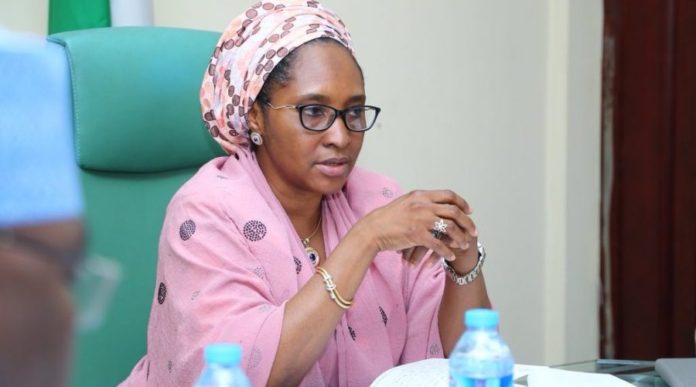
Minister of Finance, Budget and National Planning, Zainab Ahmed said the budget estimate was made up of N2.083 trillion capital expenditure, representing 29 per cent of the total budget.

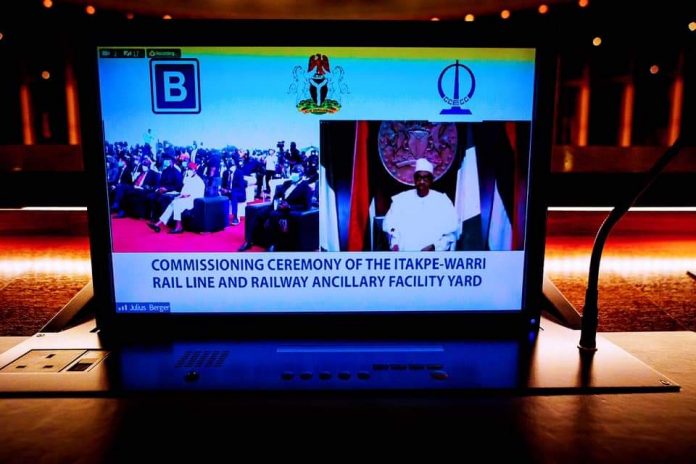
Buhari inaugurates 326 Km Itakpe-Ajaokuta-Warri rail line for commercial operations

After more than three decades’ delay, President Muhammadu Buhari on Tuesday inaugurated the 326km Itakpe-Ajaokuta-Warri rail line for commercial operations as well as the ancillary facilities yard, at the recently named Goodluck Jonathan Railway Complex in Agbor (Owa-Oyibu), Delta State.

According to a statement by Special Adviser to the President on Media on Publicity, Femi Adesina, President Buhari at the virtual opening of the rail line linking Itakpe to Warri, directed the Federal Ministry of Transportation to link all the nation’s ports of origin and destination – Apapa, Tin Can, Warri, Onne, Calabar Ports- to the rail network in order to significantly improve overall transportation and economic capacities.

Adesina said the President declared that his administration recognised the importance of the railway mode of transportation as a vital backbone to support industrialization and economic development.

“Accordingly, I have approved the prioritization of viable railway routes for either new rail lines or the reconstruction and rehabilitation of some, to achieve effective and efficient train services supporting the country’s trade and commerce.

”The Railway Infrastructure that I have the honour to commission today is the rail line from Itakpe via the steel town complex of Ajaokuta to Warri, and is an important link for the country’s economy as the central rail line.

”This Government has also approved to link this line further from Itakpe to Abuja, thereby, connecting the Northern Zone of the country and also extending southwards to link the Warri Ports,” he said.

He further stated that the President expressed confidence that the project, which serves as a vital link of South-South geopolitical zones of the country to the Northern zones, would be completed during the tenure of this administration.

”It will link people across the cultural divides and expand the frontier of trade and commerce, which will lead to better standards of living for our citizens,” he said.

President Buhari recalled that to further give recognition to Nigerian sons and daughters who have distinguished themselves at nation building and development , 11 railway stations and railway villages were named after some deserving citizens.

He listed them as follows: Adamu Attah Station, Itakpe; Abubakar Olusola Saraki Station, Ajaokuta; Augustus Aikhomu Station, Itogbo; George Innih Station, Agenebode; Anthony Enahoro Station, Uromi; Tom Ikimi Station, Ekehen and Samuel Ogbemudia Station, Igbanke.

Others are Goodluck Jonathan Railway Complex, Agbor, Owa-Oyibu; David Ejoor Station, Abraka; Michael Ibru Station, Opara; Alfred Rewane Station, Ujevwu; and Michael Akhigbe Railway Village, Agbor.

The President enjoined all Nigerians in the transportation industry, especially the railway sub-sector, to continue to support Government in its stride to achieve other railway infrastructure projects.

He also enlisted the support of all at realizing this milestone of a functional and full-fledged central railway, after more than 30 years during which the project has suffered several setbacks and false starts.

”I implore those who work on this line to uphold maintenance and safety culture necessary for long-lasting service in this difficult terrain.

”By the same token, I urge other sectors who will be primary beneficiaries of this transportation backbone, including, the iron and steel sector, stakeholders in agricultural and mining sectors on this corridor, as well as the host communities to protect and sustain this infrastructure and maximize the benefits that could be derived from it and which is readily available at their doorsteps.

”This project will increase the volume of their trade and kickstart and resuscitate the iron and steel complexes.

”All these, I hope will improve our industrial potentials and capacities as well as boost employment,’’ he said.

President Buhari said projections indicated that the commencement of operation of the Itakpe-Ajaokuta-Warri Rail line would account for close to one million passengers annually and also unleash approximately 3.5 million tonnes capacity of freight annually that will service all off-takers on the corridor and beyond.

Congratulating the Minister of Transportation Hon. Rotimi Chibuike Amaechi and his team on successfully completing the project, the President recognized the host communities on this corridor for their patience during the long wait of over 30 years for the realization of the project.

He also commended the host communities for their cooperation during the completion works by the Federal Government.

He assured Nigerians that his administration would continue, within available resources, to judiciously connect commercial and industrial hubs to boost trade, generate wealth and create employment.

In his remarks, Delta State Governor, Dr Ifeanyi Okowa commended President Buhari’s bi-partisan approach to governance, saying ‘‘it is a thing of pride and joy that this rail line was completed under your watch.’’

”Deltans are excited that this day has come,’’ he said, adding that the Ika nation is glad of the recognition accorded former President Goodluck Jonathan, in naming the railway complex in Agbor after him.
Okowa urged the private sector to take advantage of the historic corridor by establishing investments that will create jobs for locals, curb youth restiveness and stem the tide of criminality.

”It is imperative that the Federal Government in collaboration with the States provide adequate security cover for this rail line corridor,” he said.

In his remarks, Edo State Governor, Godwin Obaseki congratulated the President on the feat of completing the project, saying it is quite fortuitous that few days to the country’s 60th independence celebration, the President has achieved the completion of this critical infrastructure.

”For us in Edo State we are excited that we have a few stops that have been completed and we are going to be working with you to utilise this infrastructure,” he said.

The Edo Governor appealed to the minister of transportation to extend the rail line to the industrial park in Benin City to facilitate the movement of goods to the northern part of the country.

In his remarks, Minister Amaechi said the project was fully funded by the Nigerian government, adding that 8 of the 10 stations are in the Niger-Delta/ South South region of the country.

”There is no loan on this project, it was funded from the budget and I had the directive of the President to go and revive it and complete it as soon as possible,’’ he said.

According to the Transportation Minister, the project started under the military era in 1987 but ‘‘underwent protracted hiccups, prolonged abandonment and massive vandalisation,’’ before it was resuscitated by the Buhari administration.


In 3 Years, NNPC Paid Itself N1.53trn As Subsidy On Petrol

The Nigerian National Petroleum Corporation, NNPC, paid itself N1.53 trillion as subsidy on Premium Motor Spirit, PMS, also known as petrol, in three years and six months, from January 2017 to June 2020, according to series of documents obtained from the corporation.

According to the documents, in 2017, 2018 and 2019, the NNPC paid itself N144.53 billion, N730.86 billion and N551.22 billion respectively; while from January to June 2020, the NNPC deducted N106.992 billion from its total remittances as subsidy.

In 2016, no amount was spent on subsidy, while in 2015, the government had paid N306.917 billion to oil marketers and the NNPC as subsidy.

The NNPC called the payments under-recovery (another name for subsidy) and deducted it from the proceeds of its domestic crude oil sales, before making remittances to the Federation Account.

To ensure it does not go contrary to the law, the NNPC coined the term ‘under recovery’, because subsidy was not appropriated for in the budgets of the affected years.

In addition to the amount it said it incurred as under-recovery, Group Managing Director of the NNPC, Mallam Mele Kyari, in a statement by the corporation in Abuja, disclosed that government spent N2.13 trillion from 2016 to 2019, as subsidy on foreign exchange for marketers.

The NNPC became the sole importer of petrol in Nigeria in 2016 after the Federal Government introduced the price modulation mechanism, which saw the pump price of the commodity rise to between N143 to N145 per litre, from N97 per litre.

Irrespective of the hike in the pump price of the product then, few months after, marketers backed out of its importation, citing difficulties in accessing foreign exchange and government’s interference in fixing the price of the commodity below the actual price determined by the forces of demand and supply.

Few months after the hike in May 2016, the value of crude oil in the international market soared, while the value of Nigeria’s currency, the naira, slid to almost N500 to the dollar, from about N197 to the dollar.

This affected the landing cost of petrol, which skyrocketed, and in a short while, the country not wanting to hike the pump price of the commodity again, returned to subsidizing the product.

The NNPC, therefore, resorted to deducting the shortfall, that is, the difference between the actual cost of the product and the pump price of the product, from its earnings.

In the statement by the NNPC, Kyari disclosed that concrete steps had been taken to address the main concerns of marketers, especially the issue of availability of foreign exchange, stressing that the Central Bank of Nigeria, CBN, had already taken the first step of merging all foreign exchange windows to have a unified exchange rate.

He said: “It is really not in our interest to be the sole importer of PMS in the country. We have taken definite steps to exit the situation.

“This is a definite step taken and the details would be communicated to stakeholders like Major Oil Marketers Association of Nigeria, MOMAN; Depots and Petroleum Products Marketers Association of Nigeria (DAPPMAN), DAPMAN; Independent Petroleum Marketers Association of Nigeria, IPMAN, and others outside this forum.”

Kyari added that there were plans by the government to inject about N2.7 trillion into the Nigerian economy to stimulate production, stabilise the exchange rate and cushion the inflationary effect of the pump price increase.

He noted that the Federal Government was keen on driving the deregulation programme to create value for the country and ensure that Nigerians enjoy the benefits of the policy.

By Economicconfidential.com

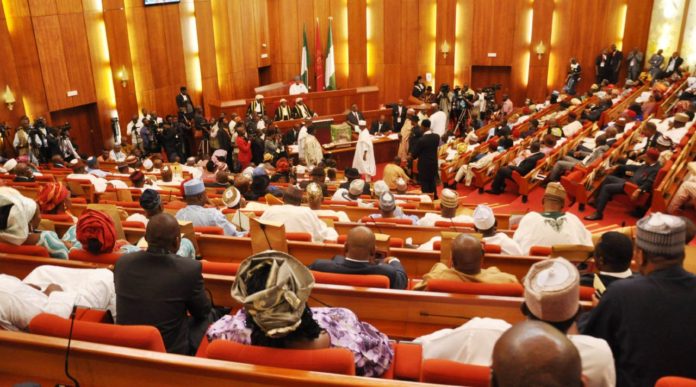
Senate receives Buhari’s request to confirm Eight nominees as Justices of Supreme Court, others

Senate on Tuesday received a request from President Muhammadu Buhari for the confirmation of eight Justices of the Court of Appeal as Justices of the Supreme Court of Nigeria.The request which was contained in a letter dated 31st August, 2020, was read on the floor during plenary by the President of the Senate, Ahmad Lawan.According to President Buhari, the request for the confirmation of the eight Justices to the Supreme Court was carried out in line with the provisions of section 231(2) of the 1999 Constitution and the advice of the National Judicial Council.The letter reads: “Pursuant to section 231(2) of the 1999 Constitution of the Federal Republic of Nigeria (as amended), and upon the advice of the National Judicial Council, I hereby present for confirmation by the Senate, the appointment of the underlisted Eight (8) Justices of the Court of Appeal as Justices of the Supreme Court of Nigeria, according to their ranking of seniority at the Court of Appeal.”They are: Hon. Justice Lawal Garba, North West; Hon. Justice Helen M. Ogunwumiju, South West; Hon. Justice Addu Aboki, North West; Hon. Justice I. M. M. Saulawa, North West; Hon. Justice Adamu Jauro, North East; Hon. Justice Samuel C. Oseji, South South; Hon. Justice Tijjani Abubakar, North East; and Hon. Justice Emmanuel A. Agim, South South.In another request to the Senate dated 14th September, 2020, President Buhari requested the confirmation of appointment of the Chairman, and Commissioners of the National Population Commission.The letter reads: “In accordance with the provision of Section 154 of the 1999 Constitution of the Federal Republic of Nigeria (as amended), I write to forward for confirmation by the Senate, the underlisted names of twelve (12) nominees as Chairman and Commissioners of the National Population Commission.The appointees are: Nasir Isa Kwarra (Nasarawa), Chairman; Ali Silas Agara (Nasarawa); Mohammed Chiso A. Dottoji (Sokoto); Gidado Razak Folorunso (Kwara); Ibrahim Mohammed (Bauchi); Hon. Joseph Kwali Shazin (FCT); Ajayi Ayodeji Sunday (Ekiti); Garba A. G. Zakar (Jigawa); Mai Aliyu Muhammad (Yobe); Muhammad Muttaka Rini (Zamfara); Hon. Engr. Bala Almu Banya (Katsina); and Mrs. Bimbola Salu-Hundeyin (Lagos).In a third request, President Buhari sought the confirmation of Ambassador Muhammad Haruna Manta and Yusuf Yunusa as Non-Career Ambassador-Designates.The request, according to the President, was made in accordance to Section 171(1),(2)(c) and sub-section (4) of the 1999 Constitution as amended.President Buhari noted that the appointment of both nominees serve as replacement to his earlier submission, wherein he nominated Air Commodore Peter Ndabake Gana (Rtd) and Alh. Yusuf Mohammed, from Niger and Yobe States respectively. (Sundiata Post)

Ex-First Bank employee jailed 98 years, to return N49m, $368,000 •14 internet fraudsters jailed

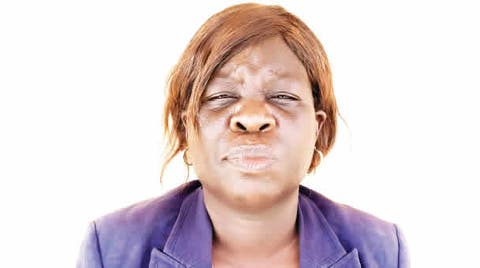
IBADAN – A former employee of First Bank of Nigeria Plc Oreoluwa Adesakin, has been handed a cumulative 98 years in prison on Monday.

Adesakin was found guilty of stealing N49,320,652.32 and another $368,203 belonging to the bank.

She was said to have converted the sums to her personal use.

The convict was prosecuted by the Ibadan zonal office of the Economic and Financial Crimes Commission and convicted on 14 counts bordering on stealing, forgery and fraudulent accounting.

One of the charges read, “That you, Oreoluwa Adesakin, sometime between the months of May, 2013 and November 2013, at Ibadan within the Ibadan Judicial Division, whilst being a staff member of First Bank Plc, stole the sum of N25,974,116.13 from First Bank Plc MoneyGram payment naira account, property of First bank Plc.”

She, however, pleaded not guilty to the charges, which necessitated her trial.

The prosecution counsel, Usman Murtala, presented vital documents and witnesses, which nailed the convict.

Justice Muniru Olagunju of the Oyo State High Court noted that the EFCC’s evidence against the convict was clear and showed that the agency did a diligent investigation on the case.

The judge pronounced Adesakin guilty of all the charges and sentenced her to seven years in prison without an option of fine on each of the 14 counts. The jail terms are to run concurrently.

The convict is also to pay restitution of the money she stole to First Bank through the EFCC.

The convict was arraigned on April 4, 2014, by the EFCC following the conclusion of investigation into a petition dated December 18, 2013, which was written by her former employer.

The bank alleged in the petition that Adesakin, as its money transfer operator saddled with the responsibility of effecting payment through Western Union Money Transfer and MoneyGram platforms, fraudulently manipulated the accounting system and withdrew the sums of N49,320,652.32 and $368,203 for herself, which it uncovered while reviewing its internal account.

The EFCC also established the fact that the convict used part of the proceeds of her crime to acquire landed property in different parts of Oyo State.

Meanwhile, Justice Simon Amobeda of the Federal High Court in Calabar, Cross River State, has sentenced 14 Internet fraudsters to various jail terms.

The fraudsters, Victor Ogadibo, Unwana Edem, Michael Omos, Emediong Iwoenang, Christian Okechukwu, Ogbuechi Ifeanyi, Anozie Franklin, Clinton Onyekachi, Princewill Egerue, Akpodiete Moses, Innocent Japheth, Ugwuegbu Ikenna, Ndulaka Chukwuebuka and Opara Daniel, were arraigned before the court by the EFCC and pleaded guilty to the charges.

Justice Amobeda sentenced Edem, Ikenna and Franklin to six months’ imprisonment each with an option of N500,000 fine, while Onyekachi, Ifeanyi, Victor, Ndulaka and Opara were sentenced to six months’ imprisonment each with an option of N200,000 fine.

Princewill and Moses were sentenced to 12 months’ imprisonment each with an option of N700,000 fine, while Christian, Michael and Innocent were sentenced to 12 months imprisonment each with an option of N1m fine. Emediong was sentenced to three months imprisonment with an option of N100,000 fine.

The court further ordered that Onyekachi, Victor and Ifeanyi should return the sums of $2,000, $3,000 and $200, respectively to their victims through the prosecution and should forfeit the instruments used to commit the crime, including their phones, laptops and cars to the Federal Government.

The Head, Media and Publicity, EFCC, Wilson Uwujaren, in a statement on Tuesday, said the 14 convicts admitted to the crime and made confessional statements to the agency, adding that forensic analysis of their phones and laptops revealed that while some of them specialised in love scams, others impersonated military personnel of the United States purportedly on a foreign mission and needed financial help as they could not access their funds.

Uwajaren added that the convicts made their victims give them gift cards, which they changed to Bitcoin and then to naira. (Punch)

FG to decongest juvenile inmates in prisons

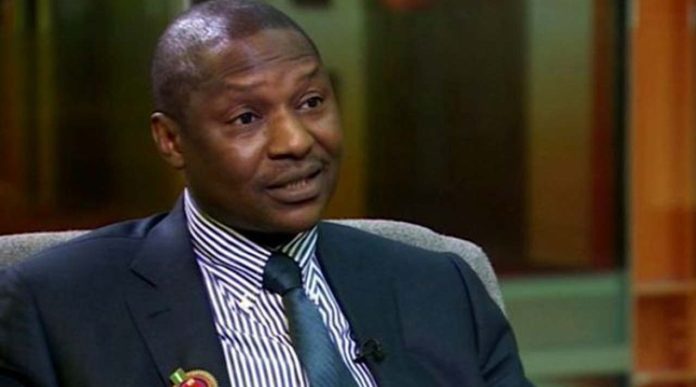
The Attorney-General of the Federation and Minister of Justice, Mr Abubakar Malami (SAN), said on Tuesday that the Federal Government was planning to embark on second phase of prison decongestion exercise which would focus on juvenile inmates.

The minister who spoke during a virtual interactive session with the Attorneys-General and  Commissioners of Justice and heads of courts, said 3,751 inmates were released in a nationwide decongestion exercise shortly after the outbreak of COVID-19.

He said, “I am glad to inform you that by way of leveraging on the achievements recorded during the said exercise, the Ministry has articulated plans for the second phase of the Nationwide Custodial Decongestion which will this time, focus on implementing amnesty and decongestion for juveniles deprived of their liberty during the COVID-19 Pandemic and beyond and will entail the collaborative efforts of the State Attorneys-General, heads of Court of the 36 states and the FCT, the Ministry of Women Affairs, the Nigerian Correctional Service, Non-Government Organizations like the United Nations Children’s Funds as well as, other relevant cum critical justice sector stakeholders.”

The Tuesday’s event was co-organised by the Federal Ministry of Justice, the Presidential Committee on Correctional Service Reform and Decongestion and the United Nations Children’s Funds. (Sundiata Post)  

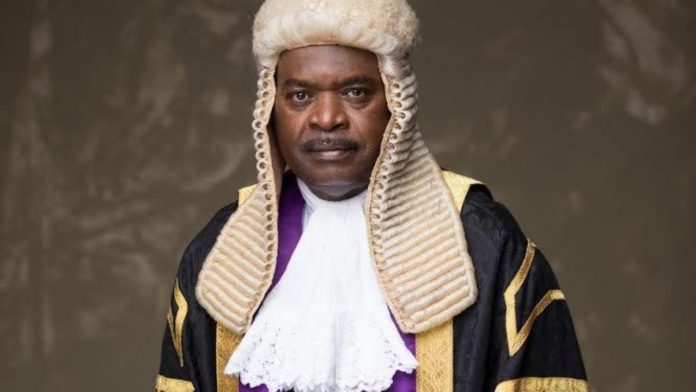
Justice Ishaq Bello’s Nomination is a Poor Choice for ICC Job


Although Nigeria has a robust procedure for appointing judges into courts of records, this process is often observed in the breach.

Merit is often sacrificed for family connection or political patronage.

Speaking at the Nigerian Bar Association’s Annual General Conference in August, Nigeria’s President Muhammadu Buhari made a case for continuous improvement of the selection processes for appointment of the men and women who serve on the bench. “First we must cast our nets wider in search of judges, especially at the appellate level. Second we must put in place primarily merit-based selection processes including mandatory tests and interviews for all applicants for judgeships”, said the president. 

One would have expected the president to insist that the net be cast wider and the process be more rigorous to select a qualified candidate for nomination as an International Criminal Court (ICC) judge. Viewed from both the perspective of the nomination process and suitability, Ishaq Bello is not a good candidate for appointment as a judge of the ICC.

Although Bello has considerable years of experience as a high court judge, he is a product of a flawed nomination process, has a poor record of upholding justice, and participated in a process that recommended unqualified lawyers for appointment as judges.

Ordinarily, his experience should have put him in good stead for the ICC job. Before he was appointed a judge, he had worked as state counsel, magistrate, and deputy chief registrar of Nigeria’s highest court, the Supreme Court. He was appointed judge of the High Court of the  Federal Capital Territory in 1997, and chief judge in 2015.

As chief judge, Bello regularly visits prisons to free those who have spent more years awaiting trial than years they are likely to serve on conviction. In October 2017, he was appointed chairman of a Presidential Committee on Prison Reforms and De-congestion (now Presidential Committee on Correctional Service Reforms and De-congestion). Since its inauguration, the Committee has released over 3768 individuals from 36 correctional facilities across the country.

That is perhaps where the positives end.

His handling of the trial of policemen charged with extra judicial killings of six traders in Abuja in 2005 left a dent in Bello’s career as a judge. It took him 12 years to conclude the trial. The delay was a deliberate ploy to help one of the officers charged with the murder escape justice.

Then his judgment was even more bizarre. At the trial, a witness testified that a senior police officer personally shot at the victims, while also ordering his subordinates to shoot them. In his judgement, Justice Bello convicted the subordinates, but acquitted the senior officer. He argued that contradictory witness testimony and unavailability of the senior officer’s fingerprints after the arrest made it impossible to establish his culpability. Many who followed the trial felt that that reasoning was strange. He eventually sentenced two junior policemen to death, although there were no fingerprints of the two either. The victims’ relatives are of the view that Justice Bello deliberately helped the senior police officer escape justice for reasons unrelated to the evidence.

The injustice allegedly perpetrated by Bello’s tainted judgment could not be redressed on appeal because the Attorney General of the Federation, Abubakar Malami refuses to file an appeal despite pressure from the relatives of the victims of the extrajudicial killings. Abubakar Malami recently recommended Bello for nomination for the ICC job and has refused to issue a fiat to a private prosecutor to appeal the judgment. Bello, the senior police officer and Abubakar Malami are from the same part of Nigeria and share similar backgrounds.

Early this year, Bello played a key role in recommending unqualified lawyers to be appointed as judges of courts where he presided as the chief judge.

In 2018, a senator (member of Nigeria’s upper legislative chamber- the Senate) led armed thugs to invade the chambers of the Senate, from where he stole the mace – the legislative symbol of authority. Following civil society pressure for the senator to be prosecuted, Bello, sitting as chief judge, issued an ex parte order barring police and other security agencies from arresting the senator for interrogation. That ruling is against long established precedent that courts have no power to stop law enforcement agencies from carrying out their constitutional duties. Worse still, Bello issued the order without giving the law enforcement agencies an opportunity to be heard.

The process that led to Bello’s nomination is shrouded in secrecy. It smacks of cronyism, a trait that the administration of President Muhammadu Buhari has become notorious for. Applications were not invited from suitable candidates. Civil society organizations were shut out. No interview was conducted.

Nigeria should not be allowed to infect the world with her cronyism.

Audu Emakpe (pseudonym) is a lawyer who has appeared before Justice Ishaq Bello as counsel. He has chosen to write under a different name for fear of reprisal as he continues to practice as a legal practitioner.

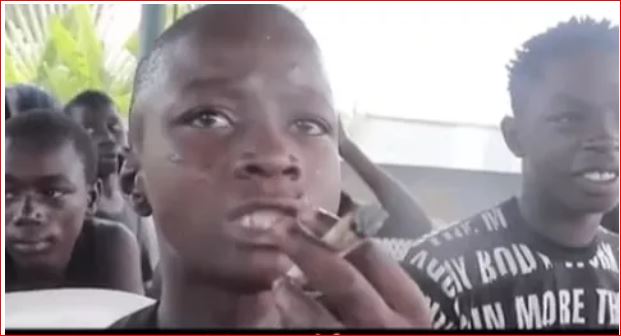
DANGER!! Meet The Deadliest 11-Year Old Boy ”Shanowole” That Terrorized Lagos Community – See What He Looks Like Now After Rehabilitation

Few years ago, the senior pastor of This Present House Tony Rapu rescued an 11-Year-old boy who is a cultist and claimed to have been involved in violence leading to murder, off the streets.

The 11-year-old boy known as “Shanawole” is currently undergoing rehabilitation at the Freedom Foundation founded by Pastor Tony Rapu.

Shanowole recounts how he got into the underworld, The notorious cultist who also claimed to enjoy smoking Indian hemp, further explained that if anyone tries to fight them, he and his boys would hit on the person very hard, often times leaving them dead or maimed for life. He also said he robs.

Just like the story of many disillusioned young boys and girls on the streets out there, he was on the streets causing mayhem. However, his story changed after his encounter with Pastor Tony Rapu who has taken it as a mission to take people like Shanowole off the streets.

Revealing his life story, Shanawole who is now known as Micheal was a terror on the streets. Many described him as scary and the young man admitted to being a killer as part of the Eiye cult.

Asides being a trouble starter, at age 11, Michael was exposed to a habit of smoking and ingesting illegal substances. Michael who has various scars around his body birthed from several fights and clashes with other cult groups could be described as a victim of circumstance before he met the man of God who turned his life around.

Recall that Scooper News earlier shared the story of Lizzy who speaks eloquently but was into begging, drugs and prostitution.

Please check out the Story Here:

Meanwhile, Apart from being the senior pastor of This Present House, Pastor Tony Rapu is also a medical doctor. He once wrote a lengthy letter to Shanawole who he refers to as son on Father’s Day. The letter immediately went viral that year, bringing a lot of praises and encomiums from well-wishers and members of the public.

Read the letter below:

Dear Shanawole,

It’s another Father’s Day, but I know that until now this day has not held much meaning for you. For you, the concept of a father has been a fuzzy one, perhaps nothing more than a term used to describe an older man. You grew up on the streets, never knowing the warmth of a hug from a natural father, never experiencing that strong voice of protection and direction that a father brings into the life of his son. There have been no words of caution to steady you when the adrenaline is pumping through your veins, causing that strong temptation to do what you know is wrong.

When other children your age recount the joy of a dad teaching them a game, watching them play, and rejoicing or commiserating with them afterwards, to you their stories only exacerbate the painful void that exists within you. This is the same feeling that often tugs at the heart of the girl who never knew her dad. She feels a pang of pain perhaps when she imagines not having her father there to walk her down the aisle on her wedding day. Even some of our single mums live daily with the stigma and feeling of loss that comes from raising a ‘fatherless’ child.

My dear Shanawole, it’s easy to take the downward slide into drugs, violence and rebellion as you have done. It can be very tempting to revolt against a world that has been cold and unloving towards you. And that has been your journey. You have rebelled against society, you have until now counted yourself out of life’s best, imagining that a home, a loving family and valuable contributions to society are beyond your reach, something only a privileged few attain to.

I know the odds seem stacked against you; I know many have counted you out and spoken harsh words to you. I am aware that life often seems unfair. I know the pain you’ve encountered at the hands of those who should have protected you. The only words you may have heard are words of rejection and negativity. You have been told to your face that you will never amount to anything and that your life has little value. Yet, I want you to know that not everyone takes the downward spiral. Some with even seemingly worse circumstances have broken free from the cycle of failure.

Life is about choices. Nothing stays broken forever, unless you want it to — not a life, not a career, family, body, finance, nothing! You can escape, you can choose to leave the pain behind, you can fill that black hole left by someone’s abandonment. You can be the answer to someone’s prayers, you can find that love you need to move forward, you can change your family history forever.

https://youtube.com/watch?v=NHswAoD8hdc%3Fautoplay%3D1%26controls%3D1

TIPS