Home Blog Page 1252

A Nigerian internet or social media shutdown? What to know and do

Two fears arise every time citizens of an African country take to the streets en masse to criticize some aspect of their government’s performance: that the government will shut down the internet, or that access to social media sites will be restricted.

The recent history of citizen demonstrations from the Arab Spring in 2011 to events in Ethiopia, Cameroon, the Democratic Republic of Congo, and Zimbabwe validate these fears. 

When governments order shutdowns, there’s little wiggle room for dissent even for the most progressive or good-intentioned telecommunications operator.

For example, when Zimbabwe ordered a shutdown in January 2019, Strive Masiyiwa couldn’t tap into his global fame and liberal democratic appeal to resist. His Econet, the country’s largest telecoms company, had to block access to internet services, else management would face three years imprisonment.

Life in a country without the internet feels like being cut off from the world. In 2020, being without the internet is equivalent to living under a rock.

Without a workaround, the only way to access your email could be to phone a friend abroad and give them your login details. The rapid exchange of information through WhatsApp and Twitter that now seem normal suddenly become novel things to long for. 

If you’re in Lagos Nigeria, no Uber or Bolt means those infamous yellow taxi cabs are all you’ve got for private trips. Costs of work-from-home company calls will rise dramatically to the point of prohibition.

It’s a grim reality. Here’s how it would play out and what to anticipate.

‘NCC says pull the plug’

A request from the Office of the National Security Adviser raising national security concerns is sufficient for an internet shutdown order to become reality in Nigeria.

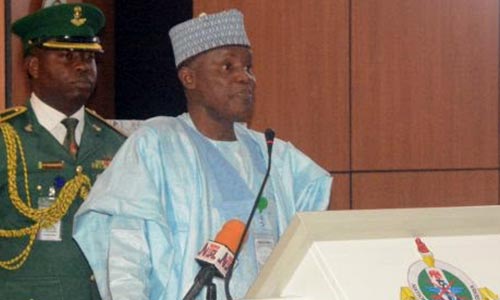
The NSA, at this time Babagana Monguno – a retired major general, would send a directive to the Executive Vice Chairman of the Nigeria Communications Commission. The request will be for the NCC to direct its licensees to pull the plug.

“That’s the most likely route,” says Adeboye Adegoke, programme manager at Paradigm Initiative, a digital rights advocacy group.

“It is not impossible but we hope it doesn’t get to this. The government’s response to the [#EndSARS] protest has been double faced.”

An internet shutdown in Nigeria would require tier 1 internet service providers (MTN, Glo, Airtel, MainOne) to shut down their connections by disconnecting their servers from authorised data exchange points within the country. The Nigerian internet as we know it is an interconnection between these ISPs.

The alternative to a shutdown – blocking access to social media sites – would mean these ISPs will be mandated to not forward traffic from websites like Twitter and Facebook. The ISPs will block each of these site’s IP addresses from all its users, or delete the sites from their DNS servers; you’ll be told the site doesn’t exist when you try to connect. 

Paradigm Initiative published a guide for Malawians ahead of their May 2019 elections about staying online in the event of government-sanctioned internet shutdowns. Adegoke says they are working on specific steps for Nigerians. 

The guide focuses on what to expect when specific websites are blocked, and in times of total shutdowns.

To access blocked sites, two options are available: installing the TOR browser or using a trusted Virtual Private Network (VPN).

Put simply, a VPN helps a user create a private network from a public connection. Your IP address will be anonymous (a VPN creates one that shields yours) and your online activity is virtually untraceable. Essentially, it’s a tunnel for your phone or PC to stay in touch when highways are under patrol.  

Paradigm Initiative’s guide lists PsiphonLantern and Tunnelbear as free VPNs that can be trusted to work on Windows, Android and Mac/iOS devices. I’ll include Proton because it has been recommended to me by a cybersecurity professional in a bank, but it’s free version doesn’t grant access to blocked content.

These can preserve your connection to social media sites when they are blocked.

When the internet is completely shut down, there’s really no way to dwell on a website on the internet.

Twitter used to have a feature for tweeting by SMS – this was how the service was originally designed. But it was disabled in September 2019 due to security issues after CEO Jack Dorsey got hacked. They confirmed in April this year that Twitter via SMS has been turned off in all but a few countries; Nigeria isn’t included.

But people can connect to each other by using some offline messaging apps. For now, Bridgefy is the most notable. It requires a Bluetooth connection to broadcast messages to people around you, and as such must be used cautiously.https://platform.twitter.com/embed/index.html?creatorScreenName=nochieonukwue&dnt=true&embedId=twitter-widget-0&frame=false&hideCard=false&hideThread=false&id=1316379859896209423&lang=en&origin=https%3A%2F%2Ftechcabal.com%2F2020%2F10%2F14%2Fnigeria-internet-shutdown-2020-end-sars%2F&siteScreenName=techcabal&theme=light&widgetsVersion=ed20a2b%3A1601588405575&width=500px

‘Protection from falsehood’

Every internet shutdown has a common theme: the government wants to dictate what information should be exchanged by people in a country, whether between themselves or with those outside. 

The government in question may not be a dictatorship but it sure wants to dictate.

Nigeria hasn’t had an internet shutdown. There are good reasons to believe it won’t happen, the strongest being that the country’s banking system is more cashless than ever before. 

Over ₦15 billion (~ $33 million) was transacted through Nigeria’s Instant Payment terminal in September 2020 alone. Mobile money operations in 2019 were valued at ₦5.1 trillion (~ $12.7 billion), according to the Nigeria Inter-bank Settlement Scheme’s data.

In-bank transactions are falling as the use of digital bank apps and USSD services rise.

But this digital banking adoption has been driven largely by the youth – the same demographic that prioritizes the internet (and social media) as the platform of choice for media consumption. A history of Nigeria’s treatment of the media is a clear signal as to why no one should be confident of the internet’s inviolability. 

To give one example: armed soldiers raid newspaper depots on the weekend of 7th June 2014 based on “orders from above” as the BBC reported.

The newspapers were accused of “publishing and selling falsehood” and helping the distribution of explosives that would “wreak havoc.”

Six years later, these terms feel eerily familiar to internet users. The 2019 National Assembly social media bill was tagged “protection from falsehood.” This week, Flutterwave reportedly answered a brief summon by the Central Bank of Nigeria over concerns that it’s web-based payments platform was being used to aid #EndSARS protests.

Nigeria may not go ahead with an outright internet ban but it doesn’t hurt to stay vigilant. In case you need a reminder, here’s what that 2019 social media bill aimed to achieve:

Techcabal

#EndSARS: Things left unsaid, By Dakuku Peterside

On Friday, 18 December 2010, a man named Mohamed Bouazizi, protesting police corruption and ill-treatment, set himself on fire in the Tunisian city of Sidi Bouzid. This action sparked a series of protests in Tunisia. From Tunisia, the protests spread to five other countries: Libya, Egypt, Yemen, Syria and Bahrain. The consequent anti-government protests, uprisings, and armed rebellions later spread across much of the Arab world in the early 2010s. The masses were protesting oppressive regimes and a low standard of living.

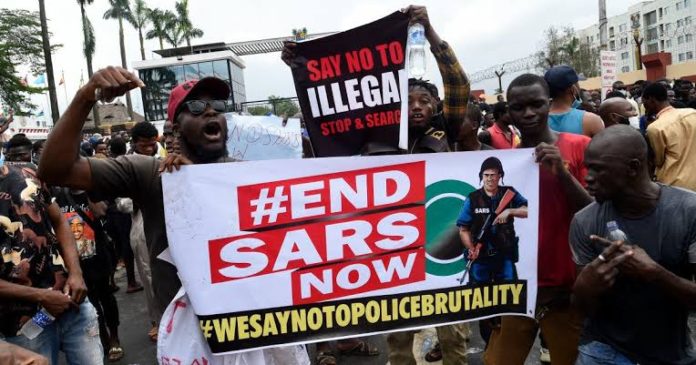
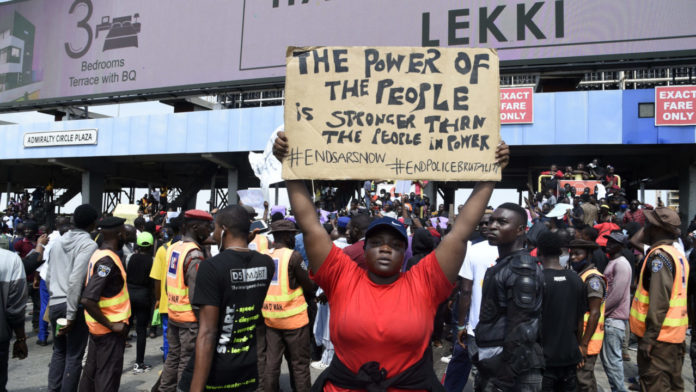
Here in Nigeria, on Saturday, 3 October 2020, at Wetland Hotel, Ughelli in Delta State, a police officer attached to the Special Anti-Robbery Squad (SARS) shot a young man, and he and his colleagues took away a Lexus SUV belonging to the victim. This event captured on video started trending, wildly, on Twitter. The resultant public outcry led to nation-wide protests tagged #EndSARS. Since 8 October the country has been overwhelmed with outcry and anger with videos and pictures showing police brutality, harassment and extortion in Nigeria. The protests were led predominantly by young Nigerians in different cities alongside many activists and celebrities.

The #EndSARS protests have gained international traction and are perhaps the most famous hashtag on Twitter in the last week. From rapper and US presidential candidate, Kayne West; Arsenal FC midfielder Mesut Ozil, to British media personality, Piers Morgan, a lot of people across the globe have lent their voice to the protest against police brutality in Nigeria.

Jack Dorsey, the CEO of Twitter, even entered the fray. He twitted the #EndSARS hashtag and urged protesters who seem to be having difficulties in securing a viable platform for raising funds for the protest to consider using bitcoin. The #EndSARS hashtag has been used over 50 million times on Twitter.

This current EndSARS protest is propelled by social media, which is playing a significant role in facilitating communication and interaction among participants of the protests. Protesters are using social media to organise demonstrations, disseminate information about their activities, and raise local and global awareness of ongoing events. With Twitter and Facebook, especially, protesters do not need the traditional media to spread their message. In this way, the movement virtually takes a life of its own.

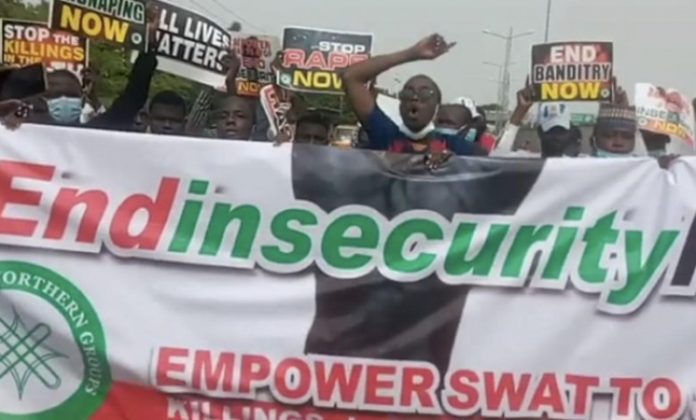
The #EndSARS campaign is still ongoing as Nigerian youths have been camped in the streets for days now. From Lagos to Port Harcourt to Abuja, major roads are blocked, economic and social activities are severely disrupted, and unfortunately, precious lives have been lost.

There have been #EndSARS protests in London and other major global cities with young people leading the movement.

This upheaval is gradually metamorphosising into a youth protest about everything that is wrong with Nigeria. Most youths are lending their voices and venting their anger against insecurity, kidnapping and general lawlessness in all parts of the country. They are complaining bitterly against impunity, nepotism and corruption. They complain against grinding poverty and low quality of living of the majority. They complain against the insensitivity of some government officials who act like colossal demigods bestriding the local and national space filled with people they consider nincompoops. They complain against the high rate of unemployment and the worsening state of under-employment faced by over 70% of Nigerians. In summation, it is a symbol of all sorts of frustration with the Nigerian nation.

Important rhetorical questions arise at this juncture: does government need a protest before tackling these myriads of issues? Should all stakeholders not listen to the “voices of the voiceless” youths and start the necessary engagements and changes to avert any impending doom in the horizon?

The problem with the protests is that there are signs that no one can determine how it is going to end. For instance, although the government conceded to the demand of the protesters and disbanded SARS, the protesters still demanded an address by the President. The President addressed the nation on the issue, yet the protesters are demanding for more. They had a 5-point demand, which the government has met, but they are still protesting. Many people are unsure what the current direction of the protesters is. What is clear is that Nigerian youths are very angry with the current situation in the country, which is a product of many years of visionless leadership and mismanagement.

A keen observer of events in Nigeria in the past few decades will notice that this kind of situation was on the horizon. The SARS problem and other forms of police brutality had lingered for too long. The Nigerian police are reputed to be the most corrupt in the world. Each time there is a public outcry, the authorities take cosmetic measures.

There was a time the police authorities changed the name from SARS to FSARS in reaction to acts of lawlessness, high-handedness and impunity by people who are supposed to be custodians of the law. Many see government action as window dressing as police brutality continued. Police continued treating any young man seen wearing dreadlocks or carrying a laptop as a “Yahoo Boy”, a byword for internet fraudsters; they insisted on going through peoples phones, and they killed and maimed with odious impunity. This is not to say there are no good men in the police or all police personnel are bad. Nigerian police is a force for good except for a few rotten eggs amongst them.

It is clear that the protesters mostly consist of youths who seek meaningful engagement. We have undergraduates who are at home because the Academic Staff of Nigerian Universities (ASUU) is currently on strike. The ASUU vs FG imbroglio has become a recurring decimal in the life of our nation. Incessant ASUU strikes have become part and parcel of our educational system. It is possible that with the #EndSARS protest, the chicken will finally come home to roost for the government and the society. Engagement with the youths is no longer an option or luxury; it is apt and timely.

Apart from undergraduates, millions of unemployed youths see the #EndSARS protest as an opportunity to vent their anger on the government and society they accused of failing them. Are the government and the society about to pay the price for lack of meaningful engagement with our youths? Is the government getting battered because of the difficult economic conditions, which has lingered over the years?

I was alarmed when I saw some people donating food and drinks to the protesters. In a country that is said to be the poverty capital of the world, who can convince thousands of hungry Nigerian youths to go home when the streets provide them with food to eat and for some criminal elements amongst them, the opportunity to loot? There is suspicion in some quarters that some anti-government elements are cashing in on the situation to fuel the protest even more. They provide food and logistics to the protesters and funding for other activities. This action will indeed extend the protests and portends for a sinister outcome.

The government should be careful in handling the protests and protesters. The current Covid-19 economic malaise had led the government to make some decisions that would hurt the masses in the short run but would ultimately be beneficial to all and sundry in the long run. The removal of petroleum subsidy has led to higher fuel prices and the increment in electricity tariff means that Nigerians who can see elusive electricity are paying more for it. As the economic situation becomes more challenging and harder for the citizens, so would the propensity to join in any protest that targets the government, which allows them to vent their anger.

Therefore, the government needs to continue in meaningful engagement with the protesters and ensure that our trigger-happy law enforcement agencies apply the highest degree of professionalism and restraint in dealing with the visibly angry youths. Beyond mere pronouncements, the government should take concrete actions to show that it is not business as usual.

Members of the now-disbanded SARS who engaged in wanton killing of innocent youths should face the full wrath of the law while genuine reforms of the Nigerian police starts in earnest and not by the police. Nobody should expect the police to be on the driver’s seat of police reforms. Every stakeholder who has something to offer, including the young people who are leading the protest should be involved in the reforms.

Be it as it may, the government should not allow itself to be held hostage by subversive elements who failed through the ballot box but who want to take advantage of the current situation to perform acts of sedition capable of undermining the peace and security of Nigerians. If these people are indeed opposition politicians like many people suspect, the law should take its course.

After the last of the protesters has gone home, there is a need for stakeholders to take a holistic look at governance in general. There currently exists a considerable lacuna between the government and the governed. At every election cycle, leaders make strenuous efforts to seek the support and votes of the electorate. But after elected to office, most of the leaders transform into autocrats and pseudo-despots. They enact policies and programmes that are anti-people and govern in a way that looks like those that elected them do not matter.

In most instances, the citizenry watch in awe and utter resignation as the leaders trample on all manner of norms and decency.

But as the current protests have revealed, the citizens can rise to demand that their voices are heard. Maybe after some days or weeks, the #EndSARS protesters will disperse. But it should be clear to our leaders that the Nigerian youths have realised a viable avenue of bringing about social change, protest. Taking them for granted will ultimately lead to consequences, so far-reaching that it can completely transform the fabrics of our society.

Indeed, Nigeria has everything it takes to be a great nation. However, all Nigerians must change their ways in all facets of our national existence. Every section of the country must not only be seen to have a sense of belonging but must have it. There must be justice, equity, and equal opportunities for all. Nigerians must rise above primordial sentiments of ethnicity, religiosity and clannish bigotry. We should eschew mediocrity, nepotism and impunity whilst embracing and promoting meritocracy, accountability, transparency and efficiency in managing our resources.

The #EndSARS protest has sent a clear signal that the youths of Nigeria have found their voice and the message is that we need comprehensive reform in all sectors of our country, be it security, education, healthcare, governance, economy or youth engagement. To assume that it is all about police brutality is a simplistic interpretation of a complex phenomenon.

Dr Dakuku Peterside (DAP), leadership & organisational development consultant, is a corporate Political strategist and newspaper columnist. He can be reached on +2348033123801.

WHETHER EVIDENCE ADDUCED DURING TRIAL WITHIN TRIAL CAN BE USED IN THE MAIN TRIAL

“So PW1 was cross-examined by appellant’s counsel at the trial-within-trial, but the law says that a trial within trial is a separate and distinct proceedings from the main trial, therefore, evidence adduced therein “cannot be translated, injected or imported into the main trial”. See Ifaramoye v. State (2017) LPELR – SC, (2017) 8 NWLR (pt 1568) 457. Thus, whatever PW1 said at the trial within trial in evidence in chief or cross examination, stays there and cannot be used, in anyway or form, in the main trial.”

AYOADE V. STATE (2020) 9 NWLR (PT 1730) 577 SC @ 603 PARAS F – G, Per Augie, JSC.

#EndSARS protesters block CBN head office

Protesters demanding an end to police brutality have blocked the two entrances of the Central Bank of Nigeria (CBN) head office in Abuja.

Chanting anti-government songs and wielding different placards, the protesters have vowed to prevent activities at the nation’s apex bank on Monday.

The protesters packed vehicles in front of the main gate of the CBN headquarters, blocking movement in and out of the premises and from connecting roads.

While hundreds of the protesters are in front of the building, some of them are also camped on the road by the rear exit of the building.

As of 9:30pm, music was blaring from loudspeakers at the premises while some of them vowed to spend the night there.

Security operatives guarding the building are on standby in case of any break out of violence.

North’s Stand On #EndSARS Validates Calls For Restructuring — Ozekhome, SAN

..Says DHIS, governors at liberty to advocate what is good for their people

Renowned constitutional lawyer and human rights activist, Mike Ozekhome has said the position of prominent leaders on the recent disbandment of the Special Anti- Robbery Squad, SARS, by the federal government has again validates the need to urgently restructure the country.

Ozekhome who spoke against the backdrop of remarks credited to the chairman, Northern Governors’ Forum and governor of Plateau state Simon Lalong that the North is against the dissolution of SARS, noted that in preferring to stick with SARS, the nation should now be restructured to enable the component parts decide on what works for them.

Governor Lalong had while briefing President Muhammadu Buhari recently on the issue said: “Some people said they don’t want SARS, some said they want SARS but a reformed SARS. They want a reformed SARS because as far as they are concerned, some of these SARS operatives help them in addressing insecurity.

“Our opinion and conclusion at this stage is that let us not just say that we are throwing away the baby with the bath water. If there are good ones, you don’t chase them away.

“So as SARS is banned, we are now looking forward to an opinion because most of the states in the North said no. They want SARS because SARS helps them.

It would be recalled that few days after the disbandment of the police special unit, a non-governmental organization, Digital Home with Internal Solution, DHIS founded by Ambassador Ibrahim Bala Aboki faulted what it called the “hurried” dissolution of the Special Anti-Robbery Squad, SARS, of the Nigerian Police Force by Inspector General of Police, Muhammed Adamu, saying the development is capable of posing a serious security threat across the country.

Addressing a world press conference in Kano, Aboki noted that though, some bad eggs had over the years portrayed SARS in bad light; reform, he said should have been the way out order than outright disbandment.

“DHIS condemns in totality the uncivilized approach by most political commentators through their reckless use of social media to fuel this ugly development. To us in DHIS, the disbandment of SARS is a serious security threat to the nation, especially because of the onerous task of this special arm of the Nigerian Police Force. Nigerians will recall that before the creation of SARS in 1992, there were so many cases of armed robbery, kidnapping and other security vices. But the activities of this special force have reduced the operation of these criminal gangs across the country.

“We are aware that there are some few bad elements in the force that have been terrorizing innocent citizens of Nigeria, but we are totally against the disbandment of this special unit in the Nigeria Police Force. Rather, we want to advocate for a total overhaul of not just the operation of SARS, but the entire police force in order to meet with the demand of Nigerians on community policing.”

Speaking exclusively with Vanguard in Abuja, the Senior Advocate of Nigeria said: “If the North says they want SARS, and the entire South-South, South-East and South-West say they don’t want, it is a reaffirmation of the urgent need for the restructuring of Nigeria that we have been talking about.

“It means that the requirement of one state or region are not exactly the same with others. This is the reaffirmation of the urgency of now and yesterday to urgently restructure Nigeria and allow each state and each geo-political zone to do things the way they deem fit.

“The South-West has started Amotekun, the South-East and South-South, as well as the Middle Belt, should start their own. This will not in any way means that Nigeria has balkanised. It simply means that like the United States of America, every state does its own thing its own way.”

Protest against SARS and police brutality has continued nationwide in the past one week with some governors reportedly embarrassed by a mass of youths registering their displeasure on the state of affairs in the country.

#EndSARS: NHRC Directs State Offices To Monitor Human Rights Violations During Protest From October 19

National Human Rights Commission (NHRC) has directed all its offices in the respective States including Federal Capital Territory, Abuja, to monitor the ongoing #EndSARS protest across the nation, as it relates to human rights violations.

This was disclosed in a tweet on Sunday by the Commission which was sighted by TheNigeriaLawyer, titled “NOTICE TO ALL NHRC STATE OFFICES AND HEADQUARTERS ABUJA. MONITORING OF HUMAN RIGHTS VIOLATIONS DURING THE #ENDSARS  PROTESTS.”

“Please note that at the state & monitoring Dept at headquarters, you are required to go out and follow the #EndSARS  protesters to monitor the protests in the various states and Abuja to protect their human rights.”

In addition, it was added that the essence is to monitor and protect the human rights of the protesters.

“Please note that at the state & monitoring Dept at headquarters, you are required to go out and follow the #EndSARS  protesters to monitor the protests in the various states and Abuja to protect their human rights.”

In addition, it was added that they “are to bring reports of any human rights violations by security and law enforcement personnel or thugs against the peaceful #EndSARS protesters. You are to send a weekly reports of the monitoring exercise.”

Furthermore, it was directed that an officer is to be saddled with the responsibility and reports should be sent every Sunday.

“An officer should be charged with this activity in the state or Monitoring Dept to ensure you send your report by Sunday evening every week. This exercise to go with and monitor the safety of the #EndSARS  protesters will commence from tomorrow Monday 19th October 2020.”

“All reports to the commissions’ email are to be marked for the attention of monitoring Dept”, it was concluded.

#EndSARS: Defence Minister Warns Protesters On National Security

The Minister of Defence Maj Gen Bashir Salihi Magashi (Rtd) has cautioned EndSARS protesters against breaching National Security.

General Magashi gave the caution when the National Coordinator Buhari Campaign Organisation (BCO) Danladi Pasali led the Executives drawn from its Headquarters, Zonal and State levels on a courtesy visit to him at the Ministry of Defence, Ship House, Abuja.

He extolled the virtues of President Muhammadu Buhari whom he described as a forthright leader and thanked members of the Buhari Campaign Organisation for promoting his political ideology, democratic governance, Rule of Law and philosophy.

The Minister of Defence who told the group of his pioneering membership of the Buhari Organisation which dates back to the years of All Nigeria Peoples Party (ANPP) told them to fortify their flanks and ranks against subversive penetration of mischief-makers capable of causing distraction, disaffection and division among them.

He assured them of the support of the Ministry of Defence in actualising their lofty programmes in raising the bar of national security.

He said they should leverage on their structure in the 774 Local Council areas and 36 States of the Federation as well as the Federal Capital Territory to gather intelligence and channel it to the appropriate authorities for action.

Earlier, the National Coordinator of the Organisation, Danladi Pasali said the objective of the courtesy call was to congratulate the Minister on his one year in office and to thank him for emplacing what he called gigantic reforms in the Military.

While thanking General Magashi for his focused leadership in contributing to the National Peace and Security, they offered to render service to the relevant Authorities to burst crimes capable of threatening Peace and Security in the country.

The National Coordinator who recalled the dogged and dedicated role played by the group in the electoral victories of President Muhammadu Buhari in the 2011 and 2019 Presidential elections said the Organisation is spurred to establish National/ Community Support Security Initiative to key into the fight against Boko HaramTerrorists in the North East, Banditry in the North Central and kidnapping in the Niger Delta Region.

Venezuelan Envoy Asks ECOWAS Court To Stop US From Extraditing Him

A Special Envoy to the Government of Venezuela, Alex Nain Saab Morán, has through his lawyer Femi Falana, SAN, urged the West African regional court, the ECOWAS Court of Justice in Abuja to halt the plan to extradite him from Cape Verde to the United States of America.

Morán, a dual Colombian and Venezuelan nationality, who has been in detention since his arrest by Cape Verde authorities four months ago, urged the court to suspend the extradition process as a precautionary measure pending the court’s decision on the merits.

According to Morán’s legal team led by Mr Femi Falana, a Senior Advocate of Nigeria, Morán, who is a Special Envoy to the Government of the Bolivarian Republic of Venezuela is being “arbitrarily detained” by Cape Verde pending extradition to the United States.

Falana in the application filed on behalf of his client on September 30, 2020, said the extradition request initiated by the US authorities was an offshoot of “the political conflict between the United States of America and Venezuela”.

Cape Verde is the sole respondent in the suit.

He argued that as of the time of his client’s arrest on June 12, 2020, “the complainant was carrying out a special mission on behalf of Venezuela and was not the subject of an arrest warrant or even a red alert in Cape Verde”.

Falana who alleged that his client’s detention in Cape Verde was illegal and arbitrary, argued that Morán “enjoys immunity and inviolability in his capacity and status as Special Envoy to the Government of the Bolivarian Republic of Venezuela”.

He added, “So far, Cape Verde’s executive and judicial authorities have ignored the Complainant’s claim that he cannot be subjected to extradition proceedings in Cape Verde and that, therefore, his protective custody for the purpose of extradition violates his fundamental right of freedom.

“In this sense, Article 22 (1) of the Constitution of Cape Verde provides that everyone has the right to request the Constitutional Court, through a writ of amparo or protection appeal, through a habeas corpus, to protect their constitutionally recognised fundamental rights, freedoms and guarantees.”

He also maintained that the “Red Alert issued by INTERPOL against the complainant is illegal since it was issued after his arrest and violates international law and consequently the rules of INTERPOL”.

He argued further that if the complainant is extradited to the US, “he will be subject to torture due to his political position and the sensitive information he has, which would also constitute a violation of Article 5 of the African Charter’.

The lawyer urged the court to halt the extradition of the complainant as requested from Cape Verde by the US, “ and release him under the supervision and responsibility of the Ambassador of the Bolivarian Republic of Venezuela, accredited to the Republic of Cape Verde”.

Falana also wants the court to order Cape Verde to ensure that the complainant is treated as a Special Envoy in transit, in particular, ensuring his inviolability, freedom of communication and security.

He also wants the court to order Cape Verde to refrain from taking any other measures “that may harm the rights claimed by the complainant and / or aggravate or extend the dispute submitted to the Court, or compromise the implementation of any decision that the Court may render”.

According to Falana, the ECOWAS Court of Justice has prima facie jurisdiction to hear the case since the respondent (Cape Verde) is a party to the ECOWAS Protocol on the Court of Justice, and the purpose of the complaint’s application concerns alleged violation of his rights which are within the jurisdiction of the court to protect.

He also noted that Cape Verde is part of the Treaty on the Economic Community of West African States which establishes the ECOWAS Court of Justice under Article 15 (1) of the treaty.

As #EndSARS rages against police brutality, journalists recall gory police torture for reporting the protest

You are lucky it’s not yet night,” said M. B. Shehu, a dark-skinned mobile police officer. nd lanky. A one-star Assistant Superintendent of Police, he was probably younger than me but that meant nothing. My companion and I got what he meant because, earlier, the savages he supervised had assaulted us and boasted that they would’ve killed and erased every trace of our existence if they had caught us in the dark.

“I don’t even care,” he said about the possibility of our murder. “I will waste you right here and nothing will happen.” He spoke confidently, as if he had the mastery of “disappearing” citizens, which, in a deadly irony, instigated the #EndSARS protests I had just attended in Abuja.

A few minutes earlier, surrounded by a number of savages Nigeria had granted the permission to bear guns, I wasn’t too sure of seeing the next minute. They hit us with sticks, as though anticipating “self-defence” to justify the use of a more lethal weapon.

Our nightmare had begun on the way to Louis Edet House, the Nigerian Police headquarters. Our #EndSARS procession was intercepted by projectiles of teargas canisters and truck-mounted water cannons, with battle-ready brutes marching to confront us. They looked like villainous extras in a Rambo movie. Even the protesters who rushed to lie flat in resistance had had to move when they realised the trucks had the same sense of humanity as their owners. Not even the journalists covering the protests were spared.

About an hour later, I called a police officer friend at the Complaint Response Unit in Louis Edet and informed him that cars belonging to journalists and some protesters were parked at Ralph Shodeinde Street in the city’s Central Business District, and he offered to speak to the rank-and-file who had blocked all roads leading to Louis Edet.

The officers at the first check-point obeyed the instructions of their superior on the phone and let us through. When we got to our cars, we found them vandalized. My car was dented and three of my tyres slashed. We were then ambushed by the police officers responsible.

The officers were deaf to our explanation that we were authorized by their colleagues a check-point away. I called my friend again and passed the phone to the officers. They collected my phone and smashed it. They struck it repeatedly until it was scattered, with their superior still on the line.

Sani Inuwa, one of my companions, fled in the car that brought us there as the brutes cornered Ibrahim Usman (aka Morocco) and me. “So na una make them ban SARS?” they said. They began to hit us from all angles. I attempted to show an ID card to prove an affiliation to the media, hoping that would stop them. But it only drew their ire. “Na una we dey look for sef,” one said. At that point, I knew I was in trouble. We were in a barricaded area with no civilian witness, and as I blocked the multiple hits with my arms, I lost the endurance to keep up.

Suddenly, they stopped. One of their colleagues was approaching us and had issued an instruction. He wasn’t in a uniform. They agreed to send us to the Louis Edet House for torture, and then hand us over to the Special Anti-Robbery Squad, the same unit that had been announced as disbanded, threatening that we must feel the aggression of that brutal sect before they finally close shop.

When we met ASP Shehu on our way to their torture chamber, he said, “Why didn’t you go to the SARS office to protest?” As Morocco attempted to say it’s because Louis Edet House is the highest authority of the police, they descended on him, slapping, kicking, and hitting again and again.

I had learned long ago that provoking these brutes in an isolated area is Russian roulette. So, throughout the encounter, I refused to be offensive, refused to take their bait, refused to fight back, and even refused to resist arrest. I was lucky that Inuwa, at least, had fled and must have informed our colleagues and other people that we were with the police.

When we got into the Louis Edet premises, there was an instant disapproval of our dehumanizing treatment from a lone voice. He was also a mobile police officer and bore the tag “Ibe King N.” He asked us to be brought to an office instead of the proposed torture chamber. The junior officers had not only broken my phone, they had also broken one of Morocco’s phones and his Apple wristwatch. Luckily, Morocco had hidden a second phone.

The plain-clothed officer, who was probably from the intelligence unit of the police, confiscated Morocco’s WiFi device, saying it’s a recording device. We were searched and made to submit all we had on King’s desk. They made me remove my prescription glasses, which, in their stone-age thinking, was worn for fashion. I complied.

King, a two-star ASP, left the room and spoke to the officers who arrested us. He returned and asked us to sit on the bench. He was the first to allow us to introduce ourselves—to listen to us at all. He was alarmed that we had been profiled and presented as criminals. He gave us our wares.

“I would’ve let you go right now,” he said. “But these guys outside are still going to manhandle you.”

Meanwhile, Aisha Yesufu, Maureen Kabrik, and Florence Ozor, fellow protesters who had been alerted by Sani, called Dr. Oby Ezekwesili, the former Minister of Education and a long-standing soul of Nigeria. She was ill but came to Louis Edet for our sake. Strangely, King’s decision to release us wasn’t a consensus because Auntie Oby was told we were not in police custody and not in the building. She protested and insisted the police must produce her “two sons”. They knew her well enough to know she wasn’t bluffing.

King left the room again to find out the reason for the altercation outside and then returned to ask us to come with him. His colleagues, who had lied that we weren’t in their custody, were visibly disappointed that he brought us out and handed us over to our rescuers.

Our crime, unfortunately, was choosing to abide by the law in demonstrating disappointment in the system that arms this breed of animals and expects civilised engagements with the public. We were powerless. We are powerless because we didn’t pick up arms against the state. These government-sponsored thugs who dehumanized us are strangely incapable of doing the same to the citizens who’ve chosen arms and function as invincible in armed robbery, banditry, kidnapping and terrorism.

The formula applied in our brutalization has radicalized various generations of Nigerians and has contributed to the making of the Boko Haram. But this encounter has also renewed my faith in Nigeria. Our “death warrant” was signed by ASP Shehu, whose full name is Mala Baba Shehu, a fellow Muslim and northerner who, as I have found out, is from Borno State—the same state as Morocco. But the warrant was voided by a Christian and Southerner – ASP Ibe King.

But that is insufficient. Privileges and connections can only go so far in situations like this: Because even if I had the Inspector-General of the Police on the phone with me that day, it would have meant nothing, absolutely nothing to those savages endorsed by the Nigerian state.

Source: DAILY TRUST

#ENDARS: Survivor of Awkuzu SARS brutality tells most inhuman story, compares it to Nazi camps

My 81 days Awkuzu SARS experience

By Dr. Justin Nwankwo 

I arrived Awkuzu office of the police Special Anti-Robbery Squad (SARS) on August 1, 2013 with my boss Chief Bonaventure Mokwe-Dikeh in a weakened body after six hours locked up in a police ‘Black Maria’ van, with 12 other staff of Upper Class Hotel, Onitsha. 

I had kept my mind alert refusing to faint or collapse in the van. Upon arrival, I could read the bold inscriptions on the wall of that abattoir camp which says “Welcome to hell fire”.

I quickly told myself that we are in for the worst. I have heard tales of this abattoir. I always thought and believed that it was the land of mongrels and that it was absolutely reserved for hardened criminals until I arrived. 

But no, I was mistaken. It was a center for butchering both the innocent and the guilty, a theatre of human death and sale of human parts.

Remind me, I shall tell you about the doctor who was always on flowing white agbada at Awkuzu SARS, who comes to treat gunshot wounds. His expertise is in negotiating sale of human parts. 

I was marshaled straight by the almighty O.C SARS to an open rickety hall upon our arrival. All other victims were separated, each to his or her own fate.

Torture in the abattoir is what only the lucky survives. Standing by one end was a police officer with two suspects who were chained together, tempo of the interrogation was getting higher.  Momentarily forgetting my own ordeal, I kept a gaze on all corners of the hall abandoned with an ominous look of a World War II torture camp.

Ropes streamed down from ceiling tops, bags of sand were elevated on perimeter wall fence of the hall and all types of rod and metal varying in shape, length and size were staring at us while we hear shouts of people from the back of the hall screaming the name of their late great grandmothers to come and intercede on their behalf.

Buckets of water are kept on standby in case one faints or opts to die before appending signature to already written statements. I was still mentally surveying the entire facility when I was jolted back to reality by the sound of a rapid military rifle, ‘tem tem tem’. 

“You no wan talk…you wan follow am go, you wan travel”?, were the words resonating from the other end of the hall. I tried looking but slaps from my Investigating Police Officer (IPO) reminded me that I was not in this camp for excursion or tourism. 

“That guy don travel ooo”, said my IPO. “So make you tell me the truth otherwise I go travel you”, were the words from the officer.

Meanwhile, the O.C SARS, the second in command and about four other police officers started asking me questions ranging from personal to family to academic background.

When I got to the part that I was a PhD student, the questions ceased and the O.C shout, ”Mr. Tell us what happened”,  or in his Abakaliki accent,”ma agbajisie gu okpa la abo (I will shoot your two legs).

I started my story of what happened but that was not what they wanted to hear. The questions were already made and I must be categorical in my answers

“Your director kills people”, “No Sir”, I retorted! And the torture started properly. 

Make him talk, ordered the OC James Nwafor, before he went to supervise the torture of Chief Bonaventure Mokwe at the back of the hall. 

Ropes were tied to my two hands, the two legs, then both legs and hands bent and tied together with a rod passing through them and then elevated to a perimeter wall.

In fact, if you have watched a goat being prepared for suya barbecue, then you are close to the picture.

At the turn of each question and non-compliance, a bag of sand is added at my back to add extra pain. Cries upon wails until you pass out. “Ooh you want to die?”. A cold bucket of water quickly spoils your trance and brings you back to reality.

From minutes to hours, the torture lasts on top of the beam. In the cell, we call it ”hanging”, the  boss of the cell will always differentiate ”ndi agbara” hanging with others because you will be laid flat at the cell for at least three days before your joints start to heal.

The ”hanging” never stops until finally you start saying that you killed XYZ so that you can be brought down meanwhile XYZ is alive.

From hanging on the beam, tying of rope in a strangulation mode around the neck, inserting of pin and rope inside the penis to shooting of bullets in a circular fashion, increasing the tempo of the questions at each turn, one is immersed into a theatre of pain and your pre-written statements, a product of individual pain threshold.

In the midst of my torture, I opted to set forth at dawn, dragging myself to crossover the threshold of death but they were Anthills in the Savannah.

On his part, Bonaventure Mokwe was undergoing his own routine hanging and strangulation and his shouts of “nne mooo, nne moooo, nne moooo”, was reverberating from the back of the hall. 

“I will kill you and nothing will happen”, were consistently echoing from the chief butcher James Nwafor. At this point, everybody was carrying his own cross, nothing I could do to help the old man but to soak my own some are better than the others. Cell 5 is the worst because it is tagged “condemned cell”. If you happen to be there, then you are not in Awkuzu SARS because that cell for them does not exist. High profile criminals caught with military rifles are kept there awaiting execution and because our case had all the above element, I smelled the cell for six hours and was transferred out in the morning of the next day while the director remained there till the 5th of August. 

From Cell 5, I was moved to Cell 1 and to Cell 4 where I rotted away without taking a bath or brush, defecating in a nylon polythene and not seeing the light of day for 81 days. 

Cell 4 and Cell 3 in Awkuzu SARS are dark cells. No light, no ventilation and no windows, completely dark from morning to evening. People who are tortured return back with ambulance services performed by inmates since you can neither walk, move or shift any part of your body. The demand for water is the case consistently but no one gives you. Your cell boss knows the implications of giving you water and so brotherhood of men is preserved for it transcends the sovereignty of nations. 

Cellmates die from suffocations. 

Cellmates die from torture effect. 

Cellmates die from gunshot wounds unattended to. 

Cellmates die from trauma. 

Cellmates are summarily pulled out and executed in the middle of the night. 

Another huge task for the police to comtain

Akwuzu SARS was a theater of death. An abattoir. 

Dying in the cell is a normal occurrence and the ambulance duty each morning is to take them to the back yard for the diabolical looking doctor to confirm. 

Cells 4 and 3 were total blackout cells filled with the stench of inmates purportedly caught with locally made pistols and kidnapping cases.

In my days at Guantanamo bay, I rekindled my pastoral skills and led the two twin cells of 3 and 4 in morning, afternoon and night devotions. Sleeping was with one eye open because gunshots fill the air at all times and people are summarily judged through the barrel of a gun. Answering your name at odd hours is risky and mentioning of your name reminds one of the ambulance job we do each day for fallen comrades.

A room of not more than two square feet size packed by 29 to 31 suspects. Heat kills, hunger kills, mental switch on and off kills, and police bullets do the rest.

Who will be the next to be killed?  At the abattoir, talk of going to court is freedom itself and remanding one…

Dr. Nwankwo told this story in a twitter tread. I hope he returns to complete it

@mr_cjayerus

TIPS