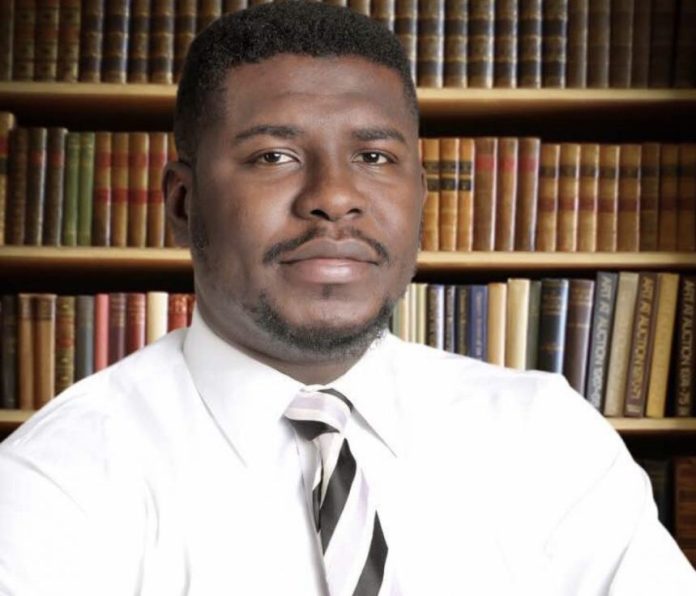
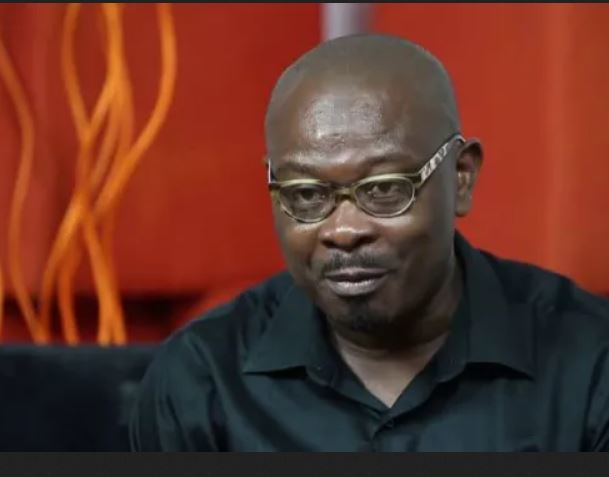
By Okechukwu Nwanguma
My Experience Confronting SARS Atrocities
In the course of the over three decades of my activism and advocacy for Police Reform, I have waged vigorous campaigns against police brutality, intervening in numerous specific cases, especially atrocities committed by the now disbanded Special Anti Robbery Squad (SARS) across the country. I have documented numerous cases of SARS atrocity under successive Inspectors General of Police who appeared to be helpless in addressing them until the recent mass protests elicited the rare decisive actions we are witnessing today.
Nothing new has happened with regards to the enormity of the crimes and abuses committed by SARS and other tactical squads, as well as the regular units of the police. Petitions have been written to police authorities and reports published about specific cases in the media. Yet, no serious action was ever taken except, at best, when a particular case attracted public attention and outrage, and police authorities make arrests, announce the dismissal of a few officers and hand them over for prosecution. It is usually not clear how most of such cases ended. Some promises of reforms are also made and before long, we return to business as usual.
In many cases where the courts have ordered the police to pay compensations to victims of extrajudicial killing, the Police do not comply with these orders. Sometimes, police officers shield police officers wanted by justice. In one case where a bench warrant was issued for the arrest of a DPO in Enugu for him to be produced to answer to a case of kidnapping and murder, the police said they did not know his whereabouts. About four years later, the same DPO was sighted at Zone 9, Police Headquarters, Umuahia in the Provost Office, ironically. Still nothing happened even when alarm was raised. Also a DPO raped a female suspect in his custody in 2014. An investigation was ordered but the report of the investigation was not made public despite promises that it would. That senior officer has remained in service and even promoted. Need I rehash the tragic case of the ‘Apo 6’ and the debauchery that attended it? So, impunity reigns!
I commend the current IGP for his courage in responding to public demands to ban the notorious SARS and for rolling out further reform measures. But this was because, the presidency authorised it. No IGP can act beyond the limit permitted by the President. This is the bane of professional policing in Nigeria. Every IGP acts at the pleasure of the President. Nigeria is the only country in the world where the IGP is not the operational head of the Police. Because the IGP lacks operational autonomy and security of tenure, he is unable to do long term visioning and planning. He is constantly battling with the fear that he can be removed at any moment – even through a tweet- by the President who appointed him, singlehandedly- because the governors fail to play their part as members of the Police Council as provided for in the Constitution.
Until we amend the Constitution and restore operational control of the police to the IGP, guarantee him security of tenure and operational autonomy; until he can act without being afraid to offend the Presidency or other influential actors who can manipulate the president and get kicked out, no IGP, no matter how reform minded he may be, can perform effectively or act professionally.
I learnt of the several attempts by IGP Solomon Arase to remove James Nwafor over numerous complaints about his bloodthirsty reign at Awkuzu SARS. I also know how Arase’s initial attempt to remove Abba Kyari as OC SARS, Ikeja, Lagos was blocked by politically influential interests until he eventually created the IRT toward the end of his tenure and redeployed him to head it. The police must be insulated from partisan interference and political control for professionalism to take root.
Of all the SARS bases in the country, the most outstandingly notorious was SARS Awkuzu Anambra State. The impunity exhibited by operatives of SARS Awkuzu was at its peak under the blood-thirsty reign of CSP James Nwafor.
Until recently, SARS, Lagos State Police Command was the next in notoriety. SARS Lagos was until the exit of Abba Kyari as O/C, another human ‘abattoir’ where human dignity was debased, human lives willfully, senselessly and gratuitously terminated through brutality, torture and summary executions and freedom traded for the monetary benefits of the unscrupulous operatives.
Petitions, reports and repeated calls made for an investigation into the criminal and unlawful activities of CSP James Nwafor (O/C SARS) and his allies, especially, allegations of framing up people with serious allegations, labeling and parading ‘suspects’ publicly as kidnappers or armed robbers, demanding huge sums of money as bribe for bail, the rampant and gratuitous use of torture to punish detainees or force them to ‘confess’, and summary executions and disappearances of detainees, were ignored.
SARS, AWKUZU
In my time as National Coordinator, Network on Police Reform in Nigeria (NOPRIN), I wrote several petitions to police authorities at the Force Headquarters and to state Command Commissioner of Police, as well as to police services commission and national human rights commission, seeking investigation of allegations of arbitrary arrest, unlawful detentions, torture, extortion, extrajudicial killing or enforced disappearance of victims with a view to ensuring accountability for perpetrators and justice for victims.
With regards to Awkuzu SARS, one of my petition was one dated May 6, 2015 addressed to the Acting Inspector General of Police Mr. Solomon Arase captioned ‘The Continued Unlawful Detention And Disappearance of Chinagorom Ihejiagwa by James Nwafor (CSP), O/C SARS Awkuzu Anambra State And Flagrant Disobedience to Court Orders to Produce the Accused in Court: A Call to rid the Police of Lawless and Murderous Elements.
In that petition, I urged the IGP to take urgent action in the case of one Chinagorom Ihejiagwa who was arrested by Awkuzu SARS operatives in May 2014 and detained incommunicado in flagrant disregard of two court orders for his production before the Court.
Chinagorom was a 31-year-old businessman running a wine shop at Triple M Plaza, Asaba Delta state as at the time he was arrested sometime in June 2014. His wife, Ifeyinwa Ihejiagwa, who was then nursing a one-month-old baby, was also arrested on Thursday May 29, 2014 by operatives of SARS, Awkuzu, Anambra State. They were arrested between 4 and 6pm by police officers, one of whom was identified only by his pseudonym ‘Pele’. Chinagorom was the first to be arrested and taken away without being informed of his offence or the reason for his arrest. His wife was arrested about two hours later at the same shop when she came to find out from neighbours at the Plaza why her husband was arrested.
Chinagorom’s wife was detained till the next day and she reported that she was ‘physically and emotionally molested’ including being slapped by one of the officers.
As at the date of the petition to the IGP, Chinagorom had spent twelve months in the custody of SARS without being charged to Court or granted bail. Repeated requests by his family members and legal representatives to see him were refused by the O/C SARS, CSP James Nwafor. Chinagorom’s younger brother, Callistus Ihejiagwa, a lawyer, quoted the O/C SARS Mr. James Nwafor as telling him that ‘we will kill him because he is a confessed kidnapper’. Chinagorom had been tortured to make ‘confessions’, as was the common practice at SARS.
According to his family, ‘Pele’ had called Chinagorom several times prior to his arrest and accused him of buying a stolen vehicle and was demanding that he should bring his ‘own share’. Chinagorom denied buying any stolen vehicle and told him he had nothing to give to him. It was after several unsuccessful efforts by ‘Pele’ to extract his “share’ from Chinagorom of what he claimed to be financial proceeds of crime that he masterminded his arrest and detention, and then labeled him a ‘kidnapper’, a usual practice in SARS.
The O/C SARS, CSP James Nwafor continued, in his characteristic contemptuous disposition, to disregard court orders directing the police to either release Chinagorom on bail or produce him before a court for trial to determine his guilt or innocence in accordance with due process.
An Anambra State High Court on 30th June, 2014 ordered the police to grant him bail or produce him before the Court within 7 days. In its final Judgment on 27th November, 2014 on the Fundamental Rights Enforcement Action filed on behalf of the victim, the same Court ordered the Anambra State Commissioner of Police and in particular, the O/C SARS, Awkuzu, Anambra State to release Chinagorom Ihejiagwa on bail or bring him before the Court. The Court declared illegal and unconstitutional, the continued indefinite detention of the victim. However, the O/C SARS said the court orders had no meaning, because, as he claimed, a non-existent Anambra State law permitted the police to disregard court orders.
Prior to the assumption of office by IGP Solomon Arase, I had addressed a petition dated June 12, 2014 to the then Inspector General of Police (IGP) Mr. M. D. Abubakar concerning this same case and numerous other disturbing complaints of gross abuse of human rights, misuse of police powers, breach of legally established procedures for arrests and detention and flagrant disobedience to Court Orders by police officers at the Special Anti-Robbery Squad (SARS), Awkuzu Anambra State under the supervision of CSP Nwafor James (O.C. SARS). I received no reply and was not aware of any action taken in response to my petition.
Before MD Abubakar, I addressed a petition to his successor and IGP Arase’s immediate predecessor, IGP Abba Suleiman on this same case, calling on him to take urgent and decisive actions to check the excesses of CSP James Nwafor and to bring an end to the brutality, gross misconduct, corrupt activities and impunity at SARS Awkuzu. There was also no reply. My petition to Arase was thus, my third petition to three successive IGPs over the excesses of the same man running the human abattoir.
Arase is one of the brightest and most reform minded IGP’s the NPF has had and I brought this same case to his attention in his time in my belief that he would address it promptly and impartially and ensure that the CP Anambra, and in particular, the O/C SARA, Mr. James Nwafor complied with the orders of Court without further delay.
I am aware of the many steps taken by Arase to remove James Nwafor as OC SARS Awkuzu but Arase’s efforts were met with interference by politician and influential businessmen in Anambra State. James Nwafor was eventually removed at the twilight of Arase’s tenure but was never brought to account. James Nwafor was rejected at every state command he went to owing to his blood stained record. This is the time to bring him to account- to reassure his numerous victims and demonstrate that impunity would no longer be tolerated in the new Nigeria Police of our dream. After James Nwafor left Awkuzu SARS, his legacy of cruelty and brutality remained intact. This next story illustrates this.
How Miracle was miraculously rescued from death from starvation at SARS
In April 2017, while I was still at NOPRIN, I received a complaint from Treasure Chinonye Okpara an Imo State indigene but resident in Abuja concerning the disappearance of her younger brother Miracle Ifeanyichukwu Okpara who was eventually found at SARS Awkuzu, Anambra State after several months of his whereabouts being unknown to his family.
Miracle’s sister, Treasure informed me that sometime in January 2017, while Miracle was travelling from Lagos to Nnewi where his parents reside, he stopped over at one of his Aunt’s house in Onitsha, Anambra state (three of his Aunt’s live in Onitsha). He was arrested by police officers and his whereabouts remained unknown. Three months later, sometime in March 2017, a boy who had just been released from Awkuzu SARS called Treasure’s elder sister on phone and informed her that he had just been released from the custody of SARS, Awkuzu Anambra state and that her brother Miracle (who was his fellow inmate) gave him her number to call her and inform her that he was in custody at Awkuzu SARS.
Miracle’s elder sister quickly gave the boy the direction to their house and he came crying and informed them that their brother, Miracle had been with him in cell at Neni SARS (after he was transferred from Awkuzu) and that he was going through serious torture and suffering at SARS. He told them that Miracle said he was arrested over a laptop and that he had nothing to do with the allegation. He further told them that Miracle was transferred from SARS Awkuzu to SARS Neni and kept in an Underground cell and that was where he met Miracle. He said Miracle was shot on his right leg during interrogation and the wound was already festering before he was brought to Neni SARS and he had not been given any medical treatment for the wound.
He made the startling revelation that nine other boys were brought to the cell at Neni along with Miracle, and seven were already dead. He, Miracle and one other were the only survivors of 10 young men detained at SARS Awkuzu. He told them that Miracle was seriously sick and in need of urgent medical attention. He gave the number of one of the police officers involved as: 08039441848; and their leader’s number as 08060630721.
She said when their mother called one of the numbers, the officer who answered asked her to come to Awkuzu, but when she reached the station, the officer did not show up but instead, threatened her on phone that he would deal with her if he met her in the office. Her mother presented Miracle’s photograph to the officers at the station for them to identify and confirm that he was the same boy they had in their custody, but they told her that the person in the photograph was not in their custody.
Action taken
When I heard these mindboggling details, I quickly called the OC SARS Mr. Sunday Okpe (James Nwafor’s 2i/c and immediate successor) and inquired about the case. He said he didn’t know about it but said he would inquire and revert. He never reverted and I called him again the next day and he replied that Miracle was ‘a confirmed armed robber’; and that they had evidence. I asked him how long Miracle had been in custody and when they will charge him to court; he said he would inform me. He did not respond to further inquiries.
I contacted and requested my colleague, Justus Ijeomah, an activist based in Anambra State to go and see the OC SARS concerning the case. Justus went with Miracle’s mother and saw the OC Mr Okpe and he asked them to come back the next day. The next day, Justus and Miracle’s mother went back and the OC brought Miracle out and asked his mother if that was her son and she confirmed that he was her son. The OC did not allow them to speak with Miracle or to ask him any question and quickly returned him to the cell. Miracle’s mother told me that Mr. Okpe later rebuked her for giving false information to ‘human rights people’ about the case. He promised to call Justus and I to inform us about the next step they would take.
However, without contacting anybody, the OC charged Miracle to a Magistrate’s Court for armed robbery and he was remanded in prison.
On account of Miracle’s troubling condition when her mother and Justus saw him, and the fact that 9 other boys who were detained along with him had been severely tortured and died due to life-threatening detention conditions, Justus and I decided to bring Amnesty International into the case so as to escalate the campaign for justice for Miracle and the families of the 9 others. Justus visited Miracle in prison to interview him and possibly locate the relatives of the other 9 deceased victims. I later went to Awka and Justus and I also interviewed the OC SARS in Awka.
Summary of Miracle’s account after his interview with Justus Ijeoma
Miracle Ifeanyichukwu Okpara was 23 years old as at the date of interview and lives in Otoko in Awkuzu, Oyi Local Government Area of Anambra State.
Reason for his arrest:
Miracle said he was accused of stealing a laptop. He was arrested at about 6:30pm on the 13th February, 2017 at Otoko, Ezinkwo Awkuzu and taken to Awkuzu SARS. The arresting police officers searched him and collected the sum of fifteen thousand naira (N15, 400.00) he had in his pocket and also collected his wrist watch, necklace and phone (Camo 8 Tecno).
Interrogation
The Admin officer directed police officers to go and hang him. They took him to the back of a hall within the station and tied him with ropes. They tied his hands to the back; tied his two legs and then joined the ropes in the hands and the legs to the back causing his chest to protrude. They have two prepared iron stands where they hang people. They crossed an iron rod through the ropes and then lifted him up by the rod and hung him on the iron stands.
Then they started using all manner of objects to beat him, including machetes and sticks, inflicting injuries all over his body. One of the officers (identified as Simeon) used an exhaust pipe to hit him on his teeth and broke some of his teeth. He was left hanging under excruciating pains for more than three hours. He was shouting until he started vomiting blood. Then one other officer, identified as Agaba asked that he be brought down saying he did not want to hear his screams again. When officer Agaba left, his torturers came and squeezed a handkerchief into his mouth and tied it with a rope. He remained in that state for more than two hours and then began to suffocate and lose consciousness.
When Officer Simeon saw that he was losing consciousness, he went and informed the team leader identified as Aghaogu (also known as 2i/c) who came and ordered that he be brought down. They brought him down and dumped him in the interrogation hall. Then Officer Simeon brought a phone and asked him if he was the owner of the phone. He told him it’s his and that it was among the things collected from him by the officers including some money he had in his pocket. Then the officer removed the two SIM cards and destroyed them and put the phone into his drawer, informing him that it was an exhibit.
The 2i/c then came and asked the officers to take him to cell 5, which is the worst cell in Awkuzu SARS. Those in cell 5 hardly eat or drink water. The next morning, they brought him out of the cell and took him to Onitsha and forced him to lead them to where he sells phones and laptops. In Onitsha (Emeka Offor Plaza) they arrested about four persons randomly, claiming that they bought things from him whereas he had never met any of those persons in all his life. They also took him to his Aunt’s house in Onitsha and arrested her son. When they returned to the station, they took him back to the place where they had hung him the previous day, threatening to hang him again since he didn’t want to confess.
Then one officer, Peter Emiator, took a 2×2 wood and started hitting him on his two legs threatening to cripple him since he seemed to be strong-willed. He inflicted on him several injuries, some of which the scars were still visible. At that point the 2i/c took Simeon to one corner and conferred with him. Then Simeon turned, grabbed a gun, aimed it at Miracle’s legs and shot him on the right leg. One officer, whose name he didn’t find out, started reprimanding the officer asking why they would shoot him. He started bleeding from the injury. Simeon told him that he should not worry, that they would treat him.
Then they took a singlet from one of the inmates and tied the bullet injury and took him back to cell 5. The owner of the singlet was also severely tortured, also shot on the leg and dumped in the cell without any medical treatment. He died the following morning as a result of the torture. The following day a complainant was brought and they brought Miracle out and asked him in the presence of the complainant about the laptop. Miracle told them that he did not know anything about the laptop. The complainant left and Miracle was taken back to the cell. That was the last time he heard from the complainant and he did not visit again, but he remained in the cell from February 13, 2017 to March 17, 2017.
He and other inmates suffered starvation and only ate when some Reverend Sisters brought some food for them usually on Thursdays and Saturdays or when the family members of any of the inmates brought food for the detainee. On March 17, there was a rumour that ‘human rights people’ were visiting the station (Awkuzu SARS). Then the police brought 10 of them out, put them in a bus and took them to their cell at Neni.
At Neni, the Commander told them to remove their boxers, which were the only things they had on. They were rendered completely naked and the commander ordered his men to take them to Cell 1 which, according to them is the ‘condemned cell’. They passed through two passages and then went through the 3rd one which leads into the dark, dingy cell. After sometime, the commander came and addressed them asking them to relax, promising that he would talk to their OC at Awkuzu to permit them to be giving them water to drink. He also assured them that the Awkuzu people would usually bring people there at Neni but after sometime they would carry the suspects back.
They relaxed, believing that the Commander would be humane to them. He told them that he was going to Awkuzu to solicit on their behalf. They waited for two days without any food or water. Then some of them started shouting from the cell, calling for water. Some of them started urinating and drinking their urine. One of the officers at Neni (nicknamed ‘Too-much-money’) came to them and admonished them to save their strength because they had a long way to go. Because of this ‘admonition’ they started to shout louder, telling them that it is better for them to shoot and kill them than to starve them to death. The police told them that they would watch them die one after another.
When they continued shouting and asking for water, the officers came and sprayed teargas into their cell. They continued crying. Then, the police removed their own suspects from other cells and took them behind the center and then brought a different type of teargas- powdery teargas; tied it to a wrapper and released it to them. They locked the passage gate, leaving them to choke to death. It was unbearably suffocating. All of the inmates collapsed. Some were foaming from the mouth. He was the only one conscious but the effect of the gas was causing his neck to bend and his two hands to twist. They were in that situation for three days. On the 3rd day they came to check whether we they were still alive. They were still breathing but the teargas had almost dried all the fluid in their system, making them very weak.
The police came and washed the cells of their own suspects and applied some substances after which they returned their suspects to their cells. Those of them brought from Awkuzu continued begging the officers to give them some water but they refused and told them that they would watch them die one after another. Some of them who had money hidden inside their removed boxers begged them to go and collect the money and buy water for them. Then the Station Officer came and asked them whether they came to the world with any cloth and they answered ‘No’! He asked them again if they would go with any cloth when they are departing this world, they answered ‘No.’! He then left without saying any further word to them. That was the end of any conversation with the officers. It was then they realized that they had been sentenced to death.
After that week, one of the inmates, Ifeanyi, was released and they remained nine (9) in the cell. Before the end of that 2nd week, four of them (Okechukwu, Uchenna, Uchechukwu and Chinedu) died. Their dead bodies remained with the other inmates in the cell until the next day before the police came and evacuated them. The 3rd week, three other persons (Ngirima, Victor Azubuike and Ojoto) died. Each of them that died was left in the cell till the next day before it was evacuated, except Ojoto, whose remains were left for three days before being evacuated. The corpse had decomposed in the cell before it was removed. While the police were removing Ojoto’s decomposed corpse, Miracle heard them saying, ‘this one has decayed, there is no need taking it to Awkuzu, let’s bury the corpse here’. He managed with the little energy left in him to stretch and peep through the tiny window and saw the police burying the corpse beside the soak away pit at the back of their station.
On Easter Sunday one of the officers came to attend to their own suspects in their cells. He promised that their commander will ‘do Easter for us’. But nothing was given to them. Very early the following morning on Easter Monday, while he was praying, he heard Tochukwu take his last breath. By daybreak, they called the police to come and carry his corpse. Meanwhile, before Tochukwu died the police brought in two new suspects (Ifeanyi Mba and Ekene Nwoke) from Awkuzu into their cell bringing them to four in the cell. Ifeanyi and Ekene were crying when Tochukwu died. Miracle was consoling them.
Awkuzu people came and carried the corpse. A week after Tochukwu died, they were preparing to bail Ifeanyi Obiorah, a native of Nanka, one of the suspects of Neni SARS. Miracle secretly gave him the contact of his sister and the direction to their house in Nnewi. When Ifeanyi was released he went to Miracle’s house and informed his people. Then his people contacted Mr. Nwanguma of NOPRIN. Mr. Nwanguma immediately contacted the OC SARS and later an activist based in Onitsha, Justin Ijeomah who went to Awkuzu and asked about Miracle. The OC SARS called the Station Officer in Neni who was behind Miracle’s cell answering the call. The OC was reprimanding them for allowing the inmates to survive. Miracle overheard their conversation because the SO’s phone was on external speaker.
The OC at Awkuzu accused the Station Officer at Neni of giving food to the inmates which enabled them survive. The SO denied the accusation. Then the SO and his men came to the cell of their own Neni suspects and brought all of them out and flogged them for allegedly giving food to the inmates from Awkuzu. The officers were particularly mad at Miracle. They came to the cell and searched everywhere for any writing material or phone with which Miracle could have communicated to the outside world. They didn’t see anything. They threatened to bring Miracle out and ‘finish’ him.
On Monday 24th April, 2017 at about 9:30pm they came to Neni and carried Miracle back to Awkuzu. The following day, Tuesday he was brought before the OC SARS, the OC asked him if he was Miracle Ifeanyichukwu Okpara, and he said ‘Yes.’ The OC openly expressed shock that he survived at Neni. He was surprised and told his men that his name is really following him. The OC then asked him whether he has eaten anything and he said he had not. He asked him what he would want to eat and he told him he wanted anything liquid as he was finding it very difficult to swallow. He asked them to go and buy him tea and bread.
They brought him out on Wednesday for his mother and Justin Ijeoma to see him. The following day they took him to a Magistrate’s Court at Nteje. There was no complainant, no witness. The Court awarded a cost of 40,000.00 against the police. There was no legal representation for him. There was no treatment for him. They did not at any time take him to any hospital. The matter was adjourned to 22nd July and the Magistrate told him that he has referred the matter to the High Court. They charged him with armed robbery.
Meeting with OC SARS
On August 10, 2017, Mr. Okechukwu Nwanguma, accompanied by Justus Ijeoma met with the OC SARS, Awkuzu. The OC SARS apologized for not reverting to Justus Ijeomah after his last visit to the station (accompanied by Miracle’s mother) despite his promise during that first visit to revert with next step to be taken by the police. He also apologised for not informing Mr. Nwanguma and/or Miracle’s family or representatives before charging him to court. This would have enabled him prepare for defence. However, he said he was under pressure from two sides: from the ‘human rights people’ and from another unnamed source and that the only option he was left with if he was not to be seen by either side as having compromised was to charge Miracle to court.
SARS LAGOS STATE POLICE COMMAND
Just as with the case of James Nwafor, IGP Arase’s initial attempt to redeploy Abba Kyari as O/C SARS, Ikeja due to rampant complaints of extrajudicial killings and enforced disappearances of detainees was also resisted by political and business interests. But towards the end of Arase’s tenure, he eventually created the IRT at the Force Headquarters and redeployed Abba to head it.
One of the cases that discredited SARS Ikeja under Abba Kyari was the case of arrest, indefinite and incommunicado detention and disappearance of Afam.
Afam, a Lagos resident, was arrested in Lagos on Friday January 17, 2015 by officers from the Special Anti-Robbery Squad (SARS), Ikeja, Lagos and detained incommunicado. His family members as well as lawyers were denied access to him by the detaining authorities.
According to his family members, the SARS operatives first trailed, double-crossed and arrested his two elder sisters, assaulted them without any provocation or justification, seized their phones, forced them into their vehicle and asked them to lead them to their brother. None of the two women had any prior information or invitation from the police concerning any crime that their brother may have committed or any other reason for looking for him. The two women, who by this time had become traumatized, took the police officers to a hospital in Ikorodu, Lagos where their brother had gone for a surgery the previous day. One of the police officers, Abdurrahman (08062080913) later told the women that their brother was wanted for being in possession of four AK47 rifles belonging to the police. The two women found this claim incredible because their brother has been very close to them and had never, to their knowledge, been involved in any crime.
About two weeks after Afam’s arrest, his family members, to their utter shock, read a report in some newspapers, including SATURDAY INDEPENDENT of January 31, 2015, p. 9 claiming that the accused is an informant to a kidnap gang which allegedly kidnapped two prominent oil dealers in Lagos.
The family members said they were perplexed because the initial information the police gave them was that their brother was wanted allegedly for being in possession of four AK 47 rifles belonging to the police. The allegation published in newspapers that their brother was involved in kidnapping and that he confessed during interrogation at SARS contradicted this new allegation.
Afam Nriezedi’s family members were never allowed, despite several efforts, to see him and ask him some questions and hear his response to the allegation leveled against him. They remained in doubt of the allegation by the police because they were never aware of their brother’s involvement in any criminal act, let alone one involving the use of firearms. They were also worried because they knew that, for numerous reasons, SARS operatives usually torture innocent people to ‘confess’ to crimes they did not confess.
Action Taken
Upon receiving this complaint on April 27, 2015, I called the O/C SARS, Ikeja, Mr. Abba Kyari and inquired from him about it. The O/C SARS replied thus through a text message: ‘My brother, he is a member of a kidnapping gang that kidnapped Mr. Ademola owner of Dapsy Oil and Alh Fashola owner of Kings Oil. The arrest of Afam, Chukwube, Kelvin and etc was celebrated all over the newspapers and television stations. We are still making serious efforts to arrest Ikechukwu and two others before they will form new gang to kidnapping innocent citizens again. Thanks’
I then inquired from the O/C SARS about the whereabouts of the accused, but got no further reply. However, the IPO, Abdurrahman later sent me a text message through 08062080913 and said ‘Is a transfer case Sir’.
In further effort to ascertain from sources at the Force Headquarters, Abuja if and where in ‘Abuja’ the case may have been ‘transferred to’ as claimed by SARS Ikeja, I called the then Principal Staff Officer to the IGP, Mr. Austin Ewa (CP) now AIG retired, narrated the incident to him and requested him to assist us with inquiry to locate where the case/suspect may be in Abuja, which he promised to do. Subsequent efforts to reach back to the PSO for feedback did not yield any success.
A New Twist
Curiously, on Sunday May 3, 2015 one Prophet David Babalola a self-styled General Overseer of His Presence Redemption Ministry, Ogba called one of the accused person’s sisters, Ngozi who worships in his church and informed her that some police officers from Abuja had come to Lagos to pick up a file relating to the case from SARS Ikeja. The ‘man of God’ told her that the officers would like to meet with any member of their family. Ngozi went to see the ‘man of God’ in his Church and he assigned one of his workers who took her to a hotel in Ikeja where she met a man who claimed to be police officer Patrick and who claimed that he was a member of the team from Abuja.
The said Police Officer Patrick asked Ngozi to write a statement stating that her brother, Afam, was arrested in a beer parlour with members of his gang and that she should not mention that her family had given any money to Prophet David Babalola to assist them in ‘settling’ Abuja and securing her brother’s release. She said she could not write such a statement changing the facts of her brother’s case.
Petition to IGP
I wrote and drew IGP Arase’s attention to the fact that the Constitution of the Federal Republic of Nigeria presumes any person arrested and detained for any alleged crime as innocent until proved otherwise after a fair trial before a competent court. Any person detained for a crime is also entitled to be allowed access to family members, doctors and legal representatives. It is prejudicial to fair trial to try an accused person on the pages of newspapers without allowing the person the opportunity to appear before a court of competent jurisdiction to prove his innocence or otherwise.
I then requested the IGP to kindly direct the O/C SARS, Ikeja to grant the family of the detained person’s immediate access to him or disclose to them his whereabouts if he is no longer in the custody of SARS.
I further requested the IGP to order a prompt, impartial and exhaustive investigation into this case, with a view to:
Ascertaining the true identity of the ‘police officers’ who claimed to have come from Abuja and who wanted the sister to the accused person to make false statements rewriting the facts of the case.
Ascertaining the role of Apostle David Babalola (the General Overseer of His Presence Redemption Ministry, Ogba, Lagos), especially his involvement in brokering this curious meeting between the ‘police team from Abuja’ and the detainee’s family.
Ascertain why the police officers chose to meet the detainee’s family in a hotel rather than at the police station.
Ascertain the information we received from the family that Prophet David Babalola had so far deceitfully and fraudulently obtained from them the sum of over five million naira (N5,000,000.00), ostensibly to assist them to ‘settle some top management police officers in Abuja’ and secure the release of the suspect.
The Police did not resolve this case until Abba Kyari was moved to Abuja to head IRT and until Arase left office. The family of the victim later consulted Agbakoba Chambers which went to court to enforce the fundamental rights of the victim. The courts awarded compensations which the police have failed to pay.
Sexual Exploitation
In the course of my years of campaign and intervention in cases of police brutality, I came across cases where female detainees were sexually assaulted and raped but the victims preferred that such information be not disclosed. I respected their preferences.
It was in Lagos in early 2015 that a 46-year-old man was arrested and detained in SARS, Ikeja Lagos after he was accused of robbery. The IPO (trying to get the name) insisted that the only way to release the man from custody was for him to sleep with the wife of the suspect and her 17-year-old daughter, who were coming for his bail. The ladies resisted for a while but after two months and increasingly looking like their bread winner was going to die in custody, they buckled and gave in to the demand of the SARS officer. To cut the story short, the SARS officer raped the wife and daughter of the man in his custody and shortly after still executed the suspect.
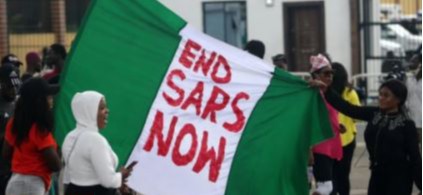
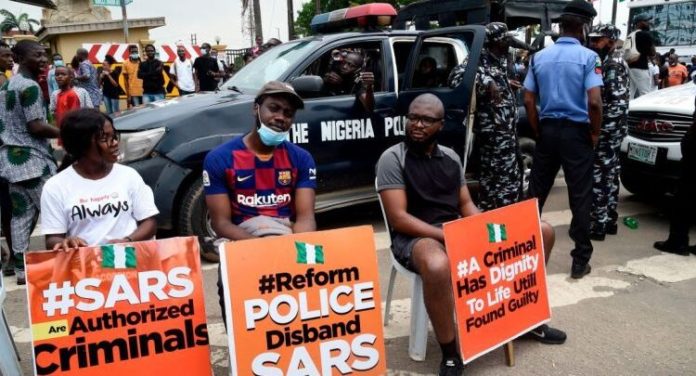
I have recalled the foregoing- just a few of several cases I have been involved in- just to show that SARS atrocities are longstanding. I have spent all my adult life exposing many atrocities even more chilling than the ones that triggered the ongoing protests. What is new is that our youth have finally found this voice. I am happy that this day has come.
The #ENDSARS campaign is not just about SARS. SARS is only a symptom and a manifestation of what is wrong with the Nigeria Police. What our youth are demanding for is not just an end to SARS. They are more importantly asking for accountability for perpetrators of police brutality, killing and violence and rogue behavior. They are asking for justice for the numerous victims, including apologies and adequate compensations. They are asking for Police Reform, including addressing the factors and conditions that fuel police brutality: compromised recruitment process that enables misfits and rogue elements to find their way into the police and discredit the institution; grossly inadequate funding that is responsible for operational inefficiency and poor welfare conditions and fuels corruption. Our youth and citizens are ultimately asking for good governance. We cannot have the police we deserve unless we have the government we desire. Police cannot be our friend when government is not our friend.
Finally, I welcome the decision reached between the federal government and state governors to inaugurate judicial panels of inquiry in all the states and the FCT to inquire into cases of human rights violations by SARS and other police units with a view to identifying the perpetrators and recommending appropriate disciplinary measures as well as recommending adequate compensations for the victims.
My organisation, RULAAC, will be sending petitions on behalf of some victims and will also represent some of the victims at the panels.
Okechukwu Nwanguma
Executive Director
Rule of Law And Accountability Advocacy Centre (RULAAC)
08064974531