Home Blog Page 1207

Court Order On Freezing Of #EndSARS Protesters Account Is Flawed, Says Banire, SAN

A former National Legal Adviser of the All Progressives Congress (APC), Muiz Banire, says the court order on the freezing of #EndSARS Protesters’account is flawed.

Banire disclosed this on Wednesday during an interview on Channels Television’s Politics Today.

“In my very strong view, the order is flawed. The order granted by the judge to enable the Central Bank of Nigeria to carry out inquiry and investigation, how will you freeze somebody’s account and then go back to investigation and inquiry?” he questioned.

“I am sure it is a case of putting the cart before the horse. Beyond that itself, the law does not even say that. What the law says is that even where you do so, you must investigate the matter through the Nigerian Police or any of the security agencies.”

When asked what the Federal Government should have done rather than freezing the accounts of the protesters, the legal practitioner called for trust-building.

While recalling President Muhammadu Buhari’s speech on the protests in October, Banire asked the current administration to meet the demands of the Nigerian youths.

“My expectation is that the Federal Government as promised by the President in his speech should have just gone ahead, engage them in respect of the five demands of the youths.

“Beyond that also, the government should try to build confidence in these youths. The truth of the matter is that Nigerians generally tend not to trust the government in anything.

“In a situation like this when the youths come out to say ‘look we do not trust you,’ the least that we can do post the protest should have been to engage them to put this trust.”

Banire’s remarks come five days after a Federal High Court in Abuja has granted the request of the Central Bank of Nigeria to freeze the accounts of 19 individuals and a public affairs company linked to the #EndSARS protests.

The request, granted by Justice Ahmed Mohammed, was filed by the CBN on October 20.

Some of the affected individuals include Bolatito Racheal Oduala, Chima David Ibebunjoh, Mary Doose Kpengwa, Saadat Temitope Bibi, Bassey Victor Israel, Wisdom Busaosowo Obi, Nicholas Ikhalea Osazele, Ebere Idibie, Akintomide Lanre Yusuf, Uhuo Ezenwanyi Promise and Mosopefoluwa Odeseye.

Others are: Adegoke Pamilerin Yusif. Umoh Grace Ekanem, Babatunde Victor Segun, Mulu Louis Teghenan, Mary Oshifowora, Winifred Akpevweoghene Jacob, Victor Solomon, Idunu A. Williams, and Gatefield Nigeria Limited.

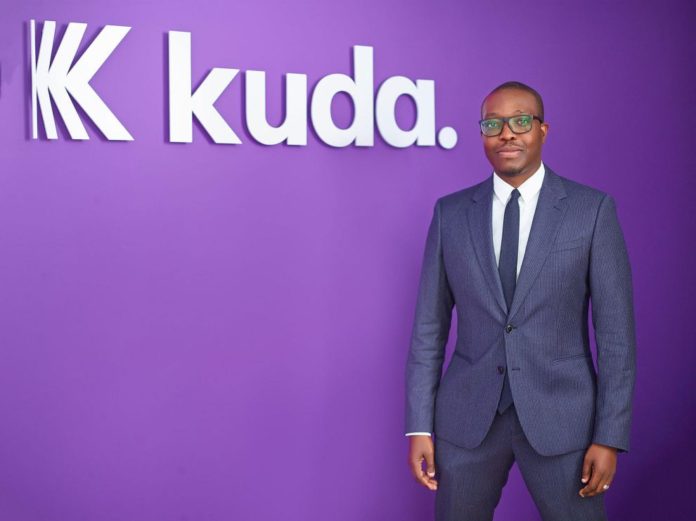
Nigeria’s Kuda raises $10M to be the mobile-first challenger bank for Africa

The African continent is currently one of the fastest-growing regions when it comes to mobile growth, and financial technology companies that are building services to meet that rapidly-expanding market are getting a lot of attention.

In the latest development, Kuda, a startup out of Nigeria that operates a popular mobile-first challenger bank for consumers and (soon) small businesses, is announcing that it has raised $10 million — the biggest seed round ever to be raised in Africa. The funding comes on the back of strong demand for its services and its ambitions — according CEO Babs Ogundeyi — to become the go-to bank not just for those living on the continent, but for the African diaspora.

“We want to bank every African on the planet, wherever you are in the world,” he said in an interview. It’s starting first in its home market: since launching in September 2019, it has picked up around 300,000 customers — first consumers and now also small businesses — and on average processes over $500 million of transactions each month.

The $10 million is being led by Target Global,  the giant VC out of Europe, with Entrée Capital and SBI Investment (once part of SoftBank, now no longer) also participating, along with a number of other notable individual fintech founders and angels.

The list includes Raffael Johnen (founder of Auxmoney), Johan Lorenzen (founder of Holvi), Brandon Krieg/Ed Robinson (founders of Stash), and Oliver and Lish Jung (angel investors in Nubank, Revolut, and Chime).

Prior to this Kuda — which is co-founded by Ogundeyi and CTO Musty Mustapha — had raised $1.6 million in a pre-seed round to launch a beta of its service, and Ogundeyi said he’s already working on a much bigger Series A. No valuation is currently being disclosed.

In a year where many have been watching the world economy with some trepidation on the back of a raging health pandemic hitting multiple geographies, fintech in Africa has been in the spotlight of late.

Most recently, Paystack — a payments startup out of Nigeria — got acquired by Stripe for over $200 million, making it not only Stripe’s biggest acquisition, but the largest exit-by-acquisition to-date for any Nigerian startup. That news followed closely on the heels of Interswitch, another payments startup, hitting a $1 billion valuation on the back of an investment from Visa.

But in truth, startups focused around the business of financial transactions — which also includes the adjacent industry of e-commerce (See: Jumia, the first venture-backed startup out of the region to go public) have been some of the most eagerly-watched, and their services mostly widely-adopted, of all tech plays in the region.

The reason is logical. As a contintent, Africa is one of the most populous, yet one of the more underdeveloped economically, continents in the world. And in our modern times, digital inclusion has become synonymous with financial inclusion. So, as the population begins to adopt mobile technology in earnest, those users represent a big opportunity: there is pent-up demand, and competition is relatively sparse.

That has meant a number of efforts, leveraging the growth in mobile phone usage to provide services to people to make transactions beyond those that they would otherwise only do in person, using cash. These have included innovative services like Mpesa, which uses a person’s phone (which can be a basic feature phone) as a proxy for a bank account, allowing people to pay in and pay out using their phone numbers and prepay accounts.

Nigeria — currently the biggest single economy in Africa — has also been at the center of a lot of fintech activity, and Kuda has been taking that opportunity by the horns.

In its case, that has started with building Kuda’s footprint from the ground up.

The rise of the challenger bank has been one of the more interesting developments in the world of consumer fintech, with companies like N26, Monzo, Starling, Chime, NuBank and Revolut finding a lot of traction with younger users.

But unlike many of these, Kuda does not partner with other banks to manage and back deposits with the challenger bank to in turn focus on customer service, and building user-friendly experiences and value-added services around money management. Instead, Kuda has obtained a microfinance banking license from the central bank of Nigeria.

This means that it manages payments, transfers, issues debit cards (in partnership with Visa and Mastercard). It also, he said, has partnerships with the incumbent banks Zenith Bank, Guaranteed Trust and Access Bank for people to come in for physical deposits and withdrawals when needed.

“We have built the core banking services in-house so we own the full stack,” he said. “It means we don’t have to piggy back on another financial institution. We may choose to partner on certain products but we don’t have to.” He added that the plan will be to get full licenses “in what we consider key regions” but possibly partner in others where the existing infrastructure makes it more logical to do so.

“The reason for the full license is because of monetization,” he added. “As a bank you need to be able to lend, and in Nigeria if you don’t have a full license it’s hard to lend and make money.”

Having an account is free, and so Kuda makes money through other services. Among them, users can top up their phones directly from the Kuda app (most accounts are prepaid), so Kuda acts as a kind of broker in that transaction and makes a percentage from it.
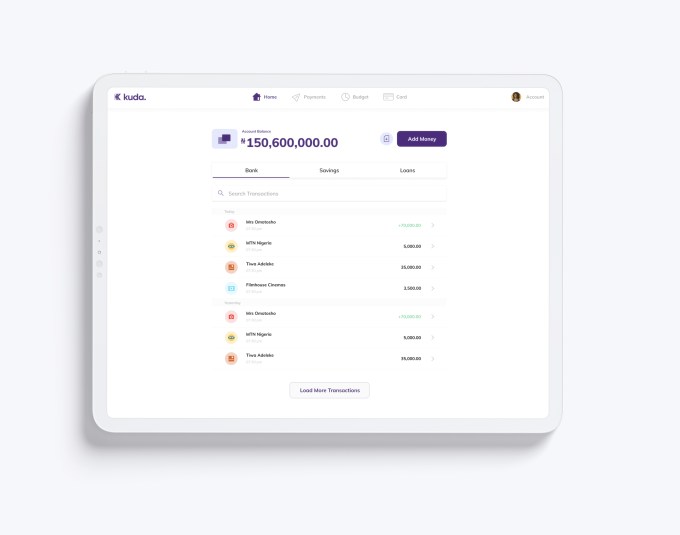
Image Credits: Kuda(opens in a new window)

Users can also pay bill through the app, where Kuda also makes a percentage. And, like other banks, Kuda manages its float and invests it in treasury bills, mutual funds and soon other credit products. There are also fees collected from debit transactions but these are not the real focus, he said.

Kuda’s mobile-first interface is not unlike a lot of the new wave of banking services built around apps, including an aim to be more than just a “dumb box” for storing money.

In its case, Kuda uses machine learning to personalize every customer, Ogundeyi said, generating suggested budgets and savings plans for its users. “The plan for our credit service is that we will base how much we issue and at what terms based on your existing spending habits,” he said.

That focus on spending dovetails with the kind of customers that Kuda is targeting. Some 70% of Nigerians are under the age of 30, and they are “smart and entrepreneurial” said Ogundeyi.

Although a pared-down version of Kuda is available for feature devices — it lacks the AI-based money management features, for one thing — the startup is mainly targeting the segment of the population that is buying and using smartphones, have the kind of incomes and lifestyles that mean they are actively depositing and spending money, and — in an increasing number of cases — also running their own businesses. That overlap means that “targeting small business owners doesn’t deviate from our original business model of younger consumers too much,” he said.

While some users are already running some of their small business banking through Kuda, a more formal small business product, with more features tailored for those users, will be launched by Q1 2021, he said.

Nigerian potential, African promise

Ogundeyi said that despite the uncertainty many are feeling around the pandemic, the relative success of Kuda and the optimism around the future of challenger banks, helped the company close this seed round (and raise other money soon) relatively easily.

“The emergence of digital challenger banks, providing customers with a free, digital and significantly better banking experience compared to services offered by traditional banks, has seen huge success across the globe,” said Dr. Ricardo Schäfer, Partner at Target Global, in a statement. “Kuda is one of Africa’s leading digital challenger banks and one of the fastest growing fintechs on the continent. We are very excited to be working with Babs, Musty and the entire Kuda team to further build on the fantastic momentum they have had since inception and support them in taking the company to the next level.” He is joining Kuda’s board with this round.

“Kuda’s relentless drive and ability to execute quickly has allowed it to carve out a highly disruptive business model in the finance and banking industry,” added Avi Eyal, partner at Entrée Capital.

Funding for any startup from the continent is rare enough that stories around it must also be viewed in the context of the bigger challenges in general that African startups have with raising money in a global market, which seems to generally be heavily biased towards developed economies (and startups in specific regions like Silicon Valley) and more known-quantity founders (which often tends to skew to while males).

“Ultimately I think there is work to be done on both sides,” he said of investors, founders and the situation of building stronger African ecosystems. “On the side of investors, more of them need to appreciate the value of the continent. And from the entrepreneurial side, there is work to be done in understanding how investors invest to get them over the line.”

He thinks that having more investors from the continent itself could help.

“Unfortunately we don’t have many African investors. My belief is that people with money typically will give money to people they understand and connect with. It’s not a surprise that if you have gone through a certain establishment (work or school) it’s easier to get funding from someone who was in that organization,” he said. “My first investment came from a friend who was at school with me.”

Indeed, Ogundeyi knows something about the workings of capital from his own first-hand experience. He was actually born England to Nigerian parents, who eventually moved back to Nigeria but kept him in the UK going to British boarding schools and eventually university. Ogundeyi still splits his time between Lagos and London (which is where he was when we spoke last week). He says that he considers himself Nigerian first.

“Nigeria has the potential to be a great national economy if it’s well harnessed,” he said. “Tech is contributing significantly to that. That is why there is a lot of interest and why we are excited to be there.”


SPECIAL REPORT: How victims of neglected tropical diseases risk exclusion from treatment over poor incentives to community volunteers

Situated on Ibadan-Ijebu Ode road, Onipe village is an agrarian community in Oluyole local government area of Oyo state. It has no electricity or pipe borne water supply and the dwellers are majorly farmers and petty traders. Apart from Onipe, there are about 40 other villages in the area, all relying on two primary health centres.

Frolence Opaleye, a 76-year-old wife of the baale (community head) is a drug dispensing volunteer for these communities. She has been on the field for more than 20 years, helping government and international health agencies to distribute certain categories of off-the-shelve drugs to people afflicted with neglected tropical diseases and other ailments.

Among the drugs the septuagenarian helps to distribute is Mectizan, which is used in the treatment of Onchocerciasis, also known as river blindness, one of the several Neglected Tropical Diseases in Nigeria. She also helps distribute Albendazole, a medication used to treat tapeworm infections such as neurocysticercosis and hydatid disease. These are two of the prevailing NTDs in the communities.

But lack of incentive to compensate for her effort is discouraging Opaleye and other volunteers from carrying out the task, putting victims of these diseases at the risk of not getting the required drugs for treatment. Opaleye is the leader of the volunteer team in the area and each time drugs are brought to her for distribution, she gets N1,000; the same amount is also given to each of the volunteers she engages.

She said she used to have several women volunteers in her team, but because they were not adequately compensated, the women left her to continue alone.

Babatunde Balogun, a health official

“I am a volunteer for the distribution of drugs to people who need them in communities that government cannot reach. We have several streams in the villages under these communities. There are also Fulani herdsmen in these communities so we have flies from their cattle which transmit river blindness to and other diseases to humans. In these communities, there are victims of these diseases. Many people have been cured with the free drugs supplied by government and distributed by the volunteers to them,” she said.

“We have also distributed other drugs that had helped women to conceive. Unfortunately, our people do not realise how much effort it takes for volunteers to reach them; they think we have been adequately paid for the job.

“I hardly find people to work with me again. Majority of the volunteers are women and I had to beg their husbands to allow them do the work as if it is my personal business. They (the husbands) do not see it as volunteer work. Each time the women distribute drugs to those in need in the villages, I must give them little money for transportation from my own pocket.

“Sometimes I hire commercial motorcyclists to take them to the villages. We are paid N1,000 each for the work but it is too small and not enough for transportation, so I use my own money to encourage the volunteers and ensure success of the work. Most of the drugs are distributed once in a year and we return any remaining tablet to government.”

Opaleye: The 76-year-old volunteer

According to her, the burden of reaching out to all those who need the drugs is one she cannot shoulder alone. Apart from the volunteer work, she also sells petty household items in front of her husband palace. Each time she has to distribute drugs, her business suffers.

“I cannot do it alone. I also do volunteer work for World Development Committee and other health development agencies. In this ward under Oluyole local government, there are villages that vehicles cannot reach because of rivers and poor roads. But we ensure that we go there to distribute these drugs,” she said.

“We know how expensive these drugs are and we appreciate government effort to bring them to us. But they also have to appreciate the volunteers and encourage us. Each time I have to go and distribute the drugs, I have to close my shop until I complete the work. Sometimes it takes more than a day. We need more money for transportation and compensation. At my age, it is becoming difficult for me.”

But despite the obstacle to her charity work, Opaleye said she would still persevere for the sake of the sick in the communities.

VICTIM OF RIVER BLINDNESS SPEAKS

Sunday Solomon, 50, a church sexton and labourer in the village, is a victim of river blindness. According to him, he contracted the disease seven years ago but got cured after using one of the drugs supplied by government. He, however, said there has been short supply of the drug lately, leading to fear of relapse.

“When I contracted the disease, I would feel that there was spider web in my eyes. Sometimes, I would fall while walking, I could not work to cater for myself. But I no longer fall again. I can see better now after taking the drug for six years. I can now work and earn a living. But I am worried because I no longer get regular supply of the drug,” he said.

However, Solomon’s claim of not getting regular supply was disproved by Balogun Babatunde, the health officer at Onipe Primary Health Centre. Babatunde explained that the drug Solomon is using for his optical challenge is taken once in a year and that supply had already been made in March.

MILLIONS OF PEOPLE AT RISK

Speaking during a media dialogue organised by the United Nations Children’s Fund (UNICEF) in Ibadan on Thursday, Michael Igbe, programme manager, National Onchocerciasis Elimination Programme, federal ministry of health, said river blindness is already prevalent in 481 local government areas across Nigeria, with 50 million people at risk.

“At inception Nigeria had interventions covering 32 states and the Federal Capital Territory (FCT). Now, (intervention is in) 27 states and FCT, with 481 endemic local government areas. About 50 million persons in Nigeria are at risk of onchocerciasis.

“It is caused by the nematode Onchocerca volvulus, the second leading cause of preventable blindness, transmitted by the bite of an infected black fly called Simulium damnosum and other species breeding in fast-flowing streams and rivers or well oxygenated water.

“Infection with Onchocerca volvulus leads to reduced immunity and resistance to other diseases which can lead to reduction of life expectancy of up to 13 years.”

TheCable

23 Year Runaway Wife Of 82 Year Alaafin Of Oyo Cries Out…My Life Is In Danger

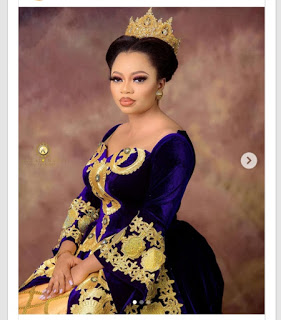
The marriage between 82-year-old Alaafin of Oyo, Oba Lamidi Adeyemi, and one of his wives, Queen Aanu, appears to have ended as it was revealed that she walked out of her marriage.

However, the estranged Queen who welcomed the monarch’s third set of twins in 2018, has now revealed that her life is being threatened.

In a post shared on her IG page, Queen Aanu raised an alarm that her life is in danger after she took the decision to walk out of her marriage with the monarch.

According to Aanu, she took the decision to walk out of the union as she couldn’t continue to live in bondage.

 She said that since she moved out of the palace, her life has been under serious threat. She said she recently survived a failed attempt to kidnap her.

How public development banks can help nature, By Elizabeth Mrema & Carlos Manuel Rodriguez

Public development banks will be critical to global efforts to build back better from the COVID-19 pandemic and its economic fallout. To realise their potential, they should complement their climate investments by setting explicit nature-based goals and targets.

MONTREAL/WASHINGTON, DC – This week’s Finance in Common Summit will mark the first time that leaders of the world’s 450 public development banks (PDBs) come together to discuss how to reorient investments toward sustainable development. Given the current global economic uncertainty and compounding environmental threats, the gathering comes at a critical moment. It is a welcome opportunity to consider how public financial institutions can help steer funding toward conservation and sustainable use of natural resources – thus opening up an asset class that supports both people and the planet.

The summit is also a chance to underscore the vital importance of a healthy environment as a basis to fulfill the United Nations Sustainable Development Goals, the Paris climate agreement, and a new, ambitious framework under the UN Convention on Biological Diversity. More immediately, PDBs will be critical to global efforts to build back better from the COVID-19 pandemic and its economic fallout.

A recent report by the Finance for Biodiversity initiative underlined the urgent need to address the shortcomings of G20 governments’ COVID-19 economic stimulus packages, and concluded that the current recovery path risks reinforcing negative environmental trends. But the report also highlighted the opportunity to act decisively to prevent irreversible damage to nature that will long outlast the pandemic.

To change course, we need to put nature at the heart of economic planning, strategies, and decision-making. The ecosystem services provided by nature are essential to meeting 80% of the SDG targets, while nature-based solutions represent 30% of the path to achieving the Paris agreement goal of limiting global warming to below two degrees Celsius relative to pre-industrial levels. Conserving nature is also essential to prevent pandemics from recurring.

PDBs thus have a great opportunity to complement their climate investments by making explicit nature-based goals and targets a fundamental part of their efforts to support sustainable development. After all, unlike private banks, many PDBs have just one shareholder: governments.

At the same time, PDBs must avoid financing the problem as well as the solution. According to the OECD, today’s biodiversity-positive investments globally amount to only a fraction of the spending on activities with high negative effects. We cannot overstate the potential impact of public financial institutions ending their support for fossil-fuel projects and for schemes that lead to deforestation or natural destruction. A long-overdue investment shift in support of the transition to a nature-positive economy and nature-based solutions to climate change would shape the development of industries, energy, transport, services, and consumption for decades to come.

Although estimates of the financing needed to protect biodiversity vary depending on the assumptions, methodologies, and scenarios used, ranging from lower to higher three-digit billion figures, they all point to a significant and persistent gap in this decade. Against this backdrop, sustainable investing means recognising opportunities to invest in nature and committing to closing this gap.

Such an investment emphasis could pay large dividends. Recent studies have found that protecting more nature would yield benefits that exceed costs by at least five to one, and would support 30 million jobs in ecotourism and sustainable fishing. And with over half of world GDP dependent on nature, investing in green projects is essential for global economic growth. A transition to a nature-positive economy could generate up to $10.1 trillion in annual business value and create 395 million jobs by 2030.

Acting now to support nature conservation, restoration, and sustainable use is a winning proposition, and governments can set the stage for the investments needed to enable this shift. As providers of $2.3 trillion of annual financing – representing 10% of total global investment – PDBs have a crucial role to play in supporting public policies and mobilizing both public and private resources at scale to put the world on a sustainable path.

The Finance in Common Summit is an important step in the run-up to next year’s COP26 climate conference in Glasgow, Scotland, and the COP15 biodiversity meeting in Kunming, China. We are very happy to see that PDBs will commit in their common summit declaration this week to support climate action, the SDGs, and protection of biodiversity. That’s why the UN Convention on Biological Diversity/COP15 decided to support the event. We will be keenly watching the PDBs’ implementation of these commitments, and the evolution of their approaches to investment and risk management.

We look forward over the coming months to working with both public and private funding institutions toward common goals and the adoption of an ambitious post-2020 global biodiversity framework. By charting a path toward a more sustainable economic future, the world can realize the Convention on Biological Diversity’s 2050 vision of “living in harmony with nature.”

Elizabeth Mrema is Executive Secretary of the United Nations Convention on Biological Diversity.

Carlos Manuel Rodriguez is CEO and Chairperson of the Global Environment Facility.

Google-IFC report estimates Africa’s Internet economy can hit $180bn by 2025

LAGOS (Sundiata Post) — e-Conomy Africa 2020, a new report released on Wednesday by Google and the International Finance Corporation (IFC), estimates that Africa’s Internet economy has the potential to reach 5.2% of the continent’s gross domestic product (GDP) by 2025, contributing nearly $180 billion to its economy. The projected potential contribution could reach $712 billion by 2050.

Driving this growth is a combination of increased access to faster and better quality Internet connectivity, a rapidly expanding urban population, a growing tech talent pool, a vibrant startup ecosystem, and Africa’s commitment to creating the world’s largest single market under the African Continental Free Trade Area. 

According to the report seen by Sundiata Post, currently, Africa is home to 700,000 developers and venture capital funding for startups has increased year-on-year for the past five years, with a record $2.02 billion in equity funding raised in 2019, according to Partech Ventures Africa. 

“The digital economy can and should change the course of Africa’s history. This is an opportune moment to tap into the power of the continent’s tech startups for much-needed solutions to increase access to education, healthcare, and finance, and ensure a more resilient recovery, making Africa a world leader in digital innovation and beyond,” said Stephanie von Friedeburg, Interim Managing Director, Executive Vice President and Chief Operating Officer of IFC.

Digital startups in Africa are driving innovation in fast-growing sectors, including fintech, healthtech, media and entertainment, e-commerce, e-mobility, and e-logistics, contributing to Africa’s growing Internet gross domestic product (iGDP) — defined as the Internet’s contribution to the GDP. 

“Google and IFC have created this report to highlight the role the digital startup sector is playing and other factors driving the continent’s growth, in order to showcase and support the opportunities the continent presents,” said Google Africa director Nitin Gajria. 

An analysis within the report, conducted by Accenture, found that in 2020, the continent’s iGDP may contribute approximately $115 billion to Africa’s $2.554 trillion GDP (4.5% of total GDP). This is up from $99.7 billion (3.9% of total GDP) in 2019, with the potential to grow as the continent’s economies develop. 

Investments in infrastructure, consumption of digital services, public and private investment, and new government policies and regulations will play an important role in supporting Africa’s digital growth. The report notes that investment in digital skills will also need to increase in order to help drive technology usage and continue to grow the continent’s talent pool. 

APP names Uche Nnadi as acting national chairman

By Joseph Erunke THE Action Peoples Party, APP, has appointed  Barr. Uche Nnadi as its Acting National Chairman. The appointment which is with immediate effect, followed an emergency meeting of the National Executive Council, NEC,of the party held in Abuja in the early hours of Wednesday. The party in a statement, in Abuja, said the change of guard was to enable the national cairman of the party,  Ikenga Imo Ugochinyere proceed on medical leave due to what it described as his reoccurring voice infection contracted during his recent police detention. Barr. Nnadi,who was until now the deputy national chairman of the party, is expected to oversee the affairs of the party pending the time the substantive national chairman is certified medically fit to resume duties, a process it noted, “is line with the party’s constitution in such circumstances.”

APP in a one page letter to the Acting Chairman of Inter-Party Advisory Council, IPAC, Dr Leonard Nzenwa,dated November 10 , 2020, said the choice of Nnadi was done after due consideration by the party leaders and the relevant provisions of its constitution. APP is one of the existing political parties after the Independent National Electoral Commission, INEC, axed 49 other political parties. The party in the statement directed all state officials to report to the new acting national chairman until further notice. Vanguard News Nigeria

#EndSARS: Lawyer Files Criminal Complaint Against Falana Before ICC

A lawyer, Joseph Nwaegbu of Pathfind Attorneys, has filed a criminal complaint against Femi Falana (SAN) before the International Criminal Court (ICC) in Hague, for allegedly instigating the #EndSARS protests, which he claimed, led to the killing of innocent citizens, destruction of property, among others.

The complaint dated 4th November 2020 was addressed to the Office of Madame Fatou Bensouda, the Prosecutor ICC by Nwaegbu, who claimed to be acting for his group, Make Nigeria Better Initiative (MNBI).

Nwaegbu alleged the role played by Falana before, during, and after what he described as “the mother of all protests in Nigeria” is not only ignoble but criminal.

”On the recent #EndSARS protests which turned violent across the country, we beg to submit that the role played by Mr. Falana before, during, and after what observers described as “the mother of all protests in Nigeria” is not only ignoble but criminal.”

He accused Falana of spreading fake news to further incite the youths in the country against the government which killings and destructions of properties.

Nwaegbu added: “We have seen how the type of incitement spearheaded by Mr. Falana worked in Rwanda and other parts of the world and the resultant effect was genocide.

“In the case of Nigeria, the misguided youths who acted based on Falana’s posture, character and utterances employed crude methods to illegally murder about 22 (Twenty Two) police officers in cold blood during the #EndSARS protests that lasted between the period 3rd October, 2020 till 21st October, 2020.

“We strongly believe that Mr. Falana is a highly placed Nigerian citizen, senior lawyer, and politician that without the timely intervention of the ICC he will get away with justice in this case.

”At Oyigbo Police Station in Lagos alone, a total of 3 (Three) police officers were killed and roasted like Christmas goats with their facilities destroyed,” he said.

”It is our further submission that what Falana is doing gives room for suspicion that another brand of the terrorist group may be created to hide under the cover of “human rights activists” whilst sustaining the evils already bedeviling our people through the activities of the disbanded Islamic Movement in Nigeria (IMN), Boko Haram and Indigenous People of Biafra (IPOB).

”Overall, we submit that prima facie cases of instigating violent protests that led to the killing of innocent citizens, wanton destruction of properties and other heinous crimes against humanity have been established against Femi Falana SAN vide this Criminal Complaint for which the ICC can investigate, prosecute and mete out appropriate sanctions to him.”

He urged the ICC Prosecutor to open an investigation of Femi Falana, SAN, on her own accord under Article 15 (1) of the Rome Statute;

Nwaegbu urged the ICC Prosecutor to compel Femi Falana SAN upon conviction under the Rome Statute to pay the sum of $2,000,000,000 (Two Billion US Dollars) as punitive damages for causing death, injury and maiming of several citizens as well as wanton destruction of public and private properties through his instigation of the violent #EndSARS Protests across Nigeria from the period 3rd October, 2020 till 21st October 2020.

The ICC has acknowledged the receipt of the complaints in reply signed by the Head of Information and Evidence Unit of the ICC, Mark P. Dillon.

Dillon said the communication has entered the Registry of the Court and will be considered accordingly with the procedure and Rome Statute of the ICC.

He however added: “Please note this acknowledgment letter does not mean an investigation has been opened, nor that an investigation will be opened by the Office of the Prosecutor.

“As soon as a decision is reached, we will inform you, in writing and provide you with reasons for this decision.”

FEC Approves N62.7bn For Kano Road, N740m For Lagos Airport

The 23rd virtual Federal Executive Council (FEC) meeting chaired by President Muhammadu Buhari has approved the sum of N62.7 billion for the construction of Kano-Dawakin-Tofa-Gwarzo-Dariyo road in Kano State.

The Minister of Works and Housing, Babatunde Fashola, who announced this on Wednesday while briefing State House reporters, said the project located in Kano would be executed in 24 months.

The Minister of Information and Culture, Alhaji Lai Mohammed, while briefing afterward, said the FEC also approved the sum of N470,263,037 for the procurement, installation, and commissioning of fully dimensional aerodrome and approach simulator at Lagos Airport.

Mohammed, who spoke on behalf of the Minister of Aviation, Hadi Sirika, who presented a memo to the council, said the contract was awarded to Messrs Intelligent Transportation System Limited, an authorized representative of the original manufacturer, Messrs Teofex System of France, with a completion period of six months.

He said the contract became necessary in view of the increase in the number of personnel who had been recruited and trained as air traffic controllers.

“It is important to us to ensure safety in all the 32 aerodromes of the country,” he added.

Mohammed, while also briefing on behalf of the Minister of Industry, Trade, and Investment, Otunba Adeniyi Adebayo, said the council ratified Nigeria’s membership of the African Continental Free Trade Area Agreement (AfCFTA), thereby beating the December 5, 2020 deadline set for all member-states.

He recalled that Nigeria had on the 7th of July, 2019, signed the AfCTA agreement in Niamey during the 12th Extraordinary Session of the Assembly of the African Union (AU) with effective date fixed for July 2020.

He said the date was postponed to the 1st of January, 2021 because of the outbreak of the COVID-19 pandemic across the globe.

“All member-states were given up to the 5th of December to ratify the agreement. That is precisely what Nigeria did today.

“The Federal Executive Council approved ratification of the membership of the African Continental Free Trade Area Agreement. It was ratified and as such, we beat the deadline of the 5th of December. Effectively, we hope that by 1st of January 2021, the agreement will come into force,” he added.

[VIDEO] Alleged Contempt: Court Session Ends In Disorder As Police Used Teargas, Firearms On Lawyers In Cameroon

Three lawyers were reported to have been injured, others teargassed in an altercation between Cameroonian lawyers and their police in Bonanjo Court of First Instance, Douala, Littoral region.

According to the information gathered by TheNigerialawyer(TNL), Wednesday, the police used firearms and tear gas on Lawyers who appeared in court in solidarity with their colleagues.

Narrating the ordeal, Human Rights Advocate and Peace Crusader, Tamfu Richard, Esq., said two Lawyers of the Cameroon Bar Association resident in Douala were accused of contempt on a magistrate, attempted corruption, and false pretense.

They were remanded in prison custody on the 9th of November,  2020, at the New Bell Central Prison of Douala on the above said charges.

Yesterday being their first appearance before the Court of First Instance Douala-Bonanjo which was scheduled for hearing lawyers mobilized in large numbers in show of solidarity to their colleagues and filed in an Application for Bail for their colleagues in accordance with the provisions of the Cameroon Criminal Procedure Code.

“After heated submission from the lawyers for the defense and the State prosecutors, the presiding judge in charge of the case adjourned the matter to the 25th of November 2020 for ruling on the Application for Bail that was submitted by the Defense counsel.

“This really irritated more than 300 lawyers present in the Court room who expected a ruling on the spot or at least on short notice.

“Voices in contempt”.

https://youtube.com/watch?v=860Lo7Y_IIo%3Ffeature%3Doembed

TIPS