Home Blog Page 1195

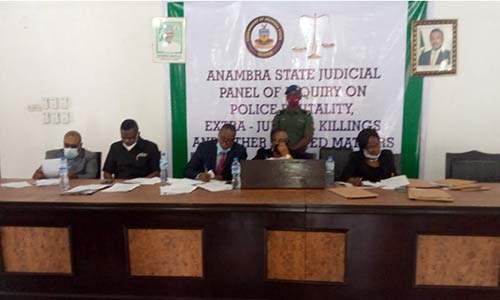
‘SARS Killed My Son, Collected N400,000 From Me For His Feeding’, Man Tells Anambra Panel

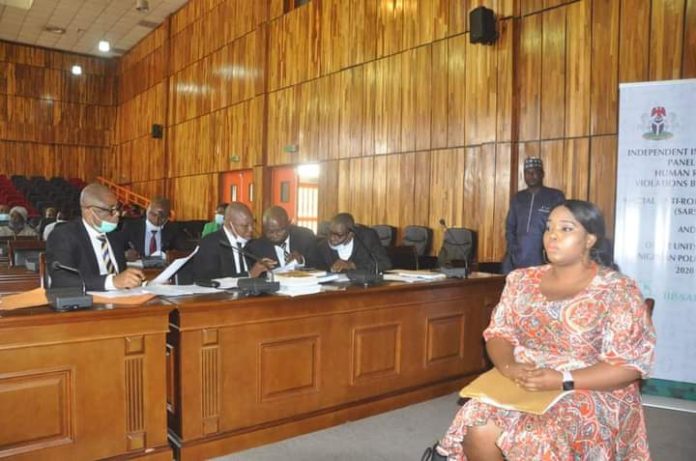
Mr Emmanuel Adimachukwu, an indigene of Oraifite in Ekwusigo Local Government Area of Anambra State, yesterday, narrated a chilling story of how the operatives of the defunct Special Anti-Robbery Squad (SARS) murdered his son, Obinna.

Emma, a school proprietor, told the Anambra State Judicial Panel of Inquiry sitting in Awka, the state capital, that his son, an international businessman, was killed by the SARS operatives and still collected N400,000 from him for his feeding.

This is even as another petitioner, Mr Obiora Akabuike, told the panel that his younger brother, Ekene Augustine Akabuike, a final year student of Statistics at Nnamdi Azikiwe University, Awka was killed by the SARS operatives for no offence.

Adimachukwu said his son, Obinna, had returned to Onitsha on the fateful day having gone to Nnewi to collect his money, $10,000 USD, from his debtor before SARS operatives swooped on him.

He said that his son was a businessman who imported clothes from India and sold them in Onitsha. He said that he was killed in 2014.

He narrated thus: “I am happy that a situation like this arose for me to talk about what happened to my son because I was intimidated and never knew I could ever get anyone to listen to me about what happened to my son.

“He graduated at Nnamdi Azikiwe University and served at National Inland Waterways Authority (NIWA). Because he read Business Administration, I opened a shop for him at Mount Olive Shopping Plaza, Onitsha.

“He travels to India to buy clothing. On March 14 2014, he went to Nnewi and collected $10, 000 USD owed him by a friend and proceeded to Onitsha to take delivery of his goods that just arrived. He got to the park and was told the bus conveying the goods was yet to arrive, so he waited.

“It was while they were waiting that some SARS men arrived and started shooting and people ran away but he did not run. They arrested him and his friend. As they were taking them to their office, they searched him and saw $10,000USD with him and concluded he was an armed robber.

“My son refused to let them take the money, he fought them. So, when they got to Awkuzu SARS, they told him they will send him to a place where he will fight since he knows how to fight. So, they killed him.

“When I went to see him after his friend who was smuggled out told me of it, James Nwafor told his men to lock me up that I was a father to an armed robber.

“Some prominent people intervened and they released me. They later told me to drop money so they could be feeding my son, and they collected N400,000 from me, knowing full well that they had killed my son.”

Adimachukwu narrated that the then SARS boss, James Nwafor, later reached out to him about two years after, telling him to conduct burial for his son that he had been killed.

On his part, Akabuike told the panel that his younger who was the last child of their family was killed in 2004. He said that their mother died out of trauma as the deceased was close to her.

“On June 3rd, 2004, they picked my brother in his room and we were told they would arraign him in court the next day, but they killed him and told us that he had been wasted.”

Meanwhile, the matter was adjourned to Tuesday next week for further hearing.

APC Defection: My Friend, Umahi Wants To Be President – Wike

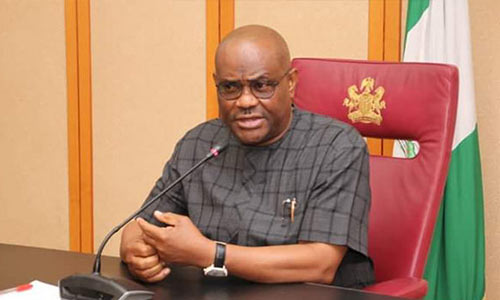
Rivers State Governor, Nyesom Wike, has slammed his Ebonyi State counterpart, Governor David Umahi, over his reasons for leaving the Peoples Democratic Party (PDP).

According to him, Governor Umahi left the PDP because he wants to be the presidential candidate of the All Progressives Congress (APC) in 2023 and not injustice meted on the South East by the opposition party, as claimed.

Governor Wike stated that committed members of the PDP were not surprised that the Ebonyi governor formally defected to the APC on Tuesday, which he had been fraternising with for a while.

He decried that he felt offended by Governor’s Umahi’s attempt to justify his decision on the purported injustice meted on the South East by the PDP.

The Rivers governor accused his Ebonyi counterpart of being unfair to the opposition party which gave him its governorship ticket in 2015 against all odds and repeated the same feat in 2019.

He noted that while Governor Umahi has a right to move to the APC, for him to attempt to blackmail the PDP and paint it in a bad light was mischievous and unacceptable.

“My friend, Umahi wants to be president. There is no problem with that. You have a right to be president. Nobody can stop you. You are educated. You have been a governor for two terms, so you are qualified to say I want to be president of Nigeria.

“But, that does not mean, that because you want to blackmail your party, and tell lies to the people you are leaving the party because of the injustice meted against the South-East, that is not correct,” Governor Wike said.

Power Is Sweet
He asked the Ebonyi governor to retract the statement that the PDP has not been fair to the South-East, stressing that under the PDP, the South East has produced Senate Presidents, national vice party chairman, and Secretary to the Government of the Federation (SGF).

The Rivers governor stated that it was erroneous for Governor Umahi to accuse the PDP of injustice, when he had unilaterally ‘imposed’ his younger brother as South-East Zonal Vice Chairman of the PDP.

He said, “In life, power is sweet, but conscience is important. It is most offensive and insulting for a man to lie against his party because of power.”

The governor believes although APC has not revealed where it will zone its presidential ticket, Governor Umahi’s move may be too hasty and ruin him politically.

“My reaction to Governor Umahi’s defection is not that he has no right to defect, but to say he is defecting because of injustice meted to the South East, that is insulting to the South East,” he said.

Governor Wike, therefore, urged the National Working Committee and the National Executive Committee of the PDP to take decisive steps to ensure the PDP does not die in Ebonyi State.

Joe Biden’s world order, By Shlomo Ben-Ami

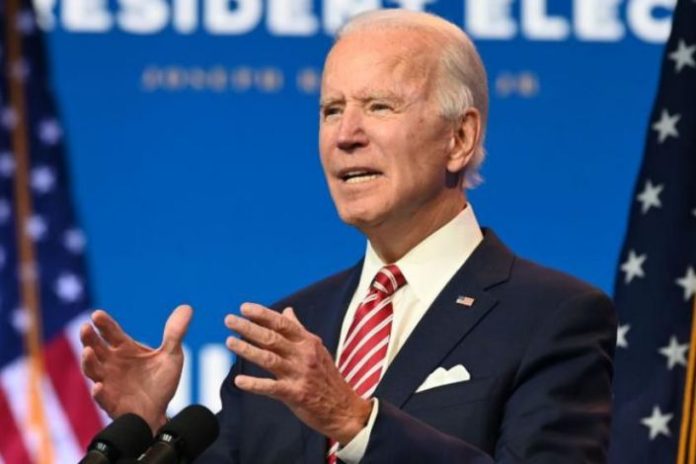
Many hope that, when US President-elect Joe Biden takes over in January, he can salvage, and even renew, the American-led post-1945 liberal world order. That’s an understandable desire, but it is entirely unrealistic.

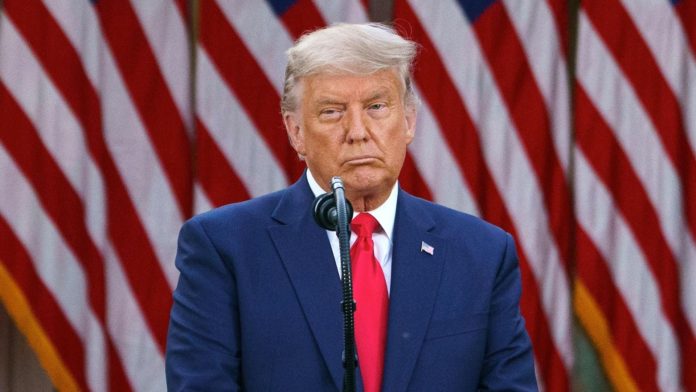
TEL AVIV – In less than four years, outgoing US President Donald Trump has achieved what, historically, only devastating wars had done: recast the global order. With his isolationism, wannabe authoritarianism, and sheer capriciousness, Trump gleefully took a sledgehammer to the international institutions and multilateral organisations his predecessors had built from the ashes of World War II and maintained ever since. What now?

Many hope that, when President-elect Joe Biden takes over, liberal international arrangements can be salvaged, and even renewed. That would certainly be desirable. Unfortunately, it is an unrealistic hope. A post-Trump order appears to be more about a return to the inter-bloc competition of 1945 than to post-Cold War liberal euphoria.

For starters, the Biden administration will be consumed by the daunting tasks of healing the domestic wounds that Trump has inflicted and correcting America’s critical weaknesses, laid bare by the pandemic. The US’ recovery from the most divisive presidency in its history will be neither quick nor painless. Reforming America is a prerequisite to restoring its capacity for global leadership.

Even if Biden’s administration had infinite capacity, there would be no turning back the clock. The status quo ante sprang from a kind of post-Cold War euphoria, animated by the belief that Western liberal democracy had secured a definitive victory over the rest, and the world had reached, in Francis Fukuyama’s famous formulation, the “end of history.”

In the 1990s and 2000s, when the United States was the world’s unrivaled economic, military, and diplomatic power, the logic of liberal hegemony was compelling. But, in today’s rapidly changing multipolar world, it no longer is. This has been true for more than a decade, which is why the US was retreating from global leadership long before Trump took office.

Although Trump’s isolationism is often portrayed as anomalous, it reflects a strain of American thought stretching back to the country’s founding. Had German submarines not attacked American merchant ships in 1917, the US may well have stayed out of World War I.

Likewise, it was only when Japan attacked Pearl Harbor in December 1941 that the US entered World War II. And after the war, US efforts to preserve peace (by deploying troops) and restore prosperity in Europe (by implementing the Marshall Plan) were driven by fear of Soviet expansion, not some sense of moral duty.

It was also in America’s interest that Trump’s predecessor, Barack Obama, in whose administration Biden served as vice president, and even George W. Bush before him, took steps to scale back US foreign policy’s hegemonic project. Like Trump, both Obama and Bush voiced frustration about inadequate burden-sharing by America’s NATO allies.

The US retreat from hegemony reflects history that Biden cannot undo: America’s loss of credibility as a result of its long, costly, and inconclusive Middle East wars, and the 2008 global financial crisis, which exposed the downside of globalisation and the shortcomings of neoliberal orthodoxy. Far from fulfilling the promise of broadly shared prosperity, it became clear, the free-market ethos of the last few decades had facilitated the emergence of obscene inequalities and the collapse of the middle class.

This combination of never-ending war and rising inequality fueled the nationalist backlash that propelled Trump to victory in November 2016. The same frustrations were reflected in the United Kingdom’s Brexit vote that June, France’s Yellow Vest protests in 2018, and even the COVID-19 crisis.

A pandemic would seem like an unmissable opportunity for cooperation. Yet it has been met with border closures and competition over supplies and future vaccine doses, not to mention curbs on civil liberties and expansion of surveillance capabilities, including in democracies. Simply put, just when we need global cooperation the most, our broken multilateral system has driven us back to the bosom of the nation-state.

So, the world seems to be returning to a Westphalian order, in which sovereignty prevails over international rules. Trump’s “America First” stance fits neatly within such an order. And while China touts international cooperation in some realms, multilateralism is a fundamentally alien concept to it. It would oppose the revival of a world order based on liberal precepts. Other big nationalist powers (such as Brazil, India, Russia, and Turkey) and smaller ones in Eastern Europe (Hungary and Poland) move broadly within the same illiberal realm.

The Biden administration should aspire to lead the world’s democracies in their competition with a rising authoritarian bloc, while upholding the multilateral institutions and structures most essential to peace. To this end, it should immediately abandon its predecessor’s connivance with Turkish President Recep Tayyip Erdoğan, and replace his bellicose strategy toward Iran with an effort to reach a revised, durable nuclear agreement. Fortunately, it appears set to do both.

At the same time, the Biden administration will need to treat America’s alliances more as collective enterprises, which the US ideally leads without dominating. From the allies’ side, this shift has already begun, with European leaders, especially French President Emmanuel Macron, increasingly recognising the need to take Europe’s security into their own hands. The US should work with an empowered European Union to contain Russia’s revisionism on NATO’s borders and end its hybrid war on Western democracies.

Similarly, to manage its ongoing strategic confrontation with China, the US will need to work with its Asian allies, such as a rearmed Japan and South Korea. With China having all but abandoned its “peaceful rise” strategy, avoiding violent conflict will be a delicate balancing act.

More broadly, the US will need to galvanise the world’s liberal democracies to forge a bloc capable of standing up to the world’s authoritarians. This should include efforts to counter the forces of disintegration within the EU and, potentially, to transform NATO into a broader security alliance of democracies.

Crucially, the two blocs would also need to cooperate effectively in key areas of shared interest, such as trade, non-proliferation, climate change, and global health. This will require diplomatic skills that Trump could scarcely imagine, much less muster.

Shlomo Ben-Ami, a former Israeli foreign minister, is Vice President of the Toledo International Center for Peace. He is the author of Scars of War, Wounds of Peace: The Israeli-Arab Tragedy.

Vaccine Apartheid, By Jayati Ghosh

UKRAINE – 2020/11/13: In this photo illustration a syringe and a small bottle with fake vaccine seen in front of the World Health Organization (WHO) map showing the COVID-19 coronavirus cases. (Photo Illustration by Pavlo Conchar/SOPA Images/LightRocket via Getty Images)

Because a pandemic can be overcome only when it is overcome everywhere, embracing an every-country-for-itself approach would seem irrational. And yet, as the unseemly competition for vaccine doses indicates, that is exactly what many countries have done.

NEW DELHI – The American pharmaceutical company Pfizer and Germany’s BioNTech have announced that the COVID-19 vaccine they are jointly developing was more than 90% effective in early clinical trials. The news raised hopes around the world that life may soon return to pre-pandemic normal.

Those hopes may not last long. The announcement also sent governments scrambling to lay claim to vaccine doses, apparently realising a bleak prediction: wealthy countries and individuals will monopolise early doses of any effective vaccine.

The COVID-19 Vaccine Global Access Facility (COVAX) – led by the World Health Organisation, the Coalition for Epidemic Preparedness Innovations, and Gavi, the Vaccine Alliance – was established precisely to prevent this outcome. The COVAX Facility aims to accelerate COVID-19 vaccine development, secure doses for all countries, and distribute those doses fairly, beginning with the highest-risk groups. In other words, the facility was created partly to prevent hoarding by rich-country governments.

So far, more than 180 countries, representing nearly two-thirds of the world’s population, have joined. This includes 94 higher-income countries, all of which have made legally binding commitments. All will have access to the vaccines in the COVAX list, and pay for their doses individually. The 92 lower-income countries that are parties to the facility will receive their doses free of charge.

The COVAX plan would have the vaccine distributed in two phases. In the first phase, all participating countries would receive doses proportionate to their populations. It would begin with enough vaccines to immunise the 3% of their population at highest risk, especially frontline workers in health and social care. Additional doses would then be delivered, until immunisation covers 20% of each country’s population – beginning with others most in danger from COVID-19, such as the elderly and those with co-morbidities.

In the second phase, vaccines would be delivered to specific countries based on how quickly the virus is spreading; whether other pathogens (like measles) are also spreading; and how vulnerable the country’s health infrastructure is to being overwhelmed. Given the constraints at work – the BioNTech-Pfizer vaccine, for example, must be administered in two doses three weeks apart, and only 1.35 billion doses, at most, will be produced by the end of next year – it is difficult to imagine a fairer system.

And yet there are major barriers to the system’s implementation. First and foremost, while China finally joined COVAX in early October, the United States has not.

Of course, given his “America First” approach, US President Donald Trump surprised no one by refusing to join. There is, however, reason to hope that President-elect Joe Biden will be more receptive. After all, Biden plans to re-join many international agreements from which Trump withdrew, and has already established a COVID-19 task force. Seth Berkley, the head of Gavi, the Vaccine Alliance, is set to hold talks with Biden’s team.

Meanwhile, China has been working aggressively and largely independently to develop and test its own vaccine. At least four candidates are currently undergoing Phase-3 trials. Though none are yet proven, Chinese officials have reportedly attempted to inoculate tens of thousands of people – possibly many more – outside the traditional testing process.

But there is another problem: COVAX participants are still competing to secure bilateral deals with pharmaceutical companies, as there is no rule against it. The United Kingdom, for example, has reserved 40 million doses of the BioNTech-Pfizer vaccine. Several other European governments have also placed orders, or are negotiating deals.

Moreover, the European Union has finalised a deal for up to 300 million doses. The US, with its population of 328 million, has ordered 100 million doses, with the rights to acquire 500 million more – a target so high that it smacks of an attempt to corner the market. Brazil – another COVAX participant – is also in talks with Pfizer, as are many others.

Within days of its announcement, Pfizer had sold more than 80% of the vaccine doses it will be able to produce by the end of next year to governments representing only 14% of the global population. In other words, if this is the first safe and effective vaccine to get to market, the vast majority of the world’s population will have almost no access to it.

Many other vaccine candidates – there are currently over 200, around 50 of which are in the clinical-trial phase – are also spoken for. Rich-country governments have already cut deals for privileged access to vaccines being developed by Moderna (which has also reported promising results from clinical trials), Johnson & Johnson, and AstraZeneca, among others, should these candidates make it through the approval process. Obviously, low-income countries do not have this option.

Because a pandemic can be overcome only when it is overcome everywhere, embracing an every-country-for-itself approach would seem irrational. And yet, as the unseemly competition for vaccine doses indicates, that is exactly what many countries have done. Unless we change course, global health apartheid will become increasingly entrenched and drive inequality to new heights. And the pandemic will still be with us. We will have merely added new problems to the one we didn’t solve.

Jayati Ghosh is Executive Secretary of International Development Economics Associates and a member of the Independent Commission for the Reform of International Corporate Taxation.

Populism after Trump, By Philippe Legrain

While more than 72 million Americans cast their votes for Donald Trump, over five million more chose Joe Biden – a 3.4 percentage-point difference. The implication is clear: right-wing populism is not dead, but it can be defeated.

LONDON – Before he was US president, Donald Trump built a reality-television persona on the catchphrase, “You’re fired.” Now, the American people have fired him. And Trump’s defeat has also dealt a devastating blow to nationalist populists in Europe and elsewhere. Might it prove lethal?

The swamps that breed populist nationalism have not been drained. Too many people remain frustrated over their perceived (or anticipated) loss of economic and social status, and feel disregarded or maligned by establishment politicians. Wage stagnation, deindustrialisation, and economic injustice continue to be serious challenges. Many are convinced that immigration and cultural change pose a threat to their safety and way of life. The COVID-19 crisis has compounded these anxieties.

The persistence of these fears and frustrations was reflected in the US election results. Though President-elect Joe Biden won over five million more votes than Trump – a 3.4 percentage-point lead – more than 72 million Americans still cast their votes for the outgoing president.

Nonetheless, Biden has demonstrated that populism can be defeated – and not just with more populism. Far from employing populists’ tactics, endorsing their worldviews, or pandering to their prejudices, Biden built a broad electoral coalition around a promise of positive change, sober moderation, and competent governance. This holds a crucial lesson for center-left and center-right political parties in Europe, which have at times succumbed to the populist temptation – such as by echoing their socially conservative, anti-immigrant views – to try to win votes.

Trump’s loss also amounts to a warning for other far-right populists, such as Brazilian President Jair Bolsonaro and Hungarian Prime Minister Viktor Orbán. Earlier this year, Orbán proclaimed, “We used to think that Europe was our future; today we know that we are the future of Europe.” But with Trump’s defeat, his words ring hollow. Even if these leaders remain popular for now – in Bolsonaro’s case, thanks to generous COVID-19 handouts to citizens – the rise or persistence of far-right populism is hardly inexorable.

Beyond shattering this self-serving narrative of inevitability, Trump’s loss discredits his deeply flawed policies, thereby reducing their attractiveness to others. Over the past four years, Trump has pursued an approach that unabashedly purports to put “America first,” trampling on trade treaties and misusing sanctions to try to give US businesses and workers an edge.

In this context, it seemed almost naive for others, including European governments, to pursue multilateral, cooperative open-market solutions. As mainstream politicians leaned toward protectionism, the extreme economic nationalism espoused by the likes of France’s National Rally (formerly the National Front) – whose leaders favour putting “France and French people first” – seemed increasingly reasonable. Moreover, as I explain in my new book, Them and Us: How Immigrants and Locals Can Thrive Together, Trump’s xenophobic rhetoric and encouragement of nativist sentiment opened the way for harsh immigration policies at home and abroad.

Of course, some European governments needed no encouragement to demonise Muslims, erect barbed-wire border fences, or detain asylum-seekers in squalid camps; indeed, they began doing so before Trump was elected, notably during the 2015-16 refugee crisis. But the Trump administration’s actions – including separating children from their parents and detaining them in awful conditions, deporting asylum seekers without due process, banning immigrants from Muslim-majority countries, and building a wall on the US border with Mexico – gave Europe’s anti-immigrant forces a major boost.

For example, Matteo Salvini, the leader of Italy’s far-right League party and the country’s interior minister in 2018-19, reveled in his status as “Italy’s Trump,” as he blocked boats carrying rescued migrants from docking in Italian ports. When the Trump administration refused in 2018 to agree to the non-binding Global Compact for Safe, Orderly, and Regular Migration, nine EU governments – as well as other countries, such as Australia – followed suit.

Biden will set a very different example, which is likely to strengthen internationalists and weaken nationalists in Europe. To be sure, the president-elect – like Democrats more broadly – is not pushing for unfettered free trade and immigration. But he does recognise the foreign-policy benefits of trade cooperation with America’s European allies, and he has pledged to reverse some of the Trump administration’s most controversial immigration policies within days of taking office, as well as to reshape America’s immigration system over the longer term. Biden will also scrap Trump’s approach to climate change, beginning by rejoining the Paris climate agreement on the first day of his presidency.

With Trump gone, populist politicians will not only enjoy less domestic legitimacy; governments will face a higher international price for nationalist stances. Trump was a powerful ally for Europe’s nationalist governments, especially in Hungary and Poland. When Poland’s ruling Law and Justice party picked fights with Germany and challenged EU policies on asylum, judicial independence, and much else, it felt confident that, even if its European partners turned on it, Trump would protect it from the likes of Vladimir Putin’s revanchist Russia. With Biden in the White House, the Polish government will feel more pressure to be constructive.

The same goes for British Prime Minister Boris Johnson. Trump championed Brexit as an expression of sovereignty and encouraged Johnson to take a tough line with the European Union, dangling the prospect of a bilateral trade deal as a prize.

Biden is no fan of Brexit – or, one might guess, of Johnson, whose racist slight about President Barack Obama’s “part-Kenyan” ancestry during the referendum campaign Biden is unlikely to have forgotten. Moreover, Biden, who has often discussed his Irish ancestry, has made clear that he will not accept any threat to peace in Northern Ireland. With time running out to negotiate a post-Brexit trade agreement, Johnson is now under far greater pressure to compromise.

So, populist nationalism is not dead. But it can be defeated – and Trump’s fall is likely to make that easier. Are Europeans up to the task?

Philippe Legrain, a former economic adviser to the president of the European Commission, is Visiting Senior Fellow at the London School of Economics’ European Institute and the author of Them and Us: How Immigrants and Locals Can Thrive Together.

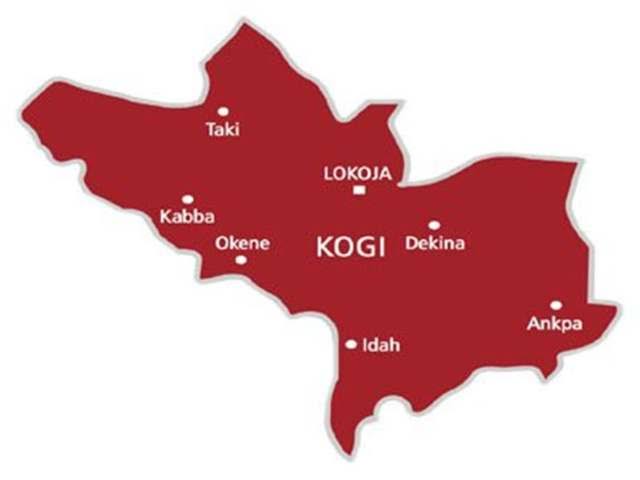
Scores die of strange disease in Kogi, lawmakers want Federal, State govts assistance

What is the strange disease that has erased more than 50 lives in Etteh village, bordering Enugu State, in the Olamaboro Local Government Area of Kogi State? Is it Yellow Fever as in Enugu State or something more sinister?

These are the questions nagging the minds of residents, medical personnel, and the people’s representative in the Kogi House of Assembly, Hon. Anthony Ujah, who has brought the Information to the fore.

Ujah has persuaded his colleagues in the State House of Assembly to call on State and Federal Ministries of Health to unravel the cause of the strange disease.

At Tuesday’s plenary sitting in Lokoja Ujah said the unknown disease comes with symptoms like headache, red eyes, loss of appetite, inability to urinate or defecate, convulsion and death.

He added that the residents of Etteh Community are at a loss what to make of the strange ailment that kills within a week of its onset.

Worse, treatments at clinics in Ogugu, Okpo, primary health centres, even the use of local herbs have yielded no fruitful results.

His words, “The reports reaching my constituency office from the community leaders confirmed that over 50 people between the age of 25 and 40 years have died since September”.

After deliberations, the lawmakers also resolved that a letter be dispatched to the Federal Medical Centre, Lokoja, for immediate support and assistance.

Without elections, APC wins another South-East state as Umahi defects, PDP bristles and Wike snarls

As expected, but citing injustice against the South-East geopolitical zone by the opposition Peoples Democratic Party (PDP), Governor David Umahi on Tuesday handed Ebonyi State lock, stock, and barrel to the ruling All Progressives Congress (APC) but his former party says he did it for his own selfish reasons.

Recall that APC won the Imo Governor’s seat vide a controversial Supreme Court judgment nearly a year into the reign of former Governor Emeka Ihedioha.

Speculations of Umahi’s departure has been in the air for more than a year.

But Rivers State Governor, Barrister Nyesom Wike said,  in a statement by his Special Assistant (Media), Kelvin Ebiri,said Umahi’s defection was not a surprise because he had been fraternising with the ruling party over time.

“My friend, Umahi wants to be president. There is no problem about that. You have a right to be president. Nobody can stop you.  You are educated. You have been a governor for two terms, so you are qualified to say I want to be president of Nigeria.

“My reaction to Governor Umahi’s defection is not that he has no right to defect, but to say he is defecting because of injustice meted to the South-East that is insulting to the South-East.”

He asked Umahi to withdraw his claims against the PDP, because the South-East had over the years produced Senate Presidents; National Vice Chairman of the PDP and Secretary to the Federal Government under the PDP

Said Umahi in his defection speech, “Let me clear the air and state that I never sought for the ticket of PDP Presidency and I will not. Whoever that said that I moved to APC because they refused to zone the ticket to me is being very mischievous. Because even if PDP promises me, an individual, a presidential ticket, how does it work?
 
“Why am I moving to APC?. Some people said I was promised this and that but I tell you, there is no such discussion. APC never promised me any position, they never promised South-East any position, there was no such discussion, however I offered this movement as a protest to the injustice being done to South-East by the PDP since 1998 till date

“…Some people say I will regret this movement, I laugh at them; as if they saw God, as if they are my God. I am satisfied being a businessman, I am satisfied doing my businesses and that is all.

“…Every man runs his destiny. One thing I have promised is that I will never castigate PDP; just like in PDP, my only sin is that I refused to castigate Mr President and till thy kingdom come, I will not do that because that is my family character.”

“But those who don’t have character, they were very suspicious of me because I don’t castigate the President, that I could be leaking information of PDP.

“What nonsense is that? I came from a known family and a place where there is character. So, I have got a character; nobody either in APC or PDP will say that whoever discusses anything, I have to go and leak it. To leak it for what? Is it for money, is it for fame?”

However, the Peoples Democratic Party (PDP) says that the Governor of Ebonyi State, Engr. Dave Umahi, left for personal reasons, which Nigerians will come to know at the fullness of time.

In a statement, it thanked Governor Umahi for services rendered to the people of Ebonyi state, as the State Chairman of Ebonyi PDP (2003 to 2007); deputy governor of Ebonyi state (2007 to 2015) and two term governor of Ebonyi (2015 till date), all elected on the platform of the PDP.

“As we wish Governor Umahi all the best in his adventure, we call on the members of our party to remain calm and committed to the ideals of our party as no individual is bigger than the PDP,” the statement adds.

The National Working Committee (NWC) of the PDP subsequently rose from a meeting and announced the dissolution of the ward, local government and state executive committees of the Ebonyi state, seeing that Umahi left with most of the officials.

The NWC also dissolved the Southeast Zonal Caretaker Committee of the party.

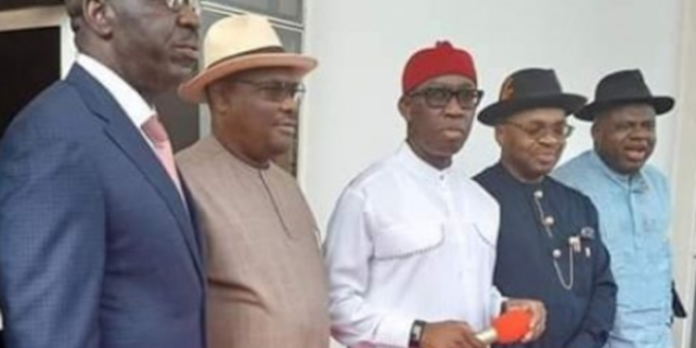
South-South governors blow hot over presidency’s cancelled meeting, demand apology

▪︎ Zamfara gold, Niger Delta oil queried for anger

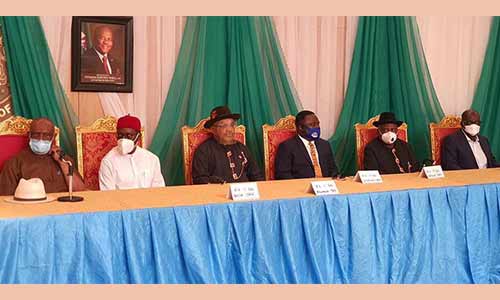
Governors from the South South geopolitical zone are angry, very angry; and have demanded a public apology from the Presidency for cancelling a stakeholders meeting in Port Harcourt, Rivers State, on Tuesday.

The anger, a manifestation of bristling disquiet in the Niger Delta over the federal government’s decision to buy gold, a mineral resource got in Zamfara from the state government, while oil is mined in the Delta region by the government and proceeds paid into the Federation Account and shared by all the states.

And when the presidency called for a stakeholders meeting in Port Harcourt to deal with the anger across the country after the youth-inspired #EndSARS protest, the Governors of the South South led by its Chairman and Governor of Delta, Senator Ifeanyi Okowa, came; traditional rulers, religious leaders, opinion leaders, youths and women from the zone also came, but presidency officials were nowhere to be found.

After five hours, anger took over. Some stakeholders berated the presidency for what they termed as an insult and disrespect, according to Ms Ankio Briggs, to the zone that feeds other zones.

Okowa pleaded for calm in the face of the embarrassment caused by the cancellation of the meeting.

“We understand the anger in you, and on our own part as governors, we are also angry because the South-South zone is a very important part of this nation.

“There is no doubt that we the governors also feel insulted and we feel very sad and touched at what has happened.

“We felt it was necessary to consult with you as critical stakeholders because if we had acted on the information without consulting you, that would have added to the insult already meted to us.

“Together we call for a public apology because the meeting was not called at our instance; it was called at the instance of the Presidency.

“Some of us didn’t sleep trying to put things in order to make this meeting a reality.

“We will convey this message to the Chief of Staff to the President that as a region we deserve public apology, particularly to our traditional rulers and opinion leaders and also to the Governors that you voted into office.

“This is the least we expect before this meeting can be reconvened”.

After the governors, traditional rulers, and stakeholders departed the venue after hours of waiting for the presidency delegation that did not show up, the Minister of Niger Delta Affairs, Senator Godswill Akpabio, himself a former Governor of Akwa Ibom State showed up full of apologies.

He said that he would liaise with host Governor Nyesom Wike for the meeting to hold next Tuesday.

It was gathered that the meeting of the National Security Council in Abuja was responsible for the unceremonious cancellation of the Port Harcourt meeting.

#EndSARS: Abuja panel orders police to produce victim of illegal custody Nov.19

▪︎Adjourns other complaints to Nov.17, 30, Dec. 2 for Police response

The Independent Investigative Panel on allegations of human rights violations by the Special Anti-Robbery Squad (SARS) and other units of the Nigerian Police force Monday ordered the Police to produce Edward Dumsiri Leera whose brother, Confidence Leera, alleged was held in police custody since November 1, 2019.

The panel also gave the Police team led by James Idachaba till Tuesday, November 17, 2020 to respond to a case involving threat to life of Mr Bello Akubuokwu who was allegedly hit by Police bullet during Shiite clash with the Police at the Federal Secretariat in 2019.

Chairman of the panel, retired Justice Suleiman Galadima who made the orders at the FCT ceremonial court, venue of the panel’s sitting, adjourned the case to Thursday November 19, 2020 to enable the Police make the necessary arrangements towards ensuring the appearance of SP Martins Samuel, DSP Essien E. Edet Esq., ASP David Ahmed Agbo, IGP, IRT “D” Division Itam, Uyo, Commissioner of Police, Akwa Ibom and Inspector General of Police, who are the 1st to 6th respondents respectively.

Prior to the order, elder brother to the victim, Confidence who was led by his counsel, Giwa Victor, testified before the Panel about some of the ordeals of his missing brother in the hands of the affected Police officers.

According to the complainant, the victim was arrested, detained for no just cause and his car confiscated and converted to personal use by IPO ASP David Ahmed Agbo.

In addition, he alleged that ASP Agbo is now driving the car belonging to the victim, as well as allegedly making cash withdrawals from the victim’s bank account using his ATM between the period of November 2019 to October 2020.

He informed the panel that his family was asked to pay the sum of three million naira (N3m) by the police before Edward would be released.

Continuing, he stated that unfortunately, Edward Dumisara was not arraigned before any court of law in Nigeria and when the family got worried over his long incaceration, they instituted a suit for the enforcement of his fundamental rights in suit No. BHC/202/2019.

“Subsequently, on December 17, 2019 the honourable court ordered hearing of the application of Edward Dumisara Leera and delivered judgment in his favour and ordered immediate release of the said Edward.

He added that the order was served on the Police but they refused to obey.

He lamented that instead of complying with the court judgment of December 2019, Edward Dimisara was charged to court on seven-count charge before Honourable Justice E.N. Ogbuji in suit No. PHC/287/CR/2020 but IRT has neither produced him in court nor released him in accordance with the earlier court order.

Against the backdrop of the foregoing, he told the panel that it seemed the victim had been killed extra judicially and disposed of.

Meanwhile, four other cases such as the case of extra- judicial killing of a corps member, Linda Igwetu, by the Police were adjourned to December 2, 2020 for the 1st respondent, Inspector Benjamin Peters, to be produced before the panel.

Similarly, a complaint of abuse of office and arbitrary arrest of Engr. Nicholas Ogbedo Azuka was adjourned to November 30, 2020 because the Police legal team pleaded for more time to study the case file and make necessary arrangements to bring the respondents to the panel.

In the same vein, a complaint of alleged abuse of office and intimidation also by Engr. Nicholas Ogbedo Azuka was ajourned to 2nd December, 2020 to give more time to the Police towards ensuring the appearance of the respondents as ordered by the panel.

Earlier, a team of Counsel to the National Human Rights Commission led by Chino Obiagwu (SAN) told the panel that the Police were properly served with the processes and proceedings of the honourable panel and therefore should be ready for the cases.

CP legal and lead counsel to the Police promised to bring all the police respondents to the panel to ensure that justice is served to all the parties concerned.

South-South Leaders Demand Public Apology From FG Over Botched Meeting

Leaders of the South-South geopolitical zone have demanded a public apology from the Federal Government over botched stakeholders meeting in PortHarcourt on Tuesday.

Governors of the South-South led by its Chairman and Governor of Delta, Senator Ifeanyi Okowa, who was in PortHarcourt for the meeting, had informed the stakeholders comprising traditional rulers, religious leaders, opinion leaders, youths and women from the zone that the Presidential delegation which convened the meeting, had cancelled it.

Okowa, who spoke for the governors, informed the people that the Presidency gave an emergency security meeting called by President Muhammadu Buhari as a reason for cancelling the PortHarcourt meeting.

Irked by the information, the stakeholders expressed displeasure with the development, describing it as disrespect to the people of the region and called for an immediate public apology from the Presidency.

They said that the action of the Federal Government amounted to treating the South-South and its people with disdain, and warned on the consequences of undermining the zone.

But in a solemn appeal to douse tension, Governor Okowa implored the people to remain calm in the face of the disrespect and embarrassment caused by the cancellation of the meeting.

He said that the governors were as pained as the other stakeholders over the disappointment, and assured that the governors would definitely convey the feeling of the people of the region to the Presidency.

“We understand the anger in you, and on our own part as governors, we are also angry because the South-South zone is a very important part of this nation.

“There is no doubt that we the governors also feel insulted and we feel very sad and touched at what has happened.

“We felt it was necessary to consult with you as critical stakeholders because if we had acted on the information without consulting you, that would have added to the insult already meted to us.

“Together we call for a public apology because the meeting was not called at our instance; it was called at the instance of the Presidency.

“Some of us didn’t sleep trying to put things in order to make this meeting a reality.

“We will convey this message to the Chief of Staff to the President that as a region we deserve a public apology, particularly to our traditional rulers and opinion leaders and also to the Governors that you voted into office.

“This is the least we expect before this meeting can be reconvened,” Okowa stated.

TIPS