Home Blog Page 1193

Senate Queries Lai Mohammed Over N19m Foreign Trip Spending

The Senate Committee on Information and National Orientation, Tuesday asked the Minister of Information and Culture, Lai Mohammed to explain how the ministry expended N19 million on international travel during the COVID-19 lockdown.

This was even as the Chairman of the Committee, Senator Danladi Sankara (Jigawa North-West), called on the Federal Government to increase the annual budgetary allocation to the Ministry of Information and Culture in view of its numerous critical schedules.

Senator representing Imo East, Ezennwa Onyewuchi, had during the ministry’s budget defence raised questions on how N19 million was expended from the N43 million meant for international travels whereas the period coincided with the COVID-19 lockdown.

“Let me take you on this 2020 overhead. You have here on local travels and transport appropriated is N30 million you expended N23 million on local transport you received N96million as appropriated as released and you expended N90 million.https://galleria.com.ng/pushgalleriaads?q=201&i=59&ho=dailyasset.ng

“On International travels and transport you had N43 million and you expended N19million.

“So, I am wondering this period of lockdown where nobody was able to go to any country during the 2020 appropriation, how were you able to embark on international travels and you expended N19 million.

“So we need to look at that critically and you should also tell us here in parliament how you were able to do that.

“Most part of the year we had travel restrictions. I am sure you will remember you did a lot of enlightenment programmes on this and I am sure you will remember that most of us were prevented from moving into other states.

“So I don’t know how you also had the luxury of spending the entire amount that was appropriated on those travels so those are the information we need to get from your expenditure,” Onyewuchi queried.

The Minister in his response said the international travels were undertaken before the COVID-19 lockdown.

“You will notice that N43 million was budgeted but less than 40 per cent was spent precisely because of the COVID-19 and before then remember that we had travelled to attend several international summits starting UNWTO conference, UNESCO in Spain and in the UK. We also did advocacy in the UK at the same time. These were all before the lockdown.

“I think our last trip was actually in Addis Ababa when we accompanied the President to the AU summit and that was about March 2020 before the lockdown.

The lockdown came at the end of March. So whatever we spent here was before the lockdown.

Meanwhile, Chairman of the Committee, Sankara, called for more budgetary allocation to the Ministry of Information and Culture.

Nigeria Debt Profile To Hit N38.68trn By December 31, 2021

BY CHUKS NNOCHIRI IN ABUJA• 

Debt Management Office (DMO) has disclosed that the nation’s debt would hit N38.68 trillion by December 31, 2021.

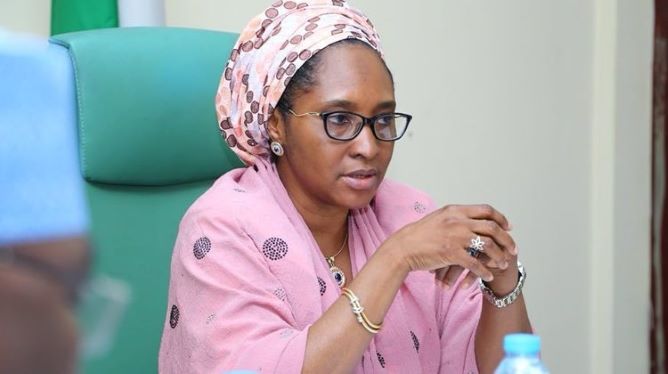
This was contained in the report submitted by DMO to the Honourable Minister of Finance, Budget and National Planning, Zainab Ahmed for presentation to the Senate Committee on Local and Foreign Debts, Chaired by Senator Clifford Odia.

The Minister presentation shows that external and domestic debts of the federal and state governments and the Federal Capital Territory (FCT) stood at N31.01 trillion as at June 30, 2020, adding that it is projected, based on existing approval, to rise to N32.51 trillion by December 31, 2020, and N38.68 trillion by December 31, 2021.

Recall that the 2021 budget provides for new borrowing of N4,281.17 billion. While domestic borrowing is N2,140.58 billion, external borrowing is N2,140.58 billion, making a total of N4,281.17 billion.

Responding to numerous abandoned road projects across the country, the Minister, who spoke during the budget defence, revealed that the current Sukuk fund, which is N162 billion, is for 45 roads cutting across the six geopolitical zones.

She said: “I’m one person that feels that we should just do this and take one major road in one geopolitical zone and finish.

“We were not able to do that because of the processes in which appropriation is made both at the executive as well as the legislative arms of government.

“But truly, if we were able to just take one or two projects at a time and complete it before going to the next one, it will be better.

“So what the contractor does is the bit that has been cut out for him to do in that particular area. Once the fund is released and it is finished, we stop again. That’s the consequence of these numerous projects that we put in the budget. It is not related to Sukuk-funded projects alone, it cuts across all the projects.”

She further said that “you will see a road that costs, maybe, N5 billion, and you will see a provision for N100m, N200m or 300m. Of course, the project will never finish. After two years, the contractor comes back and asks for variation, and the amount keeps growing.

“I wish that we get to a point when we sit down as government and agree that let us select a few projects, finish them in 2020, and then in 2021, we select the next. So that on a geopolitical basis, those selections are done as a collective process.”

The Minister said work on the legacy projects, Lagos-Ibadan highway, 2nd Niger Bridge, East-West road, and Abuja-Kaduna-Kano road, are ongoing without stop because funds were available and they are few.

According to her, “the NSIA was assigned four major road projects to do. These projects are Lagos-Ibadan highway, 2nd Niger Bridge, East-West road, and Abuja-Kaduna-Kano road.

“After the President gave approval, the appropriation for that year, 2019 was remitted to the NSIA, and then added its own fund.

“The projects are going on course because there is funding on the ground and because they are few, they are concentrating on them and work is ongoing. I wish we get to a point when we narrow down project implementation to a few projects at a time.”

On the delay in releasing Sukuk funds to contractors for executed projects, the minister said, though the fund is protected, there are procedures put in place to verify claims that will be paid.

“There is an audit process, the first batch has been released, the second batch is being released as we speak.

“There are some checks that we have to put in place to make sure that the claim that is being made is actually valid. There are parties that have been engaged to do the second level of verification in addition to the claims the Ministry of Works sends as invoices due for payment.

“The batch which is about N58 billion has been released. There is another N35 billion that is under processing,” she said.

Why Non-Governmental Persons And Companies Cannot Be Sued For Discrimination.

Daily Law Tips (Tip 687) by Onyekachi Umah, Esq., LL.M, ACIArb(UK)

Introduction:

From the constitution of Nigeria, among the fundamental human rights in Nigeria is the right to freedom from discrimination. By this right, a citizen of Nigeria cannot be discriminated against because of the person’s sex, birth, tribe, religious or political beliefs. This right dose not apply to all persons in Nigeria, rather it applies to only citizens of Nigeria.

This work will examine whether the right to freedom from discrimination applies to private sector (non-governmental outfits) and private persons. It will focus on the nature, implication and extent of the right to freedom from discrimination, where a violator is a non-governmental (privately owned) outfit.

Extent of the Right to Freedom from Discrimination: 

Fundamental human rights of persons in Nigeria are contained in the Constitution of Nigeria. Some of the rights apply to only Nigerian citizens while some apply to Nigerians and foreigners in Nigeria. Also, some fundamental human rights apply to only human being and some apply to both human beings and corporate beings (companies and registered organizations). There is no better way to understand the right to freedom from discrimination, than to listen to the unquestionable words of the Supreme Court of Nigeria, on this issue. 

The Supreme Court of Nigeria is the highest court in Nigeria. The decision of the Supreme Court of Nigeria is final on any issue, including issues of fundamental human rights. So, to better understand the nature, implication and extent of the right to freedom from discrimination, I am relying on the words of a Justice of the Supreme Court of Nigeria (Justice OLABODE RHODES-VIVOUR). His enlightening words are below:

”Section 42 of the Constitution provides that: “42(1). A citizen of Nigeria of a particular community, ethnic group, place of origin, sex religion or political opinion shall not, by reason only that he is such a person – (a) be subjected either expressly by, or in the practical application of, any law in force in Nigeria or any executive or administrative action of the government, to disabilities or restrictions to which citizens of Nigeria of other communities, ethnic groups, place of origin, sex religions or political opinions are not made subject; or (b) be accorded either expressly by, or in the practical application of, any law in force in Nigeria or any such executive or administrative action, any privilege or advantage that is not accorded to citizens of Nigeria of other communities, ethnic groups, places of origin, sex, religions or political opinions. 2. No citizen of Nigeria shall be subjected to any disability or deprivation merely by reason of the circumstances of his birth. A liberal approach must be adopted when interpreting the Constitution and especially the fundamental rights provisions. Section 42 of the Constitution guarantees to every citizen of Nigeria freedom from discrimination on the basis of belonging to a particular community, ethnic group, place of origin, sex, religion or political opinion. The discrimination complained about must emanate from a law in force in Nigeria, or any executive or administrative action of the Government. This includes laws made by the legislative Houses and legislation made by Local Governments, and this includes policy statements. The rights are enforceable against the state, and not against individuals. See Uzoukwu v. Ezeonu 11 (1991) 6 NWLR pt. 200 p. 708.” Per, OLABODE RHODES-VIVOUR ,J.S.C ( Pp. 18-19, paras. A-C )

Conclusion: 

It is not uncommon to find private outfits; companies, groups, persons and associations, without any government affiliation, being accused of discrimination. Well, although such private outfits and their conducts may be truly discriminatory, can they be sued (dragged to court) for such? The answer to this is in the negative. A Nigerian can only sue government or a government owned outfit for discrimination but cannot a private (non-governmental) outfit for discrimination. By the way, a foreigner cannot sue government or non-governmental outfit for discrimination, because right to freedom from discrimination is exclusively for Nigerians.

The Right from freedom of discrimination is for all Nigerians but must be observed and obeyed by only government institutions/outfits and their agents. This will include any arm of government and government owned outfit and their workers, like schools, banks, companies, groups, ministries, departments, agencies or programs. On the other hand, a non-governmental (privately owned) outfit, including schools, banks, companies, groups, ministries, departments, agencies or programs, even when discriminatory, cannot be sued for violation of right to freedom from discrimination. 

In summary, any complaint on violation of right to freedom from discrimination must be based on a discriminatory law or a discriminatory policy or action of any government, whether federal, state or local government or their formations/agencies. However, there are severally other legal remedies available to persons that may suffer discrimination from any non-governmental (privately owned) outfits.  

My authorities are:

  1. Section 42 of the Constitution of Nigeria, 1999. 
  2. The judgment of the Supreme Court of Nigeria in the case LAFIA LOCAL GOVT v. EXECUTIVE GOVT NASARAWA STATE & ORS (2012) LPELR-20602(SC).
  3. Onyekachi Umah, “Human Rights That Can Never Be Restricted Even In War, Pandemic or State of Emergency (Daily Law Tips [Tip 539]) <https://learnnigerianlaws.com/human-rights-that-can-never-be-restricted-even-in-war-pandemic-or-state-of-emergency-daily-law-tips-tip-539-by-onyekachi-umah-esq-llm-aciarbuk/> accessed 18 October 2020.
  4. Onyekachi Umah, “Does The President/Governors Have Powers To Lockdown Any Part Of Nigeria Or Restrict Human Rights?” (Daily Law Tips [Tip 537]) <https://learnnigerianlaws.com/does-the-president-governors-have-powers-to-lockdown-any-part-of-nigeria-or-restrict-human-rights-daily-law-tips-tip-537-by-onyekachi-umah-esq-llm-aciarbuk/ > accessed 18 October 2020.

#SabiLaw

#DailyLawTips

#SabiBusinessLaw

#SabiElectionLaws

#SabiHumanRights

#SabiLawOnBeatFm

#SabiLawLectureSeries

#CriminalJusticeMonday

#SabiLawVideoChallenge

Speak with the writer, ask questions or make inquiries on this topic or any other via [email protected] or [email protected] or +2348037665878 (whatsapp). To receive our free Daily Law Tips, follow our Facebook Page:@LearnNigerianLaws, Instagram:  @LearnNigerianLaws and Twitter: @LearnNigeriaLaw

Please share this publication for free till it gets to those that need it most. Save a Nigerian today! NOTE: Sharing, modifying or publishing this publication without giving credit to Onyekachi Umah, Esq. and “LearnNigerianLaws.com” is a criminal breach of copyright and will be prosecuted.

This publication is the writer’s view not a legal advice and does not create any form of relationship. You may reach the writer for more information.

Powered by www.LearnNigerianLaws.com {A Free Law Awareness Program of Sabi Law Foundation, supported by the law firm of Bezaleel Chambers International (BCI).}

BREAKING!! FALZ, AISHA YESUFU AND DJ SWITCH TO BE CHARGED FOR THE DEATH OF POLICEMEN

A human rights group named The Global Network for Human Rights (GNHR) has handpicked Aisha YesufuFalzDJ Switch, and few other celebrities for investigation after accusing them of Installing a campaign allegedly led to the killing of police officers across the nation during the #Endsars protest.

Falz – GQBuzz.com

According to GNHR, Aisha Yesufu and others contributed in one way or the other is ramping up public anger before the protests began.

They then intensified the incitement of people in multiple folds in the early days of the protests such that their actions can be directly linked to the outbreak of violence.

Aisha Yesufu – GQBuzz.com

Few notable Nigerians to be investigated on the GNHR list are Chief Femi Falana, Falz (Folarin Falana), Nnamdi Kanu, Obianuju Catherine Udeh (DJ Switch), Aisha Yesufu, Reno Omokri, Deji Adeyanju, Dino Melaye, David Oyedepo, BurnaBoy, Paul Okoye, Ayo Makun amongst others.

DJ Switch – GQBuzz.com

GNHR has vowed to present the list of deceased police officers and other ICC evidence for further investigation.

Buhari’s poverty alleviation, job creation programmes best in Nigerian history – Lai Mohammed

President Muhammadu Buhari’s several initiatives targeted at jobs for the youths and alleviating poverty among women and vulnerable groups remain the best in the history of the country.The Minister of Information and Culture, Alhaji Lai Mohammed stated this in Kaduna at a meeting of the Northern Governors Forum with traditional rulers on the aftermath of the #EndSARS protest.The meeting hosted by  Gov. Nasir el-Rufai of Kaduna was attended by a federal government delegation led by the Chief of Staff to the President, Prof. Ibrahim Gambari.Other members of the delegation were the Minister of Federal Capital Territory, Mohammed Bello, and the Inspector-General of Police, Mohammed Adamu.The Senate President, Sen. Ahmad Lawan, and  some members of the National Assembly from the region were also in attendance.In a presentation to the meeting, the minister who is a member of the federal government delegation said the Buhari government has remained committed to creating jobs for the teeming youths and alleviating poverty.“”No government in the history of this country has ever methodically and seriously put in place measures aimed at addressing poverty alleviation and creating jobs for youths like this Administration,” he said.Buttressing his position, the minister identified the N75 billion National Youth Investment Fund (NYIF) initiated by the government  aimed at providing opportunities for the youths.He said the Fund is part of the N2.3 trillion Economic Sustainability Plan to cushion the effects of the COVID-19 pandemic on most vulnerable Micro Small Medium Enterprises (MSMEs) across the country.The minister said the Fund, approved by the Federal Executive Council (FEC) on July 22, 2020, targets young people between ages 18-35 years and is expected to last for a period of three years (2020-2023).NAN recalled that President Buhari recently said that no fewer than one million Nigerians have applied for the N75 billion NYIF since the portal opened on October 12, 2020.The minister also listed MSMEs Survival Fund as part of the administration’s initiative at jobs sustainability.He said the Fund is a cluster of grants to support MSMEs to meet their payroll obligations and safeguard MSMEs jobs from the shock of COVID-19 pandemic.Highlights of the MSME Survival Fund, according to the minister included Payroll Support for businesses in health, education, hospitality and food production sectors targeted at 500,000 beneficiaries.One-Off payment to support self-employed individuals like mechanics and drivers, hair dressers, Keke Napep and Okada riders, plumbers, electricians with a one-time payment of N30,000 for 333,000 beneficiaries.Formalisation Support where federal government will register 250,000 new businesses with the Corporate Affairs Commission at no cost to MSMEs.General MSMEs grants which will provide N50,000 to an additional 100,000 MSMEs.Guaranteed Offtake Stimulus Scheme which aimed to stimulate direct local production in the 36 states and the FCT.Products from MSMEs involved will enjoy off-taker guarantees from the federal government.Mohammed said other initiatives targeted at the youths included N-POWER which had engaged 500,000 beneficiaries with 400,000 more in December.He said 10,000 youths had been trained and benefitted under N-TECH and N-AGRO respectively.The minister said the federal government FINTECH created enabling environment for growth of businesses that use technology to enhance or automate financial services and processes.He said over two million farmers, traders, mostly youths were empowered under FARMERMONI, TRADERMONI and MARKETMONI.Digital Youth Nigeria was also initiated to implement skill acquisition programmes for poverty alleviation and employment generation.Mohammed said over 100,000 youths across the country benefitted from Mobile Service Repair Training with financial and technical assistance.Over 500,000 youths have also benefited from the Graduate Internship Scheme which provides short-term employment graduates.1000 farmers from each of the 774 LGAs in the country were empowered and guided under the Youth Entrepreneurship Support programme.He said Entrepreneurship Training Programme ensures MSMEs are equipped with skills and access to credit while Digital Youth Nigeria focusses on positioning youth for revenue jobs opportunities tapping into the global tech market.The minister said the federal government made provision for 300,000 homes to be built by young Architects and Engineers as well as provision of 5 million Solar Home System to be installed by youth owned businesses.Mohammed reiterated that the federal government was promptly responsive to the demands of the #EndSARS protesters in meeting their five-point demands.He said the failure of the organisers to embrace dialogue led to the hijack of the protest by hoodlums leading to destruction looting and burning of public and private propertyNAN reports that some of the traditional rulers that attended the meeting are the Sultan of Sokoto, and the Emirs of Kano, Zauzau, and Bauchi.The Emirs of Ilorin and Gwandu, Tor Tiv, the Shehu of Borno, the Etsu Nupe and the Ona of Abaji in the FCT were also attended the meeting. (NAN)

LEKKI SHOOTING PROBE: Our CCTV Cameras Stopped Recording, Didn’t Capture Killings – LCC Tells Judicial Panel

Abayomi Omomuwansa, managing director of the Lekki Concession Company, operator of the Lekki toll gate, has said security cameras mounted by the company stopped recording, therefore did not capture soldiers’ shooting of #EndSARS protesters on Tuesday, October 20.

He stated this on Tuesday when he tendered the video footages of the incident to the Lagos State Panel of Inquiry and Restitution looking into allegations of brutality and killings by men of the SARS as well as soldiers’ shooting at the Lekki tollgate which according to witnesses cost 15 protesters their lives and left scores injured.

According to Omomuwansa, the cameras stopped working from 8pm on the night of the shooting, adding it was tampered with. Multiple reports show the shooting started around 7pm.

“I can confirm that inside here is the video footage that our surveillance camera was able to record for the 20th of October,” he said.

Omomuwansa said the surveillance cameras are called PTZ; wherein P enables the camera pan; T enables the camera tilt, and Z allows the camera to zoom.

“I can confirm categorically that we never ever tampered with that surveillance cameras. That’s why we can still get the footage. Until 8 o’clock when it was tampered with and we couldn’t get any footage anymore,” he said.

The judicial panel had visited the tollgate where the LCC assured it that the recording from its closed-circuit television system (CCTV) on the night of the incident was intact.

The company had also said the power outage on the night of the shooting was because its staff were withdrawn from office locations; hence they could not switch on backup generators when power was interrupted.

Hoodlums wearing army uniform behind Lekki shooting – Attorney General Abubakar Malami

Meanwhile, Abubakar Malami, attorney-general of the federation (AGF), has said it is likely that hoodlums wearing military fatigues — and not soldiers — shot #EndSARS protesters at the Lekki tollgate in Lagos state.

About three weeks ago, thousands of youths nationwide trooped out alongside celebrities like Runtown, Falz, Davido, Phyno, amongst others, to demand an end to police ruthlessness, extortion and killings. The demonstration was largely peaceful until protesters began to be attacked by hired thugs. 

The protests involved calling for the disbandment of the brutal SARS unit.

The police unit was disbanded but the protests persisted as citizens demanded reforms in the force.

Protesters converged on the tollgate for 13 days before they were forcefully dispersed by soldiers who fired live rounds at them.

Speaking with journalists on Monday in Abuja, the AGF said investigation is underway to ascertain what truly happened at the Lekki tollgate.

Malami said it was “pre-emptive” to conclude that there had even been shootings, adding that “hoodlums” may have been hired to create a scene.

“You cannot rule out the possibility of perhaps hoodlums that set in to create a scene… could equally partake in the process,” the AGF said.

The Lekki tollgate incident had sparked off outrage across the country.

Babajide Sanwo-Olu, Lagos state governor, blamed the incident on “forces beyond my direct control”.

But the Osoba Olaniyi, acting director, army public relations, said the Lagos government invited the army to restore order.

However, he denied that soldiers shot protesters, describing reports on the attack by the military as fake.

The army also said it will not disclose the identity of its men who were sent to Lekki tollgate on October 20.

The judicial panel set up by the Lagos state government to probe alleged brutality by the disbanded SARS has already commenced sitting.

The panel visited the Lekki tollgate last Friday.

Magu: Salami Panel Winds Up, Wants Police Out Of EFCC

After about five months, Justice Isa Ayo Salami Judicial Commission of Inquiry is set to wind up investigation into the activities of the Economic and Financial Crimes Commission (EFCC).

It was learnt that the panel plans to conclude its assignment this week. Its report will then be sent to President Muhammadu Buhari.

It was gathered that one of the recommendations of the panel is that the Head of the Economic and Financial Crimes Commission (EFCC) should no longer be picked from the police.

It favours appointment of the EFCC chairman from other security agencies.

All the chairman of the agency from inception till date are policemen.

But the proposed recommendation is already generating replies from among stakeholders. The police is represented in the Salami panel by deputy inspector general.

The panel will also recommend that policemen should no longer be operatives of the EFCC.

At present, there are no fewer than 850 policemen deployed in the anti-graft agency.

If the plan to remove the police from the EFCC is approved, it will foreclose the recall of Acting EFCC Chairman Ibrahim Magu.

A source close to the panel said: “We are rounding off this week or as soon as the report can be taken from us.”

A source said: “The advisory to put EFCC’s woes on the police is unfair. In the last 17 years, EFCC recorded landmark achievements under the leadership of senior retired and serving police officers. All the past and present chairmen have won international awards. Police officers and men are not liabilities to EFCC.

“These same police detectives gave on-the-job training to the cadets. The essence of bringing police officers is to put cadets through on investigation. There are still investigative manpower gaps to be filled in EFCC.

“The EFCC as it is now does not have enforcement unit. Policemen were seconded to the anti-graft agency to give back up during operations and when enforcement is required.

“After being used to deal with Magu, the police are now to be sacrificed on baseless allegation. But the Act is clear that a police officer can be chairman of EFCC. We don’t know whether they are planning to amend the EFCC Act.”

The source added: “I think the desperation to get Magu out of the EFCC has made some people to decide to throw away the baby with the bath water. The President should reject any recommendation to ease out policemen from the EFCC.”

Culled from Thenation

Malami Urged To Obey Court Order On EFCC, ICPC Powers

Nigeria’s leading anti-corruption group, Human and Environmental Development Agenda, (HEDA Resource Centre), has urged the Attorney General of the Federation and Minister of Justice, Mr. Abubakar Mallam, to obey subsisting court order that scrapped the Asset Tracing and Management Regulations put in place by the minister.

The regulation was put in place in 2019 to checkmate anti-graft agencies in the management of recovered assets and proceeds of crime.

However, few months ago, a Federal High Court declared the regulation null and void.

HEDA Resource Centre said in a statement that the minister has the legal obligation to scrap the regulation. It said the rule undermines optimum performance of key anti-corruption institutions, the Economic and Financial Crimes Commission, (EFCC) and the Independent Corrupt Practices and Other Related Offences Commission, (ICPC).

The statement signed by the group’s Chairman, Mr. Olanrewaju Suraju, asked the minister to set aside the rule.

HEDA said recent judgment of a Federal High Court confirms public fears that the regulation will not promote transparency in Nigeria.

The learned judge had said “in my view, these provisions are clear as to the powers of the applicant, the EFCC to commence this action. Consequently, I consider and hold that paragraph 5 of the assets tracing and management regulations 2019 are good for being inconsistent with Section 17 (1) of the advance fee fraud and other fraud related offences”.

The judge said relying on the asset tracing recovery and management regulations 2019 was wrong.

He submitted that the EFCC is a distinct office from that of the Attorney General of the Federation. This action is therefore predicated on a faulty pedestal.

“We make bold to state that these Regulation trespasses into the scope of powers vested in National Assembly and amounts to disregarding the supremacy of the Ground Norm. The powers as stated in the Commencement Clause of the Regulations cannot override the powers vested in the LEAs and ACAs being Acts of the National Assembly.

Assets Tracing, Recovery and Management Regulations, 2019 is merely a duplicity of laws and adds no solution, harmony or progress but further rigidity and dilemma to the implementation of the functions of the LEAs and the ACAs by prescribing sanctions for non-compliance as seen in Section 14 of the Assets Tracing, Recovery and Management Regulations, 2019.

It is trite law that the Act of the National Assembly supersedes any regulation by the executive.

HEDA had in December 2019 demanded for the immediate cancelation and nullification of the Asset Tracing, Recovery and Management Regulations, 2019 within 14 days.

It said though the objective is to prescribe procedures for all Law Enforcement Agencies (LEAs) and Anti-Corruption Agencies (ACAs) to ensure effective coordination of the investigation of illegally acquired assets and proceeds of crime, but that in the past one year the regulation has proved to be counterproductive.

Suraju said the order was to aid tracing and attachment of assets and proceeds of crime, the seizure and disposal of assets and proceeds of crime, and the recovery of stolen assets but that abundance evidence shows that the motive has been defeated through parochial political manipulations, adding that the EFCC and ICPC have enough laws to deal with the issues raised in the new regulation.

Requirements For Enforcement of Fundamental Human Rights

Daily Law Tips (Tip 688) by Onyekachi Umah, Esq., LL.M, ACIArb(UK)

Introduction:
One of the commonest reasons that Nigerians go to court is for the enforcement of fundamental human rights, especially against law enforcement agencies. The requirements for filing cases in court for the enforcement of human rights are unique and different from any other type of case in Nigeria. Also, the courts to approach and the types of remedies that a victim can seek are unique and specific. This work will focus on the requirements for filling cases in courts in Nigeria, for the enforcement of fundamental human rights under the Constitution of Nigeria.

What Are Fundamental Human Rights:
Fundamental human rights are the entitlements of persons, they are legally provided by law and cannot be ordinarily denied by any person or government. Fundamental human rights are basic, elementary, mandatory, compulsory and unshakable entitlements of persons, just because the persons are human beings or corporate beings. Fundamental human rights are never purchased rather enjoyed by being a person (human being or corporate being).

The fundamental human rights of persons in Nigeria, are contained in chapter 4 of the constitution of Nigeria. Also, Nigeria has signed a regional instrument (document) that ensures that the fundamental human rights of persons are respected across Africa. The regional law is the African Charter on Human and People’s Rights. The African Charter on Human and People’s Rights has expanded the fundamental human rights provided in the constitution of Nigeria.

List of Human Rights Under the Nigerian Constitution:
By the Constitution of Nigeria, the fundamental human rights in Nigeria, are: the Right to Life, the Right to Dignity of Human Person, the Right to Personal Liberty, the Right to Fair Hearing, the Right to Private and Family Life, the Right to Freedom of Thought, Conscience and Religion, the Right to Freedom of Expression and the Press, the Rights to Peaceful Assembly and Association, the Right to Freedom of Movement, the Right to Freedom from Discrimination and then, the Right to Acquire and Own Immovable Property anywhere in Nigeria.

None of the fundamental human rights is greater or more important than the other. They all are sacred and must be respected. Human rights should never be violated by any person, including law enforcement agencies or agents in any part of Nigeria. Consequently, where there is a violation or even a mere attempted violation of a fundamental human right, the victim and any other person on behalf of the victim, can seek justice against the violator.

Courts that Can Handle Cases of Fundamental Human Rights:
Since fundamental human rights are important, there are punishments for violators of such rights and compensation for victims. Where there is a violation of any fundamental human right or a threat to such right, the court to approach is a State High Court or the Federal High Court. It is easy and fast to get judgment in such cases, because they are urgently treated. It is advisable to engage the services of a good lawyer.

Documents to be Filed in Cases of Fundamental Human Rights:
Where there is a violation or a threat to violate any fundamental human right, the victim or any person on behalf of the victim, may engage the services of a lawyer to sue (drag to court) the violator. The victim is expected to gather evidence (proof of violation or pending violation) to prove his case. Evidence may include, affidavit of witnesses, video recordings, audio recordings, receipts, photographs, emails, letters and any other item to prove violation.

For enforcement of fundamental human rights, a victim or his representative must make a written application to court (often through a lawyer), backed up with an affidavit. The Affidavit must state facts of what has transpired so far and to be attached to the affidavit will be proofs.

Conclusion:
Fundamental human rights make human beings to be human beings. Hence, fundamental human rights must be respected at all cost. Where there is a violation of fundamental human rights, the victim or his/her supporters should approach a State High Court or the Federal High Court for enforcement of fundamental human rights.

My authorities are:
1. Sections 1, 2, 3, 4, 5, 6, 14, 20, 33, 34, 35, 36, 37, 38, 39, 40, 41, 42, 43, 44, 45, 305, 318 and 319 of the Constitution of the Federal Republic of Nigeria, 1999.
2. The judgment of the Supreme Court of Nigeria (on meaning and nature of fundamental human rights) in the case of RANSOME-KUTI & ORS v. AG FEDERATION & ORS (1985) LPELR-2940(SC)
3. The judgment of the Supreme Court of Nigeria (on meaning and nature of fundamental human rights) in the case of AGBAI & ORS v. OKOGBUE (1991) LPELR-225(SC)
4. The judgment of the Supreme Court of Nigeria (on documents for cases of fundamental human rights) in the case of EFCC v. REINL (2020) LPELR-49387(SC)
5. The judgment of the Supreme Court of Nigeria (on when and why fundamental human rights can be restricted/suspended) in the case of DOKUBO-ASARI v. FRN (2007) LPELR-958(SC).
6. The judgment of Supreme Court of Nigeria (on State of Emergency) in the case of ADEGBENRO v. AG OF THE FEDERATION & ORS (1962) LPELR-25118(SC)
7. Section 42 of the Constitution of Nigeria, 1999.
8. The judgment of the Supreme Court of Nigeria in the case LAFIA LOCAL GOVT v. EXECUTIVE GOVT NASARAWA STATE & ORS (2012) LPELR-20602(SC).
9. Onyekachi Umah, “Human Rights That Can Never Be Restricted Even In War, Pandemic or State of Emergency (Daily Law Tips [Tip 539]) <https://learnnigerianlaws.com/human-rights-that-can-never-be-restricted-even-in-war-pandemic-or-state-of-emergency-daily-law-tips-tip-539-by-onyekachi-umah-esq-llm-aciarbuk/> accessed 2 November 2020.
10. Onyekachi Umah, “Does The President/Governors Have Powers To Lockdown Any Part Of Nigeria Or Restrict Human Rights?” (Daily Law Tips [Tip 537]) <https://learnnigerianlaws.com/does-the-president-governors-have-powers-to-lockdown-any-part-of-nigeria-or-restrict-human-rights-daily-law-tips-tip-537-by-onyekachi-umah-esq-llm-aciarbuk/ > accessed 2 November 2020.

#SabiLaw
#DailyLawTips
#SabiBusinessLaw
#SabiElectionLaws
#SabiHumanRights
#SabiLawOnBeatFm
#SabiLawLectureSeries
#CriminalJusticeMonday
#SabiLawVideoChallenge

Speak with the writer, ask questions or make inquiries on this topic or any other via [email protected] or [email protected] or +2348037665878 (whatsapp). To receive our free Daily Law Tips, follow our Facebook Page:@LearnNigerianLaws, Instagram:  @LearnNigerianLaws and Twitter: @LearnNigeriaLaw

Please share this publication for free till it gets to those that need it most. Save a Nigerian today!

NOTE: Sharing, modifying or publishing this publication without giving credit to Onyekachi Umah, Esq. and “LearnNigerianLaws.com” is a criminal breach of copyright and will be prosecuted.

This publication is the writer’s view not a legal advice and does not create any form of relationship. You may reach the writer for more information.

Powered by www.LearnNigerianLaws.com {A Free Law Awareness Program of Sabi Law Foundation, supported by the law firm of Bezaleel Chambers International (BCI).}

TIPS