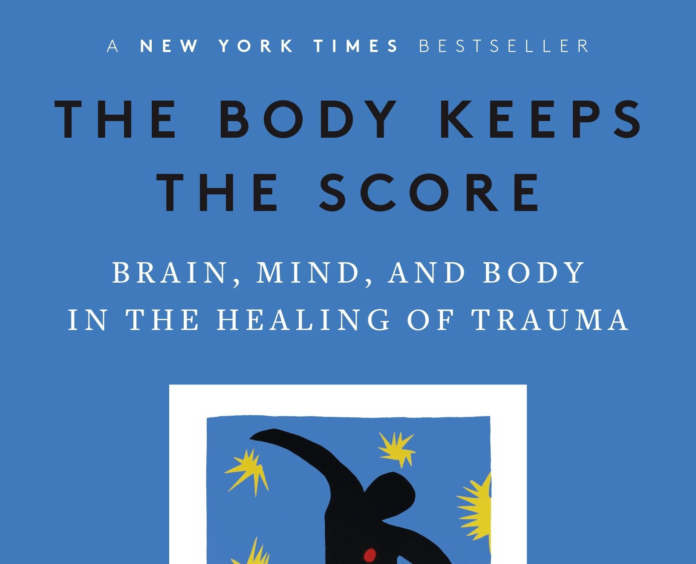
When I first picked up this book, I wasn’t quite sure what it had to do with me.
It is a book about trauma – what it is, where it comes from, and how to treat it. But I had never experienced abuse, or been caught in a natural disaster, or been attacked. I didn’t have any trauma…
Did I?
As I turned the pages, slowly and then quickly, I was introduced to a completely new conception of trauma unlike anything I had ever encountered before.
I’d spent years immersed in the “personal development” world, obsessed with uncovering hidden truths and rewriting limiting beliefs. I had read countless books on positive psychology, spiritual growth, and overcoming cognitive biases. But somehow I had never taken the time to really understand what lies at the root of a disturbed psychology.
On the pages before me I saw many of the challenges I had encountered in myself, my students, and my clients for years, except this time framed as common side effects of trauma. For example:
- Difficulties with focusing and memory
- Sensory overload and filtering what matters from what doesn’t
- Difficulty sleeping and relaxing
- Learning new information and changing behavior
- Cultivating a sense of confidence and personal agency
- Fear and anxiety around taking risks
- Fully accessing imagination and creativity
- Self-doubt and perfectionism
- Chronic fatigue and exhaustion
- Maintaining motivation and a sense of purpose
I was shocked to learn that not only is attention deficit a common symptom of trauma, but so is hyperfocus. They can both be forms of dissociation – an attempt to escape from the present moment. Even those of us who find it easy to “be productive” are not immune to the impact of trauma.
I thought, could this be the key to so much that plagues us? Could it be the root cause of so many problems that keep us from achieving our most cherished goals and dreams?
I’ve summarized the book The Body Keeps the Score (affiliate link) below because I want the information it contains to spread far and wide. These findings are critically important to everything from education, to social policy, to healthcare, to law enforcement, to personal development, and far beyond. In fact, I have difficulty thinking of any domain that they won’t have an impact on.
The book is written by Dr. Bessel van der Kolk, summarizing his four decades of experience studying the impact of trauma on childhood brain development and emotion regulation. As a clinician and researcher at Harvard University and Boston University, he has published more than 150 academic papers and led studies on the effectiveness of yoga, Eye Movement Desensitization and Reprocessing, neurofeedback, MDMA, theatre, and other methods for treating trauma.
In other words, there is no one more qualified to speak on both the scientific and personal impact of trauma in a wide variety of contexts.
I’ll focus on what I think are the most important, unusual, and powerful points from Dr. Van der Kolk’s message. All research and conclusions come from the book. Any errors or omissions are mine.
Trauma is universal
Trauma is an almost universal part of the human experience, the book establishes early on.
We usually think of trauma as a thing that happens in very extreme circumstances – rape, molestation, physical abuse, extreme neglect, assault, domestic violence, or natural disasters. But this is acute trauma, which is not the only kind.
Even acute trauma is common. Research from the Centers for Disease Control (CDC) found that one in five Americans has been sexually molested as a child; one in four has been beaten by a parent; one in four of us grew up with alcoholic relatives; and one out of eight has witnessed their mother being beaten or hit.
These are appalling numbers, far beyond what even most practitioners expect. Childhood trauma is a silent epidemic, with only one-third of respondents in the landmark ACE study (from which these findings are drawn) reporting no such experiences.
The CDC estimates that overall costs for childhood and adolescent trauma exceed those of cancer or heart disease, and that eradicating child abuse in America would reduce the overall rate of depression by more than half, alcoholism by two-thirds, and suicide, IV drug use, and domestic violence by three-quarters.
But even for those of us who experienced no such incidents, there remains a subtler and less graphic source of trauma: chronic emotional abuse and neglect. Incredibly, Van der Kolk’s research has shown that such abuse and neglect can be just as devastating as physical abuse and sexual molestation.
He cites the research on childhood attachment by his Harvard colleague Karlen Lyons-Ruth, who in the 1980s conducted an influential study that followed children from birth to 20 years old. Their hypothesis was that hostile or intrusive behavior on the part of mothers would be the strongest indicator of mental instability in their adult children.
Instead, they found that a mother’s emotional withdrawal had the most profound and long-lasting impact.
If your caregivers regularly ignore your needs, you learn to anticipate rejection and withdrawal. You cope by blocking out their hostility or neglect and acting as if it doesn’t matter. But the body keeps the score: it remains in a state of high alert, prepared to ward off blows, deprivation, or abandonment.
One of the most devastating effects of this, Van der Kolk found, is “not feeling real inside.” When you don’t feel real, nothing matters. It’s impossible to protect yourself from danger or attend to your own needs. You may resort to extremes in an effort to feel something – even cutting yourself with razor blades or getting into fights with strangers.
And all of this carries into adulthood. It doesn’t just go away on its own. A child who has been ignored or chronically humiliated is likely to lack self-respect. Children who have not been allowed to assert themselves will have trouble standing up for themselves. And many adults who were brutalized as children carry a smoldering rage they can barely contain.
As psychologists have observed all the way back to Freud and Breuer, “the psychical trauma—or more precisely the memory of the trauma—acts like a foreign body which long after its entry must continue to be regarded as an agent that still is at work.”
In other words, the memory of the trauma acts like a splinter in the mind – it is the body’s response to the foreign object that becomes the problem rather than the object itself.
From a neuroscience lens, brain-imaging studies of trauma patients usually find abnormal activation of the insula. The insula integrates and interprets information from sensory organs, and transmits fight-or-flight signals to the amygdala when necessary.
In people with trauma, these signals are firing all the time. It doesn’t require any conscious influence – you just constantly feel on edge, for no apparent reason. You may have a sense that something has gone wrong, or of imminent doom. These powerful feelings are generated deep inside the brain and cannot be eliminated by reason or understanding.
Van der Kolk tells the story of a high-powered trial lawyer he had once worked with. He was driven, successful, and well-respected for his achievements. But he found that he was unable to enjoy them. He would pretend to feel gratified when he won a case, and when he lost it was as though he had seen it coming and was resigned to defeat before it even happened.
The lawyer would get totally absorbed in devising a strategy for winning a case, and would stay up all night enmeshed in the details. “It was like being in combat,” he said. He felt fully alive, and like nothing else mattered. But when the case finished, win or lose, he would lose his energy and sense of purpose.
This story describes a common experience among survivors of trauma: they only feel fully alive when they are totally absorbed, allowing them to escape their current reality, but at the cost of aliveness, motivation, excitement, and purpose in the rest of their lives.
Trauma becomes physical symptoms
When people are chronically angry or scared, constant muscle tension ultimately leads to spasms, back pain, migraine headaches, fibromyalgia, and other kinds of pain.
Other common conditions which often have no clear physical cause include chronic neck pain, digestive problems, spastic colon/irritable bowel syndrome, chronic fatigue, and some forms of asthma. Traumatized children have fifty times the rate of asthma as their non-traumatized peers.
These individuals may visit multiple specialists, undergo extensive diagnostic tests, and be prescribed medications. These measures may provide temporary relief, but none of them address the underlying cause.
Another common symptom is alexithymia, in which a person reports feeling physically uncomfortable without being able to describe exactly what the problem is. This comes from self-numbing, which keeps them from responding to the ordinary needs of their bodies in quiet, mindful ways – shifting in their chair, stretching, drinking water, or going for a walk, for example.
If you’re not aware of what your body needs, you’re unable to take care of it. If you don’t feel hunger, you can’t nourish yourself. If you mistake anxiety for hunger, you may eat too much. And if you can’t feel satiated, you’ll keep eating.
The impact of trauma
The overall effect of trauma can be described as a “loss in the feeling of aliveness, motivation, excitement, and purpose.”
In brain scans of 18 chronic PTSD (Post-Traumatic Stress Disorder) patients, researchers discovered something startling: there was almost no activation of the “self-sensing” areas of the brain when compared to non-traumatized subjects: the medial prefrontal cortex, the anterior cingulate, the parietal cortex, and the insula were dark.
Their conclusion was that “in response to their trauma, and in coping with the dread that persisted long afterward, these patients had learned to shut down the brain areas that transmit the visceral feelings and emotions that accompany and define terror.”
Here’s the problem: those very same areas are also responsible for registering the entire range of emotions and sensations that form the foundation of our self-awareness. What the researchers were witnessing was a terrible tradeoff: in an effort to shut off terrifying sensations, they had also deadened their capacity to feel fully alive.
Traumatized people often lose their sense of purpose and direction, because they cannot check in with themselves about what they truly want, as defined by the most basic sensations in their bodies, which are the basis of emotions like desire and passion. In some cases, the loss of self-awareness is so profound that subjects cannot even recognize themselves in the mirror.
Suppressing one’s core feelings takes a tremendous amount of energy. This leaves less energy for pursuing meaningful goals, making you feel bored and shut down. But at the same time, stress hormones are flooding your body, leading to headaches, muscle aches, bowel problems, sexual dysfunction, or aggressive behavior toward people around you.
This quote powerfully sums up what is missing:
“All of us, but especially children, need such confidence—confidence that others will know, affirm, and cherish us. Without that we can’t develop a sense of agency that will enable us to assert: “This is what I believe in; this is what I stand for; this is what I will devote myself to.” As long as we feel safely held in the hearts and minds of the people who love us, we will climb mountains and cross deserts and stay up all night to finish projects. Children and adults will do anything for people they trust and whose opinion they value.”
With a map of the world based on trauma, abuse, and neglect, traumatized people often seek shortcuts to oblivion. Anticipating rejection, ridicule, and deprivation, they are reluctant to try new options, certain that they will lead to failure. This lack of experimentation traps them in a world of fear, isolation, and scarcity where it is impossible to welcome the very experiences that might change their basic perspective.
A distinct lack of imagination has been noted among traumatized subjects. When they are compulsively and constantly being pulled into the past, they cannot envision a different future.
But imagination is essential to the quality of our lives. It fires our creativity, relieves our boredom, alleviates our pain, enhances our pleasure, and enriches our most intimate relationships. Without it, there is no hope, no chance to envision a better future, no place to go, no goal to reach.
Other common symptoms or effects of trauma include:
Flashbacks and projection
The traumatic event had a beginning, middle, and end. But flashbacks can be even worse: you never know when they will strike, or how long they will last. Traumatized people often “project” their trauma onto people and everyday situations, seeing risks and dangers where there are none.
Othering of self and others
After trauma the world becomes sharply divided – between those who know and those who don’t. People who have not shared the traumatic experience cannot be trusted, because they can’t understand it. Sadly, this often includes their spouse, children, and close friends.
Feeling numb during children’s birthday parties or at weddings makes people feel like monsters, like they are not a part of the human race. As a result, shame becomes the dominant emotion and hiding the truth the central preoccupation.
Disembodiment
Van der Kolk and his colleagues often noted a distinct lack of physical coordination among their subjects: they had trouble playing sports, pitching tents, righting a boat, and even seemed stilted in casual conversation.
He eventually came to understand these as symptoms of a profound disembodiment. Their bodies constantly bombarded by visceral warning signs, they become experts at ignoring their gut feelings and numbing awareness of what’s going on inside.
Panic attacks
People who cannot comfortably notice what is going on within them become vulnerable to any sensory shift, and respond either by shutting down or going into a panic. It is now understood that what drives panic attacks is not the initial trigger, but an escalating fear of the bodily sensations that accompany the panic attack itself.
Chronically elevated stress hormones
Embedded trauma can easily be reactivated at the slightest trigger. Massive amounts of stress hormones flood the system, and take much longer to return to baseline than normal. The insidious effects include memory and attention problems, irritability, and sleep disorders.
Overcontrol and hypervigilance
Being traumatized means continuing to organize your life as if the trauma is still going on. Every new encounter and event is continuously contaminated by the past in an endless loop. A survivor of trauma will devote their entire energy to suppressing inner chaos, leading to a withdrawal from life and a range of conditions such as fibromyalgia, chronic fatigue, and other autoimmune diseases.
In a study on people with PTSD, researchers found that there was no activation in the frontal lobe when they encountered strangers. Instead of experiencing curiosity, there was intense activation in a primitive area known as the Periaqueductal Gray, which generates startle, hypervigilance, cowering, and other self-protective behaviors. In response to being looked at they simply went into survival mode.
Dissociation and avoidance
Dissociation is the essence of trauma. The traumatic experience is split off and fragmented, so that the emotions, sounds, images, thoughts, and physical sensations intrude into the present and are relived. These people respond to even the smallest of irritations as if they are going to be annihilated, and can’t understand why. A common response is to reorganize their lives around trying to avoid these memories. But constantly fighting unseen dangers is exhausting and leaves them fatigued, depressed, and weary.
While reliving trauma can be terrifying and even self-destructive, over time a lack of presence can be even more damaging. The kids who act out are at least given time and attention. But the ones who are simply blanked out don’t bother anybody and are left alone to lose their future bit by bit.
Difficulty integrating traumatic memories
Under ordinary conditions, our emotional and rational memory systems work together to integrate new experiences into a continuous flow. But in traumatic events, many regions shut down: linguistic areas, areas responsible for creating our sense of time and space, and the thalamus, which integrates raw sensory data.
This results in a memory that is not cohesive and organized in a logical narrative, but stored as disorganized “fragments” of images, sounds, and chaotic physical sensations. In effect, a wall is erected between the two parts of a dual memory system. The traumatic memory isn’t integrated into the combined, ever-shifting sense of who we know ourselves to be.
Ordinary memory is social and adaptive – it can be reorganized, condensed down for quicker retelling, or expanded into its full detail depending on the needs of the moment. But the fragmentation and chaos of traumatic memory makes it inflexible – the reenactment is frozen in time, unchanging and always lonely, humiliating, and alienating.
Sensory overload
In normal circumstances, the thalamus serves as a filter or “gatekeeper” for incoming information. This makes it a central component of attention, concentration, and learning, all of which are known to be compromised by trauma.
People with PTSD have the sensory floodgates wide open. Lacking a filter, they are on constant sensory overload. In order to cope, they try to shut themselves down and develop tunnel vision and hyperfocus. If they can’t do this naturally, they may turn to drugs or alcohol to block out the world. The tragedy is that by closing down they are also filtering out pleasure and joy as well.
Addiction to trauma
Van der Kolk noted a common phenomenon among his patients, which he calls “addiction to trauma.”
Many traumatized people seem to seek experiences that would repel most of us, and even sometimes the very experience that traumatized them in the first place. They report a vague sense of emptiness and boredom when they are not angry, under duress, or involved in some dangerous activity.
In an experiment with eight veterans, they were asked to keep their hand in painfully cold water for as long as possible. One group watched the graphic war movie Platoon – and were able to keep their hand in the water 30% longer than a control group.
Reexposure to memories of war-time stress functioned as a relief from pain and anxiety. The researchers calculated that the pain relief they experienced was equivalent to eight milligrams of morphine, about the same dose a person would receive in an emergency room for crushing chest pain.
This could explain why people with trauma paradoxically seek injury or are only attracted to people who hurt them. If you have no internal sense of security, it is difficult to distinguish between safety and danger. If you feel chronically numbed out, potentially dangerous situations may make you feel alive.
Pathways for treatment
The Body Keeps the Score summarizes several decades of research into the nature of trauma. Drawing on Van der Kolk’s work and those of many others, it reveals the discoveries of a new generation of disciplines, including:
- Neuroscience, the study of how the brain supports mental processes.
- Developmental psychopathology, the study of the impact of adverse experiences on the development of mind and brain.
- Interpersonal neurobiology, the study of how our behavior influences the emotions, biology, and mind-sets of those around us.
What these disciplines have revealed is that trauma causes actual physiological changes in the brain. This includes a recalibration of the brain’s alarm system, an increase in stress hormone activity, and alterations in the system that filters relevant information from irrelevant.
Trauma results in a fundamental reorganization of the way the mind and body manage perceptions, plunging people into a perceived world full of risks and threats.
The book presents three pathways by which we can use the brain’s natural neuroplasticity to undo the effects of trauma:
- Top down, by talking, (re-)connecting with others, and allowing ourselves to know and understand what is going on within us, while processing the memories of the trauma.
- By taking medicines that shut down inappropriate alarm reactions, or by utilizing other technologies that change the way the brain organizes information.
- Bottom up, by allowing the body to have experiences that deeply and viscerally contradict the helplessness, rage, or collapse that result from trauma.
Top down, by talking
Although psychoanalysis has fallen out of favor in recent years, the “talking cure” remains one of the most established and popular ways of addressing trauma.
Top-down regulation involves strengthening the capacity of the mind’s “inner manager” to monitor your body’s sensations. Its basic premise is that recounting the traumatic incident in great detail and processing it through language will help the mind to leave it behind.
Here’s the limitation with the talking cure: trauma is preverbal. Neuroscience research shows that very few psychological problems are the result of defects in understanding. Therefore improving one’s understanding doesn’t help. Most psychological problems originate in deeper regions of the brain that drive our perception and action.
A surprising finding of Van der Kolk’s research was that a region in the left frontal lobe called Broca’s area went offline when traumatized subjects experienced flashbacks. Broca’s area is a speech center, and is similarly affected during a stroke. Reliving trauma shuts down people’s ability to express what they are experiencing in words, just as in a stroke.
At the same time, another region of the brain called Brodman’s area lit up. This is a region in our visual cortex that registers images when they first enter the brain. Flashbacks of trauma deactivate the left hemisphere – responsible for words, logic, and facts – and activates the right hemisphere, which is responsible for memories of sound, touch, smell, and the emotions they evoke. These memories bypass the executive functions of the brain, making them feel like intuitive truth – the way things are.
Trauma by its nature drives people to the edge of comprehension. It cuts us off from language based on common experience or an imaginable past.
Van der Kolk summarizes, “Our research did not support the idea that language can substitute for action.” Most subjects could tell a coherent story and experience the pain associated with what happened to them. Yet they continued to be haunted by unbearable images and physical sensations.
No matter how much insight or understanding people develop, the rational brain is basically impotent to talk the emotional brain out of its own reality. When our emotional and rational brains are in conflict (as when we’re enraged by someone we love, frightened by someone we depend on, or lust after someone who is off limits) a tug-of-war ensues. But this battle is largely played out in the theatre of visceral experience – in our gut, our heart, our lungs – and not in the world of ideas.
Cognitive behavioral therapy (CBT), a more modern incarnation of the talking cure, nevertheless suffers from many of the same drawbacks.
CBT has been used very successfully for irrational fears such as spiders, but has been much less successful for treating trauma, particularly those with histories of childhood abuse. Only about one in three participants with PTSD (post-traumatic stress disorder) who finish research studies in CBT show some improvement. Those who complete CBT treatment usually have fewer PTSD symptoms, but they rarely recover completely. Most continue to have substantial problems with their health, work, or mental well-being.
Finding words to describe what has happened to you can be transformative, but it does not always abolish flashbacks or improve concentration, stimulate vital involvement in your life, or reduce hypersensitivity to disappointments and perceived injuries.
Taking medicines
Antipsychotic medicines have transformed the psychiatric profession in recent decades. They were largely responsible for reducing the number of people living in mental hospitals in the United States, from over 500,000 in 1955 to fewer than 100,000 in 1996.
Van der Kolk describes the pharmacological revolution as “unimaginable” and “miraculous.” Nearly overnight, he witnessed patients who had spent much of their lives locked in their own separate, terrifying realities suddenly able to return to their families and communities. Patients mired in darkness and despair started to respond to the beauty of human contact and the pleasures of work and play.
Yet as transformative as these substances have been, we are starting to run up against their limits. Studies of Prozac found that it had no effect on combat veterans with PTSD. These results have held true for most subsequent pharmacological studies on veterans: while a few have shown modest improvements, most have not benefited at all.
Van der Kolk has come to the conclusion that psychiatric medications have a downside: they may deflect attention from dealing with underlying issues. The diagnoses that people receive can take control of their fate out of their own hands, and put doctors and insurance companies in charge of fixing their problems.
Consider the case of antidepressants. If they were indeed a permanent, long-term solution, depression should by now have become a minor issue in society. Yet it has not made a dent in hospital admissions. The number of people treated for depression has tripled over the past two decades, and one in ten Americans now take antidepressants.
There is also a dramatically uneven socioeconomic impact. Children from low-income families are four times more likely than privately insured children to receive antipsychotic medicines. These medications are often used to make abused and neglected children easier to deal with. But they also interfere with motivation, play, and curiosity, which are indispensable for maturing into well-functioning and contributing members of society. Children who take them are also at risk of becoming morbidly obese and developing diabetes.
Based on these and other findings, Van der Kolk concludes that “…drugs cannot ‘cure’ trauma; they can only dampen the expressions of a disturbed psychology.” They do not teach the lasting lessons of self-regulation. They can help to control feelings and behavior, but at the price of blocking the chemical systems that regulate engagement, motivation, pain, and pleasure.
The most controversial medications, the so-called “second-generation antipsychotic agents” such as Risperdal and Seroquel, are the best-selling psychiatric drugs in the United States. More than half a million children and adolescents are now taking them.
These antipsychotic drugs are widely used to treat abused children who are inappropriately diagnosed with bipolar disorder or mood dysregulation disorder. And yet for the most severe symptoms – dissociation, self-mutilation, fragmented memories, and amnesia – they generally have no effect.
Meanwhile, there have been no studies on the effects of psychotropic medications on the developing brain. These medications dampen the emotional brain and thus make children less skittish or enraged, but may also interfere with being able to appreciate subtle signals of pleasure, danger, or satisfaction. They can also make them physically inert, further increasing their sense of alienation. They may work in calming them down, but by blocking the dopamine reward centers, may interfere in learning age-appropriate skills and developing friendships with other children.
Bottom up, through experiences
Bottom-up regulation involves recalibrating the autonomic nervous system (ANS), which originates in the brain stem. We can access the ANS through breath, movement, or touch.
In psychomotor and somatic therapy, one of the treatment methods that fall into this category, the goal is to form new memories that live side by side with the painful realities of the past. These new memories provide sensory experiences of feeling seen, cradled, and supported in ways that can serve as antidotes to memories of hurt and betrayal.
In order to change, people need to become viscerally familiar with realities that directly contradict the feelings of being frozen or panicked. They need to replace them with sensations rooted in safety, mastery, delight, and connection. A bottom-up approach trains people in reactivating the brain structures that were knocked out during the original experience of trauma.
Before we examine the bottom-up pathway in more detail, we’ll need to take a detour into biology – specifically, the crucial role played by the vagus nerve.
The vagus nerve
Our social engagement system depends on nerves that have their origin in the brain stem regulatory centers, primarily the vagus nerve.
Together with adjoining nerves it activates the muscles of the face, throat, middle ear, and voice box or larynx. When this nerve complex is working properly, we are able to empathize and synchronize with others. These nerves send signals down to our heart and lungs, slowing down our heart rate and increasing the depth of our breathing. As a result, we feel calm and relaxed, centered, or pleasurably aroused.
Any threat to our safety or social connections triggers changes in the vagus nerve. The throat gets dry, the voice becomes tense, the heart speeds up, and respiration becomes rapid and shallow. These changes are partially meant to signal others to come to our aide.
But if no one comes, the older limbic brain takes over. The sympathetic nervous system mobilizes muscles, heart, and lungs for fight or flight. Our voice becomes faster and more strident and our heart starts beating faster.
Finally, if the threat continues and there is still no way out, the ultimate emergency system is activated: the dorsal vagal complex (DVC). This system reaches down deep below the diaphragm to the stomach, kidneys, and intestines.
Our heart rate plunges (our heart “drops”), we can’t breathe, and our guts stop working or empty. Metabolism is drastically reduced throughout the body. This is the point at which we disengage, collapse, or freeze. Once this system takes over, both ourselves and other people cease to matter. We may not even register physical pain. This level of immobilization is at the root of most traumas.
Bottom-up treatment of trauma
Of the three pathways for trauma treatment, bottom-up approaches like somatic and psychomotor therapies are the least used and appreciated.
Their aim is three-fold:
- To draw out the sensory information that is blocked and frozen by trauma
- To help patients befriend (rather than suppress) the energies released by that inner experience
- To complete the self-preserving physical actions that were thwarted when they were trapped, restrained, or immobilized by terror
Talking and understanding help, and drugs can dampen hyperactive alarm systems. But research and practice have shown that imprints from the past can also be transformed by having physical experiences that directly contradict the helplessness, rage, and collapse that are part of trauma. And by doing so, regaining self-mastery.
In the mid-1980s, Steven Maier and Martin Seligman performed experiments in “learned helplessness” with dogs. They repeatedly administered painful shocks to dogs who were trapped in locked cages, triggering a condition called “inescapable shock.” After the cages were opened, dogs who had been previously shocked didn’t run away. They simply laid there, whimpering and defecating.
This famous experiment sheds light on what happens with trauma in humans: opening the pathway to freedom doesn’t necessarily mean they take it. Rather, they often just give up rather than experimenting with unknowns.
The scientists found that the only way to teach the traumatized dogs to get off the electric grids when the doors were open was to repeatedly drag them out of their cages so they could physically experience how they could get away. Thus began Van der Kolk’s exploration into how these findings could be applied to humans.
What he found was that the opposite of immobilization is effective action. Immobilization keeps the body in a state of inescapable shock and learned helplessness. If a person is held down, trapped, or otherwise prevented from taking effective action – such as in a war zone, car accident, domestic violence, or rape – the brain keeps secreting stress chemicals, and the brain’s electrical circuits continue to fire in vain. But if they can effectively fight or flee, the threat ends and the body returns to normalcy.
Being able to move and do something to protect yourself is a critical factor in whether an experience ends up being traumatic in the first place. Survivors of Hurricane Katrina who were strapped down and airlifted out of dangerous areas suffered worse trauma than those who stayed, for example. The best way to overcome ingrained patterns of submission is to restore a physical capacity to engage and defend.
Before beginning somatic and psychomotor therapies, patients are supported in building up a feeling of internal safety. Body-based therapist Peter Levine calls this “pendulation” – gently moving in and out of accessing internal sensations and traumatic memories. Once they can tolerate being aware of their trauma-based physical experiences, they are likely to discover powerful physical impulses – like hitting, pushing, or running – that were originally suppressed in order to survive.
Somatic therapies create a safe space for these acts to be expressed, amplifying the movements and experimenting with ways to modify them to bring the incomplete actions of the past to completion. These therapies can help patients relocate themselves in the present by experiencing that it is safe to move. Feeling the pleasure of taking effective action restores a sense of agency and a sense of being able to actively defend and protect oneself. This can eventually lead to the resolution of the trauma.
Essential steps for recovery
All these findings and therapies point to a series of essential steps that help people heal their trauma.
Reembodiment
You can only be fully in charge of your body if you can acknowledge the reality of your body, in all its visceral dimensions. At some point, we need to feel at home and safe with the full range of sensations available to us.
This can happen through rhythmic interactions with other people – such as in sports, music, dancing, or play. All these activities rely on interpersonal rhythms, visceral awareness, and vocal and facial communication. These help lift people out of fight/flight states, reorganize their perception of danger, and increase their capacity for relationship.
This can happen through developing somatic awareness – by naming what one is feeling. Not the surface emotions like anger, fear, or anxiety, but underlying sensations such as pressure, heat, tension, tingling, caving in, feeling hollow, etc. These physical sensations are transient and respond to slight shifts in body position, changes in breathing, and shifts in thinking. Becoming aware of how your body organizes these feelings opens up the possibility of safely revisiting the past, where you can release impulses that were once blocked in order to survive.
Van der Kolk describes their work helping patients create “islands of safety” within the body. These are parts of the body, postures, or movements they can use to “ground” themselves whenever they feel stuck, terrified, or enraged. These body parts usually lie outside the reach of the vagus nerve, which carries messages of panic to the chest, abdomen, and throat. They can serve as allies in reintegrating the trauma.
Communicating and experiencing fully
At some point in their treatment, victims of trauma must learn to communicate the full extent of their experience.
Often their story has become a rote narrative over time, edited into the form least likely to provoke rejection. But through talking, writing, art, music, dance, and other forms of self-expression, they can begin to tell the real story. That may be one reason these artforms have been practiced in cultures around the world for millennia, helping individuals and communities come to terms with what has happened to them.
In journaling, for example, things will come out that you didn’t even know were there. The inner critic quiets down as words spill out onto the page, as the pen or keyboard seems to channel whatever bubbles up from inside. Through writing, we can connect parts of the brain that don’t normally speak to each other, without worrying about what anyone will say.
In a study by James Pennebaker and Anne Krantz, a San Francisco-based dance and movement instructor, non-verbal artistic expression was compared to writing in its ability to process trauma. One group was asked to disclose a personal traumatic experience through expressive body movements for at least ten minutes per day for three consecutive days and then to write about it for another ten minutes. A second group danced but did not write about their trauma, and a third group engaged in a routine exercise program.
Over three months members of all three groups reported feeling happier and healthier. But only the expressive movement group who also wrote showed objective evidence: better physical health and improved grade point averages.
In a subsequent study by Pennebaker, participants were asked to recount their traumatic experiences into a tape recorder. They found that those who allowed themselves to feel their emotions showed significant physiological changes, both immediate and long term. The drop in blood pressure could still be measured six weeks after the experiment ended.
Learning to trust others again
One of the most devastating effects of trauma is the loss of the ability to trust others. How can you surrender to an intimate relationship after you’ve been brutalized or violated?
Everything about us – our brains, our minds, our bodies – is geared toward collaboration in social systems. It is our most powerful survival strategy. The key to our survival as a species. And it is precisely this that breaks down in most forms of mental suffering. If you look beyond the formal symptoms, almost all forms of mental suffering involve either trouble creating workable and satisfying relationships, or difficulties in regulating arousal (becoming habitually enraged, shut down, overexcited, or disorganized). All of these interfere with our basic social support machinery.
Many traumatized people feel chronically out of sync with other people around them. They often seek out others with similar experiences, who “get it.” This alleviates their sense of isolation, but sometimes at the price of having to deny their individual differences. Isolating oneself into a narrowly defined victim group promotes a view of others as irrelevant at best and dangerous at worst, leading to further alienation. Gangs, extremist political parties, and religious cults may provide solace, but don’t usually offer the mental flexibility needed to be fully open to what life has to offer.
Social support is not merely just being in the presence of other people. The key issue is reciprocity: being truly seen and heard by the people around us, and feeling that we are held in someone else’s mind and heart. For such reciprocity to be possible, our defensive system must temporarily shut down. Intimacy requires us to be able to experience vulnerability without fear.
Being able to feel safe with other people is probably the single most important aspect of mental health. Trusted, intimate connections are fundamental to meaningful and satisfying lives. Because trauma almost always involves not being seen, not being mirrored, or not being taken into account, treatment needs to restore the capacity to mirror and be mirrored by others, without being hijacked by others’ negative emotions.
Traumatized people recover in the context of relationships: with families, loved ones, AA meetings, veterans’ groups, religious communities, or professional therapists.
Letting go of shame
Deep down, many traumatized people are haunted by shame over what they did or didn’t do during their experience. They despise themselves for how terrified, dependent, excited, or enraged they felt.
This is particularly true if the abuser was someone close to them as a child, or someone they depended on, as is so often the case. The result is confusion about whether one was a victim or a willing participant, which in turn leads to bewilderment about the difference between love and terror, pain and pleasure.
Part of recovery is letting go of these feelings of guilt and shame. Forgiving oneself for what happened or didn’t happen. Or realizing that there is nothing to forgive.
Reintegrating memories and changing their meaning
As we saw before, traumatic memories often exist in a separate, walled off part of the mind. An essential part of trauma treatment is reintegrating those memories back into your sense of self, where they often take on new meanings.
Van der Kolk describes his experience working with Albert Pesso, a former dancer who had developed a new kind of treatment for trauma called Pesso Boyden System Psychomotor (PBSP) therapy. It involved creating “structures” or scenarios where subjects recreated scenes from their past. Through an interview format, the main participant (called the “protagonist”) would direct people to sit or stand in positions around the room that represented their role or relationship toward them.
The human brain processes spatial movements with the right hemisphere of the brain, which is the same area that is most affected by trauma. Through creating and then manipulating these structures, the protagonist is able to replay and change scenes from their past. For example, by having someone “play” their mother or father and expressing anger, disappointment, or unexpressed love toward them. Protagonists became like the directors of their own play, enlisting others to provide the love, support, and protection that had been lacking at those critical moments.
These innovative treatment methods don’t erase bad memories, or even neutralize them. They provide fresh options – an alternative memory where your basic human needs were met and your longings for love were fulfilled. Structures promote one of the essential conditions for deep therapeutic change: a trance-like state in which multiple realities can live side by side. In that state you can simultaneously experience the complex emotions of loyalty and tenderness mixed with rage and longing.
The possibility of self-leadership
Trauma robs people of self-leadership – the feeling that you are in charge of yourself. A challenge of recovery is reestablishing ownership of your body and mind.
For most people this involves:
- Finding a way to become calm and focused
- Learning to maintain that calm in response to images, thoughts, sounds, or physical experiences that remind you of the past
- Finding a way to be fully alive in the present and engaged with the people around you
- Not having to keep secrets from yourself, including secrets about the ways that you have managed to survive
As long as people are either hyperaroused or shut down, they cannot learn from experience. Even if they manage to stay in control, they can remain inflexible, stubborn, and depressed. Recovery from trauma involves the restoration of executive functioning, and with it, self-confidence and the capacity for playfulness and creativity.
As our visceral connection to our bodies is reestablished, there is a brand new capacity to warmly love the self. We begin to care for our health, our diet, our energy, and our time. This caring arises spontaneously and naturally, not in response to a “should.” This sets the stage for developing our internal leadership skills – how well we listen to our different parts, make sure they feel taken care of, and keep them from sabotaging one another. Instead of any one part of ourselves dominating the conversation, we can treat them all as important elements in a complex constellation of thoughts and emotions.
Pioneering neuroscience research by scientists like Michael Gazzaniga, combined with work in IFS (Internal Family Systems), has given us a model of the human mind as consisting of multiple distinct subsystems. Each one operates semi-autonomously, with its own needs, skills, and history. They also have different levels of maturity, excitability, wisdom, and pain.
In trauma, the relationship between these subsystems breaks down and they go to war with one another. Self-loathing fights with grandiosity, loving care with hatred, numbing and passivity with rage and aggression. Trauma hijacks these feelings out of their natural, valuable states. For example, we all have parts of ourselves that are childlike and fun. When we are abused, these are the parts that hurt the most, and they become frozen with the pain, terror, and betrayal of abuse. This burden makes them toxic, and the other parts rally to shield themselves from its pain.
In so doing, these “internal managers” take on some aspects of the abuser. Hypercritical and perfectionistic internal voices make sure we never get close to anyone, or drive us to be relentlessly productive, or throw us into a rage at the slightest provocation. They are trying to protect us from the feeling of annihilation, but in the process are making us miserable.
Every complex system requires competent leadership, and this internal system is no different. Treatment involves assuring all parts that they are welcome and valued, even those that are suicidal or destructive. It involves calling on one’s internal leader to wisely distribute the available resources and supply a vision for the whole that takes all parts into account. This “leader self” does not need to be cultivated or trained. It is always there beneath the surface, ready to take charge once the protective mechanisms that have arisen to protect it from destruction step back.
In a nine-month study, a group of IFS subjects showed measurable improvements in self-assessed joint pain, physical function, self-compassion, and overall pain relative to a control group. They also showed significant improvements in depression and self-efficacy. The subjective improvements were maintained one year later, but not the objectively measured ones, indicating that what had improved was their ability to live with their pain.
Traumatic adaptations continue until the entire human organism feels safe and integrates all the parts of itself that are stuck fighting or warding off trauma. If you were abused or neglected as a child, you likely still have a childlike part living inside you that is frozen in time, still holding fast to self-loathing and denial. Pushing these feelings away can be highly adaptive in the short run, helping you preserve your dignity, or focus on critical tasks like caring for your family or rebuilding a house.
But it requires an enormous amount of energy to keep the system under control. A single comment may trigger several parts simultaneously: one that becomes intensely angry, another filled with self-loathing, and a third that tries to calm things down with coping habits. The internal manager we enlist to manage this situation can become a problem unto itself – creating obsessions, seeking distractions, imposing control, thirsting for power, suppressing emotions, or denying reality altogether. Eventually, the powerful managers that we created to protect against the feeling of helplessness need to be put to rest.
The future of trauma
Currently more than 50% of the children served by Head Start have had three or more “adverse childhood experiences” as defined by the ACE study, such as incarcerated family members, depression, violence, abuse, drug use in the home, or periods of homelessness.
This is an absolutely staggering number. It defies our understanding of trauma as something uncommon, that only affects a small minority of people.
Meanwhile, child abuse and neglect is the single most preventable cause of mental illness, the single most common cause of drug and alcohol abuse, and a significant contributor to leading causes of death such as diabetes, heart disease, cancer, stroke, and suicide.
We are slowly moving toward becoming a trauma-aware society, as the research and clinical practice outlined in this book spread into the medical establishment and therapeutic culture. But as Van der Kolk documents in detail, there have been backlashes against acknowledging the reality of trauma before.
This book is a landmark achievement in the history of trauma awareness and treatment. It threads scientific research together with clinical practice and new treatment methods. It calls attention to the horrific impact of trauma and individuals and on society, while suggesting numerous practical ways it can be treated, including ones not included in this summary such as EMDR (Eye Movement Desensitization and Reprocessing), neurofeedback training, and theatre.
Click here to visit the Amazon book page (affiliate link), where it is available in multiple formats.