Home Blog Page 1183

Trump’s election challenge is continuing, but the campaign is already sacking staff

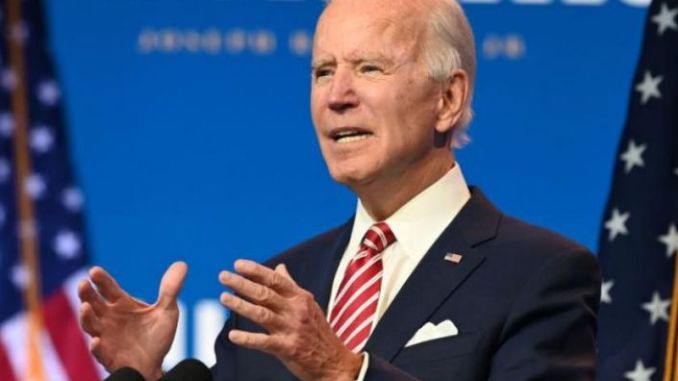
WASHINGTON — Two days after Joe Biden was declared the winner in the presidential election, President Trump and his allies have vowed to keep on fighting, but his campaign team has already let go of some staff and isn’t extending others beyond this week, multiple sources told Yahoo News.

“They just laid off people,” a former Trump campaign adviser said Monday.

Another source familiar with the campaign told Yahoo News they were unaware of layoffs, but knew many staffers who were not being extended beyond this week and next.

“I’ve heard a lot of people have just one week left,” the source said, adding that those staffers were getting their last paycheck.

It’s standard operating procedure for presidential campaigns to let staff go after the election, particularly people involved in work like hosting live events, which are typically no longer needed once all the votes are cast. “Every campaign has a sell by date, even successful ones,” a Republican source said.

“This is why campaign life is the best and also worst job ever,” the source said.

But in this case, Trump and senior members of the campaign team have insisted this election is not over, potentially making the loss of staff more consequential.

Tim Murtaugh, the Trump campaign’s communications director, framed the staff reduction as normal post-election turnover. “Unlike most campaigns, which close down immediately after Election Day, because of the unprecedented nature of the 2020 race, we have long had a plan to continue on to see President Trump reelected. However, staffers related to events, trips, door knocking and grassroots organising played roles that ended on Election Day and obviously play less of a role after Election Day,” Murtaugh wrote in an email to Yahoo News.

As part of his effort to keep the election going, President Trump, who has falsely declared himself the winner and made baseless allegations of widespread “fraud,” has had lawyers for his campaign file multiple legal challenges and demanded recounts.

On Monday evening, Trump’s team held a press conference where White House press secretary Kayleigh McEnany, who is also a spokesperson for the campaign, declared, “we want every legal vote to be counted and we want every illegal vote to be discarded.”

The former Trump campaign adviser attributed the need to shed staff to the fact the operation is “dry on cash.” In the final months of the election, heavy spending by Trump’s team eroded a financial advantage he was expected to have over Biden. During the past few days, the campaign has aggressively raised funds in support of its election challenges. According to Murtaugh, Trump’s team would have what it needed to keep challenging the election.“We are raising significant amounts of money to fuel the president’s challenges and will retain appropriate staff to see the post-election process through to the president’s victory,” he said.

Supporters of President Trump stage a rally outside the Utah State Capitol. (Rick Bowmer/AP)
A second former Trump campaign adviser said they knew senior people on the team would be “sticking around another couple weeks.” They suggested the team could survive cuts and still have what it needed to make legal challenges and push for recounts.

“You can probably trim down the operation and still be legit,” the source said.

However, the Republican source, who described post-election layoffs as a normal part of political campaigns, had questions about the scope of the campaign’s challenge efforts even before layoffs. The source noted that Utah Sen. Mitt Romney, who was the Republican nominee in 2012, had a robust operation for a potential challenge that year with a team of election lawyers and planes on standby to take them to key states.

In contrast, the source accused the Trump’s campaign of having “zero planning” with “no legit poll watching or recount plans” and staffers appearing on TV to make wild and baseless allegations rather than a serious team of lawyers and experts.

“Waving around the political equivalent of a bloody rag is no substitute for legitimate planning,” the Republican source said. (Yahoo News)

Why SSS Ordered #EndSars’ Promoters’ Bank Accounts Frozen, Stopped Foreign Travel

Fresh facts have emerged that the embargo placed on the bank accounts of some leading supporters of the #EndSARS protests was the result of an instruction from the Department of State Services, DSS.

THEWILL gathered authoritatively that it was the DSS which ordered the Central Bank of Nigeria, CBN, to freeze the bank accounts of 19 persons and a firm found to be backing the protests.

The security service was also said to have directed the Nigeria Immigration Service, NIS, to stop several promoters of the protests from leaving or entering the country based on intelligence information that they were being used with or without their knowledge by both international and local conspirators to forcefully remove President Muhammadu Buhari from office.

Multiple sources familiar with the development said the DSS Director-General, Yusuf Magaji, who had been covertly monitoring the #EndSARS protests, advised the Presidency to immediately accede to the demands of the protesters because it got real-time intelligence that some unidentified persons had infiltrated them and wanted to use the protests to instigate the removal of the President from office.

It was further gathered that in the heat of the riots and tension that rocked the country, the DSS invoked national security concerns and asked the Central Bank Nigeria to freeze the bank accounts linked to some promoters of the protests because it believed they were being used to funnel cash to keep the protests going in order to sabotage the federal government.

The DSS, according to sources, also directed the Immigration Service to prevent some persons linked to the protests from leaving or entering the country without clearance from the agency as part of its investigations.

The directives as expected have been greeted with uproar by Nigeria’s often restive youths, who make up the bulk of the #EndSARS protest.

“The freezing of the bank accounts of some persons with ties to the EndSARS movement and their inability to travel is beyond the CBN and NIS. They were given direct orders by the Presidency in the name of national security and they must comply with such others.

‘’They cannot even debate such or ask questions over such. It is now beyond them and purely for the Intelligence agencies,” an intelligence source told THEWILL, on condition of anonymity.

The source added: “Let me also add that the CBN and the NIS cannot unilaterally lift these blockades, even if they want to. They have no such discretion or powers. It is now way beyond them. I read the CBN went to court to secure an order to give it further legal backing and to probably protect the commercial banks from liabilities but the truth is that they do not even have to do that really.

“The Presidency has sweeping powers under National Security and any person or group that feels their rights have been infringed upon can go to court to seek redress. In most cases, the rulings by the court are based on evidence presented by the government.”

At least two persons who have been affected by the directive have sued. Bassey Israel, a Port Harcourt- based pharmacist has gone to court to challenge the development, while Modupe Odele, who mobilised legal services for detained protesters, and had her international travel passport seized when she wanted to travel a few days ago, also said she has sued the government.

Efforts to reach DSS yesterday for comment proved abortive.

Appeal Court President Seeks Judiciary’s Help For AMCON To Recover N5tr Debt

President of the Court of Appeal, Justice Monica Dongban-Mensem, and the Administrator of the National Judicial Institute (NJI), Justice Rosaline Bozimo (retd.) have urged the Judiciary to help speed up hearing in cases involving the Asset Management Corporation of Nigeria (AMCON) and its recalcitrant obligors before their courts.

The duo urged that justice must be dispensed within the ambit of the law.

Also, AMCON Managing Director/Chief Executive Officer, Mr. Ahmed Kuru, said the corporation has a number of legal issues in different courts with its obligors.

He explained that non-collection of the debts, which is in the excess of N5 trillion, would have negative effect on national resources.

Kuru expressed appreciation to the Judiciary for sustaining the AMCON Task Force in the four divisions of the Court of Appeal to fast-track the corporation’s appeals.

AMCON, he said, currently owes more than N4 trillion to the Central Bank of Nigeria (CBN), which could even rise to almost N7 trillion by 2024 at the current rate of inflation.

The AMCON chief said this was why Federal Government’s sister agencies should ensure that the debtors, who he said intended to cripple the banking sector before AMCON was set up, are made to repay the debt that is weighing down the economy.

The justices and the AMCON chief spoke at a two-day annual seminar for Justices of the Courts of Appeal in Abuja.

The event was jointly organised by the NJI and Legal Academy with the full complement of AMCON management.

On her expectations of the Judiciary to enable AMCON succeed, Justice Bozimo said: “The role of the Judiciary in the execution of AMCON mandate cannot be over-emphasised.

“This is understandable, considering that the distinguished Bench is indispensable to the realisation of the enormous powers conferred on the corporation by the AMCON Act.

“It is through these interactions that the Judiciary will be sensitised on the complex role AMCON plays at ensuring the sustenance of the financial system stability in Nigeria. The level of financial stability currently enjoyed in the country is solely attributable to the role played by AMCON in offloading toxic portfolios from the balance sheets of banks thus enabling the banks to perform their intermediating role in the macro-economy.”

The Appeal Court president noted that it is evident that AMCON is bound to confront challenges and difficulties in its efforts to realise its mandate.

She said it was in order to overcome the challenges that the NJI ensures that the Judiciary, especially the judges, are sensitised and provided with updates that have to do with the AMCON regime at all times.

Justice Bozimo said: “AMCON’s intervention in the economy at the time it was set up by the Federal Government ensured the integrity of banks and saved their employees from sudden and untimely disengagement. In other words, with the establishment of AMCON, Nigerian banks were saved from imminent collapse and their employees secured from retrenchment.”

Justice Dongban-Mensem recalled that the 2007-2009 global financial crisis had severe impact on the economies of many countries, including developing economies like Nigeria.

The jurist said this was the reason AMCON was set up.

She stressed that the corporation, having made sure that the financial system in Nigeria did not collapse, wanted all sister agencies of government to ensure AMCON recovers its outstanding huge debt from its recalcitrant obligors who she said were exploring judicial technicalities to gain more time.

She said: “Although Nigerian banks were restructured prior to the financial crisis through consolidation, the restructuring did not shield Nigerian banks from the effects of the crises. In fact, the crisis further exposed other lapses in the system that needed to be addressed in order to prevent total collapse.

“The Nigerian government responded by establishing AMCON to help in stimulating recovery of the Nigerian banking system through buying non-performing assets of troubled banks.

“Eight factors were primarily responsible for the crisis in Nigeria. They include macro-economic instability caused by large and sudden capital inflows, major failures in corporate governance in banks, lack of investor and consumer sophistication, inadequate disclosure and transparency about the financial position of banks, critical gaps in regulatory framework and regulations, uneven supervision and enforcement, unstructured governance and management processes at the CBN/and weaknesses in the business environment.”

Insisting that the Judiciary must support AMCON to recover the debt, Justice Dongban-Mensem added: “In the wake of a financial crisis, banks found themselves saddled with plethora of defaulting loans. In addition to causing default, the crisis typically led to depreciation in the value of securities created against these defaulting loans thereby leaving banks with an unfortunate inability to recoup their losses.”

CAF Rules Absent Teams To Forfeit Matches

The Confederation of African Football (CAF) has released new guidelines specifying that any national team unable to play in upcoming qualifying matches for the 2022 Africa Cup of Nations due to Covid-19 restrictions will be deemed to have lost the game 2-0.

The guidelines, put out by CAF also say a team will be considered to have lost 2-0 if it is unable to field the minimum number of players required – 11 plus four substitutes.

Normally, squads for these qualifying matches would be much larger, but some national team managers have expressed concern about their ability to get players, especially those based in Europe, to play in Africa amidst fears they could get Covid.

During the last break, Crystal Palace’s Jordan Ayew and Liverpool’s Naby Keita both contracted the virus while on international duty.

The Gambia coach Tom Saintfiet has complained that Polish side Gornik Zabrze have so far said that Alasana Manneh will not be allowed to join up with the Scorpions.

The guidelines also say that all matches must be played behind closed doors, although national FAs can ask for special permission to have fans in.

Kano Sharia Police Destroys 1.9 Million Bottles Of Beer Worth Over N200m

Kano State Hisbah Board has destroyed 1,975,000 bottles of beer, worth over N200 million, confiscated within Kano metropolis.

The state Governor Abdullahi Umar Ganduje who was represented by his Deputy Nasiru Gawuna during the destruction exercise at Kalebawa in Dawakin Tofa Local Government, said consumption of alcohol and all other intoxicants that can distort mental capability and was forbidden in Islam.

Kano, operating Sharia Law, has banned consumption of alcohol.

Hisbah enforces Sharia law.

Gawuna said part of his administration’s effort of enhancing the welfare of the Hisbah, before this year 2020 runs out, there would be a salary increase and new uniform for them.

“My administration is proud of the way you discharge your duties..therefore I wish to urge all stakeholders to continue give you all the support you need to succeed ” he said.

In his remarks, the Commander General, Kano State Hisbah Board, Sheikh Harun Muhammad Ibn Sina said that the board got a court order to destroy over 20 trucks of alcohol.

Ibn Sina while expressing the appreciation of the support given to them by the State Government, assured that the Hisbah would not relent in its fight against immoral acts that are destroying society.

Buhari Reopens Border for Dangote, Keeps it Shut for Other Businesses

President Muhammadu Buhari has granted Dangote Group a special waiver that would allow the conglomerate transport its products across the Nigerian borders into other West African countries, Bloomberg reported on Monday citing an official disclosure.

The business news outlet said Dangote Group’s Michel Puchercos confirmed that the company will now be able to export cement to Togo and Niger following “an authorisation given by this administration.” 

It was unclear why Mr. Buhari singled Dangote out for commercial clearance through land borders, which have been shut since August last year. The administration argued the closure, which left thousands stranded because it was not announced prior to implementation, was designed to allow consumption of home-grown products. 

The government carried out the policy despite criticism from other West African countries whose leaders said Nigeria’s action undermined the spirit of the newly-signed continental free trade agreement.

In its report on Monday, Bloomberg said Dangote’s waiver could open a way for other companies to seek special concessions to export across the border, although this was not immediately confirmed by any government official.

NewswireLawandEvents

#EndSARS: Sanwo-Olu called me to say Col Bello was shooting at Lekki, Gen tells Lagos panel

We only fired blank ammunition to scare hoodlums – Bello

…insists nobody was shot dead, says protesters happy seeing soldiers

OLADIMEJI RAMON

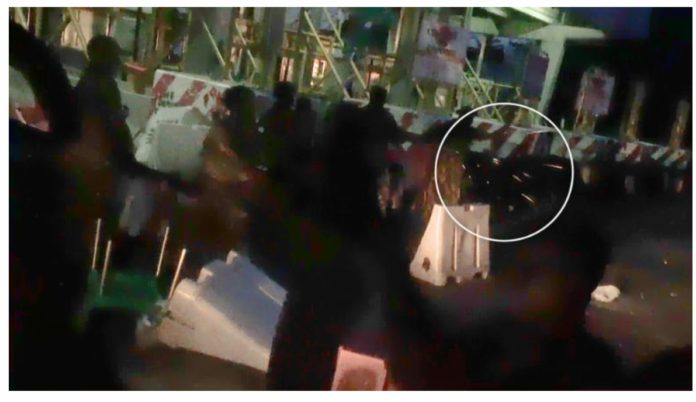
The Commander, 9 Brigade, Nigerian Army, Brig Gen Musa Etsu-Ndagi, representing the Nigerian Army on the Lagos State Security Council, has said he received a phone call from the Lagos State Governor, Mr Babajide Sanwo-Olu, around 7.23pm on October 20,2020 informing him that a certain Lt Col Bello was reportedly shooting at the Lekki tollgate where #EndSARS protesters were gathered.

Etsu-Ndagi said he immediately called Bello, who is the Commanding Officer, 65 Battalion, Bonny Camp, Victoria Island, and he (Bello) told him that he only fired blank ammunition into the air.

Etsu-Ndagi, who is one of the top four military officers listed as witnesses of the Nigerian Army before the Lagos State Judicial Panel of Inquiry probing the Lekki tollgate shootings, stated this in his statement on oath filed at the panel’s registry on Friday.

The top Nigerian Army officers insisted that soldiers never shot at or killed anyone and there was no massacre at the Lekki tollgate on the night of October 20.

They vehemently denied using live ammunition on the #EndSARS protesters who gathered at the tollgate, adding that soldiers did not take any dead bodies away.

Bello said the protesters were, in fact, happy to see the soldiers at the tollgate, adding that he personally offered the protesters water and drinks while persuading them to go home and observe the 24-hour curfew declared by the Lagos State Government.

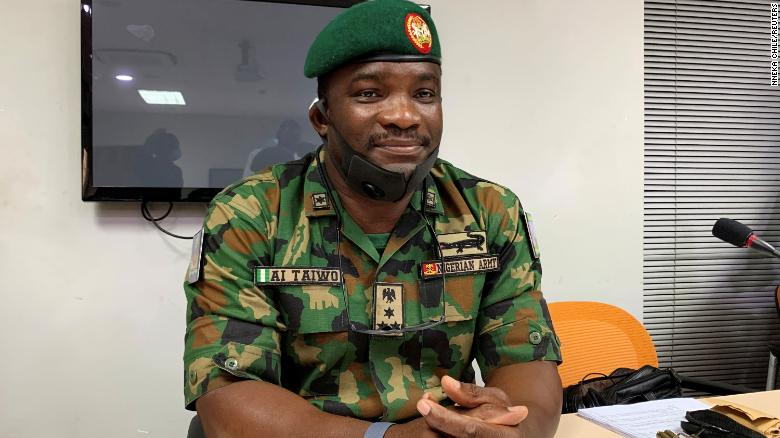
The other army officers who deposed to witness statements before the panel are the Commander of 81 Military Intelligence Brigade, Victoria Island, Lagos, Brig Gen Ahmed Taiwo; the Chief of Staff, 81 Division, Nigerian Army, VI, Lagos, Brig Gen Nsikak Edet; Commander, 81 Division Garrison, VI, Brig Gen Francis Omata.

Specifically, Omata and Bello told the panel that by the time they arrived at the tollgate, the protest had turned from peaceful to violent.

They said on arrival at the tollgate, they were being pelted with stones and broken bottles and that in response all they did was fire blank ammunition into the air to disperse the crowd.

Omata said, “On arrival at the tollgate at about 7.30pm, I met a rowdy situation. I also met the Commanding Officer, 65 Battalion (Bello), who briefed me on the situation. He briefed me that he met a hostile crowd, hoodlums mixed with the protesters, who were chanting and throwing stones at them. I was able to disperse the crowd by firing blank ammunition into the air.

“At this point, stones and sticks were being thrown at us. Then I moved to a safe area and briefed General Officer Commanding 81 Division, Maj Gen Godwin Ahamefuna Umelo by phone.

“The General Officer Commanding directed me to pacify the hostile crowd and move the troops back to base. However, the crowd still continued chanting #EndSARS. I then instructed the troops to withdraw to base.”

Giving his own account of the incident, Bello said while he was moving towards the Lekki-Ajah Expressway at around 6.45pm, he heard gunshots before the tollgate and on coming down he saw that “the crowd had turned from peaceful protesters to a mob, infiltrated by hoodlums.”

He said, “On getting to the tollgate, I persuaded the crowd to go home and observe the 24-hours curfew declared by the state government. But surprisingly, the hoodlums continued throwing stones, bottles and other dangerous objects at us and were burning tyres. I again fired some blank ammunition upward to scare the hoodlums away. But some protesters who were still at the tollgate sitting down quietly were given water and drinks by me while pleading with them to go home.”

Bello stressed that “we did not fire at the protesters. Blank ammunition were fired upward to scare the hoodlums from the crowd. Nobody was shot dead at the Lekki tollgate, there was no massacre as claimed. The claim that the military took away dead bodies was not true. The protesters were happy to see us as indicated in some of the video clips of 20th October 2020.”

Panel suspends sitting as youths protests CBN’s freezing of members’ accounts

The sitting of the Lagos State Panel of Judicial Inquiry probing the alleged shooting of #EndSARS protesters at the Lekki tollgate was frustrated on Saturday due to the absence of the two youth members of the panel, Oluwarinu Oduala and Temitope Majekodunmi.

Oduala, who is one of the promoters of the #EndSARS protest, failed to show up for the Saturday sitting in protest against the freezing of her bank account by the Central Bank of Nigeria.

The PUNCH had reported that the CBN obtained a court order freezing the accounts of 20 #EndSARS promoters till January 2021. One of those affected was Oduala.

The chairman of the judicial panel, retired Justice Doris Okuwobi, said the panel had no other option but to suspend Saturday sitting as it could not form a quorum in the absence of the two youths.

Justice Okuwobi said, “We are confronted with a situation which prevented her (Oduala) from coming. We do not know if the two youths’ representatives will eventually pull out.

“We don’t want a situation where proceedings would go on and later it is impugned with controversy for lack of quorum.”

Justice Okuwobi stressed that it was important for all the sittings of the panel to be held in accordance with the law.

“In all matters, we have to wait for them (youth representatives) to join us. Without them, we are handicapped,” she said.

The panel scheduled Saturday to take the testimony of the Nigerian Army on the October 20 shootings by soldiers at the Lekki tollgate in Lagos.

A soldier had already taken the witness stand when Justice Okuwobi announced that the sitting could not proceed.

Responding, counsel for the Nigerian Army, A. T. Kehinde (SAN), who explained that the army’s appearance on Saturday was pursuant to an October 28 summons by the panel, appreciated the panel for explaining its challenges to everyone.

He asked to be guided on the next date his client would appear before the panel.

Also speaking, counsel for the Lagos State Government, Olukayode Enitan (SAN), aligned himself with the submission by the counsel for the Army.

“The issue of a quorum is of utmost importance as to the competence of the panel to proceed and as to the integrity of recommendation to be made at the end of proceedings.

“Therefore, the directive for the panel to adjourn is quite appropriate,” Enitan said.

Counsel for #EndSARS protesters, Mr Adesina Ogunlana, described the development as an embarrassment to both the panel and lawyers.

Ogunlana, who claimed to have privileged information about plans to disrupt the panel sittings using thugs, advised the panel to be proactive and to ask the government to do the needful.

“Government cannot approbate and reprobate. This disconnect must be addressed immediately,” he said.

Also, a Senior Advocate of Nigeria, Adeyinka Olumide-Fusika, who said he was before the panel on behalf of some victims who wanted to make a presentation before it said he would need the panel’s directive in view of the development.

Olumide-Fusika gave the names of some of his clients as Raimi Olumide, Solomon Samuel Ageze, Olamilekan Sanusi, Ayodeji Beckley, Samuel Asala, Agbese Isiawu and Onileowo Legend.

Justice Okuwobi adjourned further sitting of the panel till next Saturday, November 14.

The panel had on Friday fixed next Tuesday, November 10, to continue the viewing of the video footage of the Lekki shootings submitted by the Lekki Concession Company, operator of the tollgate.

In an interview with journalists, the #EndSARS protesters’ lawyer, Ogunlana, said the freezing of the bank accounts of the promoters of the protests had substantiated his submission to the panel on Friday that his life and those of his clients were being threatened.

He declared the freezing of the protesters’ accounts as a declaration of war by the government.

Ogunlana said, “Why are they boycotting the panel? Why did they choose to boycott the panel? It is because one of them has been sanctioned by the Federal Government via the court.

“These people say, ‘How can you put us on a panel for the purpose of resolving this issue and then you are sanctioning us very drastically?’

“We are talking about financial squeeze; they can’t operate their accounts again; that’s a declaration of war. You know one of the ways of fighting a war is starvation. So, these people are saying you can’t ask us to do a job, promising peace and progress, then you are punishing us. That is what happened. And the law setting the panel up say those young people, representatives of the youth are necessary. So, their presence is necessary for the panel to form a quorum.”

A member of the panel, who spoke to Sunday PUNCH on condition of anonymity, said the panel members generally felt betrayed by the government.

The member said, “Most panel members feel a sense of betrayal by the government. Many of the members are sacrificing their time, reputations and even careers, for this assignment, so that peace can be restored.

“It is unfair on the side of the government to provoke the protesters. Having set up the various panels, the government should not be the one undermining the gallant efforts of the panel members.

“In this regard, panel members view the freezing of the bank account of Miss Rachael Oduala (Rinu) as a direct affront on the integrity of the panel.”

The member said it amounted to “the greatest act of provocation for the government to freeze their bank accounts, seize their travel documents or even arrest the #EndSARS protesters since they embraced dialogue by agreeing to serve on panels set up by the government.

“If this should continue, how will the panel get witnesses to come out openly to narrate their experiences? The government should set good examples and not carry on as if there is no law regulating human affairs. We expect the government to reach out to the youth protesters to resolve all issues with them. The panel cannot sit under the present circumstances,” the member said.

Questions arise over alleged govt official fingered as six Nigerians are convicted in UAE over ‘B/Haram Funding’

Who is the alleged government official named as part of a ring that finances Boko Haram terrorism activities in Nigeria, and for which six persons have been jailed in the United Arab Emirate (UAE), according to a Daily Tust publication?

According to the newspaper report, one Alhaji Ashiru, said to be “a Nigerian government official” and senior undercover Boko Haram member facilitated the transfer of misappropriated public funds to the dreaded terrorist group.

That is the nagging question engaging analysts as the Court sentence of the six Nigerians last year came to light in the newspaper report this Monday.

Security sources were expectedly mute in Abuja on Monday.

The Daily Trust report reads in full: Six Nigerians have been convicted by an Abu Dhabi Federal Court of Appeal in the United Arab Emirates (UAE) over alleged funding of Boko Haram, investigations by Daily Trust reveals.

Two of the convicts, Surajo Abubakar Muhammad and Saleh Yusuf Adamu were sentenced to life imprisonment while the remaining four, Ibrahim Ali Alhassan, AbdurRahman Ado Musa, Bashir Ali Yusuf and Muhammad Ibrahim Isa were handed ten-year imprisonment respectively.

The convicts, according to a court judgment exclusively obtained by Daily Trust were tried and convicted in 2019.

The court judgment also showed that between 2015 and 2016, the convicts were involved in different cash transfers allegedly in favour of Boko Haram to the tune of USD782, 000.00 even as those close to them said the transactions were for legitimate purposes.

Our correspondents report that for the past 11 years, the issue of Boko Haram funding had remained mysterious and different theories advanced by prominent personalities and groups.

This was probably the first time certain individuals were identified albeit outside the shores of Nigeria. A senior government official confirmed that they were aware of the case.

“They were framed up”

However, families of those affected told the Daily Trust that the victims were “framed up” considering that they had been doing legitimate bureau de change business in the UAE before their arrest.

The conviction of the six suspects was said to have been upheld by the appellate court in the UAE after they lost an appeal earlier filed at a lower court.

According to the judgment, all the accused were charged with funding a terror group (Boko Haram) by facilitating transfers of money from Dubai to Nigeria for alleged terror operations.

Engaging in such an activity is a crime under Article 29, Clause 3 of UAE’s Federal Law No 7 of 2017 with regards to anti-terrorism law, documents seen by this paper showed.

How they were arrested, tried

Court documents seen by Daily Trust indicate that arrest warrants from the office of the National Security Bureau were issued against the accused after investigations “confirmed their involvement and membership of the Boko Haram” terror group in Nigeria, and transferring money for that group.

The accused were said to have been apprehended between April 16 and 17, 2017, and their homes searched according to the search warrant issued by the National Security Prosecution office dated April 16, 2017.

Thereafter, interrogation files were prepared for each of them.

The first and second accused were said to have been charged for joining the Boko Haram group in Nigeria knowingly, which is a crime punishable under Article 22/2 of the Federal Law No 7 of 2017 with regards to anti-terrorism punishable by death or life imprisonment.

The third, fourth,  fifth and sixth accused were charged with assisting the terror group knowingly, which is a crime under Article 31, Clause 1 of the same law, and is punishable by life imprisonment or jail for not less than five years under the UAE law.

Undercover agents at large

It was gathered that almost all the transactions that landed the six Nigerians now in jail in the UAE were initiated by two undercover Boko Haram agents who are based in Nigeria from where they were facilitating the funding transactions.

One of them, Alhaji Sa’idu who is allegedly based in Nigeria, is said to be a senior undercover Boko Haram member responsible for facilitating the group’s access to funds from its sponsors.

Also fingered in some of the transitions is one Alhaji Ashiru, who is said to be “a Nigerian government official” and yet a senior undercover Boko Haram member who facilitated the transfer of misappropriated public funds to the group.

How indicted Nigerians got involved

Families of those affected told our correspondents that their relatives were most likely deceived in the course of their routine bureau de change transactions to the extent that some of the transactions they facilitated turned out to be for proceeds meant for Boko Haram activities.

It was gathered that one of the Boko Haram couriers, Alhaji Sa’idu, would arrange an unidentified or vaguely identified Arab person on a visit to Dubai from Turkey to hand over an amount of money in US Dollars to one of the convicts who would, in turn, advise his Nigerian-based business partners to hand over the Naira equivalent of the amount to him (Alhaji Sa’idu).

A source familiar with the case said, “I think Alhaji Sa’idu is just Nom de guerre who used the gullibility of the victims to achieve his aim. They were into bureau de change business, receiving and sending monies on behalf of others.

“From what I understand, they have been doing the business for long and along the line, they fell into a trap. I am not siding with them or trying to indict them but generally, there is ignorance on their side,” he said.

‘No fair hearing’

Auwalu Ali Alhassan, an elder brother to two of the convicts; Ibrahim Ali and Bashir Ali said his siblings were not given a fair hearing during the trial, adding that efforts to get the Nigerian government to intervene proved abortive.

According to him, “There was no fair hearing during the court case; no witnesses and they were just convicted to ten years in prison (Ibrahim and Bashir) and those that provided them with the monies were sentenced to 25 years each. They were earlier accused of money laundering and nothing more but along the line, the charge changed to financing terrorism”.
https://googleads.g.doubleclick.net/pagead/ads?guci=1.2.0.0.2.2.0.0&client=ca-pub-1103034130049335&output=html&h=60&slotname=9114618322&adk=1742951136&adf=2589558187&pi=t.ma~as.9114618322&w=468&lmt=1605003838&rafmt=12&psa=1&format=468×60&url=https%3A%2F%2Feveryday.ng%2Fquestions-arise-over-alleged-govt-official-fingered-as-six-nigerians-are-convicted-in-uae-over-b-haram-funding%2F&flash=0&wgl=1&tt_state=W3siaXNzdWVyT3JpZ2luIjoiaHR0cHM6Ly9hZHNlcnZpY2UuZ29vZ2xlLmNvbSIsInN0YXRlIjowfSx7Imlzc3Vlck9yaWdpbiI6Imh0dHBzOi8vYXR0ZXN0YXRpb24uYW5kcm9pZC5jb20iLCJzdGF0ZSI6MH1d&dt=1605003838161&bpp=4&bdt=2118&idt=806&shv=r20201104&cbv=r20190131&ptt=9&saldr=aa&abxe=1&cookie=ID%3D198b1f531000c808-223466e961a6002e%3AT%3D1604304380%3ART%3D1604304380%3AS%3DALNI_Ma7gbACYFpLKbFrIe_gD0oCtihsfw&prev_fmts=0x0%2C468x60&nras=1&correlator=2706652383540&frm=20&pv=1&ga_vid=1224109608.1604304380&ga_sid=1605003839&ga_hid=525273415&ga_fc=0&iag=0&icsg=615720786329599&dssz=46&mdo=0&mso=0&u_tz=60&u_his=1&u_java=0&u_h=1280&u_w=800&u_ah=1280&u_aw=800&u_cd=24&u_nplug=0&u_nmime=0&adx=166&ady=3913&biw=800&bih=1160&scr_x=0&scr_y=0&eid=42530672%2C21066922%2C21067466%2C21068083%2C21066819%2C21066973&oid=3&pvsid=2615120681892556&pem=290&rx=0&eae=0&fc=1920&brdim=0%2C0%2C0%2C0%2C800%2C0%2C800%2C1160%2C800%2C1160&vis=1&rsz=%7C%7CeEbr%7C&abl=CS&pfx=0&fu=8448&bc=31&ifi=2&uci=a!2&btvi=1&fsb=1&xpc=305lNoMXar&p=https%3A//everyday.ng&dtd=859

On how they responded to the alleged funding of terrorism by their brothers, Alhassan said, “The case was appealed and still the ruling was upheld. We reported back to foreign affairs (here in Nigeria) and they advised us to wait till after the appeal.”

He said following his brothers’ arrest, he went to the Ministry of Foreign Affairs and reported to the then Minister of State, Khadija Bukar Abba Ibrahim and also spoke with the UAE Ambassador to Nigeria and it was agreed that they would be released and sent out of the country (UAE).

“This wasn’t to be. After they were taken to court they were later charged with terrorism, that those monies they collected were from people linked with a terrorist.

“Our brothers were not accused of terrorism. The ministry requested inquiries trying to use diplomatic relations to secure their release since they were not convicted of terrorism and to seek an explanation from the UAE of what really happened. It was at that point when the COVID pandemic sets in. Till date, the government of the UAE has not provided the information and court proceedings being sought by the Nigerian government.

“We have been to relevant places including the Ministry of Justice and the Diaspora Commission; they keep telling us no response (from the UAE). We even wrote an open letter to the president, which was published in some national dailies but no positive development. The boys are still being held in prison. We are seeing lack of interest from the Nigerian government to secure their release,” he said.

How the convicts moved to Dubai

Alhassan explained how his brothers started money exchange business in Kano and later moved to Dubai where they were eventually arrested.

“We realised that the business was booming as more people visit Dubai from Kano and other parts of the world so we decided to ask Ibrahim to move to Dubai as part of our business expansion strategies.

He said on arrival, “Ibrahim started buying things for other businessmen based here at the Kantin Kwari Market, Kofar Wambai and others.

Sometimes, he settled school fees of children studying abroad and also transferred monies to people to Hong Kong or China where they intended to buy commodities. This was all possible because he had a residence permit of the United Arab Emirate,” he said.

According to him, Ibrahim later set up a company called Kofar Ruwa General Enterprises that was duly registered in Dubai and which enabled him to transact business and money transfers in Dubai.

“We do send gold and dollars as well for him to sell but later dollar was stopped by the government; so we sent him gold to convert to Dirham (Dubai local currency) for people and because of the status of Dubai being the hub of international business he was doing well.

“He went there in 2015 with his family and they were all having their residence permits as well. He became a trusted ally and respected by many to the point people started keeping their monies with him and it was at this point that his younger brother, Ibrahim Ali, later joined him. He too got papers and was living there peacefully,” he said.

He said after two years his brothers were arrested by authorities in Dubai in 2017 and all their belongings got confiscated.

“For three months we didn’t know their whereabouts; it was later that we got to know they were moved to Abu Dhabi.  The authorities took away about 800,000 USD, equivalents to 3 million Dirham, which was peoples’ money brought for safe keep.

“They accused them of collecting stolen monies from people,” he said adding: “If you accuse them of wrongdoing they should be arraigned before a court but that wasn’t to be till after two years before they were charged to court.”

Justice ministry reacts

Contacted, the Attorney – General and Minister of Justice, Abubakar Malami said the Nigerian government was aware of the matter and had written the UAE seeking records of proceedings but was yet to get feedback.

Commenting on claims by families of some of the convicts that different government agencies including the ministry of justice failed to come to their aid, Malami said it was not true that the Nigerian government did not do anything on the matter.

“Nigerian government has written firstly for copies of the proceedings, which will give us the opportunity to see whether justice was done or not. And on whether they have committed the crime, we requested to know who and who are involved so that the Nigerian government will know what to do next.

“Nigerian government is working but it doesn’t have the exclusive control, it has to rely on the information provided by UAE. So, it is not in control of the speed of response or action.

“We are working on both the issues that they did not receive a fair hearing and that they were alleged to have supported Boko Haram activities,” he said.

On the alleged undercover agents who are said to be at large, Malami said the Nigerian government has instructed all the associated agencies including the financial intelligence unit to profile the allegation.

“Since the relationship involves issues of money between Nigeria and UAE, the Nigerian government has equally instructed the existing agencies of government to embark on an investigation on that and we have gone far.

“We await further intelligence from the UAE, which has relevance to the conviction and trial in order to do what we can as a follow-up to take the next line of action,” he said.

The Embassy of the United Arab Emirates (UAE) in Nigeria did not respond to Daily Trust’s request to comment on the matter at the time of filing this report. A text message seeking a reaction from the embassy was not responded to.

Lawyers react

A legal practitioner based in Kano, Barrister Yusuf Muhammed Ahmed said the only option available is for the families of the convicts to approach a Supreme Court in the UAE if there is one.

“Sometimes a case will move from a magistrate court to high court and then to appeal court…All of them would stand on the same judgment only for the Supreme Court to do away with the judgment and order a fresh case,” he said.

However, Barrister Ahmed Sani in Abuja said the case could be resolved through diplomatic ways. “If the appeal court in UAE is the final place, Nigeria can use its diplomatic link to save the convicts especially if there is evidence that they did not deliberately make themselves available to ship the proceeds of crime.

“I see some elements of ignorance and greed on the side of the convicts…They should have established the record of the people they were dealing with because ignorance is not an excuse in the eye of law and you know that the Arab countries are not taking it lightly in dealing with monies meant for terrorism funding,” he said.

ACCOUNTABILITY BEYOND BORDERS

No! America is not coming to save you! 

No! The United Nations is not coming to save you! 

It is because of these blasé international law principles: “Territorial Sovereignty” and “Non-Interference.” 

These two principles are the reasons tensions escalate while the world is in full glare. But let’s face it, think about Papa Funmi, who lives a few blocks away, coming into Papa Uwa’s house to provide Uwa with aid (a humanitarian intervention), as Papa Uwa gives Uwa the beating of his life. Papa Funmi has crossed the line. He has stepped in uninvited to a house he has no control over (breached territorial sovereignty) to rescue Uwa (thereby interfering in a matter that has no direct effect on him or his). Well, we all know how that would end! 

In this very mundane hypothetical scenario lie the foundation of the principles of territorial sovereignty and non-interference. You see, international law functions under the maxim that states are independent and equal. As such, there is a legal obligation that the United Nations and sovereign states desist from intervening in other sovereign states’ internal affairs. These principles are based on respect for sovereignty and the territorial integration of sovereign states. In this way, by deferring to governmental institutions within sovereign states, the state’s internal and external supremacy as a legal person is acknowledged. 

Within contemporary international law, one of the hallmarks of the legal order is its commitment to upholding human rights. Particularly, the United Nations Charter enshrines the obligation to ensure the universal respect for and the protection of human rights and fundamental freedoms for all through international cooperation. Owing to this bedrock principle, in the face of gross human rights violations, the expectation is that the idea of a common humanity would take precedence over legality – the legality enshrined in the doctrines of “Territorial Sovereignty” and “Non-Interference.” But in reality, notwithstanding the commitment to upholding human rights the world over, whether there would be any humanitarian intervention in cases of gross human rights violations would depend mainly on questions within domestic jurisdictions vis a vis the applicable international laws. To this end, humanitarian intervention, military and non-military as relates to the principles of “territorial sovereignty” and “non-interference” is highly controversial in international law practice. But in the words of Kofi Annan, “…if humanitarian intervention is, indeed, an unacceptable assault on sovereignty, how should we respond to a Rwanda, to a Srebrenica – to gross and systematic violations of human rights that affect every precept of our common humanity?” 

History has taught the world that external intervention has met the same fate when applied as in; Somalia, Bosnia and Kosovo, and when not applied as in; Rwanda – controversiality. As such Kofi Annan’s question poses a dilemma; perhaps one question that the world truly has no answer to, and one, I do not presume to know the absolute answer. I can, however, point out the facts and the law and let you draw a syllogism. 

On the Facts 

Over the last few weeks, the #EndSARS movement in Nigeria marked with the #5for5 gained momentum. Many Nigerian youths came out in peaceful protest, calling out and asking for the end of an era of a litany of police brutality that has led to the extrajudicial killings and forced disappearance of many young Nigerians. Within the circle of protesters were whispers that if they held out for 30 days in peaceful protests, just 30 days, the United Nations and the United States would sweep in to save the day.  

As the protests continued, a most shocking report emerged – the Lekki Tollgate Massacre. On October 20th, 2020, members of the Nigerian military reportedly opened fire on a group of peaceful protesters at the Lekki Tollgate in Lagos state, Nigeria, killing some protesters and wounding many. 

Following these events, the whisperers now convinced that the protection of fundamental human rights once considered the purview of sovereign states alone has transcended governments and borders, giving birth to a regime of universality, a universality amplified by globalization. These whisperers hoped against hope that the world they see in shades of the United Nations and the United States would lean in to ensure that our common humanity triumphs. 

On the Law 

Human rights are universal and inalienable, indivisible, interdependent and interrelated. Though human rights are inherent to all individuals, by our sheer humanity, the International human rights regime embodies legal doctrines and practices that recognize that states have a tripartite obligation; the obligations to respect, protect and fulfil the human rights of its national and those to whom it is tasked to protect within its borders.  

Despite the existence of fora charged with the responsibility of addressing gross human rights violations on the international plane, the reality is blurred by layers of complexity. Regarding the United Nations, the International legal order’s very bedrock: The United Nations Charter enshrines in Art. 2(7) that: 

“Nothing contained in the present charter shall authorize the UN to intervene in matters which are essentially within the domestic jurisdiction of any state or shall require the Members to submit such matters to settlement under the present Charter; but this principle shall not prejudice the application of enforcement measures under Chapter Vll.” 

While the United Nations would be barred from a unilateral intervention in a member nation’s affairs, except under its Chapter VII powers, it possesses a functional system for addressing human rights violations committed within its member states’ territory. These include; 

The Human Rights Council

Through its universal complaint procedure, the Human Rights Council (HRC) addresses complaints submitted by individuals, groups of individuals, and non-governmental bodies showing consistent patterns of gross and reliably attested violations of human rights and fundamental freedoms. By its very nature, the HRC can receive and address ongoing violations within the territory of all member states of the United Nations.  

However, as a precursor to filing a complaint with the HRC, the complainant must have: 

Taken steps by or on behalf of the alleged victim(s) to exhaust domestic remedies, such as recourse to the domestic courts and other domestic public authorities, or 

Show that domestic remedies have not been exhausted, on the grounds that such recourse of domestic remedies would be ineffective or unreasonably prolonged. 

Human Rights Treaty Bodies  

There are currently ten human rights treaty bodies under the United Nations human rights system, which monitor and protect the nine-core international human rights international instruments and the Optional Protocol to the Convention Against Torture. 

Violations of provisions of various human rights instruments can be brought to the attention of treaty bodies via three main procedures – individual communication, state-to-state complaint procedure and Inquiries 

The individual communication/complaint procedure is a potent way to have individuals communicate consistent and gross violations of human rights instruments, occurring within the territories of parties to human rights instruments. However, its potency is limited to the fact that individual communications can only be received from individuals whose countries have made the declaration for treaty bodies to receive such individual communications for alleged violations within its jurisdiction. 

Of the eight individual complaints procedures in force within the human rights treaty bodies framework, Nigeria has only conceded to having individual communication brought before only two treaty bodies. This leaves recourse to individual communication only in cases of alleged violations of provisions of Convention on the Elimination of Discrimination Against Women and Convention on the Rights of People with Disabilities, to which Nigeria is a party to the optional protocol.  

Special Procedure 

The special procedures consist of a system of independent human rights experts mandated to report and advise on various thematic and country-specific human rights issues. Special Procedures act both on individual human rights violation cases and broader and structural human rights issues. The mandate of the Special Procedures includes performing country visits, convening expert consultation, engaging in advocacy and raising public awareness on human rights issues within the mandate of the Special Procedure.  Presently, there are 11 country mandates and 44 thematic mandates.  

On the regional level, the African Commission on Human and People’s Rights receive (Art. 55) individual communication, similar to the HRC’s complaint procedure, for violation of the African Charter. 

No! America is not coming to save you if you hold out for 30 days! 

No! The United Nations is not coming to save you if you hold out for 30 days! 

In the #EndSARS movement, can there be accountability beyond borders?  

Notice only that the syllogism is only marginally contingent on the aforementioned premise.

CBN OPPOSES SUIT TO REMOVE ARABIC INSCRIPTION FROM NAIRA NOTES

The Central Bank of Nigeria has vehemently opposed a suit before the Federal High Court in Lagos praying that the Arabic inscriptions on naira notes be removed.

A Lagos-based lawyer, Chief Malcolm Omirhobo, who filed the suit before Justice Mohammed Liman, contended that having Arabic inscriptions on the naira notes portrays Nigeria as an Islamic state, contrary to the country’s constitutional status of a secular state.

Omirhobo, who said he does not know what the Arabic inscriptions mean, is praying the court to order the CBN to replace the Arabic inscriptions with either English language, which is the country’s official language, or any of Nigeria’s three main indigenous languages – Hausa, Yoruba or Igbo.

According to the lawyer, with the Arabic inscriptions on the naira note, the CBN has been violating sections 10 and 55 of the Nigerian Constitution, which make the country a secular state.

He wants the court to restrain the CBN from “further approving, printing and issuing naira notes with Arabic inscriptions, bearing in mind that Nigeria is a secular state.”

But the CBN has filed a counter-affidavit in opposition to the suit.

In the counter-affidavit deposed to by one Abiola Lawal, the CBN maintained that contrary to Omirhobo’s claim “the Ajami inscriptions on some of the country’s currencies do not connote any religious statements or Arabian alignment.”

The CBN also tackled the lawyer on the claim that the Arabic inscriptions were a threat to Nigeria’s secular status.

“The inscriptions on the country’s currencies do not and at no time have they threatened the secular statehood of the nation nor have they violated the Constitution of Nigeria, as every design and inscription was finalised with the approval of the relevant government bodies,” the apex bank said.

The CBN explained that the “Ajami inscriptions” on the naira notes dated back to the colonial era “and they do not imply that Arabic is an official language in Nigeria.”

The apex bank said, “The naira notes retained the inscriptions with Ajami since 1973 when the name of the Nigerian currency was changed to naira from pounds.

“The Ajami was inscribed on the country’s currency by the colonialists to aid those without Western education in certain parts of the country, who, back then, constituted a larger part of the populace.

“The Ajami is not a symbol or mark of Islam but an inscription to aid the populace uneducated in Western education in ease of trade.”

While urging the court to reject Omirhobo’s suit, the CBN pleaded that removing the Arabi inscriptions from the naira notes “would cost the tax-paying Nigerians and the Federal Government colossal sum of money to discard the existing naira notes and print new ones in satisfaction of the plaintiff.”

Hearing in the suit comes up on Tuesday (today) before Justice Liman.

The judge will also be hearing a similar suit filed by Omirhobo against the Nigerian Army, seeking the removal of Arabic inscriptions from the logo of the Nigerian Army.

Like the CBN, the Army has also opposed Omirhobo’s suit and urged the court to throw it out.

TIPS