Home Blog Page 1102

Who will die for Nigeria?

By Lillian Okenwa

No school day passes without Nigerian children lustily singing the national anthem during morning assembly.

A very significant part of that song is the line which says: “The labour of our heroes past shall never be in vain;” a persuasive call to patriotism.

But how Nigeria’s past heroes who have shown topmost heroism have fared is a question that requires little or no answer. To public affairs analysts and average Nigerians, the answer conspicuously stands out. They maintain that heroes have been ridiculed, shamed and humiliated so much that patriotism is nearly synonymous with stupidity.

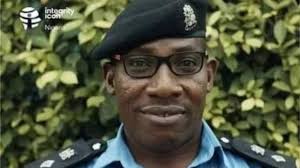
Only recently the internet was awash with news of a senior Nigerian police officer who resigned his job, on account of being denied promotion three times. This officer was said to have once rejected a bribe of N864 million.

CSP Francis Erhabor

Though he has since explained that he only contemplated the action on account of injustices he experienced in the force, this goes to show the level of frustration honest Nigerians go through in the course of their jobs.

The officer, Francis Erhabor, a Chief Superintendent of Police (CSP), headed a division of the police in Akwa Ibom State, South-south of Nigeria.

Igbere TV, an online media quoted him as saying, “I have wasted 30 years serving my fatherland.” He said many of his juniors have been promoted above him and that “it hurts deeply.” 

A pained Erhabor in the report said: “I once had a dream about the Nigeria Police Force becoming the people’s force, the country’s pride. So sad, I no longer believe in the system as a noble one, but one where mediocrity, nepotism, and all other ignoble acts are given higher preference.

“I am sorry I let all my fans down. I am deeply sorry for not finishing where you all expected me to finish. Thanks for your strong and relentless faith in me. I remain forever grateful to you all.”

When another media outfit eventually spoke with him, he explained that he actually contemplated resignation but changed his mind.

He further disclosed that he did not grant any interview to Igbere TV but had a “discussion with a friend” about the ill treatment.

“I feel so irritated by the injustice in the system, I switched off (my phone) after sharing my thoughts with him. I never knew he was trying to reach me to get permission from me before he could publish it.”

Succour according to him came after listening to a devotional from Nigerian pastor, Enoch Adeboye, of the Redeemed Christian Church of God in the morning of last Saturday.

“I think I have accepted my fate,” the officer said, when PREMIUM TIMES told him that his “discussion” could put him into trouble with the police authorities. I am in thank-you mode. I have accepted my fate. For posterity, I think it was also not a bad idea that they knew how I felt.

“Hopefully, we pray the system could correct itself. I know the system might come against me. I meant no harm.”

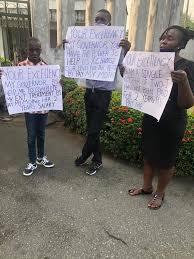
Presently, Magistrates in Cross River State are protesting the non-payment of salaries for 24 months. Among the photos trending online is that of  Safiya Iyeh Ashipu, of the Chief Magistrate Court Odukpani and her two sons holding placards in front of the state Governor’s office. Her sons’ placards bore entreaties for the governor to pay their mum’s salary.

Chief Magistrate Safiya and her two sons

It beggars imagination that a system will allow a woman holding such a sensitive position to work without pay for 2 years. She is a single mother of two kids. Sadly, the authorities appear not to have contemplated the danger and possibility of magistrates selling judgments in other to feed.

The News Agency of Nigeria (NAN) reports that 30 Magistrates dressed in their full regalia embarked on the peaceful protest on Monday. The jurists, including 11 from Obudu, where the State Governor Ben Ayade comes from, were drawn from the 18 council areas of the state.

Speaking to journalists, Chief Magistrate, Solomon Abuo said the protest became imperative over what he described as a failed dialogue while engaging with the relevant arms of government.

 “As we speak, we are all sitting magistrates manning different courts in the state, dispensing justice for the peace and tranquillity of our state, Cross River. We kept on waiting for the state government to pay us our salary and some persons will be asking why are we protesting.

“We decided not to protest all this while in order to give peace a chance by dialoguing with the government. Dialogue has failed.

“We have written to the executive arm of government through the Secretary to the State Government, the Attorney General of the state.

“We have written to the legislative arm of government through the Speaker, Cross River State House of Assembly on this matter, up till now no salaries,” he said.

Meanwhile, Magistrate Richard Bassey on Tuesday collapsed at the gate of the governor’s office in Calabar during the protest.

As condemnations trail the non-payment of Magistrates salaries in Cross Rivers and the enthronement of mediocrity in the polity, Mr. Jibrin Samuel Okutepa, a Senior Advocate of Nigeria (SAN) has said the legal profession may be heading towards extinction,

Okutepa, in a statement said the judiciary is no longer independent. He also faulted Governor Ayade who said he would not pay the salaries as he did not give approval for their appointment.

According to the Senior Advocate, Ayade lacks powers to approve appointment of Magistrates as such powers lie with the State Judicial Service Commission.

“The legal profession is in the state of helplessness and hopelessness in Nigeria. The profession seems to be heading towards total extinction in terms of relevancy, independence and the awe for which it was previously known.

“Yesterday learned magistrates who were duly employed and in the employment of Cross River State judiciary staged a peaceful demonstration demanding for payments of their legitimate salaries and allowances, which the state Government has refused to pay them for job done.

They had worked for the past 13 months or so without being paid. Today the Acting Chief Judge of Cross River State, Hon Justice Ita E. Eyo is reported thus:

‘The Cross River State Acting Chief Judge, Justice Eyo Effiom Ita has confirmed the non-payment of salaries of over thirty Magistrates in the state.Justice Ita who spoke with newsmen in Calabar said he was aware of the situation but he did not know for how long the Magistrates had been owed.

‘I was appointed Acting Chief Judge two and a half months ago and I heard that some Magistrates were appointed but the governor said he did not give clearance for their appointment and so will not pay them.’

“The Acting State Chief Judge explained that there was nothing anyone could do to change the situation until Gov Ben Ayade changes his disposition. He said all interventions had been made but the Governor insists he never approved their employments. ”

But Okutepa held: “This statement credited to the Ag. CJ if true clearly shows how the judiciary in Nigeria has been emasculated and independence taken away from it.

“What does the Ag. CJ mean by the statement? Under what law does the Governor of Cross River State derive the power to give approval for appointments of Magistrates in the State?

Under the 1999 constitution as amended the 3rd Schedule thereto, item 5 (C) thereof is clear on the point. It gives the power to appoint and discipline Magistrates amongst others in Cross River State to the Cross River State Judicial Service Commission.

It states that: (c) to appoint, dismiss and exercise disciplinary control over the Chief Registrar and Deputy Chief Registrar of the High Court, the Chief Registrars of the Sharia Court of Appeal and Customary Court of Appeal, Magistrates, Judges and members of Area Courts and Customary Courts and all other members of the staff of the judicial service of the State not otherwise specified in this Constitution.

“There is nowhere the constitution gives power to the Governor to approve the appointment. The Ag CJ is the Chairman of the Cross River State Judicial Service Commission.

How did his lordship feel when he spoke to the press about approval? I was expecting the Hon Ag CJ to have told the world that the Magistrates were not appointed by the Cross River State Judicial Service Commission.”

Mr. Okutepa then called on the Nigerian Bar Association (NBA), to take action.

“In all these absurdities the professional body of lawyers in the state and the national levels are on leave. Nothing is being done. The absurdities in Cross River State should not be swept under the carpet. What is going in that state is sad. No justification for the Magistrates not to be paid. Did they forge their letters of employment which from impeccable sources they are in possession of?

The inhumanity being visited on these learned gentlemen should not be tolerated. I call on NBA to stand up to its duties and responsibilities and take action on this matter.” he said.

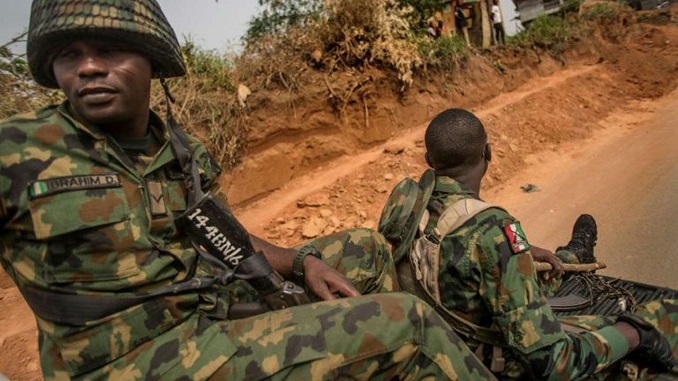
Last month a military court martial in Abuja convicted a former Theatre Commander of Operation Lafiya Dole, Major-General Olusegun Adeniyi, over a leaked video which showed poor conditions of soldiers and challenges advancing into the dreaded Alagarno forest area of Borno state.

Major-General Olusegun Adeniyi

The tribunal also found him guilty of violating social media guidelines and ruled he be demoted by at least three years. It also sentenced him to 28 days in jail with hard labour.

It has been said that rather than strive to perfect the works of our heroes past, Nigeria tramples on the memories of these men and women and even spit on their graves. Who will make sacrifices for Nigeria?

What the new variants of covid-19 mean for human health

Between now and when vaccines are widely available countries will face some hard choices

The winter solstice may have passed, but in the land of covid-19 the nights are still growing longer. In recent weeks two variants of the coronavirus have spread with ferocious speed in Britain and South Africa. They have mutations that make them a lot more contagious. Although, so far, they do not seem to be any deadlier, for every ten people that older variants would infect in Britain the new one infects 15. Early data suggest that the South African variant burns just as fiercely.

Just now the world is rightly focused on approving, making and administering vaccines. Alas, it also needs to face up to the fact that before jabs come to the rescue, the new variants will spread, creating deep difficulties for policymakers.

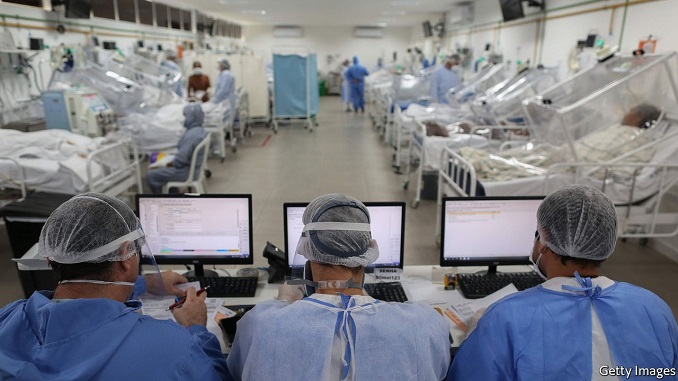
Evolutionary biologists have shrugged at the appearance of the mutations: this is how viruses behave, for natural selection favours variants that are more transmissible and less deadly (see article). Some viruses that cause common colds may have started out as vicious as sars-cov-2 and moderated in their old age. Policymakers cannot afford to be so relaxed. A more transmissible covid-19 virus that is just as dangerous, as this variant is, means that hospitals may be overwhelmed. In England the majority of the population has been in near-full lockdown for weeks. Yet covid-19 patients at hospitals have now exceeded the peak in April and the health service is struggling to cope.

Much of the rest of the world, including Europe and America, will soon follow. More than 50 countries rushed to ban travellers from Britain as soon as its scientists told the world about the new variant, in mid-December. Many have also banned arrivals from South Africa. But such measures are likely to buy only a little time. In early November, before travel bans, the British variant already accounted for nearly 30% of cases in London, one of the world’s most connected cities. Given how early variants spread from ski resorts in the Alps last winter and from Spain in the summer, it is naive to believe that cases are not already seeded all over Europe and beyond. Once it arrives, the new British variant is likely to displace local strains within a few weeks.

So far, only sporadic cases of it have been found in 20 or so countries, including in America in a man who had not travelled. But that is because, unlike Britain and South Africa, most do little genomic sequencing to look for mutations. France has examined the virus fewer times in the entire pandemic than Wales does in a week. Most countries do not look at all. Other more contagious variants may thus be spreading undetected. The good news is that these mutations are unlikely to reinfect people who have had the disease or to evade today’s covid-19 vaccines. Natural selection will, eventually, begin to change that, as more and more people are inoculated, but vaccines can be tweaked to remain effective. With the Pfizer-BioNTech vaccine, the process takes just six weeks.

Between now and then

However, even in the mostly rich countries that have hoarded vaccine supplies there will not be enough to stop the virus from spreading, at least until summer. This week’s emergency approval of the AstraZeneca-Oxford jab will help (see article), but there will still be delays. Poorer and middle-income countries will remain less well protected for a lot longer.

Countries in Europe and beyond will be forced to deal with this fast-changing reality by reassessing the trade-offs between the benefits from the harsh lockdowns needed to stop a more contagious virus and their long-term costs to schooling, health and livelihoods. There is still light at the end of the tunnel. But the road through it has become a lot more treacherous.

The Economist

The story behind ‘Oloture’, Nigeria’s Netflix sex-trafficking drama

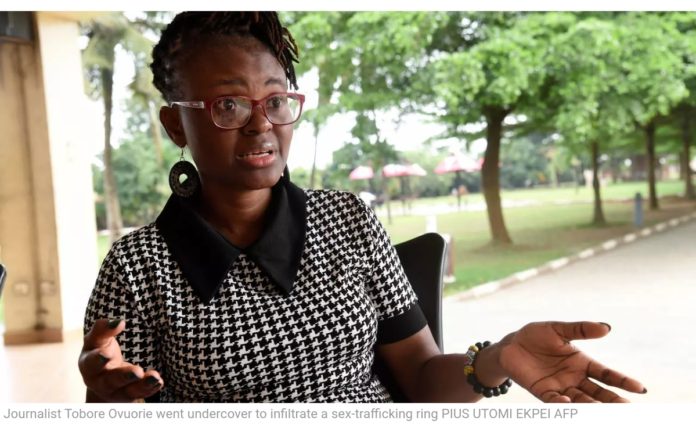
Clad soberly in a chequered knee-length dress, Tobore Ovuorie hardly seems as if she once walked the streets of Lagos in a revealing outfit and high heels.

A freelance reporter with a burning desire to uncover the truth about a sordid backstreet trade, Ovuorie dressed as streetwalker to infiltrate a prostitution ring.

She took on the dangerous mission after a friend left for Europe, became a sex worker and died, leaving Ovuorie shocked and beset with questions.

Today, Ovuorie’s remarkable story has been turned into a hit Netflix film, “Oloture,” which has shone a bright light on one of Nigeria’s darkest trades.

“I needed to do justice, to know the truth. I wanted to know the process, the back story about these ladies,” the 39-year-old reporter told AFP.

By dressing up, she sought to gain the prostitutes’ trust — the first step to introducing her to a “madam”, a pimp.

After eight months working undercover in 2013, Tobore Ovuorie emerged with a terrifying account about the victims of sex trafficking.

Some were sent to Europe, where they were coerced into becoming sex workers. Others were forced to participate in orgies organised by local politicians. Some became victims of organ trafficking for ritual crimes.

She published her story in 2014 in the Nigerian newspaper Premium Times and Dutch investigative magazine, Zam Chronicles, inspiring a production company in Nigeria to adapt it for the screen.

Released in October on Netflix, the story has been widely watched and applauded in its home country, Africa’s most populous market.

“Sometimes investigative journalists in search of the story become the story,” director Kenneth Gyang told AFP.

But in this case, the reporter was also “the torch that led us into the lives” of victims, he said.

– Disillusion –

Sex trafficking is rife in Nigeria, in particular in southern Benin City, a recruiting ground for criminal gangs who smuggle women to Europe.

How many are trafficked is unknown but in Italy, authorities say that between 10,000 and 30,000 Nigerians are prostitutes.

Several thousand others are stuck in Libya or other African countries, often exploited by criminals who make them believe they will one day reach Europe.

In the film, a journalist named Oloture, playing the part of Ovuorie during her investigation, heads to neighbouring Benin with a dozen other girls.

From there, their “madam” promises they will depart to Europe in exchange for money (up to $85,000, 70,000 euros) that they will have to repay once they arrive in Italy.

Very quickly, the journey turns sour.

Instead of heading to the border, their minibus stops in a gloomy training camp on the outskirts of Lagos.

There, the girls are roughed up and divided into two groups: “street” prostitutes and “special” prostitutes reserved for wealthier clients.

On screen, the most gripping character is Linda, a young uneducated woman from a poor rural background, who becomes friends with Oloture.

Linda “represents many of those young ladies and how they get in disillusion” said Ovuorie, who came across such a character during her investigation.

For the director, it is exciting that the film is a success in Nigeria.

“We have to see how to make this film available in remote places for young vulnerable women who might be susceptible to be trafficked to Europe,” said Gyang.

– Emotional toll –

On social media, the movie — and its ending — have triggered passionate debate.

“For most of these ladies there is never any light at the end of the tunnel,” said Gyang, “so why would you try to make a film that would end on a happy note?”

Ovuorie said that what she saw and experienced during her investigation still haunts her — she is trying to find the women she was meant to go to Europe with, and tell their stories.

Her work has inflicted a heavy emotional cost, she said.

“I’m a shadow of myself, I try to smile, to look bright, but most of the time it’s been just me fighting to hold onto life”.

CNN

NOTES TO LAI MOHAMMED: ICC AND OTHERS ARE NOT OPPOSITION PARTIES

In 2014, the Minister of Information, Lai Mohammed, acknowledged the International Criminal Court (ICC) as the court of last resort.  This was during his presentation as the former National Publicity Secretary of the All Progressives Congress (APC) before the House of Commons, London, on 8 September 2014. He acknowledged the mandate of the ICC as a court “Expected to exercise its jurisdiction only if states themselves are unwilling or unable to genuinely investigate and prosecute international crimes.” He made these remarks as an opposition party member, while analyzing the security challenges facing the country.

In 2021, while the country is still faced with insecurity problems, Lai Mohammed alleges that some human rights organizations and the ICC seem to have colluded to exacerbate the challenges facing the country in the area of security.

It is doubtful if the claim is justified. In December 2020, Nigerian Guardian reported that the ICC had concluded plans to conduct independent and impartial preliminary examinations, investigations and prosecutions of Boko Haram insurgents and Nigeria Security Forces for alleged crime of genocide, crimes against humanity and war crimes.

While the ICC is counting on the full support of the Nigerian authorities (as well as that of the Assembly of States Parties), the Nigerian Government through the Minister of Information appears to be saying that no such cooperation should be expected, notwithstanding that Nigeria is a State Party to the Treaty establishing the ICC – that is, the Rome Statute of the ICC. As a State Party, Nigeria has accepted the Rome Statute. This Statute sets out the crimes falling within the jurisdiction of the ICC, the rules of procedure and the mechanisms for States to cooperate with the ICC.

Nigeria’s sovereignty not under threat – the ICC in brief

Lai Mohammed has also vowed that the Nigerian Government will not surrender its sovereignty to the ICC. This reaction throws up the question whether the operations of the ICC threatens the sovereignty of States. While scholars have rendered various jurisprudential perspectives on the issue, some points are clear. From the comprehensive notes found on the ICC’s website, the ICC is an independent body whose mission is to try individuals (not States/Countries) for crimes within its jurisdiction. The ICC is not the same as the International Court of Justice (ICJ) which is the principal judicial organ of the United Nations (UN) for the settlement of disputes between States. The ICC is not an office or agency of the UN.

The ICC may exercise its jurisdiction in situations where the alleged perpetrator(s) (like insurgents/terrorists in Nigeria or Nigeria Security Forces) is a national of a State Party or where the crime was committed in the territory of a State Party. Also, a State not party to the Rome Statute may decide to accept the jurisdiction of the ICC. As a matter of fact, No one is exempt from prosecution at the ICC because of his or her current functions or because of the position the person held at the time the crimes concerned were committed. For instance, on 8 October 2014, a sitting President (Kenyan President, Uhuru Kenyatta) was a ‘guest’ at the ICC to answer to some alleged crimes against humanity. The charges were later dropped.

Clearly, the ICC does not trouble or threaten the sovereignty of Nigeria or that of any other State Party like Nigeria.

The integrity of Lai Mohammed’s outburst doubtful

One might be tempted to doubt the integrity of Lai Mohammed’s outburst in view of the fact that he appears to commend only situations that are favourable to his political standing at any given time. For instance, in 2012, Lai Mohammed relied on a report by Transparency International (TI) on corruption perception index to tackle the Government at the time. TI is an independent, non-governmental and not-for-profit organization working to put an end to corruption and to promote transparency, accountability and integrity at all levels and across all sectors of a society.

In 2020, Lai Mohammed condemned TI’s report on corruption perception index in Nigeria which scored the country low, claiming that the Federal Government is not seeking to impress any organization with its anti-corruption fight.

In February 2020, Lai Mohammed reportedly said that the Nigeria Television Authority (NTA) will compete with the likes of Cable News Network (CNN) if his ministry gets the $500 Million loan it requires for the upgrade. The Minister clearly acknowledges the sophistication and reliability of CNN. But in November 2020, Lai Mohammed threatens CNN with sanctions over its damning report on the Lekki Toll Gate shootings of 20 October 2020 during the #EndSARS protest.

Thus, like a sportsman, every referee decision which is favorable to Lai Mohammed is good and welcome. But if unfavorable, must be bad and rejected. Lai Mohammed wants to be a player and a referee at the same time.

Conclusion

The least thing expected of the Nigerian Government is to be transparent in its approach towards issues of national importance such as the allegations leveled against her Security Forces. Rather than castigate international organizations that have been working in earnest for the betterment of humanity, the Government should cooperate with them by also taking proactive steps to tackle the challenges. Treating international organizations like the ICC and Amnesty International as if they are opposing political parties is not healthy. It is not in the best interest of the nation.

BBC

NERC approves hike in electricity tarrif

Nigerian Electricity Regulatory Commission, NERC, has approved over 50 per cent hike in electricity tariff payable by customers of the 11 Distribution Companies, DisCos.

This is coming just two months after it finally implemented a much opposed hike in November 2020.

According to a revised Multi Year Tariff Order (MYTO) signed by the new Chairman of NERC, Engr. Sanusi Garba, on December 30, 2020, and sighted Tuesday, the new tariff increase took effect on January 1, 2021, and supersedes the previous Order NERC/2028/2020.
In the new Order NERC/225/2020, the commission said it considered the 14.9% inflation rate rise in November 2020, foreign exchange of N379.4/$1 as of December 29, 2020, available generation capacity, US inflation rate of 1.22% and the Capital Expenditure (CAPEX) of the power firms to raise the tariff.

The revised Service Based Tariff (SBT) also saw increase in the rates payable by all classes of electricity users unlike the one of November 2020, that exempted low power getters.

This is effective till June 2021 while a Cost Reflective Tariff (CRT) expected to raise the new cost higher will be activated from June to December 2021, the NERC Order revealed.

Previously in December, 2020, NERC notified that it had begun a review for another tariff, which has been completed and had taken effect from January 1, 2021.

NERC had raised tariff for the DisCos in September but that drew outrages from customers and the organised labour, prompting the federal government to suspend it while parties dialogued.

By November 1, 2020, the suspended tariff was implemented after some discounts were given for customers who get 12 hours and above power supply daily.

However, those with less than 12 hour supply did not get a tariff hike, according to the NERC order of November 2020.

courtroommail

The Third Biggest Rice Mill in the World – The Imota Mill Guarantees Economic Development and Job Creation in Lagos State, as it nears Completion

The Third Biggest Rice Mill in the World – The Imota Mill Guarantees Economic Development and Job Creation in Lagos State, as it nears Completion

Following the closure of Nigeria’s land borders by the federal government of Nigeria in August 2019, the local production of rice and other staple foods by indigenous farmers have increased rapidly, thereby generating high economic returns in the country. Since the mandatory closure across all the borders in the country, several rice mills have been birthed while struggling ones have been revived in various rice-producing states in Nigeria. 

To upscale food production, the Lagos State ministry has advocated diverse agricultural schemes, treating agriculture as both an economy booster and as a development platform. These initiatives have raised strategic partners and stimulated investments in the state.

One of the several developments registered from the spring of rice mills in Nigeria is the expansion of the Imota rice mills in Ikorodu, Lagos State from the production of 2.5 metric tonnes per hour to the production of 32 metric tonnes hourly. This development has attracted operators in the private sectors to invest in rice processing.

The Third Biggest Rice Mill in the World – The Imota Mill Guarantees Economic Development and Job Creation in Lagos State, as it nears Completion

Currently, the Imota mill, described as the third biggest rice mill in the world nears completion and will become the largest in sub-Saharan Africa, with the production of 2.5 million bags of 50kg rice annually. So far, about 800 Lagos farmers have been engaged to support the paddy supply from Kebbi State, based on Lagos state’s collaboration with other states and the Rice Farmers Association (REFAN).

Some of the benefits of the mill development will include the extensive supply of freshly processed rice across Nigeria as well as the creation of more than 250,000 job opportunities in both the upstream and downstream sectors of the rice value chain.

The vision to enhance stable food supply in Lagos state is not unconnected to the current administration’s T.H.E.M.E.S development agenda which incorporates Traffic management and transportation, Health and Environment, Education and technology, Making Lagos a 21st-century economy, entertainment, and tourism as well as security. 

The mill development is in line with the Lagos State’s aim to fulfil its target of producing not less than 25% of the food consumed by residents of the state before the end of the year 2025. The present focus on rice mill development will ensure food security and improved nutrition for Lagosians, as well as create massive job opportunities on operation.

refinedng

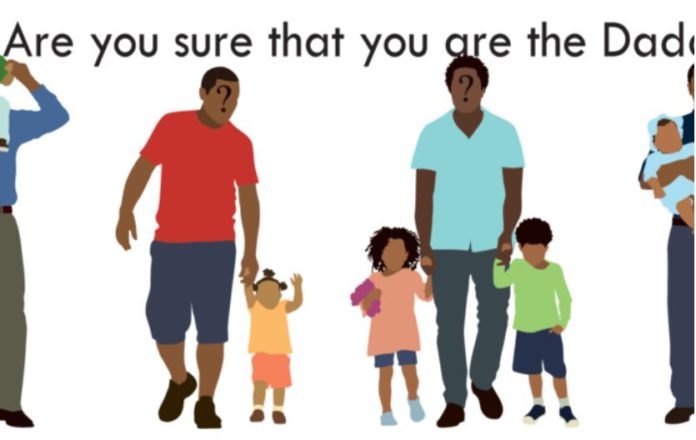
Paternity Fraud In Nigeria: DNA Test Should Be Mandatory At Birth

A Nigerian Lady has lamented over the high rate of Paternity Fraud in Nigeria, stating that DNA Test Should Be Mandatory At Birth.

The lady who shared the story with statistics on Twitter wrote;

“DNA test should be mandatory at birth , too many of you lying about who the father is and messing up people life including the child, especially in Nigeria.

In a phone interview with Ventures Africa, Mr Ayodele Ayodeji of Paternity Test Nigeria said there is one case of paternity fraud out of every four paternity test conducted at the centre. “I will say one out of four paternity tests turn out negative,” he told me.

He also added, that people of the east – Ibos, south-south – Deltans, and south-east, patronise the centre than the people of western Nigeria – the Yorubas.

According to a forensic geneticist, Dr. Abiodun Salami, 30 per cent of fathers are unknowingly nurturing and investing in children who are not biologically theirs.

Salami, who is also the Chief Medical Director, DNA Centre, Lagos, revealed that 50 per cent of the all paternity tests carried out in his laboratory came out negative and mostly affected were first born children.

This false pretence is common among Nigerian women. Durex survey suggested that Nigerian women are the most unfaithful in the world and a DNA expert from Lagos University Teaching Hospital claimed that 30% of Nigerian men are not the biological father of all the children”

According to reports, it was also stated that 50% of Nigeria first born belongs to other men.


barristerng

Google responds after staff members form a union and voice concerns about company

Google has responded after its staff members announced the formation of a new union and voiced concerns about the direction of the company.

Organisers said that the new union would be open to all employees and contractors of Google parent company Alphabet, regardless of what they do.

In an announcement published in the New York Times, representatives of the new union said that it had come about after a range of controversies around Google’s activities, including growing workplace concerns about issues such as discrimination and harassment, and the use of its artificial intelligence technologies in military contracts.

Those behind the effort had been organising in secret for almost a year, the paper reported.

Google said in a statement following the announcement on Monday morning that it would “continue engaging directly” with staff.

“We’ve always worked hard to create a supportive and rewarding workplace for our workforce,” said Kara Silverstein, Google’s director of people operations.

“Of course our employees have protected labor rights that we support. But as we’ve always done, we’ll continue engaging directly with all our employees.”

Unlike a more traditional union, the Alphabet Workers Union does not demand the company produce a new contract, but instead will aim to represent workers and organise activists within the company.

“The Alphabet Workers Union will be the structure that ensures Google workers can actively push for real changes at the company, from the kinds of contracts Google accepts to employee classification to wage and compensation issues,” organisers said in an announcement posted on the union’s website. “All issues relevant to Google as a workplace will be the purview of the union and its members.”

Because it represents Alphabet workers as a whole, workers at other companies under that umbrella – such as Fitbit and driving car company Waymo – will be invited to join, too.

Representatives said that the union was formed following a number of concerns about the way the company was acting, pointing to examples such as the controversial Project Maven project that was undertaken for the Pentagon and was abandoned in the wake of public criticism from staff.

“This union builds upon years of courageous organizing by Google workers,” said Nicki Anselmo, Program Manager. “From fighting the ‘real names’ policy, to opposing Project Maven, to protesting the egregious, multi-million dollar payouts that have been given to executives who’ve committed sexual harassment, we’ve seen first-hand that Alphabet responds when we act collectively.

“Our new union provides a sustainable structure to ensure that our shared values as Alphabet employees are respected even after the headlines fade.” (Independent/UK)

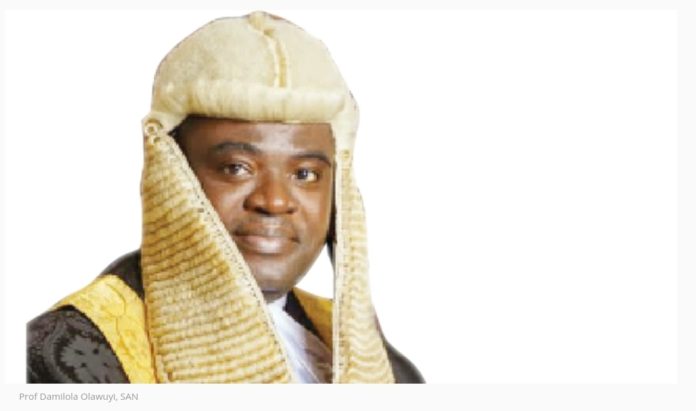
I studied Law by mistake — Damilola Olawuyi, 37-year-old SAN

Prof Damilola Olawuyi, 37, is the youngest academic to become a Senior Advocate of Nigeria. He tells TOFARATI IGE about his career, family and other issues

How do you feel being the youngest Senior Advocate of Nigeria?

I thank God for the wonderful opportunity and privilege of being recognised as a Senior Advocate of Nigeria. Being the youngest legal academic ever to receive the rank makes it even extra special, and I hope it serves as a positive inspiration to all youths out there that great things happen when we stay positive, dedicated and committed to our goals.

What stirred your interest in Law?

Growing up in a family of six, myself being the last, I was generally seen as very energetic and vocal from a young age. I was the one that spoke when others were timid, the one who called for fair distribution of household chores and the resulting benefits (food, in most cases), and the one to settle fights and disputes. I also had a strong interest in current affairs, so I became involved in debating right from the primary school stage. My father noticed my interest in social justice issues at an early age and he began to encourage me to read newspapers. He would buy different newspapers and bring them home for me, and also discuss the key contents with me. I read about famous lawyers such as Aare Afe Babalola (SAN) and Chief Gani Fawehinmi (SAN) of blessed memory, and I secretly admired their commitment to justice and societal development. These naturally developed in me a strong passion for social development issues.

However, my path to studying law was not as straightforward. I actually studied Law by mistake. And that is easily the best mistake I have ever made. I made very good results in the junior secondary school examination― one of the best in Oyo State at the time. Consequently, I was compelled to enroll in the science class, based on the cliché at the time about what intelligent people should study. However, given my interest in social sciences, I insisted on adding Literature in English and Government to my combinations as a science student, which was seen as abnormal at the time. After succeeding in the West African Senior School Certificate Examination, I was very close to enrolling for Computer Engineering at the university but I was told that the course was not commencing that year. At that point, I called my father with great disappointment, but he asked me, ‘Do they have Law’? The answer was yes, and I had the required combinations to be admitted. That was how I transformed from a science student to a Law student. I have never looked back since then.

What is the most challenging case you have ever handled?

In my practice, I provide legal representation and expert advice to governments of different countries, especially in oil and gas and environmental law matters, which comes with different challenges. The most complex case I have been involved in was when a client had a major operational blowout and had over 700 claims filed against them at the same time. In such a circumstance, it takes a lot of time, patience and careful negotiations to separate the wheat from the chaff and to get the client back to a good position. Also, in such cases, negotiating with affected local communities and stakeholders can be very complex and challenging, especially when emotions are still high. It was indeed a good learning experience that has greatly prepared me for handling complex environmental and oil and gas related cases.

Which do you find more fulfilling― practising Law or teaching it?

I find both law teaching and practice to be equally stimulating and fulfilling. My continued engagement with practice gives me fresh perspectives on the workings of the law, which allows me to provide my students with fresh real life examples and scenarios. My students, therefore, gain practical and commercially relevant knowledge from an early stage. In the same vein, my research and publications provide the sharp insights and analysis that help my practice in very significant ways. Working on different academic publications and research projects means that I can be aware of the latest developments in law at every point in time, which enriches my practice, especially the process of preparing for court cases and arbitrations.  I also like the serenity and collegiality of the university, which allows scholars to think, innovate, and unearth new ideas through society-relevant research.

What are your duties as the Deputy Vice Chancellor of the Afe Babalola University?

As the Deputy Vice Chancellor, Academic, Research, Innovation and Strategic Partnerships, I oversee all academic and research programmes of the university. I also chair a number of university committees, especially the University Research and Innovation Board, which implements programmes to promote research, innovation and societal impact in the university.  As a world class and research active university, our goal is to ensure that the high number of research publications produced by our faculty and students are widely disseminated across the world, and influence decision making in key sectors and industries. I work closely with the Vice Chancellor and all colleges to ensure that we achieve this goal, while also attracting international grants, partnerships and collaborations with other research minded universities across the world. Some of the results of our high energy approach to research and innovation are already evident in the number of high impact publications generated by our faculty members. Some of these publications have shaped discussions on COVID-19, solid minerals development, agriculture, oil and gas, climate change and public health, to mention but a few.

What are the challenges you face in the course of doing your job?

The COVID-19 pandemic has posed big challenges to all universities worldwide. For example, several of our planned in-person conferences and outreach activities have been affected. We are, however, very fortunate to have a team of dedicated and supportive staff that have made the process less daunting. Through their innovation, we have been able to move several of our activities online through teleconferencing, webinars and telework. I am indeed proud of the leadership role that ABUAD is playing in spearheading innovative and ICT-driven education in this country.

What are your short-term and long-term goals for the university?

We have a bold vision at ABUAD, which is to achieve the highest standards of excellence in societally-relevant research, innovation and enterprise development, and to become one of the world’s top tier research intensive universities. With exceptional strengths in agriculture, medicine, law, entrepreneurship and engineering, among others, our strategic plan for the next five to 10 years will be to consolidate this leadership, while continuing to raise our profile, presence and reputation as an internationally engaged world-class university.  Under the leadership of our able Vice Chancellor, Professor Elisabeta Olarinde, the university has recorded significant strides in areas of functional ICT-based learning. ABUAD is one of the few institutions in Nigeria that have been able to continue functioning seamlessly despite the pandemic. When you walk around (the campus), you also see our emphasis on entrepreneurship and practical learning. Many thanks to the innovation, sagacity and foresight of our founder, Aare Afe Babalola (SAN), ABUAD has a Talent Discovery Centre, where students immerse themselves in innovation and skill development. We are never afraid to push the boundaries of knowledge. We believe that innovation is the primary function of world class and research-driven universities. So, very soon you will hear more about our post-COVID 19 innovations, publications, and programmes.

Some people feel that despite the high fees paid by students, the quality of lecturers in private universities is not as good as those in public institutions. What is your reaction to that?

I think that erroneous sentiment has now been permanently laid to rest due to the several significant landmark achievements and contributions of private universities to the Nigerian education landscape over the last two decades. I am a living proof of the highest quality of education provided by private universities. I graduated from Igbinedion University, Okada (Edo State), did a Master’s degree at Harvard University (a private university in the United States), and now, I teach at ABUAD. I am a product of private universities and I have been able to attain the peak of my profession due to the high quality of education and support that I have received.

What makes a university world class is not whether it is public or private. It is the high quality of its research staff and the available infrastructure for research and innovation.

As the Vice Chair of the International Law Association, what do you do?

The International Law Association was founded in Brussels (Belgium) in 1873, and it aims to promote the study and clarification of public and private international law worldwide. The ILA is headquartered in London (United Kingdom) under the chairmanship of the Right Honourable The Lord Mance, a former Deputy President of the Supreme Court of the United Kingdom. As a Vice Chair, I sit on the Management Committee and the Executive Council of the ILA, and provide insights and contributions to the functioning of the association worldwide. I also serve on special committees that are created from time to time to advance the development of international law in different parts of the world.

What were the highlights of your time as a visiting professor at Columbia Law School, New York?

It was a great privilege and honour to serve as a David Sive Visiting Scholar at the Sabin Centre for Climate Change Law at the Columbia Law School, New York (United States of America). Firstly, I enjoyed the rich culture and energy of New York― a very vibrant and multicultural city known for being a hub of entertainment. More importantly, I enjoyed the warmth and reception of my colleagues at the Columbia Law School who made the task of settling in and conducting research less stressful. I also enjoyed my interactions with the students in class, especially the very intelligent questions they asked which further enriched my own research projects. In all, it was a wonderful experience which greatly allowed me to transplant some important notions on climate justice in the United States to inform and influence the development of the law in this area in Nigeria. Some of the articles and books I developed during that time have received accolades and awards.

You were recently appointed as an Independent Expert on the African Union’s Working Group on extractive industries, environment and human rights. How has the experience being so far?

It has been an enriching experience so far. The working group comprises foremost thought leaders and policy experts in natural resources law in Africa, with the mandate to examine the impact of extractive industries in Africa within the context of the African Charter on Human and Peoples’ Rights. For over 11 years, the working group has played an active role in informing the African Commission on the possible liability of non-state actors for human and peoples’ rights violations in the extractive industries, especially oil and gas, and solid minerals development. Among other functions, the working group formulates recommendations and proposals to African governments on the appropriate measures and activities for the prevention and reparation of violations of human and peoples’ rights by extractive industries in Africa.  One important initiative that we are currently working on is to establish more guidelines and awareness on how to address problems of illicit financial flows in the extractive industries in Africa. The working group also recently published a detailed newsletter that aims to create awareness across Africa on how to address adverse human rights impacts of the extractive industries.

What are some of the most notable books you have published?

I have several books in areas of natural resources, energy and environmental law. I will however mention some of the few that have received national and international awards. My most famous books are The Principles of Nigerian Environmental Law (2015), Food and Agricultural Law in Nigeria (2016), The Human Rights Based Approach to Carbon Finance published by the Cambridge University Press (2016), Extractives Industry Law in Africa published by Springer Switzerland (2018), and most recently, Local Content and Sustainable Development in Global Energy Markets, also published by Cambridge University Press (2021).

From your perspective, what qualities make a good lawyer?

I often tell my students that Law is a service profession. Just like restaurants, our value is intricately tied to how well we serve our clients. So, diligence and hard work are very vital to building a successful law practice. For lawyers and law students, hard work simply means leaving no stone unturned in preparing for every case or examination.  The best Law students read as if their entire lives and futures depend on it, while advocates that devote themselves to comprehensive and multi-jurisdictional research often find the missing piece in their clients’ cases. This means when facing their work, they shut out all distractions and prepare vigorously. Also, good lawyers master the art of amiable networking. It is very important to actively build relationships with colleagues within and outside the profession, in order to widen one’s horizon and knowledge base. Consistent diligence and hard work breeds reliability. Reliability, in turn, breeds an increased network of viable contacts and allies. An increased network brings boundless opportunities, and opportunities ultimately open the door for success.

You have practised and taught Law in Europe, North America, Asia, Africa and the Middle East. What are the peculiar differences in the way law is practised in each of those places?

Teaching and practising law in multiple jurisdictions requires an in-depth knowledge of the key legal traditions of the world, namely common law, civil law, and Islamic law. In Nigeria, as it is in many commonwealth countries and former British colonies, we largely apply common law principles in legal drafting and contractual interpretations, as well as in case preparation and in courts. The first time I had to work in civil law jurisdictions such as France, China, Russia, and Qatar, it was a significant transition as their oil and gas laws have strong influence from the civil codes. In those jurisdictions, law is as written in the codes and a lot of things are not opened to wide interpretations. Being a global lawyer means one must be ready to learn fast and one cannot be set in one’s ways. I have been able to immerse myself in those legal traditions to such a point that I now have the temerity to author books on civil law and Islamic law. For example, my co-edited book titled, Negotiating Joint Operating Agreements in Civil Law Jurisdictions, is a compendium of best practices on oil and gas law from 21 civil law countries.  Furthermore, given my experience working in the Middle East, I have also authored an environmental law book for Arab countries, which explores the influence of Islamic law and principles on environmental protection. As I tell my students, being a global lawyer means one must have an in-depth understanding of the comparative law principles that underpin the multiple but convergent legal systems of the world.

Punchng

Conducting Elections During a Pandemic

This interesting article by Festus Okoye recounts how the onset of the Covid-19 Pandemic in 2020 created challenges for INEC, vis-a-vis the Edo and Ondo Governorship elections which could not be postponed because of the mandatory provisions of the Constitution and the Electoral Act, even in the face of the preventive protocols like social distancing implemented by Government. INEC however, was able to successfully wade through uncharted waters on its own, without any precedents to follow.

Introduction

Conducting elections during a pandemic or under the shadow of a pandemic, is not a tea party. It becomes difficult in a void and speculative environment, with little or no precedent to draw from. It becomes even more difficult when the virus known as Covid-19 cannot be seen, and seems far removed from the understanding of the people. Even those with medical knowledge have also struggled to explain its characteristics, complexity, transmission pattern, symptoms and treatment regimen. Most startling was the fact that advanced countries were shutting down, and governments in different parts of the world imposed strict restrictions on movement, transportation, social and economic life. People in advanced countries fell ill, the hospitals struggled to cope with the influx of patients, isolation centres sprang up and people were dying. Fear, anxiety and trepidation took over, and citizens of different countries who were in Nigeria left in droves and in confusion. But, still, in the midst of this hullabaloo, it appeared that the virus was alien to Nigeria, and the average Nigerian thought that this challenge was reserved for the high and the mighty. In other words, at inception, Nigerians felt far removed from the virus.

As an election management body, the Independent National Election Commission (INEC) conducted the 2019 general elections on the 23rd day of February and 9th day of March, 2019, respectively. As at January 2020, the Commission was still grappling with litigation arising from the conduct of the said elections, and the issue of a pandemic was far removed from the electoral lexicon of Nigeria. Between the end of the elections and February 2020, a few legislative vacancies had occurred, but they did not pose a fundamental urgency and the Commission had enough time to fix dates for their conduct and or postpone them to a later date.

However, two end-of-tenure elections were due in 2020, and on the 6th day of February, 2020, the Commission released the Time Table and Schedule of Activities for the conduct of the Edo and Ondo State end of tenure Governorship elections. By constitutional and statutory stipulations, the tenure of the Governor of Edo State was to expire on the 11th day of November, 2020. Pursuant to the provisions of Section 178(1) and (2) of the Constitution of the Federal Republic of Nigeria, 1999 (as amended), the earliest date for election into the office of Governor, Edo State was 15th day of June, 2020 and the latest date for the election, 13th day of October, 2020.

In the same vein, the tenure of the Governor of Ondo State was to expire on 23rd day of February, 2021, and pursuant to Section 178(1) & (2) of the Constitution and Section 25(7) and (8) of the Electoral Act, 2010 (as amended), the earliest date for the election into the office of the Governor, Ondo State, was the 27th day of September, 2020 and the latest date, 25th day of January, 2021.

It is worthy of note that, by virtue of the provisions of Section 178(2) of the Constitution and Section 25(8) of the Electoral Act, Election into the office of a State Governor shall hold not earlier than 150 days and not later than 30 days, before the expiration of the term of office of the last holder of the office.

Navigating the electoral landscape in a pandemic would have been easy, if some members of the electoral management body had experience in doing so or had lived under a pandemic, or had experiences or precedent to draw from. Unfortunately, only the history books give a clue about what happened during the 1918 global pandemic, that is, the Spanish Flu. Sadly, the pandemic drew closer and closer and the Presidential Task Force on Covid-19 and the Nigeria Centre for Disease Control (NCDC) issued guidelines and protocols on pharmaceutical and non-pharmaceutical interventions, to contain the pandemic.

On the 23rd day of March 2020, the Commission issued a statement and contended that in view of the Coronavirus Pandemic and the preventive and containment measures put in place by the Federal and State Governments and in line with the advisory on social distancing from the World Health Organisation (WHO) and the NCDC, effective from Tuesday 24th March 2020, all regular and non-essential activities were to be suspended in its headquarters and offices nation-wide for 14 days in the first instance. Based on these, the Commission suspended the regular quarterly meetings with Stakeholders, namely: Political Parties, Civil Society Organisations, the Media, Security Agencies and all other meetings including the monitoring of the conventions, congresses, conferences or meetings of political parties. The Commission made it clear that, the new measures taken would not affect the activities for Edo and Ondo Governorship elections scheduled for 19th September and 10th October 2020 respectively.

The virus continued to spread, spreading fear, panic and anxiety everywhere. In Nigeria, various State Governments announced measures to contain the virus including but not limited to lockdowns, curfews and the establishment of isolation centres and the distribution of palliatives. Clearly, the world was embroiled in an existential war, and survival became the paramount issue. The poorest of the poor that make a daily living through menial jobs, stayed at home virtually hungry. Traders could not market their wares. Persons who travelled for a variety of reasons were stranded wherever they were, on account of the travel restrictions.

Challenge faced by INEC

Amidst all this, the Commission faced a different kind of challenge. Elections and the conduct of elections were far removed from the immediate concerns of the people, and even the Government did not see electoral staff as persons providing essential service. Different countries including the advanced ones were postponing and or had postponed their elections, and the Commission was expected to follow suit. It was therefore, unthinkable and absurd for the Commission to proceed with two Governorship elections when more advanced countries with robust and advanced health care and electoral systems postponed and or cancelled their elections. It became clear that the Commission had a herculean task convincing Nigerians, that the two end of tenure elections must proceed in the unchartered terrain of a global pandemic.

These were fundamental and legitimate concerns, and the Commission duly reflected on them and decided to be upfront with information relating to the two end of tenure Governorship elections. The Commission also decided to proactively study the pattern of the virus, and how it affected the conduct of elections in other countries. Unfortunately, there was little or no precedent to draw from. The Commission decided to look inwards and design its own roadmap on conducting elections in a pandemic, bearing in mind our peculiar challenges and circumstances. Part of the challenge is embedded in the Constitution which is the fundamental law of the land, and the second challenge revolved around the scepticism and perception relating to the existence or otherwise of the virus and the mass gatherings that will be occasioned by rallies, campaigns and the elections itself.

Section 178(2) of the Constitution and Section 25(8) of the Electoral Act provide that election into the office of a State Governor shall hold not earlier than 150 days and not later days than 30 days before the expiration of the term of office of the last holder of the office. What does this translate to in practical terms? Governors in Nigeria are elected for a four-year period, and thereafter new elections are held and they must vacate office at the expiration of their tenure. To prevent discretionary manipulation of the timeline for the conduct of the elections, the lawmakers circumscribed the timeframe for the conduct of the elections. In the case of Shettima & Anor v Goni & Ors (2011) LPELR-417(SC), the Supreme Court of Nigeria made it clear that the timelines in the provision are mandatory and not permissive, as they admit of no discretion.

Furthermore, in the case of Abubakar & Ors v Nasamu & Ors (2012) LPELR-7826 (SC) the Hon. Justice Walter Samuel Nkanu Onnoghen, J.S.C made it clear that: “It is settled law that the time fixed by the Constitution, which is the fundamental or supreme law of the land, cannot be altered, extended, expanded, elongated etc by any court in the purported exercise of a discretion to that effect”. Since the dates in Section 178 of the Constitution and Section 25 of the Electoral Act are cast in stone, could the electoral management body proceed to reschedule, postpone or cancel the elections without doing fundamental damage to the spirit and letter of the Constitution?

Options

The first option available to the Commission was to proceed with the election and provide a clear framework for so doing, and convince the Nigerian people of its capacity to do so. Unfortunately, the pandemic engendered fear in the people, and some Nigerians could hardly put food on the table considering the measures in place to contain it. In the existential struggle, elections and the electoral process does not really and fundamentally count.

The second option was to postpone the election and wait for the pandemic to abate and or be contained, before proceeding with the conduct of the election. In this, there was no timeline on when the virus would be contained and a vaccine developed. More fundamentally, in postponing the election the Commission would have to act within the ambit of its powers in the Constitution, else the country could slip into a constitutional crisis.

The third option was to utilise Section 191 of the Constitution that allows the Speaker of the State Assembly to assume the office of the Governor, when the office of the Governor and Deputy are vacant. The challenge here is that in such circumstances, the Speaker of the State Assembly shall hold office for the unexpired term of the last holder of the office. This in the main created its own constitutional crisis, and would leave a dangerous vacuum in the electoral and democratic process.

The fourth option was recourse to Section 180(3) of the Constitution that provides that, if the Federation is at war in which the territory of Nigeria is physically involved and the President considers that it is not practicable to hold elections, the National Assembly may by resolution extend the period of four years mentioned from time to time, but no such extension shall exceed a period of six months at any one time. The challenge here is whether the Federation can be said to be at war, and whether the pandemic could be be classified as one.

The fifth option was for the Commission to wait and have the tenure of the Governors lapse, and then allow the President to activate Section 305 of the Constitution and declare a State of Emergency in Nigeria, and the Proclamation would give details of the Emergency.

On the basis of these challenges, the Commission under the leadership of Professor Mahmood Yakubu rallied National Commissioners and the management staff to design Electoral Continuity Plan (ECP) to surmount Covid-19 challenges and avoid constitutional crisis that may likely erupt with the postponement of constitutionally circumscribed end of tenure governorship election. The Commission activated its zoom platforms and continued nonphysical meetings with National Commissioners, Resident Electoral Commissioners, Directors and Heads of Departments.

INEC’s Policy on Conducting Elections in a Pandemic

On the 21 day of May 2020 the Commission released its Policy on Conducting Elections in the Context of a Pandemic and stated that the “Covid-19 pandemic has had an extensive impact on the electoral process in Nigeria. Not only has it led to far-reaching disruptions in the electoral system, it has also specifically led to the postponement of elections and created uncertainties about scheduled ones. The Commission, cognisant of the profound impact of the pandemic on the electoral process, extensively deliberated on how best to respond to the impact of the pandemic on election administration. The situation was made worse by the global economic impact of the pandemic and its knock-on effect on the Nigerian economy, which had seen a decline in funding for government activities.

Expectedly, this trend was also going to affect the work of the Commission. Conducting elections in a pandemic such as Covid-19, was yet uncharted waters. Only very few jurisdictions had any experience with this. That notwithstanding, the Commission was committed to conducting all elections that were due within the extant legal framework. However, in so doing, it would put a premium on public safety and mitigation of health risks from Covid-19. Citizens must be assured that they will be safe while participating as voters, candidates and officials. The Commission remained committed to raising public confidence in the electoral process in spite of the challenges posed by the pandemic, and to regularly communicate its actions and challenges to the public” .

As part of its overall response, the Commission put in place a two-tier queuing system in the polling units, made provision for pharmaceutical interventions at the polling units and collation centres, the observance of physical distancing and compulsory wearing of face masks or face covering. It electronically recruited its ad-hoc staff and other categories of election staff, and used physical and nonphysical means in training them. It designed a framework of reduction of the number of passengers to be carried by buses and boats, that will ensure physical distancing in transportation among other measures.

On the 9th day of June, 2020, the Commission released the First Supplementary to Regulations and Guidelines for Conduct of Elections. It amended the Regulations and Guidelines for the Conduct of Elections issued by the Commission on 12th January, 2019. The Commission also released Supplementary Regulations and Guidelines for Activities of Political Parties, as well as Supplementary Guidelines for Election Observation. The Commission also developed, designed and distributed “Voting in Safety” Voters Code of Conduct (VCC) for Elections during the Covid-19 Pandemic.

The processes and mechanics of implementing these polices, appeared problematic and challenging. The Political Parties found it difficult and sometimes deliberately subverted the health protocols in their rallies and campaigns, and this heightened the anxiety of infection. The flouting of the guidelines and protocols also gave the impression that the pandemic was not real and/or that in political matters, a pandemic takes a back stage and power equation becomes the central object.

The Commission faced the challenge of another uncharted territory. In the midst of dwindling resources available to the Commission, it added the burden and responsibility of providing pharmaceutical interventions to its ad-hoc staff, the voters and other categories of electoral workers, and this increased the cost of conducting elections. It procured these items, and the Presidential Task Force on Covid-19 assisted with some quantity of infrared thermometers.

In some States, those wearing face masks and observing the NCDC protocols were seen as the suspects or carriers who must be avoided. In some of the States and communities, the people continued as if the pandemic did not exist and or did not believe that a pandemic was in Nigeria, and the fear of community transmission grew and became a reality. The Commission decided to approach the Presidential Task Force on Covid-19 and NCDC, and they assigned an incident officer to join the Inter Agency Consultative Committee on Election Security to advice the Commission on Covid-19 related matters. The Chairman of the Commission also briefed the nation on the preparation being made by the Commission, in relation to the Edo and Ondo Governorship elections. The Commission also raved up its technological intervention and solutions to electoral matters.

Prelude to Edo and Ondo Elections

As a prelude to the conduct of the Edo and Ondo Governorship elections, the Commission decided to use the Nasarawa Central State Constituency Election on the 8th day of August, 2020 to test run its preparations and logistics for the Edo and Ondo Governorship elections. The Commission learnt valuable lessons from that election, and applied those lessons for the Edo and Ondo Governorship elections. In the State Assembly election most of the voters complied with the Commission’s directive that all voters must wear face masks or face coverings. The Commission provided face masks to its ad-hoc staff, as well as hand sanitisers and disinfectants for cleaning the Smart Card Readers, and deployed infrared thermometers for the polling units and collation centres. Unfortunately, most of the voters had difficulty observing physical distancing, or deliberately flouted physical distancing at the polling units.

The Real Thing!

In the Edo and Ondo Governorship elections, the Commission in collaboration with the Presidential Task Force on Covid-19 deployed infrared thermometers to all the polling units and collation centres. The Commission learning from the Nasarawa Central State Constituency bye-elections deployed on time and took control of the polling units before the arrival of voters, and used ropes and other creative strategies in taking control of the polling units and enforcing social distancing. Most of the voters wore face masks and face coverings, and the Commission made appreciable progress in social distancing.

Conclusion

Going forward, it is imperative to make the polling units accessible to voters, and decongest congested polling units through a threshold of 500 voters per polling unit and a maximum of 750 voters per polling unit. This can be achieved through the conversion of Voting Points and Voting Point Settlements to Polling Units, and taking them close to the voters. The Commission must also accelerate the deepening of and deployment of technology in the electoral process, and reduce to the barest minimum human contact and interface. Early voting by those on essential duty must be explored, and internet based voting options must be accelerated to prevent large gatherings at polling units. The pandemic may not be the only emergency that may face us in future, and based on our experiences, we must make proposals to the National Assembly on responding to future emergencies occasioned by a pandemic and other challenges. More fundamentally, the Commission must remain focused, courageous, firm, forward looking, inclusive and consultative in its approach to elections and emergencies.

Festus Okoye, Lawyer, National Commissioner & Chairman, Information and Voter Education, INEC.

thenigerialawyer

TIPS