Home Blog Page 1088

Pigeons Released by Buhari Refused to Fly at Armed Forces Remembrance

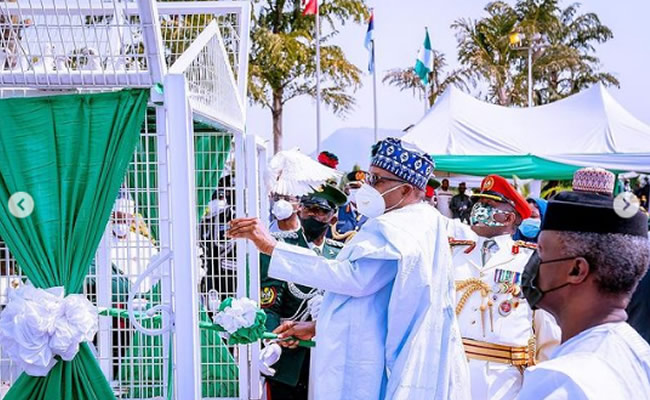
There was a mild drama at the venue of this year’s Armed Forces Remembrance Day held in Abuja earlier Friday as the white pigeons, released by President Muhammadu Buhari refused to fly.

The President, eager to make them fly, made multiple attempts to push the birds to the air but they refused to fly. (thepodium)

Philly scientist behind COVID vaccine tech was demoted by UPenn, yet she persisted

Dismissed by many, Dr. Katalin Karikó remained passionate about mRNA therapeutics.

By Michaela Winberg

The coronavirus vaccines wouldn’t be possible without advancements developed at the University of Pennsylvania, which has been touting its contribution in news releases and TV ads. But it turns out the school wasn’t very supportive of the scientist who led the charge.

Former Penn researcher Dr. Katalin Karikó’s dedication to the promise of using messenger RNA (mRNA) in medicine paved the way for the vaccines now giving society hope.

As Karikó worked for decades toward adapting mRNA to bring out its therapeutic qualities, her efforts were repeatedly dismissed by the university, she has said. When she was unable to find funding, Penn demoted her, taking her off the track to full professorship.

“Usually, at that point, people just say goodbye and leave because it’s so horrible,” Karikó, known as Kati, told Stat News in November.

The breakthrough finally came in 2005, after Karikó found a colleague whose passion for the topic mirrored hers in Dr. Drew Weissman. Now 65, she’s a VP at a biotech firm. Both she and Weissman, a professor at Penn’s Perelman School of Medicine, were quoted in a recent release from the university.

“I feel humbled, and happy,” says Karikó in the release, referred to as an adjunct professor. “I am more [of] a basic scientist, but I always wanted to do something to help patients.”.

Penn officials declined to comment on their relationship with Karikó, previous or current. “We are unable to discuss specifics about faculty or staff employment matters,” spokesperson Stephen Maccarthy told Billy Penn.

Despite the university’s original attitude toward Karikó’s research, it holds the patent on the tech used in the COVID-19 vaccines.

Credit: billypenn.com

Wow! It’s 7 years already!!! Just like yesterday!

By Fidel Albert

The case was GOSL v. Marport Robotics. Proceedings were pending before the Supreme Court of Newfoundland & Labrador, St. John’s, Canada. This case came with lots of lessons and experiences for me, especially as it concerns the gaps and inefficiencies in the Nigerian judicial system.

I think I had just left paid employment to set up our little shop with my partner. We were both 5 years at the Bar when we decided to take this leap of faith. We were briefed by a Nigerian Client to institute legal action in Canada for breach of contract against a Canadian company. Of course we were not licensed to practice law in Canada, so we needed a top-rated Canadian law firm to lead us.

It took us six months of intense search to find a good law firm willing to take the brief. And this was not for lack of good law firms in Canada. There are hundreds of them. Problem was, no one was willing to touch a brief from Nigeria with a 10-meter pole!! Once they hear “Nigeria”, they’ll politely tell you they’re not interested, and hang up. Firm after firm, this is what confronted us. No one wanted to take a big commercial brief, whether they would make money from it or not, as long as it came from Nigeria. It was an extremely depressing experience.

Eventually, a large firm agreed to handle the brief, after much persuasion and cajoling from me. But then, I didn’t know they had done intensive due diligence on me before accepting. One night, I got a call from my former boss, Babatunde Irukera, demanding to know what business I had to do in Canada. I told him I had some prospective litigation we were trying to get going there. He said well, Aelex (one of the biggest firms in Nigeria) just called him to confirm who I was and whether I had worked with Simmonscooper Partners as I claimed, and he graciously confirmed that I was legitimate. So, it turns out that the Canadian law firm had engaged one of the biggest law firms in Nigeria to undertake due diligence on me, for a fee I reckon, before accepting a legal brief from me. Interesting!

All said and done, the case was filed and I had to attend the Discovery Proceedings in Canada. Lawyers would understand what this means. It was during the proceedings that this picture was taken. So Discovery Proceedings is simply where parties meet on the record to examine each other’s documents, narrow down issues of disputes, examine witnesses and perhaps make admissions. It helps to streamline the case of each party preparatory to trial. Proceedings are recorded and are undertaken under oath. It’s a very tedious process.

But I saw strange things. I’ll tell you one of those. In the course of proceedings, the Defendant’s Counsel handed us a bundle of documents that it would rely on at trial. We were supposed to examine each one, ask questions on it and indicate if we had any objections to admissibility of the documents. I remember clearly that while examining the documents, the opposing counsel stopped us abruptly, and indicated to us that we had missed examining a key document in the bundle and that he believes we ought to examine that document. We asked him which document he was referring to, and he flipped the bundle and extracted the document he thought we missed, and kept it on the table. Fair enough. So I took a look at this document and couldn’t believe it. This single document was enough to bury their entire case, yet the Counsel felt himself under a bounded obligation to draw our attention to it, to the detriment of his own case!!

I reflected this matter for a long time, and kept thinking of the judicial system in my own country. After the proceedings, I asked my lead Counsel, Liam, why the opponent did what he did. Liam looked at me bemused, perhaps wondering why I, as a lawyer, should ask such stupid question when I ought to know. But he did eventually tell me that if the man did not disclose the document, he would have been disbarred. It’s an extremely serious infraction in their judicial system, according to Liam.

I thought about the Nigerian judicial system again and what it has become in recent times. You see, in our Bar, honest disclosure by lawyers is a very strange phenomenon. Lawyers actively and deliberately conceal and suppress facts and evidence that they consider injurious to their case. More worrisome is the fact that we do so under oath. Let’s say I was the opposing counsel in that case, what I would have done, and what my client would gladly pay me to do, would have been to burn that adverse evidence and then have my junior in chambers swear under oath that such document never existed. And the oath ends with a phrase “so help me God”! But I kid you not, this is even not the worse things that happen on a daily basis at the Bar! Worse things happen.

I have personally seen a lot in my few years at the Nigerian Bar. Sometimes I’m left wondering what has become of this our profession. Unfortunately, there are no consequences, especially for the big guys who have exerted lots of sweat to institutionalize these terrible practices. It was supposed to be a profession of nobility, but sadly, except for a few, you can’t find integrity at the Bar. Even worse, the system seems to reward unethical conducts. I have seen people who should not be lawyers at all on account of a total lack of integrity become Senior Advocates of Nigeria. It almost seems as though the harder you dig in the mud, the more likely you are to strike gold. So the Bar has become a huge stampede in mud and grime.

So do you still wonder why the international legal community will scarcely take the Nigerian lawyer serious? Out there, far more premium is placed on integrity and rectitude, than knowledge or wealth. And this is the problem. Our Bar is very knowledgeable, our Bar is wealthy, but our Bar is rather scant on integrity.  

How is it that many multinational companies will rather lose a deal in Nigeria than sign a contract where forum for dispute resolution and governing law is stated as Nigeria? I’m talking about contracts that are signed in Nigeria, where the work is to be executed in Nigeria, and where all the parties are in Nigeria! But when it comes to the dispute resolution and/or governing law clauses, they insist to the death that any dispute arising from the contract must be resolved in courts of other jurisdictions, not Nigeria. In fact, if you insist on NIGERIA, they will rather walk away from that deal, no matter how much profit they were to make, than leave jurisdiction to Nigerian Courts! Ever wondered the effect of this? Do we not know that that is work taken away from Nigerian lawyers? Or that that is transaction and litigation experience taken away from the Nigerian lawyer, which we will never have?

Even our own Government, when they have huge projects to execute in Nigeria, hire international law firms to undertake work for them. The most benefit we get from these deals is that government will hire some of our local law firms to piggy-back and act as “assistants” (but they use respectable appellations like “co-counsel”, “co-solicitors” to describe their role) to these international law firm to do the work. Our government won’t even trust its own local firms. You know, this reminds me of what my boss used to say ever so often to us when he wanted to underscore the importance of exhibiting integrity in all our dealings. He would say “do you know that even a thief will always look for an honest man to keep the quarry for him?”? Think about it, it’s the gospel truth. 

And yet we strut around like peacocks with so much hubris, seemingly oblivious to the fact that our conduct in destroying the moral fabric of this profession will perpetually keep us as bottom feeders, where we wallow in the shallows waters, forever banished from the deep ends of the oceans, where international law firms are raking the bottoms of their priceless bounties. But I have no pity. We laid this bed of thorns with our own hands, let’s enjoy the sleep!

When you read the English decision in IPCO v. NNPC, and how the English Courts terribly x-rayed the Nigeria legal system under the harshest light possible, your heart will melt. Mine melted. Despite a heroic attempt at patriotism, I knew there was truth somewhere in there.  

IPCO v. NNPC is a decision where a party got an arbitration award against the defendant, NNPC, in an international arbitration. Before he could enforce the award, the defendant filed an action in the NIGERIAN courts to set aside the award. The plaintiff joined issues in the new suit in the NIGERIAN courts but thereafter went to the UK to file an action for enforcement of the award, while a challenge of same award was pending in Court in Nigeria.

Many questions faced the UK Court in the enforcement proceedings, but the one that caught my attention was whether enforcement could proceed in the UK, while proceedings to set aside the same award sought to be enforced was pending in Nigeria! Normally, the UK court should have waited for the Nigerian challenge proceedings which came before the enforcement proceedings in UK. But the UK Court didn’t think it was that easy and straightforward because of the country involved. The UK Court spent a great deal of time x-raying the unfairness of Nigerian legal system and how the concept of justice was fleeting on account of inexplicable delays and questions of integrity. In the end, the Court settled for requiring the Defendant, NNPC, to make deposits of huge sums as security before a stay of the UK proceedings could be ordered.

While I am not unaware of the appeal processes in the IPCO v. NNPC case and variations to the orders of the lower Court that were eventually made by the House of Lords, I still find it distressing that the world has taken judicial notice of what we have made of our judicial system.

I fear that if something drastic is not done to reposition our Bar and the entire justice administration system, I fear that if we do not raise the bar of the Bar, this Bar of ours will be reduced to rowdy sessions of inebriate fellows at a raucous bar. We will have a bar without the Bar.

We wait!

Photo Credit: Forbes

WhatsApp and Facebook’s ultimatum to users reveals a privacy disaster


There’s been a lot of confusion and outrage on social media over an in-app notification that informed WhatsApp users that the messaging app’s privacy terms had changed. Users of the application have no choice but to adopt the new terms, or the software will delete itself on February 8. Because privacy terms are so lengthy, convoluted, and complex in the world of ad tracking, many have assumed that the additional collected information puts their privacy and the security of encrypted personal chats at risk.

In reality, the WhatsApp privacy changes only affect a certain sliver of users’ WhatsApp Business interactions, extending tracking capabilities that are already well in use. The change in terms is less indicative of an end to encrypted privacy on WhatsApp and more a signal of Facebook’s response to the many U.S. antitrust inquiries ahead of them in 2021—and that the social media giant will continue to shift attention to the markets that exist outside of the United States, where it is far more popular.

Because of Apple’s new data disclosure requirements, WhatsApp informed users last week that certain data points, such as the user’s profile status, login activity, contact list, purchases, and financial information, may be shared with businesses and the third parties they use. In 2018, Facebook launched “WhatsApp Business,” which allows us to chat with companies we know in order to ask support questions about orders, inventory, and in some cases make purchases directly through the app. As of summer 2019, 50 million businesses were using WhatsApp Business to communicate with their customers. Because companies pay for each message they send to users, WhatsApp Business has provided Facebook with a clear new revenue stream.

To put your mind at ease: The changes to privacy terms announced last week apply only to people interacting with companies on WhatsApp Business (as of 2019, about 40 million people per month viewed a business on the app, a small fraction of WhatsApp’s 2 billion users). This is the good news. Your private chats with friends and family overseas are still as protected as they ever were.

The bad news is that for those who worry about WhatsApp sharing data with Facebook, little is changing, and that’s a problem in itself. Unless you were one of the lucky few who managed to opt out of WhatsApp sharing your data with Facebook in 2016 when the company gave you the option, you were always being tracked in this way. The biggest difference is that even now, despite the privacy backlash of the last few years, there’s no new option to use WhatsApp without sending data to Facebook. Be tracked, or delete the app.

The fact that the new privacy notice is largely a continuation of the status quo did not, however, stem the outrage against Facebook.

This frustration came largely from WhatsApp users in India, briefly causing “#WhatsApp” to start trending on Twitter at the beginning of last week. But users and reporters globally also slammed Facebook for its lack of transparency. The notification didn’t fully explain what the update really means, and as users discovered that they didn’t have an option to opt out of the data collection, some began to delete their accounts. People around the world have grown weary of Facebook, interpreting a relatively banal terms change as apocalyptic.

HOW WHATSAPP FITS INTO THE DATA ECONOMY

It’s no surprise that people have been confused and outraged over the WhatsApp notification because it’s very difficult to understand. Opaque third-party ad-tech companies and the ever-growing suite of Facebook products make it very difficult to track down the realities of data-sharing, even among experts who understand the jargon.

Shoshana Wodinsky, a reporter at Gizmodo and ad tech expert, described advertising technology to me as a system of Escher-style interconnected pipes folding in on themselves infinitely. Shoshana and I spent way too much time reading the Facebook terms, WhatsApp terms, WhatsApp for Business terms, and diving into the marketing claims and documentation made by third-party data processors, but it’s still relatively unclear exactly how this newly permissioned shareable data will be used. Facebook’s stated intent is to “improve” and “market” the Facebook solutions to brands, which gives them permission to do all sorts of shady things.

WILL THIS DATA SHARING IMPROVE FACEBOOK’S TRACKING OF YOU? WELL, SORT OF.

Will this data sharing improve Facebook’s tracking of you? Well, sort of. WhatsApp Business offers a platform to companies that allows them to chat with you directly as an individual. The change might mean that the brands using WhatsApp Business can use what they learn about you as a customer, including information from your chats with them, status updates, payment history, contact list, and profile photo, and connect it to Facebook’s normal ad targeting.

WhatsApp Business chat conversations may also be in the mix for data mining. Business chats, unlike private messages, are only encrypted in transit, meaning the business and any third parties they work with get to decide what to do with that information once they get it. It’s likely that Facebook will then allow those brands to retarget you so that their own ads for promotions will follow you across Facebook and Instagram. It’s unclear whether Facebook will reuse these WhatsApp Business insights and sell them to other ad buyers, such as political campaigns. But importantly, there’s little stopping them from using your data in this way. Facebook can change their terms whenever they wish, as they did in 2016 and are sure to do again.

If brands do want to use your newly collected information to target you on Facebook, there are a lot of ways this can go wrong. Businesses may now be able to use information such as your transaction history and profile photo to send ads that are “more relevant.” Most modern targeting systems in this space often make use of a field of artificial intelligence called deep learning, where many behavioral features can strongly correlate to race, gender, or socioeconomic class. If WhatsApp Business allows brands to use your profile photo or chats for targeting, it’s possible that the skin color of your profile photo or the nuances of your chat style may allow them to inadvertently infer sensitive information about you, resulting in a different and potentially harmful experience between people of different genders or race.

For instance, if AI mined the chats for some kind of “customer quality score,” it might inadvertently deprioritize support requests from minorities. Or, it might make you more likely to see ads for predatory products such as high-interest loans or gambling sites. I can’t know for sure if this kind of data mining of chats or profile photos is happening, but legally speaking, outside of the EU and U.K., there’s little standing in Facebook’s way.

A PUSH TOWARD AN INCREASINGLY GLOBAL FACEBOOK

Beyond the technical details of how exactly the terms change will affect users, the decision to improve data tracking for WhatsApp Business in particular indicates that Facebook is devoting more and more energy to products that are mostly popular outside the U.S.

That may be because Facebook seems to know it will have a tough time regaining trust from Western audiences. Given the Facebook-fueled assault on the U.S. Capitol building this Wednesday, Facebook’s potential harm to society is pretty hard to ignore. In addition, Facebook is now under investigation for its recent acquisitions of WhatsApp and Instagram, despite a rush to more deeply incorporate the two applications into the code base of the parent company.

FACEBOOK’S POTENTIAL HARM TO SOCIETY IS PRETTY HARD TO IGNORE.

Because of the investigation, last week’s move to change terms is a bold one, according to Roger McNamee, Elevation Partners cofounder and an early Facebook and Google investor. He says that when you’re the subject of an antitrust investigation, “the normal response is to be contrite, promise never to do it again, and spend your time trying to minimize the appearance of harm. The last thing you want to do is add incremental harms. This is not how an antitrust defendant is supposed to act.”

The timing and audacity of the WhatsApp changes may be signals that Facebook believes its time of explosive revenue growth in the U.S. is drawing to a close. Facebook revenues in India, where WhatsApp is dominant, have skyrocketed in recent years, while its user base in the U.S. and Canada has begun to decline. Facebook claims that it needed to update terms only so that it could store messages on behalf of businesses, which is also a signal that the company will prioritize WhatsApp’s B2B relationships. It most certainly indicates that Facebook intends to focus its future efforts on audiences abroad, where it enjoys a draconian capture of all things internet in developing markets. In some of these markets, there aren’t any choices but to use Facebook if you want to get online.

Facebook has an uphill battle ahead of it in 2021. Even while Indian users have been frustrated by the terms change, WhatsApp is so deeply embedded that many have felt little choice but to accept it. But as the public becomes better informed about the many potential harms of AI-enabled targeting, Facebook will be forced to focus on parts of the world where its brand faces less privacy backlash.

This could present a strategy to remain profitable despite looming consequences in the United States. Notably, those in the EU and U.K. aren’t affected by this terms update, because of their deep protections from ad targeting by virtue of the sweeping privacy regulation called the GDPR. While the WhatsApp terms update may not mean much has changed, it’s clear that in most places, Facebook has far too much power to set the terms, and its users have no alternative but to opt in. If this is merely a continuation of the status quo, it’s clear that in order to protect our privacy and civil liberties, the status quo needs to change.


Liz O’Sullivan is a cofounder and VP of Responsible AI at Arthur, the AI monitoring company. She also serves as Technology Director for STOP (The Surveillance Technology Oversight Project), where she works on New York policy to curb the technology that threatens our civil liberties, especially among marginalized communities. She is an active member of the Campaign to Stop Killer Robots, where she advocates on their behalf at the UN. (fastcompany)


Buhari keeps mum as unqualified NAPTIP boss assumes office

Mrs Sulaiman-Ibrahim’s credential does not match the requirements stipulated by the NAPTIP law for the top job.

Despite her being unqualified for the job as stipulated by the law, President Muhammadu Buhari has failed to rescind his appointment of Imaan Sulaiman-Ibrahim as the head of the anti-trafficking agency, NAPTIP, as the new director-general has since assumed office.

Mrs Sulaiman-Ibrahim was on December 2 appointed the head of the National Agency for the Prohibition of Trafficking in Persons, also known as NAPTIP, after her predecessor, Julie Okah-Donli, was axed. But she did not assume office until December 22.

Upon her appointment, this newspaper reported how the law establishing the agency was flouted to land Mrs Sulaiman-Ibrahim the top job.

Director-General of NAPTIP, Imaan Suleiman-Ibrahim [PHOTO CREDIT: @naptipnigeria]

Section 8 (1) of the NAPTIP Act 2015 mandates any appointee for the position of the the director-general of the agency to be from the directorate cadre in the civil service or from an equivalent cadre in any of the nation’s law enforcement agencies.

“There shall be for the agency a Director-General who shall be from the Directorate cadre in the public service of the Federation or its equivalent in any law enforcement service and shall be appointed by the President on the recommendation of the Minister,” the section reads.

The Act further stipulates that the agency must have a board, to which the director-general is the secretary, and the board must be made up of representatives of the government, all of whom must be within the directorate cadre in any of the ministries of justice, women affairs, labour and productivity, the police, the National Intelligence Agency (NIA), the Nigerian Immigration Service and the National Population Commission (NPC).

Mrs Sulaiman-Ibrahim’s credential does not match these requirements, and her appointment makes it the second time ever the NAPTIP law was breached while appointing the head of the agency. Mr Buhari was president both times.

A politician and businesswoman, Mrs Sulaiman-Ibrahim’s stint in public office was as a special adviser on strategic communication to the minister of state for education.

This implies that she was only a political appointee whose appointment ends with the expiration of the tenure of the current government, and, therefore, did not meet the directorate cadre prerequisite for the position she now holds.

Authorities have since kept mum about the appointment, an indication they approve of Mrs Sulaiman-Ibrahim assumption of office or are unwilling to do anything about it.

Again on Wednesday, presidential spokesperson Garba Shehu, directed all comments to the ministry of humanitarian affairs, whose spokeswoman, Halima Oyelade, declined comment.

The spokesman of the Secretary to the Government of the Federation, Willy Bassey, also declined comment.

Undeterred, the new appointee has since commenced work and has been seen in the public performing functions and visiting dignitaries, including her state governor in Nasarawa.

On Tuesday, she released a statement saying that NAPTIP has handed over 22 rescued children to the Kaduna State Government. (premiumtimesng)

Tokyo Olympics: Japanese Minister Concedes ‘Anything Can Happen’

A Japanese cabinet minister admitted Friday that “anything can happen” with the coronavirus-postponed Tokyo Olympics, becoming the first senior official to concede uncertainty about the Games as Japan and other countries battle a surge in cases.

Taro Kono, minister for administrative and regulatory reform, did not rule out the possibility of the Olympics being cancelled, with greater Tokyo and other regions currently under a state of emergency until at least February 7.

He is the first cabinet minister to deviate from Prime Minister Yoshihide Suga’s insistence that Japan is on track to hold a “safe and secure” Games, despite a state of emergency being expanded this week to cover a total of 11 regions, including Osaka and Kyoto.

“Given the coronavirus situation, anything can happen,” Kono, a high-profile former foreign and defence minister, told a press briefing.

“The organising committee and the IOC must of course be thinking about back-up plans. The government is firmly preparing for the Olympics and Paralympics.”

Public support for the Olympics has plummeted in Japan, with a recent poll finding that more than 80 percent of respondents think the Games should be cancelled or postponed again.

Tokyo 2020 President Yoshiro Mori said in a speech Tuesday that another postponement was “absolutely impossible”, according to local media.

Mori also said Japan will decide in the coming months whether to allow foreign fans to enter for the Games, saying: “We will have to make a very difficult decision from February to March.”

– ‘First line of defence’ –
Suga has said Japan is committed to hosting the Games and believes the public mood will change when the country begins its vaccination programme, set for late February.

Local media quoted Olympic minister Seiko Hashimoto saying Friday that Japan is suspending an exemption that allows foreign athletes to enter the country to train while the country’s state of emergency is in place.

Japanese athletes will still be able to re-enter Japan, but they will no longer be allowed to skip the 14-day quarantine period.

“We want to prioritise saving lives,” Hashimoto was quoted as saying. “So as a preventative measure to eliminate risk, we want to strengthen our first line of defence a level.

“We will take the infection situation at home and abroad into account and react accordingly,” she added.

The ban on non-resident foreign athletes is also likely to affect baseball and J-League football teams, who are preparing to begin their seasons.

On Thursday, Japan’s Top League rugby put its season on hold just two days before it was due to begin, after a rash of players from several clubs tested positive for the virus.

The Tokyo 2020 organising committee insisted Friday that the latest anti-virus measures would help rather than hinder preparations.

“We expect that the series of measures being implemented by the government of Japan, the Tokyo metropolitan government and other prefectural authorities will help improve the situation,” it said in a statement.

“We hope that daily life can return to normal as soon as possible, and we will continue to work closely with all related parties in our preparations for holding safe and secure Games this summer.”

AFP

Asymptomatic COVID-19 cases unlikely to cause large-scale infection- Health official

Asymptomatic COVID-19 cases are unlikely to cause large-scale infection as long as the public takes protective measures, a Chinese health official said on Wednesday.

Feng Zijian, Deputy Director of the Chinese Center for Disease Control and Prevention, told a press conference that asymptomatic COVID-19 patients carry a small amount of the virus and are less infectious.

It usually requires multiple close contacts for a long period of time without personal protection for asymptomatic cases to cause transmission of the virus, he added.

China has recently been facing local outbreaks and sporadic infections of COVID-19. (Xinhua/NAN)

ACCI commends tax harmonization plans in FCT

The Abuja Chamber of Commerce and Industry (ACCI) said it welcomed the declaration by the Minister of Federal Capital Territory Administration, Alhaji Muhammad Bello, on plans to harmonise tax policy within the territory to ease the burden of multiple taxation on SMEs.

The President of ACCI, Alhaji Al-Mujtaba Abubakar made the commendation in a statement he personally signed and made available by the media officer, Latifaat Opoola in Abuja on Wednesday.

The ACCI President said in the statement, “We appreciate the Minister’s acknowledgement of the challenges faced by businesses within the territory due to series of levies, charges and taxes from Federal, FCTA and Area Council Administration.

“Multiple taxation within the FCT and the larger national economy has imposed crippling consequences on businesses. The fallout has been many failed businesses, rising level of inflation, the non-thriving of existing ones and the lack of capacity to engage many unemployed youth.

“We want to note that lower taxes when also harmonised enhance prosperity of the economy. As an SME nation, expanding the base and health of the business sector is a smart choice to exit recession and adjust to the pandemic economic disruption.

“It is thus gratifying to note that FCTA is taking the lead to ease the tax burden on SMEs. Such an action will have multiplier effect on the FCT economy, leading to more job creation and reduction of poverty rate.

“The path of lower taxation to speed up the growth of the economy is a tested tool that has helped many economies. Japan, Taiwan, South Korea, Singapore, old Hong Kong, Russia, Australia, and Israel are some of the non-western countries that have, in the last 100 years, managed to move their countries from “developing” to “developed” economies through a combination of lower tax rate and high tax base.

The statement also noted that ACCI “is of the view that governments at all level should focus on increasing the tax base rather than the tax rate”.

According to official data, as a percentage of GDP, Nigeria taxes represent 6.1%, one of the lowest in the world. The tax-to-GDP ratio in South Africa was 29%, Ghana 18%, Egypt 15% and Kenya 18%, says the OECD in a 2019 report.

“More businesses and citizens should be brought under the tax regime albeit with reduced and well harmonised rates that is devoid of multiple taxation.

“We want to note that the tax policy reform being contemplated by the FCT administration is of direct significance and interest to us at the ACCI. Our members are negatively impacted by multiple taxation.

“The economy of the Territory is also stunted by this crippling tax regime. It is therefore our pleasure to identify and work with the FCTA to accomplish these noble objectives.

“We consequently call on the FCTA to engage critical stakeholders in this very laudable reform. This will ensure that all relevant inputs are integrated before the finalisation of the reform plan. The ACCI is ready to provide interactive policy reform platform in support of the process.

“As a leading business Chamber in the FCT and a Grade A Chamber in Nigeria, the Abuja Chamber of Commerce and Industry is looking forward to engaging and working together with government at all levels as well as other social partners, in delivering the vision of a successful and prosperous Nigeria”, Alhaji Abubakar further noted. (theconclaveng)

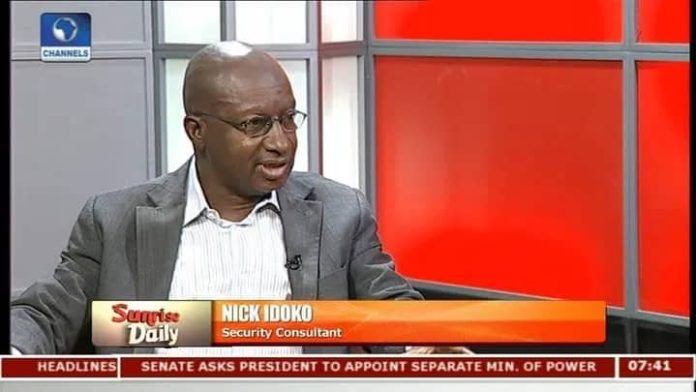
Prof. Nick Idoko is dead

A Professor of Mass Communucation, Nick Okonkwo Idoko, is dead.

He died Wednesday morning at UNTH, Enugu, after a brief illness.

He was until his death a lecturer at Christopher University and consultant to many organisations in Nigeria and overseas.

His consultancy interest was in peace-building.

A close associate of Idoko, Felix Abugu who mourned him on Facebook, disclosed that he had sugar level complications, which doctors at UNTH fought hard to manage but could not.

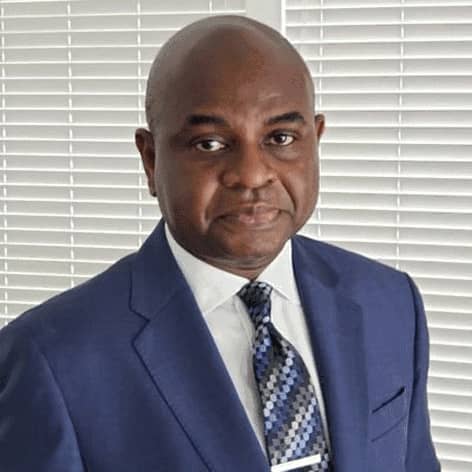
Moghalu punctures FG’s claim on economy recovery in Q1 2021

A former deputy governor of Central Bank of Nigeria (CBN),   Prof. Kingsley Moghalu made a prognosis into Nigeria’s economy in 2021 and concluded that that the year would be much like the past year (2020).

He also said that CBN introduced bank verification number (BVN) out of frustration when National Identity Management Commission (NIMC) was moving at a slow pace in registering Nigerians.

He spoke during a television programme monitored in Abuja on Tuesday, in response to Federal Government’s optimism that the economy would rebound from recession by the end of the first quarter of this year.

Moghalu, who was presidential candidate of Young People’s Party (YPP) in the 2019 general election said “the second wave of COVID-19 will bring about another lockdown in many countries of the world and it is already happening.”

He said: “As those countries are locked down again, industrial capacity is not being used at full capacity; demand for Nigeria’s oil would keep dropping and in order to manage the price of oil, OPEC members have instituted production cuts that affected Nigeria.

“These things affect Nigeria’s ability to earn revenue because the country has left itself vulnerable by being a one product economy.

“All these along with the policy direction of the economy which has not been friendly will combine to create a situation where it’s going to be difficult though, not impossible for Nigeria to grow by 1.9 percent in 202; but I doubt it can happen in the first quarter. It can happen from the second or third quarter.”

According to him, “there is no question on the need for biometric data in any 21st century situation to be able to secure citizens.

“When we were at the central bank, we executed a lot of reforms in the payment system. And as deputy governor of operations, I led the team that conceptualized and introduced the bank verification number (BVN).

“Why did we do it? It was because we were frustrated with the pace of the national identity number rollout.

“We were not satisfied and we said okay, but we control the financial system as regulators.

“So within that space, we will do what we have to do to make financial transactions more efficient, more secure with unique identifiers.

“That was why we developed the BVN and it worked. There are 40 million people in Nigeria today who have it.

“If the same efficiency and effectiveness were used by the wider government, we would have been at a far better place by now.”

He however said it was not sensible to force millions of Nigerians to obtain NIN registration in the middle of a massive pandemic as people were massing at various centres, super spreading COVID-19.

He advocated a reform of the education system, which he said was not structured to drive an economy for a 200 million population country like Nigeria.

Moghalu said: “We also need to invest in human capital and that level of investment is not taking place. We focus on the shiny bright object of infrastructure but who is going to use that infrastructure if half of your youth do not have jobs, half of them do not have skills?”

He also advocated creation of a N1 trillion venture capital fund where the government would invest N500 billion and the private sector would contribute the rest but the private sector would administer the fund.

“In Nigeria, you have government running everything and once you have that situation, politics, corruption and rent seeking will take over.

“That is why the country is not moving because government has too much control because politicians want to make money from all these so-called schemes.

“The Federal Government must create an enabling environment for private sector investors to come in and do these things on an economic basis, people would be serious, “ he added. (theconclaveng)

TIPS