Home Blog Page 1078

TYPES OF MARRIAGE IN NIGERIA AND THEIR EFFECTS

Marriage and getting married is one of those things in life that an average person believes he understands. It is unfortunate that many people do not very well understand the implication of what they do when they choose a particular type of marriage in Nigeria. As a matter of fact, many people do not even know that there are types of marriage, they just do what is convenient at the time they think it’s time to “take their relationship to the next level”.

As of today, there are three main types of marriage in Nigeria. They are, customary marriage (under which Islamic marriage falls), church marriage and statutory marriage.

Our courts have adopted the definition of marriage given in the landmark English Court of probate and divorce case of Hyde vs. Hyde, which is, “the voluntary union for life between a man and a woman to the exclusion of others.”

This definition however relates to a statutory marriage, that is, one conducted in any marriage registry in Nigeria. (They are usually located within Local Government premises).

Only a statutory marriage promises you that your marriage will be to the exclusion of others, and where one party is guilty of adultery, the other party can validly bring an action against them in court for bigamy in some states in Nigeria, and also file for divorce or separation in court.

For customary marriages and Islamic marriages, they are polygamous in nature. Hence, if all you did with your spouse is traditional marriage, otherwise known as engagement or introduction, or if all you did was Nikkah, your spouse (in most cases, the man), can marry another person and that would be acceptable within the boundaries of the type of marriage you conducted.

For church marriages on the other hand, due to the beliefs of Christianity which favor monogamous marriages, marriages conducted in church may frown at parties marrying another spouse during the pendency of the marriage. To take it a step further, churches that are registered with government as a place of marriage are given government approved certificate of marriage, hence the signing and issuance of this certificate metamorphoses the church marriage into a statutory marriage.

Now, where there are irresolvable issues in a customary marriage, and the parties want to go their separate ways, they may approach the customary or family court (magistrate court) for the dissolution of the marriage, or the woman may refund the bride price that was paid, or parties may literally just go their separate ways.

If the marriage produced children, generally the man is entitled to the children where they are not toddlers. This is because under customary laws, the man owns the children. If however they are toddlers or suckling babies, the woman may have their custody until they can live with their father.

The parties on the other hand may approach the courts for determination of who gets the custody of the children, the courts according to native laws and customs (or Islamic laws) and their discretion will award custody to any party they discern will favor the interests and well-being of the children.

Where there are irresolvable issues in a statutory marriage, parties have an option of seeking dissolution of that marriage in court, they have the right to claim ownership or joint ownership of properties acquired during the pendency of that marriage, they have a right to claim money from the other party for maintenance and/or upkeep of the children (if they are in custody of the children).

There are people who are in customary marriages but are expecting the benefits of a statutory marriage, and vice versa. It is important to know what you are getting into, or what you have gotten into and to guide yourself appropriately just in case you wanted something else.

Source

Must Military & Other Forces “Obey The Last Command”?

Must Military & Other Forces “Obey The Last Command”? Daily Law Tips (Tip 717) by Onyekachi Umah, Esq., LL.M, ACIArb(UK)

 Introduction: 

“Obey the last command” is a popular saying in military and other forces. This creates the air that a soldier has no choice or voice, rather a soldier must obey all commands. This is the premise for the popular song of Fela Anikulapo Kuti (“Zombie” in his 1976 Album), wherein he described soldiers as zombie (a will-less and speechless human. Well, does the “obey the last command” principle excuse a military or para-military officer from the punishments designed for a breach of law and human right? These and more are considered in this work. 

“Obeying the Last Command”: 

Military, para-military and other forces in Nigeria are all creations of law and they must obey laws. Greater than all forces, institutions, persons, governments and interests in Nigeria and outside Nigeria is the Constitution of Nigeria. Hence, every person and thing in Nigeria must obey the constitution of Nigeria. 

The constitution of Nigeria of Nigeria contains the fundamental human rights of persons in Nigeria. As expected, the human rights of all persons in Nigeria must be obeyed by all persons (including, all forces in Nigeria) to avoid a violation the constitution of Nigeria. Aside the constitution of Nigeria, there are other laws in Nigeria that criminalizes certain actions and inactions of persons in Nigeria. Hence, all forces in Nigeria are also mandated to obey and respect such laws. 

Obeying a command/order is not a permission to violate any law or to breach any human right. Breaking any law or violating any human right has its own punishment. Where there is torture in any security agency, the immediate commanding officer in-charge of the unit/department that committed such offence of torture will be held liable as an accessory to the crime, for any act or omission or negligence on his part that may have led to the commission of torture by his subordinates/colleagues. The punishment for torture is imprisonment for not more than 25 years and there is no option for fine.

Recommendation and Conclusion:  

In obeying last commands in a force, the command must be lawful. Where a command or an order (whether written or verbal) is unlawful, no persons is expected to obey it. Any person that obeys an unlawful command has violated laws, must be prosecuted and punished. Also, the person that gave an unlawful order must be prosecuted too. Military, police and all other forces in Nigeria are not above any law in Nigeria. Report all unlawful commands. Soldiers and officers of other forces do not need to obey unlawful commands. 

My authorities, are:

  1. Sections 1, 2, 3, 33 to 46 of the Constitution of the Federal Republic of Nigeria, 1999.
  2. Sections 2, 8 and 14 of the Anti-Torture Act, 2017.
  3. Onyekachi Umah, “#EndSarsNow: Punishment For Police (SARS) Torture” (LearnNigerianLaws.com, 6 October 2020) <https://learnnigerianlaws.com/endsarsnow-punishment-for-police-sars-torture/> accessed 18 January 2021.
  4. Onyekachi Umah, “Being Present During Torture Without Participating In It, It Is A Crime” (LearnNigerianLaws.com, 25 November 2019) <https://learnnigerianlaws.com/being-present-during-torture-without-participating-in-it-is-a-crime-daily-law-tips-tip-464-by-onyekachi-umah-esq-llm-aciarb-uk/> accessed 18 January 2021.
  5. Onyekachi Umah, “Command Officer of a Unit is Responsible for any Torture Committed by his Unit/Subordinates” (LearnNigerianLaws.com, 24 November 2019) <https://learnnigerianlaws.com/a-commanding-officer-of-a-unit-is-responsible-for-any-torture-committed-by-his-unit-subordinates-daily-law-tips-tip-463-by-onyekachi-umah-esq-llm-aciarb-uk/> accessed 18 January 2021.
  6. Onyekachi Umah, “Watching Torture But Not Participating In It, Is Torture” (LearnNigerianLaws.com,19 November 2019) <https://learnnigerianlaws.com/watching-torture-but-not-participating-in-it-is-torture-daily-law-tips-tip-460-by-onyekachi-umah-esq-llm-aciarb-uk/> accessed 18 January 2021. 
  7. Onyekachi Umah, “New Punishment For Security Officers Involved In Tortured In Nigeria” (LearnNigerianLaws.com, 27 August 2019) <https://learnnigerianlaws.com/new-punishment-for-security-officers-involved-in-torture-in-nigeria-daily-law-tips-tip-401-by-onyekachi-umah-esq-llm-aciarb-uk/> accessed 18 January 2021. 
  8. Onyekachi Umah, “What Is The Punishment For Any Person Including Police Officers That Torture Another Person” (LearnNigerianLaws.com, 18 December 2018) <https://learnnigerianlaws.com/daily-law-tips-by-onyekachi-umah-esq-tip-251-what-is-the-punishment-for-any-person-including-police-officers-that-tortures-another-person/> accessed 18 January 2021.
  9. Onyekachi Umah, “Flogging or Any Form of Torture Is Illegal, Even During COVID-19 Lockdown”(LearnNigerianLaws.com, 24 April 2020) <https://learnnigerianlaws.com/flogging-or-any-form-of-tortue-is-illegal-even-during-covid-19-lockdown-daily-law-tips-tip-555-by-onyekachi-umah-esq-llm-aciarbuk/> accessed 18 January 2021. 
  10. Onyekachi Umah, “Blindfolding, Prolonged Interrogation, Denial Of Sleep, Solitary Confinement And Secret Detention Centers Are Illegal In Nigeria” (LearnNigerianLaws.com, 22 August 2019) <https://learnnigerianlaws.com/blindfolding-prolonged-interrogation-denial-of-sleep-solitary-confinement-and-secret-detention-centers-are-illegal-in-nigeria-daily-law-tips-tip-397-by-onyekachi-umah-esq-llm-aciarb-uk/> accessed 18 January 2021. 
  11. Onyekachi Umah, “An Access To Criminal Laws In Nigeria” (LearnNigerianLaws.com, 4 December 2020) <https://learnnigerianlaws.com/an-access-to-criminal-laws-in-nigeria/> accessed 18 January 2021.
  12. Onyekachi Umah, “Can A Person With A Nigerian Flag Be Shot Or Killed?” (LearnNigerianLaws.com, 23 October 2020) <https://learnnigerianlaws.com/can-a-person-with-a-nigerian-flag-be-shot-or-killed/> accessed 18 January 2021.
  13. Onyekachi Umah, “#EndPoliceBrutality: How To Sue the Nigeria Police Force and Police Officers” (LearnNigerianLaws.com, 14 October 2020) <https://learnnigerianlaws.com/endpolicebrutality-how-to-sue-the-nigeria-police-force-and-police-officers/> accessed 14 January 2021. 
  14. Onyekachi Umah, “#EndSarsNow: SARS Is Not A Creation of Law” (LearnNigerianLaws.com, 12 October 2020) <https://learnnigerianlaws.com/endsarsnow-sars-is-not-a-creation-of-law/> accessed 18 January 2021. 
  15. Onyekachi Umah, “#EndSarsNow: Nigeria Police Lacks Power To Punish.” (LearnNigerianLaws.com, 7 October 2020) <https://learnnigerianlaws.com/endsarsnow-nigeria-police-lacks-power-to-punish/> accessed 18 January 2021. 
  16. Onyekachi Umah, “#EndSarsNow: Compensation For Police Brutality” (LearnNigerianLaws.com, 5 October 2020) <https://learnnigerianlaws.com/endsarsnow-compensation-for-police-brutality/> accessed 18 January 2021. 
  17. Onyekachi Umah, “Shooting Of Isolation Centers’ Escapees Is Unlawful And Punishable” (LearnNigerianLaws.com, 3 April 2020) <https://learnnigerianlaws.com/shooting-of-isolation-centers-escapees-is-unlawful-and-punishable-daily-law-tips-tip-540-by-onyekachi-umah-esq-llm-aciarbuk/> accessed 18 January 2021. 
  18. Onyekachi Umah, “Any Security Agency’s Manual/Protocol That Allows Torture Even For National Security Cases Is Unlawful And Its Officers Are Liable”, (LearnNigerianLaws.com, 11 September 2019) <https://learnnigerianlaws.com/any-security-agency-s-manual-protocol-that-allows-torture-even-for-national-security-cases-is-unlawful-and-its-officers-are-liable-daily-law-tips-tip-412-by-onyekachi-umah-esq-llm-aciarb-uk/> accessed 18 January 2021. 
  19. Onyekachi Umah, “What Is The Punishment For Any Person Including Police Officers That Tortures Another Person”, (LearnNigerianLaws.com, 18 December 2018)<https://learnnigerianlaws.com/daily-law-tips-by-onyekachi-umah-esq-tip-251-what-is-the-punishment-for-any-person-including-police-officers-that-tortures-another-person/> accessed 18 January 2021.
  20. Onyekachi Umah, “Is Obeying “Orders From Above” A Defence For Torture In Nigeria”, (LearnNigerianLaws.com 7 September 2019) <https://learnnigerianlaws.com/is-obeying-orders-from-above-a-defence-for-torture-in-nigeria-daily-law-tips-tip-409-by-onyekachi-umah-esq-llm-aciarb-uk/> accessed 18 January 2021. 

Sabi Law Projects:

#SabiLaw

#DailyLawTips

#SabiBusinessLaw

#SabiElectionLaws

#SabiHumanRignts

#SabiLawOnBeatFm

#SabiLawLectureSeries

#CriminalJusticeMonday

#SabiLawVideoChallenge

Speak with the writer, ask questions or make inquiries on this topic or any other via [email protected], [email protected] or +2348037665878 (whatsapp). 

To receive free Daily Law Tips, join our free Telegram group, via this link: https://t.me/LearnNigerianLaws

To keep up to date on all our free legal awareness projects of Sabi Law Foundation, follow us via:

Facebook Page:@LearnNigerianLaws, Instagram: @LearnNigerianLaws and Twitter: @LearnNigeriaLaw

Please share this publication for free till it gets to those that need it most. Save a Nigerian today! NOTE: Sharing, modifying or publishing this publication without giving credit to the author or Sabi Law Foundation is a criminal breach of copyright and will be prosecuted. This publication is the writer’s view not a legal advice and does not create any form of relationship. You may reach the writer for more information.

This publication is powered by www.LearnNigerianLaws.com {A Free Law Awareness Program of Sabi Law Foundation, supported by the law firm of Bezaleel Chambers International (BCI).} Sabi Law Foundation is a Not-For-Profit and Non-Governmental Legal Awareness Organization based in Nigeria.

WHEN ONE MAY APPEAL AGAINST CONVICTION DESPITE PARDON BY STATE

Pardon connotes official decision of government not to punish somebody for a crime; it means to officially allow somebody who has been found guilty of a crime to leave prison and/or to avoid punishment; see FRN v. Dingyadi (2018) LPELR-46061(CA) and Adeola Vs State (2017) LPELR 42327(CA).

It is normally granted by president or governor, as the case may be, under sections 175 or 212 of the Constitution of the Federal Republic of Nigeria, 1999 (as amended). It is generally an act of grace. Therefore it needs not be legally and or morally justified; it is purely a political contrivance. See FRN v. Alkali & Anor (2018) LPELR-45237(CA)

Against the backdrop of the foregoing, is there need to appeal against conviction when state has already granted pardon?

POSITION TAKEN BY OUR COURTS

Pardon has a limited scope. Much as it wipes out consequence of conviction, it does not entitle one to be given back properties that were confiscated as a result of conviction.

In such a circumstance, if a convict who was pardoned wants to get his properties back, his option is to appeal against his conviction.

See the case of Okongwu v State (1986) 5 NWLR (Pt. 44) 741 at 750. where this position was enunciated by Akpata J. C. A (as he then was) as follows:

“It must be noted that what has been confiscated from a person as a result of his conviction for the offence committed by him will not necessarily be returned to him by reason of the pardon. For instance, if a person is found guilty of embezzlement of public funds and certain immovable and or movable properties allegedly acquired by him with the ill-gotten gains are confiscated by the Government, such properties will not be returned to him because of the pardon.”

The court did not stop there, Akpata J.C.A said the beneficiary of pardon can appeal against conviction as a matter of right. In his words:

“It will be wrong therefore to deny such a person the opportunity of proving his innocence by way of an appeal, so that if he succeeds not only his innocence that will be restored, the properties seized will also be returned to him. Pardon unlike an acquittal is not total. In effect a person who has been convicted and granted a pardon is still at liberty to appeal against such a conviction.”

What happened in this case was that the Appellant therein, who was the Solicitor-General of Anambra State, was summarily convicted for contempt of Court and sentenced to 21 days imprisonment on 11th February, 1983. On the same day, the Governor of Anambra State, Chief Jim I. Nwobodo, issued an instrument of pardon granting a free pardon to the Appellant.

As a result of this instrument, the Appellant was released from custody on the same day. The Appellant however subsequently filed an appeal to the Court of Appeal against his conviction and sentence. During the proceedings, the Court suo motu raised an issue touching on the competence of the appeal, having regard to the fact that the Appellant had already been granted a free pardon, and took the addresses of Counsel. Consequently, the Court held that the appeal was competent. According to the Court of Appeal, the mere fact that he had been pardoned did not preclude him from appealing to seek setting aside of his conviction.

Reiterating the effect of pardon and the right to appeal in the circumstance, Akpata J.C.A said:

“That the appellant in this case was convicted is true, regardless of the pardon. It is an antithesis of truth to indulge in the fiction that pardon wipes out the offence of conviction. What pardon does is, in my view, to wipe away the stigma of the conviction and not the conviction itself. It contains no notion that the person to whom the pardon is extended never had in fact committed the offence. It is a matter of forgiveness. If, indeed, the fiction of pardon blotting out the offence or conviction is valid, this fiction should not prevent the appellant from having his conviction ‘blotted out’ in reality by a competent court.”

RESERVATION ON THE POSITION OF THE COURT OF APPEAL IN OKONGWU V STATE

As elementary as pardon may appear, its application has been rendered complicated by our courts. One is at lost as to exactly why the Court of Appeal said a pardoned person will not be entitled to restoration of his forfeited properties. Is forfeiture of property not a consequence of conviction? The court seemed to have read into the constitution what is not intended by its framers.

Our constitution is modeled after the US constitution and that’s not the position there. In Osborn v. United States, 91 U.S. 474 (1875), court ordered the return of confiscated property belonging to petitioner who had received a full pardon for aiding the Confederacy.

However, in Knote v. United States, 95 U.S. 149 (1877), due to peculiarity of the case, court rejected pardoned petitioner’s claim for restoration of confiscated property because the funds had already been paid into the U.S. Treasury, and concluded that pardon power does not reach money in the U.S. Treasury unless authorized by Congress. But the Court reiterated that a pardon “releases the offender from all disabilities imposed by the offence, and restores to him all his civil rights. In contemplation of law, it so far blots out the offence, that afterwards it cannot be imputed to him to prevent the assertion of his legal rights.”

In Boyd v. United States, 142 U.S. 450 (1892), due to presidential pardon, competency of a person convicted of a felony as a witness was restored, since “the disability to testify” was a consequence of the conviction under the principles of common law.

Coming back to Nigeria, Court of Appeal in the same Okongwu v State (supra) agreed with the decision in Re-Royal Commission on Thomas Case (1980) 1 NZLR 602, a Commonwealth case, that a beneficiary of pardon can sue for defamation in respect of the same case for which he is pardoned. The court said: “The effect of a pardon under the Great Seal is to clear the person from all infamy, and from all consequences of the offence for which it is granted, and from all statutory or other disqualifications following upon conviction. It makes him, as it were, a new man, so as to enable him to maintain an action against any person afterwards defaming him in respect of the offence for which he was convicted.”

Despite the above position it took on defamation which is a suggestion that a pardoned person is now clean and issue of the offence for which pardon was granted should not be raised portraying him as a criminal, Court of Appeal went ahead to say that properties forfeited as a result of conviction cannot be restored.

Interestingly, in Falae vs Obasanjo (1999) 4 NWLR (Pt 599) 476, Court of Appeal stated that: “A pardon…obliterates the punishment the law demands for the offence and restores the rights and privileges forfeited on account of the offence. The effect of a pardon is to make an offender a new man novus homo), to acquit him of all corporate penalties and forfeitures annexed to the offence pardoned.”

This position in Falae’s case is succinct and sound. The effect of pardon is ”to acquit him of all corporate penalties and forfeitures annexed to the offence pardoned.” Thus, the court was right when it held that Obasanjo was competent to contest for the office of the President by reason of the pardon granted to him.

Though, to the best of this writer’s knowledge, the law is yet to be tested, it is hoped that when issue arises as to restoration of forfeited property, court will rule in favour of a pardoned person. It is more logical that way because it makes no sense granting someone pardon but denying him his property which was subject of his conviction.

Be that as it may, the law as it stands today is that a property forfeited as a result of conviction will not be restored by reason of pardon. The beneficiary of pardon must pursue an appeal for his conviction to be set aside if he wishes to have his properties back.

                        ✍
    O. G. Chukkol, ACIArb (UK)
             Final Year Student, 
               Faculty of Law,
                   ABU, Zaria
    [email protected]
               08032470318
           January 19, 2021

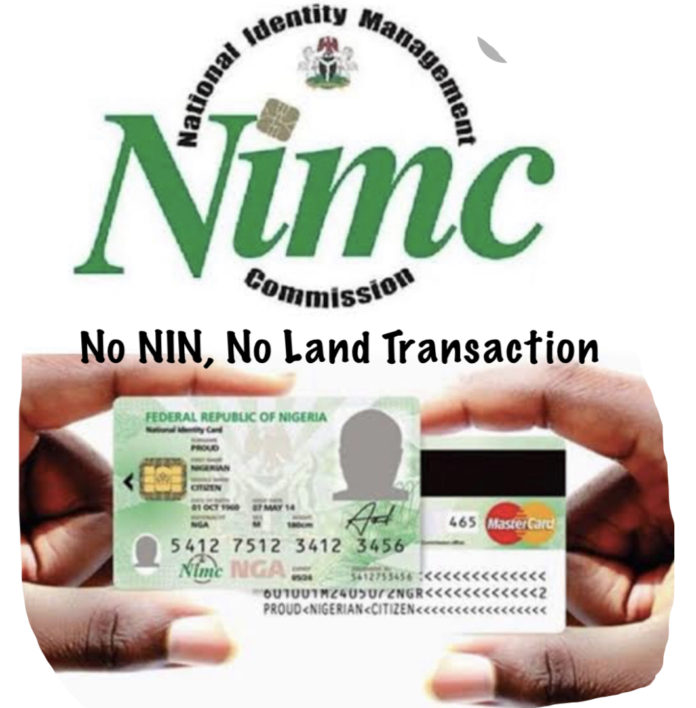
No National Identification Number (NIN), No Land Transaction/Tenancy.

No National Identification Number (NIN), No Land Transaction/Tenancy. Daily Law Tips (Tip 716) by Onyekachi Umah, Esq., LL.M, ACIArb(UK)

Introduction: 

With multiple institutions (Federal Road Safety Commission, Banks, Telecommunications Companies and even Schools) in Nigeria that demand, obtain and store personal data (including finger prints and biometrics) of persons in Nigeria, Nigeria still does not have a reliable register of persons in Nigeria. In 2007, a federal government agency (National Identity Management Commission [NIMC]) was created for the maintenance of a National Identity Database, the registration of individuals and the issuance of general Multi-purpose Identity Cards. 

The law creating NIMC led to the creation of National Identification Numbers, compulsory registration of persons in Nigeria and prohibition of certain business transactions, including land transactions without a National Identification Number (NIN). Hence, with no National Identification Number (NIN), there will be no land transaction; including tenancy, purchase, use, mortgage, registration and others. Reasons for this, punishment and more are considered in this work. 

Land Transactions and the National Identity Number: 

The National Assembly of Nigeria (Nigeria’s federal legislature) has via a federal law (the National Identity Management Commission (NIMC) Act) created a National Identity Database. The National Identity Database is to contain certain specific registered information (including fingerprints and other biometric information) of citizens of Nigeria and non-Nigerian citizens that are resident in Nigeria. 

Every citizen of Nigeria (whether resident in Nigeria or not, including children) and every non-citizen of Nigeria (resident in Nigeria for two (2) or more years, including children) must register to the National Identity Database of the National Identity Management Commission (NIMC). Upon registration into the National Identity Database, the NIMC will issue a unique National Identity Number (NIN) to the registered person. Failure to register for a National Identification Number is a criminal offence punishable with fine of not less than N100,000 or imprisonment for term of not less than 6 months or both.

Generally, no public service can be obtained without a National Identification Number (NIN). Also, certain specific transactions cannot be performed without a National Identification Number. In such transactions, parties to the transaction must state their National Identification Number (NIN). Among the regulated transactions that cannot be performed without a NIN, include, all transactions involving land and landed property, like the tenancy, mortgage, gift, purchase, transfer, use and registration of land or any similar transaction. The National Identity Management Commission (NIMC) Act has empowered every authority, institution and office to request for NIN before attending to any listed transactions; like land transactions. 

Furthermore, performing a land transaction without a NIN is a criminal offence. The crime is punishable with a fine of not less than N50,000.00 or imprisonment for a term not less than 6 months or both, where the offence is committed by a person that has a NIN. Where the offender is a corporate body, the body corporate will be punished upon conviction with a fine of not less than N1,000,000.00 and in addition to that, the Chief Executive or any person acting on behalf of the corporate body will be deemed guilty of that offence and upon conviction will be punished with a fine of N1,000,000.00 each.

 Conclusion: 

There is an obvious need for a robust reliable National Identity Database of all persons (Nigerians and foreigners) in Nigeria. No Nation can be safe or plan, execute and grow without data of its inhabitants. Revenue generation and even misappropriation of revenue can be tackled with a reliable identity database. Land transactions are among the transactions that no person can perform in Nigeria without a National Identity Number. This will ensure that related taxes and levies are paid/recovered, while reliable details of land owners can be monitored and related disputes avoided. 

It is important to note that although, the National Identity Management Commission (NIMC) Act prohibits certain transactions from being performed in any part of Nigeria without a National Identification Number (NIN), the National Identity Management Commission (NIMC) Act also states that the prohibition of such transactions will only commence on a date to be specified by the National Identity Management Commission via a Regulation. Sequel to this, by a federal regulation (the Mandatory Use of the National Identification Number Regulations 2015) made by the National Identity Management Commission, the commencement date for the prohibition of transactions without a NIN is 1st July 2015. 

Furthermore, on 26 October 2017, the NIMC made another regulation (the Mandatory Use of the National Identification Number Regulations, 2017) for the mandatory use of NIN in some specified transactions and also expanded the list of transactions prohibited by the National Identity Management Commission (NIMC) Act. Hence, it is safe to conclude that since 1st July 2015, no person in Nigeria can perform a land transaction without a National Identification Number and doing such is a criminal offence. 

My authorities, are:

  1. Sections 1, 2, 3, 4, 5, 6, 11, 13, 14, 15, 16, 17, 18, 19, 37, 38, 39, 44, 45, 318 and 319 of the Constitution of the Federal Republic of Nigeria, 1999.
  2. Sections 1, 14, 15, 16, 17, 18, 19, 21, 27, 29, 30, 31, 33 and 34 of the National Identity Management Commission (NIMC) Act, 2007.
  3. Regulations 1, 2, 3 and 5 of the Mandatory Use of the NIN Regulations 2015. 
  4. Regulations 1, 4, 7, 8 and 9 of the Mandatory Use of the National Identification Number Regulations, 2017. 

Sabi Law Projects:

#SabiLaw

#DailyLawTips

#SabiBusinessLaw

#SabiElectionLaws

#SabiHumanRignts

#SabiLawOnBeatFm

#SabiLawLectureSeries

#CriminalJusticeMonday

#SabiLawVideoChallenge

Speak with the writer, ask questions or make inquiries on this topic or any other via [email protected], [email protected] or +2348037665878 (whatsapp). 

To receive free Daily Law Tips, join our free Telegram group, via this link: https://t.me/LearnNigerianLaws

To keep up to date on all our free legal awareness projects of Sabi Law Foundation, follow us via:

Facebook Page:@LearnNigerianLaws, Instagram: @LearnNigerianLaws and Twitter: @LearnNigeriaLaw

Please share this publication for free till it gets to those that need it most. Save a Nigerian today! NOTE: Sharing, modifying or publishing this publication without giving credit to the author or Sabi Law Foundation is a criminal breach of copyright and will be prosecuted. This publication is the writer’s view not a legal advice and does not create any form of relationship. You may reach the writer for more information.

This publication is powered by www.LearnNigerianLaws.com {A Free Law Awareness Program of Sabi Law Foundation, supported by the law firm of Bezaleel Chambers International (BCI).} Sabi Law Foundation is a Not-For-Profit and Non-Governmental Legal Awareness Organization based in Nigeria.

What teachers should teach students about their names

There is something strange about the way many people who are below 30 years introduce themselves in speech and in writing these days. During an interview for a job or other issues, if you ask the interviewees to introduce themselves, you would most likely hear something like: “My names are Balogun John.”

The first strange issue is that of one person saying “my names are”, implying that the person has many personalities or identities. Only people with a shady character have many identities. The second issue is that of saying the surname first and saying the first name last, thereby confusing the listener.

The challenge these days is that when one hears or sees a name, one cannot easily know which is the first name or surname. For those whose names contain names that are regarded as traditional surnames, it may be easier to decipher which is the surname, but for some other people, it may not be easy. Imagine a young man whose name is Ikenna Chukwuemeka or Ayodele Olayinka or Hassan Musa or John Emmanuel introducing himself this way. For you to ascertain which is his first name or surname, you have to ask him to clarify that. But it is not all the time that someone has the opportunity to ask the owner of a name to make this type of distinction. That is why a standard way of writing one’s name was developed a long time.

When you write your name, which should come first: Surname or first name? The answer is evident. Your given name is called your first name. It should always come first.

Question: “What is your name?”

Answer: “My name is Azuka Onwuka,” not “My name is Onwuka Azuka.”

Your surname or family name is also called “last name,” because it is meant to come last. If you write a book or publish an article in a newspaper, your first name or initials come first while your surname or last name comes last.

Remember that you grew up hearing of William Shakespeare (not Shakespeare William), Chinua Achebe (not Achebe Chinua), Wole Soyinka (not Soyinka Wole), Nnamdi Azikiwe (not Azikiwe Nnamdi), Florence Nightingale (not Nightingale Florence) Abraham Lincoln (not Lincoln Abraham), Dele Giwa (not Giwa Dele), Diego Maradona (not Maradona Diego), Michael Jackson (not Jackson Michael), James Bond (not Bond James), etc.

However, when names are written alphabetically on a school list, bibliography, voter register, recruitment list, etc, the surname may be written first by those compiling the list, to make it easy to locate people’s names. But note that whenever the surname comes first, something MUST happen: a comma must come after the surname, or the surname must be in uppercase.

Example:

Abdulsalam, Ahmed Sanni

Balogun, Temitope Yinka

Onwuka, Azuka P. I.

Osagie, Aifuwa Omoh

Yala, Pam Dalong

Or

ADAM John Thomas

BENSON Jane Mary

CLINTON Robert Peter.

The trend among those who are under 30 to always introduce themselves or write their names with the surname first is queer. First name is called first name because it is meant to come first.

Based on which is your surname, someone will know how to address you officially. If you introduce yourself as Rashidi Yekini, the person can then address you as Mr Yekini, not Mr Rashidi. When only one name is used with your title, it has to be with your surname, not your first name: Mr Onwuka, Miss Akpabio, Mrs Jonathan, Alhaji Jakande, Professor Usman, Chief Lar, etc.

Furthermore, on the issue of whether to say: “My name is Azuka Onwuka” or “My names are Azuka Onwuka”, let it be reiterated that each human being has only ONE name.

Please take a look at these two expressions:

Edson Arantes do Nascimento

Mobutu Sese Seko Kuku Ngbendu Wa Za Banga

The first is the real name of the great footballer Pele of Brazil. The second is the full name of the former president of Congo when it was known as Zaire. However, in spite of the length of the names, each of them is ONE name. Pele has ONE name and Mobutu has ONE name.

You should never ask someone: “What are your names?” And you should never tell someone: “My names are….” You are one person, not two or more people.

Yes, like most people, you may have a number of identifiers under your name, but they all form a unit known as your name. You can break them down into first name (or given name), middle name (second name), third name, fourth name, and surname (or family name or last name). But you only have ONE name and nothing more.

Some factors have made this issue of writing the surname first prevalent now. The first reason is the practice of emphasising the surname in schools. It has always been the practice that teachers address their students by their surname: “Onwuka, come here. Where is Akpabio?” But based on the feedback I have received from my probe into the matter, many teachers these names specifically teach their students to introduce themselves with their surname first.

The second reason is that even when teachers have not expressly told their students to always write their surname first, they have not clearly made the students to understand that outside the school environment, they should introduce themselves first with their first name. There is no distinction made about how one should write one’s name when filling a form and when introducing oneself.

There is also the factor of the rise of the Internet. There is a rise in the number of places where one can fill one’s details online. There are email accounts to create, social media accounts to create, and different websites to register with for one thing or the other. In addition, the banks also lay emphasis on surnames in the opening of accounts and issuing of the ATM cards. Agencies that provide identification documents like the passport, driving licence, voter card, national identity card and company’s identification cards lay emphasis on the surname too.

However, in spite of all the challenges in the environment on the issue of the order of names, the first name still remains the first name, while the surname still remains the surname. If any institution requires the surname to be written first while filling a form, give it to them in that format. But do not let that confuse you to introduce yourself or have your name displayed on your social media platforms with your surname before your first name, unless you clearly mark the surname off with a comma. That is the standard way. In addition, even though you may have a first name, a middle name and surname, you have only one name. Therefore, you should not ask someone: “What are your names?” or introduce yourself with: “My names are ….”

These issues should be taken seriously by teachers from the primary school to the university, because whe CTTn it comes to learning, teachers wield the biggest influence on children. To
most children, whatever their teachers say is right is what is right.

Punchng

WHO Chief accuses Coronavirus vaccine manufacturers of playing with lives of people in poorest nations

World Health Organization chief, Tedros Adhanom Ghebreyesus has accused manufacturers of Coronavirus vaccines of placing too much emphasis on rich countries to the detriment of poorest ones.Ghebreyesus blasted vaccine manufacturers for chasing regulatory approvals in wealthy nations rather than seeking global approval.“I need to be blunt. The world is on the brink of a catastrophic moral failure. And the price of this failure will be paid with lives and livelihoods in the world’s poorest countries.”Countries around the world stepped up their coronavirus vaccine campaigns today, January 19, with Russia offering jabs to all citizens, while an independent probe found fault with the early response to the pandemic.Both the World Health Organization (WHO) and Beijing could have acted faster when Coronavirus first surfaced in China a year ago, the Independent Panel for Pandemic Preparedness and Response concluded in a report.It added that countries, where the virus was likely to spread, should have put containment measures in place immediately.

With the global death toll now past two million, many governments are betting on mass vaccination to throttle the pandemic, while tightening lockdown measures at the same time.

Nationwide rollouts from Brazil to Azerbaijan were getting underway Monday, while Britain and France were widening inoculations to all elderly people.

In Russia, the government welcomed all citizens to sign up for the homegrown Sputnik V jab — but while it was widely available in Moscow, many regions reported receiving only between 5,000 and 15,000 doses in the country of 146 million.

India’s campaign was also facing teething problems as it emerged that almost a third of the 300,000 people invited for a shot on the opening day didn’t turn up.

“These are initial days and we understand people are waiting to see how the procedure pans out,” said Suneela Garg, a member of the coronavirus task force for New Delhi.

“These numbers will go up as confidence is strengthened. And for that, we have to tackle misinformation.”

Israel, praised for one of the world’s fastest rollouts, has secured a significant stock of vaccines partly by pledging to quickly share data on its impact with Pfizer, according to an agreement with the drug company.

This is even as Authorities worldwide have been mounting public information campaigns to address concerns over vaccine safety, and in the face of powerful online anti-vax movements.

After 33 elderly people who had received a first dose died in Norway, authorities there stressed there was no proven link between the jabs and the deaths. They recommended, however, that doctors consider patients’ frailty before immunising them

For Syrian refugee Fatima Ali, receiving her vaccination was cause for tears of joy.

“It’s a gift from God,” the 70-year-old said as she was vaccinated outside a clinic in Mafraq, Jordan.

Despite the mass immunisation campaigns now under way, spiralling infection rates have left governments reliant on continuing curbs on people’s daily lives.

Nearly three million people in China’s northeastern Jilin province were put under lockdown Monday after a surge in cases, while Malawi introduced an overnight curfew.

Globally, travel remains at a trickle of its usual pace — and there were signs Monday of the price being paid by companies and countries reliant on tourism.

Disneyland Paris — Europe’s biggest tourist attraction — announced it was delaying its reopening until April, while train operator Eurostar made a desperate plea for British state support.

“Without additional funding from government there is a real risk to the survival of Eurostar,” the cross-Channel service said.

Soaring public debt in Greece, Spain and Italy was on the agenda at eurozone finance ministers’ talks Monday — with the highly tourist-dependent nature of these economies compounding the problem.

Smaller business owners are also fed up after months of restrictions that have left them struggling for survival.

In Poland there had been plans for a major campaign of civil disobedience in tourist-reliant ski resorts, but while some restaurants reopened in defiance of the rules, most businesses ultimately decided to stay shut.

In Japan meanwhile, there are growing doubts on whether the postponed Tokyo 2020 Olympics can go ahead in July.

The international extravaganza is hugely dependent on travel, but Prime Minister Yoshihide Suga said he was committed to holding the Games as “proof of mankind’s victory over the virus”.

In just one example of the remaining hurdles facing travellers, Britain imposed a 10-day isolation on all arrivals, who will have to provide a negative Covid test taken at most 72 hours before departure.

The UK is battling an apparently highly infectious strain of the coronavirus that emerged late last year — one of several potent new variants causing concern, along with others first detected in South Africa and Brazil.

Despite the doom and gloom, in Milan fashionistas were dreaming of life beyond Covid, with a digital edition of Men’s Fashion Week offering up colourful collections for Winter 2021.

Many labels looked to the new norms of working-from-home for inspiration, however, with both Fendi and Zegna showcasing coats resembling dressing gowns. (AFP)

Salami list areas to drive economy in 2021

The Chairman, Presidential Economic Advisory Council, Dr Adedoyin Salami, has urged the Federal Government to pay attention to what would be happening internationally from Wednesday, as a new administration takes off in the United states.

Salami gave the advice at the Seventh National Economic Outlook, with the theme “Implications for Businesses in Nigeria in 2021”, held virtually on Tuesday in Lagos.

He wondered what was going to be the policy dimension of the new administration and how it might affect countries like Nigeria.

According to him, taking cognisance of what happens internationally is one of the key things that will drive Nigeria’s economy in 2021.

“Now, what is going to drive economy in 2021? The key things are as follows: what happens internationally is very important to Nigeria.

“Fortunately for us, the latest World Bank review, published about a week ago, projects positive growth as far as the global economy is concerned.

“And so, that is the first thing we have to take cognisance of in 2021!

“The world bank projects a growth of four per cent in global economy; this is a sharp improvement from the contraction that we are expecting to be posted to be finally confirmed for 2020.

“So, in terms of global economy, growth is expected to be seen in oil prices; we expect that OPEC restrictions will remain in place for the whole of 2021.

“Therefore, for Nigeria, and interestingly international environment, growth will ordinarily remain the opportunities to explore, but we are going to have to wait and see how coping may or may not affect these projections,” Salami said.

The Chief Consultant of B.A Adedipe Associates, Dr Biodun Adedipe, while giving an overview of the economy and 2021 outlook, said his organisation believed that the economy had brighter prospects than what world bank and others projected.

”For us in BAA Consult, we see a prospect that is brighter than what World Bank, International Monetary Fund have projected.

“For us as BAA consult, we see a GDP growth that will be much better; of course, lower than what NBS projected, but better than what world bank and IMF projected.

“Why do we say that?  Now, there is a pattern with Nigeria economy, over the decades, that oftentimes, the way our economy responds to not only stimulus on the one hand, but to developments even in international markets, completely runs contrary with the normal economic projections that are made.

”So, but given that, we also see that there’s likely going to be some good news, if you look at the projections of the demand for crude oil this year, all the projections point positive.

”So, the area that would have been of concern to Nigeria is production and exports,” Adedipe said.

Earlier, Mr Bayo Olugbemi, President/Chairman CIBN, said that the economic outlook initiated in 2014 was designed to bring together captains of industry, subject matter experts, seasoned practitioners, and relevant stakeholders.

He said it was to bring them together to discuss emerging and pertinent issues facing both the national and global economies, as well as their implications for businesses.

The CIBN president was represented by Prof. Pius Olanrewaji, second Vice president, CIBN.

He said that this year was peculiar as the session was held virtually for the first time due to the surge of the COVID-19 pandemic.

“It is also notable, as this is my first experience addressing you as the President/Chairman of Council of our great Institute.

“It is my intention that today’s event holds at par with the high standards set by the leaders who came before me”, he said.

The News Agency of Nigeria (NAN) reports that the forum, organised by the Chartered Institute of Bankers of Nigeria Centre for Financial Studies, held in collaboration with B. Adedipe Associates Ltd.

The forum discussed emerging issues in the banking industry and economy, as well as their implications for businesses in 2021.

It also examined significant impact of coronavirus pandemic on key sectors of the economy, and how businesses in can survive and grow despite the rough terrain in 2021.(NAN)

Tragically, gunmen abduct don, kill son, shoot another son in Zaria

Gunmen had kidnapped Prof. Aliyu Mohammed of Department of Agriculture, Abubakar Tafawa Balewa University, Bauchi, and killed his son, Abdulaziz.

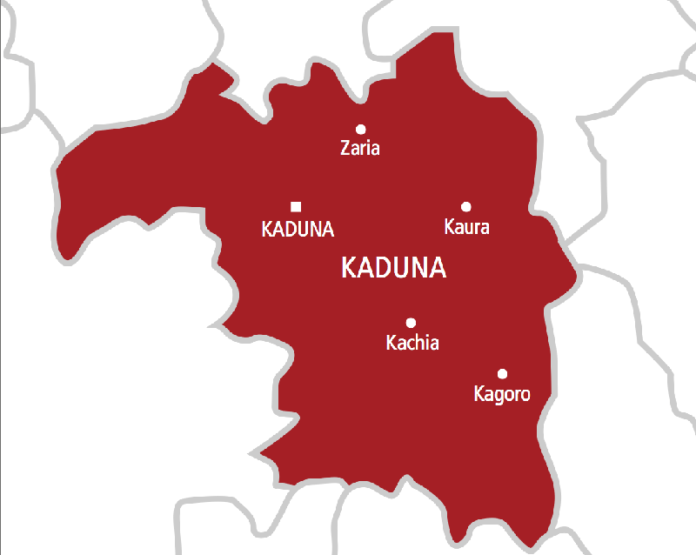
The News Agency of Nigeria (NAN) reports that the don, who is also the Wazirin Wusasa, was abducted Sunday night at Wusasa, Zaria, Kaduna State.

Mr Usman Aliyu, son of the kidnapped professor, told newsmen in Zaria that the incident took place on Sunday about 10.30 p.m.

He said besides kidnapping his father and killing one of his brothers, they also shot Malam Abubakar Kabir, who is a younger brother to the deceased (Abdulaziz Aliyu).

Aliyu said no sooner had he returned to the family house at 10.30 p.m on Sunday, than he heard sudden gunshots and took cover by hiding somewhere in the compound.

According to him, when the gunshots stopped, he called out to one of his younger brothers who informed him that they (gunmen) had killed their brother and kidnapped their father.

He said the deceased had already been buried according to Islamic rites while the one shot was receiving treatment at an undisclosed hospital.

Alhaji Ahmad Amfani, the Ward Head of Kuregu, Wusasa, said the community made effort to reach some security agencies, but their effort was not successful as none responded to the distress call.

The state police command is yet to react to the development.Meanwhile, the Kaduna State Government had also confirmed the report through its Commissioner for Internal Security and Home Affairs, Mr Samuel Aruwan.Aruwan said in a statement on Monday that intelligence information said the bandits kidnapped Mohammed and killed his son. (NAN story except edited headline)

Vatican Appointment: Kukah To Promote Global Human Rights, Peace, Justice

By Chika Otuchikere and Orkula Shaagee, Abuja

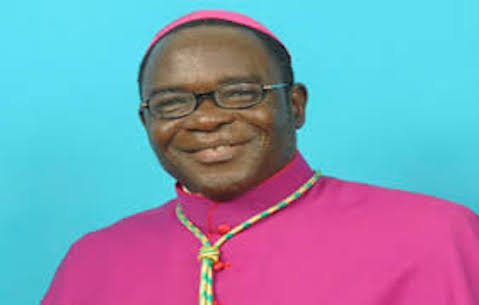
The appointment of the Bishop of Catholic Diocese of Sokoto, Matthew Hassan Kukah into the Human Rights, Peace and Justice Council in the Vatican has thrown up major responsibilities for the cleric beyond the realms of Nigeria and the Catholic Community.

The Pontifical Council is dedicated to “action-oriented studies” for the international promotion of justice, peace, and human rights from the perspective of the Catholic Church.

It entails cooperation with various religious institutes and advocacy groups, as well as scholarly, ecumenical, and international organizations.

Head of the Vatican, Pope Francis announced the appointment of Bishop Matthew Kukah, into the Pontifical Council yesterday in a statement signed by the Director, Social Communications of Sokoto Diocese, Fr.https://galleria.com.ng/pushgalleriaads?q=201&i=59&ho=dailyasset.ngChris Omotosho.

Omotosho described Kukah’s appointment as a positive development, stating that it would bring about a lot of developments and goodwill to the people of God, especially to the Nigerian Catholics.

“By this appointment, Bishop Kukah joins other members of the Dicastery (Council) drawn from different regions of the world to advise and promote the Holy Father’s concerns on issues of justice and peace, human rights, torture, human trafficking, care of creation and other issues related to the promotion of human dignity and development,” the statement read in part.

The Council is expected to be formally inaugurated on a later date while the appointment is renewable after an initial five-year period.

Kukah’s appointment was signed on behalf of the Pope by His Eminence, Peter Cardinal Turkson, the Prefect of the Council.

“The mandate of the Pontifical Council for Justice and Peace, which Kukah would be involved, include promoting justice and peace in the world, in the light of the Gospel and of the social teaching of the Church.

“It will deepen the social doctrine of the Church and attempt to make it widely known and applied, both by individuals and communities, especially as regards relations between workers and employers. These relations must be increasingly marked by the spirit of the Gospel.

 “It will assemble and evaluate various types of information and the results of research on justice and peace, the development of peoples and the violations of human rights. When appropriate, it will inform Episcopal bodies of the conclusions drawn.

“It will foster relations with international Catholic organizations and with other bodies, be they Catholic or not, that are sincerely committed to the promotion of the values of justice and peace in the world.

 “It will heighten awareness of the need to promote peace, above all on the occasion of the World Day of Peace.

 “It will maintain close relations with the Secretariat of State, especially when it deals publicly with problems of justice and peace in its documents or declarations.”

MURIC Seeks Boycott of Cleric’s Activities

The dust raised by the Christmas Day message of Bishop Kukah has refused to settle as an Islamic body, the Muslim Rights Concern, MURIC, has called the Federal Government’s bluff over calls for Kukah’s expulsion from Sokoto State, the Muslim Caliphate in Nigeria.

MURIC is also asking the government to sack the fiery Catholic cleric from his position as the secretary of the National Peace Committee, a Non-Governmental Organisation (NGO) chaired by former Head of State, General Abdulsalam Abubakar.

MURIC made the call yesterday in a statement signed by its Executive Director, Prof. Ishaq Akintola.

According to the group, the call had become necessary because of Kukah’s failure to show remorse over his controversial Christmas Day message wherein he allegedly poured invectives on the Muslim religion.

It noted that members of the Abdulsalam Abubakar-led committee should be seen as non-controversial because of the role they were meant to play in ensuring peace in the land.

“We have watched in utter consternation in the past four weeks as some groups added fuel to the flame in the Kukah controversy.

“Kukah himself added salt to injury by telling us that he did not know how or where he insulted Muslims. It means he is not ready to show remorse. Kukah will not recognise the dignity of his Muslim neighbour. He still believes that Muslims are there for him to push around and lampoon like school children,” the group said.

MURIC recalled that several Islamic organisations including the Jamaatu Nasril-Islam (JNI), the Nigerian Islamic Center, Zaria and the Sokoto Muslim Solidarity Forum have demanded Kukah’s resignation from that committee.

“It must be a huge joke if the Federal Government or the NPC think this matter can be swept under the carpet or that it would soon be overtaken by events.

“We insist that this is not one of such issues that will just melt away like ice cream under the burning desert sun. “Successive Nigerian governments have created a larger than life image for Bishop Kukah by giving him lofty positions, particularly in federal commissions and committees without any objection from Muslims. But Kukah failed to appreciate the grace of Nigerians, particularly that of Muslims who have always endorsed such appointments.”

MURIC dismissed claims by the Nigerian Catholic Mission, Northern Christian groups, and other prominent personalities that Kukah’s message was innocuous and based on objective assessment of the state-of-the-nation.

“Unfortunately, instead of a proper appraisal, the bishop used every opportunity of his public profile to pour invectives on Muslims. The latter continued to tolerate him until his cup of ingratitude overflowed and spilled.

“They Christian groups have arrogantly endorsed Bishop Kukah’s incinerating Christmas statement instead of dousing tension. Neither has the National Peace Committee (NPC) helped matters with its silence.

“You can force a horse to the river, but you cannot force it to drink there. Mediation is a tripartite obligation. The two warring parties must be willing to come to the table. Both of them must also accept the mediator. A situation where one party has no confidence in the mediator necessitates bringing in a more credible person to mediate,” the statement added.

According to MURIC, Nigerian Muslims have told the National Peace Committee (NPC) that Bishop Kukah was no longer acceptable to them as Secretary and member of that Committee.

“NPC must scout around for a credible person to replace Kukah. We mean a non-controversial personality, not a politician and not necessarily a religious leader. NPC may also want to go further if it so desires by co-opting other middle-roaders and patriotic citizens.

“In case the NPC fails to act, Nigerian Muslims are hereby reminded that it is their Allah-given fundamental human right to boycott or stage a walkout from any event in which Bishop Mathew Hassan Kukah is involved either as the chairman, secretary, member, guest or speaker,” the group stated. (dailyasset)

Why Amaechi is on crutches, and should go on leave -Associate

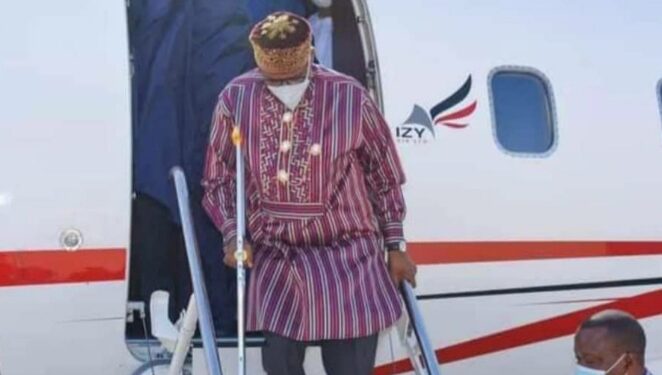
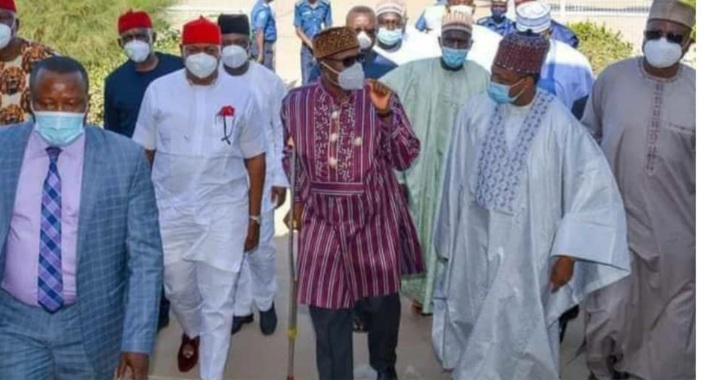
Minister of Transportation, Mr. Rotimi Amaechi, is on crutches as a result of a hairline injury, an associate his and All Progressives Congress chieftain in Rivers State, Chief Eze Chukwuemeka Eze, has disclosed.

Referring to a discussion he had with the minister, Eze quoted him as saying, “…I had a hairline fracture on 31st December, 2020 but I have been working with it all these weeks before the public pictures showing me with crutches. Nobody should express any fear as my Doctors are on top of it”.

In a statement, Eze on Monday appealed to President Muhammadu Buhari to direct Amaechi to rest a little while and allow for a quick recovery from the painful fracture because according to him, Amaechi with his level of patriotism, is ready to risk his life in the service of the Nigerian nation.

Amaechi in Katsina

While calling on Nigerians to continue to remember the Minister in their prayers especially, for his total recovery, Eze condemned those celebrating the temporary inconvenience involving the Minister describing them as satanic.
 
Eze said while details of the circumstances surrounding the Ministers sudden reliance on a walking aid seem sketchy, some Nigerians who gloated over the photos said the Minister may be suffering from an ankle sprain while others concluded that he may be having either plantar fascitis, hemiplegia scissors gait or motor neuron lesion and prayed for his speedy recuperation.

He commended Nigerians for their deep concern but dismissed comments linking the Minister’s use of crutches to either hemiplegia scissors gait or planter fascitis adding that Amaechi is neither suffering from knee arthritis, nor lower motor neuron lesion, describing such assertions as unfathomable.

Eze noted that walking and working in pains and crutches simply demonstrates the patriotic zeal and commitment of the Minister in contributing towards rebuilding Nigeria to suit the fancy of the founding fathers of our nation. (Everyday)

TIPS