Home Blog Page 1075

Five Easy Ways To Kill Nigerian School Children (Dedicated To Late Prof Nick Idoko)

The first and the easiest way to decimate Nigerian school at­tendees is to reopen schools amidst the worst ravages of Covid-19 pandemic, and Nigeria has embraced it. After a confusing week when different government officials openly disagreed on the desirability of re-opening schools it has been an­nounced that schools should reopen from this weekend.

Yet, in all that cacophony, the President Muhammadu Buhari said nothing. It is like the man is not there, as though he is missing in action. Yet, he is there. So, why has he not taken charge in this most serious of matters? At stake is the lives of our school children. But the President has refused to say even a word. Instead the Education officials would say that schools should not re­sume, or that the resumption date would or should be reconsidered, a Covid-19 committee or panel head would counter them, and the private school proprietors, have been giving the impression that the schools are ready to observe all the Covid-19 protocols. And we are talking about all the schools in Nigeria – the well-equipped and properly staffed ones and the examples of what schools should not be and so should not have been registered, would all resume on the crazy assumption that all would observe Covid-19 protocols.

Please, may someone, anyone please, remind Buhari that he is the Nigerian President. He is the one elected to point Nigeria in the right direction. He may appoint anyone into any position to help him meet his duties, but he remains OUR PRESIDENT. So, at times, he should not only take charge but be seen to be truly in charge. Such a time is now. Some countries are now talking about vaccinating their citizens with the Covid-19 vaccines such countries produced. Apart from the global gi­ants, Cuba, South Africa, Taiwan, Iran and such other developing countries are also developing their own vaccines. But not Nigeria. It is as though we have no universities and no research institutions. It is like we are still in the dark ages.

Having known that Nigeria lacks either the capacity or the will or both to seek for an anti-Covid19 vaccine, what stopped Nigeria from joining COVAX, the vaccines pillar of the Access to COVID-19 Tools (ACT) Ac­celerator, co-led by the Coalition for Epidemic Preparedness Innovations (CEPI), Gavi, the Vaccine Alliance, and the World Health Organization (WHO) – working in partnership with developed and developing country vaccine manufacturers to ensure COVID-19 vaccines are avail­able worldwide to both higher-in­come and lower-income countries? 80 self-financing and 92 low- and middle-income economies –minus Nigeria – are in this cooperative en­deavour.

Serious countries completed their commitment payments in this coor­dinated effort on 9 October 2020 to be eligible to secure enough doses of vaccines from this source to protect the most vulnerable populations, such as health workers and the el­derly. Nigeria did not participate.

Yet, on this cooperation, Stefan Löfven, Prime Minister of Sweden had explained: “Equal access to a COVID-19 vaccine is the key to beat­ing the virus and paving the way for recovery from the pandemic. This cannot be a race with a few winners, and the COVAX Facility is an import­ant part of the solution – making sure all countries can benefit from access to the world’s largest portfolio of candidates and fair and equitable distribution of vaccine doses.”

Now, amidst the second wave Covid-19 spike decimating Nigeri­ans, the Finance Minister, Zainab Ahmed, said on January 13 that gov­ernment is currently resolving what type of Covid-19 vaccine to procure and the quantity needed and that “FG was committed to a quick sup­plementary budget that makes way for…. This would have been laugh­able were it not tragic. While other countries have devised a time table to fully vaccinate all their citizens, Nigeria is still planning for a supple­mentary budget for vaccine doses acquisition. I pray that outrageous contracts would not be awarded to source the vaccines from the open market.

As though the self-disgrace is not enough, FG through the National Primary Health Care Development Agency (NPHCDA), announced its distribution plan for the Covid-19 vaccine doses, already bought. How many vaccine doses for the entire nation of over 200 million people? According to the NPHCDA; not more than 4,000 for each state with the top states being Kano State 3,557; Lagos 3,131; Katsina 2,361; Kaduna 2,074; Bauchi 1,900; Oyo 1,848; and Rivers 1,766.

Meanwhile, the total number of Covid-19 cases in Nigeria surpassed the 100,000 mark as at Sunday, Jan­uary 10, 2021. Lagos state has ar­rested over 200 people for violating COVID-19 protocols in clubs, strip joints. Edo state is enforcing the use of face masks in public transport vehicles. From 392 cases in the last week of last November to 694 cases the first week of December, Lagos state recorded over 1,000 in the sec­ond week of December, 7,420 cases in December, according to the Lagos health commissioner, Akin Abay­omi, thus surpassing the total infec­tions for the previous three months.

The Chairman of the Presidential Task Force (PTF) on COVID-19, Mr. Boss Mustapha, said on Monday 11 January, that the reopening of air­ports and increased local and inter­national travels as well as the reopen­ing of schools and religious centres without adherence to safety protocols contributed to the rise in COVID-19 cases across Nigeria.

An online newspaper showed a few days ago that “one in every six persons (16 per cent) tested for COVID-19 in Nigeria in the past two weeks tested positive, indicating how fast the virus is spreading.

Just as the decision to reopen the schools was being announced on Jan­uary 14, Nigeria recorded her worst COVID-19 day with 23 deaths and 1,479 new infections). Active cases in the country rose sharply by some 600% from about 3,000 two months ago to over 20,000.

The Chief Medical Director (CMD), Lagos University Teaching Hospital (LUTH), Idi-Araba, Lagos, Prof. Chris Bode, said: “The resur­gence of COVID-19, through the new­ly mutated form, is ravaging our land, claiming many lives. Unlike what we witnessed in the first wave, this one is even more easily transmitted and deadlier too.”

Dr. Chikwe Ihekweazu, head of Ni­geria Centre for Disease Control, said January 15, 2021, that Nigeria may be forced to take “tough decisions” about the serious COVID-19 cases.

It appears the tough decision taken is to kill our own children by reopen­ing schools. It is either that Covid-19 pandemic has not reached Nigeria and the officials are manufacturing the infection numbers as many Ni­gerians suspect and so refuse to even wear the face mask for protection, or we want to murder our school chil­dren.

Please listen to this:, Mr. Ben Goong, spokesperson for the Nigeri­an Education Ministry, told reporters that “Parents and respective institu­tions must ensure full compliance with COVID-19 protocols, including the compulsory wearing of face masks by all students, teachers, and workers in all schools, temperature checks, and hand-washing facilities at strategic locations in all schools. Also, they must ensure a constant supply of water, hand sanitizers, and enforcement of maintenance of social distancing and suspension of large gatherings such as assembly and visiting days.” Dear Mr. Goong and company, are you ready to testi­fy before God that even you believe in that empty promise? How many towns and villages have water for drinking, let alone for hand washing? And how widespread is face mask us­age in the open society?

Is Nigeria an island, complete and total onto itself? If no is the answer, how many countries where schools reopened hastily have been studied for Covid-19 infections? None. Yet, the evidence of children being asymp­tomatic spreaders and the increase in pediatric cases in several countries have increased public pleas for clos­ing schools until a large number of the population has been vaccinated.

From the experience in several countries, schools have been called the “potential source of COVID-19 outbreaks, due to the number of individuals intermingling in close proximity for extended periods of time, wrote Rebekah Jones, Scott Glasgow, and Oscar Wahltinez in the US News and World Report of De­cember 2, 2020. They argued that “It makes sense when you think about it. Stuff a bunch of people into a con­fined space for eight hours a day and the likelihood of catching the virus increases.

“And internationally, data indi­cates how quickly schools may be­come supers-spreaders. In Israel, for example, many schools closed due to COVID-19 outbreaks only two weeks after the country fully reopened classrooms. Districts in Georgia and Mississippi (two American states) experienced similar scenarios when they started school in August. They said that between August and Sep­tember last year, “The COVID Mon­itor – our database tracking corona­virus cases in K-12 schools, a joint effort between the finance-focused nonprofit FinMango and Florida COVID Action to provide timely, transparent and unbiased data about the impact of K-12 education (prima­ry and secondary) on the spread of the virus, and vice versa. Run entire­ly by a small army of volunteers – showed nearly 250,000 students and staff new Covid-19 cases across the United States.

A United Kingdom study in No­vember also showed a decline in cases in every age group except, apparently, among school-aged chil­dren and teens.

Basically, the US study observed that “the higher the community case rate, the higher the school dis­trict case rate”, so as the infections increased in the general society, so too it went in the schools. “A recent study based on our data found school districts can reduce COVID-19 case rates by about 40% by reducing the in-person class size by 50%.

“Based on data from Florida, we know that school districts without mask mandates have an average case rate (12.1 per 1,000) nearly twice as high as those with mask man­dates (6.9 per 1,000). But we know that school children do not know how to use face masks well.

In our opinion, the data suggests schools are NOT safe and DO con­tribute to the spread of the virus – both within schools and within their surrounding communities. Because of this, many should be closed to in-person learning– especially as cases continue to rise across the country,” the study concluded.

Now, may God save the fool who would ask me that stupid question: “do you know anybody that has died of Covid-19?” Prof. Nick Idoko, a friend from my University of Nige­ria, Nsukka, days in the early 1980s, died of Covid-19 on January 13 at UNTH. And without determining the cause and course of the Covid-19 second wave, the government is also asking Nick’s children to resume school. There must be a limit to bad governance. I dedicate this article to Nick; last December I invited him to my hotel to pick up a column in the In­dependent group of newspapers and express his ideas of making Nigeria a better place. We reconnected after over ten years. He said he lacked the time because of his load of work at Christopher University, Mowe, Ogun State, and other engagements and proposed that we team up on a book on Nigeria. Then he died in January. Sorry Nick, you belonged to an awful country that never grew tired of her sorry story – and which wasted your incandescent brain. My soul mourns even as the state and federal govern­ments toy with the lives of our chil­dren. Rest in peace, brother.

Independent

Blasphemy: Court Upturns Conviction Of 13-Year-Old Farouq, Orders Retrial Of Case Against Yahaya Sharif Aminu

*Sets Aside Death Sentence Against Yahaya Sharif Aminu

An Appeal Panel presided by Chief Judge of Kano State, Justice Nura Sagir and Justice Nasiru Saminu has ordered the retrial of the case of blasphemy levelled against one Yahaya Sheriff Aminu.

The defendant, it could be recalled, was last year convicted by an Upper Sharia Court sitting at Zoo Road in the state capital and subsequently sentenced to death for act blasphemy against the Holy Prophet.

Delivering judgement on Thursday at the High Court in Kano, the two-member Appeal Panel ordered that the case be returned to the same Upper Sharia Court at Zoo Road for a retrial but should be retried by a judge different from Alkali AliyuMohd Kani who presided over the previous trial.

The Appeal Panel held that the defendant was not represented by a legal representative throughout his trial at the Upper Sharia Court adding that it was the duty of the court to ensure that he was duly and legally represented especially given the magnitude of the case which involved a capital punishment

The panel, therefore, submitted that the failure of the defendant to be represented by a legal representative during the trial at the Upper Sharia Court was a clear omission which renders the proceedings of the case a nullify.

In a similar appeal involving one Umar Farouk, who was sentenced to a 10-year imprisonment by the same Upper Sharia Court for blasphemy the panel discharged and acquitted the defendant.

In setting aside the sentence, the panel held that the defendant was a minor at the time of his trial adding that as a minor he could not be liable for his admission.

The panel observed that even the trial judge in his case at the Upper Sharia Coury admitted that he was 17 years of age during the trial.

In addition, the panel held that the said Umar Farouk was not represented by a legal representative at the Upper Sharia court, thereby invalidating the outcome of the case.

Speaking to Daily Sun at the premises of the court soon after the judgement, counsel to the two defendants, Kila Alapinni Esq expressed delight at the judgement of both cases.

” Now that the case has been returned for retrial by another judge, we are very hopeful that Yahaya Aminu Shariff would have his day in court under proper guidance and legal direction,” he said.

He assured that his legal team would remain in Kano to represent the defendant, saying that they would defend him up to the Appeal Court and the Supreme Court if the need arose.

Asked what happened if the defendant elected not to have a legal representation, he noted that he has accessed the defendant adding that he was positively disposed to being represented by a legal person

On the issue of the constitutionality of the Sharia Code, which was upheld by the panel, he stated that, “We need to ho back and study the judgement and decide if we want to proceed to the Appeal Court and the Supreme Court to challenge it ” he stated.

Thenigerialawyer

FG Frees 4,000 Inmates Under Amnesty, Says Minister

Minister of Interior, Ogbeni Rauf Aregbesola said Thursday that 4,000 inmates have been freed so far under the Federal Government Amnesty Programme to decongest custodian centres in the country.

The Minister also asserted that it is heartwarming that there has been no COVID-19 infection in any of the country’s custodian centres.

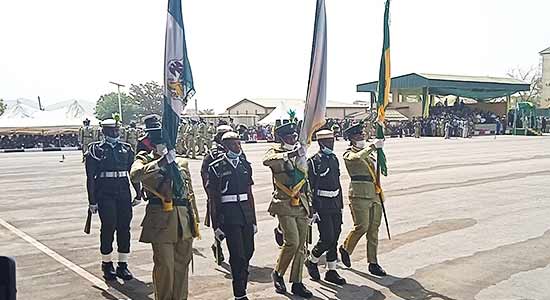
Aregbesola who made the remarks at the pulling out parade organised in honour of the Controller General of Corrections, Alhaji Ja’afaru Ahmed noted that the high bar of Service set by the out-going CGC necessitated various reforms and initiatives that rapidly transformed the service.

The Minister praised the out-going CGC for his hard work and commitment to service, saying the CGC “epitomised service, discipline and responsibility.”

He said the CGC would be remembered for the construction of 3,000-capacity ultra-modern Custodial Centre in Janguza, Kano State (North-West Zone) where 10 component projects have been fully completed while more than 36 others are at various stages of completion across the country.

Aregbesola also mentioned the commencement of the construction of 3,000-capacity ultra-modern Custodial Centre in Karshi, FCT (North-Central Zone) and at Bori, River State (South-South Zone)

Giving details of the achievements of Alhaji Ahmed, the Minister said: “currently, 23 inmates are undergoing Post Graduate Programmes comprising of one PhD; 16 Master’s Degree; and six Post Graduate Diploma Programmes.

“A total of 465 inmates are studying various Degree Programmes such as Peace Studies and Conflict Resolution; Criminology and Security Studies, Political Science, Law, etc.

“In addition, 1,404 wrote SSCE and 634 passed with five credits, including English and Mathematics, while 4,757 enrolled for Adult Education programme and 1,162 graduated.

“Vocational education enrolment also soared as 280 inmates made up of 267 males and 13 females acquired Trade Test Grades III, II and I in sundry vocations like woodwork, welding, shoe-making, barbing, dress-making, etc.

“Under him, the service has lived up to its billing as correctional institution. All the beneficiaries of these programmes in education and vocational skills acquisition will no doubt turn out as better citizens.”

Thenigerialawyer

Buhari Orders MDAs, Others To Grant FIRS Access For Tax Collection

President Muhammadu Buhari has mandated ministries, departments, agencies and business enterprises to grant access to the Federal Inland Revenue Service (FIRS) to their systems for the purposes of tax collection nationwide.

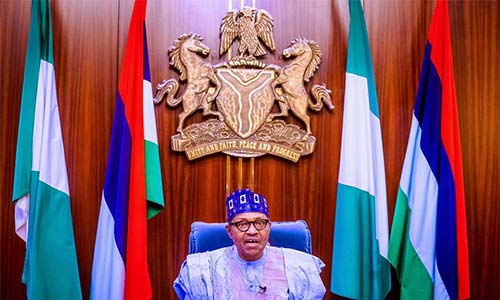
A statement from the FIRS on Thursday said President Buhari issued the mandate while delivering his address as the Special Guest of Honour at the First Annual National Tax Dialogue organized by the FIRS at the old Banquet Hall, Aso Rock Villa Abuja.

The President was said to have also mandated the FIRS to “speedily put all measures in place to fully implement programmes to stamp out Base Erosion and Profit Shifting in all of its ramifications and generally automate its tax processes.”

President Buhari also urged the FIRS to fast-track its digitalization of the tax collection process.

According to the President, “I have directed all government agencies and business enterprises to grant FIRS access to their systems for seamless connection. We all are now living in a fast digitalising world.”

He added that “business transactions are continually being migrated from “brick and mortar” locations to digital places or spaces. It is therefore incumbent upon tax authorities to adopt digital means to efficiently track taxable transactions for the purpose of collecting taxes”.

Also, President, African Development Bank (AfDB), Mr. Akinwunmi Adesina, who delivered the keynote address at the Tax Dialogue, assured the government “that the AfDB would support the FIRS to modernise the tax collection processes in Nigeria through capacity building”.

In her opening remarks at the Dialogue, Minister of Finance, Budget and National Planning, Mrs. Zainab Shamusuna Ahmed, said tax compliance was key to national prosperity, stressing that government was determined to minimise the incidence of tax dodging through such leakages as cross-border transactions by deploying technology.

In his Welcome Address the Executive Chairman, FIRS, Mr. Muhammad Nami, underscored the importance of the dialogue, saying: The universal collapse of traditional government revenue sources and the consequential resort to tax is a testimony.

“The well-known arms race among nations is gradually giving way to ‘tax-race’. The international struggle for and against digital services tax is just the beginning of the tax race. It is a race for all nations – developed or developing, and for Nigeria, it is ‘a must-win’ race.”

Mr. Nami stressed that the FIRS would match on to digitalise the tax process fully and canvassed the cooperation of the three tiers of government, the citizens and corporate organisations in the country for the success of the digitalization drive.

His words: “The FIRS started the journey to automation several years ago when it launched “Project Fact”. Several other initiatives were launched to further take advantage of evolving technology in taxpayer registration, online payment platforms, remote filing of returns, etc. However, there was very limited success with the various initiatives due to inadequate statutory framework.

“A quantum leap was achieved with the 2020 Finance Act which copiously provided legal grounds for deployment of technology in tax administration. The Service is grateful to the President, the leadership of the National Assembly, the Honourable Minister of Finance, Budget and National Planning and all other stakeholders that worked together to enact the necessary laws.

“The Service is taking advantage of the new law to embark on studies (with the assistance of friendly tax authorities and international tax organisations) with a view to developing a robust digitalisation roadmap. The roadmap will enable the Service to digitalise its whole operations (end-to-end) in a systematic, coherent and efficient manner.

“There is so much to look forward to in the coming years. The FIRS is starting this decade with the resolve to leapfrog tax administration into the digital age. Ladies and gentlemen, we are banking on your continued support as we embark on this onerous journey.”

Thenigerialawyer

[JUST IN] Second Wave Covid-19: Nigerian Law School Announces Feb 1 As Date For Resumption Of Academic Activities

The Nigerian Law School has announced that Bar part 2 (regular) candidates are to resume their academic activities at their respective campuses (Abuja, Lagos, Enugu, Kano, Yola and Yenogoa) on Monday, the 1st of February, 2021.

In a circular made available TheNigeriaLawyer signed by its Director-General, Prof. Isa Hayatu Chiroma SAN, titled “NOTICE OF RESUMPTION OF BAR PART 2 (REGULAR) 2020/2021 SET AND BAR PART 1 2021 SET”, Candidates of Bar part 1 for the 2021 academic year are expected to also resume at the Abuja campus, on Monday, the 8th of February, 2021.

As part of its measures to also avoid the spread of the infamous Covid-19 pandemic, returning candidates are expected to note the following safeguards;

1) Students must wear their face mask to gain entrance to the campus.

2) Each student is required to come with;
a] face mask
b] 2 bottles of 500ml of hand washing liquid which must be submitted at the Students’ Affairs Officers.

3) It is mandatory for students to wear face-mask on campus.

TNL recalls that the school had earlier suspended its resumption slated for January 4 and 11 respectively due to the second wave of Covid-19

Thenigerialawyer

Prof. Ifemeje Makes History As First Female Dean Of Law, Unizik

Professor Sylvia Chika Ifemeje of the Department of International Law and Jurisprudence has emerged as the new Dean Faculty of Law, Nnamdi Azikiwe University (NAU).

TheNigerialawyer(TNL) gathered that Prof Ifemeje is the first female to be elected as the Dean of the Faculty, since the inception of the Faculty.

In the election that was keenly contested on Wednesday, Prof. Ifemeje polled a total of 23 votes to defeat Prof. Emmanuel Obidimma (16votes) and Prof.  Ogugua Ikpeze (18 votes).

A total number of accredited voters was 57.

Thenigerialawyer

Foreign Missions Exempted From National Identification Number (NIN).

Daily Law Tips (Tip 719) by Onyekachi Umah, Esq., LL.M, ACIArb(UK)

Introduction:
Recently, the federal government of Nigeria ordered some members of foreign mission in Nigeria to obtain National Identification Numbers. This has led the National Identity Management Commission [NIMC] to establish an enrolment center in the premises of the Federal Ministry of Foreign Affairs, to register foreign diplomats and issue them National Identification Numbers. According to a 2007 federal law (the National Identity Management Commission [NIMC] Act), without a National Identification Number (NIN) a person in Nigeria will not be able to operate a bank account, own a phone number, transact/rent a landed property or have access to any public service.

Looking at the federal law that created National Identification Numbers as well as regulations made by the National Identity Management Commission [NIMC], it is clear that some foreign missions, diplomats, their staff and families are exempted from having a National Identification Number. They are among the few persons in Nigeria that are by law allowed to live and transact in Nigeria without a National Identification Number. This work focuses on the exemption of certain members of the foreign missions in Nigeria from the registration and use of National Identification Numbers.

Exemption of Some Members of Foreign Missions:
Generally, persons in Nigeria are mandated to obtain National Identification Numbers. This includes Nigerians and foreigners in Nigeria. However, there are some exemption to this. Some persons are exempted from obtaining and using a National Identification Number. By the federal law and regulations made under it, certain members of foreign missions are exempted from obtaining National Identification Numbers.

Diplomats, their staff and families are exempted from obtaining National Identification Numbers, so far as they are not staying in Nigeria for 2 years or more. Specifically, this includes, “Members of the diplomatic staff and of the administrative and technical staff of the diplomatic mission of any foreign state, and Consular Officers and Consular Employees, together with members of their families forming part of their respective households, as these expressions are defined for the purposes of Diplomatic Privileges (Vienna Convention) Act and the Consular Relations Act, who are present in Nigeria, provided that such persons are not citizens of Nigeria or permanent residents in Nigeria”.

Conclusion:
National Identification Number is a creation of a federal law in Nigeria. It binds Nigerians and foreigners, including diplomats and other members of foreign missions in Nigeria. A foreigner can live, work and transact business (as well as own and use mobile phone numbers and bank accounts) in Nigeria without a National Identification Number, so far as the foreigner is not staying in Nigeria for more than 24 unbroken months (ie, 2 years without leaving Nigeria). Members of foreign missions, the staff and families in Nigeria (so far as they are not Nigerians) do not need to register for a National Identification Number, in as much as they are not staying for 2 years or more in Nigeria. Refusing to have a National Identification Number is a criminal offence, punishable with fine of not less than N100,000 or imprisonment for term of not less than 6 months or both.

My authorities, are:
1. Sections 1, 2, 3, 4, 5, 6, 11, 13, 14, 15, 16, 17, 18, 19, 37, 38, 39, 44, 45, 318 and 319 of the Constitution of the Federal Republic of Nigeria, 1999.
2. Sections 1, 14, 15, 16, 17, 18, 19, 21, 27, 29, 30, 31, 33 and 34 of the National Identity Management Commission (NIMC) Act, 2007.
3. Regulations 1, 2, 3 and 5 of the Mandatory Use of the NIN Regulations 2015.
4. Regulations 1, 4, 7, 8 and 9 of the Mandatory Use of the National Identification Number Regulations, 2017.
5. Onyekachi Umah, “No National Identification Number (NIN), No Land Transaction/Tenancy” (LearnNigerianLaws.com, 18 January 2021) <https://learnnigerianlaws.com/no-national-identification-number-nin-no-land-transaction-tenancy/> accessed 20 January 2021.
6. Emma Okonji, “FG: NIN Mandatory for Foreign Diplomats” (LearnNigerianLaws.com, 18 January 2021) <https://www.thisdaylive.com/index.php/2021/01/18/fg-nin-mandatory-for-foreign-diplomats/> accessed 20 January 2021.
7. Oge Udegbunam, “NIN: Nigerian govt approves enrollment centre for diplomats” (LearnNigerianLaws.com, 17 January 2021) <https://www.premiumtimesng.com/news/more-news/436958-nin-nigerian-govt-approves-enrollment-centre-for-diplomats.html> accessed 20 January 2021.

Sabi Law Projects:
#SabiLaw
#DailyLawTips
#SabiBusinessLaw
#SabiElectionLaws
#SabiHumanRignts
#SabiLawOnBeatFm
#SabiLawLectureSeries
#CriminalJusticeMonday
#SabiLawVideoChallenge

Speak with the writer, ask questions or make inquiries on this topic or any other via [email protected], [email protected] or +2348037665878 (whatsapp).

To receive free Daily Law Tips, join our free Telegram group, via this link: https://t.me/LearnNigerianLaws
To keep up to date on all our free legal awareness projects of Sabi Law Foundation, follow us via:
Facebook Page:@LearnNigerianLaws, Instagram: @LearnNigerianLaws and Twitter: @LearnNigeriaLaw

Please share this publication for free till it gets to those that need it most. Save a Nigerian today! NOTE: Sharing, modifying or publishing this publication without giving credit to the author or Sabi Law Foundation is a criminal breach of copyright and will be prosecuted. This publication is the writer’s view not a legal advice and does not create any form of relationship. You may reach the writer for more information.

This publication is powered by www.LearnNigerianLaws.com {A Free Law Awareness Program of Sabi Law Foundation, supported by the law firm of Bezaleel Chambers International (BCI).} Sabi Law Foundation is a Not-For-Profit and Non-Governmental Legal Awareness Organization based in Nigeria.

Japan Court Upholds Ban On Dual Citizenship

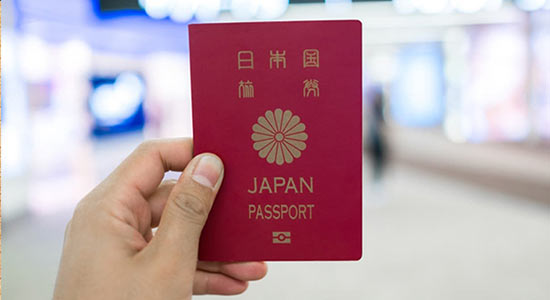
A Japanese court upheld a ban on dual citizenship on Thursday, rejecting a suit that challenged the measure’s constitutionality and sought damages for those affected.

Japan is one of around 50 countries internationally, including China and South Korea, that only permits its citizens to hold one nationality.

Under current rules, Japanese people who acquire another passport are asked to relinquish their Japanese citizenship, but in 2018 eight plaintiffs started legal proceedings, arguing the rule was unconstitutional.

One of them, Hitoshi Nogawa, has told reporters that being forced to give up his nationality was a “painful experience.”

“I obtained Swiss nationality because my job requires it, but I’m emotionally attached to Japan and this is the foundation of my identity,” the Asahi Shimbun newspaper quoted him as saying.

The plaintiffs are six people who have already obtained Swiss or Liechtenstein citizenship, and two who want to obtain foreign citizenship without losing their Japanese passports, local media said.

They argued that the rule was a violation of the constitution’s right to pursue happiness and protection of equality under the law.

But on Thursday, the Tokyo district court rejected their suit and request for damages, a spokesman said, upholding the constitutionality of the rule.

The government argued there was no national interest in permitting multiple citizenships, Kyodo news agency reported.

The issue was thrust into the spotlight with the rise to fame of tennis star Naomi Osaka, who was born in Japan to a Japanese mother and Haitian father but raised in the United States.

Osaka had dual citizenship but under Japanese law was technically required to choose one nationality when she turned 22, though authorities in Japan have been known to turn a blind eye to dual nationals in some circumstances.

The 23-year-old announced in 2019 that she would be renouncing her US citizenship.

[AFP]

Cutlasses To Drones: How Nigeria’s Restriction On Drone Usage Is Delaying The Birth Of A Tech -Driven Agro Economy

By Echoga Caleb

“Intellectual innovation could only occur in the kind of tolerant societies in which sometimes outrageous ideas proposed by highly eccentric men would not entail a violent response against ‘heresy’ and ‘apostasy.”

Joel Morky, American Economic Historian.

Introduction

In 2015, Tanzanian authorities revealed that between 2009 and 2014, as much as 67,000 elephants were lost to poaching activities in the country.[1] To help in addressing the nation’s poaching problem, Bat hawk Recon, a Tanzanian start up, began deploying drones to help provide the much needed surveillance for tracking and apprehending elephant poachers. Zipline, an American robotics company has successfully aided the Rwandan government to reduce maternal mortality by deploying its drones to transport blood donations to inaccessible parts of the country.

Similarly, The ThirdEye Project in Kenya currently helps farmers reach informed decisions on how best to optimally utilise water, fertilizer and labour on their farms by flying sensor-equipped drones capable of detecting farm areas where these scarce resources are most needed.

The above are just but a few instances of the numerous benefits obtainable from drone application to societal challenges in Africa. Naturally, it would be expected that the Nigerian government like its African counterparts would similarly deploy drone technology to address peculiar challenges. To the disappointment of many however, the Nigeria Civil Aviation Authority (NCAA), in May 2016, placed seemingly tight restrictions on the usage of drone technology in the country. It is the argument in some quarters that the restrictions placed by the government are well founded considering that drone technology regardless of its positive applications in bettering mankind, can also be deployed for destructive, immoral and debauched ends. For example, CNN reported in 2019 that domestic drones carelessly flown at an airport in Gatwick, England affected, the flights of over 100,000 passengers.[2] Similarly, in what has been described as the ‘biggest drone conspiracy in history’ by British authorities, the BBC in 2018 reported the jailing of a 7-man gang following their conviction for using drones to transport drugs worth over £500,000 into a United Kingdom, UK prison. [3]

On the other side of the divide, the popular argument is that overbearing restrictions on the technology would only operate to deny Nigeria from exploring the numerous positive applications of drones in healthcare, education, trade and indeed agriculture, the focal point of this article.

The Application of Drone Technology to Agriculture

Drones have been innovatively applied to farming practices and agriculture at large in a myriad of ways:

  1. They are currently being utilised by mechanized farmers to analyse soil conditions with a view to improving crop yield, determining soil nutrient deficiency, amongst other things. This is typically achieved by equipping drones with sensors programmed to collect and analyse data upon which farmers can take informed steps targeted at improving soil conditions/quality (for example; mulching, planting cover crops and the introduction of organic matter for better soil quality).
  2. In a faster and more efficient manner, planting is now being carried out by farmers who deploy drones to shoot seeds into the soil. DroneSeed, an American start-up is currently using this technology to plant more trees and cover more acres in its reforestation campaign in the United States, a feat not attainable when slower and more expensive manual labour was employed.[4]
  3. Farmers are also using drones equipped with multispectral and hyperspectral technology (imaging technologies used to clearly define targeted objects) to detect and treat farm areas infested with pests, weeds and diseases. The use of drones in spraying farms to combat infestations also helps in reducing the risks associated with exposure from handling pesticides. Furthermore, with the data generated from drone flights over farms, farmers are not only notified of the mere presence of maleficent infestations, but are also armed with the requisite data to determine uncertainties like the appropriate quantity of pesticides to use, proper cost estimations of pesticides required for treatment etcetera.
  4. The use of drones for crop and livestock surveillance is perhaps the most innovative application of the technology. Sensor equipped drones can be used to observe individual plants to access both patent issues like damage to leaves and latent issues as poor photosynthetic rates. Amongst grazing livestock, the technology can readily be deployed to identify sick, lost or injured animals in a faster and more efficient means as opposed to relying on human inspection efforts.

Nigeria’s Drone Usage Dilemma: Striking the Balance between National Security and Innovation.

On the 8th of May 2016, the NCAA announced restrictions on the use of drones in Nigeria. Of course in a democratic society as ours, the regulation of society is desirable to prevent a descent into chaos or as Thomas Hobbes best put it, “A state of nature where life was nasty brutish and short.” But popular concern is not with the regulation of drones, rather it is the difficulty of compliance with the swingeing restrictions that are unsettling. In relaying the restriction, Sam Adurogboye, a spokesman of the NCAA stated:

“In recent times, RPA/UAV (Unmanned Aerial Vehicles) are being deployed for commercial and recreational purposes in the country without adequate security clearance. Therefore, with the preponderance of these operations, particularly in a non-segregated airspace, there has to be proactive safety guidelines.”

Pursuant to the restriction, the agency went ahead to issue the Guidelines and Requirements for Grant of Permit for Aerial Aviation Services (PAAS) made pursuant to the Nigerian Civil Aviation Regulations (Nig. CARs 2015 Part 8.8.1.33) and Implementing Standards (Nig.CARs 2015 Part IS.8.8.1.33) as the pioneer guideline regulating drone usage in the country. Without further ado, below are the key excerpts of the above guidelines:

  • Only companies registered with the Corporate Affairs Commission with a minimum share capital of at least N20,000,000 may make an application for a PAAS. The import of this requirement presupposes that individuals are excluded from applying for the said permit.
  • The completion of a Personal History Statement by all shareholders having a 5% equity holding in the applicant company at the Headquarters of the State Security Service (SSS).
  • Payment of a non-refundable application fee of N500,000 (five hundred thousand naira) to the Nigerian Civil Aviation Authority (NCAA).
  • A waiting period of 6months for the issuance of a licence/permit from the Airport Transport Licensing Committee of the NCAA.

Indeed, a major consequence of the NCAA guidelines on agriculture in Nigeria is obviously the untold hardship it would occasion on farmers intending to deploy drone technologies on their farms. For instance, consider how many farmers in Nigeria can afford to incorporate an agro company with a share capital of N 20,000,000? This rhetoric is gloomier upon the realization that 70% of farmers in the nation are predominantly subsistent farmers with barely enough resources to only farm and feed their selves and families.

Nonetheless, the fears of Nigerian authorities cannot be discountenanced considering the reality that when in the wrong hands, drones can be utilised to achieve negative ends and indeed constitute serious security challenges in societies. Considering that the nation is plagued by a legion of security threats, the government’s strict stance can be understood. In reinforcing the position of the NCAA and further articulating the government’s position on drone usage in the country, the National Security Adviser, Maj-Gen. Babagana Monguno (rtd.) in October 2018 stated[5]:

“Members of the public are sternly warned against illicit acquisition of controlled items such as firearms, remotely piloted aircraft (Drones) and broadcast equipment amongst others. Accordingly, those with such illegally acquired controlled items are hereby advised to voluntarily surrender them to the appropriate security agencies.”

The Way Forward

It is suggested here that the appropriate approach to be adopted by relevant authorities in engaging emerging trends, technology and indeed all novelty should not be abrupt bans or grim restrictions but constructive researches and consultations to ascertain the pros and cons of such. This is what is expected in any democratic and progressive society. For example, the European Union before the passage of its guidelines regulating drones (and even currently) put in place a platform (online) to accept all recommendations and suggestions for the effective regulation of the usage of drones amongst EU member countries.[6]

In a similar vein, Parliament in the UK conducted open consultations for suggestions on the regulation of Unmanned Aerial Vehicles, drones, in the country[7]. The consultations saw over 5,000 recommendations made to the UK parliament and has ultimately culminated in the Air Traffic Management and Unmanned Aircraft Bill on the floor of parliament.

Conclusively it is germane to note that in order for Nigeria to benefit from the boundless potentials that abound in the application of drone technology to Agriculture it must review the current draconian guidelines regulating drone flights in the country. Nigeria must have a reorientation targeted at changing its approaches to emerging trends as failure to do so would leave the country as one always playing catch-up to its contemporaries.

Author:

Echoga Caleb is an associate at Omaplex Law Firm, with years of experience in Technology, Data protection and Litigation.  [email protected]

[1] Journal of African Elephants, ‘Tanzania Reinforces Anti-Poaching Efforts’ < https://africanelephantjournal.com/tanzania-reinforces-anti-poaching-efforts/>  Accessed 23rd November, 2020.

[2] Matt Mcfarland, ‘Airports Scramble to Handle Drone Incidents’ BBC (Washington DC, 5 March 2019) < https://edition.cnn.com/2019/03/05/tech/airports-drones/index.htmlAccessed 23rd November, 2020.

[3] BBC, ‘ Gang Who Flew Drones Carrying Drugs into Prisons Jailed’ BBC England, 15 March 2018) < https://www.bbc.com/news/uk-england-43413134Accessed 23rd November, 2020.

[4]  Isabella Lee, ‘Drones for Good: DroneSeed Uses Drones in Post-Wildfire Re-planting Project’ < https://uavcoach.com/droneseed/ > Accessed 23rd November, 2020.

[5] Premium Times, ‘Nigerian Govt Bans Unauthorised Use of Drones, Broadcast Equipment’ Premium Times (Abuja, 25 October, 2018) <https://www.premiumtimesng.com/news/top-news/292569-nigerian-govt-bans-unauthorised-use-of-drones-broadcast-equipment.html > Accessed 25 November, 2020.

[6] European Union, ‘Public Consultation On Drones (Unmanned Aircraft) – Technical Standards For Drones As A Product And Conditions For Drone Operations’ <https://ec.europa.eu/info/consultations/2018-drones_en > Accessed 25 November, 2020.

[7] Sean Daly, ‘UK: New C-Drone Measures Announced; In Parliament, Transport Minister Calls For Life Sentence For Gatwick Drone Pilot’ < https://c-drone-review.news/en/2019/01/11/uk-new-c-drone-measures-announced-in-parliament-transport-minister-calls-for-life-sentence-for-gatwick-drone-pilot/ > Accessed 25 November, 2020.

Report Backs FG’s Moves to Sell Moribund Assets

A new report by the pan-African credit rating agency, Agusto & Co, has backed the decision of the federal government to sell assets to fund critical infrastructure.

Apart from its plan to engage in borrowings to fund the 2021 budget, the Minister of Finance, Budget and National Planning, Mrs. Zainab Ahmed, had said during a presentation on the 2021 budget that the federal government would also sell some non-oil assets to serve as an additional source of finance for the year’s budget.

In its report, titled: “2021: The Year of the Vaccine,” which THISDAY obtained yesterday, Agusto & Co advised the federal government to undertake “bolder actions on asset reforms by reducing its exposures to moribund state-owned enterprises such as the refineries.”

It noted that funds earned from such divestments could be channelled into other high-impact assets such as critical infrastructure.

It stated that the COVID-19-induced economic crisis creates a perfect storm to implement market-friendly reforms that had long been in the books of the federal government.

“We believe the government should expend some of its political capital on a full deregulation of the downstream petroleum industry beyond the current reforms on pricing it has currently implemented,” it added.

The federal government had budgeted fiscal spending of about N13.6 trillion in 2021.

However, Agusto & Co. projected aggregate spending of about N10 trillion, while fiscal revenues would be about N3.5 trillion, indicating a record deficit of over N6 trillion.

“Despite the worsening fiscal position of the sovereign, the federal government can access credit at lower yields. In addition, the federal government’s increased borrowing from the central bank that has risen by more than 500 per cent in five years will likely continue in 2021, thus reducing the dependency of the government on financial markets in a period of higher demand for government securities.

“With naira yields on government debt securities at about the same levels with dollar yields, the incentives for the carry trade have been effectively nullified, thus making Nigeria an unattractive destination for foreign portfolio investors. Our outlook for 2021 is that real interest rates will remain negative, thus enabling the government to cheaply finance its deficits,” it said.

According to Agusto & Co., Nigeria’s long-term high inflation is an often overlooked economic indicator with exchange rates enjoying greater prominence in the discourse.

This, it stated, creates a paradox, with Nigeria’s monetary policy strategy unduly focused on the pursuit of a stable currency viewed largely from the prism of foreign exchange and inertia towards inflation.

“While Nigerians have long fantasised about a strong currency – often defined as one being at par with major currencies such as the British pound or US dollar – the long term high inflationary trend remains the underbelly of the naira.

“Agusto & Co. believes Nigeria’s high inflation reflects the country’s weak economic fundamentals and needs to be reined to set the country on the path of long-term prosperity,” it added.

It stated that outside the management of COVID-19-related disruptions to the economy, foreign exchange in Nigeria would be the most consequential economic issue in 2021.

According to the firm, the pertinent issue will include the management of foreign exchange liquidity.

It said: “For now, the central bank has resorted to its demand management playbook of 2016, which did create a wide spread between the official market and the parallel market at the time.

“The outcome of the demand management playbook in this COVID era also mirrors that of 2016. The naira is currently trading at an unhealthy arbitrage of N80 to N100 to a dollar between the parallel and the official market as monetary authorities struggle to maintain stability in the foreign exchange market.

“The odds against the naira in the foreign exchange market are in two folds. First, there are the long-term fundamental issues. With naira inflation projected to be stubbornly stuck above 15 per cent in 2021 and dollar inflation at a benign two per cent, the odds against the naira indicate an inflation rate differential of about 14 per cent between the two currencies.

“The principle behind the inflation rate differential implies that the erosion in the value of the naira measured by inflation is significantly greater than the dollar. Thus, the 13 per cent inflation differential should result in the naira’s depreciation against the dollar in similar measures. Once again, this reiterates the need to pare back inflation in Nigeria.”

It added: “The second major issue is the demand-supply dynamics in the foreign exchange market. Nigeria has entered a period of low oil and gas export revenues. In 2021, we project about $30 billion in oil & gas exports, down 20 per cent from about $36 billion in 2020.

“With net foreign investment also likely to be in negative in 2021 due to the demand management strategy of the central bank, there will be significant pressure on reserves and the naira/US dollar exchange rates.

“With foreign reserves stubbornly stuck below the $40 billion threshold since mid-November 2019, and currently around the $35 billion mark, the CBN has less dry powder to defend the naira at N390/$.”

However, it explained that Nigeria is not overleveraged in foreign currency terms, especially when compared to its peers in Africa.

It added that while Nigeria has a foreign currency debt position of 56 per cent to its current account receipts, Kenya and Ghana have positions of over 180 per cent and 70 per cent respectively.

“However, with local currency debts, especially the short-term treasuries being raised at less than three per cent – thus leaving investors with over 10 per cent in negative real interest rates – the federal government is quite incentivised to raise more local currency debt than foreign currency debt,” it added.

The firm projected a Gross Domestic Product growth of two per cent in 2021.

It explained that the rapid and seismic evolutions in consumer behaviour would prove to be the major driver of corporate performance this year, stating that the winners in 2021 will be those who are able to understand the consumer trends in their industries and make the necessary adjustments to meet the needs or shape consumer behaviour in their favour.

“For instance, in the FMCG space, the recession leaves consumers poorer and thus there will be a greater demand for products in smaller retail packs.

“While in the financial sector, weaker spending even by the segment of the middle class and upper class that are still economically buoyant will lead to an increase in savings.

“This will lead to higher demand for unique investment offerings that can create value for this class of savers. In 2021, we see fintech solutions offering greater competition to the traditional savings products, especially amongst the tech-savvy millennial.

“Overall, the winners in 2021 will be firms and individuals who learn to navigate volatility with greater stability. We believe the year will throw up significant volatility that will require resilience to withstand the shocks and on the other end, the foresight to help create paths to success even amidst uncertainty. “Nigerians who have long been inured to instability may find their resilience coming under trial this year,” it stated.

TIPS