Home Blog Page 1042

FG Plans To Replace BVN With NIN – Pantami

Says It’s Crime To Open Bank Account Without NIN

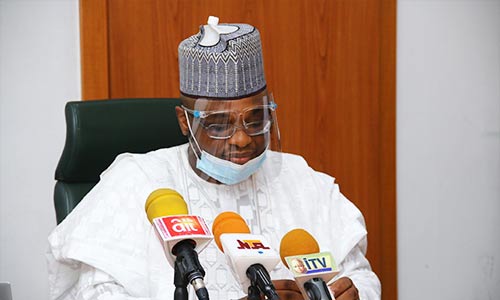
The Federal Government has stated arrangements are ongoing to replace the Bank Verification Numbers (BVN) with the National Identity Numbers (NIN).

The Minister of Communications and Digital Economy Dr Isa Pantami, who disclosed this to newsmen shortly after a tour of telecoms operators and NIN licensees in Abuja, said President Muhammadu Buhari has been briefed on the on-going NIN registrations.

Pantami who said the President was happy with the conducts of the exercise so far, added he had also briefed the National Economic Sustainability Committee headed by Vice President Yemi Osinbajo on the imperative of replacing BVN with NIN.

Pantami argued that while BVN was only for accounts holders with various banks, the National Identity Numbers are for all Nigerians irrespective of their status.

To ascertain the smooth registration of Nigerians, the Minister visited the National Identity Management Commission (NIMC) registration Centre in Gwarinpa, the Zonal Headquarters of MTN, Glo Mobile and Airtel in Maitama as well as a Private operator, OMNL, Nigeria.

Accompanied by the Executive Vice Chairman of NCC, Prof Garba Danbatta; Director-General General of NITDA, Kashifu Inuwa and Chief Executive Officer of NIMC, Engr Aliyu Aziz, the Minister said he was impressed by the strict adherence to COVID-19 protocols at all the registration centres.

Responding to challenges encountered by those with the BVN data trying to upgrade with NIN data, Pantami said:” The challenge is that the BVN records may not be 100 percent the same with NIN but what is most important is that the NIN is the primary identity of each and every citizen, including legal residents.

“BVN is a policy of a bank and has not been established by law, NIN is the only mandatory number and the primary identification of our citizens and every other identification is secondary.

“The NIMC Act 2007 provides that all our citizens must be enrolled and the law gives them 60 days to enroll from the time the law was enacted and a maximum of 180 days and all permanent residents in the country and legal residents that have to stay here for a minimum of 24 months must be enrolled.

“So this is the primary identification of all and all other data bases are supposed to utilize this and not for NIN to utilize the BVN because it is the primary one.

“We discussed with the CBN Governor today on how to ensure that all our citizens with BVN will immediately be provided with the NIN. We are working on that but facilitating the process lies on CBN to make it much easier for our people.”

Asked to clarify government position on the BVN replacement with NIN, Pantami said:” I made a presentation to National Economic Sustainability Committee and I drew the attention of CBN Governor that we need to replace BVN with NIN because the BVN is a bank policy while NIN is a law.

“Because it has been established by law so the strength of the law wherever you go is not the same with a policy of one institution.

“Also, BVN is only applicable to those who have bank accounts but NIN is for every citizen and legal residents in the country. BVN is our secondary database while NIN and the database is the primary one in the country that each and every institution should make reference to NIMC.” (thenigerialawyer)

I-G Tenure Extension, Prerogative Of The President – Police

The Nigeria Police has stated the three- month extension of tenure of the Inspector General of Police (I-G), Mohammed Adamu, is strictly the prerogative of the President.

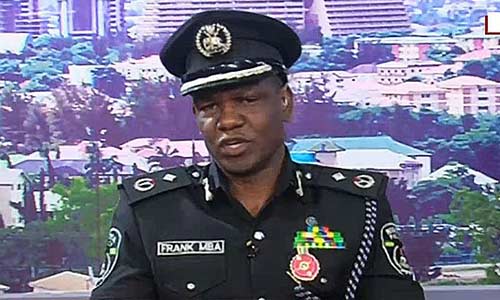
The Force Public Relations Officer (FPRO), Mr Frank Mba, disclosed this in a statement on Monday in Abuja.

He said the clarification followed reports in some sections of the media on Feb. 7, that the I-G paid over N2 billion to secure the tenure extension.

Mba described the report as untrue, unfounded, defamatory and libelous, adding that the tenure extension was never paid for as maliciously reported in the publication.

According to him, the insinuations in the report that the I-G did not celebrate his extension smacks ignorance and a pathetic misplacement of priority.

He said that the extension was not for merrymaking or celebration but a time for more work, rededication to duty and selfless service to the nation.

Mba pledged the commitment of the Police under the leadership of the I-G to improve service delivery, safety and security of the citizenry.

He enjoined the public to disregard and discountenance the publication as it was evidently untrue and unfounded.

Mba said the I-G would remain undistracted with the Force, motivated and committed to delivering on its mandate, especially the task of neutralising current and emerging internal security threats.

He said the I-G had directed his team of lawyers to commence legal action against the publishers. (NAN)

An Undertaking Not To Join An Association Is Useless.

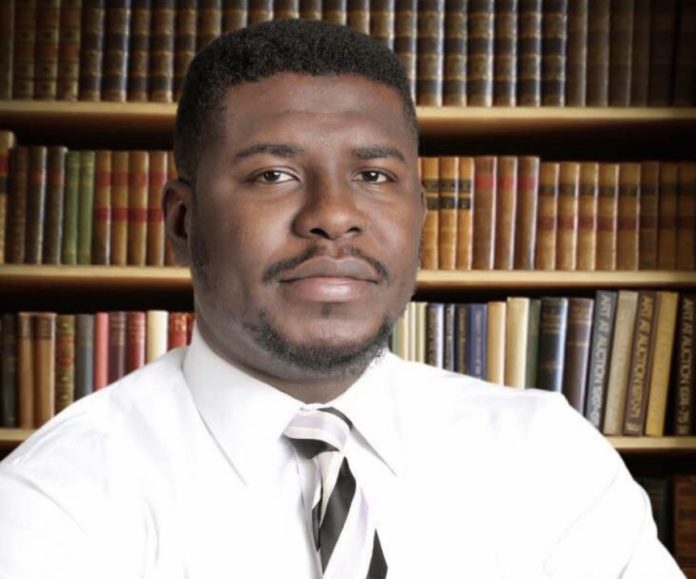
Daily Law Tips (Tip 731) by Onyekachi Umah, Esq., LL.M, ACIArb(UK)

Introduction:
In many transactions, employments, school admissions and even associations, people (parties, workers, students and members) are made to sign an undertaking never to join certain association. Some of the signed undertakings and agreements are even taken to court to be stamped and signed, with the believe that such practice makes such documents valid and binding. Also, some persons use affidavits sworn in courts or before notaries public.

Well, an Undertaking or an agreement not to form, join or relate with an association, society, group is useless, unenforceable and unconstitutional, even when they are stamped in courts. Also, in some constitutions and rules of some associations, members are mandated never to form, join or relate with opposing/competing associations. Such restricting provisions in constitutions of associations, clubs and groups are illegal and unlawful. Reasons for declaring such practices unlawful and unconstitutional are revealed in this work.

Waste of Resources:
Nigerian laws allow persons in Nigeria to make lawful agreements. So, an agreement made in any part of Nigeria will be enforceable in Nigeria, if the agreement is over a lawful affair. In the other hand, it is unlawful for any persons in Nigeria to make an agreement over any unlawful affair. An agreement over an unlawful affair cannot be enforced in Nigeria.

Take for instance, an agreement to commit murder is an unlawful agreement (conspiracy) and it a crime on its own. So, no person in Nigeria can be forced to obey or to perform an unlawful agreement. Whatever applies to agreement here, applies to undertakings, too. Any agreement or undertaking that seeks to waive any fundamental human right is a waste of resources.

Agreements are naturally binding on their makers, even without the stamps of courts. No person needs the stamp of a court for an agreement to be valid in any part of Nigeria and beyond. However, a Power of Attorney may be taken to a judge, magistrate or a notary public for authentication, just to enable a court to assume that the power of attorney was validly made. This does not apply when the content of a power of attorney are unlawful. Generally, the practice of taking agreements (apart from power of attorney) to courts is a huge waste of resources.

Human Rights Are Higher Than Their Owners:
The constitution of Nigeria contains the fundamental human rights of persons in Nigeria. Fundamental human rights are rights and entitlements of persons for just be human beings or registered corporate beings. Fundamental human rights are vested on all human beings, however, they cannot be suspended or waived by their owners. So, no person can waive his/her fundamental human rights, whether by force or by agreement. For example, “Right to life” is a fundamental human right and as such, no person can by an agreement agree to be killed or to waive his right to be alive. Such an agreement is unlawful and unenforceable.

By the Constitution of Nigeria, the fundamental human rights in Nigeria, are: the Right to Life, the Right to Dignity of Human Person, the Right to Personal Liberty, the Right to Fair Hearing, the Right to Private and Family Life, the Right to Freedom of Thought, Conscience and Religion, the Right to Freedom of Expression and the Press, the Rights to Peaceful Assembly and Association, the Right to Freedom of Movement, the Right to Freedom from Discrimination and then, the Right to Acquire and Own Immovable Property anywhere in Nigeria.

Right to Form/Join Associations Cannot Be Waived or Restricted.
Every person in Nigeria enjoys the “the Rights to Peaceful Assembly and Association”. By this particular fundamental human right, any person or group of persons in Nigeria can meet peacefully, form, create and even join any lawful association, society, organization or any group. This also means that no person in Nigeria can be stopped from creating, forming, joining or relating with any lawful association, society, organization or any group. Any attempt to waive or restrict such right is a violation of human rights and must be prosecuted. There are few constitutionally approved circumstances and procedures for the restriction of fundamental human rights in Nigeria, but restriction by agreement, undertaking or by the private constitution (bye-law) of a group is not one of them.

Conclusion:
Forcing or cajoling people to sign that they will not form, join or relate with certain associations/groups is unlawful, illegal and unconstitutional in all parts of Nigeria. Whether such agreements and undertakings are signed or stamped in courts is immaterial and useless. A fundamental human right cannot be waived by agreement of parties or by force.

The right to form, join or relate with an association/group is a fundamental human right and a constitutional right, too. Any undertaking or agreement against any fundamental human rights or ay part of the constitution of Nigeria is invalid, useless and a huge waste of resources, even if made in the Supreme Court of Nigeria or by the best lawyers or any government.

My authorities, are:
1. Sections 1, 2, 3, 4, 5, 6, 14, 20, 33, 34, 35, 36, 37, 38, 39, 40, 41, 42, 43, 44, 45, 305, 318 and 319 of the Constitution of the Federal Republic of Nigeria, 1999.
2. Sections 150 an 259 of the Evidence Act
3. The judgment of the Supreme Court of Nigeria (on meaning and nature of fundamental human rights) in the case of RANSOME-KUTI & ORS v. AG FEDERATION & ORS (1985) LPELR-2940(SC)
4. The judgment of the Supreme Court of Nigeria (on meaning and nature of fundamental human rights) in the case of AGBAI & ORS v. OKOGBUE (1991) LPELR-225(SC)
5. The judgment of the Supreme Court of Nigeria (on documents for cases of fundamental human rights) in the case of EFCC v. REINL (2020) LPELR-49387(SC)
6. The judgment of the Supreme Court of Nigeria (on when and why fundamental human rights can be restricted/suspended) in the case of DOKUBO-ASARI v. FRN (2007) LPELR-958(SC).
7. The judgment of Supreme Court of Nigeria (on State of Emergency) in the case of ADEGBENRO v. AG OF THE FEDERATION & ORS (1962) LPELR-25118(SC)
8. The judgement of the Court of Appeal (on association must be free) in the case of REGISTERED TRUSTEES OF ASSOCIATION OF TIPPERS AND QUARRY OWNERS OF NIG v. YUSUF & ORS (2011) LPELR-5024(CA).
9. Onyekachi Umah, “Notice To Quit From Any State In Nigeria Is A Violation Of Human Rights” (LearnNigerianLaws.com, 5 January 2021) <https://learnnigerianlaws.com/notice-to-quit-from-any-state-in-nigeria-is-a-violation-of-human-rights/> accessed 7 February 2021.
10. Onyekachi Umah, “Legal Remedies Can Be Sought Not Only For Breach But Fear Of Breach Of Fundamental Human Rights.” (LearnNigerianLaws.com, 9 August 2018) <https://learnnigerianlaws.com/daily-law-tips-by-onyekachi-umah-esq-tip-160-legal-remedies-can-be-sought-not-only-for-breach-but-fear-of-breach-of-fundamental-human-rights/ > accessed 14 January 2021
11. Onyekachi Uma, “Courts That Can Hear Cases of Fundamental Human Rights In Nigeria” (LearnNigerianLaws.com, 2 May 2018) <https://learnnigerianlaws.com/daily-law-tips-by-onyekachi-umah-esq-tip-92-courts-that-can-hear-cases-of-fundamental-human-rights-in-nigeria/> accessed 14 January 2021
12. Onyekachi Umah, “#EndPoliceBrutality: The Right To Protest Is A Human Right.” (learnNigerianLaws.com, 15 October 2020) <https://learnnigerianlaws.com/endpolicebrutality-the-right-to-protest-is-a-human-right/> accessed 14 January 2021
13. Onyekachi Umah, “Time To Oppose Cases Of Breach Of Human Rights In Nigeria” (LearnNigerianLaws.com, 24 August 2018) accessed 14 January 2021.
14. Onyekachi Umah, “Requirements For Enforcement of Fundamental Human Rights” (LearnNigerianLaws.com, 3 November 2020) <https://learnnigerianlaws.com/requirements-for-enforcement-of-fundamental-human-rights/ > accessed 14 January 2021.
15. “Human Rights” (Stanford, 14 October 2020) <https://plato.stanford.edu/entries/rights-human/> accessed 14 January 2021.
16. Onyekachi Umah, “Human Rights That Can Never Be Restricted Even In War, Pandemic or State of Emergency (Daily Law Tips [Tip 539]) <https://learnnigerianlaws.com/human-rights-that-can-never-be-restricted-even-in-war-pandemic-or-state-of-emergency-daily-law-tips-tip-539-by-onyekachi-umah-esq-llm-aciarbuk/> accessed 14 January 2021.
17. Onyekachi Umah, “Does The President/Governors Have Powers To Lockdown Any Part Of Nigeria Or Restrict Human Rights?” (Daily Law Tips [Tip 537]) <https://learnnigerianlaws.com/does-the-president-governors-have-powers-to-lockdown-any-part-of-nigeria-or-restrict-human-rights-daily-law-tips-tip-537-by-onyekachi-umah-esq-llm-aciarbuk/ > accessed 14 January 2021.
18. Onyekachi Umah, “When and How Can Government Prohibit Protest In Nigeria” (LearnNigerianLaws.com, 19 October 2020) <https://learnnigerianlaws.com/when-and-how-can-government-prohibit-protest-in-nigeria/ > accessed 14 January 2021.
19. Onyekachi Umah, “Human Rights That Can Never Be Restricted Even In War, Pandemic or State of Emergency (Daily Law Tips [Tip 539]) <https://learnnigerianlaws.com/human-rights-that-can-never-be-restricted-even-in-war-pandemic-or-state-of-emergency-daily-law-tips-tip-539-by-onyekachi-umah-esq-llm-aciarbuk/> accessed 14 January 2021.
20. Onyekachi Umah, “You Don’t Need To Register Any Agreement In Courts or With A Notary Public.” (LearnNigerianLaws.com, 2 December 2020) <https://learnnigerianlaws.com/you-dont-need-to-register-any-agreement-in-courts-or-with-a-notary-public/#> accessed 7 February 2021.
21. Onyekachi Umah, “How To Make Power Of Attorney To Be Genuine And Acceptable.” (LearnNigerianLaws.com, 16 April 2019 <https://learnnigerianlaws.com/how-to-make-power-of-attorney-to-be-genuine-and-acceptable-daily-law-tips-tip-312-by-onyekachi-umah-esq-llm-aciarb-uk/> accessed 1 December 2020
22. Onyekachi Umah, “Agreements in Nigeria Do Not Require Signatures of Notaries Public or Magistrates or Court Staff to be Legal and Binding” (LearnNigerianLaws.com, 13 January 2018) <https://learnnigerianlaws.com/daily-law-tips-by-onyekachi-umah-esq-tip-121-agreements-in-nigeria-do-not-require-signatures-of-notaries-public-or-magistrates-or-court-staff-to-be-legal-and-binding/> accessed 1 December 2020
23. Onyekachi Umah, “Memorandum Of Understanding (Mou) Is Not A Binding Agreement(Contract).” (LearnNigerianLaws.com, 11 February 2020) <https://learnnigerianlaws.com/memorandum-of-understanding-mou-is-not-a-binding-agreementcontract-daily-law-tips-tip-502-by-onyekachi-umah-esq-llm-aciarbuk/> accessed 1 December 2020.
24. Onyekachi Umah, “How To Write Agreements (Contracts).” (LearnNigerianLaws.com, 11 March 2016) <https://learnnigerianlaws.com/how-to-write-agreements-contracts/> accessed 1 December 2020.
25. Onyekachi Umah, “Stamps and Seals of Courts and Commissioners for Oath Are Not Needed for Agreements To Be Valid.” (LearnNigerianLaws.com, 8 June 2018) <https://learnnigerianlaws.com/daily-law-tips-by-onyekachi-umah-esq-tip-118-stamps-and-seals-of-courts-and-commissioners-for-oath-are-not-needed-for-agreements-to-be-valid/> accessed 1 December 2020
26. Onyekachi Umah, ““An Estate Association Cannot Disconnect Access To Electricity/Water Supply” (LearnNigerianLaws.com, 19 August 2020) <https://learnnigerianlaws.com/estate-association-supply-of-public-utilities/> accessed 7 February 2021.
27. Onyekachi Umah, “Should a Residents’ Association Stop Residents From Entering/Leaving an Estate for any Reason?” (LearnNigerianLaws.com, 7 August 2020) <https://learnnigerianlaws.com/should-a-residents-association-stop-residents-from-entering-leaving-an-estate-for-any-reason-daily-law-tips-tip-627/> accessed 7 February 2021.
28. Onyekachi Umah, “Why Members Must Obey Unreasonable Decisions Of Their Association.” (LearnNigerianLaws.com, 30 July 2020) <https://learnnigerianlaws.com/why-members-must-obey-unreasonable-decisions-of-their-association/> accessed 7 February 2021.
29. Onyekachi Umah, “ Association Is Not By Force, Even Estate/Community/Professional Associations/Clubs Cannot Be Compulsory” (LearnNigerianLaws.com, 13 February 2020) <https://learnnigerianlaws.com/association-is-not-by-force-even-estate-community-professional-associations/> accessed 7 February 2020
30. Onyekachi Umah, “Compulsory Estate Association is Illegal in Nigeria.” (LearnNigerianLaws.com, 11 May 2018) <https://learnnigerianlaws.com/compulsory-estate-association-is-illegal-in-nigeria/> accessed 7 February 2021.

Sabi Law Projects:
#SabiLaw
#DailyLawTips
#SabiBusinessLaw
#SabiElectionLaws
#SabiHumanRignts
#SabiLawOnBeatFm
#SabiLawLectureSeries
#CriminalJusticeMonday
#SabiLawVideoChallenge

Speak with the writer, ask questions or make inquiries on this topic or any other via [email protected], [email protected] or +2348037665878 (whatsapp).

To receive free Daily Law Tips, join our free Telegram group, via this link: https://t.me/LearnNigerianLaws
To keep up to date on all our free legal awareness projects of Sabi Law Foundation, follow us via
Facebook Page:@LearnNigerianLaws, Instagram: @LearnNigerianLaws and Twitter: @LearnNigeriaLaw

Please share this publication for free till it gets to those that need it most. Save a Nigerian today! NOTE: Sharing, modifying or publishing this publication without giving credit to the author or Sabi Law Foundation is a criminal breach of copyright and will be prosecuted. This publication is the writer’s view not a legal advice and does not create any form of relationship. You may reach the writer for more information.

This publication is powered by www.LearnNigerianLaws.com {A Free Law Awareness Program of Sabi Law Foundation, supported by the law firm of Bezaleel Chambers International (BCI).} Sabi Law Foundation is a Not-For-Profit and Non-Governmental Legal Awareness Organization based in Nigeria. (Thenigerialawyer)

SEC Releases Rule On Registration For Nominee Function

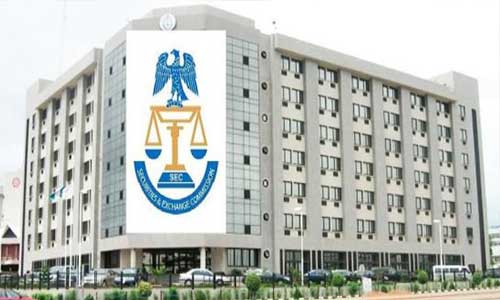
The Securities and Exchange Commission (SEC) has released new rules for firms operating as nominees.

The new rules require all persons not registered by the commission as custodians, carrying on the business of nominee and holding securities including equities, money market and fixed income securities, derivatives, among others, except pension assets, on behalf of actual owners to apply for registration.

According to the rules, the business of the nominee shall be to take title of property, money or securities in trust for and on behalf of clients as nominee for, or representative of such clients, to hold and deal with such property, money or securities strictly in accordance with any directions given by the respective clients from time to time to the nominee company.

The rule also stipulates that a nominee shall not engage in any business or activity except the business of nominee companies described above.

A nominee is a company formed by a bank or other financial institution for the purpose of holding securities and other assets and administering them on behalf of the actual owners under the terms of a custodial or nominee agreement.

The rule prescribes that a Nominee company shall have minimum of three sponsored individuals, one of whom shall be a compliance officer; the managing director of the company shall at all times be among the sponsored individuals by complying with the requirements for registration of sponsored individuals; a nominee company shall have necessary infrastructure, including vaults for safe custody of title documents, agreements etc. and information technology capability required to effectively discharge its functions.

In terms of code of conduct, SEC stated that a nominee company shall abide by the Code of Conduct for capital market operators and their employees as set out in the Commission’s Rules and Regulations.

In addition, it stated that any person registered by the commission as nominee shall not carry out any business except the business of nominee prescribed in these rules; not invest in securities; and have a robust risk management procedure and mechanism for compliance with anti-money laundering/combating financing of terrorism (AML/CFT) regulations of its parent company.

In the case of merger/acquisition, they are required to notify the clients, who shall reserve the right to appoint another Nominee company or elect to remain with the new entity.

“Within 24 hours, in the event that its registration is suspended /revoked, notify all its clients including custodians of the suspension/revocation and their obligation to appoint another nominee company within 90 days from the effective date of suspension/revocation.

“Where any client fails to appoint another Nominee, the Commission shall appoint another Nominee to take-over custody of the assets.

“In the event of a decision by the Nominee company to discontinue business, notify the commission and its clients within 24 hours.

“The nominee company shall notify the clients of their obligation to appoint another nominee within 90 days from the date of the notice and the Nominee company shall transfer assets to the appointed Nominee of the clients within five working days, failing which the commission shall appoint a Custodian.

“Comply with the commission’s Rules on withdrawal of registration before the decision to discontinue business shall be effective. A nominee company shall comply with the Commission’s Rules on internal controls; monitoring, review, evaluation and inspection of systems and controls; separate custody account; agreement with the client; preservation of records and disclaimer of liability” the rule states.

The rule outlines the functions of nominee companies to include maintaining accounts of securities of clients, collecting all rights and benefits on behalf of, or accruing to clients in respect of securities held, managing the holding of clients including facilitating sale, purchase, lending and borrowing securities and settlement of investment obligations based on the clients’ mandates as well as ensuring compliance with contractual obligations with clients and custodians. (Thenigerialawyer)

Kano-Maradi Rail Project To Cost Nigeria $1.9bn — Minister of Transportation

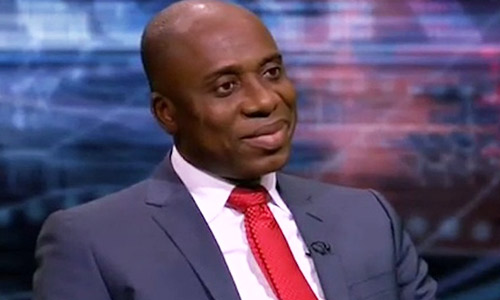
The Minister of Transportation, Rotimi Amaechi on Sunday said the Kano-Maradi (Niger Republic) rail project will cost the Nigerian government $1.9bn.

“The project is going to cost us $1.9bn and we will source it from mostly Europe,” the Minister said on Channels Television’s Sunday Politics.

Amaechi who is a former Governor of Rivers State, noted, however, that the country has not secured the money, stressing that “we are about concluding.”

On how long it will take the country to repay the loan, the 58-year-old explained that it is not within the jurisdiction of his ministry but noted that the railway project will commence on Tuesday.

“That is the responsibility of the Ministry of Finance. When we would pay; what are the terms of agreement for the loan and all that would be the responsibility of the Ministry of Finance,” the All Progressives Congress (APC) chieftain added.

“So, that question can be directed to the Minister for Finance. For us in Transportation, our job is to work with the Ministry of Finance to procure the loan and commence construction and we think we would commence construction on Tuesday.”

He explained that the project will open up the country to more investment, arguing that it is for the best interest of Nigeria for the Kano-Maradi railway to be constructed.

“The interest is national; the interest is about Nigeria. The Maradi terminal is just 20 kilometres away from Nigeria; just 20 kilometres. So, there is no huge investment like Nigerians are thinking,” Amaechi said.

The Minister who also spoke about politics in the country, dismissed suggestions that he is being touted as the next president, noting that only God knows Nigeria’s next leader.

“I am still the Minister for Transportation and only God can tell who will be the President of Nigeria in 2023,” he added. (Thenigerialawyer)

Why Nigerians Are Afraid To Accept COVID-19 Vaccine, Says Kaigama

Advises FG To Use Polling Units For COVID-19 Vaccines’ Distribution

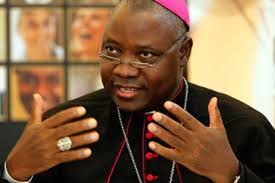
Catholic Archbishop of Abuja, Most Rev. Ignatius Kaigama, has explained that many Nigerians are afraid to accept the COVID-19 vaccine because they believe that the health crisis is being manipulated by some people.

Kaigama, who stated this yesterday in Abuja during his homily at St. Jude’s Parish Zuba, however, urged Nigerians to disregard insinuations that the vaccine is not medically safe and affordable.

He argued that even though many people will seriously question facts about COVID-19 and fear that there is manipulation by some people, he insisted that the pandemic is real.
He said: “People very dear to us have died of COVID-19. There is no doubt that our world is currently sick, ravaged by the COVID-19 pandemic.

“The fear today is that the menace of COVID-19 will continue to be with us for a long time, and so we need to be watchful and vigilant.

“Many in Nigeria, however, ask if the vaccines are medically safe and whether the poor can also benefit from them, considering that even the palliatives meant for the needy ended up in the homes of a few favoured ones or were needlessly hoarded in warehouses.”

Kaigama insisted that before vaccinating Nigerians, stakeholders must ensure that the vaccines have been subjected to appropriate tests for genuineness and were properly stored, to allay the fear of contamination.

He also stressed that the economic difficulties on account of the pandemic were palpable.

“The other fear is that if it takes so much time and money now to do a test for COVID-19, will it be that easy for the poor to have access to the vaccine?

“As basic as the face mask, which is seriously recommended to be worn by everyone is, I have seen individuals wearing dirty face masks for days because they cannot afford new ones, another reason for more infections!

“I understand that the Independent National Election Commission (INEC) is considering increasing the polling units in Nigeria to beyond the present 119,973. Could the same polling units be used as free vaccination or face masks distribution centres?”

While referencing the Biblical book of Mark 1:29-31, the Abuja Catholic prelate noted that being a Christian was not an insurance policy against sickness, suffering, and hardship.

“Life is not a bed of roses. Pain and suffering and joy and fulfillment coexist, but our faith teaches us that the suffering of Jesus gave meaning to our sufferings. Even though God permits suffering to take place, He intervenes in human situations to alleviate suffering.

“In the midst of the coronavirus health crisis, we pray that things will return to normalcy soon and our God who is the same yesterday, today, and forever will grant us both spiritual and physical healing.

“I urge that in all the circumstances of your life, remain solidly rooted in the Lord Jesus, and do not yield to superstition and wander from one juju healer to the other,” he explained. (Thenigerialawyer)

No Going Back On Cryptocurrencies, CBN Fires Back At Critics

The bank, in a statement on Sunday evening, said it is determined to protect the country’s financial system from activities of “fraudsters and speculators”.

Its directive to banks to close accounts of persons or entities involved in cryptocurrency transactions has been criticised, with former vice-president, Atiku Abubakar, asking the bank to rescind the decision.

Listing various reasons for its action, the central bank said not only are cryptocurrencies issued by unregulated and unlicensed entities, the patrons and users value “anonymity, obscurity, and concealment” and there are risks of “loss of investments, money laundering, terrorism financing, illicit fund flows and criminal activities”.

China, Canada, Taiwan, Indonesia, Algeria, Egypt, Morocco, Bolivia, Kyrgyzstan, Ecuador, Saudi Arabia, Jordan, Iran, Bangladesh, Nepal and Cambodia have all placed certain level of restrictions on financial institutions facilitating cryptocurrency transactions, the bank said in the statement signed by Osita Nwanisobi, its acting director of corporate communications.

The attention of the Central Bank of Nigeria (CBN) has been drawn to various comments and reactions following our recent reminder to Deposit Money Banks (DMBs) to desist from transacting in / and with entities dealing in cryptocurrencies. Most of these reactions reveal that there appears to be a need to provide further justifications about our position, especially to the general public.

For those who are not conversant with the universe of cryptocurrencies, it is important to state that Cryptocurrencies are digital or virtual currencies issued by largely anonymous entities and secured by cryptography. Cryptography is a method of encrypting and hiding codes that prevent oversight, accountability, and regulation. While there are a number of cryptocurrencies now in circulation, Bitcoin was the first to be introduced in 2009, and now accounts for about 68 percent of all cryptocurrencies.

As regards our recent policy pronouncement, it is important to clarify that the CBN circular of February 5, 2021 did not place any new restrictions on cryptocurrencies, given that all banks in the country had earlier been forbidden, through CBN’s circular dated January 12, 2017, not to use, hold, trade and/or transact in cryptocurrencies . Indeed, this position was reiterated in another CBN Press Release dated February 27, 2018.

It is also important to note that the CBN’s position on cryptocurrencies is not an outlier as many countries, central banks, international financial institutions, and distinguished investors and economists have also warned against its use. They have all made similar pronouncements based of the significant risks that transacting in cryptocurrencies portend- risk of loss of investments, money laundering, terrorism financing, illicit fund flows and criminal activities. China, Canada, Taiwan, Indonesia, Algeria, Egypt, Morocco, Bolivia, Kyrgyzstan, Ecuador, Saudi Arabia, Jordan, Iran, Bangladesh, Nepal and Cambodia have all placed certain level of restrictions on financial institutions facilitating cryptocurrency transactions.

In China, for example, cryptocurrencies are completely banned and all exchanges closed as well. Banks and other financial institutions are not allowed by law to transact or deal with cryptocurrencies. China’s Central Bank, called the Peoples Bank of China (PBoC) has provided several directives ruling out the use of these currencies. The PBOC views cryptocurrencies as illegal because they are not issued by any recognized monetary institution and do not hold any legal status that can make them equivalent to money. Hence banks and all stakeholders are strongly advised against their use as a currency.

Even famed investor Warren Buffett has called cryptocurrencies “rat poison squared,” a “mirage,” and a “gambling device.” Mr. Buffett believes it is a “gambling device” given that they are mostly valuable because the person buying it does so, not as a means of payment; but in the hope they can sell it for even more than what they paid at some point.

During an online forum hosted by the Davos-based World Economic Forum few weeks ago, Andrew Bailey, the Governor of the Bank of England, highlighted the extreme price volatility of cryptocurrencies as one of the biggest flaws and explained that this flaw makes it impossible for them to be used as a lasting means of payment.

“Have we landed on what I would call the design, governance and arrangements for what I might call a lasting digital currency? No, I don’t think we’re there yet, honestly. I don’t think cryptocurrencies as originally formulated are it,” he said.

It is not surprising he would take that position because, Bitcoin, the best-known cryptocurrency, hit a record high of $42,000 per unit on January 8, 2021, and sank as low as $28,800 about two weeks later. This is far greater volatility than is found with normal currencies.

Let us now turn to some of the justifications for CBN’s recent policy reminder. A perfunctory reflection on the definition of cryptocurrencies can already reveal several problems.

First, in light of the fact that they are issued by unregulated and unlicensed entities, their use in Nigeria goes against the key mandates of the CBN, as enshrined in the CBN Act (2007), as the issuer of legal tender in Nigeria. In effect, the use of cryptocurrencies in Nigeria are a direct contravention of existing law. It is also important to highlight that there is a critical difference between a Central Bank issued Digital Currency and cryptocurrencies. As the names imply, while Central Banks can issue Digital Currencies, cryptocurrencies are issued by unknown and unregulated entities.

Second, the very name and nature of “cryptocurrencies” suggests that its patrons and users value anonymity, obscurity, and concealment. The question that one may need to ask therefore is, why any entity would disguise its transactions if they were legal. It is on the basis of this opacity that cryptocurrencies have become well-suited for conducting many illegal activities including money laundering, terrorism financing, purchase of small arms and light weapons, and tax evasion. Indeed, many banks and investors who place a high value on reputation have been turned off from cryptocurrencies because of the damaging effects of the widespread use of cryptocurrencies for illegal activities. In fact, the role of cryptocurrencies in the purchase of hard and illegal drugs on the darknet website called “Silk Road” is well known. They have also been recent reports that cryptocurrencies have been used to finance terror plots, further damaging its image as a legitimate means of exchange.

More also, repeated and recent evidence now suggests that some cryptocurrencies have become more widely used as speculative assets rather than as means of payment, thus explaining the significant volatility and variability in their prices. Because the total number of Bitcoins that would ever be issued is fixed (only 21 million will ever be created), new issuances are predetermined at a gradually decelerating pace. This limited supply has created a perverse incentive that encourages users to stockpile them in the hope that their prices rise. Unfortunately, with a conglomeration of desperate, disparate, and unregulated actors comes unprecedented price volatility that have threatened many sophisticated financial systems. In fact, the price of ether, one of the largest cryptocurrencies in the world, fell from US$320 to US$0.10 in June 2017. The price of Bitcoins has also suffered similar volatilities.

Given that unlike Fiat Money which accompanied by full faith and comfort of a country or Central Bank, cryptocurrencies do not have any intrinsic value and do not generate returns by themselves. When one buys a stock, say of a conglomerate in the Nigeria Stock Exchange, its price reflects the activity and production of that conglomerate and the value people place on their goods and/or services. This price may rise as the conglomerate produces better goods/services and probably gains greater market share. The reverse would be true if the conglomerate does not innovate to improve the quality of its goods/services. In other words, the price of that stock reflects market fundamentals. In contrast, , cryptocurrencies do not have fundamentals and would never have fundamentals. Investors only buy in the hope that its use and acceptability will rise, thereby pushing up its demand and price. But since new versions of cryptocurrencies come on stream with new mathematical models, an infinite supply may someday crash the price to zero.

At this juncture, the CBN would like to assert that our actions are not in any way, shape or form inimical to the development of FinTech or a technology-driven payment system. To the contrary, the Nigerian payment system has evolved significantly over the last decade, leapfrogging many of its counterparts in emerging, frontier and advanced economies propelled by reforms driven by the CBN. This is evident from the variety of participants, products, channels, cutting-edge technology in the payments system. It is also validated by the astronomical growth of volume/value of transactions and the fact that Nigeria is an investment destination of choice for international financial technology companies because of CBN’s policies that have created an enabling investment environment in the payments system.

These developments in the payments and settlements space has helped to grow the financial system, improving financial inclusion, the quality and convenience of financial services and has also created millions of direct and indirect jobs for teeming youth population.

The innovations in Nigeria’s payment system were catalyzed by regulatory reforms driven by the CBN which entailed the issuance of a raft of guidelines and regulations on Operations of Electronic Payments Channels in Nigeria; Transaction Switching; Card Issuance and Usage, Licensing of payment service providers; Mobile Money Services, Electronic Payments of Salaries, Pensions, Suppliers and Taxes, Licensing Super Agents in Nigeria; and use of USSD for Financial Services in Nigeria, Super Agents and Agent Banking Operations and Payment Service Banks to mention a few.

The robust regulatory framework put in place by the Bank opened up the payment system to innovation with several new players across in the following licensing categories- Payment Terminal Service Providers (PTSPs), Payment Solution Service Providers (PSSPs), Mobile Money Operators (MMOs), Payment Terminal Application Developers (PTSAs), Switches, Super Agents, Agents and Payment Service Banks (PSBs) This has created both direct and indirect jobs for Nigeria’s youth population.

Several other initiatives are being implemented to further support FinTech development and creation of jobs. These include regulatory sandbox and open banking principles that the Bank recently implemented.

The recent regulatory directive became necessary to protect the financial system and the generality of Nigerians (including the youth population) from the risks inherent in crypto assets transactions, which have escalated in recent times, with dire consequences for the integrity of the financial system and financial stability. Due to the fact that cryptocurrencies are largely speculative, anonymous and untraceable they are increasingly being used for money laundering, terrorism financing and other criminal activities. Small retail and unsophisticated investors also face high probability of loss due to the high volatility of the investments in recent times. ( thenigerialawyer)


Hold Buhari Accountable For Worsening Insecurity In Nigeria — Falana-led Group

Says Worsening Communal Crisis Would Have Been Avoided If Government Had Intervened.
— Says Government Failure To Provide Security Gave Rise To Use of Self-Help
— Says Civil War is Possible If…

The Alliance on Surviving COVID-19 and Beyond (ASCAB) has said the Nigerian President, Muhammadu Buhari, should be held accountable for the worsening security situation in the country.

In a statement on Sunday, the interim chairman of the group, Femi Falana (SAN), said the communal clashes occurring in communities across the country could have been avoided if the Nigerian government had intervened.

The human rights lawyer said the government has failed to provide for the welfare and security of the people of Nigeria and Nigerians have resorted to self-help to defend their territories.

Falana, however, expressed worry that the wave of attacks and counter-attacks by armed groups in several parts of the country could lead to a civil war.

He added that self defence groups funded by the state and local governments should be set up for the protection of all communities in the country.

The statement read, “Apart from Section 14 (2) (b) of the Constitution which states that the welfare and security of the people shall be the primary purpose of the government, sections 33 and 43 of the Constitution guarantee the fundamental rights of citizens to live and to own and acquire property in any part of the country.

“But the Federal Government has failed woefully to provide for the welfare and security of the people of Nigeria. In particular, the government has refused to halt violent attacks by armed herders, bandits, kidnappers, terrorists, and armed robbers which have claimed thousands of lives and destruction of property.

“Since the government has failed to protect the people, a number of citizens and groups have resorted to self-help to secure their communities.

“We are however worried that the wave of attacks and counter-attacks by armed groups in several parts of the country could lead to a civil war.

“Therefore, the Alliance on Surviving COVID-19 and Beyond (ASCAB) hereby calls on all aggrieved individuals and groups to hold the Federal government accountable for the worsening insecurity in the country.

“President Mohammadu Buhari ought to summon an emergency meeting of the Nigeria Police Council to address the challenge of insecurity and adopt measures to secure the life and property of every person in Nigeria without any further delay.”

The group also stated that the Nigeria Police Force and other security agencies should adopt drastic measures to halt violent attacks on communities by armed groups.

They also urged aggrieved individuals and groups to liaise with the human rights community so as to ensure the immediate arrest and prosecution of all criminal elements who are attacking law-abiding citizens.

“ASCAB demands the immediate formation of self defence groups for the protection of all communities in the country. Such self defence groups should be funded by state governments and local governments,” the group submitted. (Thenigerialawyer)

Police Arrest Six Alleged Kidnappers ‘While Relocating Victim’ In FCT

The Police Command in the Federal Capital Territory (FCT), has arrested six suspects in Apo over alleged kidnapping.

This is contained in a statement by ASP Mariam Yusuf, FCT Police Public Relations Officer (PPRO) in Abuja on Sunday.

Yusuf said the suspects were arrested following credible intelligence report indicating that they had abducted three persons.

According to her, the suspects were arrested by police operatives on routine patrol, while attempting to relocate one of their victims.

She said that further investigations led to successful rescue of two other victims who identified the suspects as kidnappers.

The PPRO said the command had deployed covert and overt crime fighting strategies to strengthen security across the FCT, especially in areas with cumbersome terrain.

She said the command had also launched a strategic counter kidnapping operation, to checkmate emerging security concerns in the territory.

Yusuf said that the command was working closely with sister security agencies, key stakeholders and community leaders to rid the FCT of criminal elements.

She called on residents to remain calm and laws abiding, while enjoining them to report suspicious persons or activities around their vicinity, to the nearest police division. (Thenigerialawyer)

Uganda’s Museveni Secured His Sixth Term in Office: What the International Community Can Do Now

Two days after the polls closed and with the tallying far from completed, Uganda’s Electoral Commission announced on Jan. 16 that Yoweri Kaguta Museveni, the army general who has ruled Uganda for 35 years, had “won” his sixth presidential term. That such an announcement would be made had never been seriously in doubt. However, the manner of its procurement should alarm Uganda’s partners. They should also understand that what happens next is very much open to their influence. Despite labeling his opponents as agents of neo-colonialism, Museveni has received substantial support from the West and if governments, investors and intergovernmental bodies can muster consequences for the chronic and egregious violations committed under him, Ugandans have the possibility to wrest from this election the inspiration needed to break his authoritarian rule and pave the way for a democratic future. This will require Uganda’s partners to do much more than issue half-hearted denunciations of selective election irregularities every five years. Absent that, the country risks a descent into a period of instability that could imperil one of the most fragile regions in the world.

Museveni, aged 76, is Africa’s third longest serving head of State and doyen of the continent’s rebel leaders, having seized power in January 1986 at the end of a 15-year campaign of insurgency, begun in 1971. Museveni is not merely the most durable among his peers in Africa’s Great Lakes region, but has also established the most influential authoritarian model in the region, all the while portraying himself as an indispensable partner to the United Nations, United States and the European Union in stabilizing one of the most fragile parts of the world.

Uganda’s politics have long been polarized between Luo ethnic groups in the north of the country, on the one hand, and the Baganda of the central region, on the other. Politicians on all sides, and later military dictators, freely manipulated sectarian antipathies among Anglicans, Catholics, and Muslims to exacerbate the divisions. In December 1980, after he ran as candidate of the Uganda Patriotic Movement (UPM) and badly lost in Uganda’s transitional elections, Museveni returned to the bush from where he set out on the march that would eventually culminate in his taking power with the National Resistance Army (NRA), which later became the National Resistance Movement (NRM). Following the return to multi-party politics in 1995, the NRM split into two mutually reinforcing entities: the NRM became the ruling political party, while the Uganda People’s Defence Force (UPDF), its military wing, became the national army, with 10 reserved seats in parliament.

Uganda’s 1995 Constitution limited Museveni to two terms of five years each. It also capped the age of eligibility for presidential candidates at 75 years. In 2005, Museveni lifted term limits and, in 2017, he eliminated the age limit, paving the way for a life presidency.

Museveni’s main challenger in the 2021 elections was musician-turned-legislator, Robert Kyagulanyi Ssentamu, aged 38, and better known by his stage name of Bobi Wine. He caught the imagination of Uganda’s youth (75 percent of Uganda’s 45 million people are under the age of 30) despite having been arrested and violently attacked, and the government having punished journalists who reported on him. During the 10 weeks of the presidential campaign, the UPDF, under Museveni’s direct command, repeatedly prevented Wine from holding rallies or even traveling on the roads. They arrested and assaulted him on multiple occasions. They killed at least one of his bodyguards, critically wounded his manager with a rubber bullet while he sat with Wine in a car, and seriously injured more of his campaign team. In the worst instance, security forces gunned down dozens of people who turned out in Kampala and elsewhere to protest Wine’s arrest on Nov.18, killing at least 54 people and leaving countless others maimed. All told, the security forces arrested more than 600 people for attending Wine’s rallies – some put the number at over 1,000 – on allegations of violating pandemic restrictions. In contrast, Museveni and other ruling party candidates held large rallies without any restrictions.

Journalists were specially targeted. Security officers attacked journalists so violently that at least 10 had to be hospitalized and several more were injured and/or detained. The Media Council, a statutory body appointed by Museveni, decertified all journalists in the country, requiring them to register with the Council as a pre-condition for covering the elections. In a judgment delivered on Jan. 18 after the election results had been declared, the High Court in Kampala ruled the Council’s actions unlawful, but the damage had already been done. There was no sensible reason why the judge could not have decided the case before the election.

In addition, the government escalated attacks on civic groups, both local and foreign, expelling the U.S.-based International Foundation for Electoral Systems, the National Democratic Institute, and a contractor working for the EU delegation. Simultaneously, they took steps to incapacitate national monitoring organizations, levying against them sundry charges, ranging from compliance infractions to money laundering, deregistering some and freezing the bank accounts of others. Despite thousands of requests for accreditation from credible Ugandan and international groups, only a handful were granted. They also arrested leading human rights lawyers and monitors. In a letter made public in early February, Museveni ordered the suspension of a multi-million euro fund formed by European governments to support the work of local democracy and good governance groups, on the implausible ground that his government had no say in how the funds were “authorized”.. The unconcealed hostility of the Ugandan government to election monitoring led the United States to cancel its own observation delegation and the EU followed suit.

Museveni took the guess work out of elections by appointing Simon Byabakama in 2016 to serve as chair of the Electoral Commission. Byabakama had served Museveni in different capacities: as public prosecutor from 1987 to 2008, when he was appointed a judge of the High Court. Elevated to the Court of Appeal in 2015, Byabakama had proved his loyalty several times, most notably in 2005 when, as deputy director of public prosecutions, he brought trumped-up charges of rape and treason against Museveni’s main opponent, Kizza Besigye.

On Jan. 14, when Ugandans turned out to vote, soldiers were everywhere, armed to the teeth and backed up by tanks. At Uganda’s borders to the north, soldiers from South Sudan deployed to assist their Ugandan comrades.

At the end of the day, Museveni addressed the nation. His message was blunt: any effort to protest the yet-to-be-declared result of the election would be regarded as treason and put down ruthlessly. It was his way of announcing himself as winner. Immediately after the voting, the UPDF surrounded Wine’s house, placing him under house arrest in order, they claimed, to prevent him from coming to harm. Many of his party agents were missing and some would later turn up dead. When U.S. Ambassador Natalie Brown attempted to visit him, UPDF officers barred her from doing so and the government advised her not to “cry for Ugandans.” On Jan. 16, Byabakama announced Museveni as the winner with 58 percent of the votes to 35 percent for Wine. On Jan. 23, the High Court ordered Museveni to lift the military siege on Wine, and the security agents finally retreated 24 hours later. On Jan. 28, the Commission officially published the election results.

Voter turn-out was only 57 percent, according to the Electoral Commission. Wine denounced the poll as “the most fraudulent election in the history of Uganda”. Byabakama reminded Ugandans that the burden of proof rests with Wine to establish substantial non-compliance with the rules of electoral conduct. It appeared the soldiers who surrounded Wine’s house would succeed in preventing him from filing a challenge to the election. However, he was able to file a petition on Feb. 1 after the Supreme Court extended the 15-day deadline for filing.

Jake Sullivan, President Joe Biden’s national security advisor, called for accountability for those who perpetrated “political violence” and denounced the election as “flawed.” In dismaying contrast, Britain’s Minister for Africa, James Duddridge welcomed the “relatively calm” passing of the election. Despite acknowledging the evidence of chronic and indiscriminate sovereign violence against peaceful citizens, British High Commissioner Kate Airey issued a statement following a visit to Wine on Jan. 27 asking “Honorable Kyangulanyi and all parties to reject violence, engage in peaceful dialogue and follow due process.” In reality, the only party who had deployed violence was the one to whom the High Commissioner is accredited and whom she chose not to name.

No one was ever seriously under the illusion that Museveni was prepared to quietly retreat from power. That said, Museveni did not pretend that this was anything other than a military operation. As one writer put it, “His message to the voters was clear: ‘it is either me, or war.’”

The violence and fraud that characterized this election is nothing new. Museveni has long used violence, repression, fraud, voting irregularities, persecution of opponents and election monitors, arrests on groundless charges, voter intimidation and, more recently, blocking of social media platforms, to win elections. Indeed, in 2001, the Supreme Court concluded that the election had been neither free nor fair but, nonetheless, declined to nullify the results on the ground that Museveni would have won regardless of the violations. A similar verdict in 2006 was probably procured by suborning some judges of the court.

Various international actors have issued public condemnations of these violations over the years as a prelude to quietly resuming business as usual without exacting any consequences. Following the 2021 elections, Museveni is now enfeebled by both advancing age and diminished legitimacy. Unless the international community acts resolutely and in concert to end the impunity of his increasingly bloody rule, the likelihood grows that land-locked Uganda could take a violent turn and undo all the previous efforts to stabilize the region. To avert this, urgent attention is required in the areas of investment, accountability, and regional security and development cooperation with Museveni.

First, investment. Museveni’s desire to centralize power in himself and his family coincides with Uganda’s emergence as an oil-producing country in 2006. Few noticed when Museveni and President John Magufuli of Tanzania signed a mega-deal for a 1,445-kilometer Uganda-Tanzania oil pipeline worth $3.5 billion in September. While the major licensees in this sector are Chinese, French and British, U.S. firms are also competing for a piece of the action. Uganda’s elections will remain farcical as long as licensing and investments in Uganda’s oil and natural resources continue to be mired in opacity and militarization of the oil regions. The pressures from climate change imperatives and alternative energy sources create an opportunity to press Uganda’s leadership to become more transparent about the governance of its natural resources sector and how it finances political corruption.

Second, it is imperative to discontinue the current policy of impunity for Museveni and his UPDF soldiers. In January 2004, Museveni referred to the prosecutor of the International Criminal Court (ICC) the atrocities of the Lords’ Resistance Army in Northern Uganda. Seized since then of the situation in Uganda, the ICC’s prosecutor has, however, avoided investigating the UPDF as the price for Uganda’s co-operation, even after the U.N. and the International Court of Justice respectively found them culpable for atrocities in the Democratic Republic of the Congo (DRC), violations that occurred under the command of Museveni.

At the beginning of January, Wine submitted a complaint to the ICC concerning the campaign-related UPDF massacres. Whether or not the ICC opens an investigation, the United States, the EU and the United Kingdom can impose sanctions against military commanders of the implicated units. The United States took a first step in September 2019, when it placed Museveni’s former inspector general of police, Kale Kayihura, a UPDF general, on its sanctions list pursuant to the Global Magnitsky Act, for gross violation of human rights from 2005 to March 2018. The new U.S. administration can investigate other top military, police, and civilian commanders and officials implicated in violations, including the five generals and two other top officials identified by former Democratic Congressman Eliot Engel in his Dec. 9 letter to Secretaries Pompeo and Mnuchin. The U.K. and the EU can take similar steps. The Financial Action Task Force (FATF, the global, intergovernmental money laundering and terrorist financing watchdog) should keep Uganda on its “grey” list, which comprises countries – currently only 18 in the world – that demonstrate substantial deficiencies in their handling of money laundering offenses, until Uganda stops prosecuting NGOs and human rights lawyers for such offenses without probable cause.

Third, the major powers and institutions, including the U.N., the United States and the EU, must pull back from security and development cooperation with Uganda. When, in 2010, the U.N. complained of verified atrocities by the UPDF in the DRC, Uganda responded with a threat to reconsider its contributions to regional and international peace keeping operations in Côte d’Ivoire, Darfur, East Timor, Sudan, and Somalia. Now that Museveni’s rule is at a point where it could become a threat to regional peace and security, these powers must avoid becoming complicit in his atrocities. The United States, as Uganda’s largest aid and military donor – providing “significant security and development assistance” of around $970 million per year, and $270 million in military equipment – can suspend funds to units implicated in atrocities and vote rigging. Similar scrutiny must be exercised by the World Bank, which, in 2020, just before the election, awarded Uganda a $300 million line of credit related to COVID-19, from which significant funds may have been diverted to Uganda’s Defense Ministry, according to the New York City Bar Association. The EU – which gives hundreds of millions of euros to Uganda – can also withhold funds liable to be misdirected.

Quite clearly, Africa’s governments and regional institutions have been equally supine in failing to disrupt, or even object to the march of authoritarian misrule in the region. Between October 2020 and January 2021, the African Union (AU) gave its stamp of legitimacy to deeply compromised elections in Tanzania and Uganda without providing any credible report of its own election observation. In so doing, the AU also seriously damaged its own standards on election credibility, developed under the continental treaty regime of the African Charter on Democracy, Elections and Governance. The telecommunications sector has equally become an active participant in undermining democratic choice in Africa.

Museveni’s model of martial rule with an artifice of electoral legitimacy persists with the assistance of Uganda’s international and regional partners. They have a stake in bringing it to an end. They can use the leverage supplied by trade, development, and security assistance arrangements to demand accountability for grave crimes, rebuild independent institutions, and prevent a violent retrenchment of political dialogue. Uganda’s historically sectarian, ethnic, and political fragmentations will also require attention to promote a more united opposition. If these fail, then the end of the Museveni era, whenever it happens, could undo everything the partners have invested. (Justsecurity)

TIPS