Home Blog Page 104

Judge fired for refusing child marriage—His stand changed the law forever

Fifty-one-year-old County Judge Robert Henderson refused to perform a marriage ceremony between fourteen-year-old Lucy Martin and thirty-eight-year-old widower Thomas Crawford on August 12, 1925, in rural Tennessee, and Judge Henderson told the families “I will not participate in the legal sale of a child, regardless of parental consent or community tradition,” and Judge Henderson’s refusal sparked outrage in the community that eventually cost him his elected position, but during his final two years as judge Henderson refused to perform seventeen child marriage ceremonies and used his authority to delay or block dozens more, and Henderson spent those two years giving speeches about raising the minimum marriage age and advocating for child protection laws, and though Henderson lost his judgeship in 1927 he helped inspire Tennessee’s 1933 law raising the minimum marriage age to sixteen, a law that protected thousands of girls from being married as children.

Judge Henderson had been performing marriage ceremonies for twenty-three years when the Crawford-Martin marriage request came to his office. Henderson had performed several marriages involving young brides before—it was common in rural Tennessee for girls as young as twelve to be married to much older men—but something about this particular case bothered Henderson. He asked to speak with Lucy Martin privately. Lucy’s father objected, saying a judge had no right to question family decisions, but Henderson insisted, using his judicial authority to require a private interview with the prospective bride.

In his private office, Henderson asked Lucy simple questions: Did she want to marry Mr. Crawford? Did she understand what marriage meant? What did she want to do with her life? Lucy’s answers shook Henderson to his core—she said she didn’t want to marry Thomas Crawford, that he scared her, that she wanted to finish school and become a teacher. Still, her father had arranged the marriage because Crawford had money and Lucy’s family was poor, and Lucy had been told she had no choice, that this was what daughters did for their families. Lucy was crying as she told Judge Henderson this, and she begged him “Please don’t make me marry him, I’m only fourteen, I’m still a child.”

Judge Henderson made his decision in that moment—he would not perform this marriage ceremony, would not use his judicial authority to legally bind a fourteen-year-old child to a man nearly three times her age, regardless of consequences. Henderson returned to his courtroom where Lucy’s father and Thomas Crawford were waiting with the marriage license and witnesses, and Henderson announced “I am refusing to perform this ceremony. Miss Martin is fourteen years old and has clearly expressed that she does not wish to marry. I will not compel a child into marriage against her will.” Lucy’s father exploded in anger, shouting that Henderson had no right to interfere with family business, that Lucy’s marriage was already arranged and paid for, and Henderson responded “A child is not property to be sold. This marriage will not happen in my courtroom.”

The community reaction was severe—Henderson received threats, his church asked him to resign from the congregation, businesses refused to serve him, and local newspapers condemned him for “destroying family values and interfering with parental rights.” But Henderson didn’t back down, and over the next two years Henderson refused to perform sixteen more marriage ceremonies involving brides under age sixteen, and each refusal generated more community outrage and more pressure for Henderson to resign or be removed from office. Henderson used each case as an opportunity to speak publicly about why child marriage was harmful, why girls needed education and development time before marriage, why older men seeking child brides were predators not suitors.

Henderson began traveling to Nashville to lobby state legislators for a law raising the minimum marriage age, and he compiled statistics showing that child brides had higher rates of maternal mortality, domestic violence, and poverty, that early marriage trapped girls in cycles of abuse and dependence, that society had a duty to protect children from marriages they couldn’t meaningfully consent to. Henderson’s advocacy made him enemies—he was called a radical, an interferer, a destroyer of tradition—but Henderson kept fighting because he’d seen Lucy Martin’s terrified face and heard her begging not to be married, and Henderson knew there were hundreds of other girls like Lucy being sold into marriages they didn’t want.

In 1927, Henderson lost his re-election bid—his opponent ran on a platform of “restoring traditional values and respecting parental rights,” and the community voted Henderson out of office as punishment for his child marriage refusals. Henderson’s final act as judge was to issue a written opinion explaining his position: “Marriage should be a union of equals entering freely into a partnership. A fourteen-year-old child cannot be equal to a forty-year-old man. A child cannot freely consent to something she doesn’t understand. These marriages are not unions—they are transactions where children are sold to men who want compliant, controllable wives. I have refused to participate in these transactions because my duty is to justice, not to tradition, and justice demands protecting children from exploitation, even when that exploitation is wrapped in the language of marriage and blessed by parental consent.”

Henderson continued his advocacy after leaving office, and in 1933 Tennessee passed a law setting the minimum marriage age at sixteen with parental consent and eighteen without, and while this law wasn’t perfect—sixteen was still too young—it was progress, and it protected thousands of girls who would have been married at thirteen, fourteen, fifteen under the old system. Henderson lived until 1949, dying at age seventy-five, and at his funeral several women attended who said they’d been the young brides whose marriages Henderson had refused to perform, and they thanked him for saving them from marriages that would have destroyed their lives, thanked him for standing up for them when no one else would, thanked him for losing his judgeship rather than participate in their exploitation.

Lucy Martin, the fourteen-year-old whose case had started Henderson’s crusade, attended Henderson’s funeral and spoke about how Judge Henderson had saved her life by refusing to perform her marriage ceremony, how she’d been able to finish school and become a teacher like she’d wanted, how she’d married at age twenty-two to a man she chose, how she’d had a good life because Judge Henderson had the courage to say “No, I will not marry this child to this man, regardless of consequences.” Lucy said “Judge Henderson lost his position, his community standing, his church membership, all because he refused to participate in child marriage. He sacrificed everything to protect children like me. That’s what real courage looks like. That’s what real justice looks like. Judge Henderson showed me that one person standing up for what’s right can change lives, can save lives, even when everyone else says you’re wrong.”

Source: https://www.facebook.com/share/1DpMQ2YE3z/?mibextid=wwXIfr

The big deal about small wins

By Funke Egbemode

Ezeani, many years ago, was a village by the bend of a lazy river. For years, hunger sat stubbornly in every compound. The elders, not able to provide food for their families usually, gathered under the big orange tree, to talk about why their farms yielded so little when the land was fertile. They called it council of elders’ meeting, but it was really nothing more than a bellyaching session held from noon to late afternoon with no solution provided. Yet they returned every day for more deliberations while their wives pretended to be in the market. One day, a young boy, barely old enough to grow a beard, climbed the tree and plucked ripe fruits hanging low. He threw them down and asked, “Must we climb all the way to the topmost branch before we eat, when food is already at our fingertips?”

The elders were silent. Shame, they say, can be louder than drums. That season, the village stopped arguing about distant miracles and started harvesting what was within reach. As quietly as it came, hunger left, like an unwanted visitor who knew he had overstayed his welcome.

Nigeria today is that Ezeani where our problems are not always the absence of ideas or resources but the stubborn refusal or lack of political will to pick the fruits hanging right before us.

In development language, “lowest-hanging fruits” are reforms and actions that require relatively modest political will, a little new spending, and existing institutions—but deliver outsized impact quickly.” They are not silver bullets, and they do not replace deep structural reforms. Yet, they buy trust, stabilise society, and create momentum. Three things Nigerian politicians love. So, why are Nigerian governors and their tripled monthly allocation from FAAC not taking advantage of the nation’s size, talent, and natural endowments to score political points while still delivering on development?

Some leaders fear small reforms because they do not look “big” enough. They prefer the ones that require big ribbons. Our governors prefer the flyovers, roads and bridges so they can invite their colleague governors and walk them up and down the roads and bridges. Not that there is something wrong with cutting ribbons on long bridges but we can also walk five governors through dozens of hectares of cassava plantation, or even okro.

I have driven almost an hour through a cassava plantation before. It was so big, my fuel gauge was blinking yellow. Yes, it was that massive. And what is even more impressive, it belonged to one man, just one farmer called Niji Lucas. He planted, he processed and exported. One man desired to do all that and did it, employing dozens.

How come no government has thought of it with all the budgets the state ministries have spent every year, for five decades? Let us not even mention the Federal Ministry of Agriculture through the years. All we see are agbada in every colour at budget presentations. The governors go to their State Assemblies for the budget ritual every year, yet they cannot plant cassava. All we get is earful of long and big figures of how much they will spend on us. May the Lord forgive some of their sins.

The cassava species I plant, yes this little girl is a farmer, is harvested after one year. Just 12 months. There are species ripe for harvests in six months, even. Now, imagine one governor planting 100 hectares of cassava? Imagine the amount of people he will employ: from farmhands to Engineers to Agromists. Think of the number of women who will work there, young Nigerians, old Nigerians. Imagine a new community that will be built and the opportunities for bricklayers and carpenters. Even I will go there and build farmhouses and collect rent. Madam Landlady will only join that level of the value chain. My lashes, nails and wig will all be able to thrive there. Don’t laugh. The point here is, a farm settlement will provide more jobs than you think. It will decongest the urban centres faster than any other sector of the economy.

Now, let us go to the point that is agitating your mind.  Security. The farms are not secure. Nigeria is no longer secure. The farmers will be abducted. Our harsh and sad reality. Do we all agree that not all the 36 states are so unsafe that we cannot plant anything? Do we all agree that we all still travel certain distances by road, in spite of our fears of abduction? Or are we all going to run abroad to live with our Japa children, all of us?

Was it not taking the easy way out that got us here? This is a country endowed enough to feed the world. The low-hanging fruits were and are still there, but our leaders were and are still climbing the iroko tree to look for what is not lost. Was it not the unoccupied, untrained, uneducated, unemployed children of yesterday that are today’s terrorists? Will they just disappear, this league of terrorists, by Nigeria doing the same things and expecting different outcomes? Will this headache be cured by running around the problems in circles?

A governor that decides to try out a corn or cassava project will even have something to showcase in 100 days. I know so. Google the images of a 100-day-old 100 hectares of corn. I just did. Take the media there with their cameras. Don’t go without the big talk show hosts and columnists. Go with the social media influencers. Then sit back and see that what a road commissioning can do, a cassava farm can do better.

Citizens experience development in small ways and that is the truth.

Small wins build trust, reduce anger, buy time for deeper, bigger reforms.

A government that harvests low-hanging fruits creates the political capital needed to climb higher branches.

So, what is stopping Nigeria from picking these fruits?

It is not ignorance and it not lack of money alone. The real obstacles are elite comfort with dysfunction.

‘Bamubamu ni mo yo, emi o mo p’ebi npomo enikankan.’

‘Me, I am well fed, I do not care about my hungry neighbours. ‘

That is how we got here. Fat cats whose palm kernels were cracked by political gods who prefer to flaunt their wealth rather than spread it? They rub the noses of the hungry neighbours in their posh and lush living. The ‘blessed’ believe somehow that there would be no consequences for ‘chopping alone.’ The rumbling stomachs of the poor gave them different instructions and they followed them, into crime, rituals into the forests

If we are going to stop more hungry people from answering the calls of the gods of evil, we must speedily, with ‘automatic alacrity’ go for the low-hanging fruits and easy gains.

There is also the need to ensure that those who shortchange Nigerians pay for it. And I do not mean send them to jail. That is a long topic I wrote about years ago but we will revisit it soon. There must be consequences for failure.

Politics that rewards noise over results is demeaning and must stop, too. Let’s focus.

History has shown that when even a few leaders choose discipline over drama, progress follows.

Conclusion: Back to the iroko tree

The village in the folktale did not become prosperous by inventing new trees. It simply stopped ignoring the fruits already ripe. Nigeria does not need to reinvent development. We need to practise it.

The lowest-hanging fruits are waiting: in classrooms, clinics, councils, farms, and files gathering dust. The question is not whether they exist. The question is whether those in power are finally ready to stretch out their hands.

Development, after all, is not always about climbing higher. Sometimes, it is about bending down and picking what has been there all along.

The views expressed by contributors are strictly personal and not of Law & Society Magazine.

Legendary gospel singer Ron Kenoly dies at 81

Renowned American Christian worship leader, singer and songwriter Ron Kenoly has died at the age of 81.

The globally renowned gospel musician reportedly passed away on Tuesday, February 3, 2026, with his death confirmed by several artistes across social media platforms.

Reacting to the news, Nigerian gospel minister Nathaniel Bassey paid tribute to Kenoly, describing him as a generational inspiration.

“Dr Ron Kenoly crosses to yonder side. Thank you for inspiring generations of psalmists like me. I grew up on these songs, and today others are growing up on ours. Thank you, sir,” Bassey wrote on Instagram.

Kenoly was celebrated for iconic worship songs such as “Majesty,” “Righteousness, Peace & Joy,” “Anointing,” “All Honour,” “Sing Out,” “Lift Him Up,” and “Jesus Is Alive,” many of which shaped modern congregational worship across the world.

Born on December 6, 1944, in Coffeyville, Kansas, Kenoly rose to prominence in the 1980s and 1990s for leading large-scale live worship concerts that influenced churches globally, particularly in Africa.

His music career began after serving in the United States Air Force, with his major breakthrough coming in 1992 when Lift Him Up became the fastest-selling worship album at the time. Another album, Welcome Home, produced by Tom Brooks, was critically acclaimed and topped Billboard’s Contemporary Christian Music charts.

Ron Kenoly leaves behind a lasting legacy in gospel music, having inspired countless worship leaders, musicians and believers worldwide through his sound, spirit and message of praise.

PUNCH

Autopsy ordered after teen dies in custody—Lawyer claims attempted religious burial sparked cover-up fears

The death of a 13-year-old Christian orphan in government custody in Kano State is igniting international concern, after a U.S.-based Nigerian human rights lawyer alleged the boy was illegally detained, denied medical care, and nearly buried under religious rites inconsistent with his faith.

Emmanuel Ogebe, an international religious freedom advocate, says the circumstances surrounding the death of David Tarfa, a resident of Du Merci Orphanage, raise urgent questions about state authority, child protection, and religious liberty in Africa’s most populous nation.

At the centre of the controversy is the claim that officials moved swiftly to bury the teenager—without notifying his guardians—before an intervention reportedly led the Kano State Attorney General to advise that an autopsy be conducted.

A Death That Sparked Immediate Alarm

According to sources familiar with the incident, sympathisers alerted Du Merci orphanage proprietors, Prof. and Dr Mrs. Tarfa, about the boy’s death on January 28, 2026, prompting them to dispatch lawyers and representatives to the Nassarawa Government Orphanage, where his body was found lying on a bed.

Officials allegedly told the delegation that the child would have been buried according to Muslim rites.

“That would have been a big mistake,” a source said. “David is a Christian minor. No one has the right to forcibly convert him without parental consent.”

Hospital staff later declined to issue a death certificate, noting the boy had not died at their facility. His remains were eventually transferred to the Aminu Kano Teaching Hospital, a federal institution expected to conduct the autopsy.

Observers say the move may help ensure procedural transparency, given federal oversight.

Ignored Illness?

Representatives of Du Merci claim the teenager had complained of severe stomach pain for days but was ignored by authorities.

“He was said to have died on his bed after purging throughout the night,” the orphanage said, adding that siblings discovered his body after returning from classes.

If confirmed, rights advocates warn the allegations could point to medical neglect of a minor in state care—a potential breach of both Nigerian child welfare statutes and international human-rights conventions.

Illegal Detention Claims

Ogebe argues the boy should not have been in state custody at all.

A prior consent judgment, he said, ordered that 16 Du Merci children be returned to their orphanage, but Kano authorities allegedly failed to comply fully.

“David was not among those who reportedly chose to remain in the Ministry’s care,” Ogebe said.
“He was therefore being held against his will and in violation of a lawful court judgment.”

Du Merci is now seeking damages, accusing the state of contempt of court.

Conversion Dispute Adds Fuel

In a September 2025 letter responding to earlier petitions, Kano’s Ministry of Women Affairs denied allegations of forced religious conversion, insisting children under its supervision acted voluntarily and in accordance with state child protection laws.

The ministry also noted that U.S. Embassy officials had previously visited to review the situation.

Yet Ogebe dismissed the government’s position as contradictory.

“It’s perverse that having failed to convert him in life, they attempted to Islamise him in death,” he said.

Judicial Delays Raise Eyebrows

The case has also been dogged by procedural setbacks.

A scheduled court hearing in November 2025 was postponed, then delayed again in January 2026 after the registrar reportedly failed to notify state counsel.

Critics say such lapses risk undermining public confidence in the justice system—particularly in cases involving vulnerable minors.

Global Implications

Ogebe warned the case could reverberate beyond Nigeria, potentially influencing the country’s designation under international religious freedom monitoring frameworks.

“The world is watching,” he said, adding that diplomatic observers have already shown interest in the dispute.

Analysts note that allegations involving child detention, religious coercion, and disregard for court orders often attract scrutiny from foreign governments and rights bodies.

A Test of State Responsibility

Legal experts say the episode underscores a broader constitutional principle: when a government assumes custody of a child, it inherits an elevated duty of care.

Failure, they warn, is not merely administrative—it strikes at the legitimacy of public institutions.

For now, attention turns to the autopsy, which may determine whether David Tarfa’s death was preventable—and whether accountability will follow.

Until then, the case stands as a stark reminder of the fragile line between state protection and state power, and of how quickly that line can blur when the subject is a child with no voice left to speak.

Nigeria pays debt after embassy power cut—but funding crisis questions persist

The Nigerian High Commission in Pretoria has paid its outstanding utility bills after South African authorities disconnected electricity to the diplomatic facility — a startling development that has intensified scrutiny of Nigeria’s spending priorities and the long-running complaints of underfunded foreign missions.

The City of Tshwane confirmed it cut power to the mission as part of its #TshwaneYaTima enforcement campaign targeting consumers with significant unpaid municipal debts.

Executive Mayor Nasiphi Moya announced the move in direct terms.

“We’ve disconnected electricity at the High Commission of the Federal Republic of Nigeria. They owe the city for utility services,” she said.

Hours later, the mayor confirmed that payment had been received and electricity would be restored.

“We thank the High Commission of the Federal Republic of Nigeria for honouring its debt to the city,” Moya added.

Funding Crisis Back in Focus

While the immediate dispute was resolved, the incident has reignited persistent complaints that Nigeria’s diplomatic missions across the world are chronically underfunded, often struggling to maintain basic infrastructure.

The episode has led many Nigerians to question why Africa’s largest economy appears unable to adequately support its foreign representations — even as critics accuse the government of wasteful spending and the excesses of political office holders at home.

Human rights lawyer and public affairs analyst Sonnie Ekwowusi said the Pretoria blackout mirrors a broader pattern.

“The Nigeria House in New York faces the same embarrassment. The elevator to the House is dysfunctional, trapping visitors. It has trapped me twice,” he recalled.

Observers warn that such reports risk projecting an image of administrative neglect and weakening Nigeria’s diplomatic stature at a time when global perception increasingly shapes geopolitical influence.

Social Media Backlash

The power cut triggered a storm of reactions in Nigeria, with many describing the situation as a “national embarrassment.”

Critics questioned how a diplomatic mission representing one of Africa’s most influential nations could default on routine municipal payments.

Others drew uncomfortable parallels between Nigeria’s domestic electricity challenges and the embassy’s blackout abroad, arguing that the episode reflects deeper structural problems in governance.

Calls for greater transparency and accountability in the funding of foreign missions quickly followed.

Little Sympathy in South Africa

Online reaction in South Africa was far less forgiving. Social media users insisted that a diplomatic status should not exempt any institution from paying for essential services.

“If you don’t pay, you get cut off,” one widely shared comment read.

More Than a Temporary Blackout

Though electricity has now been restored, analysts say the damage may not fade as quickly. Service disconnections involving diplomatic facilities are rare and often carry outsized reputational consequences, signalling possible governance lapses.

For many observers, the Pretoria incident is less about an unpaid bill and more about what it reveals — a growing perception that Nigeria’s global presence is being undermined not by lack of resources, but by contested priorities.

The lights may be back on in Pretoria, but the uncomfortable questions about funding, governance, and national image remain very much alive.

State Authority in Question: Gunmen rampage through Nigerian communities, fuel claims Nigeria is losing control of rural territories

By Lillian Okenwa

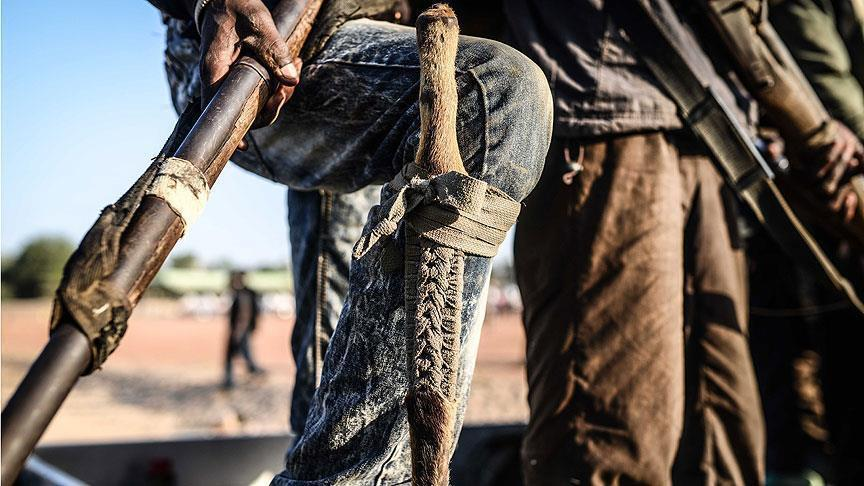
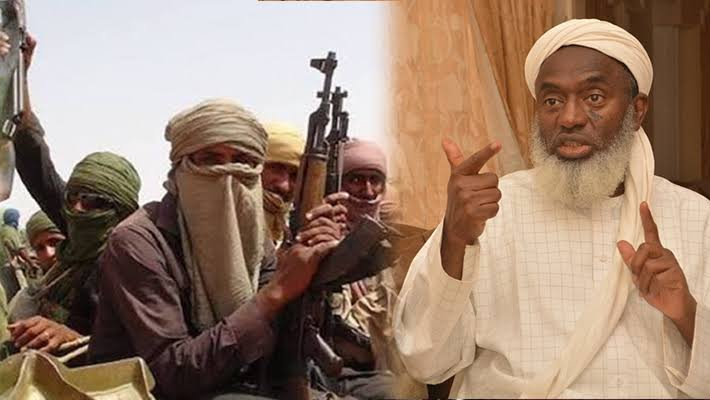
Nigeria’s deepening security crisis is raising fresh questions about state legitimacy and the government’s constitutional duty to protect citizens after suspected bandits launched coordinated attacks across multiple northern communities — killing civilians, torching public institutions, and abducting residents with little resistance.

The latest violence unfolded in Agwara Local Government Area of Niger State, where gunmen killed at least one person, kidnapped five others, and set fire to both a church and a police station in an assault that security experts say symbolises the erosion of state authority.

The United Missionary Church of Africa was engulfed in flames around 6 a.m., shortly after attackers overran the local police station using suspected dynamite. The gunmen then advanced into nearby settlements, looting food supplies and valuables before killing an elderly woman in Kabe town and abducting residents.

Police confirmed the attackers initially clashed with tactical teams before overpowering them.

“The bandits later used suspected dynamite to set the station on fire,” said Niger State Police spokesperson Wasiu Abiodun. “They proceeded to the church, burnt part of the building, and abducted about five persons. Monitoring continues.”

For many observers, the destruction of both a house of worship and a security formation represents more than another rural attack — it signals a dangerous weakening of sovereign control.

“Rule of Law No Longer Functions”

Community leaders warn that the violence is no longer episodic but systemic.

Murtala Dantoro, son of the late Emir, described communities now trapped in a cycle of fear.

“Innocent lives are being lost, farmers are abandoning their farmlands, economic activities have collapsed, and families are fleeing,” he said.
“These attacks are persistent and escalating. The absence of a permanent and well-equipped military formation has left the people vulnerable.”

The Catholic Bishop of Kontagora Diocese, Most Rev. Bulus Yohanna, delivered an even starker warning, alleging that criminals now operate with near-total freedom.

“Presently, the rule of law no longer functions effectively in Borgu and its surrounding axis,” he said.
“These suspected bandits now move freely without challenge.”

The bishop cautioned that the region risks morphing into a “terrorist enclave” unless urgent security deployments are made.

“Enough is enough. Security is the foundation of development — without it, no meaningful progress can be achieved.”

A Pattern of Escalation

Agwara has endured repeated assaults in recent months.

  • November 2025: Over 300 students and 12 teachers were kidnapped from St. Mary’s School in Papiri.
  • January 3: Armed riders killed 42 men, abducted women and children, and razed homes and a market in Kasuwan Daji.

Security analysts say such attacks illustrate a shift from opportunistic banditry to organised territorial intimidation.

Parallel Crisis in Kaduna

The Niger attack comes as communities in Kaduna State report similarly dire conditions.

Residents of Akurmi in Lere LGA say no fewer than 59 people remain in captivity, while at least 12 have been killed in coordinated raids that transformed once-productive farmlands into what locals call “graveyards and forests of fear.”

Families, leaders say, are selling stored grain meant to last the year just to pay ransom.

“Are we still part of Nigeria, or have Akurmi lives become disposable?” asked Yakubu Maigamo, president of the Akurmi Development Association.

Meanwhile, the Birnin Gwari Emirate Progressives Union warned that fragile peace in the area could collapse following renewed killings and the assassination of a former councillor.

A documentation exercise revealed 182 hectares of farmland destroyed, with losses running into hundreds of millions of naira — a development economists warn could worsen food insecurity.

Faith, Kidnappings, and a Fragile Hope

Amid the violence, the Cherubim and Seraphim Movement Church confirmed the release of 151 worshippers abducted during a January attack in Kajuru after negotiations and high-level engagements.

Yet the episode exposed troubling contradictions: authorities initially denied the abductions before mounting evidence confirmed the mass seizure.

Church leaders described the release as a “victory for faith, prayer, and dialogue,” but acknowledged severe psychological trauma among victims.

A Constitutional Question

Under Section 14(2)(b) of Nigeria’s Constitution, the security and welfare of the people are declared the primary purpose of government.

But legal scholars warn that when armed groups burn police stations, destroy churches, and impose mass displacement, the crisis shifts from a security problem to a constitutional stress test.

“The monopoly of force is the defining attribute of a functioning state,” said one Abuja-based policy analyst. “When non-state actors challenge that repeatedly without consequence, legitimacy begins to erode.”

Human Rights Alarm

Advocates say the violence now carries the hallmarks of a humanitarian emergency:

  • Large-scale displacement
  • Economic collapse
  • Forced migration
  • Trauma among survivors
  • Children cut off from education

International human-rights frameworks classify such patterns as early indicators of prolonged internal instability.

For residents of Agwara and Akurmi, however, the debate is less academic than existential.

“The state and federal governments must come to our aid urgently before these bandits chase us out of our homeland,” Dantoro warned.

As attacks spread across Nigeria’s north-central and northwest corridors, one question is increasingly unavoidable:

Can a state remain credible when citizens must negotiate their own survival?

Failing backward

By Ebun-Olu Adegboruwa, SAN

APC Will: Generate, transmit and distribute from current 5,000 – 6,000 MW to at least 20,000 MW of electricity within four years and increasing to 50,000 MW with a view to achieving 24/7 uninterrupted power supply within ten years, whilst simultaneously ensuring development of sustainable/renewable energy.”

Manifesto of the All Progressives Congress, copied from its website on February 2, 2026

The crisis bedeviling the power sector has reached an alarming point. Turn it which way, you will still get the same result, namely that the power crisis in Nigeria has worsened beyond the state that the current government met. What are the issues surrounding power supply in Nigeria? There are numerous challenges that hinder its effectiveness and growth and they seem to overwhelm those in the corridors of power, despite the constant false assurances. These issues are multifaceted and have significant implications for the country’s economy and the daily lives of its citizens. As we speak, virtually every building in Nigeria has a generator, powered with very costly diesel or fuel, with all its attendant hazards and environmental issues. The latest addition is solar panels and inverters. The current situation is to have the three modes of electricity supply with generators as the principal source, solar panels as the alternative source and public power supply as the standby. Here are some of the key issues being bandied as plaguing the power sector.

Inadequate Infrastructure

The generation capacity is abysmally low, meaning that Nigeria’s electricity generation is far below the country’s actual demand. The total installed capacity is around 12,500 MW, but the available generation is often much lower due to maintenance issues, gas shortages, and other technical challenges. Our leaders pretend that all is well, hiding as it were, under the cover of dedicated lines, industrial solar power and huge generators for their homes and offices. We were sold the dummy that some generation companies have been added to boost the capacity of existing ones but things have turned from bad to worse. Not to talk of transmission and distribution, which speak the bold language that the national grid is outdated, with transmission lines often unable to handle the load.

The grid is prone to frequent failures, leading to frequent blackouts. Some experts were paraded as coming from Germany to revive the transmission chain but that has also gone the way of previous efforts, resulting in more grid collapses and power outages. Distribution companies (DISCOs) also face challenges in efficiently delivering power to consumers. The transformers and feeder networks are so old and outdated such that with any little storm or rainfall, they stop functioning altogether or supply low current to damage consumer equipment and appliances.

Gas Supply Challenges

Nigeria depends heavily on natural gas for electricity generation in addition to the existing hydro stations. However, issues such as pipeline vandalism, gas flaring, and insufficient investment in infrastructure have led to frequent disruptions in gas supply to power plants. This limits the capacity of power plants to generate electricity. This has been going on for years and those in power dance around it through mindless propaganda till they exhaust their tenure in office and pass the baton to their cronies to continue the rot.

Privatisation and Lack of Investment

The privatisation of the power sector in 2013 aimed to improve efficiency, but it has been met with mixed results. Many of the private investors who took over distribution and generation companies have struggled with financial instability, poor infrastructure, and a lack of investment in upgrading facilities. There’s also a challenge in attracting foreign investments in the power sector, partly due to the country’s unstable economic and regulatory environment. The cause of this may be due to lack of transparency in the privatisation process which allegedly favoured preferred bidders lacking experience, capacity and commitment to birth the desired change.

Debt and Financial Instability

Many electricity distribution companies (DISCOs) and generation companies (GENCOs) are financially distressed, in part because of the lack of a viable tariff system occasioned by non-performance. Power sector debts are high, and the tariff system does not reflect the true cost of power production and distribution. The government has had to intervene with subsidies, but this is unsustainable and continues to drain public funds, apart from the corruption associated with it. The consumers who operate generators at very high costs clamour for cheaper public power supply while the DISCOS and GENCOS are unwilling to invest in stable power supply but desire higher tariffs.

High Losses and Poor Revenue Collection

The power sector suffers from high technical and commercial losses, which means that a significant portion of the electricity produced does not reach the end consumer. This is partly due to poor infrastructure, illegal connections, and weak enforcement of payment for services. Revenue collection is another major problem. Many consumers, especially in rural areas, are unwilling or unable to pay for electricity, and there is a significant culture of non-payment.

Unreliable and Insufficient Power Supply

Frequent blackouts and unreliable power supply have become the norm in many parts of Nigeria. This has a negative impact on businesses, healthcare, education, and daily life. Many Nigerians rely on generators to provide electricity, which adds to the financial burden, especially given the high cost of fuel.

Regulatory and Policy Challenges

The power sector in Nigeria lacks a clear and consistent policy framework. While there have been efforts to create policies aimed at reforming the sector, these policies are often not properly implemented, and there is a lack of long-term strategic planning. The regulatory body, the Nigerian Electricity Regulatory Commission (NERC), faces challenges in enforcing standards, regulating tariffs, and ensuring that power companies meet their obligations.

Corruption and Governance Issues

Corruption at various levels of the power sector has hindered the effective development of the sector. Funds that are allocated for power infrastructure development are often mismanaged or diverted, further stalling progress. Poor governance, lack of accountability, and a lack of political will to tackle the systemic issues in the sector have made meaningful reform difficult.

Energy Access and Rural Electrification

Despite Nigeria’s significant energy potential, a large portion of the population, especially in rural areas, still lacks access to reliable electricity. The government has made efforts at rural electrification, but progress has been slow. The rural areas face unique challenges, including lack of infrastructure, harsh terrain, and low population density, making it difficult for electricity companies to provide power profitably.

Renewable Energy Potential Underutilised

Nigeria has enormous potential for renewable energy generation (solar, wind, hydro), but it has not yet been fully harnessed. Despite the global shift towards clean energy, Nigeria has been slow to invest in renewable sources of power, relying mostly on fossil fuels. The sector also lacks the infrastructure to support large-scale renewable energy projects.

Political Instability and Policy Shifts

Political instability and frequent changes in government policies have created an environment of uncertainty for investors in the power sector. Long-term projects require stability, and frequent changes in leadership or policy directions make it difficult to sustain and implement reforms effectively.

Leadership Indifference

The power sector seems to suffer from a leadership vacuum, given that those saddled with the responsibility of revamping it have ended up damaging it. The President is solely accountable to the people of Nigeria for the dwindling fortunes of power supply across the land, having approved the controversial tariff bands for the DisCos despite obvious incapacity and incompetence. From the way things are, the situation will keep degenerating till the end of the tenure of the present government. It constitutes the greatest breach of trust known to mankind to assume power upon a solemn promise to meet and surpass the electricity expectations of the people and thereafter turn a blind eye to their plight as they battle with thick darkness all over the nation.

Suggested Solutions

As a matter of deliberate policy, the government must engage in greater investment in power generation, transmission, and distribution infrastructure. Modernising the grid and reducing transmission losses would be key to addressing the issue of unreliable power supply. Nigeria should focus on diversifying its energy mix, including renewable sources like solar, wind, and hydropower, to reduce its reliance on gas. A more robust and transparent regulatory framework, along with better enforcement of policies, could help attract investment and improve service delivery. There is an urgent need for improved governance structures strengthened to ensure that power sector funds are used efficiently in order to reduce corruption and improve sector performance. Decentralisation of the power sector to promote mini-grids, solar solutions, and other decentralised models to help address power shortages in rural and underserved areas. Simplified metering process that will erase the bureaucracy and corruption inherent in the present regime. The path to reforming Nigeria’s power sector will be challenging, but it’s critical for the country’s economic development and the well-being of its citizens that it is taken as a priority project. It is a barometer to measure performance and the scorecard so far is abysmally low.

The views expressed by contributors are strictly personal and not of Law & Society Magazine.

An incantation for Tinubu’s next trip

By Suyi Ayodele

Anyone who falls and does not want people to talk about it had better not fall like a man I know did, years ago.

It was a Sunday service at one of the Orthodox churches. The verger followed the priest closely with the pastoral staff delicately balanced in his hands as the pastoral team members made their way to the temple. Suddenly, the verger or macebearer missed his step. As he was about to stumble, he spoke the language of the elders to wit: Èmó tere ni t’Àjàò. That sounds esoteric. I will explain presently.

The words were not too audible, but the priest heard him clearly. The Man of God (MoG) threw a furtive glance at the macebearer, who pretended as if nothing happened. The procession continued. The service held and ended. After the benediction and the congregants departed, the priest asked the macebearer to come to the vestry for a discussion.

Alone with the macebearer, the priest asked if what he heard the young man utter while in procession to the temple was exactly what it meant. The macebearer threw a question back at the priest: “Would you have had me fall in procession and cause a commotion or prevent falling you as I fell?” The priest was alarmed. “How on earth would you recite incantation in the church?”, he asked the young man. The macebearer responded that he did not recite any incantation but merely uttered some words of the elders. What exactly did the young man say?

Àjàò is a bird-like animal. It has the same resemblance to the bat but slightly different from the bat. The tendency to mistake the two to be one and the same is very high for those not familiar with the two animals. Àjàò is a nocturnal animal and its dexterity at holding on to any object to prevent a fall is legendary. When shot at by hunters, Àjàò can hold on to anything as light as a leaf and it will not fall. The hunter must climb the tree to bring it down.

In Yoruba mythology, what holds Àjàò to any object is known as emo. Those who are knowledgeable harvest the Èmó usually on the palm of the animal, add other pharmacology ingredients and make an anti-fall medicine that gives one stability. Of course, when the one bathed in the Èmó substance experiences a trip or stumbles, he is expected to evoke the spirit of Àjàò as contained in the poetry line: Èmó tere ni t’Àjàò! 

There is nothing so esoteric; just mere evocation saying: it is the emo of Ajao that prevents it from falling Èmó Àjàò is the Yoruba donation to the world medical science. It is a prescription every man, especially the older ones, should carry with him the way an asthmatic patient carries his inhaler. It enhances stability like the modern-day lithium enhances bipolar disorder. Yet another story.

“His jokes. He had a sense of humour.  I can recall two or three. On one occasion, we were in the Supreme Court in Lagos. He had been addressing the court for a long time on the Weight of Evidence. As he sat, the chair broke. While everybody was worried, he quickly got up and said, “My Lord, I have been addressing you on the weight of evidence, now you have seen the evidence of weight!”

Chief Ladi Rotimi-Willians, a Senior Advocate of Nigeria (SAN), is the first son of the late Lega luminary, Chief Fredick Rotimi Atanda Williams (SAN), popularly known as FRA Williams. Chief Ladi Rotimi-Williams (SAN) gave the above answer to the question: “What is the most enduring memory of him (FRA)?”, posed to him by the duo of Lanre Adewole and Elliot Ovadje, two reporters from the Nigerian Tribune stable, during an interview session. The interview was published on September 8, 2019, under the headline: “Day Rotimi Williams’ weight broke Supreme Court’s chair —Ladi Rotimi-Williams.”

I met Baba FRA Williams, perchance, in 1996, somewhere in the Yaba area of Lagos. I was an Editorial Test Candidate with The Guardian Newspaper then under the mentorship of the late Remi Oyelegbin, then Head of Transport Desk. I followed Oga Oyelegbin to see someone around Queen Street, Yaba, and it happened that Chief FRA Williams was also a guest of the man we went to see. As we prostrated to greet the legal icon, my entire being was assessing his huge frame. All I could say to myself was that the man was as huge as his contributions to world jurisprudence.

So, reading the account of his ‘fall’ as he ‘broke’ the Supreme Court’s chair, and the joke he made about it, I came to one conclusion: there is no big deal in falling; but there is a big deal in using euphemism to describe the falling. Every man falls – old or young. The giant FRA Williams did, and he told everyone present and those who might hear about the incident, why he fell. The old man, despite the temporary trepidation in the court that day, explained that he had fallen due to his weight.

President Bola Ahmed Tinubu fell in faraway Ankara, the capital city of Turkey, last week. He was on an official visit to the country when the incident happened. How I wished Tinubu had the Emo Ajao prescription on him on that occasion; how I wished the President is familiar with that Yoruba pharmacognosy. It can be very handy. He should have one. Next time the big man travels, and he is about to tumble, he should simply utter those words of the elders. My prescription though!

One of the President’s media handlers, Bayo Onanuga, like a poor student of the Stylistics concept of Avoidance Strategy, told us that the president suffered just “a mere stumble, and thank God, not a fall.”

I read Onanuga’s reaction to the incident repeatedly, especially his “This is not a big deal, except for those who want to make mischief out of a fleeting incident.” and I imagined how the linguist, H.P Grice, would have turned in his grave, hissing at how poorly schooled Onanuga is in the Pragmatic concept of Felicity Conditions which Grice christened Cooperative Principle.  How difficult it is for those in the corridors of power to know that silence could be golden at times baffles me.

But we shall not bother much about Onanuga and his handling of his boss’ outings. President Tinubu fell, so what? Men do fall. Even deities do. Tinubu is not the first President to fall, and he will not be the last.

It also does not matter how many times he has fallen in the last two years and how many more times he will still fall during the pendency of his presidency. The most important thing is how he gets up after each fall and what explanation he gives and the narratives that his hangers-on take to town. Chief FRA fell and broke a Supreme Court’s chair. The old man explained while he fell and why the chair broke. That is what noblemen do. He left no one guessing; he simply showed the court an “Evidence of weight.” Great man, he was, FRA, the inimitable Timi The Law!

President Tinubu. like any other human being of his age, is susceptible to falling. And nobody born of a woman should make a joke of such an incident. The problem with the latest ‘mere stumble’ of President Tinubu in Turkey is not about the fact that the president fell but the way his handlers had projected him in the past as a man so perfect that he does not suffer what other people suffer. World over, presidents had fallen before and many more still do.

Among the gods and deities, the esoteric beings also fall. If people like Onanuga are familiar with this fact that the esoteric too also do fall, there would have been no need for his tirades on “those who want to make mischief out of a fleeting incident”, as he did. It is not every time the Aso Rock Villa Media Unit should be paranoid about the public opinion of the president. The Tinubu media boys should wean themselves of that infantile PR colic! 

For instance, O̩balúayé the Yoruba god of Sònpòná (smallpox), is said to be lame and very old. Then one day, fortune smiled on him and his legs gained strength. A party was thrown to celebrate the recovery of O̩balúayé’s legs. In the excitement of the feat, the deity forgot his frailty. He rose up to dance to the Bata drum.

He fell with a loud thud. Other gods present at the party laughed and in anger, O̩balúayé infected all of them with smallpox. It took the intervention of the Yoruba god of creation, Obàtálá, to heal the afflicted and O̩balúayé was banished to the evil forest. This, the folklore says, is why the sacrifice for the healing of smallpox is usually taken into the deep forest.

In ancient Egypt, Osiri, the god of the bad elements (underworld), once fell at a public function. His younger brother seized the occasion to attack him and Osiri was murdered before he could rise and his position taken over by the younger brother who became the lord of the underworld. Also, Greek mythology tells us about Hephaestus, the god of artisans, who fell twice from Mount Olympus. On his second fall, it is said that his mother, Hera, pushed him off because he was considered too ugly as he became lame from his first fall. Despite his supernatural power, he stumbles and falls, never to return to the heavenly places but resides, to date, on the Aegean Sea, Lemnos Island.

Among mortal presidents, we have had powerful heads of states who had fallen publicly. The United Kingdom Prime Minister, Boris Johnson, fell in 2019 and landed in a river while trying to jump over a puddle. In 2027, American President, Donald Trump, fell while boarding the US Air Force One. President Jacob Zuma of South Africa had his own fall in 2015 while climbing a stage to deliver a speech.

Our own self-acclaimed Mai Gaskiya (the honest one), the late General Muhammadu Buhari, fell in 2017 while alighting from a vehicle. Joe Biden, who Trump nicknamed ‘Sleeping Joe’, former President of America also fell in 2021 while boarding US Air Force One. The young Emmanuel Macron, President of France, tripped and fell while visiting a factory in 2020. The list is endless.

The difference between the above-cited cases and last week’s “mere stumble” of President Tinubu in Ankara, Turkey, is the mistrust between President Tinubu and the Nigerian populace. The puzzle around the age, health and ancestry of the President has denied the man the natural empathy he would have gotten each time he falls. Many Nigerians doubt the 73 years age the President claims. Some say he doesn’t look it; others question his gait in relation to his age. Anyway, a man is as old as he thinks!

More so, many wonder why a 73-year-old man has not been able to point at any Nigerian as his childhood playmate. Tinubu himself fuelled that dubiety, when, at the launch of the Nigeria’s Agricultural Mechanisation Programme, he introduced one Alex (Alexander) Zingman, a Belarusian businessman, as his Chicago State University classmate.

Nigerians were not amused that, like the proverbial impotent whose wife and children are always faraway, from Ibadan to Lagos, Maiduguri to Onitsha, Tinubu could not identify anyone as his schoolmate or childhood playmate but had to travel to a Bullamakanka, called Belarus, to pick a nondescript of an Alex!

Such an attitude from the President and his frequent trips to France have eroded a lot of the public IOU sympathy he would have attracted naturally should he suffer any mishap like the Ankara ‘mere stumble!”  Truth be told; it is not enough for President Tinubu to dismiss the public concern about his health and mental ability for the Presidency job with his 2022 line of “the job of a president is not bricklaying.” It is not debatable, as the President submitted that the presidency is a “job of the brain; intelligent thinking; it is a job for someone who is ready to do things right.”

The problem now is that Nigerians have yet to see which thing the Tinubu administration has done the right way since 2023. The people are yet to see the intelligence this Presidency has brought to the table; they are yet to see a man, the President, who thinks outside the box. Governance is not about rhetoric. No! Whatever the President is doing must translate to improved conditions of living for the masses.

The key sectors of the nation’s economic and social life must change for the better for the people to agree that the President actually “went to school to study accountancy and management”, as he claimed. If the management of the nation is dancing ijó yóyò, if the President travels and when asked when he will return, the response from Onanuga is: “President Tinubu is expected to return to the country at the conclusion of the visit”, then the President has failed in simple managerial acumen and has stood ‘accountability’, the basic element of the discipline, ‘Accountancy’, on its head. A good accountant, I submit, must be accountable to the people!

While one will not necessarily celebrate the fall of the President in Turkey, Nigerians have every reason to be worried that after that fall, President Tinubu presented a picture of a man in dire need of help as his Turkish counterpart, Recep Tayyip Erdogan, practically became like a baby-minder to him! Nigerians should be genuinely worried if the picture of the President they saw in Turkey would be on the roads in the weeks to come, seeking votes for a second term.

Those in the turn-by-turn league of Èmilókàn political philosophy should be concerned if this product is worth hawking or not. These are what I think Onanuga, and his men should explain instead of his recourse to the fallacy of argumentum ad hominem, leaving the issues to attack the perceived enemies of the president.

It is heartwarming to note that President Tinubu has since returned to Nigeria after the visit to Turkey. It is indeed happy news to note that the President suffered no injury after the “mere stumble” incident. One cannot but wish the President the strength of a bricklayer and the stability of a carpenter as he returns to face the job he was elected to do!

The views expressed by contributors are strictly personal and not of Law & Society Magazine.

Shadows of Influence: Defending lawyer independence in Nigeria’s legal profession

By Kachi Okezie, Esq.

Nigeria’s legal profession stands at a decisive moment. Its commitment to excellence and integrity is increasingly tested by subtle but corrosive practices that blur professional boundaries and compromise independence. Chief among these is the acceptance of practising fees, conference sponsorships, and other professional benefits from colleagues, clients, or third parties—arrangements that quietly erode impartiality and threaten the soul of the profession.

The dilemma is neither abstract nor rare. A junior lawyer appears in court opposite a senior colleague, only to realise that the same senior paid her practising fees or sponsored her attendance at the mandatory annual conference. Independence in such circumstances is not merely questionable—it is implausible. Even where no actual bias exists, the appearance of influence is enough to damage confidence in the justice system. Trust, once shaken, is difficult to restore.

The Rules of Professional Conduct for Legal Practitioners, particularly Rule 47, warn against accepting payments capable of impairing independence. Yet warnings without enforcement are insufficient. As the profession evolves, so must its safeguards.

Nowhere is this problem more visible than during Nigerian Bar Association (NBA) election seasons. Inducements—often disguised as generosity or collegial goodwill—proliferate. Cash gifts, practising fees, conference registrations, travel expenses, and other benefits are deployed to curry favour and secure votes. These practices are unethical, corrosive, and must be unequivocally banned. A lawyer whose right to practise is sustained by third-party patronage is, by definition, unfit to practise independently. The rot must end.

Accountability must be mutual and uncompromising. Both the giver and the receiver of such patronage should face serious sanctions, with senior lawyers bearing heavier penalties as a necessary deterrent. Power amplifies responsibility. Without dual accountability, the culture of dependency and favoritism will persist.

Lawyers are custodians of justice. Their independence is not optional—it is foundational. Financial dependence distorts judgment, prioritises the interests of benefactors, and places client confidentiality and fair advocacy at risk. When independence is compromised, justice itself becomes negotiable.

The NBA must rise to this challenge. Its guidelines should be strengthened and clarified, with a broad definition of “gift” that captures any benefit capable of influencing professional judgment. Mandatory disclosure rules should apply wherever there is a professional relationship or an interest in a lawyer’s cases. Sunlight remains the most effective disinfectant.

Nigeria’s legal profession has made meaningful progress in ethics and accountability, and the NBA’s stated commitment to professional standards deserves recognition. But commitment must translate into action. An independent review committee empowered to investigate conflicts of interest and impose sanctions would reinforce credibility and ensure consistent enforcement.

The consequences of compromised independence extend far beyond individual cases. They corrode public trust, weaken confidence in the courts, and ultimately threaten the rule of law. Strengthening protections against undue influence is not merely a professional obligation—it is a societal imperative.

The way forward demands a coordinated response. Regulators, law schools, and professional bodies must work together to entrench a culture of ethics from training to practice. Lawyers themselves must internalise a hard truth: independence is the profession’s moral anchor and the public’s guarantee of justice.

In designing stricter rules, access to justice must not be ignored. Sustainable alternatives—such as robust legal aid schemes, insurance-based support, or transparent funding mechanisms—can protect lawyers without compromising autonomy. Transparency and accountability must guide every reform.

Nigeria’s legal profession has the capacity—and the duty—to lead by example. By decisively defending independence and ethics, lawyers can reaffirm their role as guardians of the rule of law and servants of the public good. The moment to act is now. The future credibility of the profession depends on it.

The views expressed by contributors are strictly personal and not of Law & Society Magazine.

Hospital Horror: Man rushed to ER after World War I bomb lodged in his anus

Doctors in southern France were forced to deal with an extraordinary medical emergency after a young man arrived at the hospital with a World War I explosive lodged inside his body.

The 24-year-old presented at a hospital in Toulouse, complaining of pain but initially gave no explanation. During surgery, doctors discovered that a historic artillery shell measuring about 16 by 4 centimetres and dating back to 1918 had been inserted into his anus.

Hospital staff immediately alerted authorities, prompting the evacuation of parts of the facility as bomb disposal experts, police and firefighters were called in. Firefighters later confirmed to Le Parisien that the shell was safely defused and posed no further danger.

The man remains in recovery following surgery and could now face legal consequences for breaching France’s strict weapons laws.

Doctors noted that this was not an isolated case of patients risking their lives by inserting dangerous objects. In a separate incident, a 45-year-old man reportedly endured 10 days with a metal cup stuck in his rectum before seeking medical help. The object was allegedly inserted by friends during a drunken prank at a party in Surat, India, and became lodged further inside when he tried to remove it himself.

Another recent case involved a man in Texas who was caught placing antique items, including a makeup brush and a bottle opener, into his anus inside a shop before returning them to the shelves.

Medical professionals continue to warn that such actions can lead to life-threatening injuries and serious legal consequences.

TIPS