Home Blog Page 1008

The story of the Naira-For-Dollar Promo, By Azu Ishiekwene

It would seem harsh to judge the Central Bank of Nigeria (CBN) solely by its intentions, especially in the last four or five years. 
 
In a weak, fragile and chaotic system where a number of the main actors are either half-asleep, distracted or indifferent, the zeal of the CBN Governor, Godwin Emefiele, could be a good thing.
 
His largely unconventional approach has its benefits, especially with the rapid – sometimes unforeseen – changes in the global financial system and the beggar thy neighbour policies of rich, industrialised countries. 
 
But the recent announcement by the bank of a two-month sales promotion to boost the inflow of dollars also shows that the road to hell can be paved by good intentions.
 
According to the bank, every Nigerian abroad who sends one dollar through international money transfer organisations, will get a N5 bonus. It’s not free, of course; the bank is paying. 
 
Even though the bank has not said how much it might be shelling out for the promo in the next two months, two sources estimated this week that it could be in tens of millions of naira, depending on the public response.
 
But what’s such a small rebate, one might ask, for a banker’s bank that has underwritten the Federal Government’s deficit by nearly $25.6billion in six years? Yet, it’s not just about the money. It’s fundamentally what it says about how the country is being run.
 
On the matter at hand, the bank argues that the bonus is small potato compared with potential inflows from remittances currently at $23billion yearly, and estimated by PricewaterhouseCoopers to reach $34.89billion in two years.
 
The bank insists that in the larger scheme of things, the harvest from remittances, which it hopes could reach one or two billion dollars monthly in the near future, more than justifies the N5 giveaway. It also hopes that the incentive would help to reduce round-tripping.
 
That’s where the story invites closer inspection. On Tuesday, twenty-four hours after the promo started, the official bank rate was 409/$ as against the black market rate of 480/$. By close of business, the gap had widened. 
 
One can argue that it’s early days, but in the last three years, at least, the difference between the official and black market rates has been roughly N60. Vital signs, such as volatility in commodity prices and spiraling demand for foreign exchange, indicate that the rates might diverge even more before the end of the year. 
 
In the cat-and-mouse game between the CBN and remitters, N5 per dollar is not what is at stake. As long as remitters can make a killing using the black market window, N5 will hardly move the needle. What does N5 mean when the dollar can be exchanged for a handsome premium in the black market?
 
Before the CBN thought about the promo, remitters had multiple ways of sending money, including increasingly using cryptocurrency to avoid tying themselves up in the bank’s red tape or its multiple and often chaotic flip-flops.
 
Some remitters, for example, had Nigerian commercial bank accounts into which recipients paid in the naira equivalent of the dollar, often at rates lower than official or local black market rates. That means there are at least three rates – the CBN rate, the local black market rate, and the diaspora market rate!
 
The arbitrage in this booming trade is certainly not N5 change and the CBN cannot claim not to know. 
 
It gets even more interesting when you factor in the international money transfer organisations that are supposed to be clapping for the CBN’s financial genius. Long before N5 came into play, the IMTOs had been directed by the bank to pay all remittances in dollars. Again, according to the CBN, that was supposed to help increase remittances and discourage round-tripping.
 
Not so. Not even nearly. IMTO is a marginal business. Even the more established ones such as Western Union and Money Gram (not to mention the newer ones), survive largely on a percentage of the differential between the dollar and the local currency. 
 
Mandating them to pay locally in dollars which will not be released as cash by JP Morgan or by any of the corresponding banks abroad, doesn’t make sense. The only thing it does is to turn common sense on its head and increase pressure on the IMTOs to look for dollars for clients, which they cannot even find at the moment!

In other words, the mandate on IMTOs to pay transfers in dollars, even before the current promo, rather than encouraging inflow of dollars, is having the opposite effect on the market: increasing scarcity.
 
At different times last year, the CBN went from limiting transfers from cash-funded domiciliary accounts, to banning transfers, lifting them, and then limiting transfers to only wire inflows. 
 
Banks got so confused about the status of the CBN’s policy on the matter that two different branches of the same bank were implementing different things. Other banks imposed self-censorship and excluded themselves from dealing in cash-funded transfers altogether, even when the directive had been lifted.
 
While the confusion persisted, black market traders who could arrange wire inflows were smiling to the bank by charging a premium, all within the regulator’s line of sight. 
 
We have been told that the CBN’s promo has worked in at least two other places – Pakistan and Bangladesh. What we have not been told is that in the case of Pakistan the incentive per dollar was not cash, but airtime; while in Bangladesh, it was limited to transactions of up to $5,000 in a single transaction.
 
More important, in both Pakistan and Bangladesh, the incentive was not so much airtime or giveaways; it was the elimination of red tape, improvements in transparency and enforcement of domestic policies that enhanced the value of what the workers (mostly in the Middle East) were remitting home.
 
It’s obvious that the CBN has many chestnuts in the monetary fire all at once and its misery is compounded by the country’s weak productive base and the elite’s appetite for all things foreign. To be fair, a few of the bank’s counter-intuitive policies have surprised even its harshest critics. Yet, as the naira giveaway shows clearly, fixing the country’s struggling economy will require more than band aid. And inconsistent, ad hoc policies will only make a bad situation worse.

The CBN hates the D-word and has for years resisted pressures, especially from the IMF and World Bank, to devalue the naira. Yet indications are that as government sinks more and more into debt with shrinking capacity to repay or expand its revenue base, it’s only a matter of time before it would run out of options.

We know this. And representatives of the IMF/World bank in smart suits lining the corridors of the bank, also know that it’s only a matter of time before the chickens will come home to roost.
 
The promo is useful for amusement for now. But when the joke is over, those who want value for their dollar know where to look.

Ishiekwene is Editor-In-Chief of LEADERSHIP

How do I tell my wife I lost testis on campus, before marrying her

By Adesida Adewumi MD

The Jonathans in their 40s, walked in inside my consulting room looking dejected, out of this world. With his head bowed, Mr Jonathan told me “Doctor, it is now 15 years of marriage, no child, not even a miscarriage from morning till evening. I was about to give up when a friend told me to talk to you that you may be able to help. I looked at Mrs Jonathan, same frustrated look. I knew the couple had been through a lot.

I took over the depressed atmosphere in the consulting room. “Mr and Mrs Jonathan, I perfectly understand what both of you are going through and I feel your pains. Now let us do this consultation this way. I will see each of you one by one first then I will see two of you together as a couple. Is it okay by you?”. “

“Yes doctor ” they said together

“See my wife first doctor, I will be outside” said Mr Jonathan as he took his leave to stay outside the consulting room.

“Mrs Jonathan, It must have been so difficult for you for the past 15 years of tying the knot but trying your best to have your own child.”

She burst into tears ” Doctor I am the cause of my own problem. I had been pregnant before three times for different boyfriends when I was on campus but I removed them because I was not ready. Here am I, since I got married I have never been pregnant for one day. I am reaping the fruits of my wickedness,” she said as she sobbed deeply.

I consoled her. “Is your husband aware of this?”

“No, please and don’t tell him. He will divorce me and hold me responsible for our infertility problems.”

“Mrs Jonathan, are these your fears? What if I can help you handle the disclosure through counselling of both of you and everything goes smoothly? ” she was sceptical at first, but after more counselling she reluctantly agreed. I finished with her and she stepped outside.

Mr Jonathan came in. I equally shared in his pain and appealed to him to please tell me everything about his journey in life and much more about his sexual life from his first sexual experience to date. Has he ever impregnated any woman before?

He bowed his head, with tears rolling down his cheeks, he said ” doctor it is youthful exuberance that brought me this pain of childlessness in life.”

“Tell me more about that”.

He said doctor I impregnated my two girlfriends on campus. Both were aborted.”

He cried more like he was about to tell me something more painful and deeper.

He said, “doctor, can I confide in you? Can you promise me you will not tell my wife?” “

I told him I would see what I could do about that.

“I lost my right testis when I thought I was enjoying my life on campus. I was having fun with one of my girlfriends when I felt sudden pain in my scrotum. I was rushed to the hospital by my friends when the pain was becoming too excruciating. Then doctor said my right testis had twisted in the course of the fun I was having. He called it in medical terms Right Testicular Torsion. I was operated and my right testis was removed, so since then I never impregnated any woman to this day.”

“Is your wife aware of this Mr Jonathan? ” I asked

“Doctor, how do I tell my wife I have lost one of my testes on campus? She would not agree to marry me.”

Then I counselled him concerning disclosure to his wife. “It is always good for a couple to know every important information about each other, the battle is half won if there is no secret.”

I appealed to him. After much counselling and persuasion he too agreed to a disclosure of his secret to his wife.

I called in the two of them together as a couple and I encouraged them to tell the secrets they had kept from each other for 15 years. They did. There was a loud silence in the room. Reality shook two of them.

After allowing them to react and accept the new realities. I counselled them to forgive each other. They forgave each other in tears. Then I ordered for all the necessary tests for the two of them. Jonathan was confirmed as having low sperm count while the two tubes of his wife was blocked from infections and abortions from the previous unprotected funs she had on campus. The two problems causing their infertility can be traced back to their past youthful lives on campus.

Fast forward, I counselled them both on IVF as time was no longer on their side and given the diagnoses of two of them. They both agreed. Who said God is not forgiving and merciful? In no time at all, Mrs Jonathan conceived quadruplet, two girls and two boys. She had CS to deliver them. Joy returned to their home and faces. The day they came to show me their four babies, I asked what lesson they had learned from all their delay and suffering from infertility. They admitted that keeping secrets from the spouse is akin to living in the valley of darkness and dilemma.

For me, there were three basic lessons:

Youths need to fear God in the days of their youthfulness. You think you are having fun now on campus engaging in premarital sex, abortions, partying, smoking, cultism, etc. You are not enjoying, you are destroying your future and your life. Only time will tell.

Secondly, don’t keep any secrets from your life partner. Anybody who will make a great decision as important as sharing the rest of his or her entire life with you deserves the whole truth. By keeping secrets from your life partner, you undo yourself.

In addition to the above, learn to forgive your partner no matter the past sinful secrets they kept from you. Divorce should not be the next option. Out of the broken pieces of your lives, God can still build an edifice of hope.

▪︎ Dr. Adewumi is a Family Medicine consultant, based in Kano. Follow him on Facebook at “FROM INSIDE MY CONSULTING ROOM “; his health page on YOUTUBE and INSTAGRAM @doctorhealtheducation; on Twitter @doctorhealthed1; and on WhatsApp at: +2348068649694. He gives daily education on health plus free daily consultation.

How Harry And Meghan Sent The Church Of England Into Panic Mode

But one claim in particular caused trouble for the Church of England. In their sit down with Oprah, Markle stated for the first time publicly that the marriage the world witnessed in May 2018 in Windsor Castle was not the couple’s first matrimony.

The duchess said that their real wedding had taken place privately in the days leading up to the public ceremony.

“I was thinking about it, you know our wedding—three days before our wedding, we got married. No one knows that,” Markle said in the interview. 

The comment was made lightly and without any acknowledgement that this assertion might cause an issue. But the claim caused waves.

According to the Church of England’s canon law, a second performance of the marriage cannot be given to a couple already in a valid marriage.

Even more urgently, the duchess tied up the Archbishop of Canterbury, the highest clergyman in the worldwide Anglican church system, in the supposed double-marriage debacle.

“We called the Archbishop and we just said, ‘Look, this thing, this spectacle is for the world. But we want our union between us.’ So the vows that we have framed in our room are just the two of us in our backyard with the Archbishop of Canterbury…”

“Yeah, just the three of us,” Prince Harry added.

According to the Church of England’s handbook for clergy, “A couple who are already lawfully married cannot choose to re-marry each other, unless there is some doubt as to the validity of the earlier marriage.”

Because the wedding ceremony televised from Buckingham Palace in 2018 was performed as a valid marriage ceremony with spiritual and legal ramifications, a private wedding with legal validity beforehand would mean that the Archbishop of Canterbury was performing an inappropriate and spiritually offensive act.

Additionally, the Church of England requires the presence of at least two witnesses at a marriage ceremony for it to be considered valid. 

“Two or more witnesses must be present at the marriage. There is no restriction on the number of witnesses, nor is there an age limit but they must be able to understand what is taking place and testify if necessary as to what they have seen and heard,” the same handbook reads.

If what the Duke and Duchess claimed is true, it would mean that the private marriage overseen by the most senior clergyman of the Anglican Communion, the Archbishop of Canterbury, was directly violating multiple aspects of canon law.

Reverend David Green, Vicar of St. Mary’s in West Malling, weighed in via Twitter on the couple’s claims of a secret second marriage after watching the interview.

“I’ve no idea what they mean. Obviously lacking as a parish priest,” Green tweeted in a now-unavailable post, according to multiple media reports. “You can’t get married twice. So what was the thing three days before? And if it was a marriage, what on earth are we doing ‘playing’ at prayer/holy matrimony for cameras.”

Prince_Harry_and_Meghan’s_carriage_procession_through_streets_of_Windsor_05.jpg

“She clearly thinks something happened with [the Archbishop of Canterbury] 3 days prior,” Green continued. “So it would be helpful to clarify what it was.”

“Plus this is something she claimed that can be verified by separate testimony (i.e. Lambeth). If it’s BS, that helps assess the rest of the interview too. I’d say we are rehearsing night before. No, it’s not legal to have your own vows. What else is there?”

Green concluded by stating the Archbishop needed to clarify the matter and explain the reality of the couple’s claims about marriage.

The Archbishop has refused to comment on the matter.

The House of Windsor has deep and inseparable ties to the Church of England, which holds the monarch of the nation as the “Supreme Governor” of the church.

In the Church’s historic Thirty-Nine Articles it states, “The Queen’s Majesty hath the chief power in this Realm of England, and other her Dominions, unto whom the chief Government of all Estates of this Realm, whether they be Ecclesiastical or Civil, in all causes doth appertain, and is not, nor ought to be, subject to any foreign Jurisdiction.”

Because of this relationship to the Church of England, obedience to the canon law of the Church is a major expectation of the royal family. Failure to abide by canon law and desire to break the traditions of the Church has caused major controversy for monarchs and royals in the past, including Edward VIII, who was forced to relinquish the throne in order to marry divorced American socialite Wallis Simpson.

In fact, Markle was already walking a razor-thin edge marrying Prince Harry before the ceremony, or the two alleged ceremonies, ever took place.

The modern Church of England heavily discourages divorce and puts a great deal of consideration into the remarriage of a believer whose former spouse is still alive.

“The Church of England teaches that marriage is for life,” according to the Church’s form for remarriage. “It also recognizes that some marriages sadly do fail and, if this should happen, it seeks to be available for all involved. The Church accepts that, in exceptional circumstances, a divorced person may marry again in church during the lifetime of a former spouse.”

Markle was formerly a member of a separate sect of Protestantism, though she attended Catholic schools as a child. Before her marriage, Markle was baptized into the Church of England by the Archbishop of Canterbury, according to the Telegraph. 

Behind closed doors, negotiations allowed for Markle to wed Prince Harry, presumably meeting the qualifications to be an “exceptional case” that the Church of England finds suitable to remarriage.

The fallout from the interview with Oprah was not necessarily in the Duke and Duchess’s favor in terms of popularity in their own country.

A poll found that the majority of viewers in Great Britain were unsympathetic to the couple, though they fared far better in the United States where two-thirds expressed some amount of sympathy for the former senior royals.

In addition to the controversial claims of a secret marriage, the couple also made allegations of abuse and racism from members of the House of Windsor. The Duke and Duchess brought up a specific instance in which they say that a member of the family expressed concern over the skin tone of their unborn first child.

Prince Harry has refused to reveal the identity of the royal who made the allegedly racist comments, drawing confusion and accusations of inaccuracy from commentators.

This skepticism is now being echoed by Green and others who question the truth of the couple’s account.

“If it’s BS, that helps assess the rest of the interview too,” Green wrote on Twitter in response to the couple’s claims.

▪︎ Timothy Nerozzi is a writer and editor from northeastern Pennsylvania. He covers religious issues with a focus on the Catholic Church and Japanese society and culture.

▪︎ By religionunplugged.com

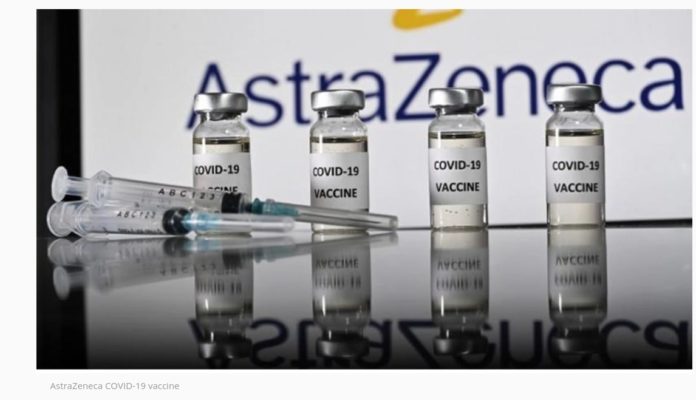
Denmark, Norway, Iceland suspend AstraZeneca vaccination after blood clot reports

• No higher risk of blood clots in those vaccinated –Regulatory body

Denmark, Norway and Iceland on Thursday temporarily suspended the use of AstraZeneca’s Covid-19 vaccine over concerns about patients developing post-jab blood clots, as the manufacturer and Europe’s medicines watchdog insisted the vaccine was safe.

Denmark was first to announce its suspension, “following reports of serious cases of blood clots” among people who had received the vaccine, the country’s Health Authority said in a statement.

It stressed the move was precautionary, and that “it has not been determined, at the time being, that there is a link between the vaccine and the blood clots”.

However, Europe’s medicines regulator said Thursday there appeared to be no higher risk of blood clots in those vaccinated against Covid-19, after Denmark, Norway and Iceland suspended use of the AstraZeneca jab.

“The information available so far indicates that the number of thromboembolic events in vaccinated people is no higher than that seen in the general population,” the European Medicines Agency told AFP by email when asked about the suspension.

As of March 9, 22 cases of blood clots had been reported among more than three million people vaccinated in the European Economic Area, the European Medicines Agency (EMA) said.

Austria announced on Monday that it had suspended the use of a batch of AstraZeneca vaccines after a 49-year-old nurse died of “severe blood coagulation problems” days after receiving an anti-Covid shot.

Four other European countries — Estonia, Latvia, Lithuania and Luxemburg — have also suspended the use of vaccines from this batch, which was sent to 17 European countries and consisted of one million jabs.

Denmark however suspended the use of all of its AstraZeneca supply, as did Iceland and Norway in subsequent announcements on Thursday citing similar concerns.

On Wednesday, the EMA said a preliminary probe showed that the batch of AstraZeneca vaccines used in Austria was likely not to blame for the nurse’s death.

‘Super-cautious’ 

“This is a super-cautious approach based on some isolated reports in Europe,” said Stephen Evans, a professor of pharmacoepidemiology at the London School of Hygiene and Tropical Medicine.

“The risk and benefit balance is still very much in favour of the vaccine,” he said.

AstraZeneca, an Anglo-Swedish company which developed the vaccine with Oxford University, defended the safety of its product.

“The safety of the vaccine has been extensively studied in phase III clinical trials and peer-reviewed data confirms the vaccine has been generally well tolerated,” a spokesman for the group told AFP.

Britain, whose widely-praised vaccine rollout has been largely underpinned by the AstraZeneca jab, also defended it as “both safe and effective”.

The Danish suspension, which will be reviewed after two weeks, is expected to slow down the country’s vaccination campaign.

Denmark now expects to have its entire adult population vaccinated by mid-August instead of early July, the health authority said.

“We are of course saddened by this news,” said Prime Minister Mette Frederiksen.

Frederiksen, who has pushed for the production of more vaccines and has formed a controversial alliance with Austria and Israel to do so, defended the Danish health authorities’ decision.

“There is always a risk associated with vaccines,” she told reporters.

“Things have gone well in Denmark, but there are some risks linked to the AstraZeneca vaccine that need to be examined more closely. That seems to me to be the right way to proceed.”

Danish Health Authority director Soren Brostrom stressed that “we have not terminated the use of the AstraZeneca vaccine, we are just pausing its use”.

“There is broad documentation proving that the vaccine is both safe and efficient,” Brostrom said.

“But both we and the Danish Medicines Agency must act on information about possible serious side effects, both in Denmark and in other European countries.”

Denmark said one person had died after receiving the vaccine. The EMA has launched an investigation into that death.

In the Scandinavian country of 5.8 million, around 25 percent of those who have received a first dose were given the AstraZeneca jab.

In total, 3.8 percent of the population has received two doses of vaccine and 13.4 percent at least one dose.

(AFP)

French Schoolgirl, 13, Admits To Making Up The Accusations That Got Her Teacher Beheaded

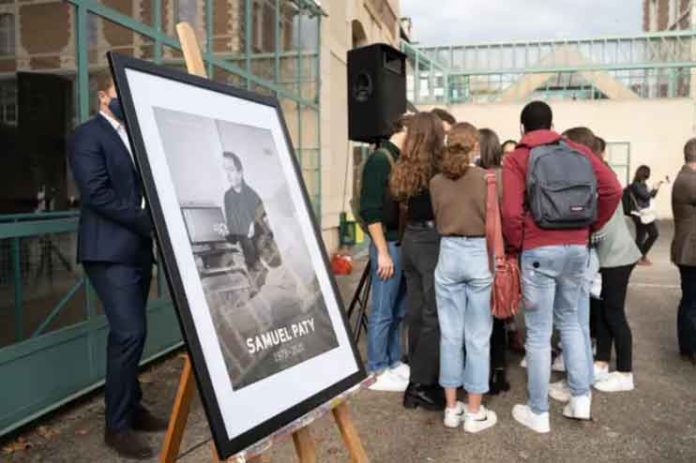
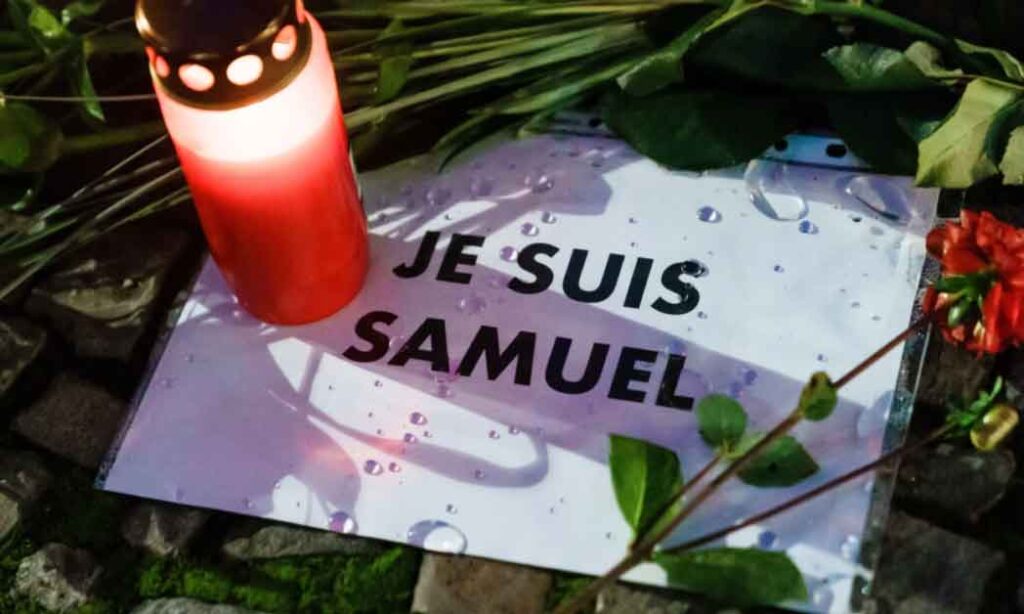
Samuel Paty, a History and Geography teacher at school in Conflans-Sainte-Honorine, Paris, was beheaded after showing pictures of the Prophet Muhammad to his class. The appalling incident happened in October last year.

As per UNILAD, Paty was murdered after a 13-year-old student told her father that her teacher asked her Muslim classmates to leave the room before he showed the rest of the students “photograph of the Prophet [Muhammad] naked.”

The concerned father then filed a legal complaint, sparking a wave of unrest against the teacher. He also used social media to post a video where he explains all of the allegations against Paty, resulting in global outrage from Muslim communities. Not long after, the teacher started receiving death threats, eventually leading to his murder.

Samuel Paty was beheaded by Abdullakh Anzorov, an 18-year-old boy, only ten days after his student accused him of disrespecting the Muslim culture. The terrorist tracked the teacher down and beheaded him in the street. Shortly after the assassination, Anzorov was shot dead by anti-terrorist police.

Samuel paty tomb Credits: Clemens Bilan/EPA

Now, several months after Paty’s death, the 13-year-old confessed she “lied” to please her father. 

On Monday, March 8, Mbeko Tabula, the student’s attorney, revealed that she did not even attend the class she was telling the story about. The lawyer claimed that the teenage girl was off sick on that day, confirming that her story was a lie.

As AFP reports, Tabula said: “She lied because she felt trapped in a spiral because her classmates had asked her to be a spokesperson.”

It was also revealed that the same student was suspended from school for not attending classes at the time. However, she told her father that it was because she had expressed resentment towards the teacher for showing the disrespectful pictures.

After the investigation, the schoolgirl was charged with slander.

Additionally, her father was arrested for “complicity in a terrorist killing.” Prosecutors stated that his online campaign against Paty was directly linked to his murder.

According to the girl’s lawyer, she should be saved from accusations. Tabula claims that her father is the one to blame for “excessive and disproportionate behavior.”

On the contrary, attorney Virginie Le Roy, who represents Paty’s family, stated “Everything in the investigation showed very early that she lied. A spokesperson of what? Of lies, of events that never happened? This explanation does not convince me and makes me rather angry because the facts are serious, they’re tragic!”

Credit:allaboutschoolsng

Emirs: We have paid ransom in hundreds of millions to bandits

KADUNA – Emir of Zazzau, Ambassador Ahmed Bamali, and Emir of Birnin-Gwari, Alhaji Zubairu Maigwari II, have stated their subjects have paid hundreds of millions as ransom to bandits.

They spoke at the presentation of 2020 security reports to Governor Nasir El-Rufai in Kaduna.

Maigwari said: “It is terrible when you see 200 to 300 bandits with weapons surrounding a village and killings people and collecting their money. Our people paid hundreds of millions of naira as ransom.”

Bamali commended security forces but said:  “We still have challenges in Zaria, Giwa because after 6pm some areas become no go area. There are other dangerous places.”

Traditional ruler of Zangon-Kataf, Agwatyap, Chief Dominic Yahaya, said despite occasional banditry and kidnappings in his domain, the peace committee he set up was not discouraged to ensure peace in the area.

Agwa tyap, Dominic Yahaya said: “However, when perpetrators are arrested and taken to the police, we don’t know what happened afterwards.

“We will continue to tread the path of peace. We will continue to work very hard to ensure that there is no reprisal”. (The Nation)

IT’S OFFICIAL | Kaduna Bandits Killed 937 Persons, Kidnapped 1,972 Others in 2020

By Hussaina Yakubu

Governor Nasir El Rufai on Wednesday received the Kaduna State 2020 Annual Security Report, in which 937 people were said to have been killed by bandits and 1,972 kidnapped within the period.

The News Agency of Nigeria (NAN) reports that the state Commissioner for Internal Security and Home Affairs, Samuel Aruwan, presented the report at a ceremony in Kaduna.

According to Aruwan, victims of the kidnapp ng, banditry and other criminal activities cut across all ethnic and religious groups in the state, contrary to skewed narratives from some quarters.

‘’Victims of criminal acts like banditry and kidnapping are to be found across ethnic, religious or political leanings and persuasions,’’ he pointed out.
The commissioner said the total number of deaths linked to banditry and other forms of violence in 2020 in the state was 937.
‘’Of this number, Igabi LG has the highest figure of 152, followed by Kajuru with a figure of 144.’’

He added that Birnin Gwari, Igabi, Giwa and Chikun local governments in Kaduna Central Senatorial District accounted for 468 of the deaths out of the 937 people that died in 2020, representing over 50% of the fatalities recorded in the state.

‘’The southern senatorial district accounts for 286 deaths, which is about one third of the total, due in large part to sporadic clashes, alongside banditry which triggered attacks and counter-attacks, especially between June and November 2020,’’ he added.

Aruwan further said, ‘’out of 1,972 people kidnapped in the period under review, Kaduna central senatorial district accounts for 1,561, and out of the total, 1,461 were kidnapped within Birnin Gwari, Igabi, Giwa and Chikun local government areas.’’

In his speech after receiving the report, El-Rufai said that state has been using its limited tools to address the security challenges.
The governor paid tribute to the victims of insecurity and reiterated his administration’s resolve to protect the people and stop all criminals.

El Rufai said the government has invested in technology to help secure the state, adding that ‘’a CCTV network is being deployed in Kaduna metropolis while options for consistent operations of its drones are being explored.’’
The governor added that the state had been collaborating with neighboring states to tackle the wave of insecurity.

‘’Together with Niger State and our neighbours in the North-west, we put together resources to fund military operations against bandits in the Kamuku-Kuyambana forest range that straddles the region.”

El Rufai however regreted that this collaboration which was done in 2015, ‘’was not sustained or expanded into a campaign of continuous, simultaneous operations against the bandits across our vast region.’’

‘’Failure to contain and defeat them in one place has emboldened them to develop a national footprint and endanger national cohesion,’’ he noted.
The governor also said that the state has been supporting federal security agencies with vehicles and other logistics since 2015, but added that “the military and police still need modern technology and equipment and more boots on the ground”.

‘’The security of our communities depend on the robust projection of state power, and that can only be done with sufficient security numbers to overawe and deter criminals,’’ he maintained.

The governor called for the decentralisation of policing, arguing that ‘’there are simply not enough police officers in Nigeria and the idea of policing such a vast, federal republic in a unitary manner is not pragmatic.”

Credit: metrowatchonline

Restructuring Nigeria, Quickest, Best Route to Return Nigeria to Basics- Nnia Nwodo.

By Mohammed Mohammed

The National Coordinator, Southern and Middle Belt Leadership Forum and immediate past President General of Ohanaeze Ndigbo, Chief John Nnia Nwodo

has said that a restructured Nigeria could be the easiest way to return the country to the basics of value that is needed to make this country great again.

Nwodo’s view was contained in a paper he titled ‘RE-EVALUATION OF AFRICAN VALUES AND CULTURE IN THE FACE OF THE CRISES OF THE 21ST CENTURY’ delivered at the 4th Chinua Achebe International Conference at the University of Nigeria, Nsukka. On Tuesday.

Nwodo noted that the change of our cultural values have traumatized our society and led us to yahoo yahoo, cybercrime, illiteracy, insecurity, electoral dishonesty, lack of accountability, retardation in educational standards and insecurity which can be remedied by going back to basics by restructuring the country.

The former two-time Minister said that the only way we can see a better Nigeria in our lifetime is to ‘Allow states to determine their educational, social welfare policies and security exclusively as well as ownership of their natural resources whilst paying royalties to the Federal Government for common services”

Chief Nwodo who took a historical look at the destruction of the nation’s socio-political and cultural values noted that the best way out is in the restoration of merits and abandonment of the quota system.

“All the major industrialized countries of the world thrive on merit. Merit promotes competition, rewards hard work and drives development.

“The idea that you can get admission to a Federal Secondary School, a Polytechnic, a University or the Civil Service without excelling in a competitive examination destroys the incentive for hard work and discovery of talents.” He said.

Nwodo also took a critical look at the nation’s political problems that results in the devaluing and leaving the basics of
Operation.

“This is the only country in the world where videos of electoral polling booths are showed by television stations yet courts hold that the test of proving without reasonable doubt has not been met.

“This is the only country in the world where the defeated will find it difficult to concede because there is usually no compelling reason to do so.

“This is the only country in the world where it can take up to six months or more to conclude an election petition through the judicial process.”

The National Coordinator of the South and Middle Belt Forum bemoaned the wrong and inadequate deployment of our youths and women in political activities.

He said: “As long as our young people take the back seat in politics and prefer to receive handouts from politicians and do their bidding, so long shall our politics be bereft of renascent ideas of the youth. Our youth are supposed to be the uncontaminated segment of our society, our tabula rasa. It is from them that we can distill new and uncontaminated ideas of where society should be headed”

He noted that it was the young men of 30s that fought for the independence of Nigeria. When Achebe wrote Things Fall Apart he propelled a revolution using his courage, his pen and his youthful zeal for change.

So did Cyprian Ekwensi when he authored Jagua Nana which literally translates to politics without ideas is like a car without a break.

Nwodo also took a swipe at discrimination against Women particularly in the North noting that by so doing “Nigeria is denying herself of a very productive gender in our generation.”

Nwodo urged the country to accelerate the diversification of skill development amongst our women and their exposure to managerial responsibilities.

“As at 29th November, 2019, 75 countries have appointed or elected women as Head of State and Head of Government since 1950. These countries include Britain, Germany, Ukraine, Ceylon, Argentina, Srilanka, Iceland, Peru, South Korea, and India” he said.

The former Ohanaeze PG also examined our slow march to the agricultural revolution, stressing that there is no justification whatsoever to allow cattle grazing that entails herdsmen trekking with numerous cows by foot from Northern Nigeria to very distant parts of the South in search of grasses to feed their cows.

According to him, the Netherlands has taught us that we can grow grasses anywhere digitally.

He said the present system is archaic, dangerous to the cows and the herdsmen and inimical to the maintenance of public security. No reasonable government will allow it to continue, he added.(sharpedgenews)

EXCLUSIVE: DPR suspends three officials accused of leaking Bashir Ahmad, others’ plum jobs to Peoples Gazette

Obianuju Akwunwa of public affairs unit, personnel information chief S.H. Hussaini and another staff member identified as B.O. Moedu were wrongfully singled out for retribution.

The Department of Petroleum Resources (DPR) has launched a company-wide crackdown on officials accused of leaking internal documents to the public, Peoples Gazette can report, in a desperate attack against transparency and accountability in public service.

Three officials were suspended in February on allegations of disclosing restricted internal communications of the energy sector regulator, coming barely days after the Gazette exposed how officials of President Muhammadu Buhari were favoured with lucrative positions for which they lacked the requisite educational or vocational background to exert. 

A letter obtained by Peoples Gazette, dated February 23, 2021, conveyed the directive of DPR’s chief executive — in league with the agency’s management board — to indefinitely suspend the accused personnel pending the conclusion of an internal probe on the matter.

Sarki Auwalu
DPR CEO Sarki Auwalu [Photo credit: DPR]

Obianuju Akwunwa of the DPR’s public affairs unit, and another staff member identified as Moedu B.O., were wrongfully singled out for retribution by the oil and gas regulatory body. The Gazette also obtained the first draft of the controversial suspension letter that went to Ms. Akwunwa, who could not be reached for comments. 

A third official, identified as S.H. Hussaini, deputy manager, personnel information, promotion and discipline, was also suspended, days after he signed the suspension letter of Ms. Akwunwa, the Gazette learnt. 

DPR letter of suspension

Although the Gazette learnt from officials at the DPR that the three officials were suspended, the Gazette was only able to obtain the suspension letter of Ms. Akwunwa, which nonetheless confirmed the rage of DPR’s management officials and their blinded ambition to quietly punish innocent officials for a story they had publicly denied as untrue. 

It was also unclear whether or not the two other officials were also suspended indefinitely like Ms. Akwunwa.  

The misguided administrative reprisals came one week after the Gazette exposed how President Muhammadu Buhari appointed his junior media aide Bashir Ahmad to supervise the newly-established National Production Monitoring System (NPMS) — a powerful and lucrative division at the DPR on February 15.https://googleads.g.doubleclick.net/pagead/ads?client=ca-pub-7675530425486834&output=html&h=180&slotname=1253569477&adk=1725290469&adf=2859834138&pi=t.ma~as.1253569477&w=720&fwrn=4&lmt=1615530840&rafmt=11&psa=1&format=720×180&url=https%3A%2F%2Fgazettengr.com%2Fexclusive-dpr-suspends-three-officials-accused-of-leaking-bashir-ahmad-others-plum-jobs-to-peoples-gazette%2F&flash=0&wgl=1&uach=WyJBbmRyb2lkIiwiOC4xLjAiLCIiLCJTTS1QNTg1IiwiODcuMC40MjgwLjEwMSIsW11d&dt=1615530839803&bpp=30&bdt=1579&idt=294&shv=r20210309&cbv=r20190131&ptt=9&saldr=aa&abxe=1&cookie=ID%3D2fbb4f07d38f0aaa-22f72eba65ba0015%3AT%3D1612855176%3ART%3D1612855176%3AS%3DALNI_MYf5KcS-xWe6JZMjssWjqo8ZBm6Ng&correlator=1803541517121&frm=20&pv=2&ga_vid=983370614.1612855175&ga_sid=1615530840&ga_hid=41862834&ga_fc=1&rplot=4&u_tz=60&u_his=1&u_java=0&u_h=1280&u_w=800&u_ah=1280&u_aw=800&u_cd=24&u_nplug=0&u_nmime=0&adx=40&ady=3393&biw=800&bih=1160&scr_x=0&scr_y=0&eid=42530671%2C31060287%2C44735931%2C21068945%2C31060305%2C21066973&oid=3&pvsid=2937689258145609&pem=645&rx=0&eae=0&fc=896&brdim=0%2C0%2C0%2C0%2C800%2C0%2C800%2C1160%2C800%2C1160&vis=1&rsz=%7C%7CeEbr%7C&abl=CS&pfx=0&fu=8320&bc=31&ifi=1&uci=a!1&btvi=1&fsb=1&xpc=3yEFNQKzSH&p=https%3A//gazettengr.com&dtd=358

President Buhari -2
President Buhari (Photo Credit: Twitter)

Mr. Ahmad, a former Hausa language reporter who was not qualified for the job, denied the allegations, but the Gazette published his employment letter on February 16, following which the DPR was pressured to publicly deny its own document. The Gazette also exposed similar jobs approved for four other aides and associates of the president, as well as another top role for Aisha Buhari’s brother at PTDF, another top-tier agency of the Nigerian government.

Despite promising transparency, the Buhari administration has continued to target officials who expose corruption and rot in public service. In many cases, as with the latest targeting of DPR officials, the government punished innocent officials as it seeks retribution for leaks.

But in other cases, several officials were suspended and charged for providing information about corruption in one federal agency to another law enforcement body, all aimed at scaring potential whistleblowers of widespread sharp practices by top administration officials.

Justifying the administrative action taken against some DPR personnel, DPR’s management said Mr. Ahmad and others’ plum jobs, especially the appointment letter, could never have come out but for the alleged role played by the now-suspended staff members, an official said.

The DPR official also told the Gazette that the management had been able to trace the PDF employment letter obtained by our reporters to one of the agency’s computers. 

“They said the file was downloaded from one of their computers and it should be one of them who did it,” the official said under anonymity to comment on an ongoing investigation.

For three days, Paul Osu, a spokesman for DPR, declined calls and messages from the Gazette’s reporters and editors about why Ms. Akwunwa and others were suspended. Mr. Osu was the official who signed the false statement disowning the agency’s own document amidst a storm of requests from pro-government trolls on social media for a denial from the agency.

A DPR official told the Gazette the agency backtracked on its dubious employment of the president’s aides because it realised that the controversial appointments could further amplify Mr. Buhari’s provocative culture of skewing federal positions of interest in favour of his tribe and cronies.

Credit: Peoplesgazatte

Maina’s Trial: Falana Storms Court, Says I’m Ready To Testify

…as court adjourns case till March 17

Senior Advocate of Nigeria, Mr Femi Falana, on Thursday, expressed his readiness to testify in the ongoing trial of the former Chairman of the defunct Pension Reform Task Team, PRTT, Mr Abdulrasheed Maina.

Maina is answering to a 12-count money laundering charge the Economic and Financial Crimes Commission, EFCC, preferred against him and his firm, Common Input Property and Investment Limited, before the Federal High Court in Abuja.

The former pension reform boss who opened his defence to the charge on March 1, had applied for the court to compel 10 persons, among whom included Falana, SAN, to appear as witnesses in the matter.

Trial Justice Okon Abang had on the strength of Maina’s application, also summoned the Attorney-General of the Federation and Minister of Justice, Mr Abubakar Malami, SAN, the erstwhile Acting Chairman of the Economic and Financial Crimes Commission, EFCC, Mr Ibrahim Magu and the Governor of the Central Bank of Nigeria, CBN, Mr Godwin Emiefele, to appear as witnesses.

Maina had insisted that evidence of the subpoenaed witnesses would be crucial to his defence of the charge pending against him.

Others he also persuaded the court to compel to appear and testify in the matter, included M. Mustapha, Hassan Salihu, Mohammed Wakil, G.T Idris, Kenneth Amabem, Ibrahim Kaigama and the Director of Compliance at the CBN.

Meanwhile, out of all the subpoenaed witnesses, only Falana, SAN, appeared before the court on Thursday.

The senior lawyer entered the courtroom around 11:30 am while Maina’s second defence witness, DW-2, Mr Emoakemeh Charles, was giving his Evidence-In-Chief.

Midway into the testimony of the witness, trial Justice Abang told the parties that he was minded to adjourn the case to another day to enable him to attend to other matters.

At that juncture, a lawyer in Falana’s chambers, Mr Marshal Abubakar, drew the attention of the counsel that represented Maina on Thursday, Mr Adaji Abel, to the presence of his principal (Falana) in court.

When the court was notified, Falana, though not robed in his wig and gown, took the floor and addressed the court.

He said: “My lord, I learnt that I have been summoned. Even though I have not been served anything, but I am here today out of respect for the court.

“I will go and collect the summons from the bailiff myself”.

While commending him for showing such respect to the court, Justice Abang explained that all the summons were issued at the behest of Defendant.

“Unlike what was reported in some sections of the media, it was not this court that issued the summons on its own. It was the Defendant that applied for them, and this court, going by decision of the Court of Appeal, had no choice but to sign them”.

Responding, Falana said he had no problem testifying in the matter.

“I quite understood my lord. It will be my pleasure to testify in this matter”, he added.

Trial Justice Abang subsequently adjourned the matter till March 17 and 18 for the continuation of hearing of evidence of the PW-2 and for evidence of witnesses on the subpoena.

Among those that accompanied Falana to the court on Thursday included pro-democracy activist and convener of the #RevolutionNowProtest, Mr Omoyele Sowore.

Speaking to newsmen at the end of the proceedings, Falana, SAN, said he would gladly testify before the court.

“I have just collected the subpoena. I believe that this is an opportunity for me to put an end to the needless controversy surrounding the property I never bought”, he added.

It will be recalled that Maina’s first defence witness, Mr Ngozika Ihuoma, had in his testimony before the court, alleged that the EFCC under Magu, misappropriated a total of 222 properties worth N1.63 trillion, which he said was recovered by the PRTT that was headed by Maina.

The DW-1 further alleged that the former EFCC boss, Magu, sold most of the recovered properties to his friends and associates.

He told the court that one of the choice properties the PRTT recovered and handed over to EFCC was grossly undervalued from N6billion in 2011 and sold to a renowned lawyer in 2015 for N1bn.

The witness further alleged that the AGF, Malami, SAN, and the National Security Adviser, NSA, held a meeting with Maina in Dubai, United Arab Emirate, UAE, in January 2016, which he said led to the recovery of about N1.3trillion that was stashed in various bank accounts.

Meanwhile, at the resumed proceedings on Thursday, the DW-2, Charles, who identified himself as a retired Superintendent of Prisons, told the court that Maina’s fight against ghost pensioners in the country, helped the Federal Government to recover over N10bn.

He told the court that before Maina was appointed the Chairman of the defunct PRTT, he handled the verification of pensions for Customs, Immigration and Prison Officers, CIPO.

The witness said it was because of the way Maina discharged his functions that he was appointed to lead the PRTT, which he said had members drawn from the EFCC, ICPC and the DSS.

Charles told the court that he was among pensioners that Maina took from CIPO to the PRTT to assist him in identifying ghost pensioners across the 36 states of the federation, through biometric exercise.

“We are so sympathetic about how the 1st Defendant is being treated now. Things are not easy for federal pensioners. For the past 10 years now, they have not reviewed our pension.

“If Maina had remained in service now, Pensioners would have gotten all their allowances. That is what we are missing him for.

“The PRTT worked under the then Head of Service, Mr Stephen Oronsaye. Each time we went for any assignment, before any approval of money is made for us, we must write to the HoS, even for Duty Tour Allowance, DTA.

“Maina did not have any control over the disbursement of funds. He must first apply to the HoS.

“The biometrics was conducted at the HoS. There is even a video recording about the biometric exercise”, the DW-2 added.

EFCC had in the charge marked FHC/ABJ/CR/256/2019, alleged that Maina used a bank account that was operated by his firm and laundered funds to the tune of about an N2billion, part of which he used to acquire landed properties in Abuja.

It told the court that the 1st Defendant (Maina) used fictitious names to open and operate various bank accounts, as well as recruited his relatives that were bankers to operate fake bank accounts through which illicit funds were channelled.

The Prosecution maintained that the Defendants committed criminal offences punishable under sections 11(2) (a), 15(3), and 16(2) (c) of the Money Laundering Prohibition Act, and also acted in breach of the Advance Fee Fraud Act.

The Defendants were arraigned on October 25, 2019, and they pleaded not guilty to the charge. (Thenigerialawyer)

TIPS