Home Blog Page 1002

‘LAGOS STATE UNIVERSITY’S RATING BEAUTIFIES FEDERALISM’

Let’s for a moment leave the meretricious story of a nation celebrating release of kidnapped school children every week while other nations are celebrating enterprise, entrepreneurship and scientific discoveries. Let’s discuss a testimony of a university that has risen from obscurity to significance within the context of federalism, an idea whose time has come for the people but which our leaders would not like anyone to talk about.

I would therefore like to draw attention to lessons we can learn from a recent consistency, efficiency and organisational excellence from the Lagos State University, which was clearly underrated a few years ago. Today, in terms of global rating, the State University is sandwiched between two indisputable federal giants, the Universities of Ibadan and Lagos.

This is not a construct we should just ignore because Lagos and Abuja curiously hate each other for political reasons. This is a story that defines development. This is a contextual reporting of federalism, a concept most hypocrites and power elite would not like the media to mention. Let’s celebrate the powers that have rebuilt the Lagos State University (LASU) from grass to grace.

Here is the latest news item: The University of Ibadan, Lagos State University, University of Lagos, and Covenant University have ranked among the top 1,000 universities in the world. This was contained in the 2021 Times Higher Education World University Ranking released last Wednesday. THE ranked UI, LASU, UNILAG as first, second, and third respectively in Nigeria. In the same vein, privately-owned Covenant University (CU), Ota, Ogun State, was ranked fourth; ahead of Federal Government-owned University of Nigeria, Nsukka, which came fifth and Obafemi Awolowo University (OAU) sixth in Nigeria. The University of Oxford tops the rankings for the fifth consecutive year, while mainland China’s Tsinghua University becomes the first Asian university to break into the top 20 under the current methodology (launched in 2011).

As usual, the United States claims a record eight places in the top 10, after the University of California, Berkeley, climbed six places to seventh, but US universities outside the top 200 show signs of decline, according to THE, which enjoys global recognition too.

There were 141 first-time entrants in the rankings this year, topped by France’s recently merged Paris-Saclay University (joint 178th).
India has the highest number of new entries (14) and as a result, boasts a record number of ranked institutions (63).

A breakdown of the rankings further shows that University of Ibadan rose to the 401- 500 bracket to overtake Covenant University, which witnessed a drop from 2018’s 636 position to remain at the top 1,000. Covenant University was ranked as Nigeria’s best university in THE’s 2020 report after usurping UI since 2018.
Lagos State University (LASU) placed between 501 and 600 bands, while UNILAG ranked 601–800. UNN and OAU are placed on figures exceeding 1,000. The same Lagos State University had, in 2020, been celebrated as the Second Best University in Nigeria as ranked by the same Times Higher Education (THE) World University ranking.

In its reaction, LASU in a press statement said, “The latest ranking follows a consistent and meteoric rise in the local and international stock of the University in the last five years of the Prof. Olanrewaju Fagbohun-led administration, thanks to the entrenchment of academic excellence, a culture of cutting edge research and enhanced community service.”
The University of Lagos too has something good to celebrate: “This year, UNILAG took a leap from the range in which it was ranked last year, 801–1,000, to a better range of 601–800. With continued dedication and hard work, the University aims to gradually advance to being ranked among the top 10 best universities across the globe. “Congratulations to members of the University community for the great achievement. All are encouraged to continue contributing their quota to make the University of Lagos great,” UNILAG added on its website last week.

The rankings show that over 1,500 universities across 93 countries and regions across the world featured in 2021 THE World University Rankings.
The rankings are based on 13 carefully calibrated performance indicators that measure an institution’s performance across four areas: teaching, research, knowledge transfer, and international outlook.
According to a fact file on the rankings, this year’s rankings analyse more than 80 million citations across over 13 million research publications and included survey responses from 22,000 scholars globally. “Trusted worldwide by students, teachers, governments and industry experts, this year’s league table provides great insight into the shifting balance of power in global higher education,” THE said on its website.

I had on two different occasions drawn the attention of two former governors of Lagos to the expediency of robust investment in the Lagos State University.
First was Babatunde Fashola shortly before leaving office in 2015. On that occasion in Ikoyi where he briefed media executives, BRF, had just approved increase in fees at LASU and there were other concomitant crises, which had then challenged the university’s management. I recall that the LASU image then was so bad that I had to challenge the governor to explain to his guests why he couldn’t equip LASU to a global standard before increasing fees that even parents and other stakeholders could not resist. As a follow up to the governor’s response at a juncture, I had to ask Governor Fashola, a graduate of UNIBEN l, if he would be comfortable enrolling for a post-graduate degree in LASU after leaving office. He artfully answered the question even as he noted the seriousness of the crisis at LASU then. Again, at the first briefing of Governor Akinwumi Ambode in GRA, Ikeja, I had followed up passionately on the LASU question, which had earlier resulted in a crisis that made the Vice Chancellor and the Registrar then to flee the campus. The Governor was so touched by the details of my analysis of the debacle that he had asked on the spot if I would like to serve on the Governing Council of the university. I had thankfully declined the offer and pleaded with him to address the point at issue. He promised to deal with the lingering crisis of the university Governor Lateef Kayode Jakande set up in 1983 before the ‘soldiers of fortune’ struck down democracy. He did to a large extent and that led to the appointment of the immediate past Vice Chancellor, Prof. Olanrewaju Fagbohun who consolidated on the gains of Vice Chancellor in the eye of the storm then, Professor John Obafunwa. The purposeful rebuilding of the University under Governor Ambode then resulted in a peaceful convocation in May 2018 at which the Governor as a Visitor to LASU adopted the best over-all graduate Ogunsanya Fuhad Adetoro. I had then on this page in an article on June 3, 2018 https://guardian.ng/opinion/ambode-lasu-and-adopted-best-graduate/ noted that we should thank God the then Governor of Lagos state was not one of the wonder governors in Western Nigeria “who keep establishing more universities without consideration for quality and history of the region”. I had then added that:
‘Instead of announcing a brand new university the other day (as some of his colleagues would have done) at the convocation of the Lagos State University, the Governor instantly granted scholarship and N5million cash reward to the 2017/2018 overall best graduate of Lagos State University (LASU), Ogunsanya Fuhad Adetoro.
I am persuaded that the Governor should be encouraged to invest robustly in the 35 years old university (LASU) instead of personal scholarships to gifted graduates who are being encouraged to study abroad…’

Barely four years ago, I wrote in this column an article titled, “Why we need better universities, not more”. (https://guardian.ng/opinion/why-we-need-better-universities-not-more/June 4, 2016). I had then claimed, among others in the article, a part of the series that gave me the ‘2017 Dame Award on Informed Commentary’:
“…This is not a seminal paper on the role of the university in a developing country. Nor is it a research topic on the role of public intellectuals in development. Rather, it is a thought-provoking discussion point on why all our representatives in government should halt the “hollow rituals” called licensing of new private universities and the federal government’s own obsession with political project called federal universities in all the states of the federation…’

So, this is an article to deconstruct LASU as an institution when re-engineering and leadership come into focus. The current rating of the university is a pointer to the lessons we have been struggling to sell to our people on the original purpose of organic federalism. And here is the thing, any state government can develop any of their institutions to compete with or even do better than the federal ones. LASU has thus provided a rare opportunity to study another truth that can set us free from the stranglehold of the unitary system of government. What the LASU success story has also taught the government and people of Lagos State is that they should continue with their robust investment in the university. They should not be tempted to set up another one. I insist that we need better and not more universities!
As I once noted to former Governor Ambode, this again is an opportunity to encourage Governor Babajide Sanwoolu to earmark resources for robust investment in Lagos State University and its Teaching Hospital. There should be incredible investments in academic resources to make the two institutions world-class centres of academic and medical excellence.

Lagos state is a pace-setter state. It is not enough to aspire to be third largest economy in Africa. It should be noted too that at the core of why South Africa’s economy and democracy are the strongest in Africa is the presence of more than ten world-class universities in the country. As I have often noted, for decades, the University of Cape Town, South Africa has been Africa’s best University. Besides, there is some consistency in almost all global ratings for universities that of the ten best universities in Africa, eight are always from South Africa while the remaining two are located in Egypt. The best 10 in Nigeria are always around 15-20 in Africa. This is part of Nigeria’s chronic challenges that our leaders hardly pay attention to. The federal government has never fulfilled and may never fulfill any promises concerning substantial investment in education quality. They promised to declare an emergency on education – to address funding and reform before the end of April 2018. There has been no word. But no one is surprised.

In the same vein, Lagos cannot become a sustainable mega city unless there are concomitant good, local universities and research institutes that can provide resources to sustain its growth and development.
Time to invest robustly in LASU and LASUTH is now. Reason: quality in education in the only known weapon of country and global competitiveness. You need that to be competitive in Africa.

Study this too: In 1963, the then U.S President, John F.Kennedy told a student body: “…No country can possibly move ahead, no free society can possibly be sustained unless it has an educated citizenry whose qualities of mind and heart permit it to take part in the complicated and increasingly sophisticated decisions that pour upon all the citizens who exercise the ultimate power….”

#

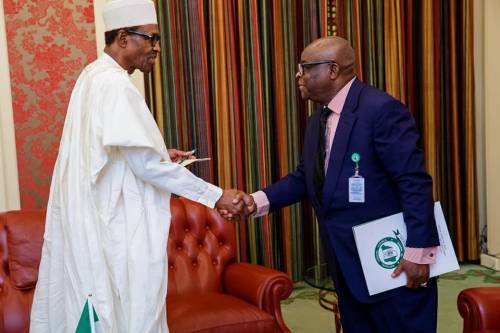
Buhari Sacked Me Over My Rumoured Meeting With Atiku —Former CJN, Onnoghen

He expressed disappointment with the president’s failure to validate such a piece of information before acting on it, despite its huge investigative capacities.

Former Chief Justice of Nigeria (CJN), Walter Onnoghen, has alleged that he was sacked by President Muhammadu Buhari over a baseless rumour of holding a meeting with Ex-Vice President, Atiku Abubakar, in Dubai before the 2019 general elections.

Onnoghen disclosed this at the public presentation of a book titled: “Fundamental Rights (Enforcement Procedure) Rules, 2009: Practice, procedure, forms and precedents,” authored by Ogwu James Onoja (SAN).

He expressed disappointment with the president’s failure to validate such a piece of information before acting on it, despite its huge investigative capacities.

According to the Nation report, Onnoghen who recalled the process leading to his removal noted that the situation got to its head when all of a sudden his trial before the Code of Conduct Tribunal (CCT) was put in motion even when he had not been invited or accused of any wrongdoing.

He condemned his trial process before the CCT, and further stated that in the course of the trial and when parties had joined issues, an ex parte application was suddenly brought in and “what followed was my illegal and unlawful suspension as the CJN.” (SaharaReporters)

(Video) Katsina govt critic, Mahdi Shehu, in disturbing video granted bail in Kano

Just as a Federal High Court in Kano was granting bail to virulent Katsina State government critic, Mahdi Shehu, a disturbing video of him lamenting his predicament in the hands of Katsina State government officials and the Police was making the rounds on social media.

3

Shehu pleaded not guilty to all the six count charges brought against him by the Katsina State Government, but in the video, with a braced neck and waist, he told how he was bitten by a snake and stung by a scorpion leading to his ailment.

He also railed at the government for incapacitating him.

On his bail, Justice Ambrose Lewis Allagoa, the presiding judge, said the accused should be remanded in correctional service pending the fulfilment of his bail condition.

He was granted bail in the sum of N10 million and one surety in like some. The court said the surety must be a resident of Kano and have a landed property there.

The matter was adjourned to May 19th for continuation. (Everyday)

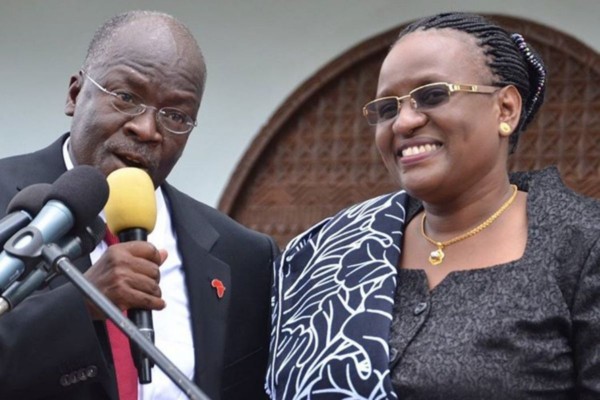
‘He Loved Morning Sex, I Will Dearly Miss Him’ – Late Tanzanian President, Magufuli’s Wife Mourns Husband’s Death

Tanzania’s first lady Janet Magufuli has eulogized her late husband today morning following his death which occurred on Wednesday evening.

In an emotional speech delivered to the state, the former First Lady could not relent to let out her feeling which were cut short by the death of her husband.

The former primary 5 teacher recalled the precious moments she shared together with the late Tanzanian President while he was alive.

Beside being a jovial man full of humor and laughter, the First Lady recalled how her late husband was also romantic when it comes to love.

The First Lady said that she will truly miss the good moments they shared together.

“He loved morning sex,I will dearly miss him so much.”, said Janet Magufuli.

The First Lady also said that President Magufuli was a dedicated man who had passion for Tanzanian and was committed in ensuring their economy prosper to another level. (Thepleadge)

$1.5 Billion To Renovate The Port Harcourt Refinery Is Suspicious At The Least.

That Nigeria’s economy is in dire straits is a fact well known both to the nation and to our international partners. Unemployment has just reached an all-time high of 33%, while inflation has hit another record high of 17%.

At this critical period, we must as a nation be prudent with the use of whatever revenue we can generate, and even if we must borrow, we must do so with the utmost responsibility and discipline.

To therefore budget the sum of $1.5 billion to renovate or turn around the Port Harcourt Refinery would appear to be an unwise use of scarce funds at this critical juncture for an assortment of reasons.

First of all, our refineries have been loss-making for multiple years, and indeed, it is questionable wisdom to throw good money after bad. At other times, I have counselled that the best course of action would be to privatise our refineries to be run more effectively and efficiently.

Moreover, the cost appears prohibitive. Too prohibitive, especially as Shell Petroleum Development Company last year sold its Martinez Refinery in California, USA, which is of a similar size as the Port Harcourt refinery, for $1.2 billion. We must bear in mind that the Shell Martinez Refinery is more profitable than the Port Harcourt Refinery.

Given this discrepancy, might we ask if there was a public tender before this cost was announced? Was due diligence performed? Because we are certainly not getting value for money. Not by a long stretch.

We cannot as a nation expect to make economic progress if we continue to fund inefficiency, and we are going too deep into the debt trap for unnecessarily overpriced projects.

Our national debt has grown from ₦12 trillion in 2015 to ₦32.9 trillion today. Indeed that is shocking enough to cause us to be more prudent in the way we commit future generations into the bondage of bonds and debt.

Waziri Atiku Abubakar
Vice President of Nigeria, 1999-2007.

Of Abati, Yahaya Bello, and the rest of us

By Kingsley Fanwo

Watching the anger of Dr Reuben Abati, former Presidential Spokesperson in the days of the PDP, was a new take. Though prolific when armed with the pen, I have always seen Dr. Abati as a gentleman right from his days in The Guardian newspapers.

So watching his angry reaction on Arise TV against the presumptuous feeling that Governor Yahaya Bello would accept the call from millions of Nigerian youth to step out for the 2023 presidency challenge. He got angry that the Governor went to meet with Obasanjo and even as far as alleging that the Governor is moving about like “small pox”.

As unsavoury as those allegations and conclusion are, I want to make bold here that they are not enough to make me lose the respect I have for a pen giant like Reuben Abati. After all we all have our bad day in office. It was just his bad day and I wont judge him just with that.

I received the video from over a hundred people. Majority of them wanted a fight with Abati. A very few said we should ignore. I have chosen to disappoint both dichotomies of thoughts. I wont fight but I wont ignore.

The Abati moment of judgement offers us an opportunity to enlighten the world about the Kogi magic under Governor Yahaya Bello. Reuben Abati was a victim of his limited knowledge about developments in Kogi State. It is not his fault to be ignorant of what is happening in the state. It is my fault not to have told him and many who share the same line of thought with him. To this end, I say a big thank you to Dr. Reuben Abati for offering yet another opportunity to tell the world about the phenomenal feat of Governor Yahaya Bello.

Kogi shares her borders with ten states, cutting across the South East, South West, South South and many states in the North Central as well as the nation’s seat of power. As advantageous as such nodal opportunities could be, it came with a hard crime nut to crack. Pre-2016, Kogi State was home to kidnappers, dare-devil armed robbers and hired assasins.

To make the matter worse, Islamic extremism found its way into the State. Some of the extremists were trained by the globally dreaded ISIS. And the state became the crime centre of Nigeria. The previous administrations were helpless as the criminals struck with recklessness. The people lost confidence in the capacity of Government to protect them.

On assumption of office in 2016, Governor Yahaya Bello launched a ferocious war on criminals and rejigged the security apparatus of the State. He launched the Kogi Vigilante Service and handed security to the locals. He also empowered security agencies with adequate logistics and motivation to crush criminality in the State

Today, Kogi is one of the safest states in the Federation. A Governor made it happen. A Governor showed commitment to make it happen. A Governor led some of the operations personally. A Governor ensured his people are safe. That Governor is Alh. Yahaya Bello. Security is the peak of performance in governance. Nothing can happen positively without security.

The Kogi State Yahaya Bello inherited was balkanized along ethnic lines. There was no unity of purpose. A Governor came and ensured the State is united. The Governor didn’t mouth unity. He acted it and today, Kogi is better for it.

From being one of the filthiest capital cities, Lokoja now wears a new look of cleanliness and aesthetic beauty. Through the rejuvenated Kogi State Environmental Protection Agency, Lokoja has become one of the cleanest capitals in Nigeria today.

There cannot be good governance without a conscious effort by Government to get feedback from the people as much as the need for orientation and adequate sensitization on Government policies and programs. The “State Of Kogi” which is a live interactive program on Radio every Monday, is a meeting point between the people of Kogi State and their Government. The program is a testament of Yahaya Bello’s honest relationship with the people he was elected to lead.

Under his leadership, The Graphic became a paper of pride to all Kogites. He also built a magnificent The Graphic House, the biggest and the best for any state-owned newspaper in Nigeria.

No administration in the history of Kogi State has been as transparent and prudent with the management of state resources like the GYB Administration. The World Bank has given Kogi awards and high ratings for her commitment to transparency and accountability.

The administration has shown a pathway to other State Governments on how to deploy digital trainings to equip the youth for excellence. Thousands of youth have been trained on ICT and Digital Resourcefulness, without noise. The various sporting awards and trophies won between 2016 and now in different sports have shown how the Governor has deployed sports to engage the minds of the youth in the State.

Massive water projects across the State, many of which have been completed and put to use , show the loyalty of GYB to the Millennium Development Goals. The multi-billion Water Project at Osara is expected to finally lay to rest, the problem of inadequate water supply to the Central part of the state.

Governor Yahaya Bello will forever be remembered for reforming and repositioning the Public Service of Kogi State. The Service is not only digitalized now, but more efficient. Wages of State Civil Servants are paid regularly.

The Mega Terminal of the State which was commissioned without completion is receiving attention and will be put to use in couple of weeks.

The educational sector inherited in 2016 was in shambles. The Governor quickly prioritized the sector and made it the first of the thematic areas. Today, he has built over 400 blocks of classrooms around the state, fully furnished to make the learning environment attractive. Apart from that, he has turned our citadel of higher education into models for others to copy. To cap it all, the Administration has established the Confluence University of Science and Technology to provide manpower for the Iron and Steel Company at Ajaokuta as well as the ever sprawling industries in the state as a result of the abundant mineral resources.

As a veteran journalist, Abati should have asked questions about how the State was rated as the one that received the heaviest inflow of investments in the last quarter of 2020. It was because it is a well secured

environment. It was because our tax administration is the most investment friendly in the country. It is because we are the real treasure of the nation.

In the area of Healthcare, Kogi has been rated as one of the best states. Apart from building state of the art hospitals, the State Government has remodeled the existing hospitals. The ongoing Referral Hospital, Okene will be one of the best in the country when completed in the next few months. The State Government is also building new hospitals across the State.

Under the Bello Care program, we have been able to give the indigent access to quality health without paying a dime. We are also one of the very few states to have started operating the National Health Insurance Scheme. The School of Nursing and Midwifery, Obangede as well as the School of Health Technology, Idah are today wearing a new look and have received state of the art facilities to ensure we produce the best health personnel from our health training institutions.

The Governor has been the number one Ambassador of the fight against Malaria. The Governor has been the number one Ambassador in combating Lassa Fever. Abati shouldn’t judge him on the highly controversial Covid-19. Authorities managing Covid-19 are yet to answer the very intelligent questions of the Governor. Bill Gates came out to reecho the intelligent position of the Governor.

Governor Yahaya Bello didn’t say there is no Covid-19. He said the so called pandemic was marketed and over-hyped above diseases that are real killers. He said we should concentrate on improving our hospitals like he is doing in Kogi State. He is saying we should stop hurting our economy because of Covid-19. Those positions are not only intelligent, but patriotic and bold. He has risked a lot to stand on the truth and the world know the truth.

Abati’s position suggests the following conclusions. “Intelligence is measured by one’s gullibility to believe Covid-19 is so so dangerous” , “How can you be President if you don’t believe in Covid-19”. If there is anyone who has displayed a chemistry of brilliance, Intelligence and courage on the issue of Covid-19, that person is Governor Yahaya Bello.

Come to Kogi State and move round Lokoja. You will see the transformation that has taken place and which are still taking place. Move to Ankpa and see the roads constructed there. Move round Idah and to Omala and Ofu to see good roads. Move to Ogugu and see what the Governor has done with the meagre resources of the state. The Kabba Township Road Project is kicking off and a massive Flyover in the troublesome Ganaja Junction is ongoing. In January, 2021, a whooping 4 billion naira was released to contractors for new and ongoing projects.

An ambitious multi-billion naira electricity project tagged, Operation Light Up Kogi East is close to completion. When completed, it will solve the power problem in Kogi East. The Governor is from Kogi Central.

Governor Yahaya Bello is creating a Green Revolution in Kogi State. Apart from setting up the Nigeria’s second largest Rice Mill in Ejiba, Yagba West LGA of Kogi State; he also ensured youth are trained and empowered with fish ponds around Omi Dam. He is creating young millionaires through aquaculture, poultry and mechanized farming. Tractors and other farm implements were procured and deployed to Local Government Areas to empower rural farmers. That has been our staying power as the number one producers of Cashew and Cassava in the country today.

In the history of Kogi State Government House, no Governor dimmed it fit to build a place of worship for Christians until Governor Yahaya Bello built an ultra-modern Chapel in Government House. He is the Yahaya that has built a Chapel for the worship of God.

Our youth are in Government and are making policies to empower the youth and women. Insecurity is not only solved by deploying arms, youth must be armed with livelihood and opportunities to prosper.

The youth are in power in Kogi. Women are in power in Kogi and they are doing well.

So would you blame Nigerians if they are clamouring for a unifier as the next President? Will you blame Nigerians if they want a proven security achiever as the next President of Nigeria? Will you blame Nigerians if they want the real Mr Infrastructure as the President?

The youth are poised for a showdown in 2023. It has to be then or never. They know their population.

They know their dynamism. They know it is Youth O’clock. They will take it democratically.

They are not asking for money from anyone. They are printing posters and banners and circulating them.

It is not about the richest but someone that can move Nigeria forward.

The youth listen to him. The women listen to him. The traders listen to him. Nigerians are listening to him. Nigerians don’t listen to failures. They know what he has achieved and what he can achieve if given the opportunity to serve this nation.

Thank you Mr. Abati for this wonderful opportunity once again.

▪︎Fanwo is the Honorable Commissioner for Information and Communications, Kogi State. He writes in from Lokoja.

Credit:Everyday

Does the New Finance Act Exempt Companies from CAC Annual Returns?

Does the New Finance Act Exempt Companies from CAC Annual Returns? Daily Law Tips (Tip 758) by Onyekachi Umah, Esq., LL.M, ACIArb(UK)

Introduction: 

One of the last federal laws made in December 2020, is the Finance Act. It is was signed by President Buhari on 31 December 2020 but came into force on 1st day of January 2021. The law has made laudable improvements on the Nigerian tax system and ushered in 80 amendments that affected 13 existing federal laws. Popular changes brought in by the new Finance Act includes; the increase of Value Added Tax from 5% to 7.5%, creation of the Unclaimed Funds Trust Fund and the Crisis Intervention Fund of N500 Billion, Exemption of low-income earners (earners of minimum wage or less) from personal income tax, reduction of import duty on Tractors from 35% to 5%, and reduction of import levy on Cars from 30% to 5%. Among the laws affected is the Companies and Allied Matters Act; which is the law that establishes the Corporate Affairs Commission (CAC) and its activities; including, registration of business entities and not-for-profit entities as well as their post registration changes, among other things.

In corporate law practice, my team and I have received severally inquiries from business entities concerning the filling of annual returns to the Corporate Affairs Commission (CAC) and the changes brought by the Finance Act. Many are wondering if the new Finance Act has truly exempted some certain business entities (Business Names and Companies) and Not-For-Profit entities from filing annual returns to the CAC. This work answers the question; “Does the New Finance Act Exempt Companies from CAC Annual Returns?”.

The CAC, Annual Returns and the New Finance Act:

Ordinarily, every entity registered at the CAC must file annual returns to the CAC every year to confirm the existence of the entity and where annual retune is not filed, huge penalties follow; including de-registration of the entity by the CAC. Presently, filling of annual returns entails completion and filing of relevant forms from the CAC, preparation and filing of financial records and the payment of prescribed annual returns fees with penalties (if any) to the CAC.

Following the new Corporate and Allied Matters Act 2020 and the guidelines from the CAC, annual returns for companies limited by guaranty, private companies, Limited Liability Partnerships, Limited Partnerships and Incorporated Trustees (Not-For-Profits) is N5000.00 per year while annual return for business names is N3000.00 and annual return for public companies is N10,000.

The new Finance Act of 2020 amended part of the Corporate and Allied Matters Act 2020. However, the amendment is as to management and payment of unclaimed dividends of shareholders of Public companies quoted on the Nigerian Stock Exchange. Hence there is no amendment of the Finance Act that affects the filling of annual returns to the CAC. There is no exemption of any entity from filling of annual returns by the Finance Act. Even foreign companies that are enjoying an exemption from registering with the CAC, are mandated to file annual returns to the CAC every year.

It is believed that many people mistake annual returns for tax/levies. Annual Return is a yearly notice of existence and state of affairs filed at the CAC by all entities registered with the CAC and foreign companies enjoying exemptions from the CAC. Tax/levies are government prescribed charges created by law and payable to government tax offices/agents, like the Federal Inland Revenue Services and other tax agencies across states in Nigeria.

The only amendment on the Companies and Allied Matters Act (CAMA), by the new Finance Act 2020, is on the issue of “Right of a shareholder to claim for dividend”. The new Finance Act reiterates that unpaid dividends as special debts and allows shareholders to recover their unpaid dividends from companies within 12 years (this is also provided by the CAMA). However, the new Finance Act, went further to create an Unclaimed Funds Trust Fund, mandating publicly quoted companies to transfer their unclaimed dividends to the fund after 6 years. It also allows the Federal Government of Nigeria to have access to such fund as special debts payable to their respective shareholders any time there is a claim for it.

Conclusion: 

The new Finance Act made on the last day of 2020, that became effective on the first day of 2021, is commendable. It introduced several themes designed to free up Nigerian economy and support easy of doing business. Although, the federal law created some tax exemptions, it did not waive the duty of entities to file annual returns to the CAC, every year. That duty remains in place as contained in the Companies and Allied Matters Act 2020. Failure to file annual returns fetches monetary penalties and where such failure continues for about 10 years, the CAC can de-register such entity.

My authorities, are:

  1. Sections 1, 2, 3, 4, 5, 6 and 12 of the Constitution of the Federal Republic of Nigeria, 1999.
  2. Sections 1, 60, 81 and 81 of the Finance Act, 2020. Click to download a free copy of the Finance Act, 2020 <https://learnnigerianlaws.com/free-copy-of-the-finance-act-2020/>.
  3. Sections 1, 81, 237, 417, 418, 419, 420, 421, 422, 423, 424, 425, 432 of the Companies and Allied Matters Act, 2020. Click to download a free copy of the Companies and Allied Matters Act, 2020 <https://learnnigerianlaws.com/new-cama-2020-companies-allied-matters-act/>
  4. Onyekachi Umah, “Why Lawyers Are No Longer Needed In The Formation Of Companies” (LearnNigerianLaws.com, 9 November 2020) <https://learnnigerianlaws.com/why-lawyers-are-no-longer-needed-in-the-formation-of-companies/> accessed 17 March 2021.
  5. Onyekachi Umah, “CAC Can Now Takeover Churches, Mosques, Associations and NGOs” (LearnNigerianLaws.com, 18 August 2020) <https://learnnigerianlaws.com/takeover-of-not-for-profits-by-cac/> accessed 17 March 2021.
  6. Onyekachi Umah, “Company Secretaries Are Not Needed In Small Companies” (LearnNigerianLaws.com, 13 August 2020) <https://learnnigerianlaws.com/company-secretaries-are-not-needed-in-small-companies/ > accessed 17 March 2021.

Sabi Law Projects:

#SabiLaw

#DailyLawTips

#SabiBusinessLaw

#SabiElectionLaws

#SabiHumanRights

#SabiLawOnBeatFm

#SabiLawLectureSeries

#CriminalJusticeMonday

#SabiLawVideoChallenge

Speak with the writer, ask questions or make inquiries on this topic or any other via [email protected], [email protected] or +2348037665878 (whatsapp).

To receive free Daily Law Tips, join our free WhatsApp group via https://chat.whatsapp.com/DgFYxiYw6Mm8MdvOl3N1yn  or Telegram group, via the below link: https://t.me/LearnNigerianLaws

To keep up to date on all our free legal awareness projects of Sabi Law Foundation, follow us via

Facebook Page:@LearnNigerianLaws, Instagram: @LearnNigerianLaws, Twitter: @LearnNigeriaLaw and YouTube: Learn Nigerian Laws

Please share this publication for free till it gets to those that need it most. Save a Nigerian today! NOTE: Sharing, modifying or publishing this publication without giving credit to the author or Sabi Law Foundation is a criminal breach of copyright and will be prosecuted. This publication is the writer’s view not a legal advice and does not create any form of relationship. You may reach the writer for more information.

This publication is powered by www.LearnNigerianLaws.com {A Free Law Awareness Program of Sabi Law Foundation, supported by the law firm of Bezaleel Chambers International (BCI).} Sabi Law Foundation is a Not-For-Profit and Non-Governmental Legal Awareness Organization based in Nigeria.

EFCC HAS POWER TO INVESTIGATE ASSETS DECLARATION OF BANK EMPLOYEES

                           By

        O. G. Chukkol, ACIArb (UK)

There are arguments everywhere from lawyers regarding the comments by the new EFCC Chairman, Abdulrasheed Bawa, giving bank employees in Nigeria till the 1st of June, 2021 to declare their assets in accordance with the Bank Employees, etc. (Declaration of Assets) Act, 1986.

Actually section 1 (2) of the above law mandates bank employees to declare their assets. And by section 3 (2) and 14 of the Act, such assets declaration forms are to be submitted to Secretary to the Federal Government or any person designated by him through an Instrument published in a Federal Government Gazette.

The SGF is empowered by section 6 of the Act to cause to be verified every Declaration of Assets Form and Annual Assets Declaration Form and may direct that a thorough investigation should be conducted into the assets and activities of the employee concerned including the assets and activities of his spouse, child, relative, parent, associate or privy.

The question now is whether EFCC has power to investigate assets declaration of bank employees. In other words, does it mean that is only SGF that is exclusively empowered to investigate assets declaration forms of bank employees?

Without going into long argument, it is my view that EFCC has power to investigate such cases.

By Section 7 (b), (c), (e), (j) (ii)(vi), (I), (m), and (n) of the EFCC Act, EFCC is the EFCC is empowered to investigate financial crimes. Crimes relating to Asset declaration are also financial crimes within the meaning assigned to them by section 46 of the EFCC Act.

For the avoidance of doubt, section 7 (1) of the Bank Employees Declaration of Assets Act provides that “It shall be an offence for an employee of a Bank to own assets in excess of his legitimate, known and provable income and assets”

Section 8(1) of the Act also criminalize knowingly failing to make full disclosure of the assets and liabilities; and knowingly making a declaration that is false, knowing same to be false in part or in whole.

Are the foregoing not financial crimes?

I read a publication of Loyal Nigeria 👉 https://loyalnigerianlawyer.com/efcc-has-no-jurisdiction-over-bank-employees-declaration-of-assets/I where Mr. Douglas Ogbankwa, Esq. beautifully argued that the Bank Employees Assets Declaration Act was enacted in 1986 when EFCC was not in existence therefore the Commission was not contemplated as an agency that can investigate bank employees who fail to declare assets. This is quite a logical and sound argument. However, I find myself unable to agree with him. In fact, by making reference to the fact that the Bank Employees Act is an old law made since 1986, the implication is that EFCC Act is superior being the latest in time.

In Allan v FRN (2017) LPELR-42310(CA), the court held that section 3 of the Territorial Waters Act, 1967 was inferior to the provisions of sections 6(n), 7(2), 13(2) and 42 of the E.F.C.C. Act because the EFCC Act was the latter in time and therefore the E.F.C.C. does not require the consent or fiat or certificate of the Attorney-General of the Federation to institute a charge against a foreigner, the Appellant.

By way of conclusion, it is submitted that the EFCC is empowered to enforce numerous laws including the Bank Employees Assets Declaration Act.

                        ✍
    O. G. Chukkol, ACIArb (UK)
             Final Year Student, 
               Faculty of Law,
                   ABU, Zaria
    [email protected]
               08032470318
           March 18, 2021

Oil Industry Deregulation And Nigerian Economy

By Muiz Banire, SAN

One area of the economy in Nigeria that has been worrisome for ages now is the petroleum industry. Like any other Nigerian, one is worried about the state of our petroleum products pricing. For years, the petroleum sector became the barometer to guage how much an average Nigeria was suffering as there was perennial shortage of supply of petroleum products to local consumers, thereby necessitating long queues at petrol stations. This was often the case any time there were agitations that there would be increase in the pump price of petroleum products. In some of my write ups in the past, I have unapologetically joined the advocates of the complete deregulation of the petroleum sector.

Two main reasons account for my position: there is the need to eliminate subsidy in the sector as it has become a drainpipe of the nation’s resources and, secondly, to enable appropriate pricing of the products. In this advocacy, I am not oblivious of the potential hardship it would engender on the masses but I have suggested palliatives that will neutralise the impact. For example, I have contended that half of the savings from the eliminated subsidy be redistributed by way of addition to workers’ emoluments while the other half be applied to the provision of infrastructure that will positively impact on the way of life of the masses. Regrettably, this has not happened.

One is not oblivious of the fact that increase in the emolument of workers has a tendency to jerk up the inflationary situation in the country. It is apparent that consistent increase in the prices of petroleum products without necessary cushion on the effects this has on the workers and masses generally may lead to an uprising just like what was experienced in January 2012. Unfortunately, the various governments have used the issue of subsidy and the need to remove same as points of campaign so that the people are tired of listening to subsidy arguments anymore.

Since 1986, the various regimes have kept on removing subsidy on petroleum products and it seems that this subsidy always re-appears each time it is removed by way of increase in the prices of the products. Just last week, there was an attempt to further increase the price of petrol by the Petroleum Products Pricing and Regulatory Agency (PPPRA).

This effort was eventually thwarted by the Ministry of Petroleum through an overriding order. Notwithstanding this temporary reprieve, the truth is that the increment will continue as the current administration that led the stuggle against the continuous payment of subsidy to marketers seems to have caved in on the struggle and has increased prices of petroleum products more than twice since it came to power in 2015. It is apparent that there will be an increase, no matter what Nigerians do. From the suggestion of the agency, this is necessitated by the increase in the price of crude oil in the international market, a thing of joy to Nigeria. While the logic, therefore, in the corresponding increase of prices of refined products at the local level is appreciated, my challenge with the whole process of importing refined products is the exclusivity self-conferred by the Nigerian National Petroleum Corporation (NNPC).

It is a sad epitaph on our collective underdevelopment that, since the 1980s, Nigeria has been importing refined products from countries like Venezuela; this process has not abated till date, more than 30 years after. It is not surprising, since the refineries in Nigeria have gone moribund, notwithstanding the huge expenses incurred every year on their turnaround maintenance. It does seem the refineries in Nigeria are white elephants that may never come back to life.

Thank God, however, for Dangote; but I understand that most of the products might end up being exported as contracted. On the 17th day of March 2021, the Minister of State (Petroleum), Timipre Sylva, was reported to have said at the 56th Annual International Conference and Exhibition of the Nigeria Mining and Geoscience Society (NMGS) in Ibadan, Oyo State, that there would still be an increase in the pump price of petrol. There is speculation that it would be increased from N162 to N206. While this is much expected as the administration has never shied away from its inability to redeem the promise that petrol scarcity would be a thing of the past and the price of petrol would come down to pre-2011, it is clear that there is a challenge that has not been addressed, which is the causal factor of this crisis. The issue, as I have said earlier, is the monopoly enjoyed by the NNPC in importing refined petroleum products into the country while average marketers are at the mercy of the NNPC. Why should it be the corporation alone importing petroleum products on behalf of all marketers in a regime of deregulation? Without doubt, we all know that in any monopoly a lot of sharp practices occur. Basically, the regulator who is supposed to monitor the quality is the same one that now procures it.

What stops the corporation from endangering all Nigerians with poor products by way of compromise, since there are no checks and balances? What stops the corporation from exploitative tendencies, which is suspected to have been happening? How do we ascertain the costs generally associated with all the processes leading to the delivery of the products? What, therefore, is wrong with allowing various marketers to import directly, in line with the deregulation policy?

The role of the regulator ought to be that of monitoring the quality of products in the circumstances canvassed. The minister was reported to have promised that there would be full deregulation now and government is only working on providing alternatives to Nigerians by tolling some roads. The federal government has also promised that alternative and cheaper sources of energy, which I fail to understand, will be provided for Nigerians. I am of the opinion that the monopoly enjoyed by the NNPC cannot continue and anyone would be talking of full deregulation.

Where there is full deregulation, average marketers would not be subjected to this kind of control and we expect them to comply with government regulations of sales at particular prices without resistance. Government has argued that the landing cost of petrol is N202, which is fuelling the speculation that there will be increase up to N206. This is a reasonable conclusion, anyway, as no one expects the pump price to be lower than what the government is claiming to be the landing cost to justify its threatened increase in the pump price. The monopoly must be broken. Except this is done, Nigerians will continue to have the impression of some people profit from the sole importation, a fact not far-fetched. Nigerians would probably have been indifferent to this seeming scam but for the fact that they remain victims of such a monopoly. I personally believe, if the importation is liberalized, landing costs much lower that that will obtain. I, therefore, plead with those responsible, particularly parliamentarians, to step in and break this undue monopoly of the NNPC importing refined products.

This will be in the true spirit of leadership. Nothing other than granting access to others for the importation of the refined products will add up. This will bring competition and the masses will be at liberty to patronize whose product is cheaper. Competition in this wise will control the greed of marketers and whoever is not able to meet the expectations of the masses is bound to fall out of the market. We cannot be pretending to be socialist while we lay claim to the benefits of capitalism.

A deregulated economy will not hold the prime of its product under the control of a government agency and continue fuelling a perpetual regime of subsidy, which is rotten with unfathomable quantum of sleaze. Our experience of the probe of the subsidy regime in this country has shown that the subsidy claim is a huge racket by which some people became wealthier than their wildest imagination with the poor masses at the receiving end. While we do not know how much of this has been exploited under the current administration, it is certain that once it leaves office we might have to contend with the narratives of what transpired, particularly when even the current importer, the NNPC, is still asserting existence of subsidy. One is getting impatient with this subsidy regime and its sad narratives.

The argument that petrol is an important product has become hackneyed and the earlier we review the national position the better. Thank God, the government claims to have fully deregulated kerosene and diesel. The same is better allowed with respect to PMS so that we relieve ourselves of this recurring decimal of subsidy fight.

The monopoly enjoyed by the NNPC has expanded beyond mere control of importation of petroleum products to immunity from any meaningful probe to unearth the sleaze that goes on there. While strikes by the marketers have reduced in recent times, it is certain that the only way to end their perennial agitations too is to fully deregulate the pump price of petrol. One hopes and expects the powers that be will listen to this and allow sanity to reign.

Why IGP Places Emphasis On Community Policing

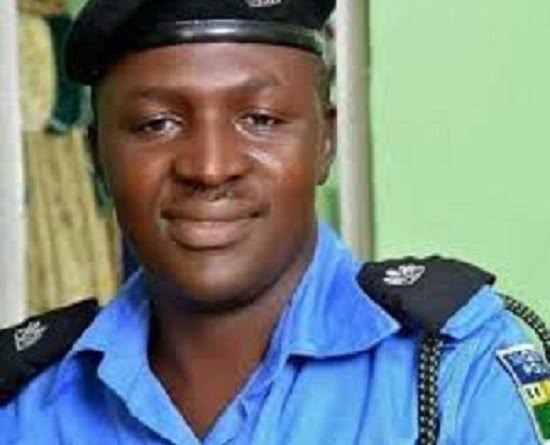
A few months ago, when the #EndSARS protests swept across the nation, angry mobs, protesting against police brutality, went on a rampage, torching police stations, carting away arms and killing security operatives. Curiously, the Nigeria Police Station, Fegge, Onitsha, Anambra State was spared as residents protected it and its personnel from the rage. In this interview, the Divisional Police Officer, Fegge Police Station, CSP Rabiu Garba, tells OKEY MADUFORO how his relationship with the community saved the day

The #EndSARS protests across the country brought you fame as one man whose station survived the anger of the mob. How did it happen?

To be very honest with you, we never expected it to take place this way. The protest indeed brought to the fore the social responsibility of the police. The police should understand the social contract between them and the people. The police is doing the job of delegated responsibility from the executive and that is exactly what it is. If you look at the constitution of the country, we have checks and balances. Sections 4, 5 and 6 of our constitution provide for the duties of the executive, legislature and judiciary arms of government and each of them act as a check on another. The checks are against executive rascality. The executive and the legislature were elected by the people, which means power belongs to the people, and it is from the elected arms of government that the executive employ people to maintain law and order and that is where the police come into the picture of doing the job of executive delegation. It is from this premise that I draw my position that a policeman is to complement the functions of the executive arm of government and that is why the police are established. Section 3 of the Police Act and Regulation and Section 4 provide functions of protecting lives and property, control and regulation of traffic as well as maintenance of law and order.

What are the specifics when it comes to the role of a police officer?

So, the duty of a police officer is to serve the public and that means he is a public officer. A policeman is not there to become a monster to the community he is serving. The community people pay their taxes and obey the laws of the land and they have the right to enjoy the right and privileges to carry out their lawful economic activities. It is based on this premise that as a police officer, I am a servant of my own community, where I find myself. I am not here to be a monster to my own community. Also, the community has the right to ask questions about the workings of the police in their area.
They have the right to come to the police station to ask questions and under the Freedom of Information Act, within seven days, they will get answers to their questions. Even if it has to do with certain documents, you have to explain to them why it is classified and may lead to unrest in the community. Therefore, it is my duty to pally with the community, but I am not saying that I am going to compromise crime. You have to work with the community to understand their problems and that is why the Inspector General Police has been emphasising on community policing. The people are those you are providing security for and you cannot go and dance along with criminals but to interface with the community. They know the area more than you and that social contract between the police and the people comes handy in maintaining law and order at every given time. For example, the youth in every community are the most vulnerable and they account for over sixty per cent of the population. That explains why we have to be close to them, organize sports activities and all that to really appreciate their problems and fashion out a way of getting them out of the woods. At some point, we get involved with politicians and public spirited leaders of the community to get the youth involved in skill training. Youth activities have become sacrosanct and that makes it imperative to relate with the youths to understand their problems.

Onitsha is the business hub of the South-East and with so much rich men and women but your relationship with them does not reflect in the infra-structure in your division…

This is my own approach and you may not agree with me. The idea has its implications. If a Nigerian comes and puts up a structure here, the police would become a puppet and the police cannot deliver. Tomorrow, if he or any of his relatives has a problem, he would expect you to help him and at the end you would have interfered in the criminal justice system which is repugnant to the tenets of the law. So, that is why I don’t want a situation whereby the police go cap in hand in the name of parleying with the community. We still have publicspirited people who come to assist us. We have new buildings here and there from people who came to show appreciation for what the police are doing. They come intermittently to provide resources and we put it into good use. But by the time you become a town crier, moving from one house to another, demanding money in order to do police work; you will end up perverting justice. The police is a federal establishment, which the citizens have paid their dues for the provision of security so you don’t expect them to be building police stations. However, we are calling for cooperation from the community in case government is not forthcoming at the moment and we use our local content and get solutions to our problems. I chose my own methodology not to disturb the business men who have the opportunity of running their own businesses. I don’t know if government is helping them or if they obtained loans from banks to do business. Even the Bible says that blessed is the hand that giveth and the Koran also says the hand that gives is bigger than the one that receives. As a police man, if you’re at the receiving end, you will have that dependant tendency.

Since after the #EndSARS protest we have been hearing of burning of police stations, are you not worried about such development?

You should understand that the police is a tool of the Federal Government. To be realistic, a lot of people have problems with government and they tend to vent their anger on Federal Government tools which the police is a part of. But if the police as an institution understands that they have to do their job in line with the law, it has to build the confidence of the people first and the people would protect the police stations. A classic example is what happened in my police station during the #EndSARS protest. People were calling me and they came here and told me, ‘Garuba don’t worry we will protect you and your station.’ Poor women selling little things were coming here with goats, rams, yam and all manner of foodstuff and they were feeding us like little children and we were safe, enjoying ourselves. That is why I am against using guns the people paid for through their taxes to intimidate and kill innocent people in the community. When you do that, they will come back to seek vengeance on you, the police man. You will be at the express road extending hands to collect money from motorists and you have not apprehended any criminal suspect. A case comes to your table and because the man has a big shop, you change the charges to criminal charges with all kinds of allegations so that you can extort money from the man. These are wrong deeds that are not expected from the policeman. But again, the public should know that a policeman is somebody’s husband, somebody’s wife, somebody’s son and somebody’s daughter. When you kill the policeman, his children become fatherless and you think that your own children will not become fatherless? This is natural justice. If you have problems with government, you don’t have to travel from Agulu to Onitsha to burn down a police station. There are legal and legitimate ways of addressing issues without burning down government property.

A day will come when you will no longer be the DPO of Fegge Police Station. How will you feel that day?

This is my community and I have no other community. I have traveled to many places in the course of my job as a police officer but it is in Onitsha that I got my fame and it is in Igboland that I made my name. I must tell you that the Igbo man is the most unique person in the entire world and I have never seen such love shown by the Igbo man. The people are hardworking and they show you love. I am not saying this because of any interest but I am telling you that the Igbo show love and brotherhood and I have really enjoyed that love. It is not about money, it is about human sympathy. I love my community and I am feeling for them. I no longer buy fuel in Fegge petrol stations because someone is ready to pay, so I go outside Fegge to buy fuel. I don’t go to restaurants to eat because everyone wants to pay for my food. They even bring food to my office and my colleagues would warn me saying that I will be poisoned. But I tell them, if they put urine inside the bottle and call it a drink, I will take it and nothing will happen to me. I am in love with this community and I cannot hide this love for the Igbo people because there is no part of Nigeria that you will see such love. Money or no money, promotion or no promotion, the love that I have enjoyed in Igboland is the greatest gift to me and my career as a police officer. (Newtelegraphng)

TIPS