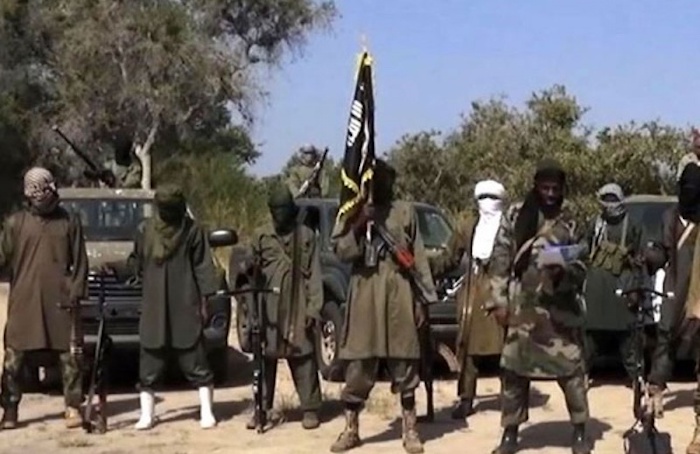
Suspected Boko Haram and Islamic State West Africa Province (ISWAP) fighters intercepted a trailer loaded with maize and three trucks carrying building materials in northern Borno State, underscoring the Nigerian government’s continued failure to secure key territories more than a decade into the insurgency.
The attack occurred around 2:35 p.m. on Monday at Garin Kashim in Guzamala Local Government Area, barely 24 hours after insurgents massacred at least 17 civilians in nearby Guzamala-Abbari village. Despite repeated assurances from Abuja, the area remains effectively ungoverned.
Local and security sources said the insurgents mounted a roadblock, deflated the trucks’ tyres, and set the trailer’s head ablaze. The fire was narrowly contained before destroying the maize consignment. Two drivers remain missing, feared abducted or killed.
The ambush came shortly after 10 newly sworn-in local government chairmen held a meeting with military officials in Mairari village—one of the communities the Borno State Government plans to resettle internally displaced persons (IDPs) in.
“The terrorists don’t want civilians to return,” a security source said. “They have controlled Gudumbali and surrounding communities for over a decade. Any attempt to restore civil authority is violently resisted.”
Gudumbali, the headquarters of Guzamala LGA, has been deserted for years and remains firmly under Boko Haram control, despite repeated calls for federal military intervention.
IDP Resettlement Stalls Amid Renewed Attacks
The Borno State Government recently announced plans to repatriate more than 3,000 refugees from Cameroon and resettle thousands of IDPs. Mairari village was identified as one of the return locations, with temporary shelters already under construction.
But displaced persons in Monguno say the renewed violence has shattered confidence.
“There is no real military presence, no civil authority, and the surrounding areas are controlled by Boko Haram,” one IDP told reporters. “How are we supposed to go back?”
On Sunday, Borno State House of Assembly Speaker Abdulkarim Lawan confirmed that 12 bodies recovered from Guzamala-Abbari were buried in Monguno, while five others killed in nearby Nganzai were interred in Gajiram town.
Lawan, who represents Guzamala, again urged the federal government to reclaim the territory and reconstitute civil governance.
‘Repentant’ Militants vs Abandoned Victims
The latest attacks have reignited criticism of Abuja’s controversial policy of rehabilitating so-called “repentant” Boko Haram fighters while survivors struggle without justice, reparations, or psychosocial care.
In February 2020, Senator Mohammed Ali Ndume warned that many rehabilitated insurgents were returning to violence. His fears appeared validated on April 30, 2024, when gunmen dressed in military uniforms attacked a police station in Maiduguri to free detained fighters, later torching Nigeria Immigration Service and NDLEA checkpoints.
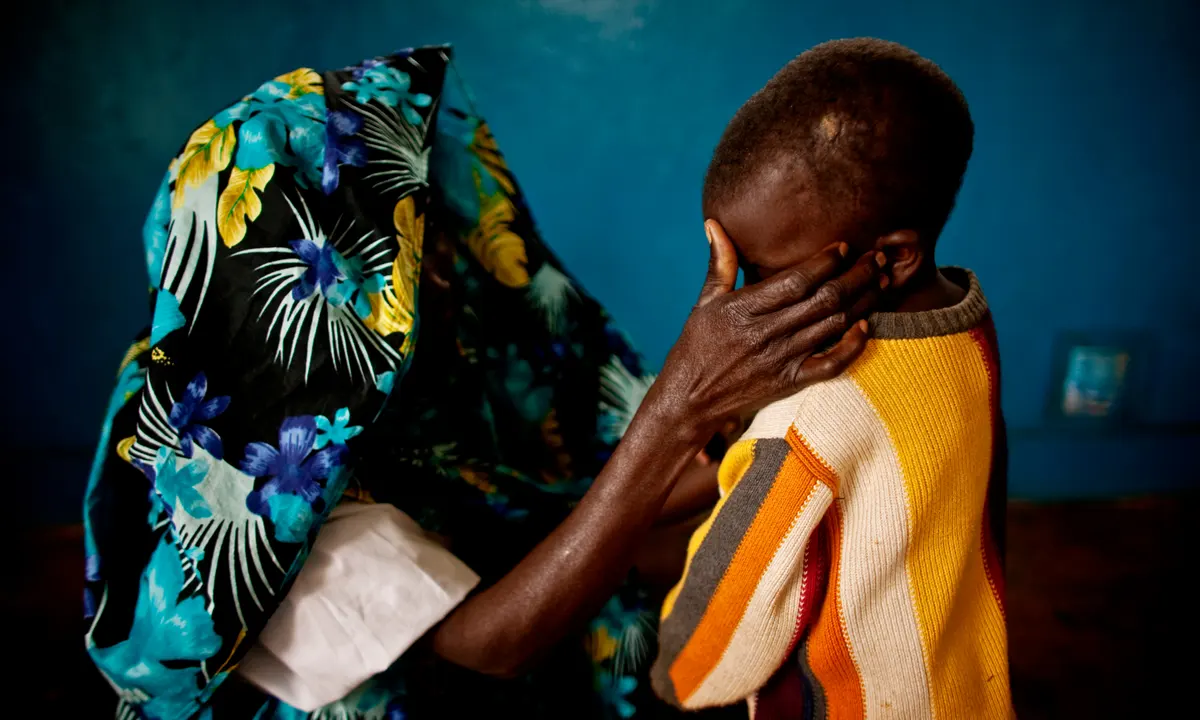
Human rights groups say the focus on deradicalisation has sidelined victims—especially women and girls subjected to rape, forced marriage, trafficking, and unlawful military detention.
A recent dialogue convened by the Al-Amin Foundation for Peace and Development in Maiduguri demanded accountability, reparations, and transitional justice for survivors. Amnesty International has repeatedly accused Nigerian authorities of unlawful detention, forced reintegration, and failure to prosecute perpetrators on both sides of the conflict.
A War Without Governance
More than 15 years after Boko Haram’s emergence, entire local governments in Borno remain outside state control. Roads are unsafe, food supplies are attacked, and civilians continue to die, while Abuja insists progress is being made.
For residents of Guzamala, Monguno, and Nganzai, the question is no longer whether Boko Haram is still active, but whether the Nigerian state has abandoned them altogether.