Today, the world observes the 2025 International Day of Persons with Disabilities (IDPD) with an ambitious theme: “Fostering disability-inclusive societies for advancing social progress.” It is a reminder that social progress is not measured by GDP growth alone; it is measured by how societies include, protect and unlock the potential of those most excluded. Inclusion is a prerequisite for genuine development, not charity.
This year’s theme also builds on the momentum generated at the Second World Summit for Social Development in Doha, where global leaders recommitted to building societies anchored in equity and human dignity. The summit reiterated an uncomfortable truth disability advocates have long highlighted: you cannot claim social progress if millions of persons with disabilities remain locked out of education, decent work, public services, and community life. The IDPD observance at the UN this year is therefore focused on turning commitments into concrete action.
For Nigeria, where at least 15% of the population lives with one form of disability, this theme lands at a critical moment. It confronts a governance question central to national development: Can our national budget create a world for everyone, or will it continue to reproduce barriers for millions?
Budget as a Real Test of Exclusion
Persons with disabilities remain disproportionately represented among the poor, the unemployed, and those without access to essential services. The barriers are structural: inaccessible schools and hospitals, transport systems not designed for diverse needs, employers reluctant to hire, and social protection systems that fail to reach those facing the highest costs of living.
These exclusions compound over a lifetime. A child unable to attend school becomes an adult locked out of work. A woman unable to access reproductive health or assistive devices faces poor health and reduced autonomy. Families, especially women caregivers, bear hidden financial and emotional burdens. The result is not only a human rights crisis, but also a development and fiscal crisis. When millions cannot participate fully, nations lose productivity, talent, and economic dynamism.
Disability inclusion must sit at the heart of any credible social progress agenda. And for Nigeria, that inclusion must begin in the national budget. Budgets are moral documents. They reveal our priorities more honestly than speeches or policies when we put our money where our mouth is.
A disability-inclusive national budget allocates adequate and predictable funds for accessibility, assistive devices, inclusive education, rehabilitation, healthcare, and public infrastructure. Two, it mainstreams disability across all ministries, rather than confining responsibility to the National Commission for Persons with Disabilities (NCPWD). Three, it ensures participation, giving persons with disabilities and their representative organisations a meaningful role in planning, implementation, and monitoring. Four, it establishes transparency and accountability, so funds reach communities rather than being absorbed by bureaucracy.
Nigeria has made some progress with the NCPWD and Disability Act. However, the Commission’s allocations have remained far below what is required and its mandate, and most ministries still treat accessibility as an optional “add-on” rather than a standard requirement. Meanwhile, disability-specific programmes rely heavily on donor funding, making them vulnerable to discontinuity.
What “Disability-Inclusive” Should Mean in Practice
To build disability-inclusive societies, countries must move beyond rhetoric to systems change.
Laws without implementation plans, budgets, and enforcement mechanisms are hollow. Nigeria must fully implement the Disability Act, enforce accessibility regulations, and integrate disability targets into national development plans with dedicated financing lines.
Accessibility must become a standard feature of all public buildings, transportation, digital platforms, and public information. Ramps, braille, tactile paving, audio announcements, sign-language interpretation, accessible websites, and easy-read formats should be routine, not exceptional. Designing for everyone increases participation and reduces long-term costs.
Schools must be transformed into inclusive spaces equipped with trained teachers, accessible materials, assistive technologies, and flexible curricula. Inclusive education is not a niche concern; it is the foundation for future access to work and civic life.
Work is central to dignity and independence. Government and employers should establish inclusive recruitment pathways, offer reasonable accommodations, and support vocational training. Public procurement can prioritise businesses led by persons with disabilities. These are not favours, they unlock economic value.
Without accurate data disaggregated by disability type, gender, age, and geography, policymakers are navigating blindly. Equally, disability-inclusive budgeting must become standard practice across federal, state, and local levels. Persons with disabilities must meaningfully shape budget decisions that affect their lives.
Reframing disability inclusion as a public good is crucial. Inclusive societies are more resilient, more productive, and more cohesive. They draw on diverse abilities, increase labour force participation, reduce poverty, and strengthen communities. Inclusion is therefore not only a rights-based obligation but also good governance and smart economics.
Technology can be transformative, from screen readers to accessible learning platforms, telehealth, communication devices, and AI-powered assistive solutions. But technology can also widen exclusion if digital systems are designed without diverse users in mind.
Government and the private sector must ensure digital accessibility standards for all platforms, support for local innovators building assistive technology, affordable devices and repair networks, and training for users and service providers. Assistive technology is only useful when it is usable, repairable, and sustainably financed.
Businesses are not optional partners; they are essential actors. Inclusive recruitment, accessible workplaces, and disability-conscious product design open new markets and unleash talent. Persons with disabilities are consumers, entrepreneurs, and innovators. Through procurement, mentorship programmes, job redesign, flexible schedules, and workplace accommodations, the corporate sector can drive national change at scale.
Organisations like the Joint National Association of Persons with Disabilities (JONAPWD), disability rights NGOs and community leaders play a vital role in translating policy into practice. They can provide expertise, advocate for accountability, and co-design programmes that reflect lived realities. Governments must support them with core funding and meaningful seats at decision-making tables.
Beyond Budgets: Shifting Culture and Expectations
As the world marks IDPD 2025, Nigeria can take some immediate steps by issuing enforceable accessibility directives for public buildings, transport services, and digital platforms; create a Disability Budgeting Framework with ring-fenced baseline funding and mainstream disability funding across all ministries including education, health, labour, transport, housing, and ICT.
Government can also launch inclusive public employment programmes with support for employers; fund a national assistive technology strategy focused on local manufacturing and affordable distribution; require accessibility and inclusion clauses in major public procurement contracts; provide core funding for disability-rights NGOs and include them in monitoring and evaluation committees; strengthen disability data systems under the National Bureau of Statistics and use conditional federal grants to encourage states to implement accessible infrastructure and inclusive schools.
These steps are realistic, achievable, and aligned with Nigeria’s development priorities.
Even the best policies can be undermined by stigma. Cultural attitudes remain one of the greatest obstacles to inclusion. Media houses, faith institutions, schools, and community leaders must help shift public perception by highlighting leadership, achievement, and agency among persons with disabilities. Representation in politics, business, media and academia changes expectations and opens pathways.
If the Doha Summit and the UN’s 2025 IDPD theme teach us anything, it is that social progress will not be sustainable unless inclusion is central. National and subnational budgets must be designed to reflect the needs and rights of all Nigerians.
This IDPD should be the moment Nigeria matches rhetoric with resources, turns policy into practice, and builds a world where everyone truly belongs. Social progress that leaves millions behind is not progress at all. A world for everyone is possible, but only if we finance it deliberately, transparently, and with dignity at its core.
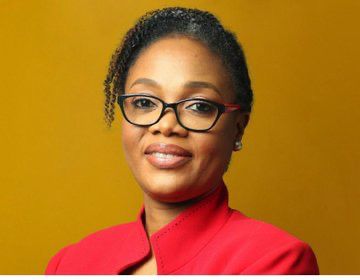
Olufunke Baruwa is an international development expert. She is a weekly columnist and writes at the intersection of gender, public policy and governance.