

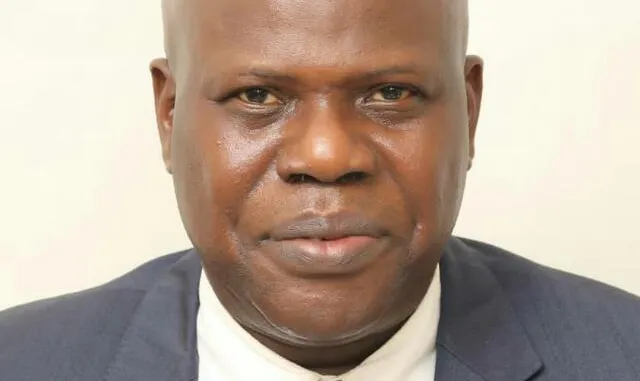
By Citizen Richard Odusanya
Let me begin with an excerpt from one of my reflections, written on May 29 – the second
anniversary of the administration of President Asiwaju Bola Ahmed Tinubu (PBAT):
That open letter of May 29, followed by another on June 12 (our Democracy Day), was not
written in condemnation but in constructive engagement — a citizen’s sincere effort to
reach out to leadership in the spirit of partnership and shared responsibility. My intention
was, and remains, to awaken our collective conscience toward purposeful governance
and people-centred progress.
Regrettably, rather than moving steadily along a deliberate path of renewal, the nation
seems to be drifting — uncertain in direction, yet burdened by the weight of expectations.
Today, our dear country finds itself at a painful crossroads. Over 31 million Nigerians are
facing acute hunger, while an estimated 133 million live in multidimensional poverty.
These are not mere statistics; they represent the silent anguish of families, communities,
and generations. The causes are multifaceted — ranging from conflict and displacement
to economic dislocation, policy inconsistency, and insecurity that has overstretched both
our institutions and our hope.
And this morning, as I pondered on these realities, two unsettling issues loomed large in
public discourse: the rumoured coup and the planned nationwide protest. Both, though
differing in nature, reflect a nation searching for direction — a paradox of frustration and
aspiration intertwined.
At such a delicate time, may wisdom prevail — among leaders and citizens alike. The path
forward must be one of dialogue, reform, and renewal, not confrontation or despair. For
nations are not destroyed by the noise of dissent but by the silence of conscience.
“Today, I write to you not as a critic but as a patriot — one deeply concerned about
the state of our beloved nation. I write as a citizen who believes in the urgent
necessity of a national rebirth — a renaissance of values, leadership, and collective
purpose. My hope is that millions of our compatriots, at home and abroad, will
begin to experience a unity that transcends division and a renewed commitment to
our shared destiny.”
Restoring Confidence and Stability: What Government Can Do
To make the very thought of a coup or any unconstitutional intervention a complete
impossibility, the government must deliberately rebuild the invisible but powerful bridge
between the people and the state. This requires not grand declarations but pragmatic,
people-centred actions that restore trust, fairness, and hope.
(1) Rebuild Economic Confidence at the Grassroots.
Hunger is a national security threat. The government must urgently scale up local
food production through guaranteed input supply, rural security for farmers, and
price stabilization mechanisms. The National Grain Reserves and Strategic Food
Supply Programme must be revived and transparently managed.
(2) Reignite Public Service Efficiency and Integrity.
Nigerians are losing faith not in democracy itself but in the way it is managed. A
visible and merit-based civil service reform — cutting waste, reducing duplication,
and rewarding performance — will renew confidence that government works for
all, not for a few.
(3) Strengthen Communication and Public Engagement.
Silence and mixed messages breed rumours and mistrust. The government must
create a credible, non-partisan Citizens’ Communication Platform — a regular,
structured interface between leadership and citizens — to listen, clarify, and
respond.
(4) Tackle Corruption Beyond Optics.
When citizens perceive selective justice, cynicism replaces patriotism. There must
be a consistent, transparent, and exemplary fight against corruption — starting
from the top. Public declaration of assets by senior officials and publication of
major contract details will send a powerful signal.
(5) Secure the Nation, Protect the Dignity of Every Nigerian.
The military must be seen as protectors of the republic, not potential arbiters of its
fate. Regular welfare reviews, professional training, and civilian oversight should
strengthen their loyalty to constitutional authority while maintaining morale.
(6) Build a Social Compact with the Youth.
No democracy survives if its youth feel excluded. The government should institute
a National Youth Economic Empowerment Compact — focused on skills, digital
jobs, and entrepreneurship — to harness their creativity rather than allow
frustration to ferment instability.
(7) Institutionalize Dialogue and Inclusive Governance.
There should be a National Dialogue Platform where labour, civil society, and
religious and traditional leaders can regularly interface with the government on
critical socio-economic issues — forestalling street confrontations and restoring
mutual respect.
And A Call for Collective Responsibility
Nigeria does not need saviours in uniform or protests in the streets to survive. What we
need are leaders with empathy and citizens with patience and participation.
When governance becomes more listening, responsive, and fair, agitation for extraconstitutional solutions will find no audience.
Let the government lead with humility, and the people respond with faith. That is how
nations heal and how democracies endure.
NIGERIA WILL RISE AGAIN
Citizen Richard ODUSANYA.
Public Affairs Enthusiast and Good Governance Advocate
odusanyagold@gmail.com
The views expressed by contributors are strictly personal and not of Law & Society Magazine.


