The Armed Forces—and indeed, the wider Nigerian society—are still reeling from the shock of power wielded not as a scalpel, but as a sledgehammer.
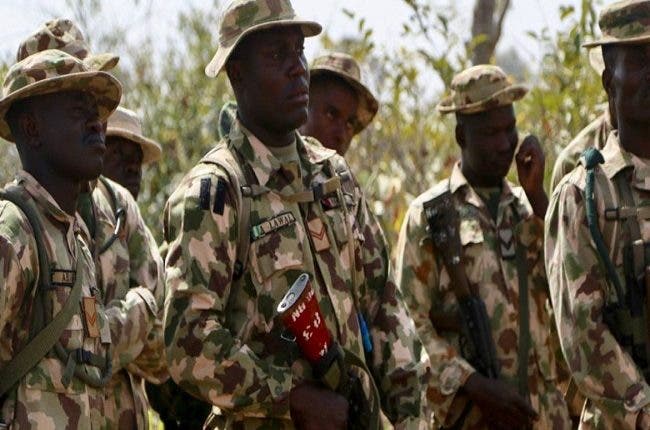
In a single, brutal stroke, disguised as “restructuring,” the Armed Forces are set to witness the orchestrated mass decapitation of their senior leadership, with an estimated 60 senior officers to be forced into premature retirement.
This is not reform—it is an act of profound institutional disruption that threatens to immolate the very professionalism and cohesion upon which national security depends. To dress this purge in the language of “a new direction” is a grotesque deception—a political gambit that sacrifices military stability at the altar of personal control.
Let us be clear about the immediate casualty: morale. The military covenant is built on the bedrock of trust and continuity. By abruptly uprooting scores of senior officers under opaque, politically tinged justifications, the administration has sent a corrosive message to every soldier, sailor, and airman: your service is disposable. Loyalty and competence are meaningless; your career now hangs on the whim of fickle political calculations.
How can an officer corps be expected to focus on mortal threats in the field when they must constantly look over their shoulders, waiting for the next arbitrary sledgehammer to fall on their careers? This move does not merely distract them—it tells them their sacrifice is utterly worthless.
This ambush on morale is compounded by a willful destruction of the military’s brain trust. The notion that a modern military can function without institutional memory is not just naïve—it is strategically suicidal.
The purged officers were not mere epaulettes hanging as decorations on a shoulder, nor simple titles on a flowchart; they were repositories of hard-won strategic knowledge, architects of operational relationships, and guarantors of institutional continuity. By eviscerating them en masse, a needless strategic vacuum has been created.
The forces now risk becoming leaderless, disoriented, weak, and dangerously vulnerable. Our adversaries are not blind; they see this self-inflicted disarray and are undoubtedly preparing to exploit it to the hilt. In the face of rampant banditry and insurgency, this purge is a self-defeating blunder.
Of course, the apologists for this chaos will prattle about the need for “new vigour.” But this hollow, cynical, and shortsighted slogan cannot mask the reality: it is impossible to inject vigour into a system paralyzed by shock.
A mass, abrupt attrition is the very antithesis of effective management. It is strategic chaos disguised as decisive action. The timing—reeking of political panic in the wake of coup rumours—reveals the true motive: it is not about strengthening the military, but about securing a political flank.
The regime may have just traded an imaginary instability for a guaranteed, continuous, and very real institutional crisis. It may have chosen to fight the spectre of rumoured disloyalty by ensuring that no one has any reason to remain loyal anymore.
The most damning indictment of this purge is the signal it sends. To the troops daily risking their lives in the field, it screams that their professional command structure is now fragile and politically contaminated. Their personal faith—that essential ingredient of esprit de corps—is being eroded.
To our enemies, it broadcasts an unmistakable message of weakness and internal confusion. They need not defeat a united, focused military; they simply need to wait for a distracted, demoralized one to make a fatal mistake.
The constitutional power to command the military is not a licence for its destruction. This purge is a catastrophic error in judgment that undermines morale, erodes institutional knowledge, and weakens defence capacity. The solution to security challenges cannot lie in such a self-destructive experiment.
The damage has been done. The question now is whether the humility to reverse course exists. There must be an immediate halt to this reckless campaign. A clear and honest explanation must be issued to the forces, and the arduous task of rebuilding the trust so carelessly destroyed must begin at once.
Poloma is a Nigerian author, historian, and public affairs commentator.. His most notable work, The First Regular Combatant: Brigadier Zakariya Maimalari, stands as a landmark contribution to Nigerian military history. harunapoloma@yahoo.com
The views expressed by contributors are strictly personal and not of Law & Society Magazine.