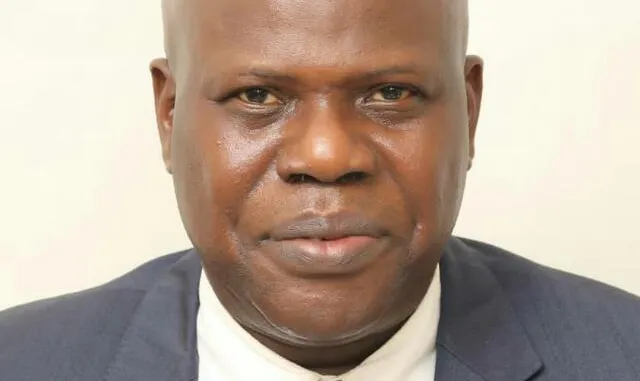
By Suyi Ayodele
Years ago, when the sun used to rise and set at its time, a powerful farmer lived. History has it that at his coming of age, the man boasted that he would have the largest farm in his neighbourhood. He was said to have also told those who heard him boast that he would not work harder than any average farmer to achieve the feat. His strength, the powerful farmer told his listeners, is that he would do what nobody would ever do.
And true to his boast, the man’s farm became the talk of the town. He cultivated virgin lands and acquired old farms from their owners. Some voluntarily yielded their plantations to him. Many others were forced to give up their farmlands by circumstances beyond their control. Not a few ‘recalcitrant’ farmers, who resisted the acquisition of their farmlands, died mysteriously. The situation got to a point that nobody was willing to share farm boundaries with the powerful farmer.
He became the only farmer around. Other farmers ‘willingly’ turned farmhands on his plantation. At that point, the powerful farmer became a demigod. He decided who ate and who should go hungry. Even when a few others struggled to farm, the yields from their fields were too miserable. Yet, the harvests from the powerful farmer were bountiful. He sold, became rich and had in excess while others wallowed in abject poverty.
The elders of the land knew something was wrong. They knew that the trajectory was no longer normal. They decided to act. A powerful diviner was consulted. What came from the divination board was shocking. The Oracle revealed that the powerful farmer was not ordinary. Ifa disclosed that while the other farmers were relying on the strength of their hands, the powerful farmer did something esoteric.
According to Opèle, the powerful man consulted a sorcerer who made a charm that makes other people’s farm produce reduce in size while that of the powerful man grew in leaps and bounds. That metaphysics is known as Ako. Ako, Yoruba metaphysics says, is twofold. One, the worse of the two, kills individuals and makes their ghosts work on the charmer’s farm. The other simply makes the other farmers’ produce grow wretched while the charmer’s produce prospers. In the case of the powerful farmer, Ifa said he combined the two. That was why those who resisted him died prematurely.
What was the solution? The divination said that if they must get rid of the powerful farmer, the people must make a sacrifice of all edibles and add what is forbidden for the powerful farmer to eat. Once the man sees the sacrifice, the divination said, he would lose all his powers. And what was that item? They asked. Ifa responded that the people should find out by themselves. After all, it is said that there is nothing as accurate as a self-applied divination.
The elders left and made arrangements for the sacrifice. All the edibles were added and the pot placed on the farm road the powerful man takes to his farm. But after about three attempts and nothing happened, the elders returned to their diviner. The message they got was that there was something they did not add. Ifa asked them to go and think deeply at home.
To solve the riddle, the elders took counsel and decided to prepare another pot of sacrifice. But this time around, they appointed some men to hide in the bush to spy on the man and his reaction when he saw the sacrifice. The strategy worked. Early the following morning, when the man stumbled on the new pot of sacrifice, he laughed. He used his cutlass to check the items in the pot and laughed again. He then wondered aloud why the people would keep doing the same thing and expecting a different result. In his arrogance, he said, loudly to himself: “But they tried this time around. The only thing missing here is a lizard.” He upturned the pot and left for his farm.
Those hiding in the bush heard him clearly. They went back and reported their findings to the elders. The next day, another pot of sacrifice was waiting. But this time around, various types of lizards were added. The people did not want to take any chances.
When the powerful man got to the spot, he knew that something had happened to him. He did all he could to reverse the sacrifice. He chanted, moved to incantation; he did evocation and ended with invocation. All failed. The powers he had had been neutralised. The esikus (ghosts) of those working on his farm descended on him and clubbed him mercilessly. He was taken home half dead. His era of terror ended.
Our native upbringing does not allow a younger person to teach an elder the wisdom of life. But the name Ajáléonílébotìèléyin (A-já-lé-o-ní-lé-bo-ti-è-lé-yin) — he who plunders another’s house to fortify his own backyard — is instructive here.
It is also un-African for a child to say he has seen a lot when the elders are present. I subscribe to that native injunction. But it is equally safe for a child to say that the little he has seen is enough to teach a life lesson.
If President Bola Ahmed Tinubu is rejoicing today because all his political opponents are coming to his camp in droves, I will advise him to ask his diviners the implications. There is a reason why he should consult those who are wise on why nobody names his child Ajáléonílébotìèléyin.
This story above is derived from the legend of Ajáléonílébotìèléyin. Our elders say that we should tell he who removes other people’s roofs to cover his own porch to remember the day a whirlwind will remove his own roof (E so fún Ajáléonílébotìèléyin pé kó rántí ojó tí ìjì máa jà tó máa gbé ilé tiè lọ). When that time comes, they caution that there will be no place to take cover from the impending rain.
President Tinubu appears to be the luckiest man today in Nigeria. He should be happy about that. He has every reason to celebrate. His camp is also justified if the drums are rolled out in jollification. If the trend of defection continues, Tinubu will be contesting against Tinubu in 2027. But I don’t think President Tinubu should be happy because he is the only farmer whose farm harvest is bountiful.
Why do I think the President should not be happy? The story of Ajáléonílébotìèléyin tells me that. Names in my Yoruba background carry meanings. This particular one is not just a name but a legend. The wisdom of the name tells me that President Tinubu should not rejoice because he has no opposition to his painful rule over Nigeria.
Joy, in the African worldview, has a slender and delicate body. We call it ayò, abara tíntín (the tiny-bodied joy) in my place. Why did those before us give joy such a contrasting name? The elders of that era argued that within joy lies defeat, and at times, sadness.
When one is happy, they caution that such a person should not be overjoyed like the proverbial striped frog (Akere) which breaks its limbs while rejoicing. The story behind ayò àkèré (the joy of the striped frog) will, however, not be told today.
At the last count, President Tinubu’s All Progressives Congress (APC) has 24 governors in its kitty. Only God can tell if any governor will remain in the opposition parties before the 2027 general election. This is a great feat by the President. The simple implication is that President Tinubu today appears unbeatable. But is that true? Is there a man who cannot be defeated? Is there any champion for life? When a man is too powerful for his enemies to handle, what do our elders ask us to do? The answer to this last poser is the experience of life as taught by the name Ajáléonílébotìèléyin.
What President Tinubu is doing with the decimation of the opposition is exactly what the powerful farmer, Ajáléonílébotìèléyin, did to his fellow peasants. He can only thrive for a while. Those who believe that President Tinubu is the master strategist should know that very soon, the sacrificial pot waiting at the three-footpath for the President will contain an item that Tinubu is forbidden to eat. It will happen because nature does not allow an individual to answer the name “we-have-come” (Enikan kìí jé àwádé).
The president’s masquerade can dance alone for as long as he wants at the arena. It must surely exhaust all the stunts in its arsenal. Former Governor Rauf Aregbesola of Osun State hinted at that last week. We should pay more than a passing attention to the man known as Ogbeni. The whirlwind will surely come and blow off the roof of Ajáléonílébotìèléyin.
He cannot be the only one with a roof over his head. And because he had succeeded in the past in rendering other houses roofless, there will be no place of refuge from the impending inclement weather. Like they say on the street, everyone go chop breakfast. This is why I believe that it is too premature for Tinubu and his supporters to rejoice.
What the President and his APC are doing is not ordinary. The way the opposition bigwigs are rushing, like in Kwesi Brew’s poem Lest We Be The Last, to the ruling APC can only spell doom for the nation. The end, like Brew’s poem, will not be palatable to the defectors of today. Tinubu himself will find out too late that there is nothing to the defections. His harvested ‘friends’ have enough forbidden edibles in their bags.
This is one of the reasons I consider Governor Seyi Makinde of Oyo State’s reaction to the gale of defections that has hit the PDP as the most metaphorical reaction so far to the epidemic of defections sweeping across our political landscape. Looking at how politicians, especially fellow governors, are falling over one another to join the ruling APC, Makinde quipped that he was not moved by the number of the people defecting to the ruling party.
He added that he would “only be moved when hunger defects into the APC.” That was classic; that was deep in all ramifications. The statement has generated a lot of negative reactions, especially by the apologists of the ruling APC and the Dictator-General of Nigeria, President Tinubu, who today is the sole beneficiary of the harvest of defections.
Many have argued that it was ‘uncharitable’ of Governor Makinde to have mocked Nigerians for being hungry. Some said that it was ‘self-indicting’ and ‘insensitive’ to talk about poverty in the land. They argue that if indeed there is hunger in the land, Makinde is part of the people who inflicted that pain on the citizenry. I don’t hold the portfolio of Makinde’s publicist, and as such, I won’t defend him on that.
The views expressed by contributors are strictly personal and not of Law & Society Magazine.