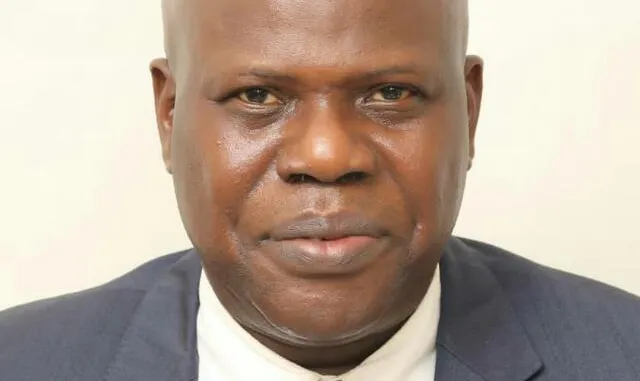
By Joe William-Obi
Nigeria is a country with the ambition of a global power and the
electricity output of a small town in rural America. For decades, we
have tolerated a power sector so dysfunctional that it would be
ridiculous if it were not crippling our economy, stalling our
industries, and humiliating our citizens daily. What confronts us
today is not a technical mystery or a shortage of ideas. It is a
political failure. The longer we pretend otherwise, like the
proverbial ostrich with its head buried in the sand, the deeper and
costlier our darkness becomes.
Let us begin with the facts, because the facts are not in dispute.
Nigeria generates between 4,000 and 6,000 megawatts (MW) of
electricity for a population exceeding 200 million people. Our
installed capacity stands at roughly 13,000 MW, yet less than 5,000 MW
is typically available on the national grid. Installed capacity is
often misunderstood, so an analogy helps. It is like the top speed
printed on a car’s speedometer. Your car may be rated for 220 km/h,
but traffic, bad roads, fuel constraints, and weather conditions, let
alone your love for life and fear of being involved in an accident,
mean you almost never reach that speed.
Power plants work the same way. Installed capacity represents a
theoretical maximum. Actual generation is what truly reaches homes,
hospitals, and factories. In Nigeria’s case, that real-world output
remains painfully low, year after year.
Meanwhile, the Minister of Power states that Nigeria requires about
$3.5 billion annually to reach 40,000 MW by 2030. Aliko Dangote has
argued that Nigeria should already be producing 60,000 MW. Former
Power minister, Professor Barth Nnaji, maintains that at least 100,000
MW is necessary to meet the demands of our population and industrial
ambitions. These numbers are not controversial within energy policy
circles. What is controversial, indeed indefensible, is our continued
refusal to act decisively on them.
The consequences of inaction are visible and immediate. In January
2026 alone, the national grid collapsed twice, plunging millions of
Nigerians into darkness. These events were not freak accidents or acts
of God. They were the predictable outcomes of a system that has been
neglected, mismanaged, and shielded from accountability by inertia and
vested interests.
Mismanagement in Nigeria’s power sector is not merely accidental
incompetence; in many cases, it is deliberate. Although Generation
Companies (GENCOs) and Distribution Companies (DISCOs) are nominally
privately owned, they operate within a framework heavily sustained by
government guarantees, subsidies, and repeated bailouts. When things
go wrong, and they often do, it is public money that is deployed to
keep the system afloat.
This milieu warehouses rent seeking, and that is when people use
political influence or connections to make money from a system without
creating real value, often by manipulating rules, contracts, or
government decisions. Politically connected consultants, contractors,
and middlemen are inserted into power sector projects not to improve
performance, but to fleece public funds. Inflated consultancy fees are
quietly embedded into project costs. Delays are tolerated because they
justify fresh interventions. So-called emergency contracts are renewed
year after year without addressing the underlying problems they were
meant to solve.
GENCOs and DISCOs are often unable to exit these arrangements even
when they are inefficient or exploitative. Many are locked into
government-backed contracts, regulatory approvals, or intervention
funding structures. When projects fail or costs spiral, the losses do
not remain with the companies alone. They are transferred to the
public through tariff hikes, bailout packages, and special
intervention funds. In this distorted system, failure is not punished;
it is rewarded. The worse the system performs, the more money flows
into it under the banner of rescue.
Darkness, in other words, becomes profitable for a few unscrupulous
citizens. When breakdowns generate income, the incentive to fix the
power sector disappears.
The economic cost of this dysfunction is jarring. According to the
Rural Electrification Agency, Nigeria loses approximately $25 billion
annually to unreliable electricity and deteriorating infrastructure.
That is money that could be building schools, hospitals, roads, and
paying salaries. Instead, it is consumed by diesel generators, wasted
fuel, and lost productivity.
In places like Asaba, this failure is not abstract or statistical. It
is not beyond the pale that emergency surgeries at the Federal Medical
Center are sometimes performed under phone lights when electricity
suddenly fails, or elective procedures are cancelled outright. In Aba,
thank goodness for Governor Alex Otti, else tailors would be spending
more on fuel than on fabric. In Kano, a few textile factories that
once employed thousands now operate at a fraction of their former
capacities; a larger number are already dead. Even multinational
corporations are relocating operations to Ghana and Kenya, where
electricity supply is far more reliable.
To understand how the system breaks down, one must follow both the
money and the mechanics. Electricity does not appear by magic. Most of
Nigeria’s power plants run on gas. That gas fuels the turbines, that
is, the massive machines that generate electricity. When GENCOs are
not paid, they cannot afford gas purchases or routine turbine
maintenance. Plants are then forced to shut down or operate far below
capacity, even when the physical infrastructure exists.
On the other end of the chain, DISCOs are responsible for delivering
electricity to homes and businesses. When they fail to maintain power
lines, transformers, and substations, electricity leaks out of the
system through faults and breakdowns. When they fail to collect
revenue efficiently, they lack the funds to repair damaged equipment
or expand capacity. The result is widespread blackouts, not because
power does not exist, but because the system designed to deliver it is
broken.
Simply put, when money stops flowing through the system, electricity
stops flowing too.
Sitting between GENCOs and DISCOs is the Nigerian Bulk Electricity
Trading Company (NBET), a government-created intermediary intended to
stabilize payments after privatization. The logic was straightforward.
Many DISCOs were financially weak and unable to pay GENCOs reliably.
NBET was therefore established to buy electricity from GENCOs,
guarantee payment using government backing, and resell that power to
DISCOs.
In theory, this process was meant to reassure power producers,
encourage investment, and prevent system collapse. In practice, it has
achieved the opposite. Because NBET depends on government funding and
political approvals, payments are often delayed. GENCOs wait months to
receive money for electricity already produced, leaving them unable to
buy gas or maintain equipment. Meanwhile, DISCOs face little pressure
to improve efficiency or revenue collection because the government
absorbs the risk.
What was designed as a temporary stabilizer has become a permanent
bottleneck, slowing payments, weakening accountability, and trapping
the sector into a cycle of debt and underperformance. Worse still,
NBET blocks direct transactions between GENCOs and DISCOs that could
enable faster and more efficient settlements.
This is why bilateral trading matters. It simply means allowing GENCOs
and DISCOs to negotiate directly, without a government warehouse like
NBET in the middle. Think of a farmer selling yams directly to a
market trader instead of through a government depot that pays late and
fixes prices without understanding production costs. NBET should be
scrapped to allow bilateral trading between GENCOs and DISCOs.
We do not need to look for working models. The state of Texas, USA,
provides a clear example. The simplest way to understand its power
system is to compare it to food distribution. Power generators are
like farmers. Their job is to produce electricity and bring it to
market. There is no single government warehouse hoarding supply.
Instead, electricity is sold in a competitive wholesale market managed
by ERCOT (Electric Reliability Council of Texas), where prices reflect
real-time demand rather than bureaucratic fiat.
Retail Electricity Providers then buy power from this market and
compete to sell it to consumers. If a Retail Electricity Provider
overcharges or delivers poor service, customers switch, no long
stories. Period! Transmission and Distribution Utilities function as
transporters, delivering power and fixing faults without owning
electricity or setting prices. Roles are clear: generators produce,
retail providers sell, transporters deliver. Money flows directly,
underperformers are forced out, and reliability follows.
China offers complementary lessons in cost-effective scaling.
Large-scale hydroelectric power provided China with a low-cost
backbone of electricity for decades. Coal plants, though
controversial, were standardized and mass-produced, reducing unit
costs and accelerating deployment. More recently, China has scaled
solar and wind aggressively, not as standalone solutions, but as part
of a diversified mix supported by strong transmission infrastructure
and grid-level storage. The lesson is not ideology; it is sequencing.
China built cheap, reliable base power first, then layered renewables
on top.
The City of Shanghai offers another lesson, this time in daily system
management. Sensors monitor electricity use, weather, and equipment
performance. Artificial intelligence analyzes this data in real time,
adjusting supply, prioritizing renewables, and detecting faults early.
Waste is minimized, outages are rare, and efficiency is maximized.
These are not futuristic ideas. They are working systems.
Nigeria must also decentralize power. Running an entire nation on a
single grid is like supplying water through one pipe. States,
communities, and private firms should be free to build mini-grids and
local systems that are faster to deploy and easier to maintain.
All these changes need skilled personnel to work. Nigeria needs a
national push to train electricians, line workers, solar technicians,
and grid engineers. The National Power Training Institute of Nigeria
(NAPTIN) is doing important work, but it is not enough. Every state
must expand technical and vocational training focused on electricity.
Pricing must also be confronted honestly. Power sold below cost is
unsustainable. Cost-reflective tariffs, paired with targeted subsidies
for citizens, are unavoidable. A cost-reflective tariff simply means
electricity is priced high enough to cover what it costs to produce,
transmit, and deliver power so the system can run without constant
bailouts or collapse. Failure must stop being rewarded. Contractors
who miss deadlines should face penalties. If you cannot deliver, you
should not be paid.
Finally, corruption must be confronted head-on. Contracts must be
published. Bidding must be transparent. Regulators must be insulated
from political pressure. Courts must act swiftly and enforce
judgments.
We have lived with blackouts for so long that many Nigerians have
stopped believing reliable electricity is possible. This fatalism is
dangerous, because a nation that is resigned to the belief that it
cannot power its homes, cannot power its industries. I must also
submit that that same nation that cannot power its industries, cannot
power its future.
Of course, we know the solutions to fixing our electricity malaise.
What we need now is leadership, leadership that puts people before
politics, performance before patronage, and light before darkness.
Nigeria’s darkness did not happen by accident. It was chosen,
maintained, and normalized. But what is chosen can also be rejected.
The question before us is no longer whether we know the solutions to
our self-inflicted catastrophe, because we do. The question should be
whether we have the courage to act on them now.
Joe William-Obi, Texas, USA. Joe William-Obi is a graduate of
history from the University of Ife, Ile-Ife (now Obafemi Awolowo
University), a Certified Public Accountant, and a Nurse Practitioner
in the United States. He writes from the United States, where he has
lived since leaving Nigeria in the 1980s.
The views expressed by contributors are strictly personal and not of Law & Society Magazine.