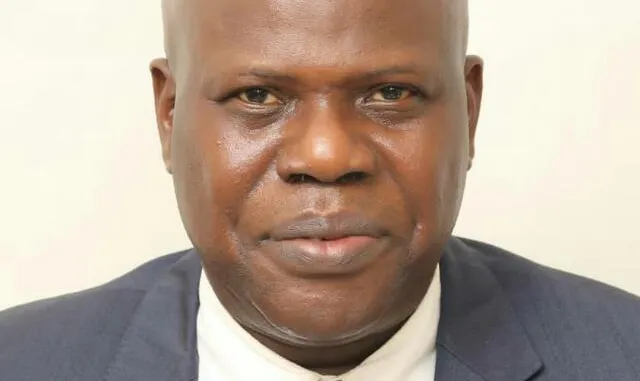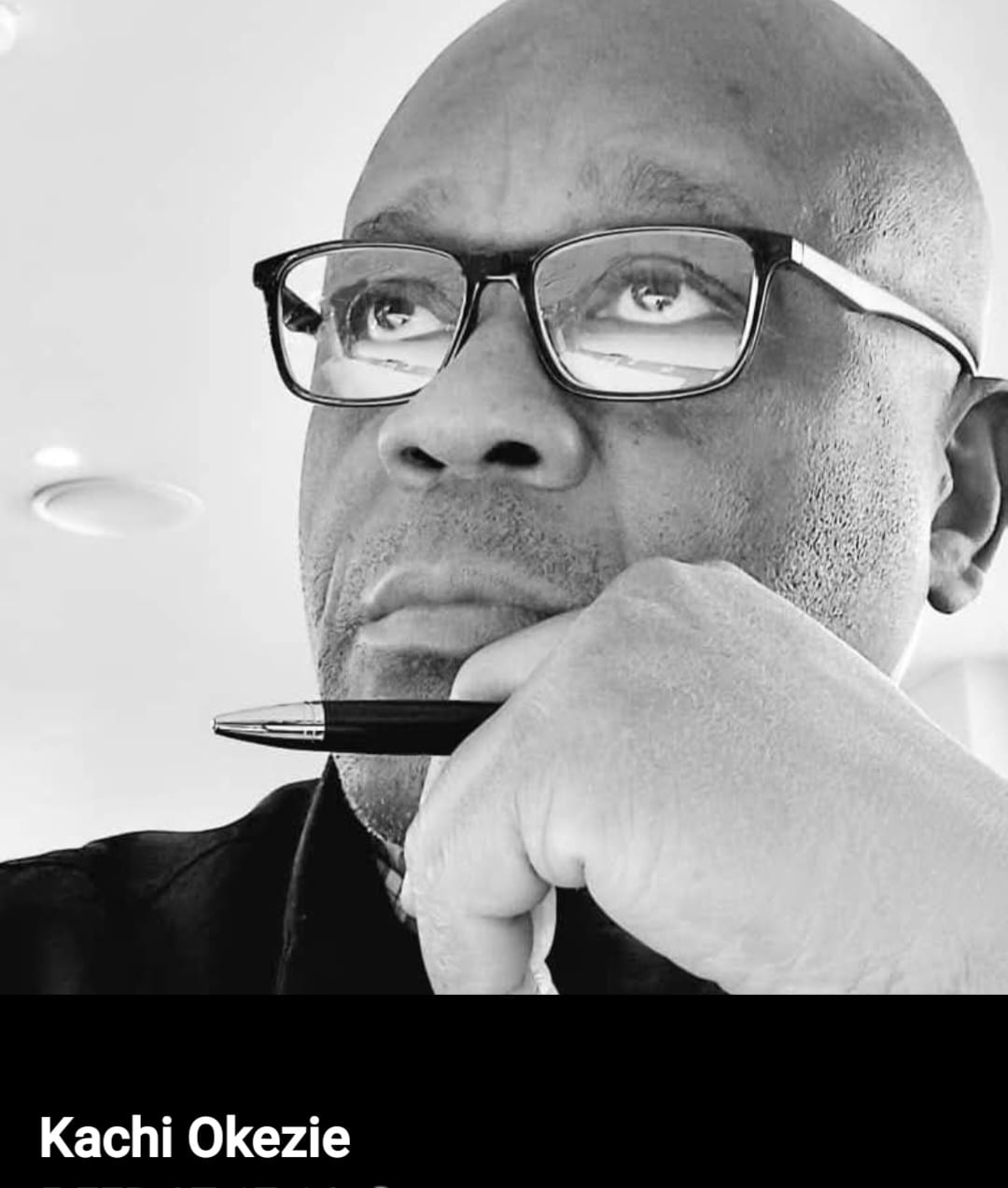
By Kachi Okezie, Esq.
“We are very talented globally but things just refused to go well in our country.”
That was the comment made by one Muktar Shinkafi on Facebook. It was not malicious. It was not careless. In fact, it echoed a sentiment many Nigerians hold sincerely. But it triggered me. And that is precisely why it deserves scrutiny.
Because in that single sentence lies one of the most dangerous ideas shaping Nigeria’s stagnation: the belief that national failure is something that simply “happens” to us—mysterious, inevitable, and beyond human agency.
Things do not “refuse” to go well for a country. Nations are not governed by fate or cursed by geography. They are built—or broken—by choices people make. By what their citizens tolerate, what their leaders prioritise, and what institutions are allowed to rot without consequence.
To frame Nigeria’s condition as bad luck is not compassion. It is evasion.
There is no serious argument that Nigeria lacks talent. From Silicon Valley to London hospitals, from global finance to the arts, Nigerians excel wherever systems reward merit and discipline. The issue has never been ability. It is environment—and environments are designed, maintained, and defended by people.
Yet we speak of Nigeria as though it were an accident rather than a collective project.
Over time, fatalism has embedded itself deeply into our political culture and religious imagination. We explain poor governance with phrases like “that’s how Nigeria is.” We reduce corruption to a cultural flaw rather than a policy failure. We pretend to abhor corruption when in fact what we abhor is having one of our indicted for it. We invoke patience where urgency is required and prayer where accountability is absent.
This mindset is not neutral. It has consequences.
It teaches citizens to endure dysfunction instead of challenging it. It conditions young people to hustle around broken systems rather than demand their repair. It normalises small acts of dishonesty—bribes, shortcuts, forged credentials—that accumulate into institutional collapse.
We condemn looters in Abuja while excusing everyday corruption in our own neighbourhoods and communities. We curse bad leadership but reward ethnic loyalty, political godfathers, and mediocrity at the ballot box. Then, when outcomes predictably disappoint us, we retreat into the language of inevitability.
But inevitability is a lie.
Nigeria’s leaders are not imposed by destiny. They emerge from systems we emplace or tolerate and processes we often ignore. Elections are rigged, yes—but apathy rigs them too. Institutions are weak, yes—but silence weakens them further.
The uncomfortable truth is this: we are not merely victims of Nigeria’s failures; we are participants in their maintenance.
Nowhere is this more urgent than with Nigeria’s younger generation. This is the most connected, informed, and capable generation in our history. Yet it faces a critical choice: to inherit fatalism as wisdom or to reject it as a fraud.
The world is moving fast. Rwanda, Vietnam, Bangladesh, and others—countries once written off—have made deliberate choices to reform institutions, discipline leadership, and demand results. Nigeria, by contrast, remains suspended between potential and paralysis, endlessly discussing what could be while avoiding what must be done.
We are told to wait. To be patient. To trust in God, time, or history. Faith has its place, no doubt. Culture has its value, too. But when they are used to excuse inertia, they become obstacles to progress.
Responsibility cannot be outsourced to providence.
Rejecting fatalism does not mean denying Nigeria’s complexity. It means refusing to romanticise dysfunction. It means recognising that while history shapes us, it does not imprison us. Choices—be they policy choices, civic choices, or moral choices—still matter.
Nigeria is not cursed. It is just been poorly governed and insufficiently challenged.
Our destiny will not be rewritten by slogans or sympathy. It will be rewritten when citizens insist on competence over sentiment, institutions over individuals, accountability over excuses. When we stop explaining failure and start confronting it.
So when we hear statements like Muktar Shinkafi’s “things just refused to go well in our country”—we should respond not with indignation, but with clarity.
Things do not refuse to go well. We refuse to make them go well.
And until that changes, Nigeria will remain exactly where it is—rich in talent, but poor in resolve.
The views expressed by contributors are strictly personal and not of Law & Society Magazine.